

Every smart glasses company promises the same future: a display, a camera, and an AI assistant packed into frames you'd actually wear in public. Almost none of them ship it. The Rokid Glasses do. This is the rare pair that puts a genuine binocular AR display, a 12MP camera, and a full voice assistant into a 49-gram frame that reads as ordinary eyewear from across a room – and it does it while undercutting the Ray-Ban Meta Display.
That combination is the whole story here, and it's a genuinely exciting one. But "does more than anyone else" and "does all of it well" are different claims. The Rokid Glasses are a first-generation product wearing a first-generation product's rough edges: a display that only speaks green, a camera that folds in low light, and a charging case that costs extra. Whether they're worth it depends entirely on which features you're buying them for.
Design & Build
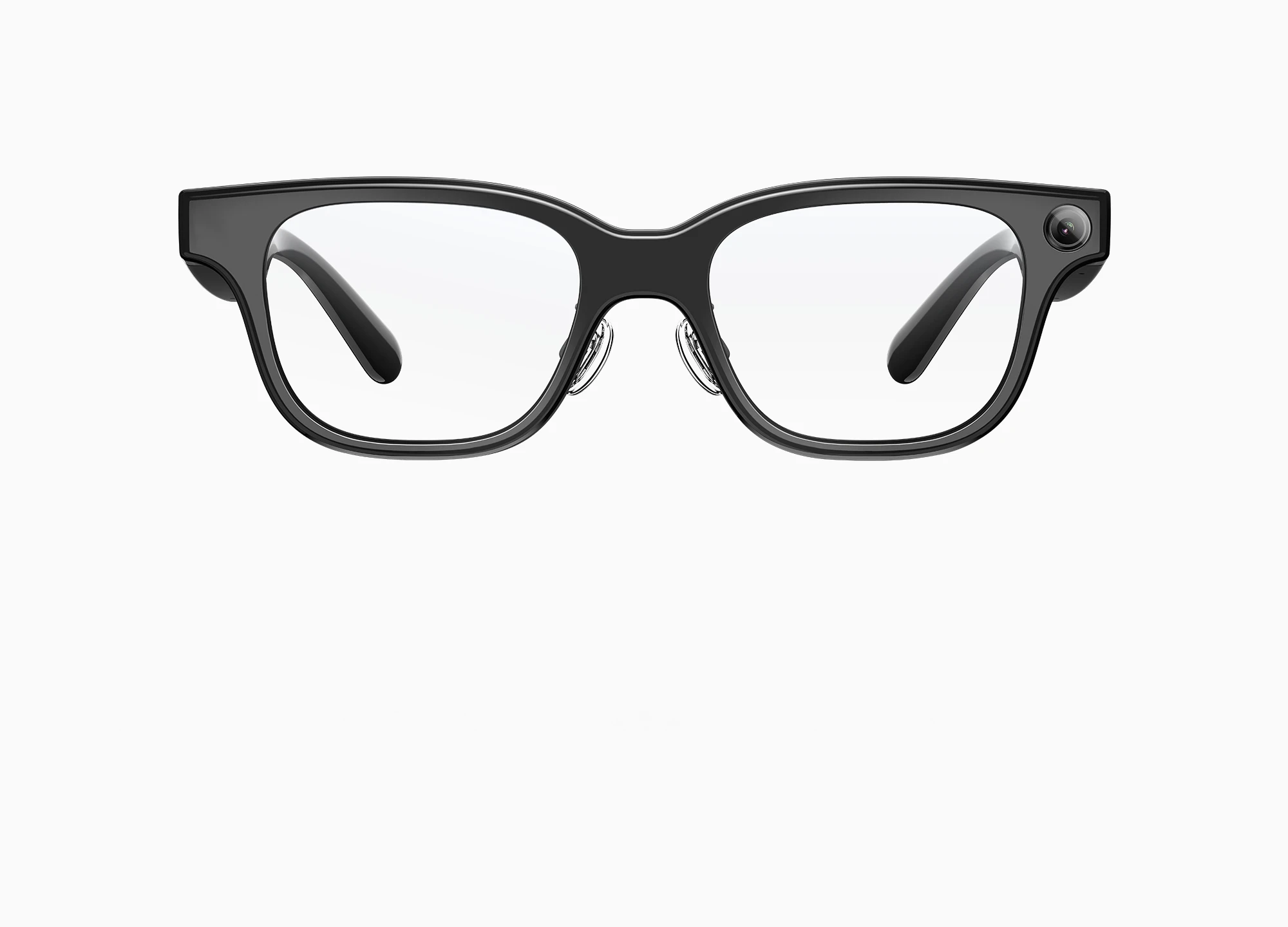
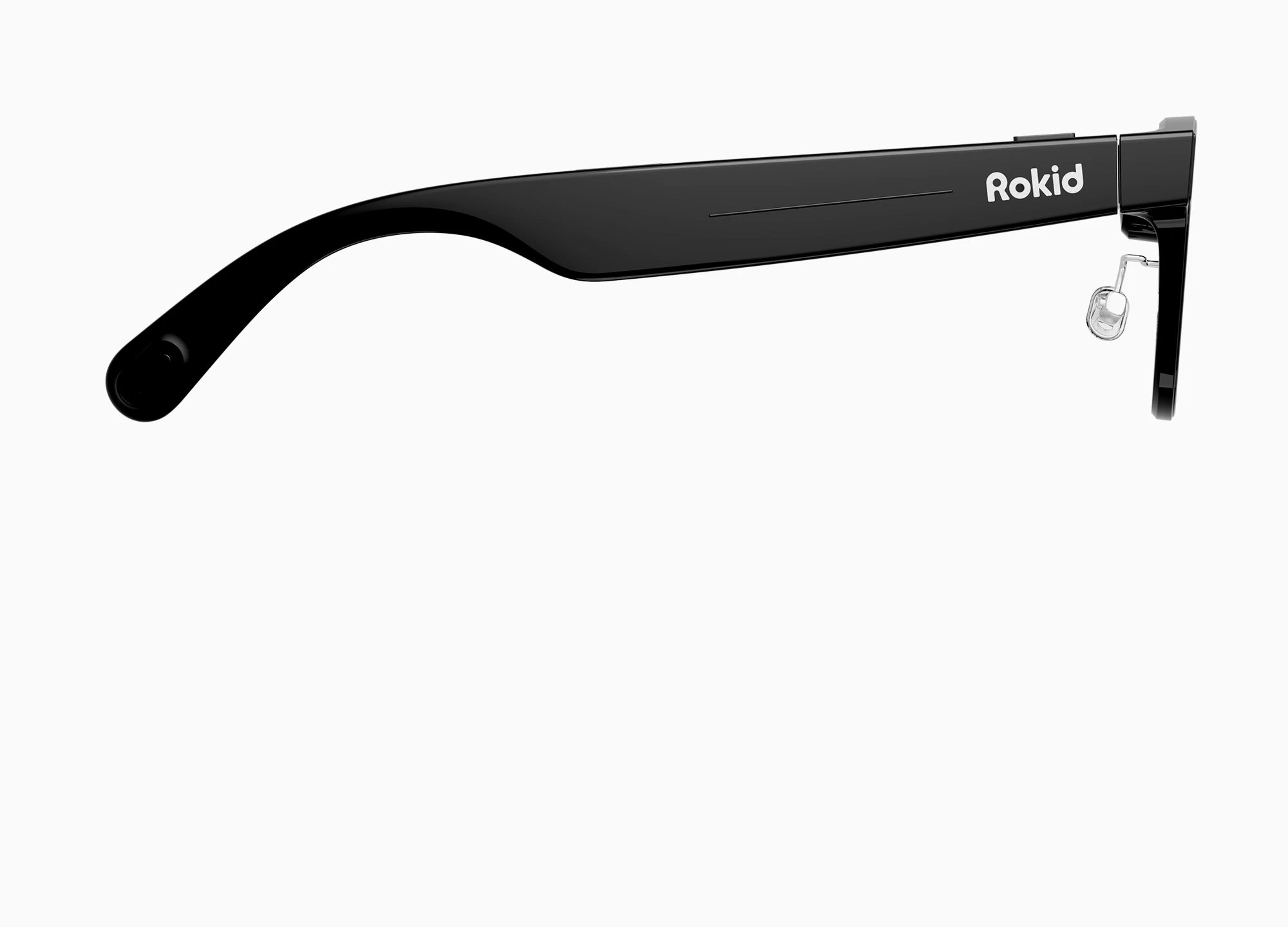
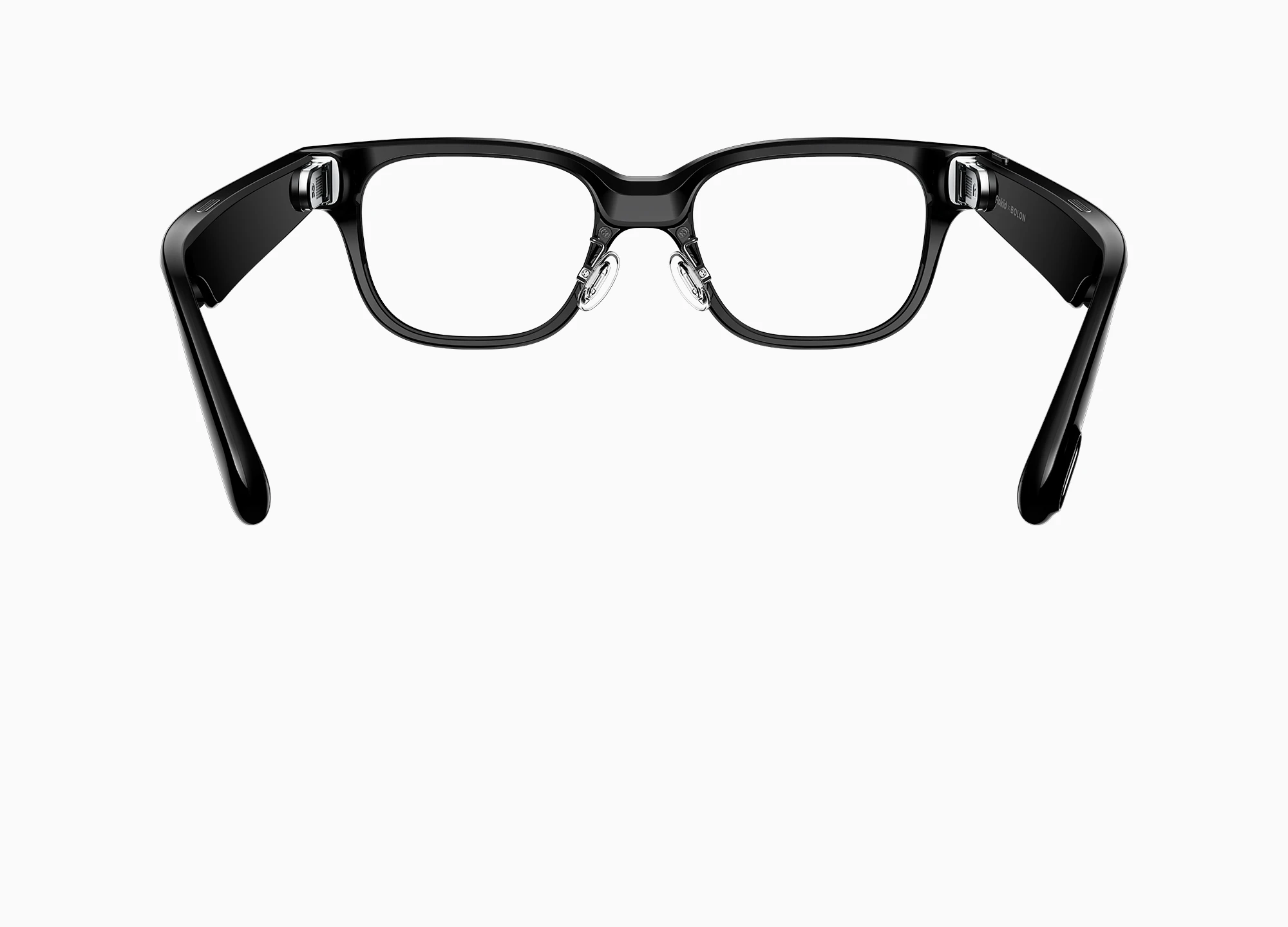
The headline number is 49 grams, and it earns its billing. These are among the lightest full-function display glasses you can buy, close enough to regular eyewear that you forget you're wearing a computer. The magnesium-aluminum alloy frame keeps them stiff without adding heft, real nose pads (two sizes in the box) do the load-bearing, and the touch controls hide cleanly along the right arm. There's an IPX4 splash rating, so a sudden shower won't end the relationship.
Where opinions split is style. Rokid went for a chunky Wayfarer silhouette, and up close the frames are thicker than a normal pair and finished in a glossy black plastic over the front that doesn't quite feel premium. They also sit a touch high on the face, which occasionally puts the faint green glow of the display squares within a bystander's line of sight. Compared to the near-invisible minimalism of the Even Realities G1, these look more like a gadget. They're comfortable and light – the two things that matter most for all-day wear – but "looks completely normal" is a generous reading rather than a settled fact.
Display & Optics
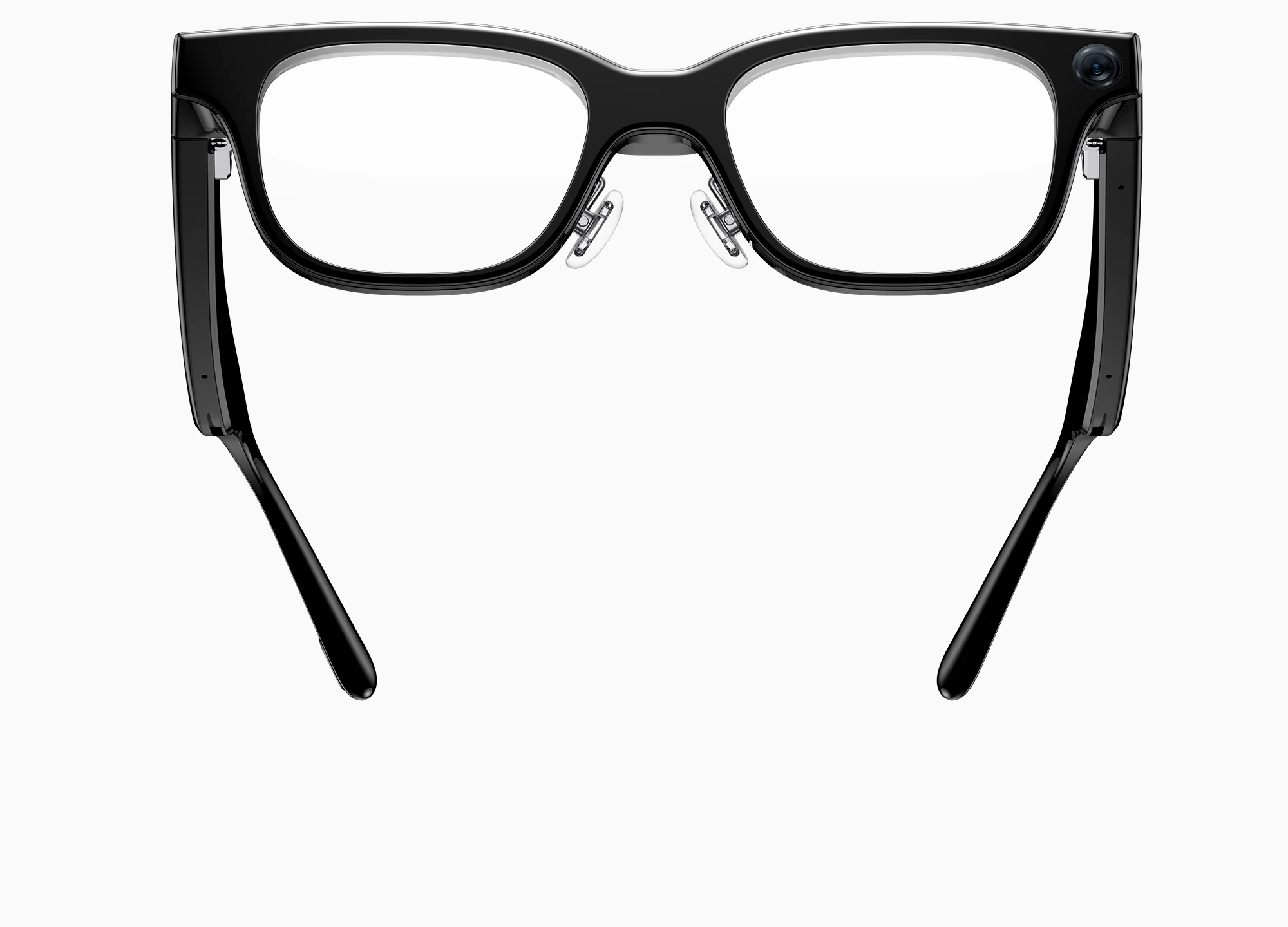
This is the reason the Rokid Glasses exist. A dual-eye monochrome green MicroLED engine feeds a diffractive waveguide in each lens, producing a binocular heads-up display that floats crisp text and simple icons in front of both eyes. Running the image through both lenses instead of one reduces the eye strain that plagues single-lens designs, and at up to 1,500 nits the HUD stays legible outdoors in bright daylight – a real achievement for a waveguide this small.
Set expectations correctly, though. The display is green and only green, the resolution is modest at 480 by 398 per eye, and the field of view is a narrow 30 degrees. This is a glanceable information layer, not a screen for photos, video, or immersive AR. Within that lane it's excellent. Teleprompter mode is the standout: load a script, start talking, and the AI auto-scrolls to match your pace, which is transformational for anyone who films to camera or presents. Real-time translation captions appear on-lens as someone speaks, turn-by-turn navigation arrows sit in your periphery, and AI answers surface without you touching a phone.
If a full-color display is non-negotiable, the Ray-Ban Meta Display is the alternative – it paints a color screen in the right lens and pairs it with a wrist-worn neural band. Rokid's binocular green HUD is arguably the more comfortable and more information-dense of the two for text-heavy tasks; Meta's is the more versatile and polished.
Camera
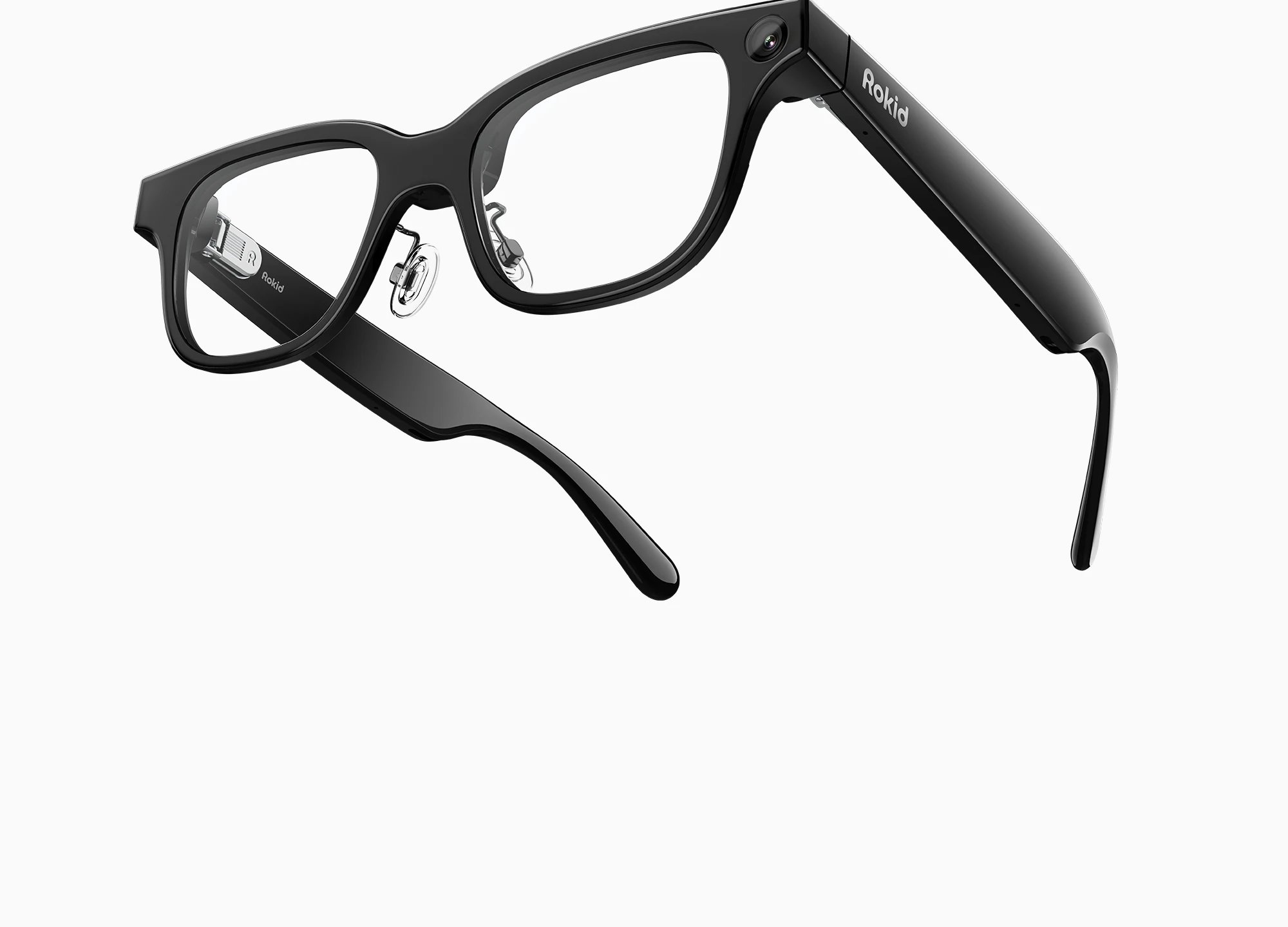
A 12MP Sony IMX681 sensor sits by the hinge, shooting through an f/2.25 lens with a wide, roughly 109-degree view and capturing video up to 1680p at 30fps with electronic stabilization (EIS). In good light it's genuinely useful: bright, detailed, hands-free point-of-view shots framed exactly the way you're looking, with stabilization keeping video steady enough for casual clips. Multiple aspect ratios and voice-triggered capture make it practical for vlogging, tutorials, or grabbing a photo mid-task.
The weaknesses are the familiar ones. A fixed focal length means there's no autofocus to lean on, dynamic range is modest, and low light is where it clearly gives ground to the Ray-Ban Meta Gen 2, still the benchmark for camera-first glasses. You'll also transfer media to your phone rather than having it stream to a social app. As a see-what-I-see capture tool in daylight, it delivers; as a replacement for your phone's camera, it doesn't.
AI Assistant & Features
Rokid's smartest decision was refusing to marry a single AI. You can switch between ChatGPT and Gemini and lean on whichever handles your task better, all running on a Snapdragon AR1 Gen 1 chip. Say "Hi Rokid" and you get spoken answers, object and scene recognition, and descriptions of whatever the camera sees – a capability that's genuinely valuable for accessibility, not just novelty.
Translation is the crown jewel alongside the teleprompter: 89 languages online plus six offline, with sub-second captions rendered on the lens and read aloud through the speakers, two-way, in conversation. Meeting transcription with speaker identification and AI summaries turns the glasses into a hands-free note-taker. Navigation is handled through full Google Maps turn-by-turn support for walking, cycling, and driving, with arrows updating in your periphery as the journey progresses. This is the deepest, most practical feature set of any glasses in this class, and it's why they anchor our roundup of the best smart glasses with an AI assistant. The caveat is polish: translation fluency occasionally slips and image recognition can be inconsistent. The ideas are all here, and most of them already work; the software will only get sharper from here.
Audio
Two down-firing open-ear speakers handle spoken responses, translated audio, and calls, backed by four directional microphones that do a solid job isolating your voice and the person across from you. Mids and highs are clear enough for prompts and podcasts in quiet spaces. Bass is thin, and outdoors or on a busy street the speakers simply don't have the volume to keep up. Treat audio as a functional companion to the AI features, not a reason to leave your earbuds at home.
Battery & Charging
The 210mAh cell delivers roughly eight hours of realistic mixed use – HUD, occasional AI, some audio – and stretches toward twelve if you're light on the heavy features. That comfortably clears the four-to-six hours we expect from camera-and-AI glasses, and it means the Rokid Glasses can genuinely last a working day. Charging is fast, hitting 50 percent in about 15 minutes.
Two asterisks. Lean hard on continuous AI, translation, and video and real-world life drops closer to four to six hours. And the charging case – the accessory that makes camera glasses truly all-day – is sold separately for around $99. Bundling a magnetic cable instead of a case at this price is a real miss.
Prescription & Fit
Prescription support is built in rather than bolted on. Rokid offers magnetic lens inserts and a lens service through partners covering myopia and astigmatism. The light frame and two nose-pad sizes make the fit accommodating across face shapes. This matters more than it sounds: glasses you can't see through are glasses you won't wear, and Rokid handled it properly.
Privacy & Social Acceptability
An always-available 12MP camera on your face is a social contract with everyone around you, and Rokid's high-sitting frames make the faint green display glow occasionally visible to others – less discreet than the near-invisible HUD glasses in this space, but far less conspicuous than any headset. There's no bright, obvious recording indicator of the kind regulators increasingly expect, so the burden of signaling when you're capturing falls on you. In practice these draw less attention than their feature list suggests, but camera glasses still ask you to be the responsible party in rooms full of people who didn't opt in.
Who It's For / Who Should Skip
Buy them if you want on-lens translation, a teleprompter, or glanceable navigation and AI without pulling out your phone – frequent travelers, creators who film to camera, and anyone who lives in multilingual conversations will get the most out of them. They're also the value pick for a real AR display, which is why they feature in our best smart glasses guide for 2026.
Skip them if you primarily want a camera (the Ray-Ban Meta line shoots better, especially in low light), if a color display or a fully polished experience is essential, or if you want glasses that vanish into a crowd. The green-only HUD, the divisive frames, and the first-gen software wrinkles are real, and they won't suit everyone.
The Verdict
The Rokid Glasses do the thing nobody else has shipped: a legible AR display, a usable camera, and switchable ChatGPT and Gemini AI in frames light enough to forget. The teleprompter, translation, and hands-free AI are legitimately excellent, and at a $699 street price they land about $100 under the $799 Ray-Ban Meta Display, with a real camera on board where Meta puts its money into a wrist-worn neural band instead. What holds them back is exactly what you'd expect from a first generation – a monochrome, narrow display, a low-light-shy camera, and a charging case that should have been in the box. Buy them for what they uniquely do well, go in clear-eyed about the rough edges, and they're one of the most genuinely useful things you can put on your face right now.
Score: 80/100 – The first glasses to deliver display, camera, and AI in normal-weight frames at a fair price; first-generation compromises keep it from greatness, not from a recommendation.
| Category | Weight | Score | Weighted |
|---|---|---|---|
| Core Function | 30% | 84 | 25.2 |
| Build Quality | 15% | 74 | 11.1 |
| User Experience | 20% | 78 | 15.6 |
| Value | 20% | 80 | 16.0 |
| Battery | 15% | 80 | 12.0 |
| Total | 100% | 79.9 → 80/100 |