
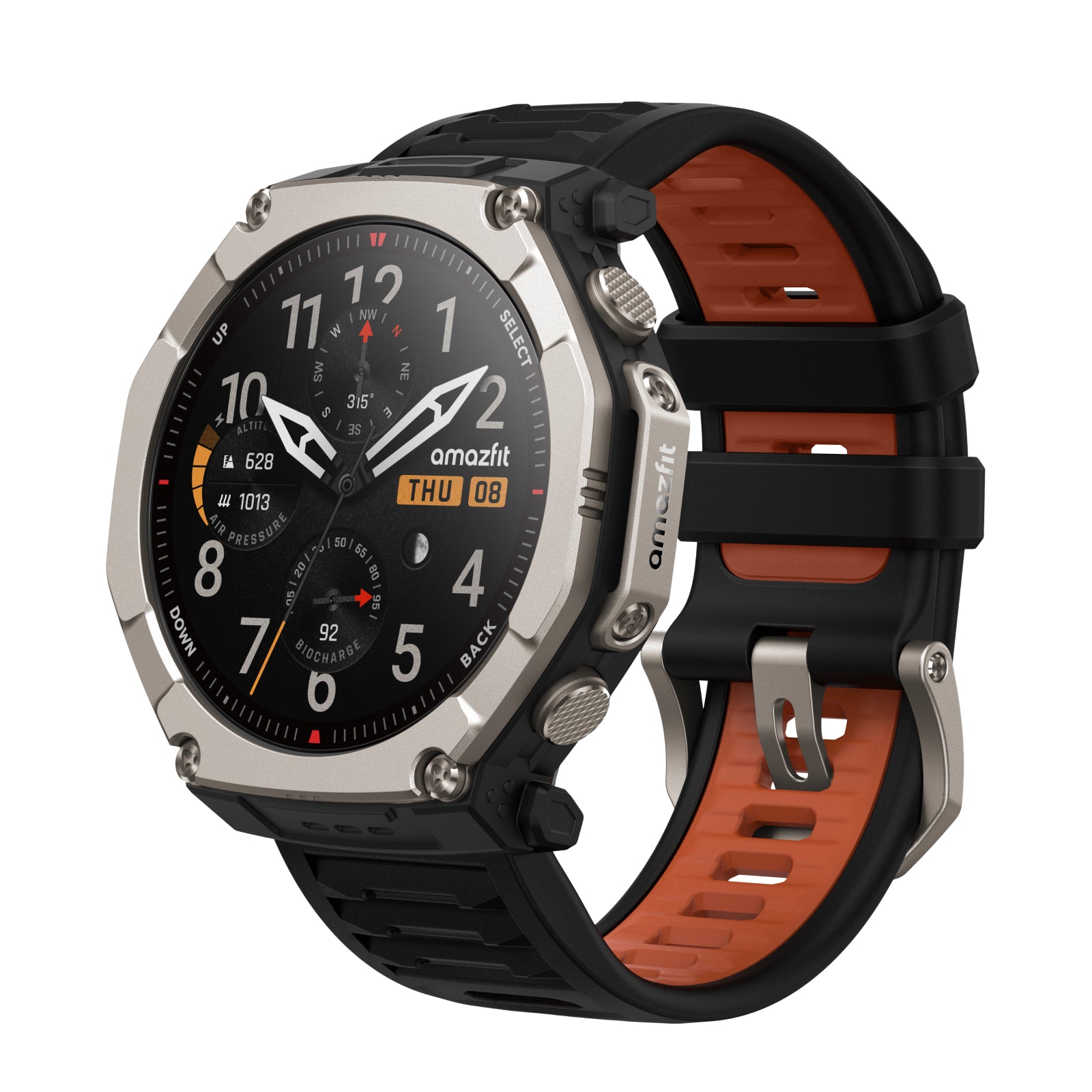
Amazfit has spent two generations chipping away at Garmin's outdoor moat, and the T-Rex Ultra 2 is the first time the company simply parks a tank on the lawn. This is a 51mm Grade 5 titanium slab with a sapphire crystal, a 3,000-nit AMOLED, offline topographic maps, dual-band GPS, a dive computer good to 45 meters, and 30 days of battery – for $549.99. Spec-for-spec, it reads like a Garmin Fenix 8 that someone accidentally priced at nearly half.
The catch, and there is always a catch with Amazfit, is that hardware has never been the company's problem. Software is. The Ultra 2 is a genuinely superb piece of adventure hardware wrapped around a version of Zepp OS that still ships half-finished features and shipped at launch with navigation bugs it should have caught. Whether that trade is worth it depends entirely on how much you were going to spend – and how much patience you have.
Design & Build
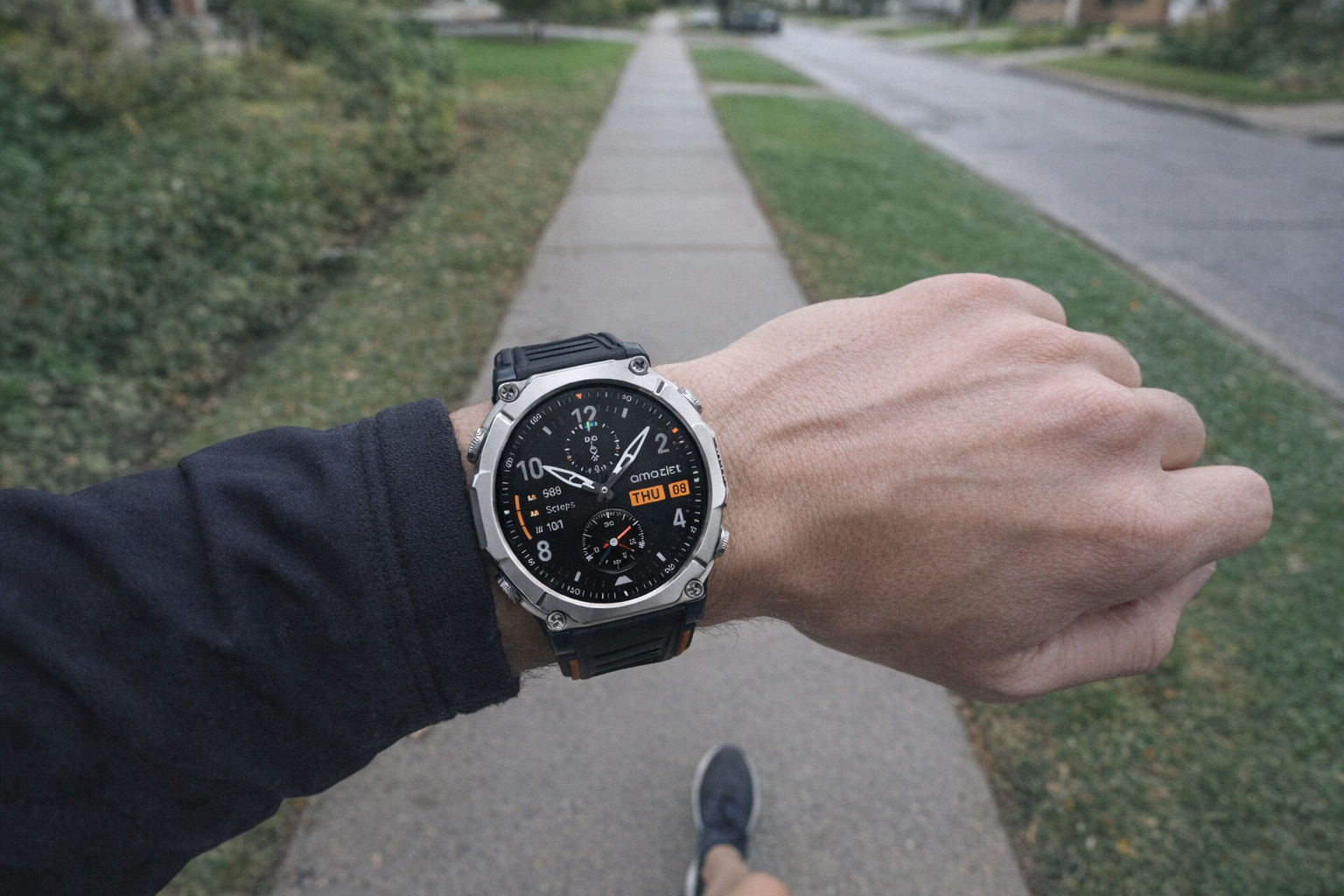
There is no polite way to say this: the T-Rex Ultra 2 is enormous. The case measures 51 x 51 x 14.3mm and the whole watch weighs roughly 89 grams with its silicone strap. On a large wrist it looks purposeful, like a piece of expedition kit. On anything average or smaller it looks like you strapped a hockey puck to your arm. This is a watch that wears like gear, not jewelry, and Amazfit clearly knows it – the "Ultra" line exists specifically to out-rugged the standard T-Rex 3.
What you get for the bulk is a build that genuinely belongs in the flagship conversation. The bezel, buttons, and back panel are Grade 5 titanium, the screen is protected by sapphire crystal rather than the cheaper tempered glass Amazfit uses lower down the range, and the whole thing carries military-grade durability ratings for cold, heat, shock, and altitude. There's a white LED flashlight with a green night-vision mode built into the case, and a speaker and microphone for taking calls off the wrist. The four-button layout is deep and glove-friendly. Nothing here feels like a compromise on toughness.
Display
The 1.5-inch AMOLED is the best screen Amazfit has ever put on an outdoor watch, and it's not close. Resolution is 480 x 480 at 322 pixels per inch, and peak brightness hits 3,000 nits – bright enough to stay legible under direct summer sun, which is exactly where a transflective Garmin display starts to look dated. Maps, in particular, benefit from the extra size and contrast; contour lines and trail detail are crisp in a way a smaller or dimmer panel can't match. If you've been holding onto a memory-in-pixel outdoor watch because AMOLED "doesn't work in daylight," this display is the counterargument.
Maps & Navigation
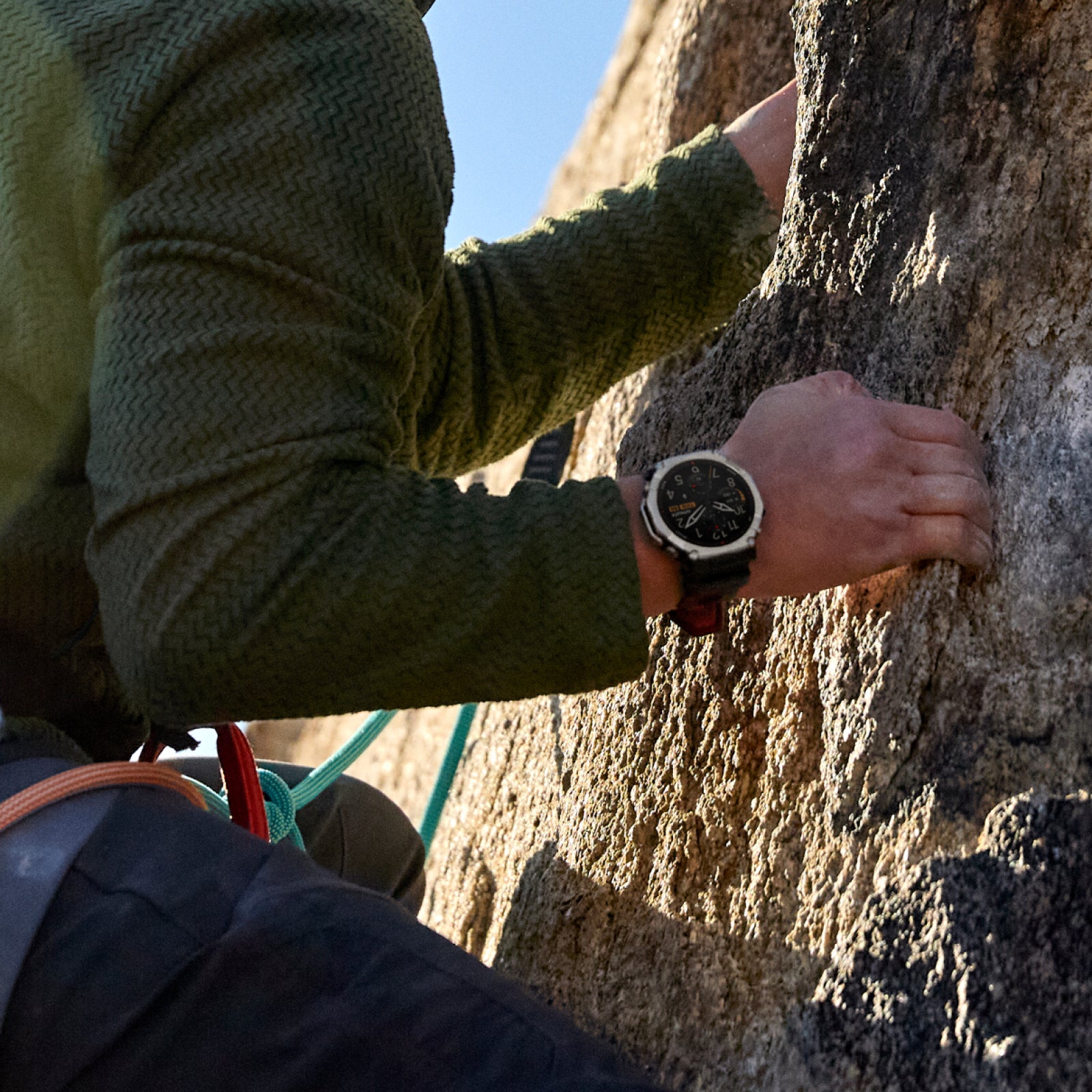
Maps are the headline, and the reason to consider the Ultra 2 over its most obvious rival. Storage jumps to 64GB (about 27GB usable for maps), and the watch ships with preloaded global base maps, with downloadable contour and ski-resort layers available through the Zepp app. You get full turn-by-turn navigation, automatic rerouting, and points-of-interest search, all working without a phone tethered. On the big, bright screen, the map experience is legitimately pleasant to use.
This is where the comparison to the Garmin Instinct 3 gets lopsided. The Instinct 3 costs $499 and has no maps at all – just a breadcrumb trail. For $50 more, the Ultra 2 hands you full offline topographic mapping, a far larger and sharper display, a speaker and mic, and that flashlight. On paper, it's not a fair fight.
Then you actually use the software. The ClimbPro-style climb-assistance feature – the one that's supposed to break an ascent into its component climbs and tell you how much pain is left – simply doesn't work reliably; climbs get misidentified and mistimed to the point of being useless. Routing crashed and lagged for early buyers, and there's still no seamless Strava route sync: you export a GPX and import it manually rather than pushing a route straight to the watch the way Garmin owners do. Firmware updates since launch have chipped away at the navigation and workout-menu complaints, which is reassuring, but the fact that they were needed at all tells you the watch shipped before it was finished. The map data is excellent; the navigation intelligence layered on top of it is not yet.
GPS & Health Tracking
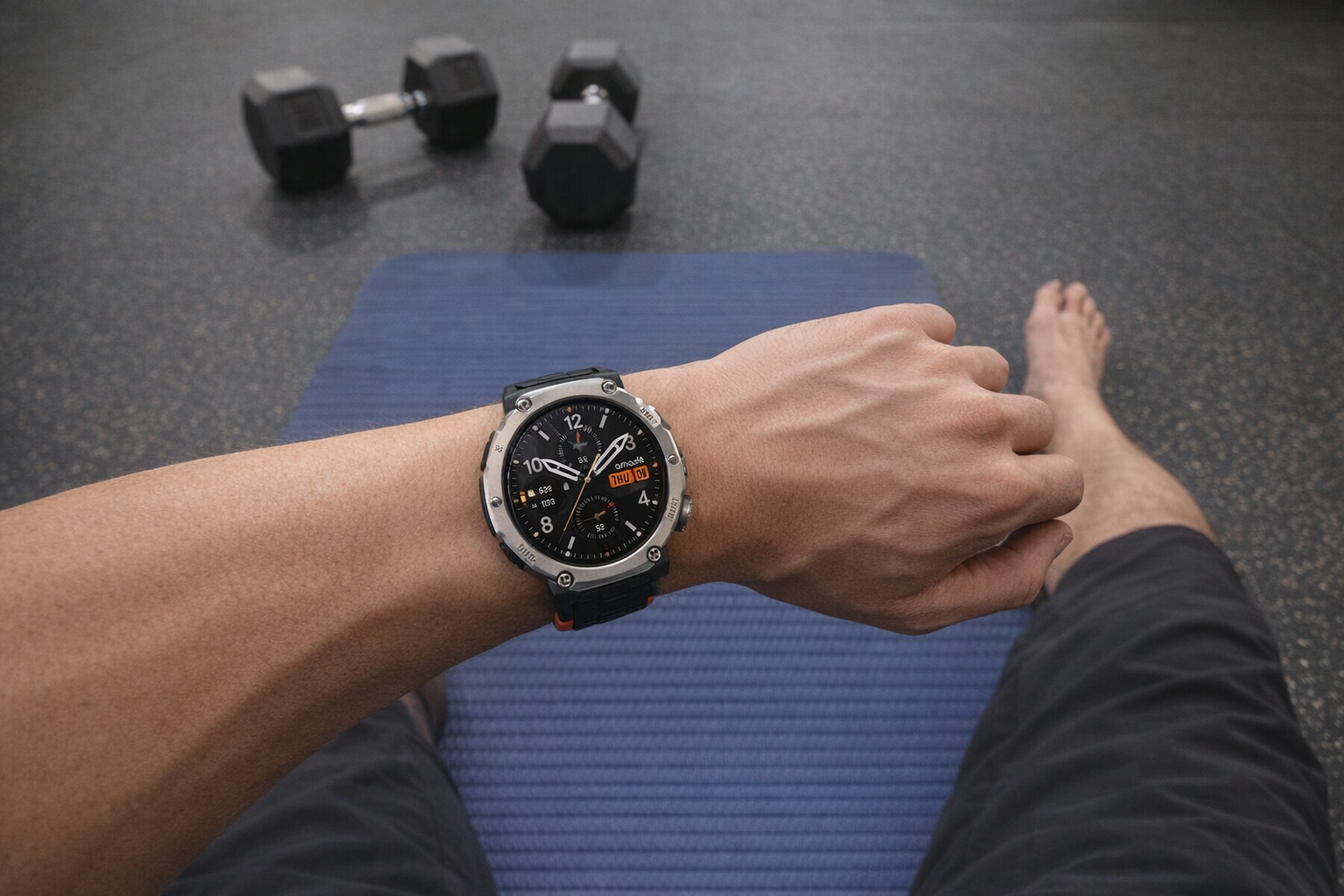
Positioning is dual-band across six satellite systems, and in practice the Ultra 2 lands in the solid second tier – good, not class-leading. On open ground it tracks cleanly; under tree cover and on technical trails it shows a mild positional offset and a slight tendency to underreport distance. It's more than accurate enough for navigation and for logging your day, but if you're the kind of runner who scrutinizes a track overlay against a Garmin Fenix 8 or a Coros, you'll see the gap.
Heart rate is the softer spot. The BioTracker 6.0 optical sensor is a real step up from past Amazfit watches and holds beat-for-beat with the reference during steady efforts. But it's sluggish at the very start of a workout – errors of tens of beats per minute until the sensor settles – and, like any wrist-based optical sensor, it wanders during hard intervals, a tendency the 51mm case's shifting on the wrist doesn't help. For zone training or intervals, pair a chest strap. The barometric altimeter, similarly, tends to slightly undercount total ascent, though it tracks the shape of a climb correctly. None of this is disqualifying for the target buyer; all of it is worth knowing before you trust the numbers.
Diving & Water Sports
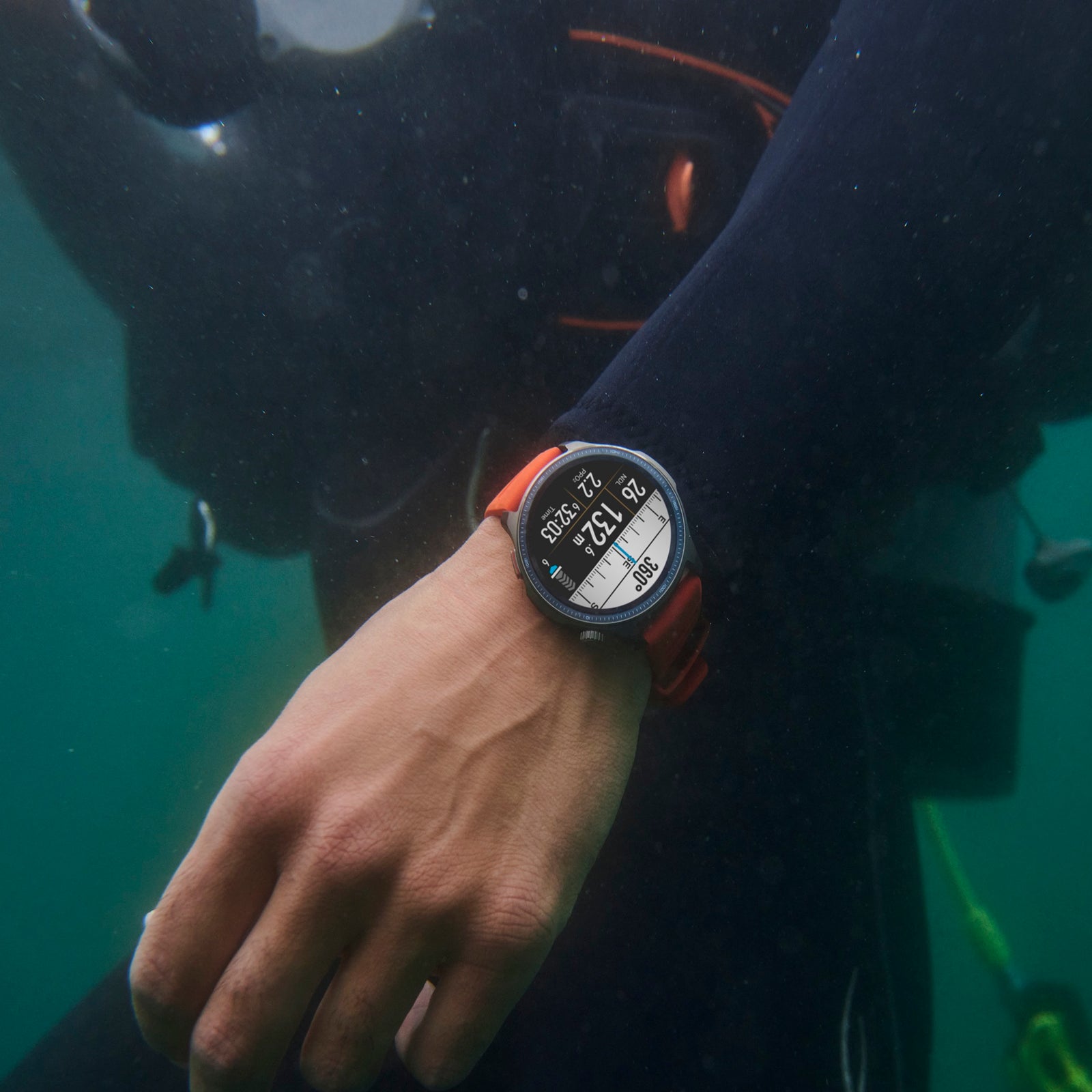
The Ultra 2 carries a 10 ATM water-resistance rating and, more importantly, an actual dive certification to 45 meters, covering both freediving and recreational scuba. That's a genuinely uncommon feature at this price – you're normally looking at an Apple Watch Ultra or a dedicated dive computer to get a wrist unit rated this deep. The freediving mode tracks depth, dive time, and surface intervals, and the big high-nits screen is exactly what you want to read underwater. It's not going to replace a Shearwater for serious technical diving, but as a do-everything watch that also handles a reef dive or a freediving session, it's remarkably complete.
Battery Life
Amazfit quotes up to 30 days of typical use from the 870mAh cell, up to 50 hours in high-accuracy GPS, and up to 90 hours in power-saving GPS. Those are optimistic-lab numbers, as always, but the real-world result is still excellent: two weeks of daily wear with an hour or two of GPS workouts a day left the watch around 30%, burning roughly 2 to 2.5% per hour during activities. In plain terms, this is a watch you charge a couple of times a month, and a multi-day trek won't leave you rationing GPS. It comfortably out-lasts any AMOLED Garmin in its class, and battery anxiety simply isn't part of the ownership experience – a claim that lands the Ultra 2 firmly in the conversation about the longest-lasting outdoor watches you can buy right now.
Software & Everyday Use
Day to day, Zepp OS is a pleasure – cleaner and more intuitive to navigate than Garmin's dense menu system, with a responsive interface and a genuinely nice widget layout. The problems are the rough edges. Saving a workout takes an unintuitive tap-tap-then-long-press. There's no sensible default to dim the always-on display overnight. And a real security lapse turned up at launch: the watch could approve a contactless payment without prompting for a PIN when it wasn't being worn. The wider ecosystem is thinner than Garmin's too – a limited third-party app store, no on-device music streaming, and Zepp's data-portability quirks if you ever want to leave. This is a watch you buy for what it does out of the box, not for a deep app ecosystem you'll grow into.
Who It's For
Buy the T-Rex Ultra 2 if you want flagship outdoor hardware – titanium, sapphire, a brilliant map display, dive certification, and weeks of battery – without paying flagship money. If your alternative was the mapless Garmin Instinct 3, the Ultra 2 is the easy call; you get dramatically more watch for $50 more. And if you were eyeing a four-figure Fenix 8 but flinched at the price, the Ultra covers the large majority of what most outdoor athletes actually use, for around half the cost.
Who Should Skip
Skip it if you have a smaller wrist – this thing is genuinely too big for a lot of people, and no amount of specs fixes that. Skip it if you live inside the training-data ecosystem, need on-device music, or want the polished, seamless route-sync and climb-analysis that Garmin and Coros still do better. And skip it if you demand chest-strap-grade heart rate and reference-grade GPS straight off the wrist – the Ultra 2 is good enough for navigation and logging, but it's not the most accurate watch in its price bracket.
The Verdict
The T-Rex Ultra 2 is the clearest statement yet of Amazfit's strategy: match the flagships on hardware, undercut them massively on price, and let the software catch up in firmware. On hardware, it's an unqualified success – one of the best-built, best-value outdoor watches you can buy, and a legitimate Fenix alternative for anyone who doesn't need the Garmin ecosystem. On software, it's still a generation behind, with genuinely useful features that don't yet work as advertised and a launch that felt a beat too early. Weigh the price against the polish and, for most outdoor buyers, the math comes out firmly in Amazfit's favor.
Score: 84/100
| Category | Weight | Score |
|---|---|---|
| Core Function | 30% | 79 |
| Build Quality | 15% | 92 |
| User Experience | 20% | 73 |
| Value | 20% | 92 |
| Battery | 15% | 90 |
An exceptional piece of outdoor hardware at a price that makes Garmin's mid-range look overpriced, held back only by software that shipped before it was done. If you can live with the size and the rough edges, nothing near this price gives you more watch.