
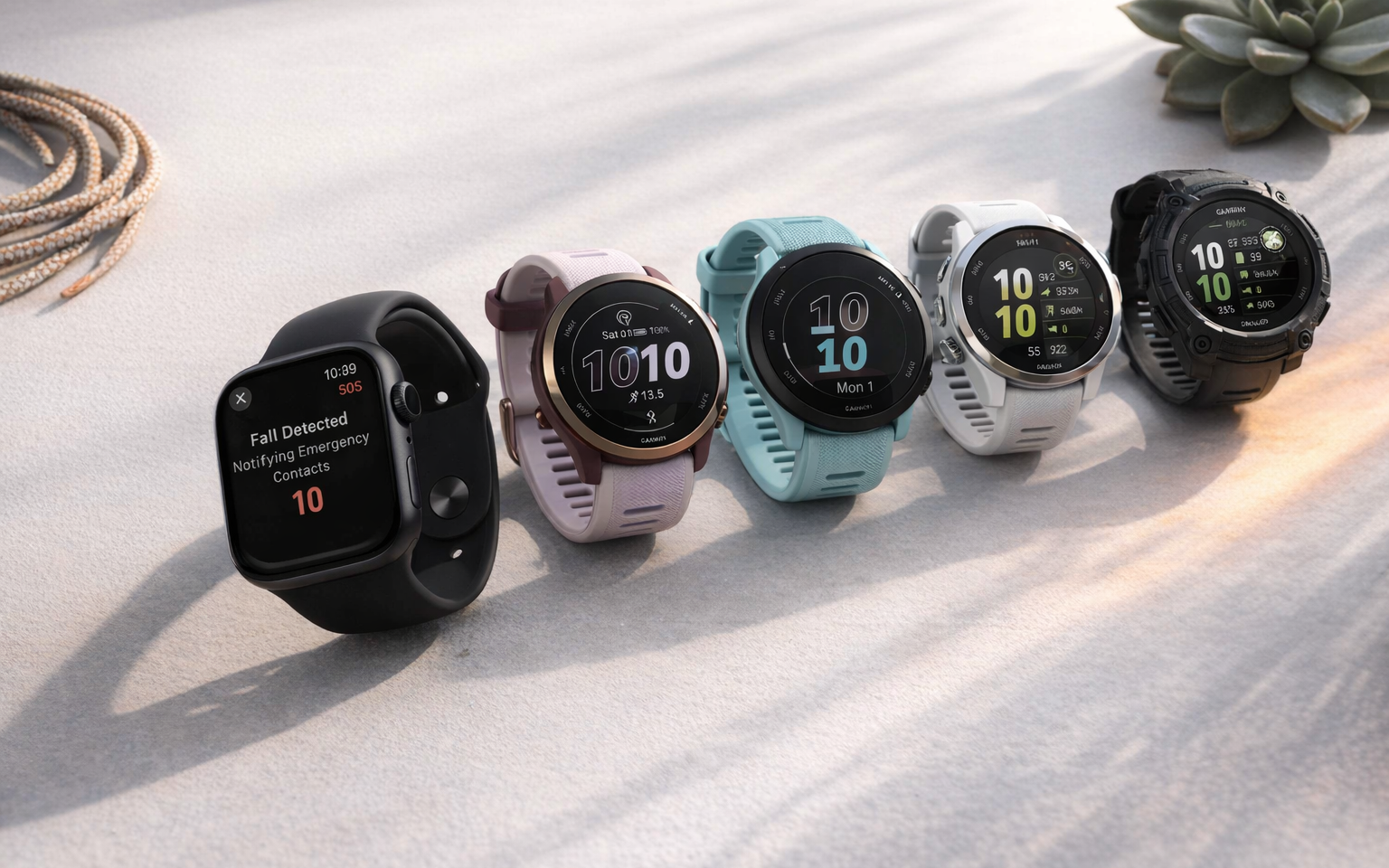
Most fitness trackers treat your phone as a required accessory. The band on your wrist is really just a sensor; the brains, the screen you actually read, and the only way to see yesterday's data all live in an app. Lose the phone, leave it in a locker, or simply not own a current smartphone, and a Fitbit or a Xiaomi band turns into a watch that counts steps it can never show you.
A genuinely phone-free tracker has to clear a higher bar. It needs an on-wrist display good enough to replace the app, built-in GPS so it can map a run on its own, and – the part almost everyone forgets – a way to get your data off the device that doesn't route through a phone. That last requirement quietly eliminates most of the market. Once you apply it, the field narrows to GPS watches, and in practice that means Garmin, with one cellular Apple Watch as the exception that proves the rule.
How "No Phone" Actually Works
There are two honest ways a tracker lives without a phone, and it pays to know which one you're buying.
The first is the computer route. Every Garmin watch can be set up and synced from a desktop using Garmin Express, a free app for Windows and Mac. You plug the watch in with its charging cable, create or sign into your Garmin account, and your activities upload to Garmin Connect on the web. No phone is touched at any point – not for setup, not for syncing, not ever. This is the universal escape hatch, and it works on the cheapest Garmin in this guide just as well as the most expensive.
The second is the Wi-Fi route. Higher-end Garmins add onboard Wi-Fi, so once they've been associated with your account they upload activities over the air with no cable and no computer in the room. You still need that one initial handshake with either a phone or a computer, but after that the watch is fully autonomous on your home network.
The watches below are ordered by who they're for, not by price. Five are Garmins, because Garmin is simply the brand that took phone-free seriously. The sixth goes the opposite direction – it keeps the phone's powers but moves them onto your wrist over cellular.
Garmin Forerunner 165 – Best Overall
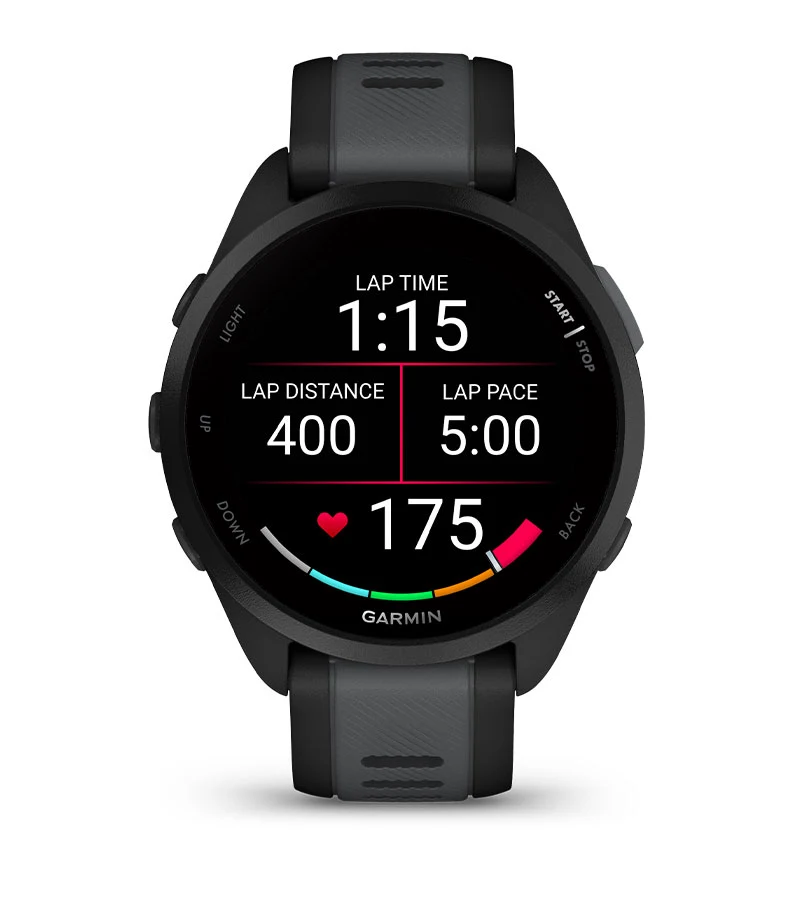
If you want one watch that does the phone-free thing without compromise, this is it. The Garmin Forerunner 165 pairs a bright AMOLED screen with built-in GPS, a clean training interface, and roughly 11 days of battery in smartwatch mode. Everything you'd open the app for – your sleep score, your training readiness, your run map – is legible right on the wrist.
For syncing, the base model uploads through Garmin Express over the cable, which is all most people need. Step up to the Forerunner 165 Music (around $299) and you add onboard Wi-Fi plus offline music storage, so it syncs over the air and plays Spotify or your own MP3s through wireless earbuds with no phone in your pocket. That combination – maps on the wrist, music in your ears, data to the cloud, all phone-free – is exactly what this category is supposed to deliver, and the 165 delivers it for less than anything else here that comes close.
The caveat is the same one that applies to every Garmin: you'll do the first-time setup from a computer, and a phone-free first GPS fix can take a minute longer than usual. Neither is a dealbreaker.
Garmin Forerunner 55 – Best Budget
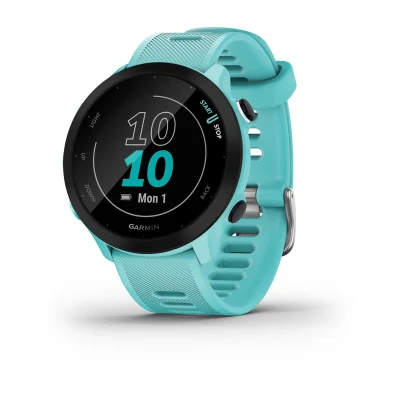
At $199, the Garmin Forerunner 55 is the cheapest watch we'd trust to run without a phone, and it's a remarkably complete little device for the money. It has its own GPS, tracks the full range of runs and workouts, estimates recovery time, and lasts about two weeks between charges. The screen is a transflective memory-in-pixel display rather than a flashy AMOLED panel, which is part of why the battery goes so far.
The honest limitation is connectivity: the Forerunner 55 has no Wi-Fi, so phone-free syncing means plugging it into a computer and letting Garmin Express do the work. If you're at a desk most days, that's a 30-second habit. If you wanted the AMOLED screen and over-the-air uploads, our Forerunner 55 vs 165 comparison lays out exactly what the extra $50 buys. But as a no-nonsense, no-phone GPS watch on a budget, the 55 is hard to argue with.
Garmin Vivoactive 6 – Best for Everyday Wear
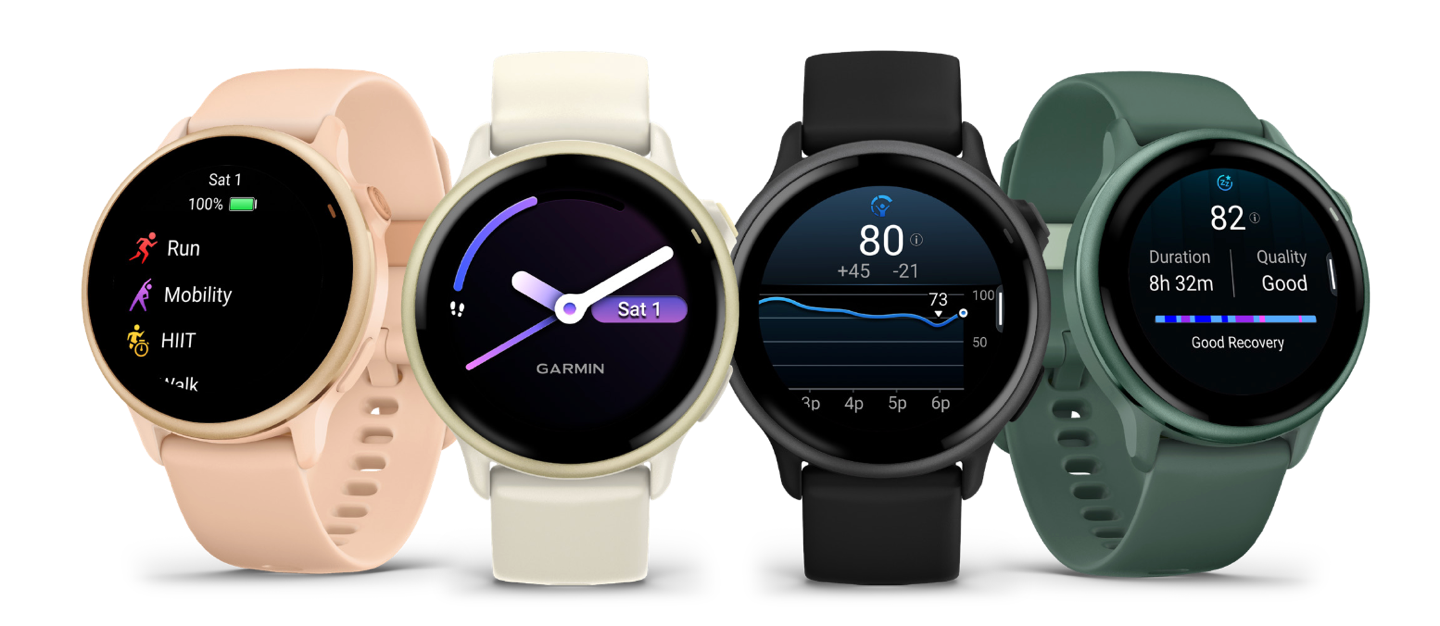
Not everyone buying a phone-free tracker is a runner. If you want something that looks and behaves like a normal smartwatch – rounded case, vivid AMOLED display, all-day health tracking – but still cuts the cord to your phone, the Garmin Vivoactive 6 is the pick. It carries built-in GPS, a deep set of health metrics, and onboard Wi-Fi, so it uploads your data over your home network without a phone or a cable once it's set up.
We called it the $300 fitness watch that makes $500 Garmins nervous, and the value holds up here. It's the most "smartwatch-like" option in this guide that still passes the phone-free test, making it the natural choice for someone who wants wellness tracking and a polished screen more than split times and lactate threshold estimates.
Garmin Instinct 3 – Best for the Outdoors
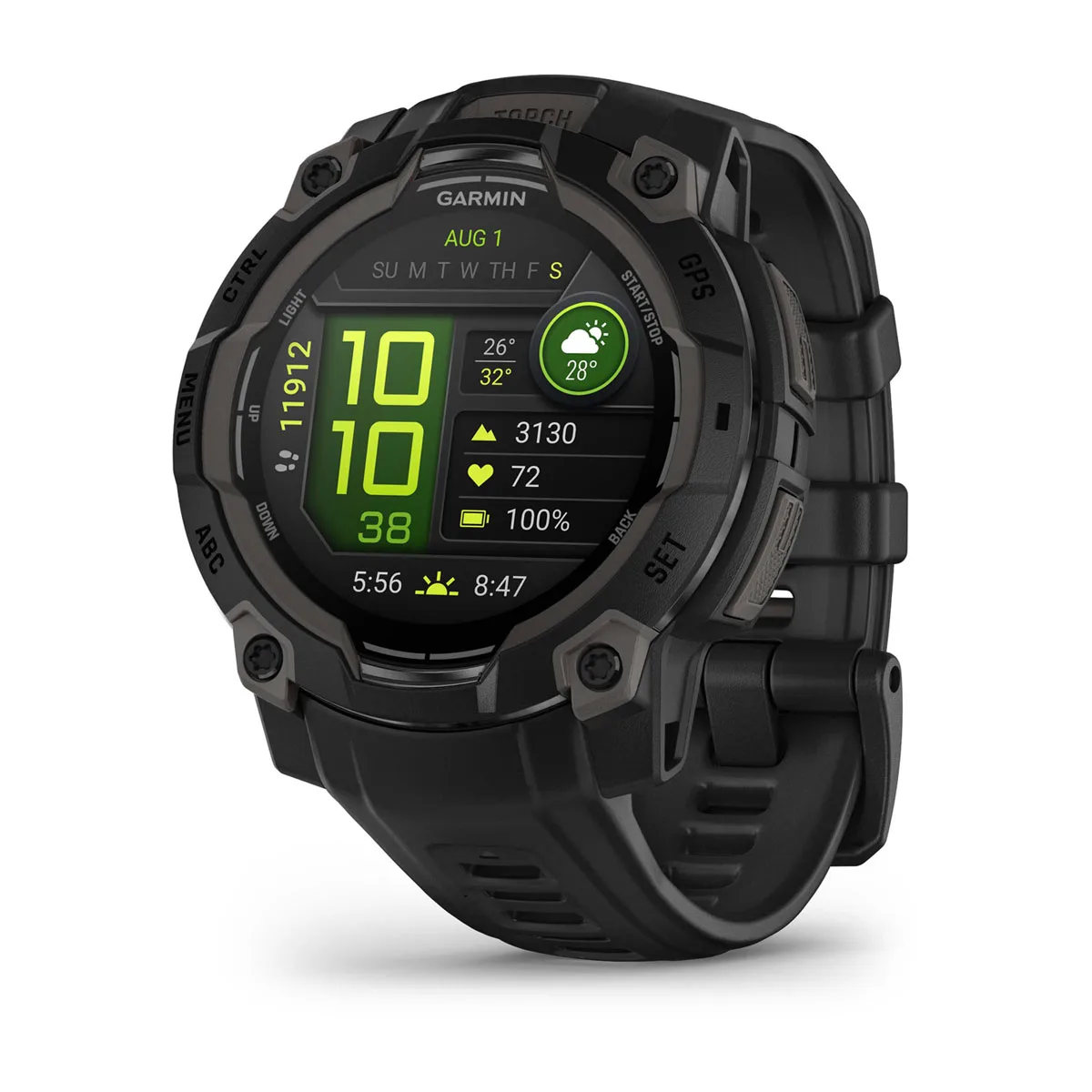
The whole point of leaving your phone behind is sharpest on a trail, where signal is patchy and a dropped phone is a real problem. The Garmin Instinct 3 is built for exactly that. It's rugged to military-spec standards, runs multi-band GPS, and – in the solar versions – stretches battery life into weeks by topping up from sunlight. It skips Wi-Fi, so phone-free syncing runs through Garmin Express over the cable – but for a watch you'll go days between charges with, plugging in now and then is hardly a burden.
It isn't the watch for maps-heavy navigation; full topographic mapping is reserved for pricier Garmins. But for hikers and backcountry runners who want a tracker that simply refuses to die and never needs a phone tethered to it, the Instinct 3 is the rugged answer at $399.
Apple Watch Series 11 (Cellular) – Best for Leaving Your Phone Behind
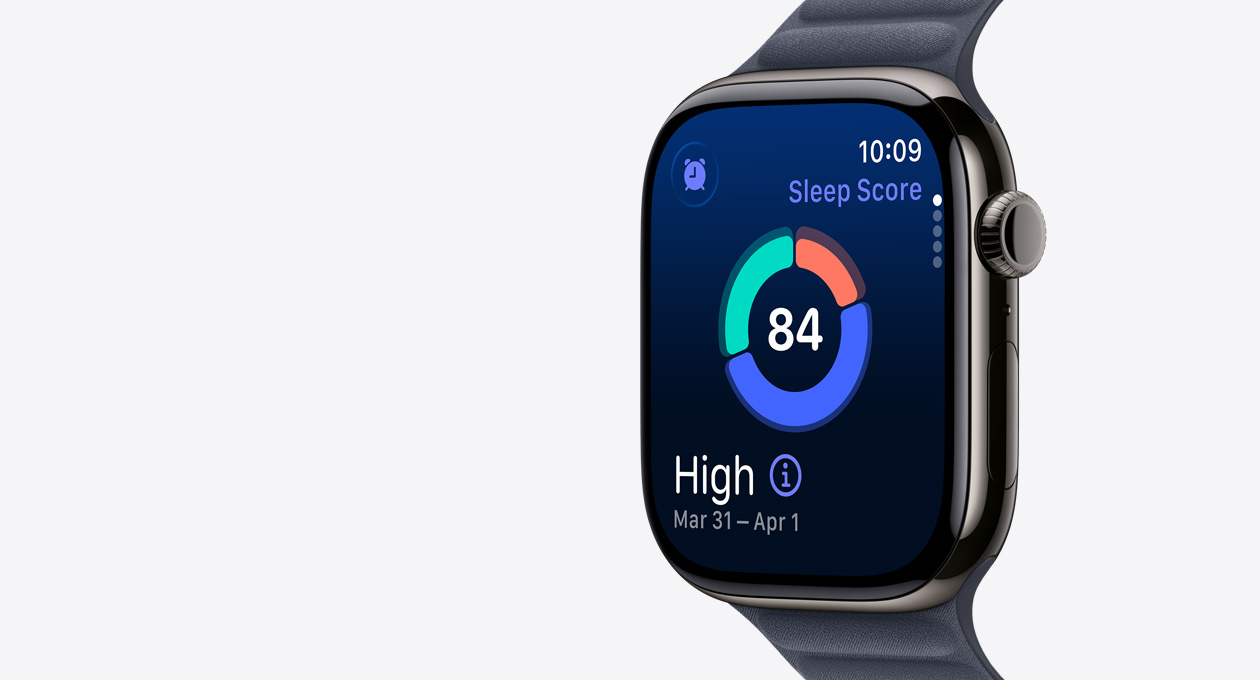
This is the other kind of phone-free, and for a lot of people it's the one they actually mean. Buy the cellular version of the Apple Watch Series 11, add it to your carrier plan, and the watch keeps its own phone number. You can leave the phone at home entirely and still take calls, send texts, stream music, use Apple Pay, and follow GPS directions – all from your wrist. The Series 11 also stretches its rated battery life to a full 24 hours, so it comfortably lasts the kind of all-day stint this use case demands.
There's one unavoidable asterisk, and it's the reason this watch sits below the Garmins despite being the most capable device here: an Apple Watch cannot be set up without an iPhone. You need one for the initial pairing, and it won't work with Android at all. So this is the answer for an iPhone owner who wants to train, run errands, or work out without carrying the phone – not for someone who has sworn off smartphones altogether. Within that boundary, nothing else untethers as completely.
Garmin Forerunner 970 – Best Premium
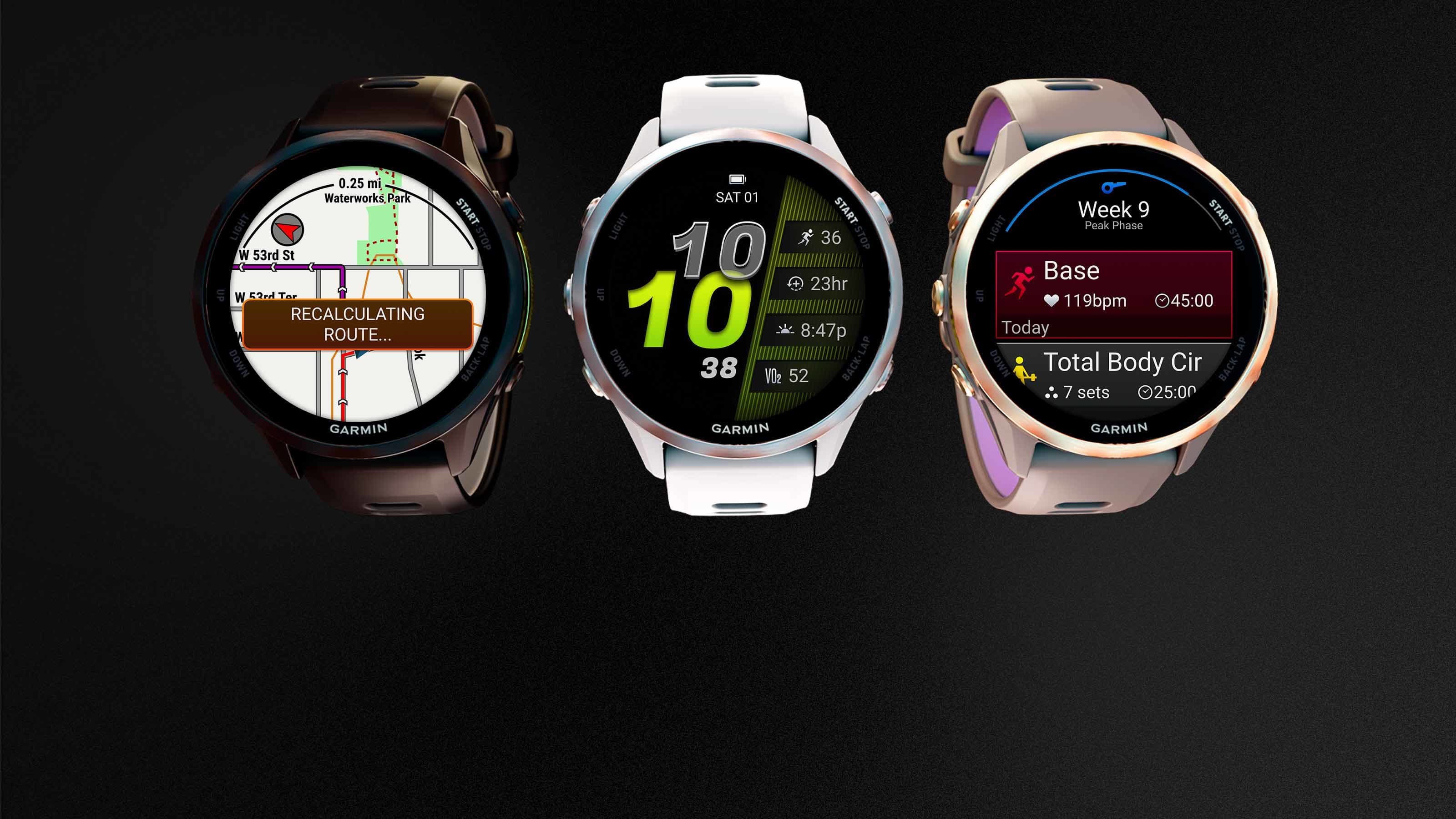
When budget isn't the constraint, the Garmin Forerunner 970 is the most self-sufficient watch in this guide. It carries full color topographic maps on the wrist, so you can navigate unfamiliar terrain with no phone for backup; it stores music for offline playback; it syncs over Wi-Fi; and its training analysis is as deep as anything Garmin makes outside the Fenix line. We called it the best running watch money can buy, and a large part of that verdict is how little it needs anything else to function.
At $749 it's a serious investment, and most people will be better served by the Forerunner 165 or Vivoactive 6. But if you want a tracker that can map a route, soundtrack a marathon, and log it all to the cloud without a phone anywhere near you, this is the ceiling.
How We Chose
We started from a strict definition: a tracker only qualifies if it can be set up, used, and synced without a phone, not merely glanced at. That ruled out the entire band category – Fitbit, Xiaomi, Samsung's fitness bands – because every one of them depends on a phone app for setup and has no way to offload data otherwise.
From there, three things mattered. On-device display: the screen has to show your metrics, history, and maps well enough to replace the app. Built-in GPS: the watch must track distance and pace on its own, with no phone GPS borrowed. Phone-free sync: there must be a real path to your data that skips the phone, whether that's Garmin Express over a cable or onboard Wi-Fi. Price and battery life broke the remaining ties, and we leaned on our own hands-on reviews for every pick.
Who Should Buy What
Buy the Forerunner 165 if you want the best all-around phone-free watch and don't want to overthink it. It's the default recommendation for almost everyone here.
Buy the Forerunner 55 if you're on a budget and don't mind syncing through a computer. It's the cheapest honest entry point.
Buy the Vivoactive 6 if you care more about everyday health tracking and a smartwatch look than about racing metrics.
Buy the Instinct 3 if your tracking happens on trails and your top priorities are toughness and battery life.
Buy the cellular Apple Watch Series 11 if you already own an iPhone and your real goal is leaving the phone at home while keeping calls, texts, and streaming.
Buy the Forerunner 970 if money is no object and you want onboard maps and music with zero dependence on a phone.
What To Avoid
Fitness bands that promise the moon for $40. A Xiaomi Smart Band or Fitbit Inspire is a fine tracker, but it is not a phone-free tracker. There is no desktop sync, the tiny screen can't stand in for the app, and the GPS is "connected" – meaning it borrows your phone's. If phone independence is the goal, no band qualifies, regardless of price.
Assuming any cellular smartwatch frees you from setup. Cellular gets you through the day without a phone, but Apple, Samsung, and Google watches all still require a companion phone (and usually a matching ecosystem) to activate. Cellular solves daily carry, not the setup tether.
Older watches without onboard Wi-Fi if you hate cables. Plenty of capable Garmins sync only over Garmin Express. They're still fully phone-free – just be honest with yourself about whether you'll actually plug in, or whether you want to pay up for Wi-Fi.
Frequently Asked Questions
Can you really use a Garmin watch with no phone at all? Yes. You set it up and sync it from a computer using the free Garmin Express app, and view all your data on the watch or on Garmin Connect's website. A phone is optional, not required.
Do I need a phone to see my heart rate, steps, or sleep? No. On every watch in this guide, those metrics are shown directly on the device. The phone app is just a second, larger window onto the same data.
Which trackers work without Wi-Fi or a phone? The Forerunner 55, the base Forerunner 165, and the Instinct 3 have no Wi-Fi, but they still sync phone-free over a cable through Garmin Express. The Vivoactive 6, Forerunner 165 Music, and Forerunner 970 add Wi-Fi for cable-free uploads.
Can an Apple Watch work without a phone? With the cellular model, it works without your phone nearby – calls, texts, and streaming all run on the watch. But it cannot be set up without an iPhone, and it doesn't support Android.