
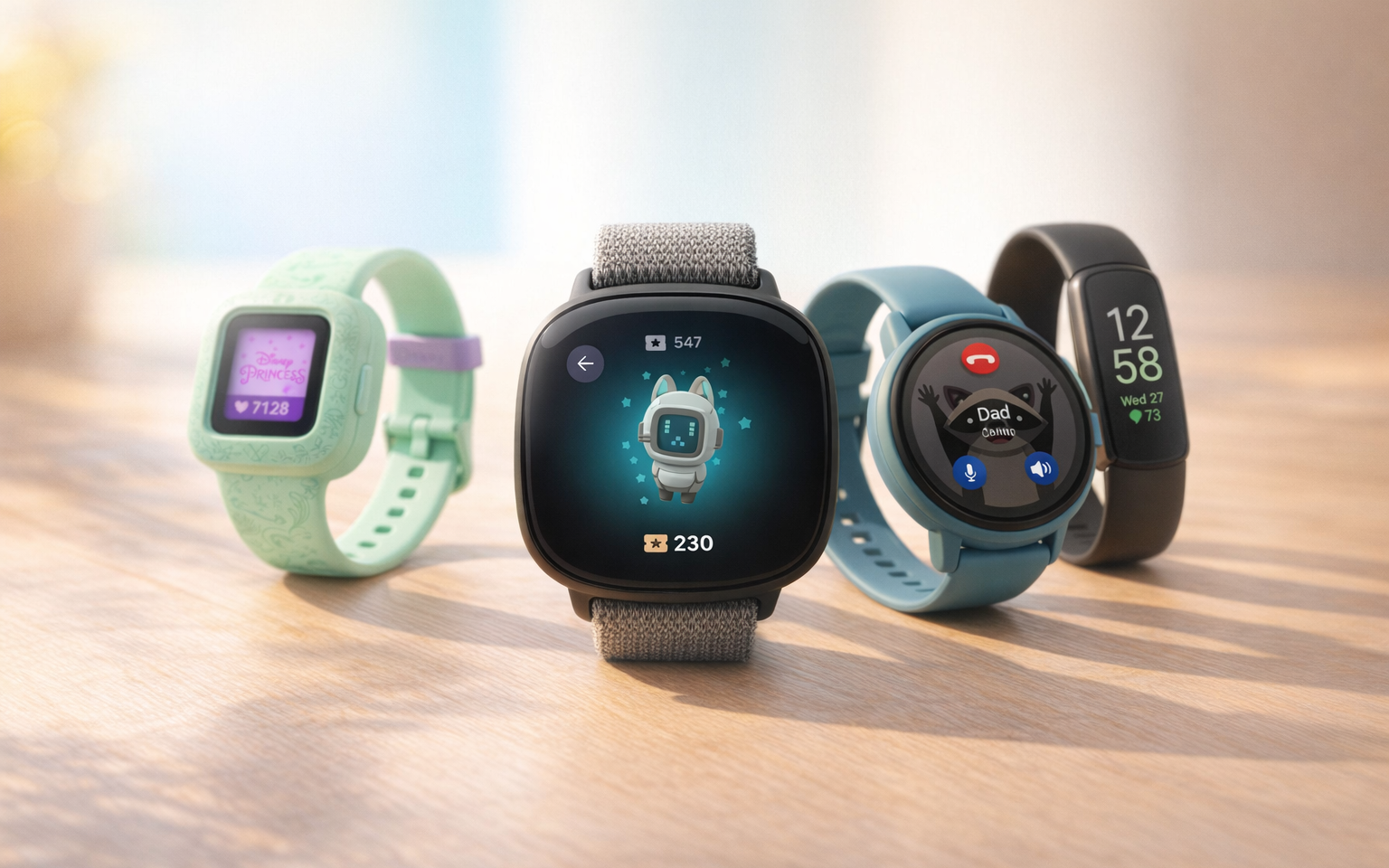
Handing a kid a fitness tracker is rarely about heart-rate zones or VO2 max. It is about getting them outside, building a movement habit early, and (for a lot of parents) knowing roughly where they are. The trackers that get this right are the ones built for kids from the ground up: tough enough to survive a playground, locked down enough to keep data private, and motivating enough that the watch does not end up in a drawer by week two.
This guide covers two very different kinds of device. On one end are simple, subscription-free bands that just count steps and reward activity. On the other are connected smartwatches with LTE, GPS, and calling that double as a way to reach your child. The right choice comes down to three tradeoffs: how much you want to pay every month, whether you want a screen with games or a distraction-free band, and how old your child is. Below are the picks that handle each of those tradeoffs best, from a $90 band that runs for a year on a coin cell to a $300 smartwatch that puts your kid a tap away.
Fitbit Ace LTE – Best Overall
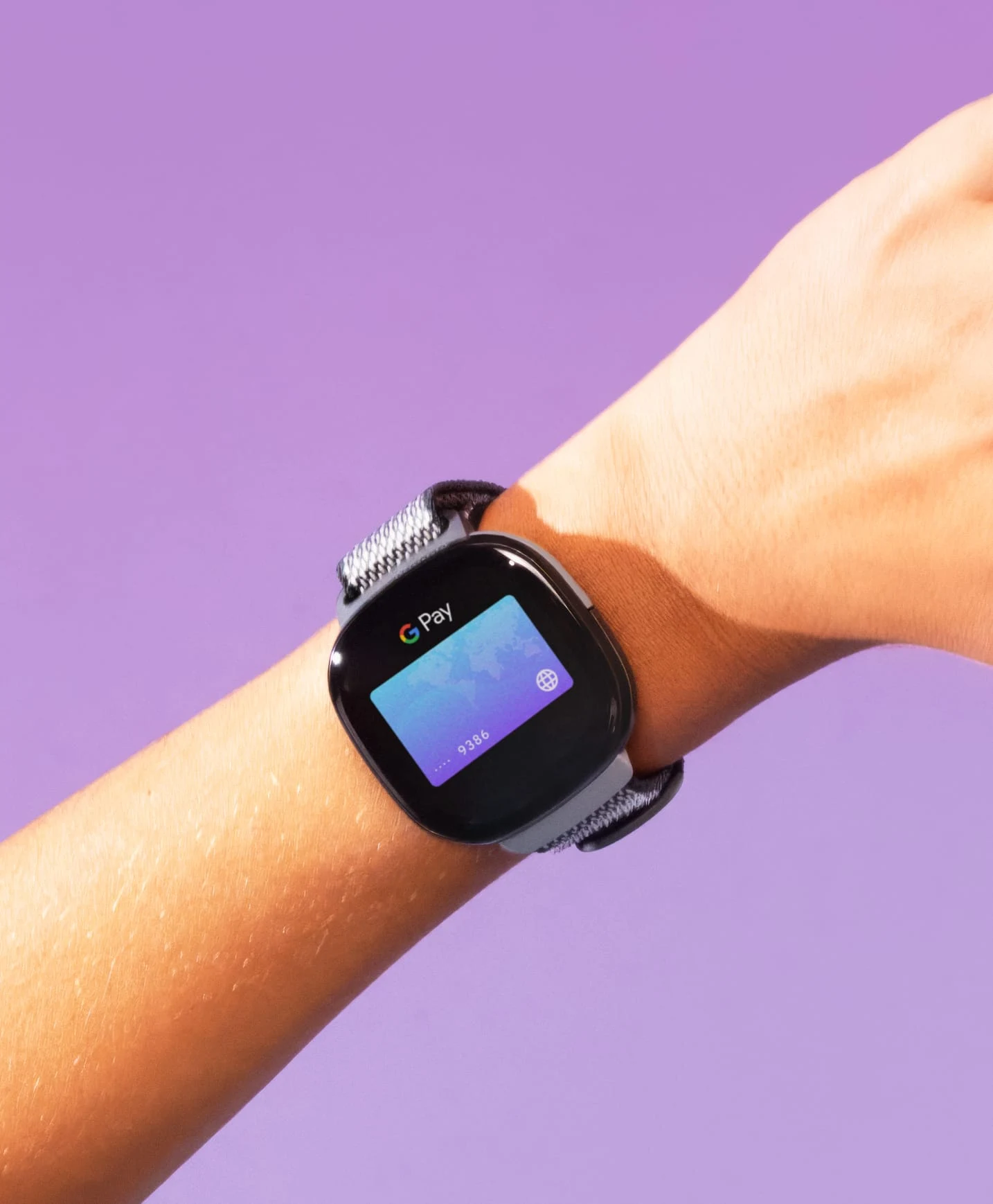
The Fitbit Ace LTE is the rare kids gadget that nails both sides of the deal: kids genuinely want to wear it, and parents get real control over it. The trick is gamification done well. Hitting movement goals unlocks in-watch games and collectible characters called eejies, so the watch turns "go run around outside" into the thing your kid actually wants to do. It is the most effective motivation engine of any tracker here.
It is also a full connected smartwatch. Built-in LTE means your child can call and message a tight list of approved contacts without a phone, and GPS location lets you see where they are. A School Time mode silences the social features during class, and the whole experience is walled off from the open internet, app stores, and social media. The Action Pack bumper case shrugs off drops, and it is swimproof to 50 meters.
Two caveats keep it from being a default for everyone. First, at $229.95 it is built for kids 7 and up, and the interface assumes a child who can read and tap through menus. Second, the connected features require an Ace Pass plan at $9.99 a month (or $119 a year), and battery life is roughly a day, so it joins the family charging rotation every night. If you want games, safety, and connection in one device and the subscription does not scare you off, nothing else here comes close.
Garmin Vivofit Jr. 3 – Best for Younger Kids and No Subscription
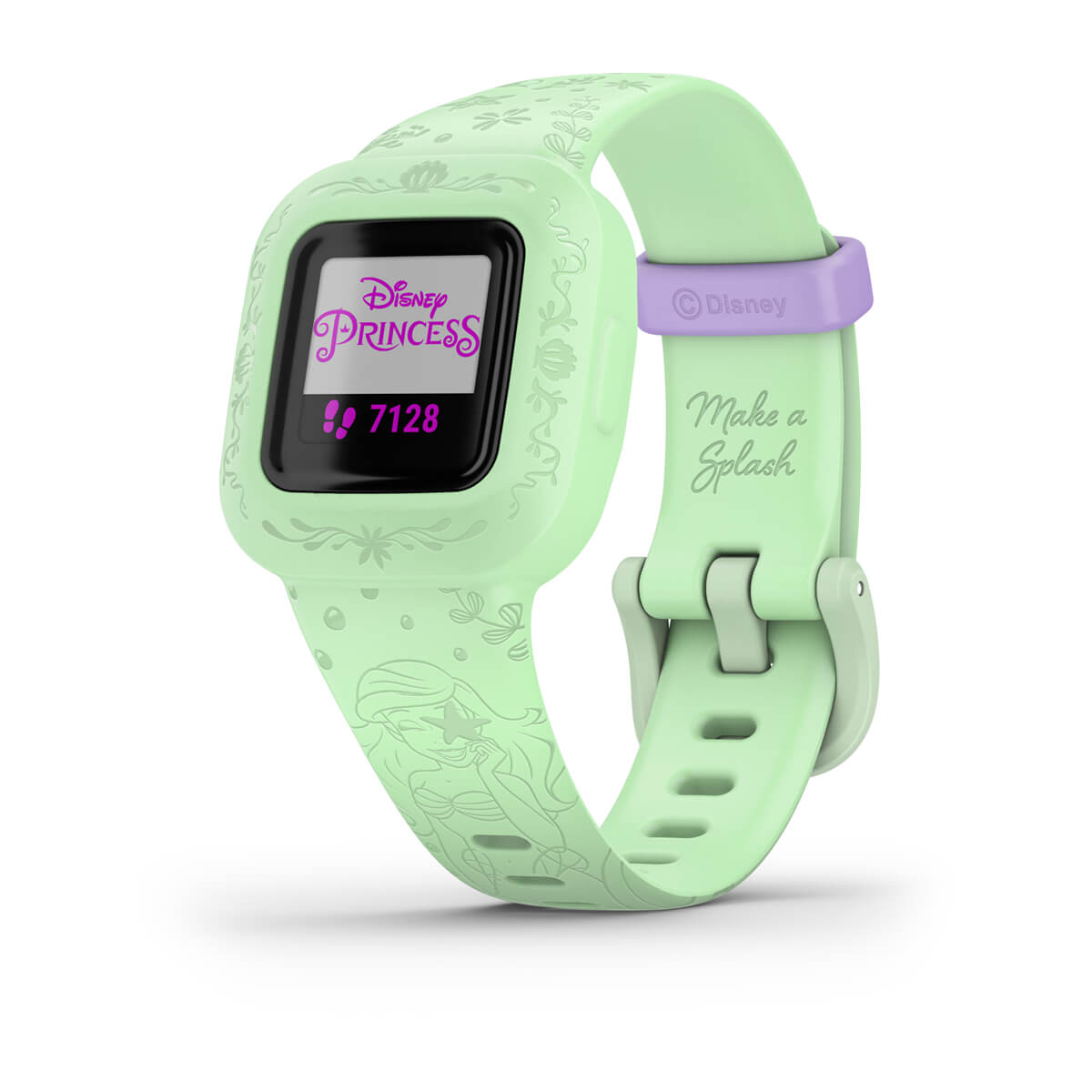
The Garmin Vivofit Jr. 3 is the antidote to charging cables and monthly fees. It runs for a full year on a replaceable coin-cell battery, so it never joins the nightly charging pile, and there is no subscription of any kind. For a four- or five-year-old, that simplicity is the entire point.
Motivation comes from themed adventures tied to Disney, Marvel, and Star Wars: kids unlock new chapters of a story by hitting a 60-minute daily activity goal, which is a smart way to make movement feel like progress rather than a chore. Parents manage everything from a phone, including a chore system that pays out virtual coins kids can redeem for real-world rewards you set. It tracks steps and estimated sleep, survives pools and sandboxes, and the small color screen stays deliberately simple.
What you give up is connectivity. There is no GPS, no calling, no messaging, and no heart-rate sensor, so this is a motivation-and-habit tool, not a way to reach or locate your child. For the youngest kids, that is a feature, not a flaw: no screen-time worries, no data leaving the house, and nothing to break the bank. It is the easiest tracker here to recommend to a parent who just wants their kid moving.
Fitbit Ace 3 – Best Budget Band
If the Ace LTE is more watch (and more money) than you want, the Fitbit Ace 3 is the no-fuss budget pick. At $79.95 list, and frequently far less on sale, it strips the Fitbit experience down to what kids actually use: steps, active minutes, sleep, and animated clock faces that come alive as your child moves. There is no subscription, and the whole thing is managed through a parent-controlled account.
The fundamentals are strong for the price. Battery life stretches to eight days, which means roughly weekly charging instead of nightly, and it is swimproof to 50 meters for pool days and shower-proof for everyone else. The touchscreen is bright, the silicone bands are cheap to swap, and the build holds up to everyday rough handling.
This is a band, not a smartwatch, so there is no GPS, no calling, and no location tracking. It is best thought of as a starter tracker for kids 6 and up who are not ready for a connected device, or for families who simply do not want another monthly bill. One note worth watching: Fitbit is steering new buyers toward the Ace LTE, so the Ace 3 is increasingly a clearance item. While stock lasts, it is the most tracker you can get for the least money.
Garmin Bounce 2 – Best for Safety and Staying Connected
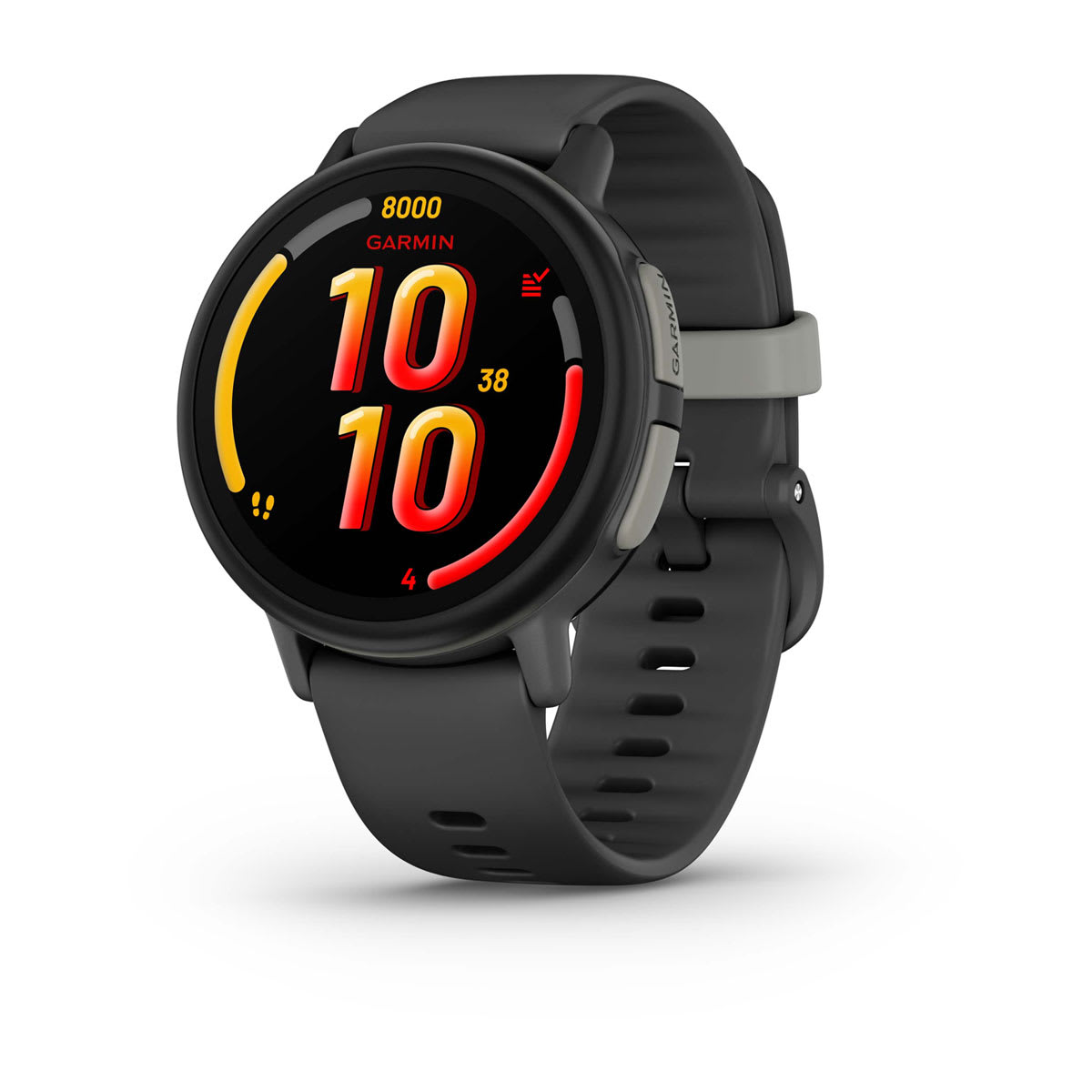
The Garmin Bounce 2 is the pick when the priority is less "track my kid's steps" and more "let me reach my kid." It is an LTE smartwatch built for ages 6 to 12, with two-way calling through a built-in speaker and microphone, texting via a full on-device keyboard, and real-time GPS location you can check any time from the Garmin Jr. app.
The standout feature is geofencing. You can draw safe zones around home, school, or a friend's house and get an alert the moment your child arrives or leaves, which is the kind of low-key reassurance that justifies a kids smartwatch in the first place. Garmin keeps the experience locked down and ad-free, and rounds it out with games, sports apps, chore rewards, and voice commands, all on a bright 1.2-inch round AMOLED screen behind 5 ATM water resistance.
The Bounce 2 is the most expensive option here at $299.99, and like the Ace LTE it needs an LTE plan ($9.99 a month or $99.99 a year) for its connected features to work at all. Battery life is about two days, and there is no heart-rate sensor. But for parents whose main goal is communication and location rather than fitness metrics, it is the most capable and best-protected choice on this list.
Fitbit Inspire 3 – Best for Teens
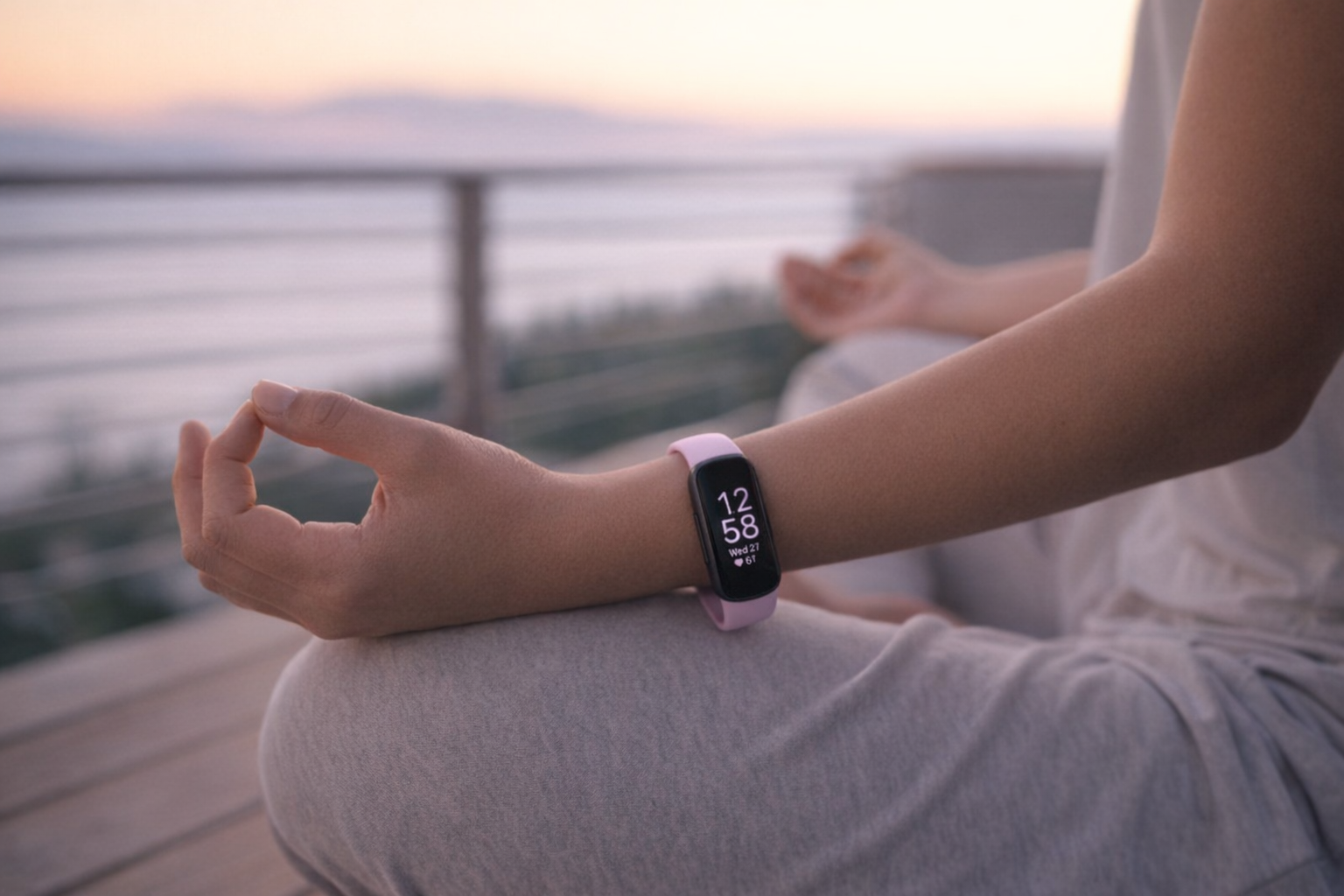
Older kids who have outgrown cartoon avatars need a real tracker, not a toy, and the Fitbit Inspire 3 is the natural graduation device. It is a slim, grown-up band with 24/7 heart rate, SpO2, sleep stages, a Stress Management score, and a Daily Readiness score, all of which give a teen meaningful insight into their activity without the bulk or cost of a smartwatch. Battery life runs about ten days, and it is swimproof.
The important caveat is that the Inspire 3 is not a kids device in the parental-controls sense. It requires the user to be 13 or older with their own account, and it does not work with the Fitbit family or child-account system. That makes it perfect for an independent teenager and wrong for a younger child who still needs supervision. At $99.95 list (and often closer to $80), it is an easy first "adult" tracker. If you are weighing it against Fitbit's pricier band, our Fitbit Charge 6 vs Inspire 3 comparison breaks down exactly what the extra money buys.
How We Chose
Kids trackers live a harder life than adult ones, so we weighted the things that actually matter for children rather than athletic performance:
- Durability and water resistance. Every pick survives drops, sand, and water. A tracker that cannot go in a pool or take a fall is not a kids tracker.
- Parental controls and privacy. The connected picks restrict contacts, lock out the open internet, and keep data under a parent account. We avoided anything that treats a child's data casually.
- Motivation that works. Games, adventures, and reward systems are not gimmicks at this age; they are the difference between a worn device and an abandoned one.
- Battery and charging hassle. A watch that dies mid-day or needs nightly charging is a watch a kid stops wearing. We favored long battery life where the category allows it.
- Honest, all-in cost. Where a subscription is required, we say so plainly. A $230 watch that needs $120 a year to function is a different decision than a $90 band with no fees.
We compared the leading kids trackers across these criteria, drawing on the major device-testing publications and the wider category of best fitness trackers to place each pick in context.
Who Should Buy What
- Youngest kids (4-6), no fuss: The Garmin Vivofit Jr. 3. No charging, no fees, no screen-time worries, just movement and rewards.
- Kids 7+ who want the works: The Fitbit Ace LTE. Games, calling, and location in one device, if you accept the monthly plan.
- Budget-first families: The Fitbit Ace 3. A genuine Fitbit experience for kids without any subscription.
- Safety-first parents: The Garmin Bounce 2. The best calling, messaging, and geofenced location tracking here.
- Teens: The Fitbit Inspire 3. A real health band for an independent 13-plus, with insights they will actually use. Parents shopping the broader budget field should also see our best fitness trackers under $100 guide.
What To Avoid
A search for "kids fitness tracker" surfaces a flood of $20 to $30 no-name bands from brands you have never heard of. Skip them. They tend to overstate step counts, ship flimsy hardware that fails within months, and (most importantly) come with vague or nonexistent privacy practices around a child's data. The whole value of a kids tracker is trust, and an anonymous Amazon brand has not earned it.
Be wary, too, of repurposing a full adult smartwatch for a young child. An Apple Watch with Family Setup can work for an older, responsible kid, but it is expensive, fragile by kids-watch standards, and overkill for a seven-year-old who mostly needs to move more and stay reachable. The devices above were designed for children from the start, which is exactly why they hold up where a hand-me-down adult watch would not.
Whichever you choose, the best kids tracker is the one your child will keep on their wrist. Match the device to your kid's age and your own appetite for screens and subscriptions, and the habit tends to take care of itself.