
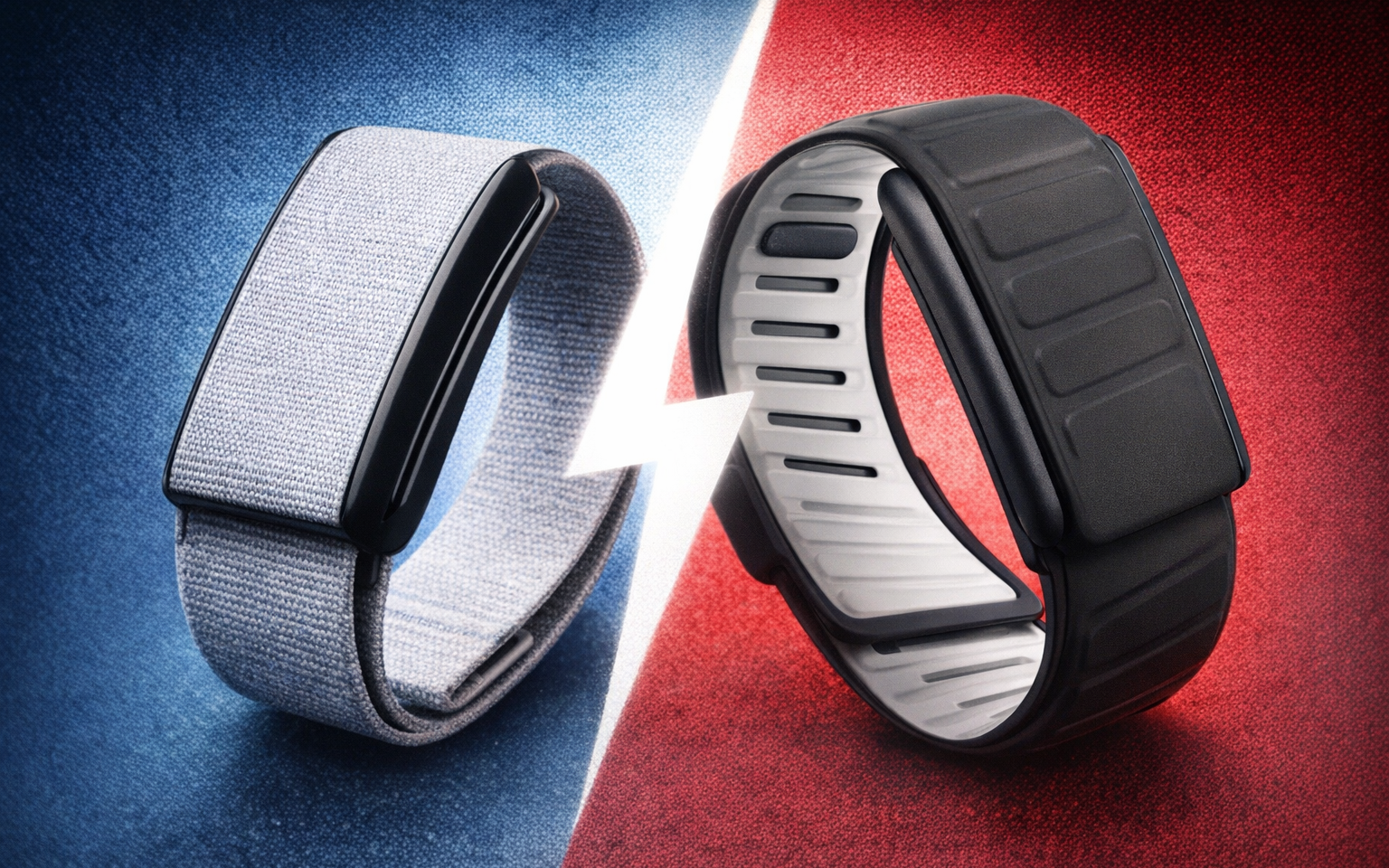
The WHOOP 5.0 launched in May 2025 with a promise that sounded almost too clean: triple the battery life, a faster processor, and longevity metrics that could estimate your biological age. For the hundreds of thousands of athletes wearing a WHOOP 4.0, the question wasn't whether the 5.0 was better on paper -- it was whether the improvements justified losing an entire band collection, navigating a messy upgrade rollout, and potentially paying more per year for the features that actually matter.
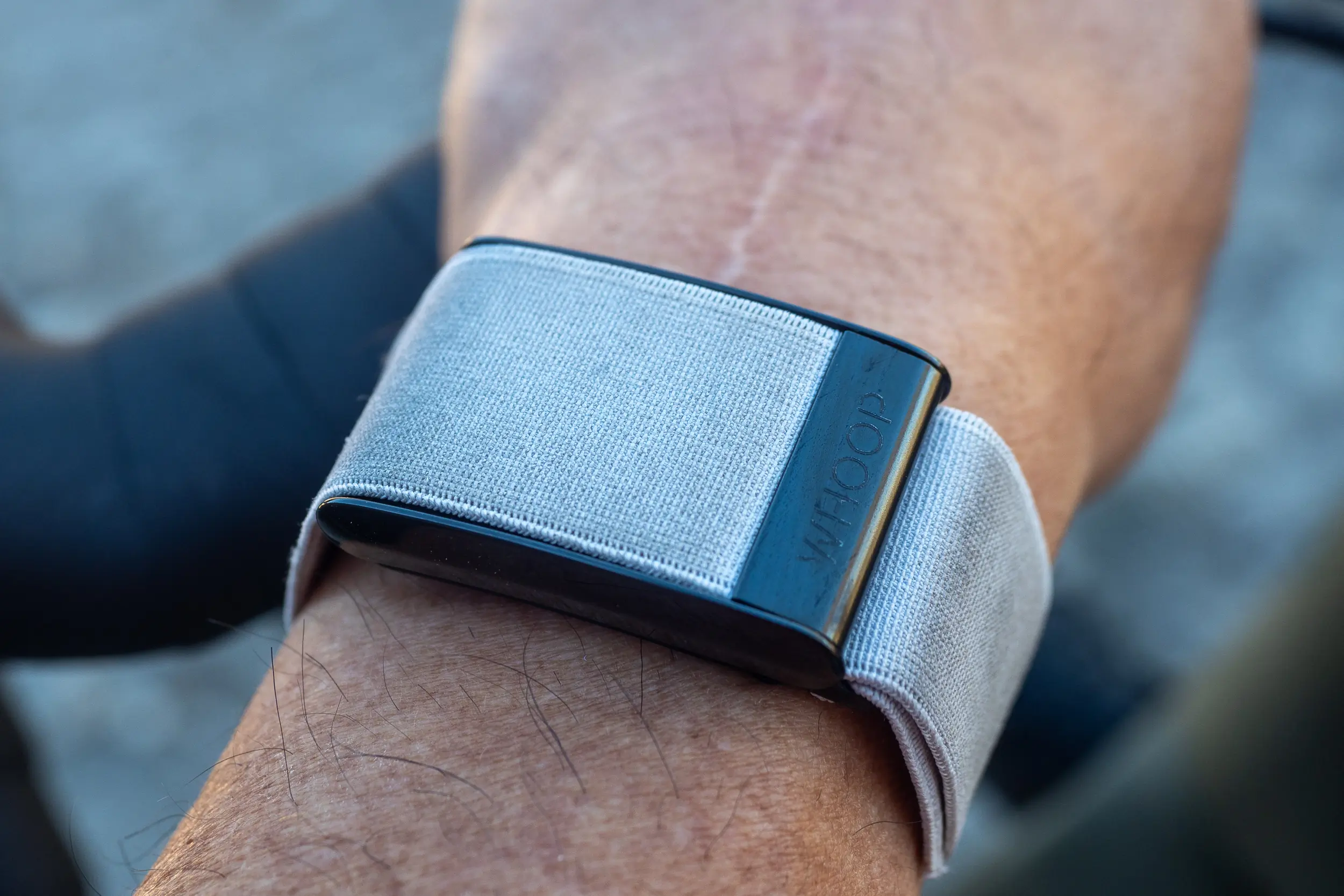
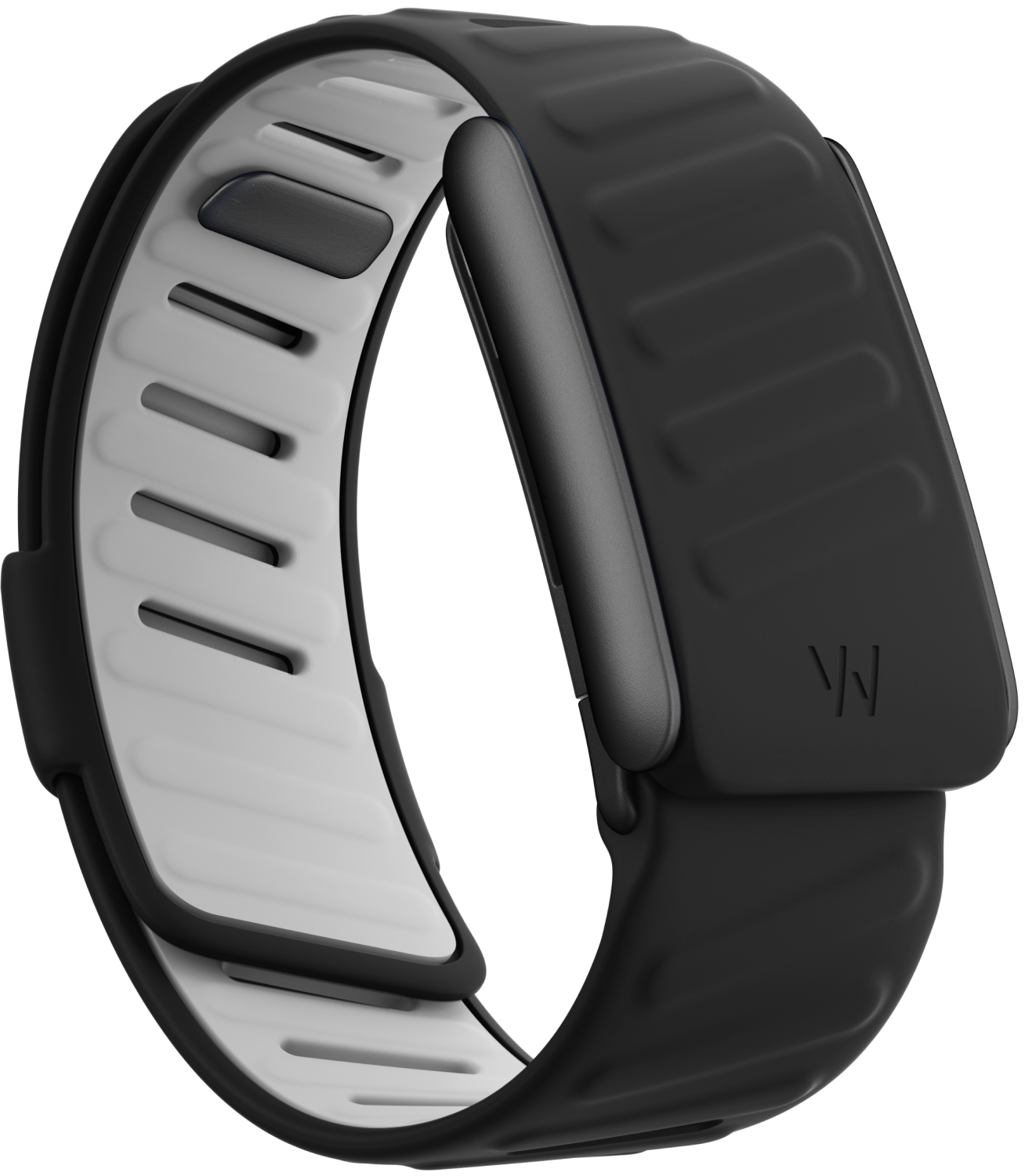
This is an unusual comparison. Both devices share the same screenless philosophy, the same subscription model, and the same target audience. But the 5.0 introduces band incompatibility, a tiered feature paywall, and a launch controversy that tested subscriber trust. The upgrade question isn't simple — here's how to answer it.
Battery Life
This is the headline, and it deserves to be.
The WHOOP 4.0 lasted four to five days on a charge. That sounds reasonable until you live with it. A device designed for 24/7 wear that dies mid-week creates anxiety -- and data gaps. The slide-on battery pack charged the 4.0 on your wrist, which was clever, but you needed it every few days. Forget it on a weekend trip and you'd come home with a dead sensor and a hole in your recovery data.
The WHOOP 5.0 runs 14 or more days on a single charge. That's not an incremental improvement -- it's a category shift. Two full weeks means charging becomes an every-other-week ritual rather than a constant background task. The new processor is 10x more power-efficient, which is what makes this leap possible without a larger battery. For anyone who travels, races, or simply resents charging routines, this single change transforms the ownership experience.
Both devices charge on-wrist, but the 5.0 uses a new system. The One tier ($199/year) includes a wired basic charger. The Peak tier ($239/year) and above ship with a wireless PowerPack that magnetically attaches to the sensor, holds enough juice for multiple full charges, and is waterproof. The 4.0's slide-on charger was functional but clunky. The 5.0's wireless PowerPack is meaningfully better -- though the wired charger on the base tier is a step backward from the 4.0's integrated battery pack.
Winner: WHOOP 5.0 (decisive)
Sensors and Accuracy
Here's where expectations need calibrating. The WHOOP 5.0 features an enhanced optical heart rate sensor with improved signal processing, but the core architecture — LEDs and photodiodes reading blood flow through the skin — remains fundamentally similar. The meaningful change is how the data gets collected: the 5.0 samples at 26Hz continuously, while the 4.0 used a duty-cycling approach that sampled in periodic windows to conserve battery. More consistent data collection means better resolution for HRV calculations, sleep stage detection, and recovery scoring. The faster processor handles the increased data throughput and improves signal processing.
The practical result is measurably better resting heart rate and HRV accuracy, particularly during sleep. For the metrics that matter most to WHOOP's coaching system -- recovery, sleep quality, strain calibration -- the 5.0 produces cleaner data from the same fundamental sensor technology.
But the honest truth about wrist-based optical heart rate hasn't changed across generations. Both the 4.0 and 5.0 struggle with high-intensity interval training at the wrist. During HIIT, CrossFit, or any exercise involving rapid heart rate swings and wrist movement, optical sensors lose accuracy. The bicep band remains the recommendation for serious training accuracy on both devices. If you're already wearing the bicep strap for hard sessions, the 5.0's sensor improvements matter most during the other 22 hours of the day -- sleep and passive monitoring -- where they genuinely shine.
The 5.0 also broadens activity support with improved auto-detection across a wider range of exercises — WHOOP hasn't published exact counts, but the library is meaningfully larger than the 4.0's. Step counting has graduated from beta to a full feature. These are quality-of-life improvements rather than breakthroughs.
Winner: WHOOP 5.0 (evolutionary, not revolutionary)
Size, Comfort, and Design
The WHOOP 5.0 is 7% smaller than the 4.0, measuring 34.7 x 24 x 10.6mm. In a device this small, 7% is perceptible but not dramatic. Both disappear under a sleeve and both sleep comfortably on the wrist.
The weight tells a more nuanced story. The 5.0 weighs 26.5 grams, and while the 4.0's exact pod weight was never officially published, users upgrading from the 4.0 consistently report the 5.0 feeling meaningfully heavier on the wrist. The 5.0 packs a larger battery and faster processor into a smaller footprint, and that comes with added heft. It's not heavy by any absolute standard, but for a device whose entire pitch is "forget it's there," the weight gain is worth noting.
Now the uncomfortable part: band incompatibility. The 5.0 uses a redesigned clasp system that does not accept WHOOP 4.0 bands. If you've spent years building a band collection -- and WHOOP's accessory ecosystem actively encouraged that -- your investment transfers to nothing. This is the single most frustrating aspect of the upgrade for existing owners. New bands for the 5.0 are available, but you're starting over.
Winner: Draw (smaller footprint vs. heavier pod and lost band compatibility)
Software, Healthspan, and New Features
The software tier is where the 5.0 creates real separation -- but with a significant asterisk.
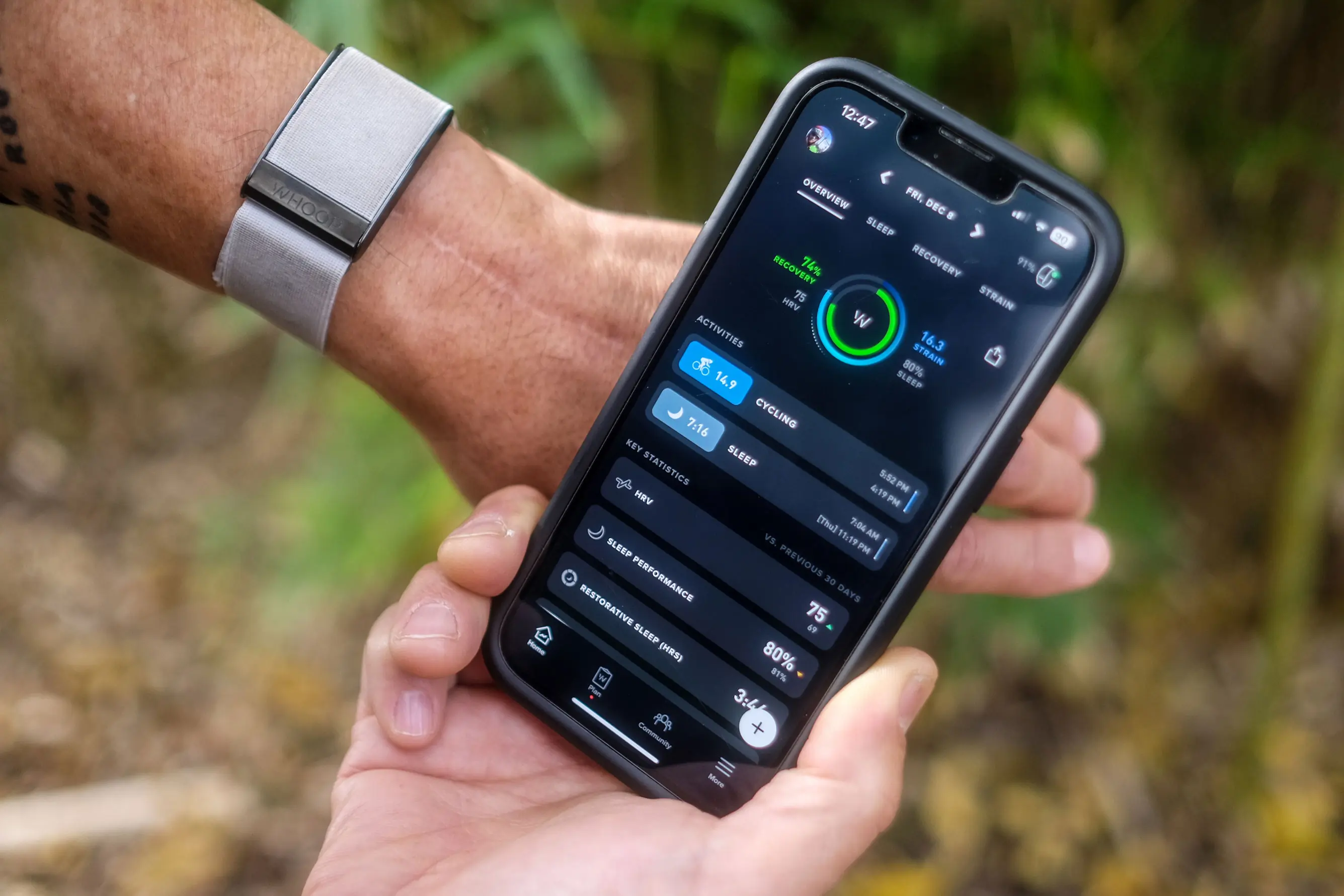
Every WHOOP 5.0 user, regardless of subscription tier, gets access to VO2 Max estimates, heart rate zones, women's hormonal insights, and the fully launched step counter. These features represent the baseline improvements over the 4.0 platform and they're solid additions. Understanding how WHOOP's sensor-driven coaching works helps contextualize why these additions matter: they expand the data WHOOP can act on.
The flagship new feature is Healthspan -- and it requires the Peak tier at minimum. Healthspan introduces WHOOP Age, a biological age estimate derived from long-term physiological data, plus Pace of Aging metrics that track whether your lifestyle choices are accelerating or decelerating your body's aging trajectory. It's WHOOP's play for the longevity market, and it's genuinely compelling as a long-term coaching tool. The real-time Stress Monitor and Health Monitor with proactive health alerts also sit behind the Peak paywall.
This creates a two-class experience on the same hardware. The One tier ($199/year) delivers an improved WHOOP 4.0 experience. The Peak tier ($239/year) delivers the experience WHOOP actually markets. The gap matters: if you're upgrading to a 5.0 for Healthspan, budget for Peak -- not One.
Enhanced AI coaching rounds out the software improvements, offering more contextual recommendations based on your data trends. The WHOOP Journal, which correlates behaviors (alcohol, caffeine, stretching, supplements) with recovery outcomes, remains the most underrated feature on the platform and works across both tiers.
Winner: WHOOP 5.0 (with the caveat that the best features require Peak tier)
Subscription and Value
Both devices require a subscription to function. The 4.0 is an inert bracelet without an active plan, and the 5.0 is no different. But the pricing structure has shifted in ways that benefit new buyers and complicate the picture for upgraders.
The current landscape:
- WHOOP One ($199/year or $25/month): Ships with a new WHOOP 5.0. Pre-owned WHOOP 4.0 available at $149/year.
- WHOOP Peak ($239/year or $30/month): WHOOP 5.0 with Healthspan, Stress Monitor, and Health Monitor.
- WHOOP Life ($359/year or $40/month): Requires the WHOOP MG, adds ECG and blood pressure monitoring.
The $149/year pre-owned 4.0 deal is the cheapest way into the WHOOP ecosystem and it's genuinely good value for what you get. The core recovery coaching, strain tracking, and sleep analysis that made WHOOP's reputation all work on the 4.0 at this price point. If the question is whether WHOOP is worth it at all, $149/year with proven hardware is the lowest-risk answer.
The math on upgrading: moving from a pre-owned 4.0 on One ($149/year) to a new 5.0 on Peak ($239/year) costs $90 more per year. Over three years, that's $270 for better battery life, improved sensors, and Healthspan access. Whether that's worthwhile depends entirely on how much you value Healthspan's longevity insights and how much the 4.0's battery life bothers you.
Winner: WHOOP 4.0 (on pure value -- $149/year for the core WHOOP experience is hard to beat)
The Upgrade Controversy
No honest comparison can skip this. When WHOOP announced the 5.0 in May 2025, existing subscribers expected free hardware upgrades -- a promise the company had made in marketing materials that were subsequently deleted. Instead, WHOOP initially required subscription extensions or $49 upgrade fees. The backlash was immediate and fierce.
WHOOP partially reversed course within days, offering free upgrades to members with 12+ months remaining on their subscriptions and issuing refunds to those incorrectly charged. But the original promise — as WHOOP's own published blog stated for years — had covered members with six months or more remaining on their subscriptions — so the "fix" still left some loyal subscribers paying for an upgrade they'd been told would be free. The resolution was incomplete. The damage to trust was real. For a company that asks customers to pay indefinitely for hardware access, breaking an upgrade promise -- even temporarily -- hits differently than a typical product launch stumble.
The controversy is largely resolved now, but it's worth factoring into any long-term subscription commitment.
Bottom line: The crisis passed, but it exposed a trust risk inherent in subscription-dependent hardware — your device only works as long as the company keeps its promises.
Who Should Buy What
Upgrade to WHOOP 5.0 if you:
- Currently own a 4.0 and the battery life genuinely frustrates you
- Want Healthspan and longevity tracking and will subscribe to Peak tier
- Travel frequently and need two-week battery endurance
- Don't have a significant band collection you can't afford to replace
- Value continuous 26Hz heart rate data for more precise recovery scoring
Stay with (or buy) the WHOOP 4.0 if you:
- Want the lowest possible entry into WHOOP's coaching system ($149/year)
- Already own 4.0 bands you like and want to keep using them
- Find the core recovery, strain, and sleep features sufficient
- Don't need Healthspan, Stress Monitor, or the newest software features
- Prefer to save $50-90/year and redirect it toward training
Skip both if you:
- Want a screen, GPS, or smart notifications -- consider a Garmin or Apple Watch instead
- Refuse to pay ongoing subscription fees for hardware you wear
- Exercise casually and don't track recovery between sessions
- Want medical-grade sensors like ECG or blood pressure monitoring without the Life tier price -- check the best fitness trackers of 2026 or best WHOOP alternatives
Our Verdict
The WHOOP 5.0 is the better device, and for anyone entering the WHOOP ecosystem fresh, it's the obvious choice. The battery life improvement alone eliminates the 4.0's most persistent complaint, and it's the kind of upgrade that changes daily behavior rather than just looking good on a spec sheet. The faster processor and 26Hz sampling make the coaching system's foundation more reliable, and Healthspan represents a genuine product vision beyond "track your workouts and sleep."
But "better device" and "must upgrade" are different conversations. The WHOOP 4.0 at $149/year on the One tier still delivers the core experience that built WHOOP's reputation among serious athletes. Recovery scores, strain coaching, sleep analysis, the Journal -- it all works on the older hardware. If you're happy with your 4.0 and don't need Healthspan, saving $90/year is a perfectly rational choice.
The upgrade earns its price for two specific audiences: athletes who were genuinely hampered by the 4.0's battery life, and health-focused users who want Healthspan's longevity metrics on Peak tier. For everyone else, the 4.0 remains a capable, proven, and significantly cheaper entry point into the WHOOP ecosystem — and if you're considering alternatives beyond WHOOP entirely, our WHOOP 5.0 vs Oura Ring 4 comparison covers the leading screenless competitor.
Specs At A Glance
| Feature | WHOOP 4.0 | WHOOP 5.0 |
|---|---|---|
| Price | $149/yr (pre-owned, One tier) | $199/yr (One), $239/yr (Peak), $359/yr (Life) |
| Subscription | Required | Required |
| Battery Life | 4-5 days | 14+ days |
| Dimensions | ~7% larger than 5.0 | 34.7 x 24 x 10.6mm |
| PPG Sampling Rate | Duty-cycled (periodic windows) | 26Hz continuous |
| Processor | Standard | 60% faster, 10x more power-efficient |
| Activities | Large library | Expanded library with improved auto-detection |
| Step Counting | Beta | Full release |
| Charging | Slide-on battery pack | Wired (One) or Wireless PowerPack (Peak+) |
| Band Compatibility | 4.0 bands only | 5.0 bands only (not cross-compatible) |
| Water Resistance | IP68 | IP68 (10m, 2 hours) |
| Healthspan | Not available | Peak tier and above |
| Stress Monitor | Not available | Peak tier and above |
| VO2 Max | Not available | All tiers |
| Heart Rate Zones | Not available | All tiers |
| Haptic Alarm | Yes | Yes |
| Women's Hormonal Insights | Not available | All tiers |
| Compatibility | iOS and Android | iOS and Android |