
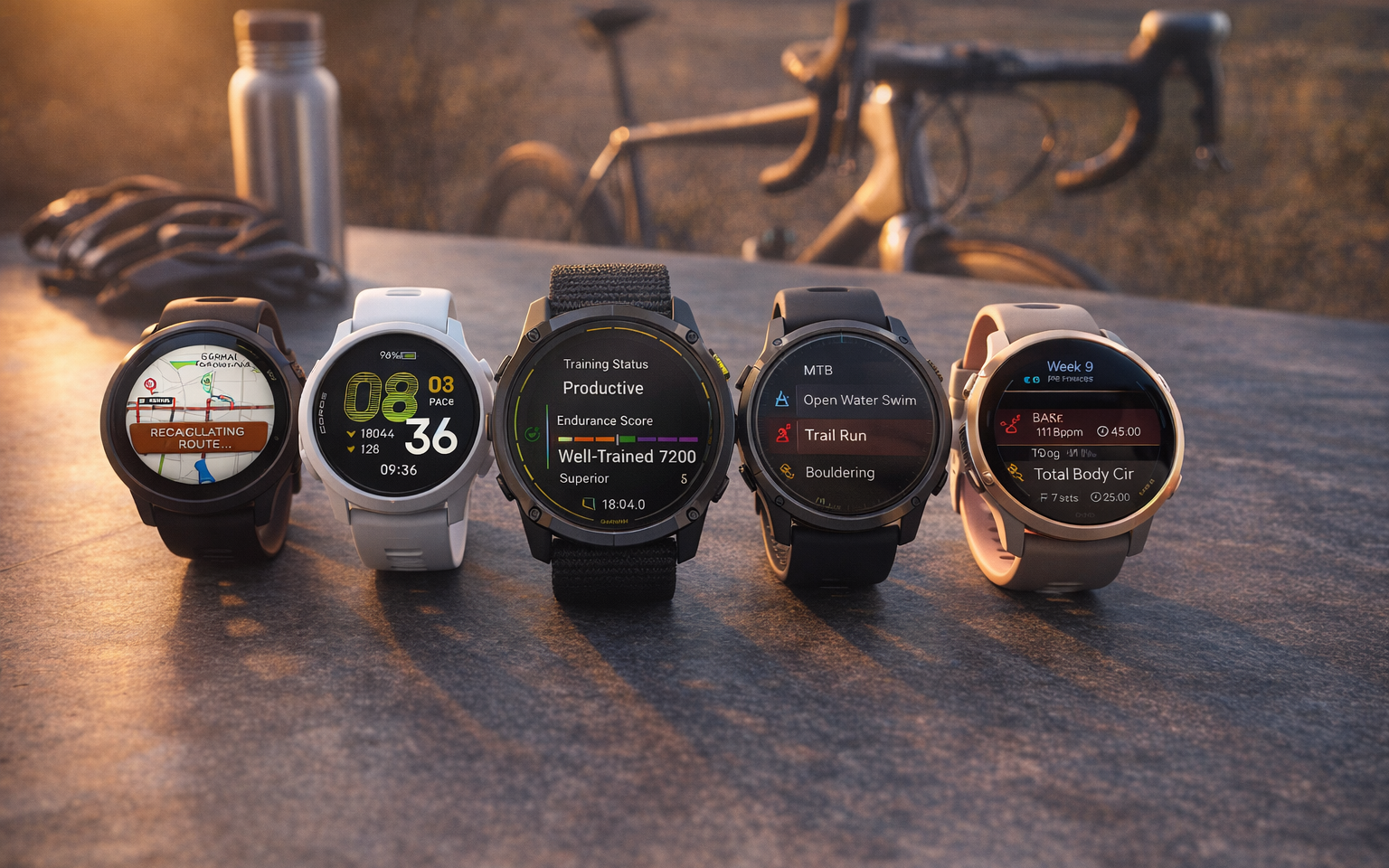
CrossFit punishes a watch in ways running and cycling never do. One workout might string together heavy cleans, kipping pull-ups, a 400m sprint, and a wall of burpees – your wrist slamming barbells, gripping a rig, and folding through ring dips the whole time. The watch you wear has to survive the contact, track a metcon's wild heart-rate swings, time an EMOM without fuss, and stay out of the way when you're under a loaded bar.
Here is the honest truth most buying guides bury: for CrossFit specifically, the heart-rate sensor on your wrist is the weak link. Optical sensors struggle exactly when you need them most – during high-intensity intervals and grip-heavy lifting, where forearm tension and rapid wrist motion throw the readings off. The best CrossFit setup is a capable watch paired with a chest strap or an armband sensor. So while we picked the six best watches below, pay attention to which ones pair with external heart-rate monitors – that matters more than any single on-watch feature.
These picks span $199 to $799, every major training ecosystem, and very different philosophies – from a screenless band you wear on your bicep to a titanium tank built for the ocean floor. All six have been through a full WearableBeat review.
Apple Watch Ultra 3 – Best Overall for CrossFit
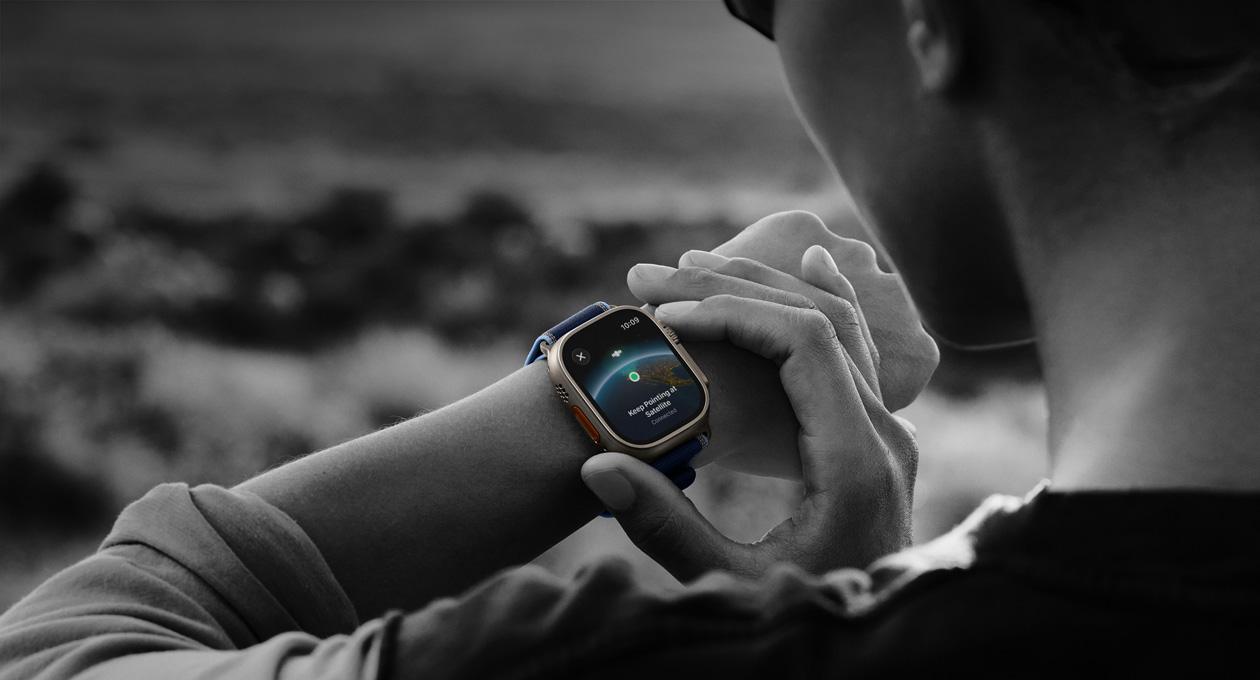
If you carry an iPhone, the Apple Watch Ultra 3 is the most complete CrossFit watch you can buy. The 49mm titanium case with its sapphire crystal shrugs off barbell knocks and rope-climb abuse, the 100m water resistance handles any conditioning piece, and the raised edge around the display protects it during floor work. watchOS includes dedicated Functional Strength Training and HIIT workout types, and the Ultra's customizable Action button is genuinely useful for starting and lapping intervals mid-WOD without hunting for a touchscreen with chalky hands.
What really sets it apart is the app ecosystem. CrossFit-specific apps like SmartWOD, WODProof, and SugarWOD turn the Ultra into a box-ready logbook, and the 3,000-nit display stays readable under harsh gym lighting or outdoor sun. The third-generation optical heart-rate sensor is among the best on any wrist – but it's still a wrist sensor, so serious athletes should pair a chest strap during metcons.
The catch is battery and price. At 42 hours you'll charge it more often than a Garmin, and $799 is a lot for a watch that'll take barbell dings. But nothing else blends durability, training tools, and everyday smartwatch polish this well.
Who it's for: iPhone users who want one watch for CrossFit, daily life, and everything in between, and don't mind charging it regularly.
Garmin Instinct 3 – Most Durable, Best Battery
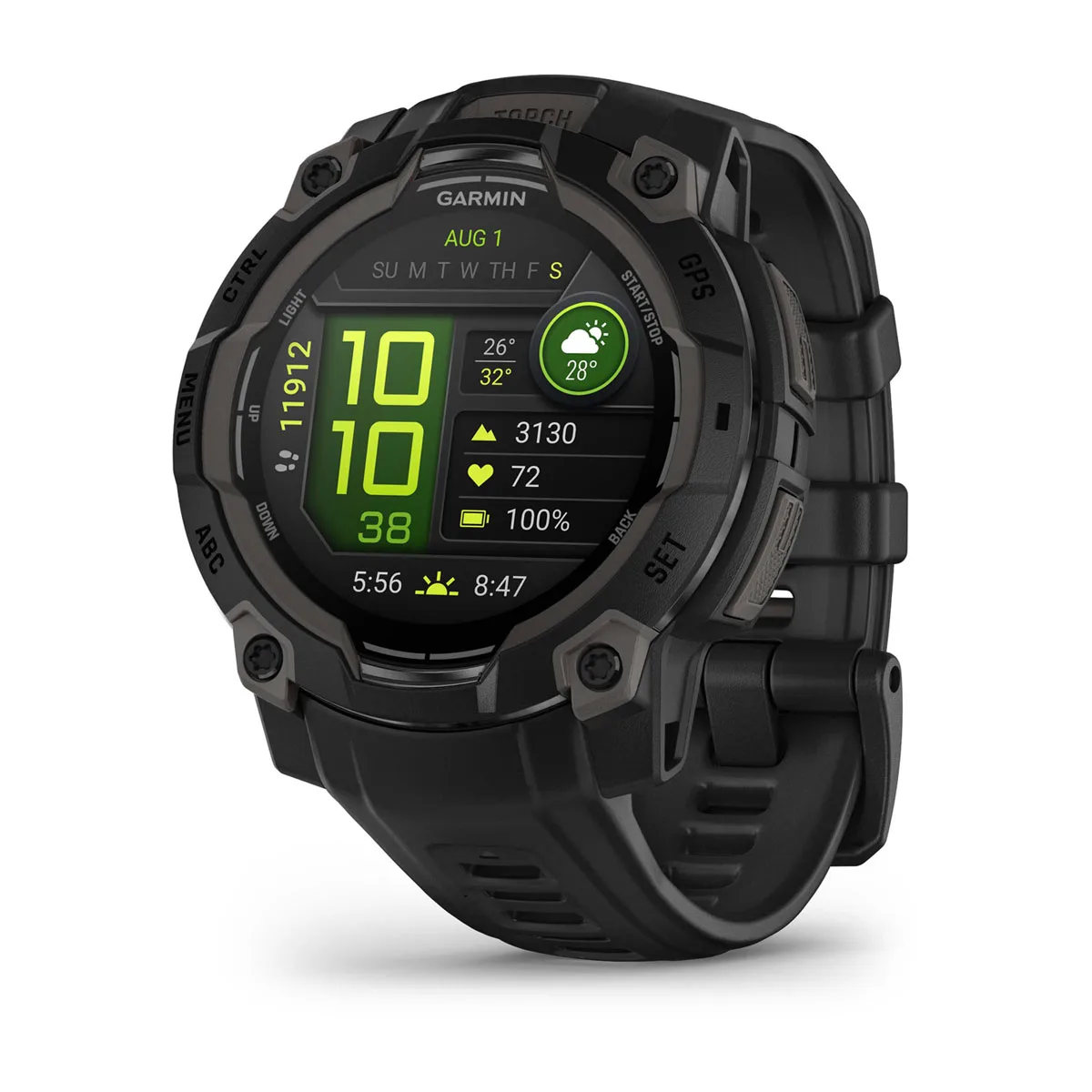
When you want a watch you will genuinely never baby, the Garmin Instinct 3 is it. Built to MIL-STD-810 standards with a fiber-reinforced polymer case, metal-reinforced bezel, and 10 ATM water resistance, it's designed to be ignored – exactly the right attitude for a watch that's going to take repeated barbell and kettlebell contact. The solar MIP variant pushes battery into the weeks (up to 40 days, effectively unlimited with enough sun), so you can train every day for a month and forget the charger exists.
For CrossFit, the Instinct 3 brings Garmin's deep training stack: a strength workout mode with automatic rep and set counting, HIIT and cardio profiles, plus recovery tools like Body Battery, HRV status, and Training Readiness that help you manage CrossFit's brutal weekly volume. Crucially, it supports ANT+ and Bluetooth heart-rate straps, so you can feed it accurate data during intervals instead of trusting the wrist alone.
The trade-offs are deliberate: the MIP display, while always readable in any light, looks plain next to an AMOLED (Garmin offers an AMOLED variant if you want one, for more money), there are no offline maps, and the rugged build is chunky on smaller wrists. None of that hurts it in a box. If you'd rather compare it against Garmin's premium tank, our Instinct 3 vs Fenix 8 breakdown lays out who should spend up.
Who it's for: Athletes who want maximum durability and battery, train in mixed indoor/outdoor conditions, and don't care about a flashy screen.
Whoop 5.0 – Best for Recovery and Lifting Comfort
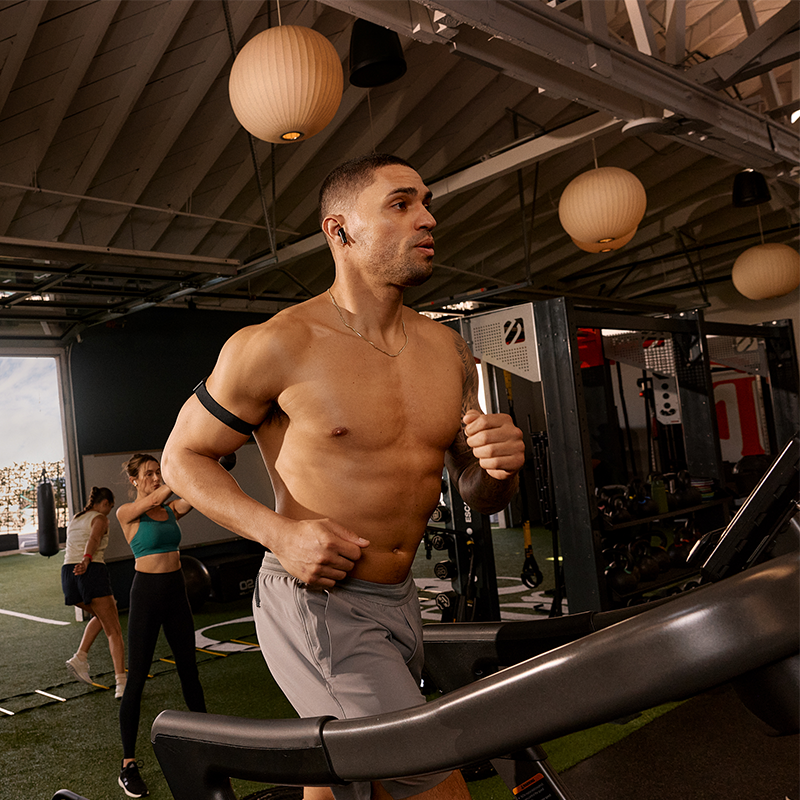
The Whoop 5.0 solves the single biggest problem with wrist wearables in CrossFit: it doesn't have to live on your wrist. Worn on a bicep band, it stays completely out of the way of barbell work, grip-heavy pulls, and ring dips – and the upper arm is a measurably better spot for optical heart rate than the wrist, so you actually get more reliable readings during high-intensity training, not less. The screenless design means there's nothing to crack, scratch, or distract you mid-WOD.
Where Whoop earns its keep is recovery. CrossFit's constantly-varied, high-intensity programming makes it dangerously easy to overtrain, and Whoop's daily Recovery score, Strain tracking, and sleep coaching are the best in the business for telling you when to push and when to back off. The 14+ day battery and on-the-go charging pack mean it never comes off, even in the shower.
The cost model is the rub: Whoop is a membership, not a one-time purchase, and there's no display for timers, notifications, or pace – you'll still want a phone or wall clock for your EMOM. Think of it as a recovery and strain coach rather than a do-everything watch. We dig into whether the subscription pays off in our full breakdown of whether Whoop is worth it, and how it stacks up in Whoop 5.0 vs Apple Watch Series 11.
Who it's for: Athletes who train five-plus days a week, lift heavy, and want elite recovery guidance without a watch getting in the way.
Coros Pace Pro – Best Value

The Coros Pace Pro is the smart-money pick. At $299 it undercuts every comparable Garmin while delivering a bright 1.3-inch AMOLED display, dual-frequency GPS, offline maps, and a featherweight 37g build (with the nylon band) that genuinely disappears during gymnastics and Olympic lifts. Light and low-profile is exactly what you want when you're cycling through toes-to-bar and snatches.
Coros includes a dedicated strength-training mode with muscle-group tracking and rep detection, plus the broader Coros training suite – Training Load, recovery, and effort-pace metrics – all with no subscription. Battery is excellent for the price (around 20 days of daily use, 38 hours of GPS), and it pairs with external heart-rate straps for the accuracy that matters in metcons. The lightweight design and clean app make it the easiest watch here to recommend to someone who doesn't want to overspend.
It's less rugged than the Instinct or T-Rex – mineral glass and 5 ATM rather than military-grade armor – so it's better suited to box and gym work than getting thrown around outdoors. But for most CrossFitters, it does 90% of what a $600 watch does. See how it compares to Garmin's mid-range staple in Coros Pace Pro vs Garmin Forerunner 265.
Who it's for: Value-minded athletes who want a light, capable, subscription-free training watch and don't need a tank.
Amazfit T-Rex 3 – Best Budget Rugged
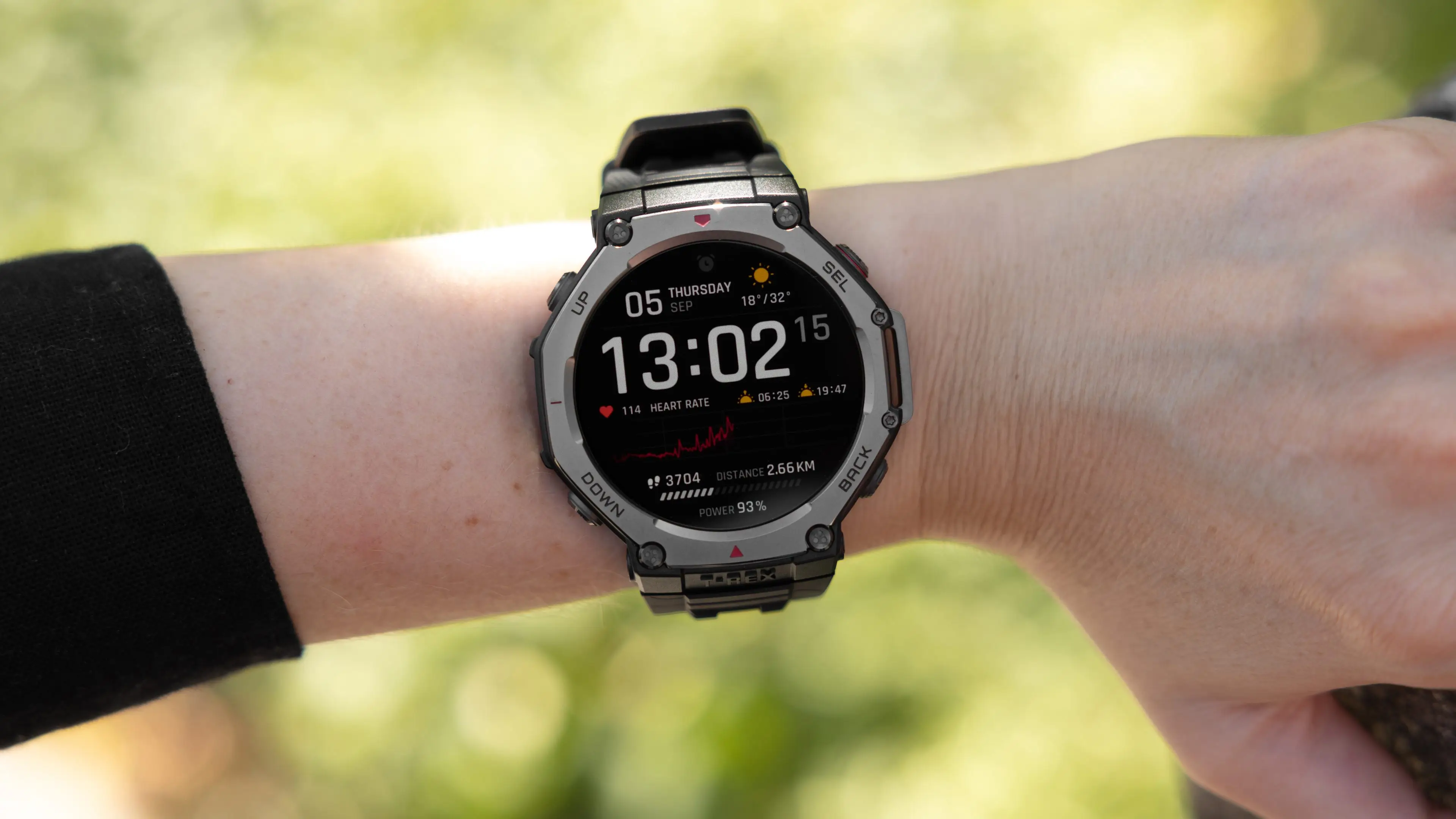
If you want Instinct-grade toughness for under $300, the Amazfit T-Rex 3 is the answer. For $279 you get a MIL-STD-810H-certified case, 10 ATM water resistance, and a genuinely stunning 1.5-inch 2,000-nit AMOLED display that's brighter than watches twice the price. It's built to take a beating, and it looks good doing it.
For CrossFit, the headline is breadth: 170+ sport modes, including a dedicated Hyrox profile and strength/gym tracking, plus support for external heart-rate straps and power meters over Bluetooth. Battery runs up to 27 days in typical use and roughly 40 hours with GPS, so charging is an afterthought. Offline maps come free, which is a nice bonus if your training spills outdoors into running or rucking.
The compromise is software polish. Zepp OS is functional but not as refined as watchOS or Garmin Connect, the rep-counting and strength tools are competent rather than class-leading, and at 68g it's a hefty watch. But pound-for-pound, nothing else delivers this much durable hardware for the money. For a closer look at how Amazfit's rugged line stacks up against Garmin, read Garmin Instinct 3 vs Amazfit T-Rex 3.
Who it's for: Budget-conscious athletes who want maximum ruggedness and battery, and can live with rougher-edged software.
Apple Watch Series 11 – Best Everyday Pick for iPhone Users

Not everyone needs the Ultra's $799 tank. The Apple Watch Series 11 gives you the same watchOS training tools – Functional Strength Training, HIIT, the full CrossFit app ecosystem, and Apple's excellent third-gen heart-rate sensor – in a slimmer, lighter, $399 package. The standout upgrade this generation is battery: a genuine 24+ hours means it finally survives a full day of training plus overnight sleep tracking without a midday top-up.
For the CrossFitter whose watch also has to be a phone-on-the-wrist all day, the Series 11 is the sensible buy. It's WR50 water-resistant, the 2,000-nit display is plenty bright, and 5G plus all the smartwatch niceties make it the better daily driver if you're not regularly slamming it into barbells.
The honest caveat is durability. The aluminum case and Ion-X glass are tougher than they look, but they don't have the Ultra's sapphire-and-titanium armor or its raised protective edge – so heavy barbell contact is a real risk. Treat it with a bit of care, or add a bumper case. If you're weighing it against a screenless tracker, our Whoop 5.0 vs Apple Watch Series 11 comparison breaks down the choice.
Who it's for: iPhone users who want one watch for CrossFit and everyday life, at a sane price, and will treat it with reasonable care.
How We Chose
CrossFit asks more of a watch than almost any other discipline, so we weighted these factors:
- Durability: The watch has to survive barbell contact, rig grips, and floor work. We prioritized sapphire/titanium and military-rated cases, and flagged where care is needed.
- Heart-rate accuracy and external sensor support: Wrist optical HR is unreliable during intense intervals and lifting. Watches that pair with chest straps or armbands (ANT+/Bluetooth) earned extra credit, and Whoop's bicep placement is a category of its own.
- Training tools for functional fitness: Dedicated strength, HIIT, and functional-training modes; easy interval timers (EMOM/AMRAP); and rep/set tracking.
- Recovery insight: CrossFit's volume makes overtraining easy. Recovery scores, HRV, and readiness metrics help you manage load.
- Battery life: Enough to train daily and sleep-track without constant charging.
- Value: What you actually get for the money, across a $199-to-$799 range.
Every pick here has been through a complete WearableBeat review – we don't recommend hardware we haven't put through its paces.
Who Should Buy What
- You're all-in on iPhone and want the best: Apple Watch Ultra 3. Most durable Apple Watch, best training app ecosystem, premium everything.
- You want one Apple Watch at a fair price: Apple Watch Series 11. Same training tools, lighter, $400 cheaper – just treat it with care.
- You want a watch you never charge or baby: Garmin Instinct 3. Weeks of battery, military durability, deep training metrics.
- You lift heavy and care about recovery: Whoop 5.0. Wear it on your bicep, out of the way, and let it coach your strain and sleep.
- You want the best value: Coros Pace Pro. Light, capable, AMOLED, subscription-free.
- You want rugged on a budget: Amazfit T-Rex 3. Tank-tough with a gorgeous screen for under $300.
What to Avoid
- Delicate fashion smartwatches: Anything with an exposed glass face and no protective edge will eventually meet a barbell. If you love a slim watch, add a bumper case or keep it for rest days.
- Trusting wrist heart rate blindly: No matter which watch you pick, don't treat wrist HR as gospel during heavy lifting or all-out intervals. If accurate heart-rate data matters to your training, budget for a chest strap or armband – it's the single biggest accuracy upgrade you can make.
- Subscription surprises: Whoop's hardware is cheap because the membership isn't. Factor the ongoing cost in before you buy, and make sure recovery coaching is what you actually want.