
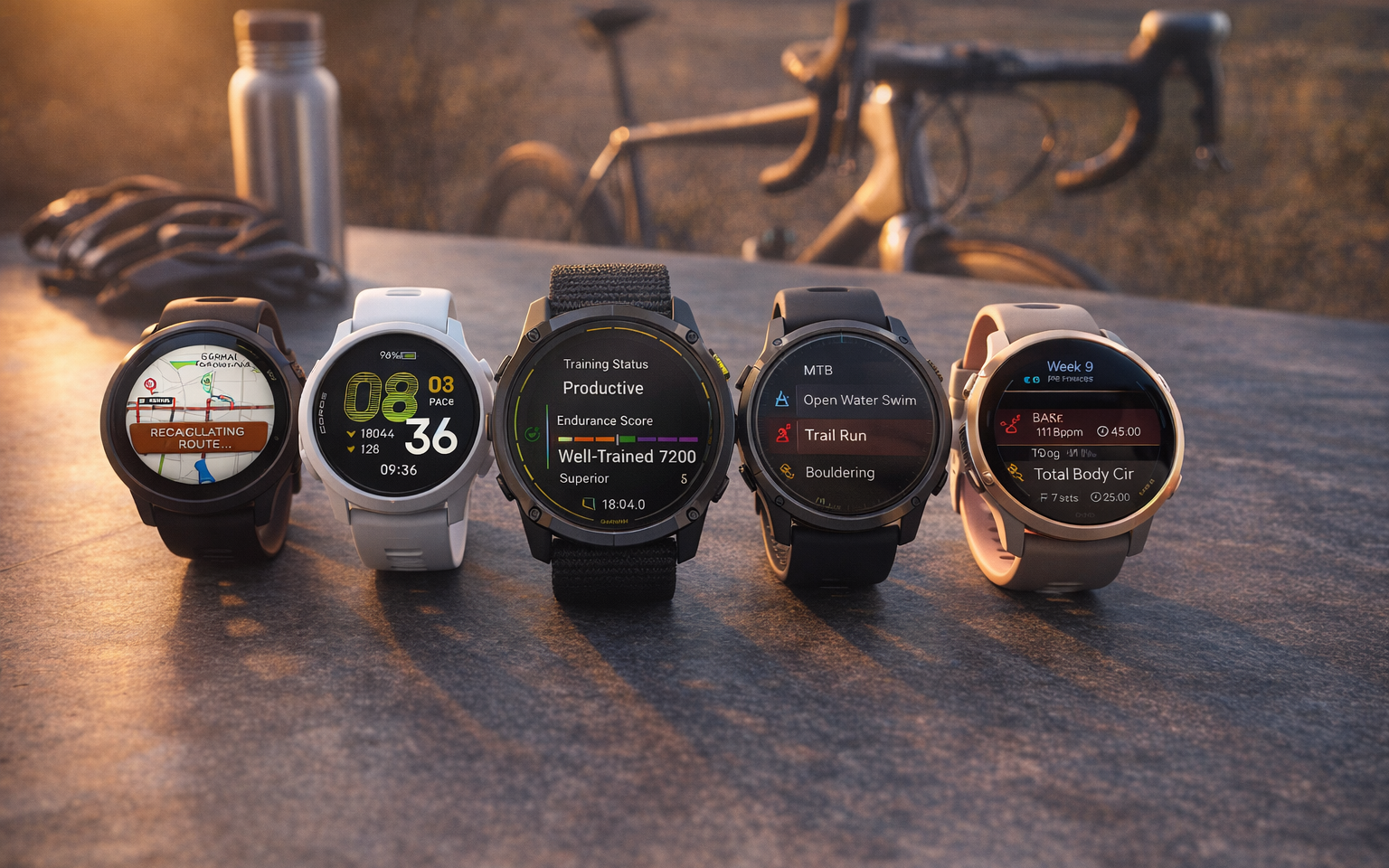
A few years ago, telling a serious cyclist to leave the bike computer at home and ride with a watch would have gotten you laughed out of the group ride. That is no longer true. The best smartwatches now pair with power meters, draw turn-by-turn maps on the wrist, and record every cycling metric that matters – cadence, normalized power, training load, and elevation profiles that update as you climb. For a large number of riders, the watch on your wrist is now a complete cycling computer that also happens to track your sleep.
But not every smartwatch is built for the bike, and the gap between the good ones and the pretenders is wide. Three things separate a real cycling watch from a fitness watch that happens to have a "cycling" mode: power meter and sensor support – and whether it speaks ANT+, Bluetooth, or both – genuine on-device maps versus a simple breadcrumb line, and enough battery to outlast a century ride or a bikepacking weekend. Price tracks those features closely; you can spend $249 or $1,000, so the real question is how much capability you actually need on the handlebars.
These are the six smartwatches we recommend for cycling in 2026, chosen for the riders who buy them rather than the spec sheets that sell them.
Our Top Picks
Garmin Fenix 8 – Best Overall
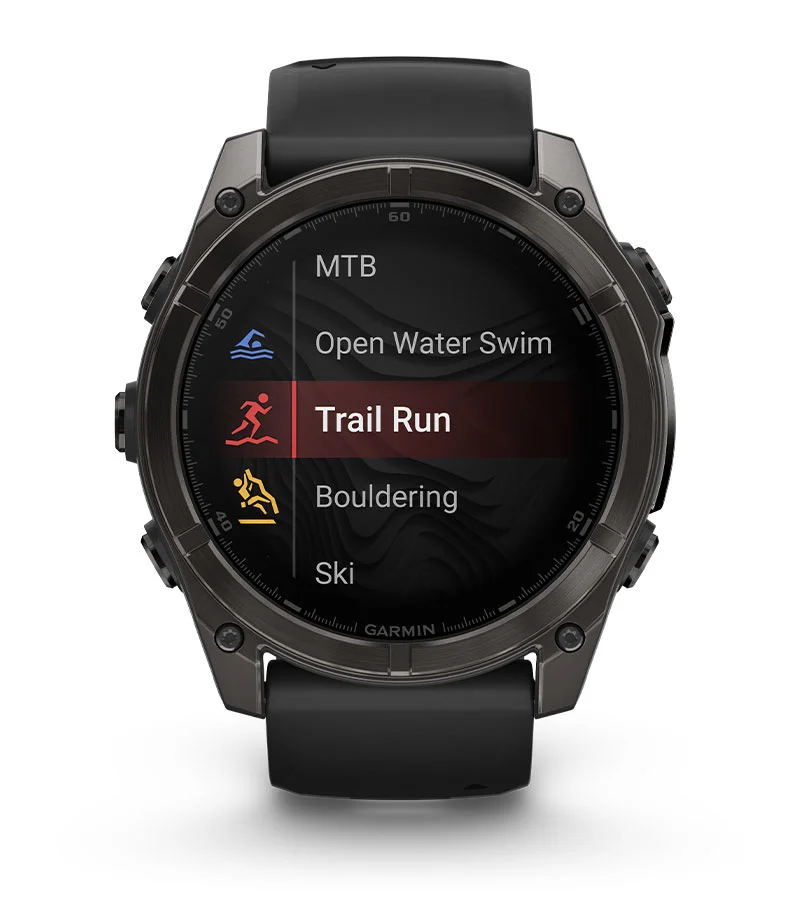
Nothing else does cycling as completely as the Garmin Fenix 8. It pairs with ANT+ and Bluetooth power meters and smart trainers, runs full TopoActive offline maps with terrain contours and turn-by-turn routing, and layers on ClimbPro to show exactly how much of each climb remains. Multi-band GPS holds a line through tree cover and city canyons where cheaper watches drift, and dedicated mountain-bike dynamics track jump count, flow, and grit if you ride trails. Battery runs to weeks in smartwatch mode and roughly 29 hours of multi-band GPS, enough for the longest day you will plausibly ride. The catch is the price: $999.99 buys the most capable wrist-mounted cycling tool on the market, but it is overkill for anyone who is not also running, swimming, and navigating backcountry trails. If you want this much watch with even more battery, see how it stacks up against the Enduro 3.
Garmin Forerunner 970 – Best for Dedicated Training
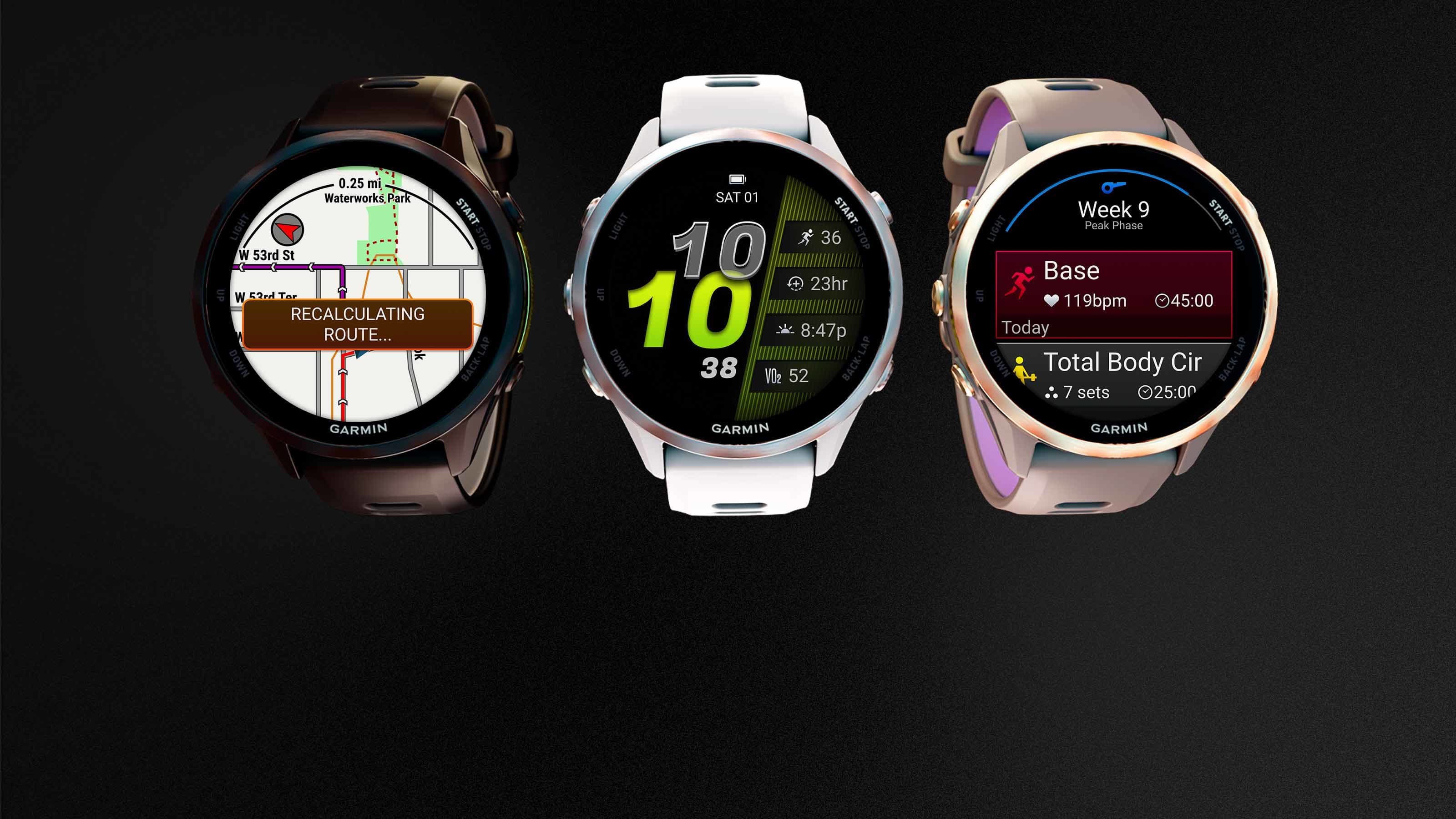
The Garmin Forerunner 970 gives you almost everything the Fenix 8 does for $250 less, in a lighter case that disappears on your wrist over a long ride. You get the same multi-band GPS, full on-device maps, ClimbPro, and power meter support, plus Garmin's Power Guide, which uses your FTP and the route's elevation to plan how to spend your watts across a course. Battery is excellent for the category – up to 15 days in smartwatch mode and around 30 hours of GPS with navigation and a route loaded, comfortably enough for an Ironman bike leg or a 300 km day. The bright AMOLED screen is the headline upgrade and the main reason battery trails the Enduro-class watches. For training-focused cyclists who also run, this is the sweet spot. The deciding factor against the Fenix is mostly durability and screen size – our Forerunner 970 vs Fenix 8 comparison lays out who needs which.
Coros Pace Pro – Best Value
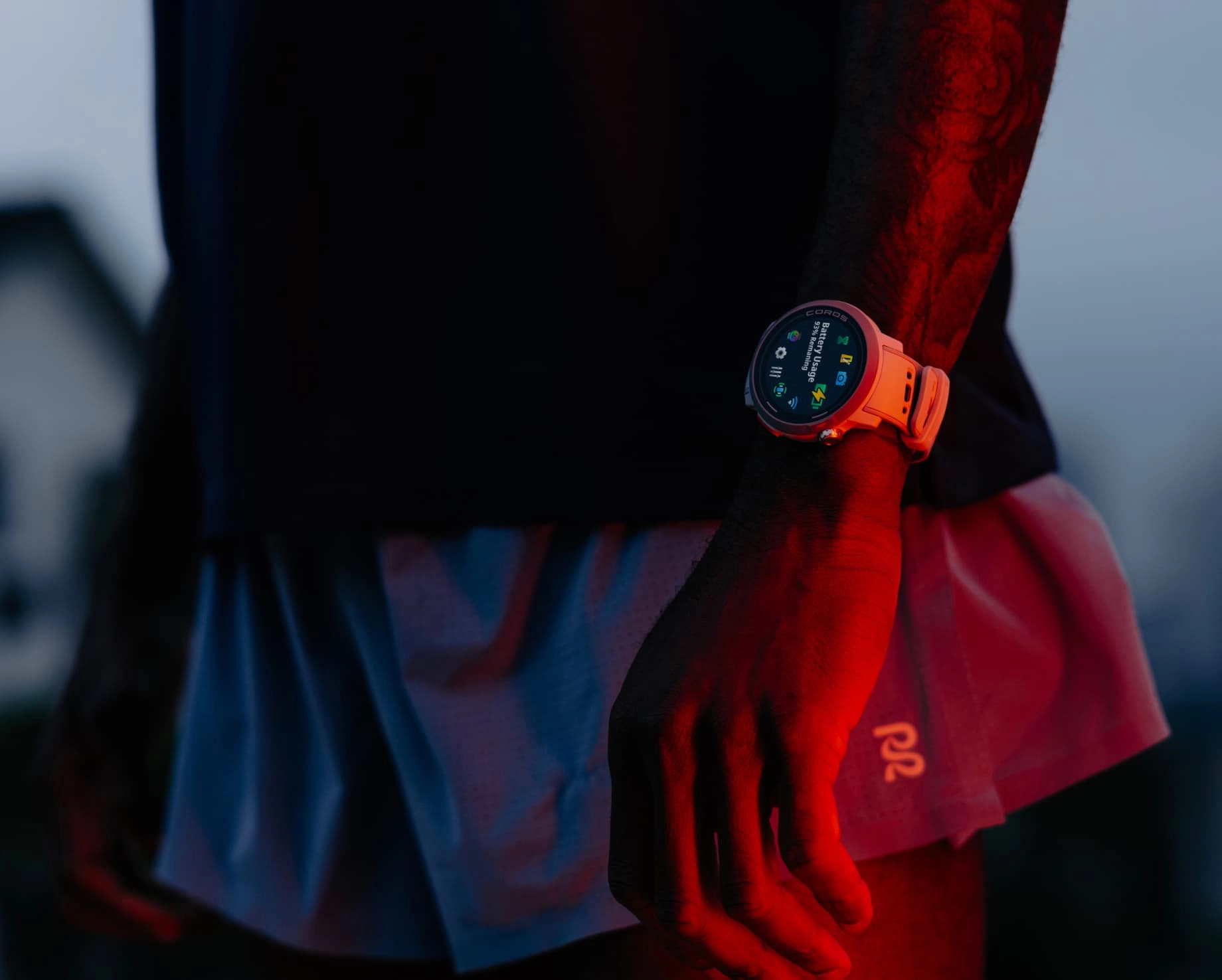
The Coros Pace Pro is the watch that makes spending $700 feel foolish. At $299 it includes the two features cyclists actually care about – full offline maps and dual-frequency GPS – alongside Bluetooth power meter support and a featherweight build that is barely there on long rides. Battery is outstanding for the price, running well past a full day of dual-frequency tracking, so a six-hour ride barely dents it. You give up ANT+ (it is Bluetooth-only for sensors) and some of Garmin's deeper cycling analytics like MTB dynamics, but for road and gravel riders who want maps and power without the premium tax, nothing touches it on value. It is the easiest watch on this list to recommend to a rider who is not yet sure how much watch they need.
Coros Pace 4 – Best Budget
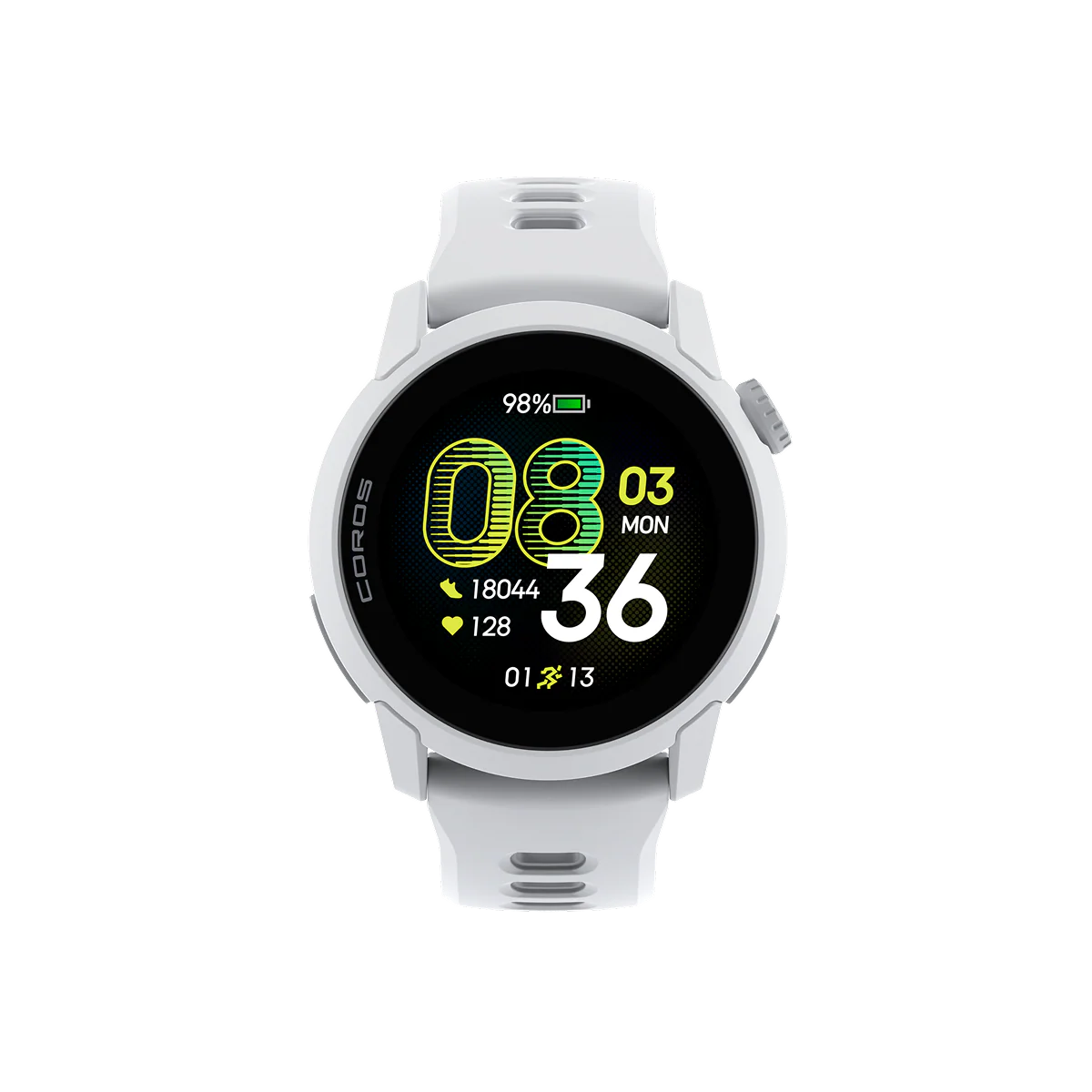
At $249, the Coros Pace 4 is the most cycling watch you can buy for the money. It pairs with Bluetooth power meters – single- or dual-sided – records the core ride metrics, and adds a crisp AMOLED screen that most budget watches skip. Dual-band GPS keeps your track accurate, and battery life shames watches twice the price. The one real compromise for cyclists is navigation: the Pace 4 follows a breadcrumb trail from a loaded GPX or Komoot/Strava route, with a turn alert roughly 50 meters out, but there are no street names, points of interest, or full offline maps. If you ride familiar roads or just want a clean route line to follow, that is plenty. If on-bike maps are a must, the $50 jump to the Pace Pro is the upgrade to make.
Apple Watch Ultra 3 – Best for iPhone Riders
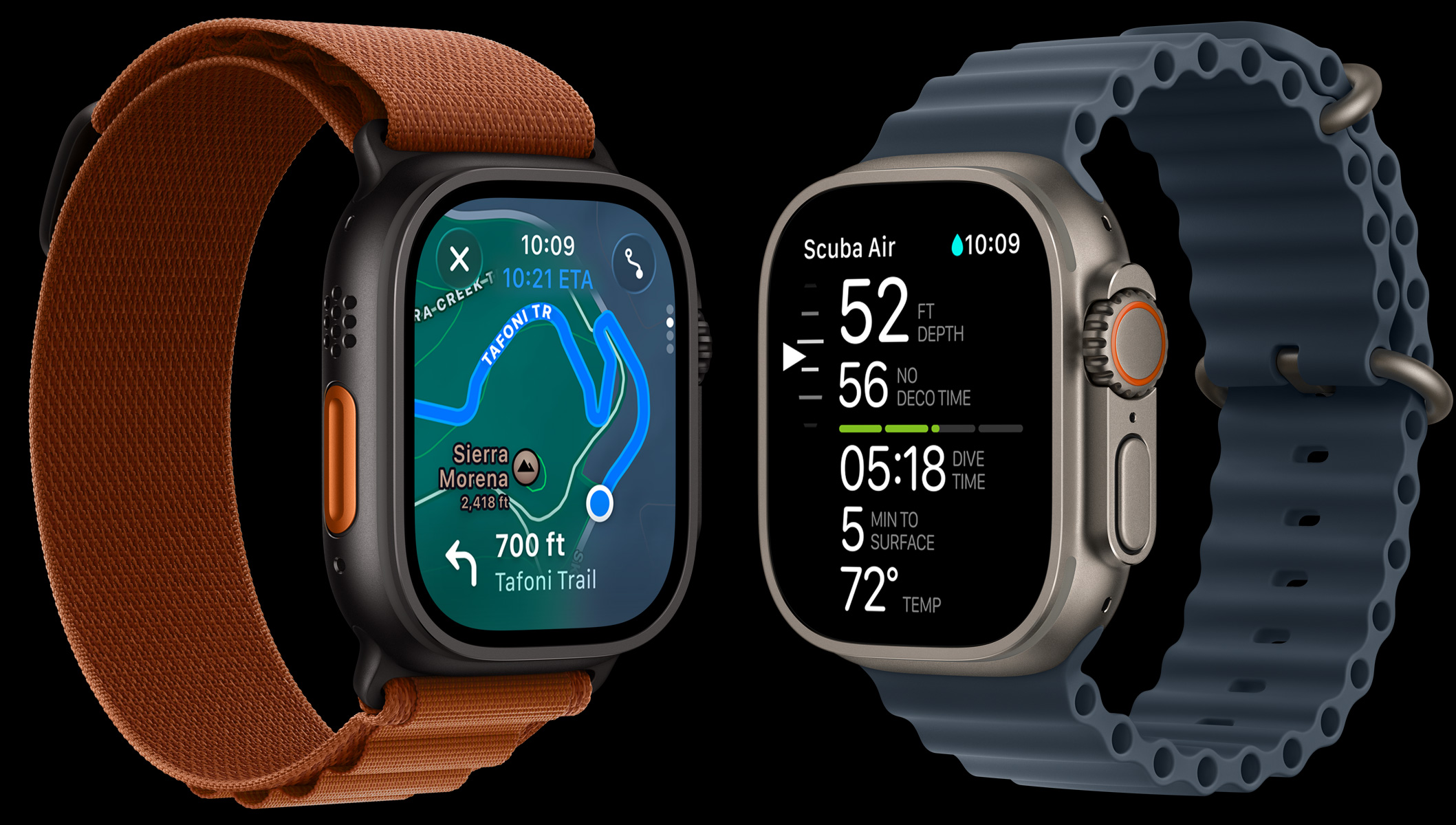
If your phone is an iPhone, the Apple Watch Ultra 3 is the most capable cycling watch you can pair with it. watchOS connects to Bluetooth power meters, speed, and cadence sensors, builds cycling Power Zones from an estimated FTP, and promotes your ride to a Live Activity on the iPhone for a big-screen dashboard. Offline topographic maps with turn-by-turn cycling directions mean you can navigate without your phone, and 42 hours of battery – about 14 hours of continuous GPS – covers any single day in the saddle. The limitations are specific: sensors must be Bluetooth, as there is no ANT+, and the whole system only works inside Apple's ecosystem. But for an iPhone owner who wants one watch for cycling, everyday life, and everything in between, nothing else integrates this cleanly. If you are weighing it against Garmin's flagship, our Ultra 3 vs Fenix 8 comparison breaks down the tradeoffs.
Garmin Enduro 3 – Best for Ultra-Distance and Bikepacking
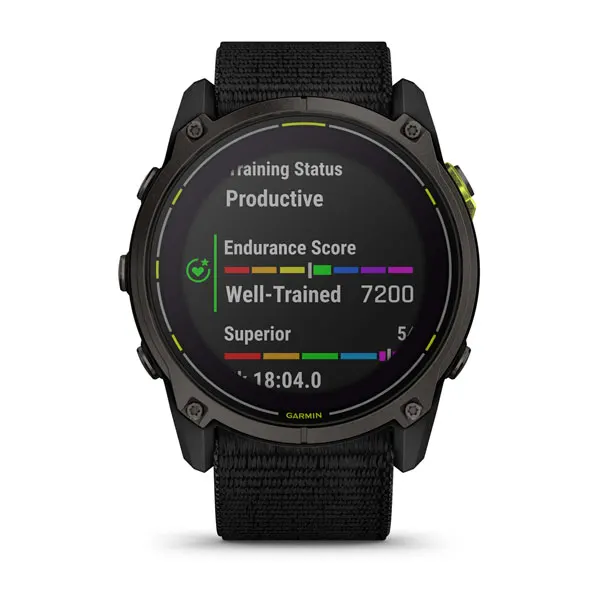
When the ride lasts days, not hours, the Garmin Enduro 3 is the answer. It carries the same best-in-class maps, ClimbPro, and power meter support as the Fenix 8, but trades the AMOLED screen for a solar-assisted transflective display and a staggering battery – up to 320 hours of GPS on paper and well over 100 hours of real-world GPS-only riding. For bikepacking, ultra-endurance events, or anyone who hates charging, that endurance is transformative; you can ride for days and let the sun top it off between stops. It is $899.99 and the screen looks dull next to the Fenix 8 indoors, but out in daylight – where you actually ride – it is perfectly legible and it simply will not die on you.
How We Chose
We evaluated each watch the way a cyclist uses it, not the way a spec sheet describes it. Our priorities, in order:
- Sensor and power meter support. A cycling watch has to pair with the sensors you already own. We checked whether each supports ANT+, Bluetooth, or both, and whether it handles power meters and smart trainers – not just speed and cadence.
- Navigation. Full on-device maps with turn-by-turn routing are the gold standard; breadcrumb trails are a real step down. We weighted genuine mapping heavily and called out where you only get a route line.
- GPS accuracy. Multi-band (dual-frequency) GPS is the difference between a clean track and a wandering line under trees and around buildings, so we favored watches that offer it.
- Battery life. Cycling drains a watch faster than almost anything else. We judged battery against the rides each watch is built for – a few hours for the budget picks, multi-day endurance for the Enduro 3.
- Value. Every pick has to justify its price against the one above and below it. The watch that does 90% for half the money usually wins.
Who Should Buy What
- The all-in athlete who wants the best, money no object: Garmin Fenix 8. Every cycling feature that exists, plus everything else.
- The serious cyclist who also runs: Garmin Forerunner 970. Near-flagship cycling tools in a lighter, cheaper package.
- The rider who wants maps and power without overspending: Coros Pace Pro. The value champion of the list.
- The budget rider or new cyclist: Coros Pace 4. Power meter support and accurate GPS for $249, as long as you can live with breadcrumb navigation.
- The iPhone owner: Apple Watch Ultra 3. The cleanest cycling experience in Apple's ecosystem, full stop.
- The bikepacker or ultra-distance rider: Garmin Enduro 3. Days of battery and the best maps Garmin makes.
What To Avoid
- Fitness watches with a "cycling" mode but no sensor support. Plenty of lifestyle smartwatches log a ride using wrist GPS and heart rate but cannot pair with a power meter or cadence sensor. If you train with power, they are a dead end.
- Breadcrumb-only watches if you ride unfamiliar routes. A simple route line is fine on home roads, but on a new gravel route or a bikepacking trip, the absence of real maps will leave you guessing at junctions. Budget accordingly, or step up to a mapping watch.
- Bluetooth-only watches if your sensors are ANT+. Older power meters and many trainer setups broadcast ANT+ only. Confirm your sensors speak the same language as your watch before you buy.