
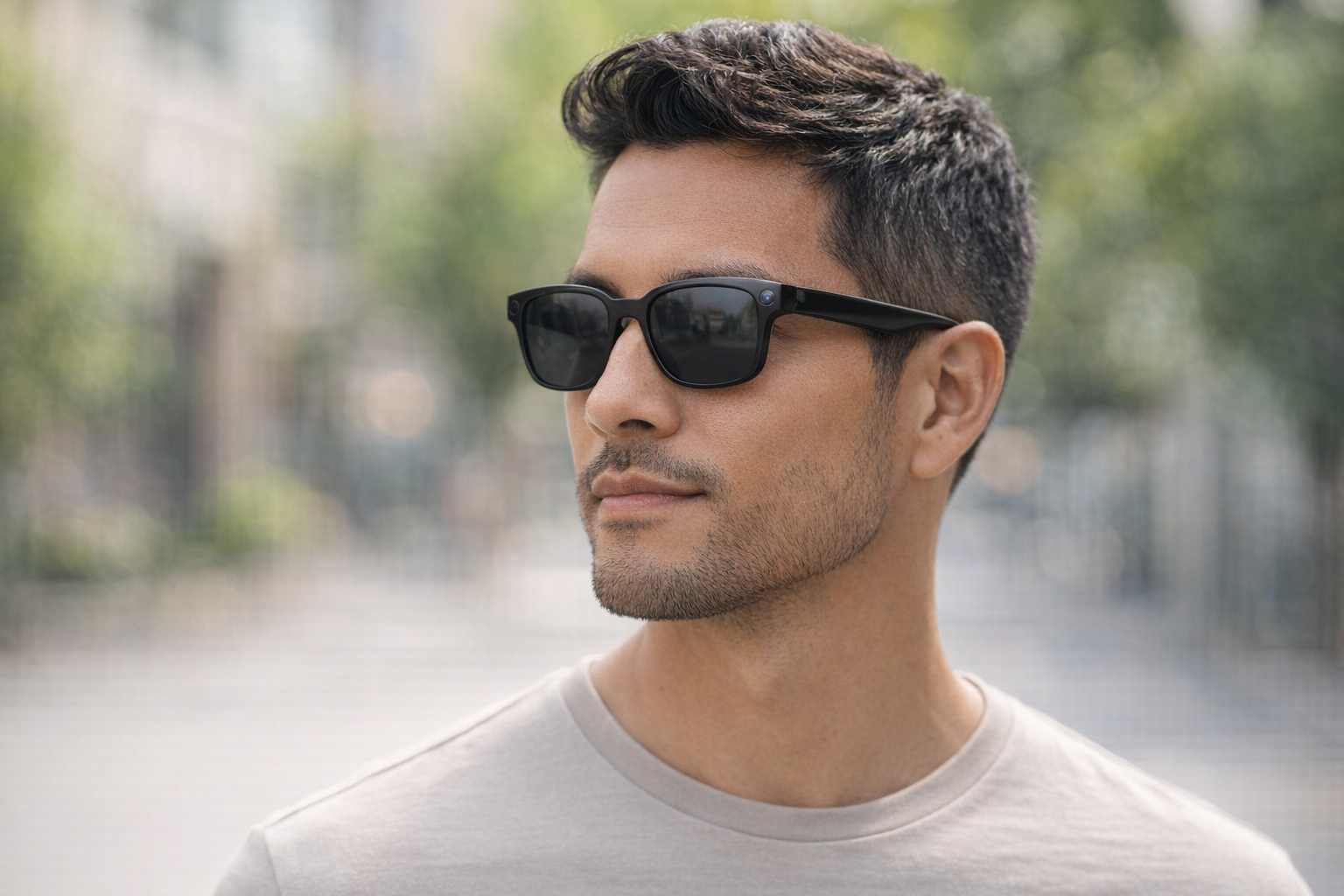
There is a lot to like about the Rokid AI Glasses Style, and almost all of it lives on the spec sheet. For $299, these display-free smart glasses record longer video than the Ray-Ban Meta, last roughly twice as long on a charge, and – unusually – let you choose whether ChatGPT or Gemini rides along in your ear. On paper, this is the most convincing Meta alternative yet.
Then you put them on. The frame that houses all this clever hardware feels cheap, and the styling lands somewhere between generic and the disposable specs handed out at a 3D movie. Smart glasses are the rare gadget you wear on your face all day, where fashion is a functional requirement, and this is exactly where the Style stumbles. Whether that trade – genuine capability for compromised looks – is worth making depends entirely on what you want from a pair of camera glasses.
Design & Build
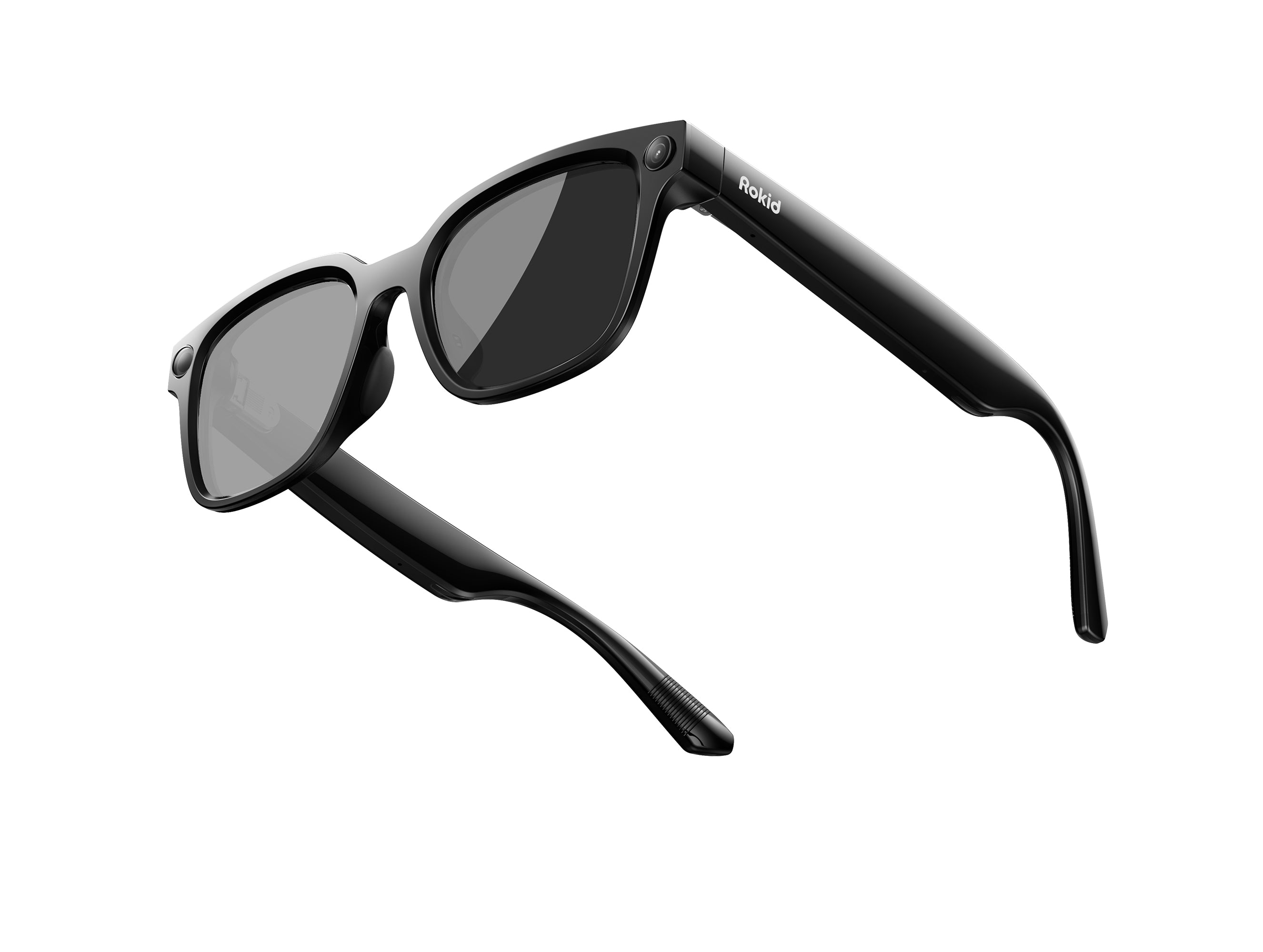
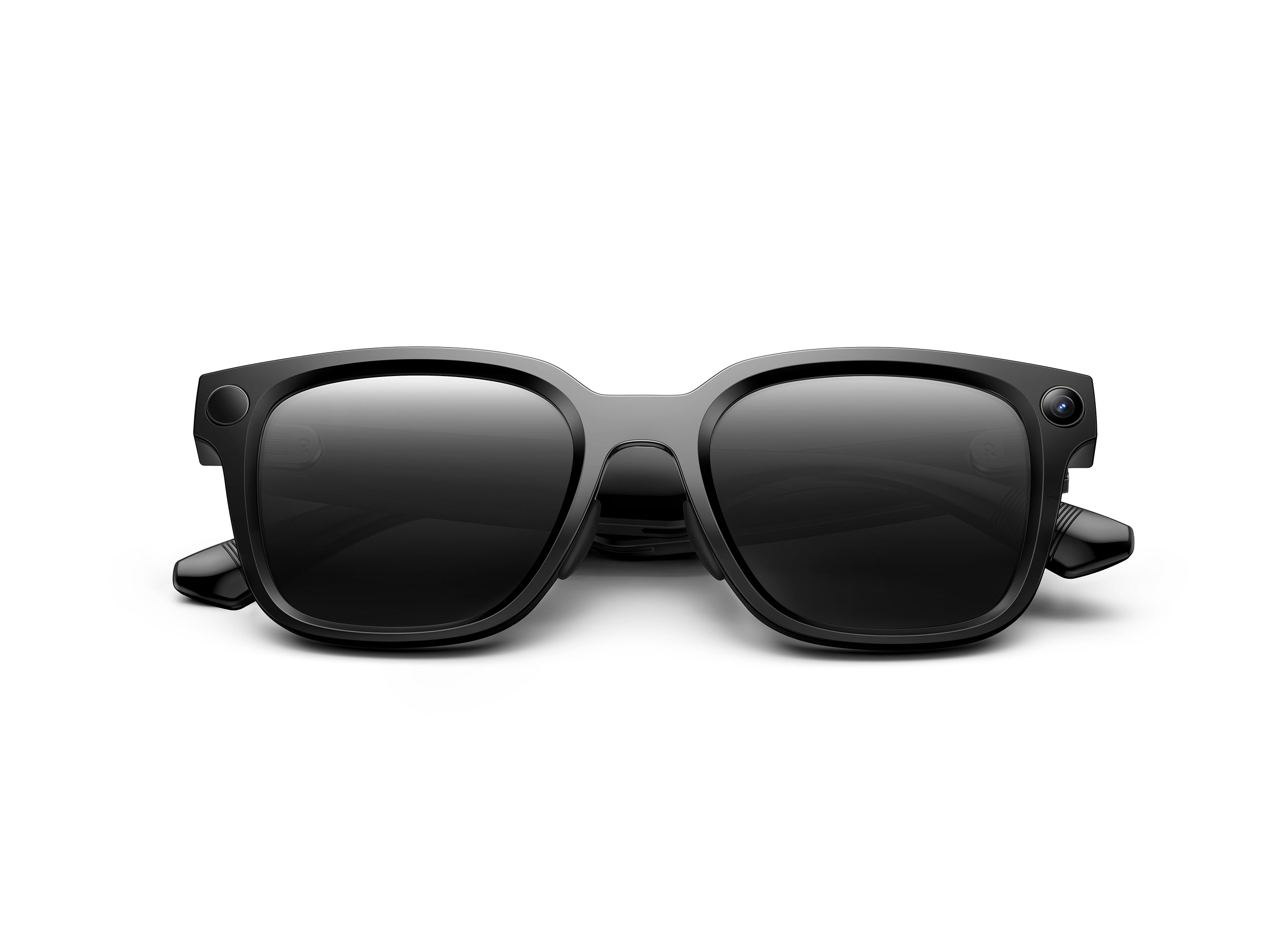
This is the crux of the review, so let's be direct: the Rokid AI Glasses Style are not attractive glasses. The TR90 plastic frame is light and flexible, but it feels inexpensive in the hand, and the angular styling reads as budget rather than fashion. Sit them next to a pair of Ray-Ban Meta and the difference in perceived quality is immediate and unflattering. For anyone who thinks of eyewear as an accessory first and a computer second, this alone is a reason to look elsewhere.
The saving grace is comfort. At 38.5 grams for the frame – closer to 45 grams once lenses go in – these are genuinely light, and the weight is distributed well enough that they don't dig into the nose or ears over a full day. The nose-pad pressure that creeps in during marathon sessions is minor. So while the Style loses badly on desirability, it holds its own on physical wearability. It's a device that's comfortable to wear and awkward to be seen in.
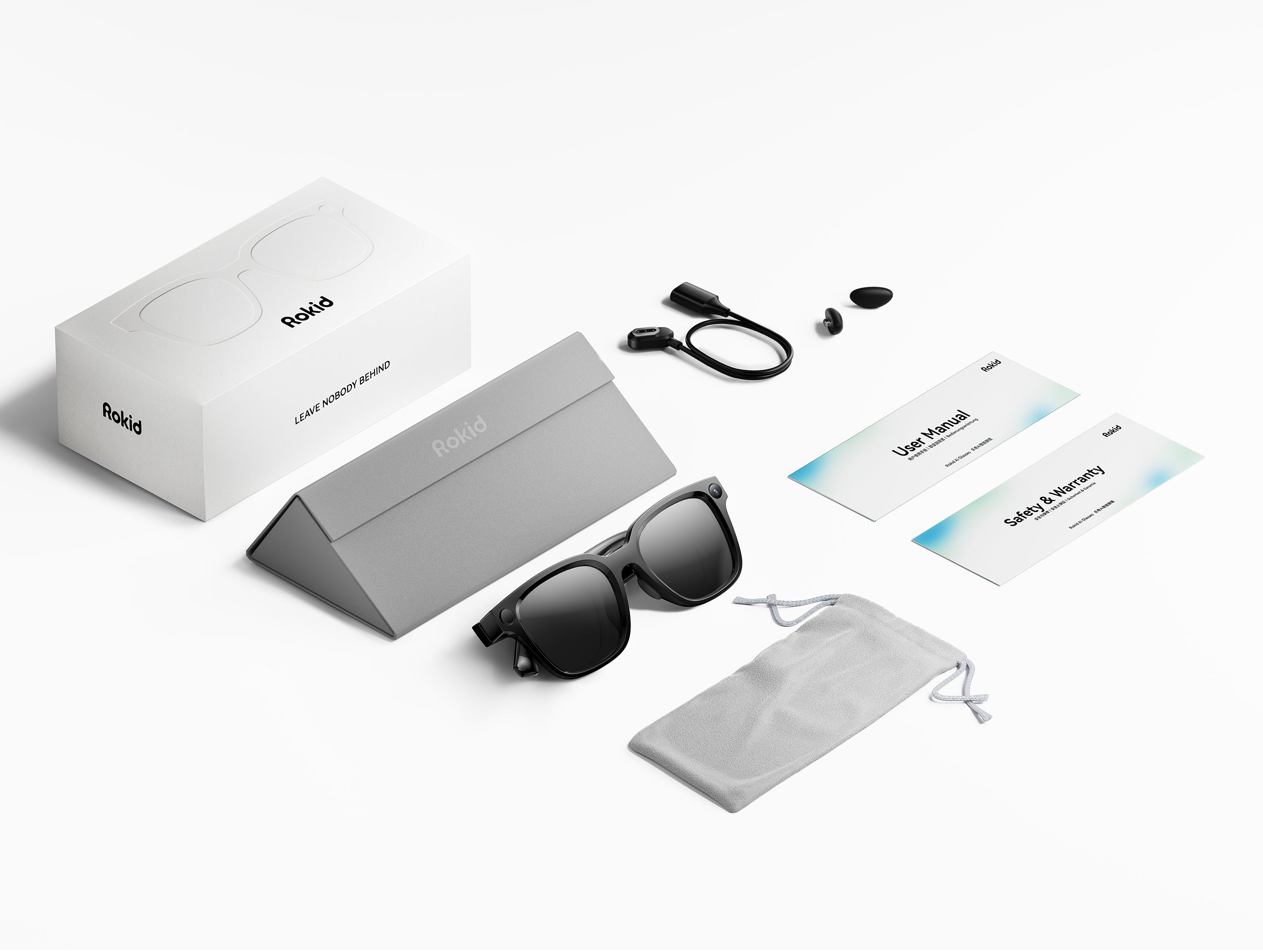
Two colorways are offered, Jet Black and Translucent Gray, and an IPX4 rating means they'll shrug off sweat and light rain. Prescription support is a real strength: Rokid handles myopia, astigmatism, progressive, and presbyopia lenses up to +15.00 diopters, along with polarized, transition, and blue-light options. If you wear glasses already, the Style slots into your life more easily than most rivals.
Camera & Video
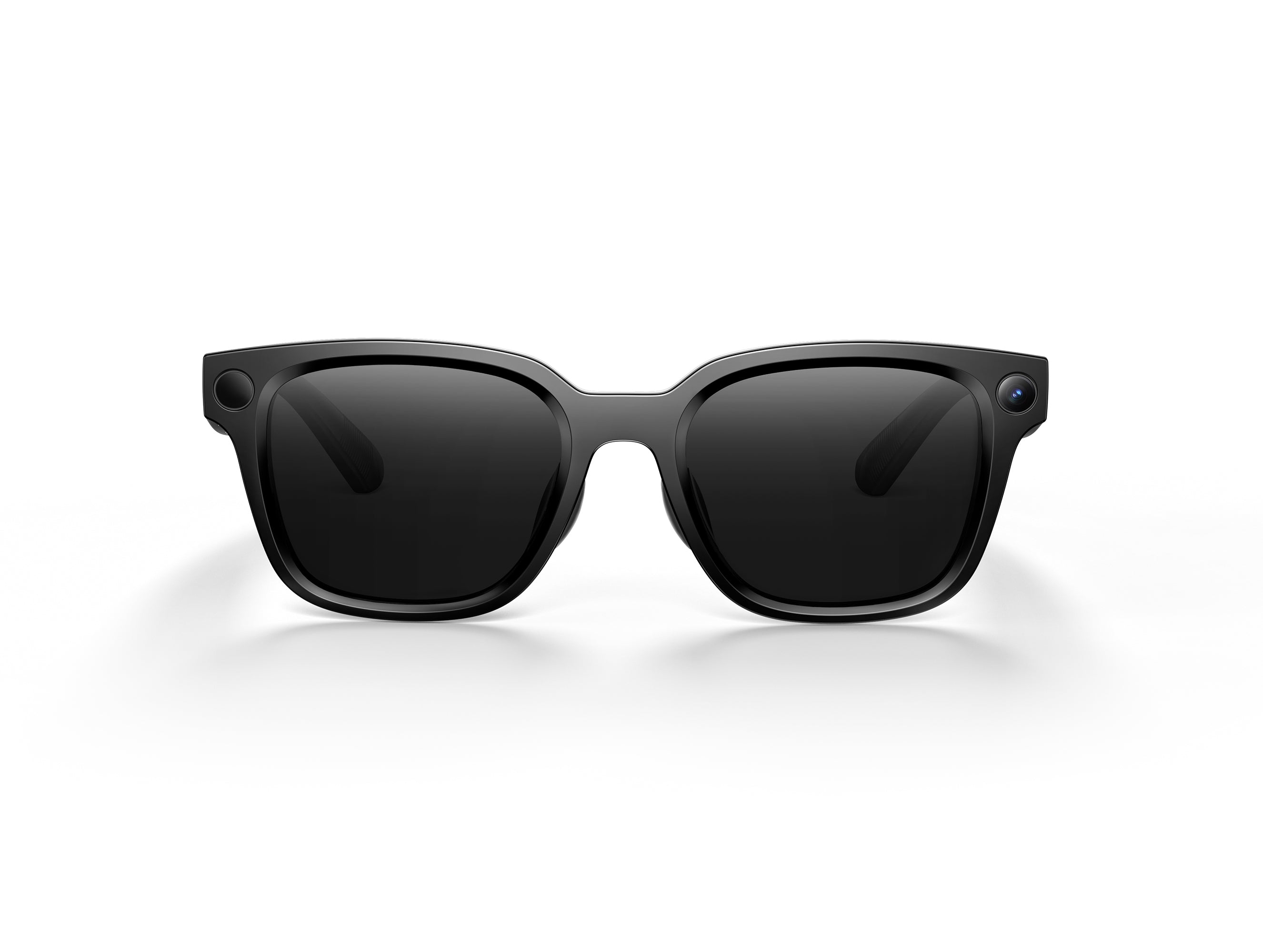
The 12MP Sony IMX681 sensor is the heart of the pitch, and in good light it delivers. Daytime photos are sharp and punchy, with a 109-degree field of view that captures a scene the way you actually see it. Push indoors or into dim conditions and quality drops off fast – images turn grainy, and because the lens uses fixed focus with no autofocus, there's no rescuing a soft frame. The camera also sits off-center on the right temple, so framing a shot takes practice; expect a few crooked photos before you learn to compensate. A slight capture delay can introduce blur if you move too soon.
Video is where the Style pulls decisively ahead of the Ray-Ban Meta Gen 2. It shoots 3K at 30fps and, crucially, records for up to 10 continuous minutes – more than triple Meta's roughly three-minute ceiling. For anyone capturing walkthroughs, tutorials, or long first-person clips, that single number changes what the glasses can do. Multiple aspect ratios, including 9:16 for vertical social posts, make the footage easy to use straight off the device. Stabilization is solid enough to keep handheld-style clips watchable.
Audio
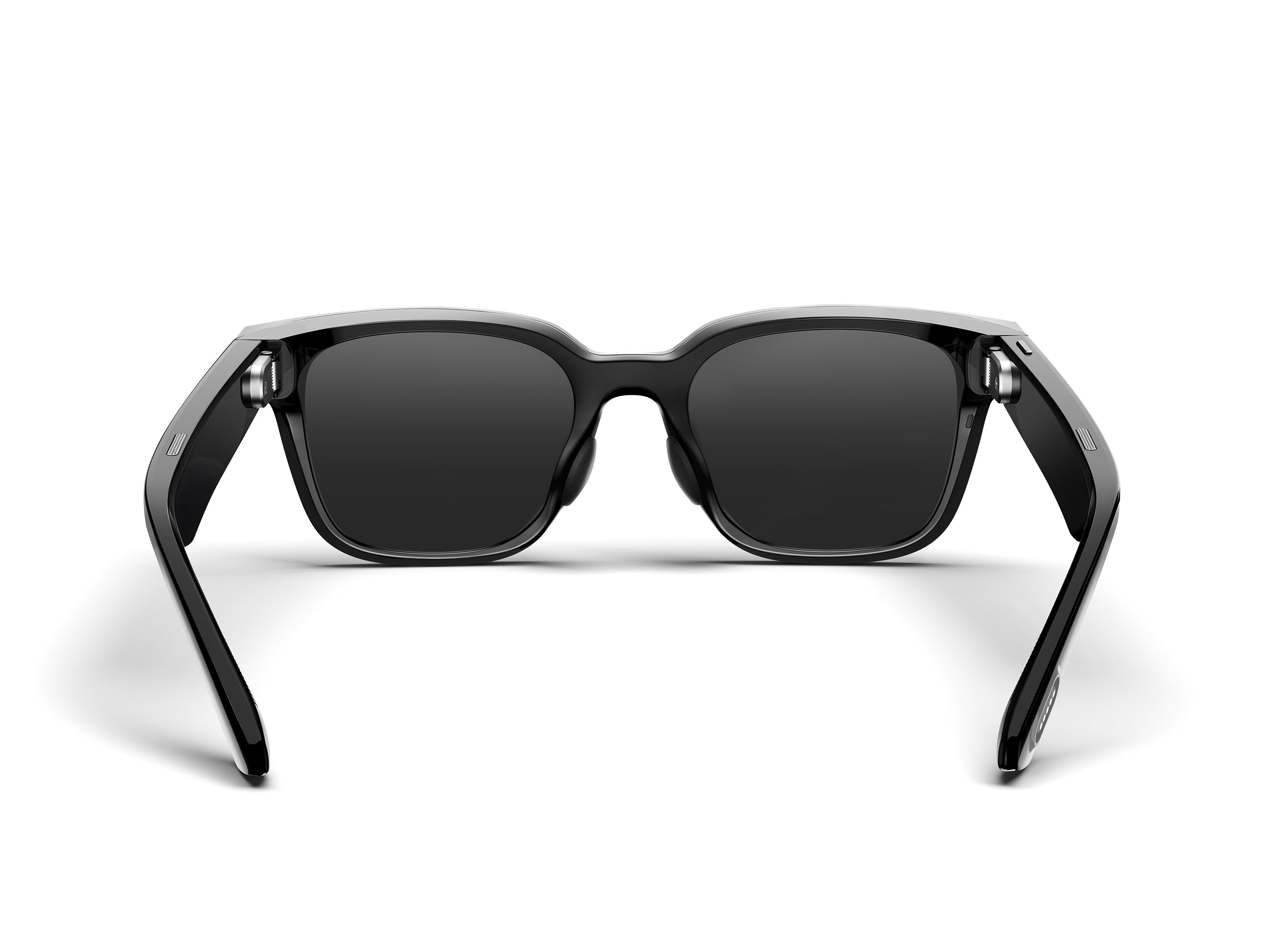
The open-ear setup uses two directional speakers tuned to keep sound aimed at you and away from bystanders, backed by a four-microphone array. It's competent. Music and podcasts come through clearly, and a podcast EQ mode sharpens voices. But the sound is thinner and quieter than the Ray-Ban Meta's, with less low-end presence and a smaller sense of volume headroom. Early units shipped with a call-quality quirk – microphone feedback that improved by lowering volume – since smoothed over by software updates. For AI prompts, navigation cues, and casual listening it's more than adequate; audiophiles were never the target.
The AI Assistant
Here's the feature that genuinely separates Rokid from the pack: you aren't locked into one company's AI. The Style runs both ChatGPT and Gemini, so you can pick the assistant you already trust rather than accepting whatever the hardware maker bundled. Ask a question, identify what you're looking at, or summarize a scene, and the responses are quick and useful. If choosing your assistant matters to you, our roundup of the best smart glasses with AI assistants puts that flexibility in context.
Beyond raw Q&A, the AI earns its keep on practical tasks. Turn-by-turn voice navigation for walking, cycling, and driving is built in – something Meta's glasses still lack. Real-time translation handles menus, signage, and conversations across 89 languages online, with a smaller offline bank for travel without signal. Meeting capture with transcription and summarization rounds out a genuinely productive toolkit. The rough edges are minor: the assistant occasionally closes the microphone before you've finished speaking, forcing a repeat. It's a software annoyance, not a fundamental flaw.
Everyday Use and the App
Living with the Style is mostly frictionless. The glasses power on when you unfold them, controls rely on taps and head gestures, and the low weight means you forget you're wearing them. Because they don't obviously look like smart glasses, they draw less attention than you'd expect – which cuts both ways. That discreetness aids social acceptability, but a camera that isn't obvious to the people around you raises the same privacy questions that follow every pair of camera glasses. A recording indicator exists, but as with all devices in this category, courtesy matters: these are not glasses for filming strangers.
The Hi Rokid companion app ties everything together – footage transfer, settings, assistant selection – and it works, though it launched rough. Bluetooth dropouts and occasional app freezes marred the early experience before over-the-air updates cleared most of them up. Charging is the other daily irritation: a magnetic cable clips to the frame, and the proper charging case that would make top-ups effortless is a roughly $129 extra rather than something in the box. It's part of a broader nickel-and-dimed feeling, where lenses, the case, and a battery capsule all cost more on top of the sticker price.
Battery Life
Battery is a straightforward win. The 210 mAh cell is rated for around 12 hours of typical mixed use, and in practice that means the Style comfortably outlasts the Ray-Ban Meta, which taps out closer to four to eight hours. Lean on the power-hungry features and the picture changes – continuous video recording drains the battery in under an hour, and heavy translation use pulls it down within a couple of hours – but for a day of photos, the odd clip, music, and AI queries, you won't be reaching for a charger. Among camera-and-AI glasses, this is class-leading endurance, and it's one of the clearest reasons to choose the Style over Meta.
Who It's For / Who Should Skip
Buy it if you want camera-and-AI smart glasses that maximize capability per dollar: longer video, longer battery, a choice of ChatGPT or Gemini, and strong prescription support, all for $299. It's ideal for content creators who need clips beyond three minutes, travelers who lean on translation and navigation, and existing glasses-wearers who value function over fashion.
Skip it if how your glasses look and feel is non-negotiable. The design and materials are the weak link, and no amount of clever software fixes a frame you don't want to wear. Style-first buyers are better served by the Ray-Ban Meta Gen 2, and anyone prioritizing a sportier, more secure fit should weigh the Oakley Meta HSTN. If you specifically want an in-lens heads-up display from the same brand, that's a different product – see our Rokid Glasses review for the HUD model, and our best smart glasses of 2026 guide for the full field.
The Verdict
The Rokid AI Glasses Style are a case study in substance over style. Nearly everything that can be quantified – video length, battery life, price, AI flexibility, lens options – favors Rokid over the glasses everyone else is copying. And nearly everything that can't be quantified – the way the frame looks, the way the plastic feels, the sense that you're wearing a premium object – favors Meta. Which set of qualities wins comes down to you. Reward the capability and you'll get the most versatile Meta alternative on the market at a lower price. Prioritize the presentation and the compromises will grate every time you catch your reflection.
Score: 74/100 – Excellent camera-and-AI capability at a genuinely competitive price, held back by a cheap-feeling, divisive design.
| Category | Weight | Score |
|---|---|---|
| Core Function | 30% | 76 |
| Build Quality | 15% | 59 |
| User Experience | 20% | 72 |
| Value | 20% | 78 |
| Battery | 15% | 82 |
| Weighted Total | 100% | 74/100 |
If longer recording, longer battery, and your choice of AI matter more than looks, the Rokid AI Glasses Style are an easy recommendation. If your glasses are part of how you present yourself to the world, spend the extra and buy the ones you'll actually want to wear.