
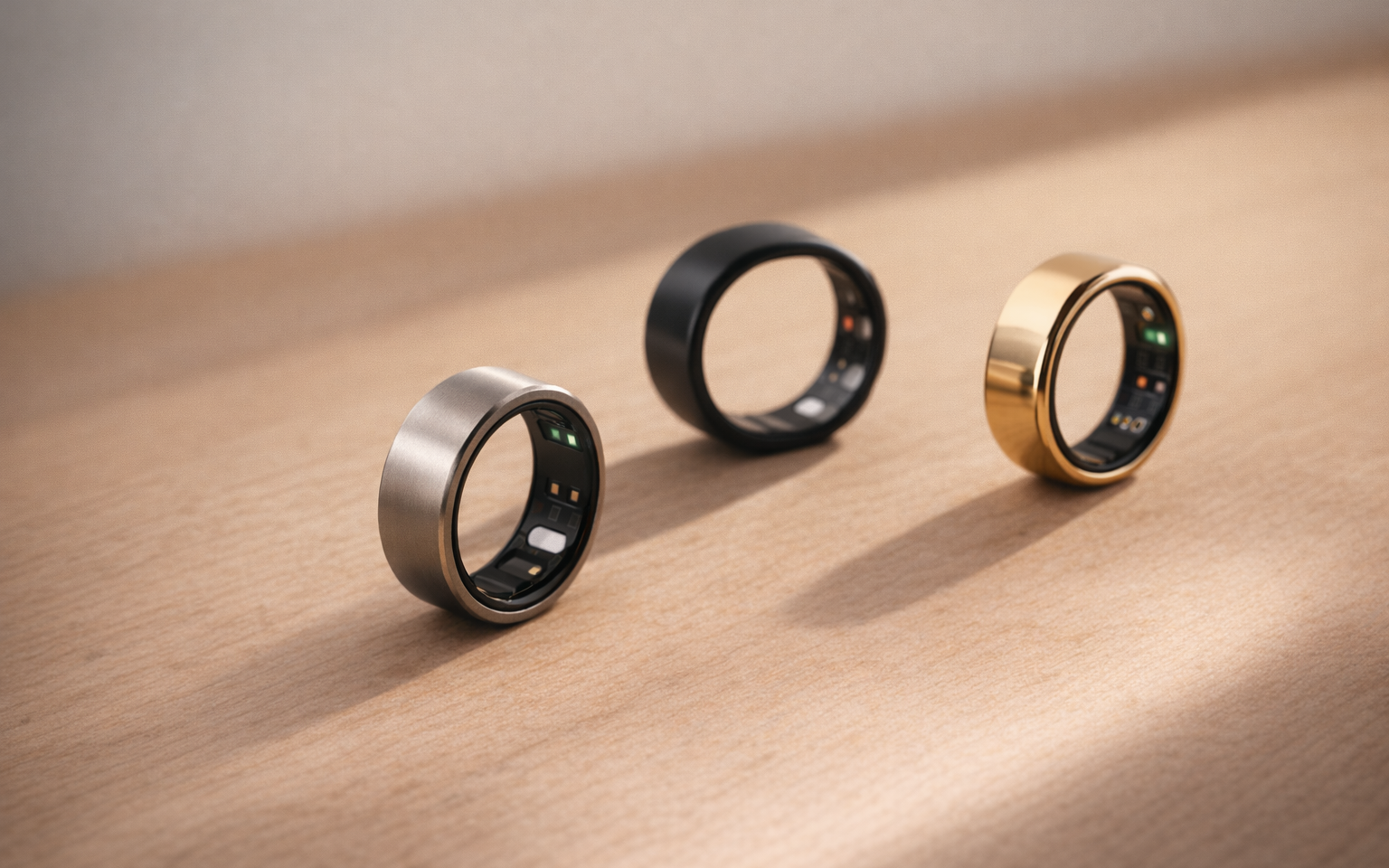
Oura makes the best smart ring you can buy. It also makes you pay twice: $349 for the hardware, then $5.99 every month for the rest of the time you own it. That second bill is the reason this guide exists. If you want sleep, heart-rate, and recovery tracking on your finger without signing up for a subscription that never ends, you have real options now – and some of them cost a fraction of an Oura.
The tradeoff at the budget end is honest and unavoidable: cheaper hardware usually means less refined sensors, thinner apps, and sleep-staging that hasn't been validated the way premium rings have. The trick is knowing where a price cut actually costs you accuracy and where it just costs you a subscription you never needed. Two of our four picks come in at or under $200. The other two cost more up front – but because none of them charge a monthly fee, they still beat Oura's real, total price over time.
That's the thesis here. "Affordable" isn't the sticker on the box – it's what you've paid two years later. We ranked these rings on total cost of ownership, not premium feature lists.
Our Top Picks at a Glance
| Ring | Best for | Price | Subscription? | Battery (real-world) |
|---|---|---|---|---|
| Amazfit Helio Ring | Best under $200 | ~$199 (often ~$160) | No | 2-3 days |
| COLMI R02 | Best ultra-budget | ~$30-40 | No | 3-5 days |
| RingConn Gen 2 | Best overall value | ~$279 | No | 7-10 days |
| Ultrahuman Ring Air | Best deep insights, no fee | ~$349 | No | 3-4 days |
Amazfit Helio Ring – Best Under $200
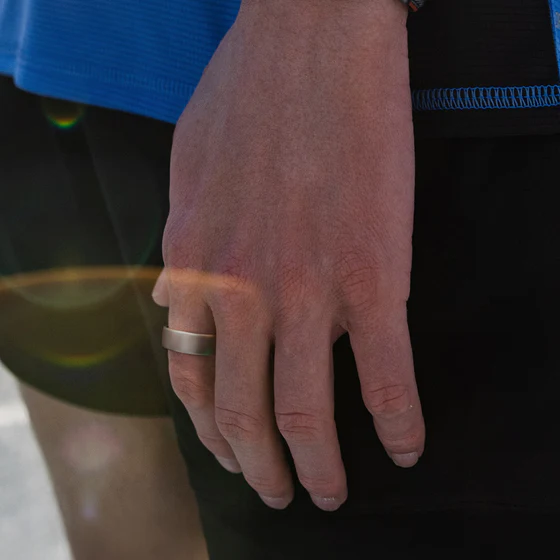
The Amazfit Helio Ring is the only smart ring from a major fitness brand that lands at or under $200, with an MSRP around $199.99 that frequently drops to roughly $160. There's no subscription. Zepp's companion software, including the Zepp Aura sleep features, is free to use – which is the whole appeal against Oura. The sensor suite is genuinely well-equipped for the money: PPG heart rate, SpO2, HRV, skin temperature, and a dedicated EDA sensor for stress readings, all on a 4-gram titanium band rated to a class-leading 10 ATM for water resistance.
The caveats are real, and we won't soft-pedal them. The Helio ships in only three sizes (8, 10, and 12), so a good fit is not guaranteed. Battery life is the bigger disappointment – Amazfit claims up to four days, but with health tracking fully on, you'll see closer to two-and-a-half to three. The ring also plays best inside Amazfit's own ecosystem; pair it with an Amazfit watch and it shines, but as a standalone device the app and insights feel thinner than what Oura or Ultrahuman deliver.
This is the pick for someone who wants a name-brand ring, no monthly bill, and a price under $200 – and who either already owns an Amazfit watch or is happy charging every couple of nights.
COLMI R02 – Best Ultra-Budget
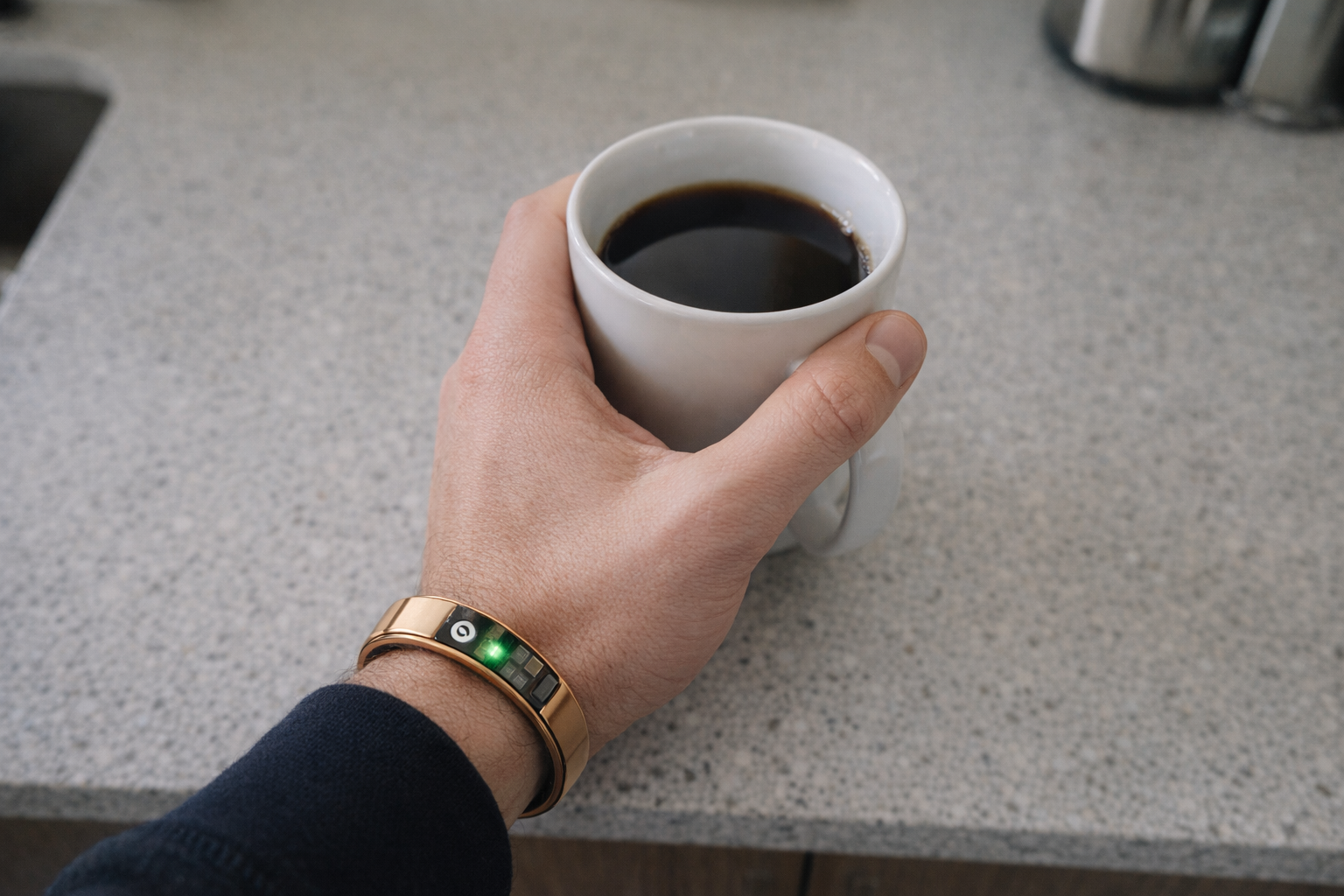
Here's the one the premium roundups won't tell you about. The COLMI R02 costs about $30-40 direct or on Amazon, ships with a charging case, and has no app fees of any kind. It is, by a wide margin, the cheapest way to find out whether you'll actually tolerate a piece of hardware on your finger 24 hours a day. Step counts, resting heart rate, and SpO2 track surprisingly close to a mainstream smartwatch in everyday use – heart rate typically lands within a few beats per minute. For $35, that's remarkable.
Be clear-eyed about what you're not getting. Sleep tracking is the weak spot: the R02 tends to log time in bed rather than genuinely staged sleep, and its REM detection isn't in the same league as a validated ring. The companion app – the basic QRing utility – is bare-bones, the steel build feels less premium than machined titanium, and warranty and support are minimal. There is no validated sleep science backing the numbers it shows you.
Treat the R02 as a "try before you commit" ring, not an Oura replacement. If you're smart-ring curious and don't want to gamble $300 on a form factor you might hate, spend $35 first. If you love wearing it, graduate to one of the picks below. If you don't, you've lost the price of a couple of takeout meals.
RingConn Gen 2 – Best Overall Value

The RingConn Gen 2 is where budget stops meaning compromise. At around $279 with no subscription, it delivers the single best battery story in the category: 10-12 days on paper, a genuine 7-10 in real use, and a charging case that holds 20-plus extra charges – pushing total system battery to a rated 150 days, so you can travel for a month without a cable. It's a 2-3 gram titanium-alloy ring with optical heart rate, SpO2, HRV, temperature, sleep staging, and – uniquely at this price – a sleep apnea tracking mode.
What makes it our overall value pick is how little it gives up to Oura for how much less it ultimately costs. It does roughly 80% of what an Oura does without ever asking for another dollar after checkout. The one honest asterisk: the apnea mode is not medical-grade, and running it drains the otherwise class-leading battery below a week.
If you want a serious daily driver that competes with the premium tier and never charges a fee, this is the one to buy. Our Oura Ring 4 vs RingConn Gen 2 comparison breaks down exactly where Oura's monthly bill does – and doesn't – buy you more.
Ultrahuman Ring Air – Best for Deep Insights Without a Subscription
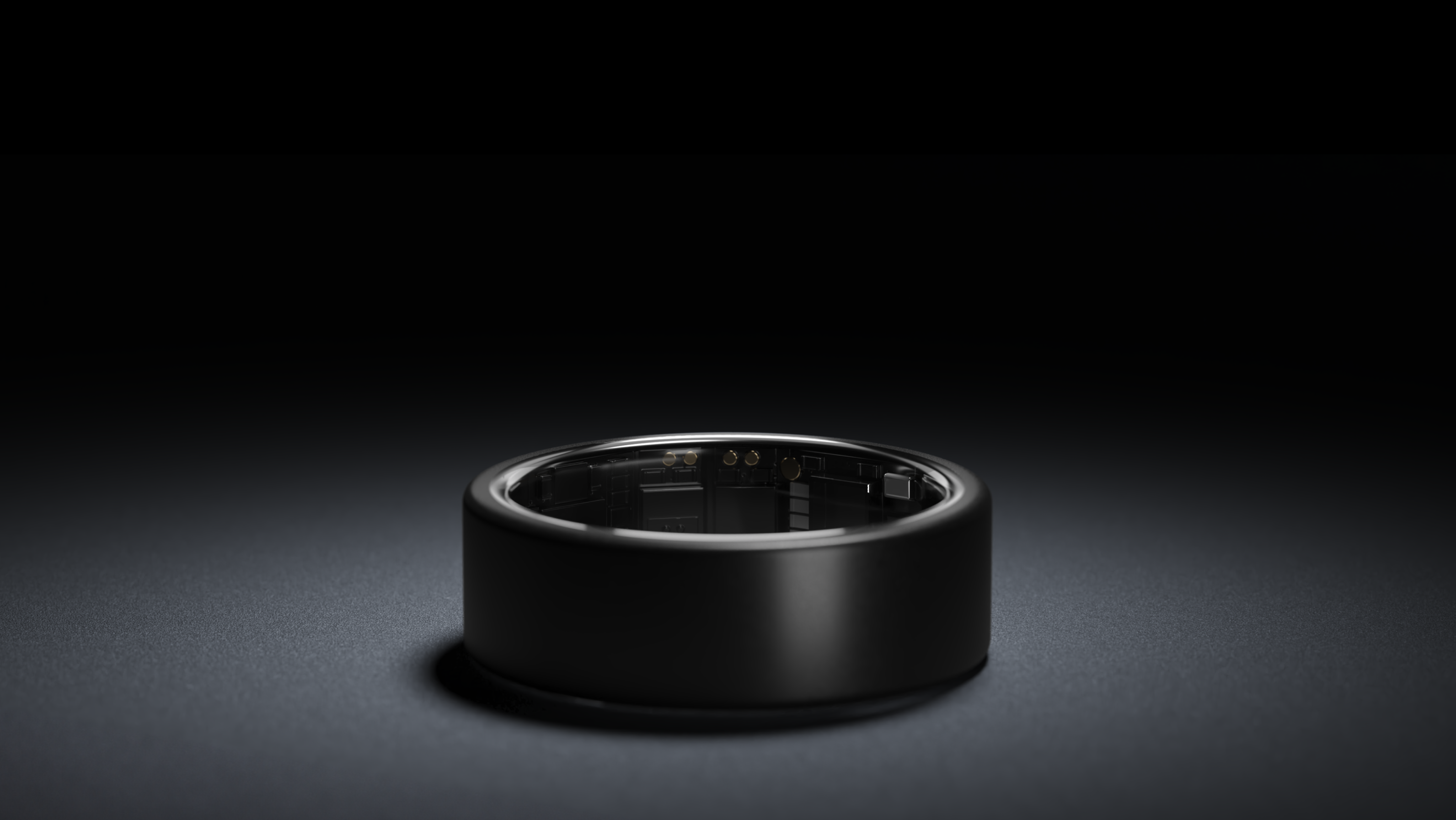
The Ultrahuman Ring Air is the pick for data enthusiasts who want metabolic-minded, granular tracking and refuse to rent access to their own numbers. At $349 with no subscription, it matches Oura's hardware price while eliminating the fee, and it leans hard into circadian rhythm, recovery curves, and a 6-axis motion sensor that flags the micro-arousals fragmenting your sleep. It's built from titanium with a tungsten-carbide coating and weighs as little as 2.4 grams.
The reason it isn't our top value pick is the battery – and reliability. Ultrahuman advertises up to six days; real-world use lands at three to four, and there's a troubling pattern of rings failing outright – some swelling to the point they can't be charged – within months. That's a reliability question you should weigh before you buy.
Choose the Ring Air if the insight depth is the point and you're willing to charge every few days to get it. For everyone who values dependability over depth, RingConn is the safer money.
The Subscription Math: Why "Affordable" Isn't Just Sticker Price
Here's the part sticker prices hide. Oura's Ring 4 starts at $349 for the hardware. The membership is $5.99/month – or $69.99 if you pay annually – and it's what actually unlocks your scores and insights. New rings include one free month; after that, billing begins. Year one lands around $415 once that first month lapses ($349 plus eleven months of membership), and you keep paying roughly $70 every year after that, forever. Five years in, an Oura has cost you north of $700.
Now run our picks. RingConn Gen 2 is $279, once. Ultrahuman Ring Air is $349, once. The Helio is around $199 – often $160 – once. The COLMI is $35, once. Every number after purchase is zero. That means a RingConn Gen 2 costs less in year one than an Oura does, and by year two the gap is a chasm: the RingConn owner has paid $279 total while the Oura owner is nearing $500 and still climbing.
This is why we frame even the $279-349 rings as "budget." They aren't cheap hardware – they're rings that never send you another invoice. Over any realistic ownership window, subscription-free is the affordable choice, and it isn't close. If you want the full head-to-head on what Oura's fee actually buys, we lay it out in our best Oura Ring alternatives guide.
How We Chose
We optimized for the total cost of ownership first. A ring that's $50 cheaper up front but locks your data behind a monthly fee is not a budget ring – it's a payment plan. Every pick here charges you exactly once. From there we weighted the fundamentals that survive a price cut: reliable heart-rate and SpO2 accuracy, battery you don't have to babysit, an app that surfaces your data cleanly, and iOS and Android support. We were willing to accept thinner ecosystems and less-polished insights at the bottom of the range, but not fake sensors or invented metrics. And we insisted every pick be currently available at the price we quote – not a phantom launch MSRP.
Who Should Buy What
The smart-ring curious and the budget-capped: the COLMI R02. Spend $35, learn whether you'll wear a ring at all, and lose nothing if you won't.
The name-brand shopper who wants under $200: the Amazfit Helio Ring – especially if you already own an Amazfit watch and can live with charging every couple of nights.
The mainstream buyer who wants a true Oura rival without the fee: the RingConn Gen 2. Best battery, no subscription, and it competes with the premium tier for hundreds less over time.
The data obsessive who wants depth over dependability: the Ultrahuman Ring Air, provided you'll charge often and accept some reliability risk for its metabolic and sleep-fragmentation insights.
What to Avoid
Steer clear of no-name ultra-cheap rings that aren't the COLMI. The sub-$40 category is flooded with clones advertising "blood oxygen" and "blood pressure" from sensors that generate plausible-looking numbers rather than measuring anything. The COLMI R02 earns its spot because its heart-rate and step data actually correlate with reality; most of its imitators don't.
Be wary of the Circular Ring 2 despite its aggressive pricing. It's dogged by a buggy app, features that were promised and never shipped, uncomfortable protrusions, and support complaints serious enough that we can't recommend it as a value play, even against pricier rivals.
And don't talk yourself into Oura's subscription if you're a casual user. If you check your sleep score with your coffee and get on with your day, you don't need to pay roughly $70 a year in perpetuity for the privilege. A subscription-free ring gives you the same daily glance for a one-time price – that's the entire point of this guide.