
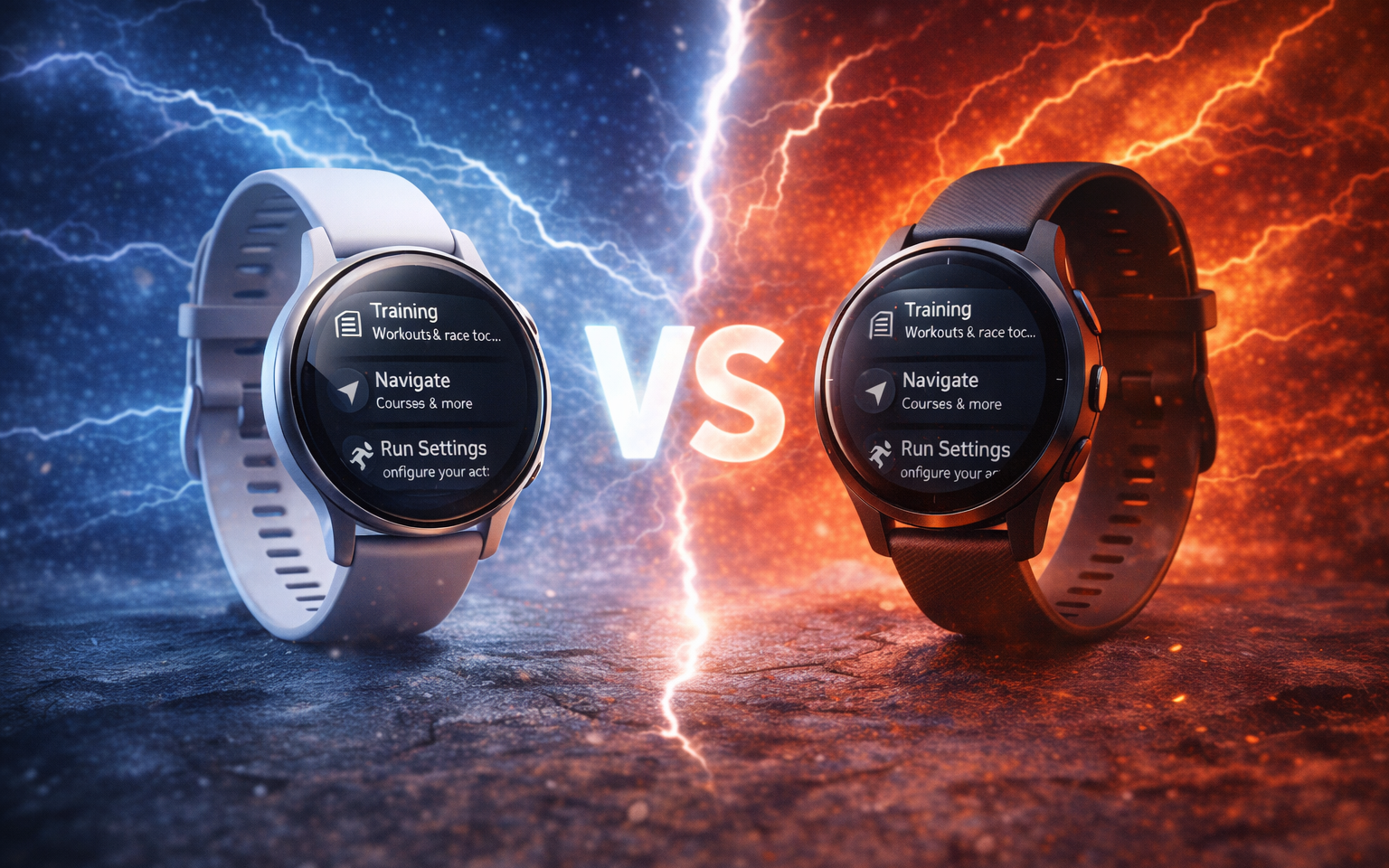
Asking which brand offers better value, Amazfit or Garmin, is really asking what you are willing to pay for trust. Garmin has spent two decades building the most respected fitness ecosystem on the planet, and it charges accordingly. Amazfit has spent the last few years proving that you can put a sapphire-glass, dual-band-GPS, three-week-battery smartwatch on someone's wrist for a fraction of a flagship Garmin's price. The hardware gap has narrowed dramatically — but a spec sheet and a wrist-worn tool you rely on are not the same thing.

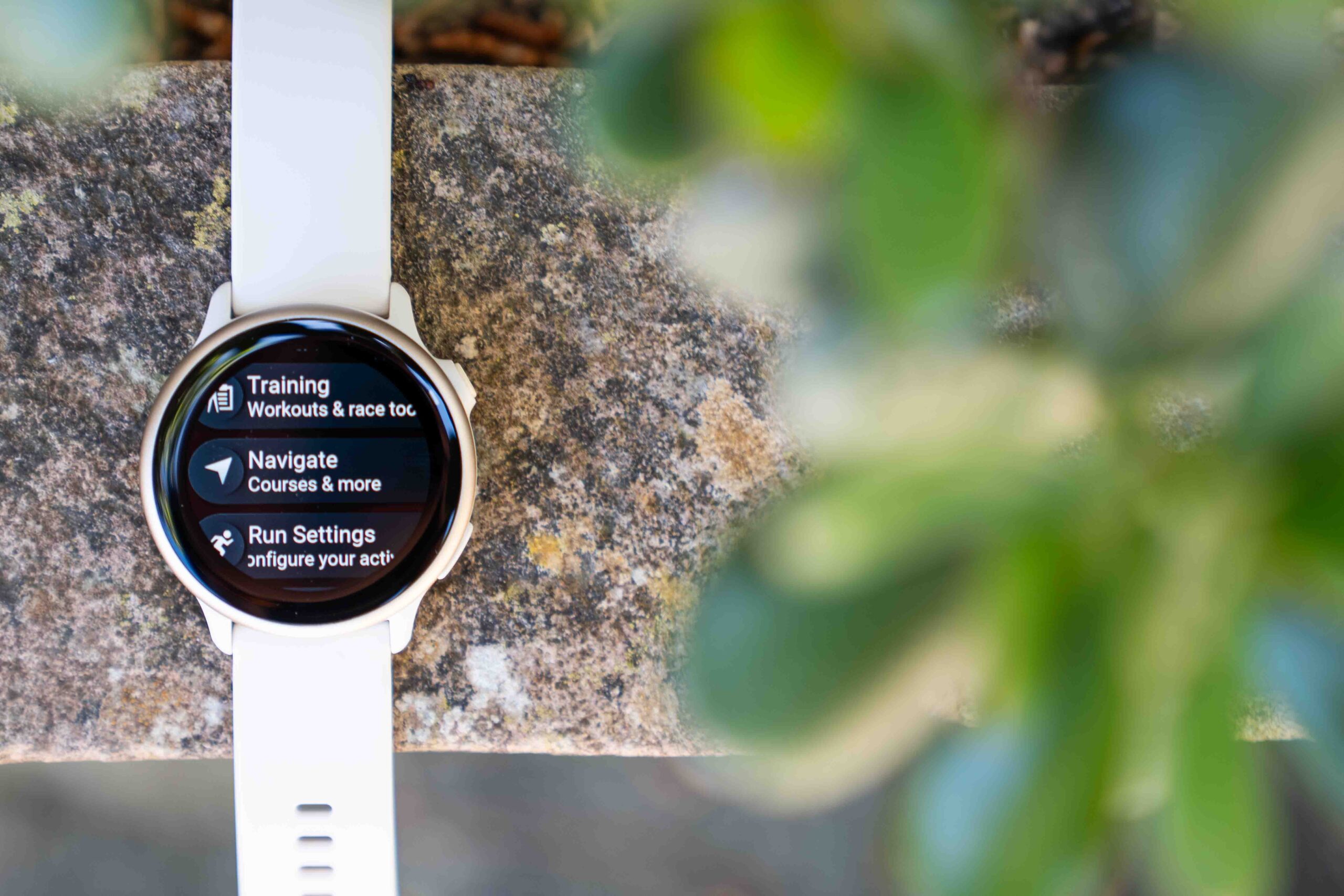
That is what makes "better value" a genuinely open question rather than a foregone conclusion. The two brands pull in opposite directions: one optimizes for the most hardware per dollar, the other for the depth, accuracy, ecosystem, and longevity that turn a watch into a tool you can trust for years. Which of those you call "value" depends entirely on who is wearing it.
This is not a reflexive call in either direction. The right answer depends on whether you want the most watch for your money or the most watch you can rely on, which is precisely what this comparison works through, category by category.
Hardware and Display
On raw hardware, Amazfit wins so decisively that it is almost unfair. Line up the two $299.99 flagships and the gap is stark. The Amazfit Balance 2 gives you a 1.5-inch, 480x480 AMOLED panel at 2,000 nits, protected by genuine sapphire crystal, wrapped in an aluminum bezel, with 10 ATM water resistance. The Garmin Vivoactive 6 at the same price gives you a smaller 1.2-inch, 390x390 AMOLED at roughly 1,500 nits, covered by Gorilla Glass 3, with 5 ATM water resistance. Sharper screen, brighter screen, tougher glass, double the water rating — all for the same money.
That pattern repeats down the entire ladder. The $99.99 Amazfit Active 2 ships with a stainless steel bezel and an optional sapphire crystal. The $169.99 Amazfit Active Max pushes peak brightness to 3,000 nits. Even the $79.99 Amazfit Bip 6 carries a 1.97-inch AMOLED. To get sapphire glass and titanium from Garmin, you are climbing into Fenix and Epix territory at four to ten times the price.
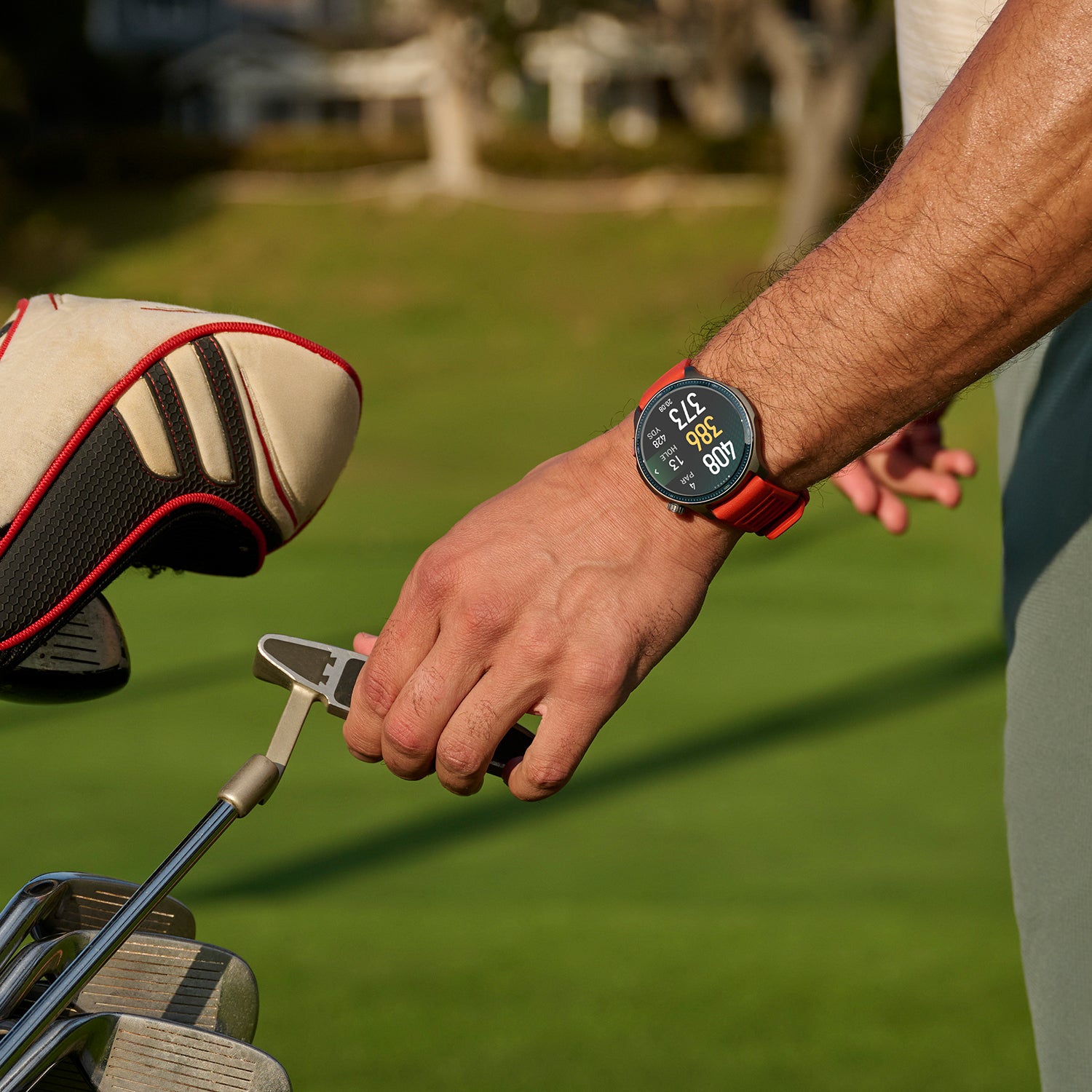
Garmin's hardware answer is restraint and refinement rather than spec-sheet maximalism. Its bezels, buttons, and build tolerances feel meticulously finished, its size options are broader, and its physical five-button control scheme is beloved by athletes who use the watch with cold or wet hands. But if you are tallying nits, millimeters, and ATM ratings per dollar, Amazfit is in a different league.
GPS and Navigation Accuracy
This is where Garmin starts earning its premium back. Amazfit has closed the hardware gap here too — its flagships like the Balance 2 and T-Rex 3 now ship with dual-band GPS pulling from six satellite systems, the same multiband approach Garmin uses on its higher-end models. In open-sky conditions, both brands now track within a hair of measured courses.
The difference shows up in the hard cases and in the data behind the dot. Garmin's GPS has a longer track record of staying locked and accurate in dense urban canyons, under heavy tree cover, and on switchback trails, and its SatIQ technology intelligently switches satellite modes to balance accuracy and battery. Amazfit's flagship GPS is genuinely good now, but it remains a notch less consistent in the toughest environments, and its optical heart rate has historically wandered more than Garmin's Elevate sensors during interval work.
Navigation is the cleaner win for Garmin. Mid-range and premium Garmin watches offer full routable topographic maps, so if you miss a turn the watch re-routes you automatically. Amazfit counters with free offline maps on watches like the T-Rex 3, including contour and even ski-resort maps, which is remarkable at its price. But those maps are not routable; you can follow a loaded course, not improvise a new one. For someone who sticks to planned routes, Amazfit's maps are genuinely useful. For someone who explores off-script, Garmin remains the gold standard.
Health and Training Analytics
Garmin's analytics platform is the deepest in the industry, and this is the second pillar holding up its price. Body Battery, Training Readiness, HRV Status, Training Load, sleep coaching, and race predictors all feed into Garmin Connect, powered by the Firstbeat engine that Garmin has been refining for years. More importantly, serious athletes trust the numbers. When a Garmin tells you that you are under-recovered, coaches and training plans treat that as actionable data.
Amazfit has built an impressively complete answer with Zepp OS and the Zepp app — readiness scores, BioCharge energy tracking, Zepp Coach adaptive training plans, sleep analysis, and the Zepp Flow voice assistant, much of it now sharpened with AI features. For everyday fitness tracking — step counting, sleep trends, workout logging, and gentle coaching — the experience is close enough that most users will not feel shortchanged. Where Amazfit still trails is in the trust and depth that matter to dedicated endurance athletes: the granularity of the metrics, the maturity of the recovery modeling, and the confidence that the numbers are precise rather than indicative. If you are casually keeping tabs on your health, Amazfit is more than enough. If you are training for a marathon and making decisions off your HRV, Garmin is worth the premium.
Battery Life
Amazfit takes this category back, and it is not particularly close. The Balance 2 delivers up to 21 days of typical use against the Vivoactive 6's 11 days, at the same $299.99 price. Step up to the rugged line and the gap becomes absurd: the $279.99 T-Rex 3 runs up to 27 days and 42 hours of continuous GPS, while the Amazfit Active Max claims up to 25 days and a staggering 64 hours of GPS tracking for $169.99.
Garmin's endurance is excellent in absolute terms — the Vivoactive 6's 11 days and the Fenix 8's 16 days are perfectly respectable — but Amazfit consistently delivers more runtime at every price point. The one place Garmin fights back is solar: the Instinct 3 Solar can run effectively indefinitely in the right conditions, a trick no Amazfit matches. For everyone else who simply hates charging, Amazfit's battery advantage is one of the most tangible value arguments it makes.
Software and Ecosystem
This is Garmin's strongest category and the area where Amazfit's value story hits its real ceiling. Garmin Connect is the most comprehensive fitness platform in wearables, Connect IQ offers thousands of watch faces, data fields, and apps, Garmin Pay is widely supported, and offline music from Spotify, Amazon Music, and Deezer is built in across much of the lineup. Third-party integration with Strava, TrainingPeaks, and the rest is seamless, and Garmin supports its watches with meaningful updates for years, which protects your investment over time.
The Zepp ecosystem is clean, fast-improving, and increasingly capable, but it remains narrower. Zepp Pay works but is limited to a shorter list of countries and banks. On-watch music is largely limited to uploading your own MP3 files rather than streaming-service integration. The third-party app library is a fraction of Connect IQ's, and while Amazfit pushes regular firmware updates, its watches historically receive fewer years of feature support than Garmin's. For a buyer who lives inside their watch's software — pays with it, streams with it, customizes it — Garmin delivers an experience Amazfit cannot yet match at any price.
Build Quality and Durability
This category is closer than the price gap suggests. Amazfit hands you premium materials shockingly cheaply: sapphire crystal on the Balance 2, Grade 5 titanium and sapphire on the $399.99 T-Rex 3 Pro, and MIL-STD-810H durability with 45-meter dive ratings on the rugged line. On paper, you are getting flagship-grade materials at mid-range prices. We pit the two rugged lines directly against each other in our Garmin Instinct 3 vs Amazfit T-Rex 3 comparison, and the value gap there is just as stark.
Garmin's edge is in the execution and the extremes. Its premium watches pair titanium and sapphire with dive certification, depth sensors, and a fit and finish honed over many product generations, and even its rugged Instinct line carries full MIL-STD-810 certification. Both brands build watches that survive real abuse. The difference is that Garmin has a longer, deeper track record of long-term reliability, while Amazfit is still proving that its hardware ages as gracefully as its spec sheet promises.
Value, Pricing, and Resale
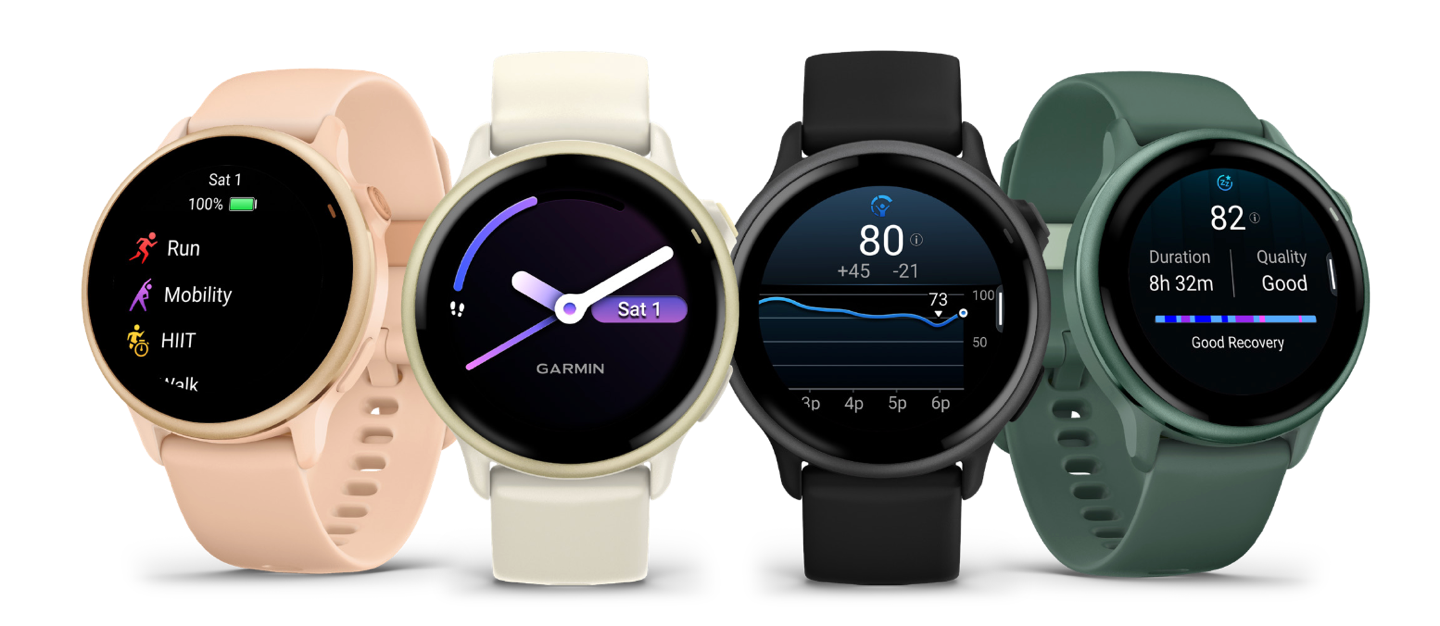
On upfront price, Amazfit is the most aggressive value brand in the category, full stop. Across the lineup it delivers roughly 80 to 90 percent of the everyday smartwatch experience at 40 to 60 percent of Garmin's price. The clearest illustration is the $299.99 standoff: the Balance 2 out-specs the Vivoactive 6 on screen, glass, water resistance, battery, and GPS hardware for the exact same money. The gap is just as wide at the bottom of the range, where the $99.99 Active 2 undercuts Garmin's cheapest AMOLED runner, the $249.99 Forerunner 165, by $150 while matching its screen size and roughly matching its battery. To match the Balance 2's hardware from Garmin, you climb toward the $549.99 Venu 4. Amazfit is not the only brand pressing Garmin on price, either — we found a strikingly similar dynamic in our COROS vs Garmin breakdown.
Garmin's counterargument is total cost of ownership, and it is a real one. Garmin watches hold their resale value far better than Amazfit's, which depreciate quickly on the secondhand market. A three-year-old Fenix still commands a meaningful price; a three-year-old Amazfit largely does not. Factor in years of software support and the ecosystem you can carry across multiple Garmin watches, and the premium looks less steep than the sticker shock suggests, especially for buyers who keep a watch a long time or trade up regularly. Amazfit wins the upfront-value race decisively; Garmin narrows the gap over the long run.
Subscriptions and Long-Term Cost
Here Amazfit pulls ahead again. Every Zepp OS feature, every training metric, every firmware update is included with the watch. There are no tiers, no paywalls, no recurring fees.
Garmin introduced Connect+ in March 2025 at $6.99 per month or $69.99 per year, layering AI-driven insights and other premium features on top of the free experience. Garmin maintains that existing free features stay free, but it has signaled that some new advanced features will be developed for the paid tier going forward. Nothing essential is behind the paywall today, but the trajectory matters: over three years, Connect+ adds roughly $210 to the cost of a watch that already commanded a premium. For value-focused buyers, Amazfit's no-subscription stance is a meaningful point in its favor.
Who Should Buy What
Buy Amazfit if you: - Want the most hardware — screen, glass, water resistance, and battery — for your money - Are a casual-to-keen fitness user who wants solid tracking without elite-grade analytics - Refuse to pay subscription fees and want every feature included - Value multi-week battery life and hate charging - Want flagship materials like sapphire and titanium without flagship prices
Buy Garmin if you: - Are a serious endurance athlete who makes training decisions off the data - Need routable maps for navigation where improvisation matters - Want the deepest analytics, the broadest app ecosystem, and seamless music and payments - Plan to keep or resell the watch over many years and care about long-term support - Trust a longer track record of GPS and optical-HR accuracy in hard conditions
Our Verdict
For most buyers, Amazfit offers the better value, and it is not a close call on the metric the question actually asks about. Dollar for dollar, Amazfit delivers more screen, better materials, longer battery, comparable flagship GPS hardware, and a complete feature set with no subscription — frequently at half of Garmin's price. If your goal is the most capable, best-built smartwatch your money can buy, and you are a normal human who walks, runs, sleeps, and wants to see the numbers, Amazfit is the smarter spend. The Balance 2 versus Vivoactive 6 matchup is the whole argument in miniature: same price, more watch.
Garmin remains the better value for a specific and important buyer: the serious athlete who depends on the accuracy and depth of the data, the explorer who needs routable maps, and the long-term owner who benefits from years of software support and strong resale value. For that person, the premium is not a tax — it is the price of a tool they can trust, and nothing Amazfit makes fully replaces it yet.
The honest summary is that Amazfit has won the hardware value war so thoroughly that Garmin no longer competes on specs at all. Garmin now sells trust, depth, and longevity — and for the buyers who genuinely need those things, it is worth every dollar. For everyone else, Amazfit is the better value, and the gap is widening in its favor.
Specs at a Glance
Budget Tier
| Spec | Amazfit Active 2 | Garmin Forerunner 165 |
|---|---|---|
| Price | $99.99 | $249.99 |
| Display | 1.32" AMOLED, 466x466, 2,000 nits | 1.2" AMOLED, 390x390 |
| Glass | 2.5D tempered (sapphire on Premium) | Chemically strengthened |
| GPS Battery | Up to 21 hrs | Up to 19 hrs |
| Smartwatch Battery | Up to 10 days | Up to 11 days |
| GPS | Single-band (6 systems) | Single-band multi-GNSS |
| Music Storage | MP3 upload | Yes (Music model) |
| Subscription Option | None | Connect+ optional |
Mid-Range Tier (Same Price)
| Spec | Amazfit Balance 2 | Garmin Vivoactive 6 |
|---|---|---|
| Price | $299.99 | $299.99 |
| Display | 1.5" AMOLED, 480x480, 2,000 nits | 1.2" AMOLED, 390x390, ~1,500 nits |
| Glass | Sapphire crystal | Gorilla Glass 3 |
| Water Resistance | 10 ATM (100m) | 5 ATM (50m) |
| GPS | Dual-band, 6 systems | Multi-GNSS (single-band) |
| GPS Battery | 33 hrs | Up to 21 hrs |
| Smartwatch Battery | Up to 21 days | Up to 11 days |
| Music | MP3 upload | Spotify, Amazon, Deezer (offline) |
| Subscription Option | None | Connect+ optional |
Rugged Tier
| Spec | Amazfit T-Rex 3 | Garmin Instinct 3 (45mm AMOLED) |
|---|---|---|
| Price | $279.99 | $449.99 |
| Display | 1.5" AMOLED, 480x480, 2,000 nits | 1.2" AMOLED, 390x390 |
| GPS | Dual-band, 6 systems | Multi-band GNSS with SatIQ |
| GPS Battery | Up to 42 hrs | Up to 32 hrs |
| Smartwatch Battery | Up to 27 days | Up to 18 days |
| Offline Maps | Yes (free) | No |
| Durability | MIL-STD-810H, 10 ATM | MIL-STD-810, 10 ATM |
| Music Storage | MP3 upload | No |
Premium Tier
| Spec | Amazfit T-Rex 3 Pro | Garmin Fenix 8 (47mm) |
|---|---|---|
| Price | $399.99 | $999.99 |
| Display | 1.5" AMOLED, 480x480, 3,000 nits | 1.4" AMOLED, 454x454, 2,000 nits |
| Materials | Grade 5 titanium, sapphire | Titanium/steel, sapphire/Gorilla Glass |
| GPS | Dual-band, 6 systems | Multi-band with SatIQ (routable maps) |
| GPS Battery | Up to 38 hrs | Up to 47 hrs (35 hrs multiband) |
| Smartwatch Battery | Up to 25 days | Up to 16 days |
| Dive Rating | 45m | 40m (EN13319) |
| Ecosystem | Zepp OS 5 | Connect IQ, Garmin Pay, music |