
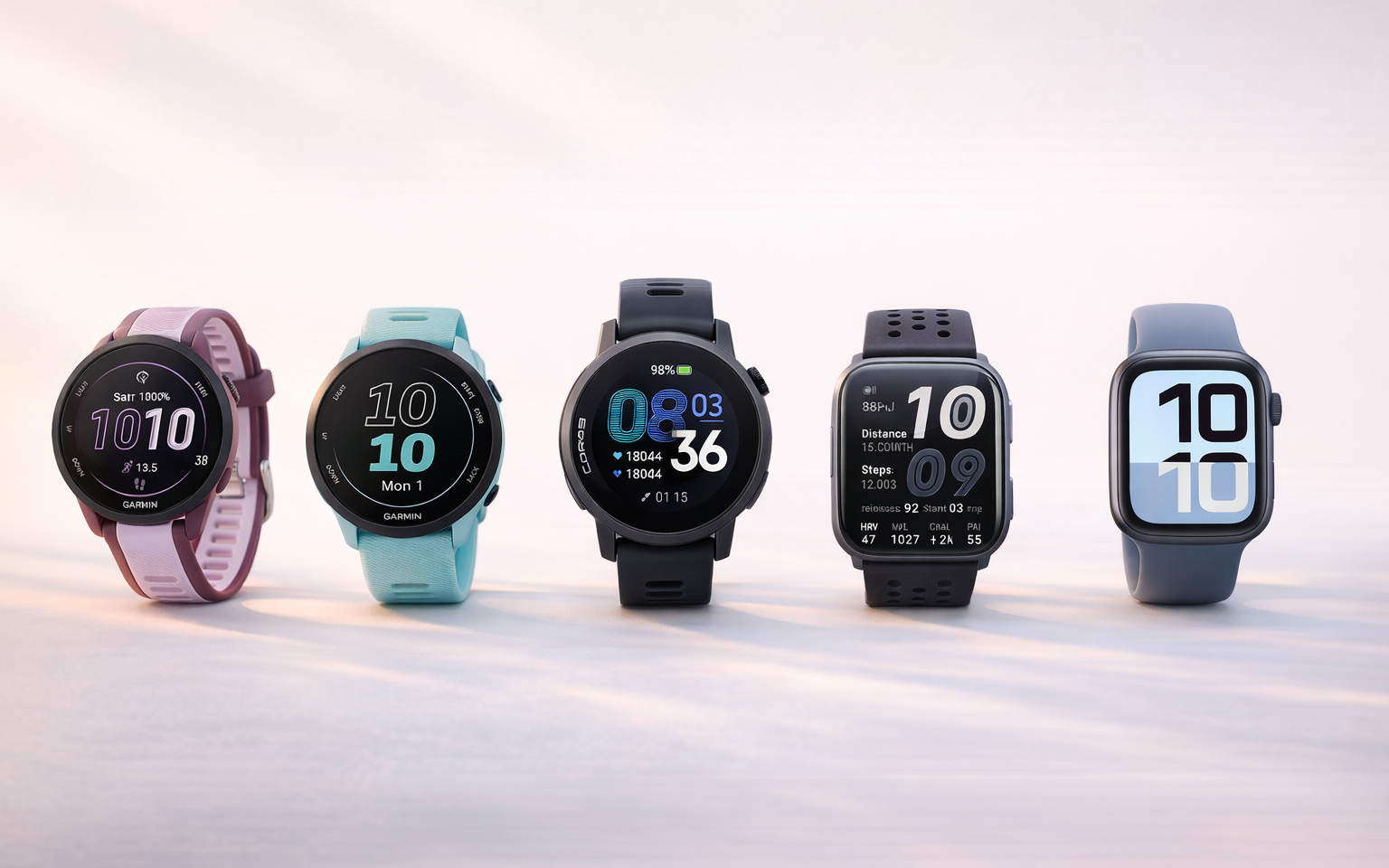
Buying your first running watch should make running feel easier, not turn it into homework. Yet walk into the world of GPS watches and you hit a wall of jargon – training load, VO2 max, real-time stamina, dual-frequency multiband positioning – most of which a new runner will never touch. The truth is that the best running watch for a beginner isn't the one with the longest spec sheet. It's the one you can strap on, press start, and actually understand. For most new runners, that watch is the Garmin Forerunner 165: it costs $249, weighs next to nothing, and comes with free adaptive coaching that quietly tells you what to run each day.
But "beginner-friendly" means different things depending on your phone, your budget, and how much you plan to run. Some people want the cheapest possible way to start; others already live inside Apple's ecosystem and just want their watch to fit in. The two things that matter most at this stage are simplicity – a clean interface, fast GPS lock, and coaching that removes the "what workout do I do today?" paralysis – and not being overwhelmed or nickel-and-dimed. Every pick below nails those basics. We've deliberately left out the $500-plus multisport monsters; if you're just starting out, you don't need a watch built for ultramarathons, and paying for one is the fastest way to feel intimidated by the sport. Here are six watches that get new runners moving, from an $80 starter to a $249 do-everything favorite.
Garmin Forerunner 165 – Best Overall for Beginners ($249)
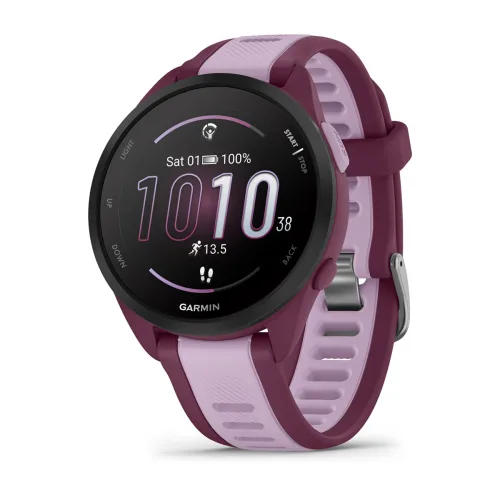
Best Overall. The Forerunner 165 is the watch we hand to almost every new runner who asks. It's the cheapest Garmin with a bright 1.2-inch AMOLED touchscreen, so your pace and distance are easy to read at a glance and in direct sunlight – a small thing that makes a big difference when you're learning to run by feel. At roughly 39 grams it disappears on the wrist, and the touchscreen-plus-buttons interface is genuinely approachable.
What makes it a beginner's watch rather than just a cheap Garmin is Garmin Coach. You tell it your goal – a first 5K, 10K, or half marathon – your race date, and which days you can train, and it builds a free adaptive plan that adjusts to how your runs actually go. It removes the single biggest source of beginner overwhelm: deciding what to do each day. You also get a race-time predictor and VO2 max estimate that show visible progress over the first few weeks, which is exactly the kind of encouragement that keeps a new habit alive. Battery life is a non-issue at up to 11 days of general use and around 19 hours of GPS.
The 165 keeps things simple by leaving out the advanced training-analytics suite found on pricier Forerunners like Training Readiness and Training Load – features beginners neither need nor want yet. Its GPS is single-band rather than multiband, which can drift slightly among tall city buildings but is accurate everywhere else. If you want to run without your phone, the $299 Music edition stores around 500 songs. Read our full Garmin Forerunner 165 review for the deeper breakdown.
Garmin Forerunner 55 – Simplest Way Into Garmin Coaching ($150)
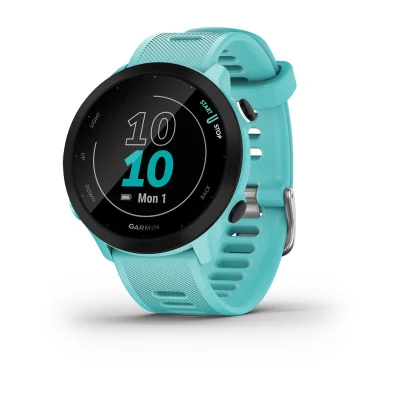
Best Value. If $249 is more than you want to spend on a first watch, the Forerunner 55 is the cheapest way to get Garmin's coaching smarts on your wrist. Originally $199.99 and now routinely on sale for around $150, it packs the same Garmin Coach adaptive plans, daily suggested workouts, and PacePro pacing guidance as watches costing far more. For a couch-to-5K beginner who wants structure without complexity, it does everything that actually matters.
The tradeoffs are all about age: the 55 launched in 2021 and shows it. Instead of a touchscreen AMOLED, it uses a smaller button-operated transflective display – always readable in sunlight and easy on the battery (up to two weeks of general use), but it feels dated next to the 165 and takes a beat longer to navigate mid-run. It's also single-band GPS. None of that stops it from being a superb learning tool, and its simplicity is arguably a feature: fewer screens to get lost in. The main question is price. When the 165 drops close to the 55's cost, the newer watch is the better buy – we lay out that decision in our Forerunner 55 vs 165 comparison.
Coros Pace 4 – Best Battery and GPS Accuracy ($249)
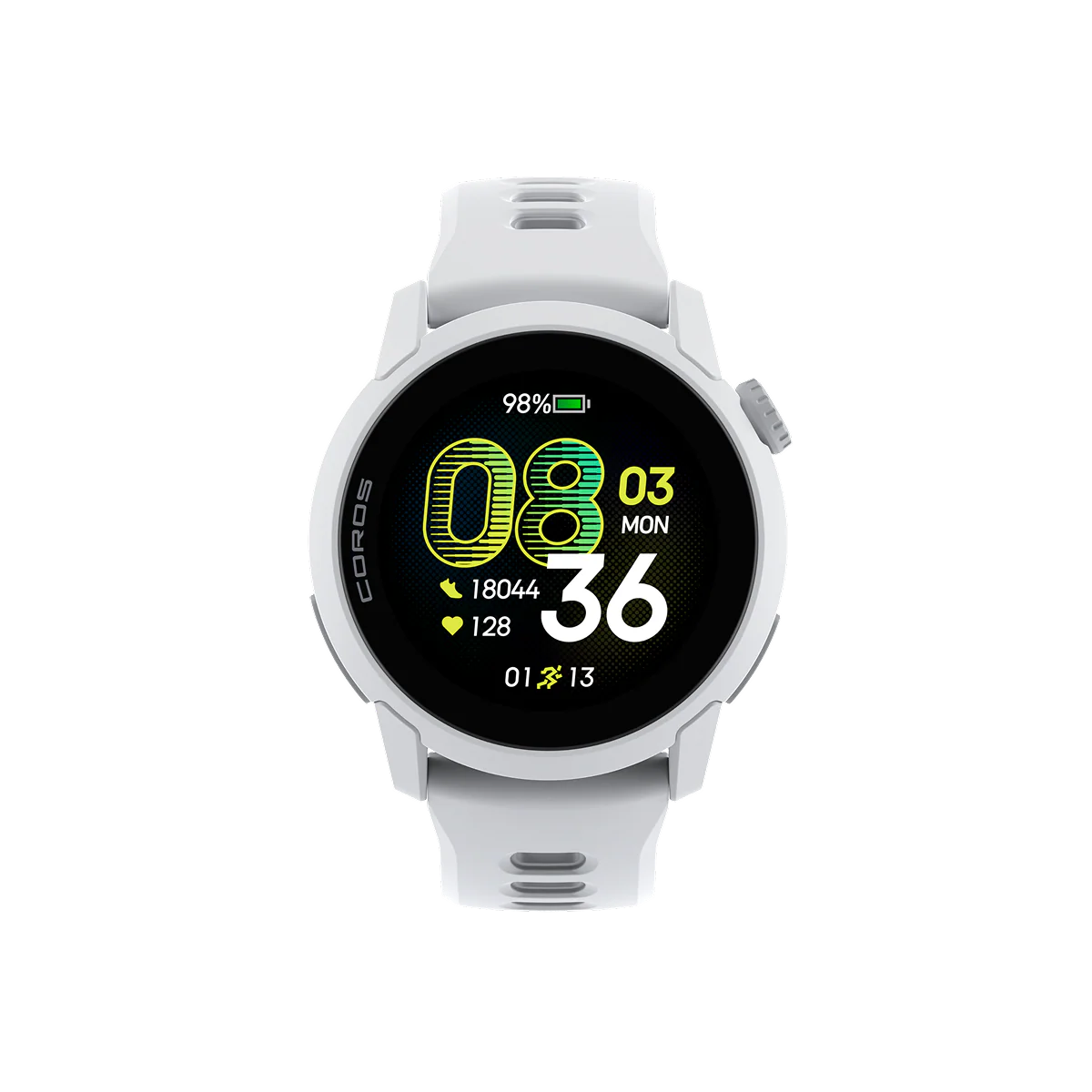
Best for Battery and Accuracy. The Coros Pace 4 is the value surprise of this list. For the same $249 as the Forerunner 165, it delivers hardware that punches well above its price: a 1.2-inch AMOLED touchscreen, a featherweight ~40-gram build, and – remarkably at this price – dual-frequency GPS that tracks across five satellite systems. That's the kind of positioning accuracy usually reserved for $500 watches, and it means your first race routes and city runs map cleanly.
Battery life is in another league too: up to around 41 hours in standard GPS mode and close to three weeks of daily use, so charging is rarely on your mind. Coros keeps its app clean and – crucially for beginners wary of extra bills – charges no subscription; all your training analysis is free. The catch is that Coros is a smaller ecosystem than Garmin, with fewer third-party integrations and no built-in offline music service. Its guidance also leans more analytical than Garmin Coach's plug-and-play, hand-holding plans, so it suits a beginner who's curious about data over one who wants to be told exactly what to do. If you value accuracy and battery over ecosystem polish, it's the smart pick – and it holds its own against pricier rivals in our Coros Pace 4 vs Garmin Forerunner 265 comparison.
Apple Watch SE 3 – Best for iPhone Users ($249)
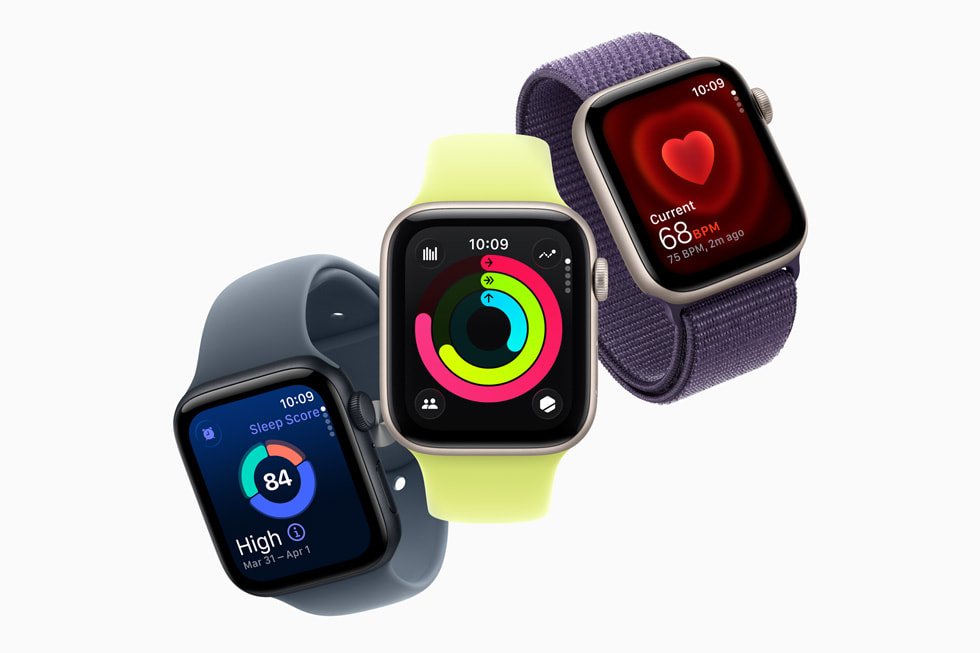
Best for iPhone Users. If you already carry an iPhone and want one device that tracks your runs and handles notifications, Apple Pay, and everyday smartwatch life, the SE 3 is the natural first watch. At $249 it now includes an always-on Retina display and Apple's fast S10 chip, and the Workout app is about as beginner-proof as it gets: pick "Outdoor Run," press start, go. The familiar phone-like interface means there's essentially no learning curve for anyone who's used an iPhone.
Its running chops are better than many assume – watchOS tracks stride length, ground contact time, and vertical oscillation, plus automatic track detection – so you can grow into more detailed metrics later. What it lacks is the deeper adaptive training system: there's no Garmin-style race-plan coaching or Running Power. The bigger limitation is battery: 18 hours per charge means nightly charging and rules it out for marathon-length GPS sessions, though it's perfectly fine for the 30-to-60-minute runs a beginner actually does. And it only works with an iPhone – Android users should look elsewhere on this list. See our Apple Watch SE 3 review for the full picture.
Amazfit Bip 6 – Best Ultra-Budget Starter ($80)
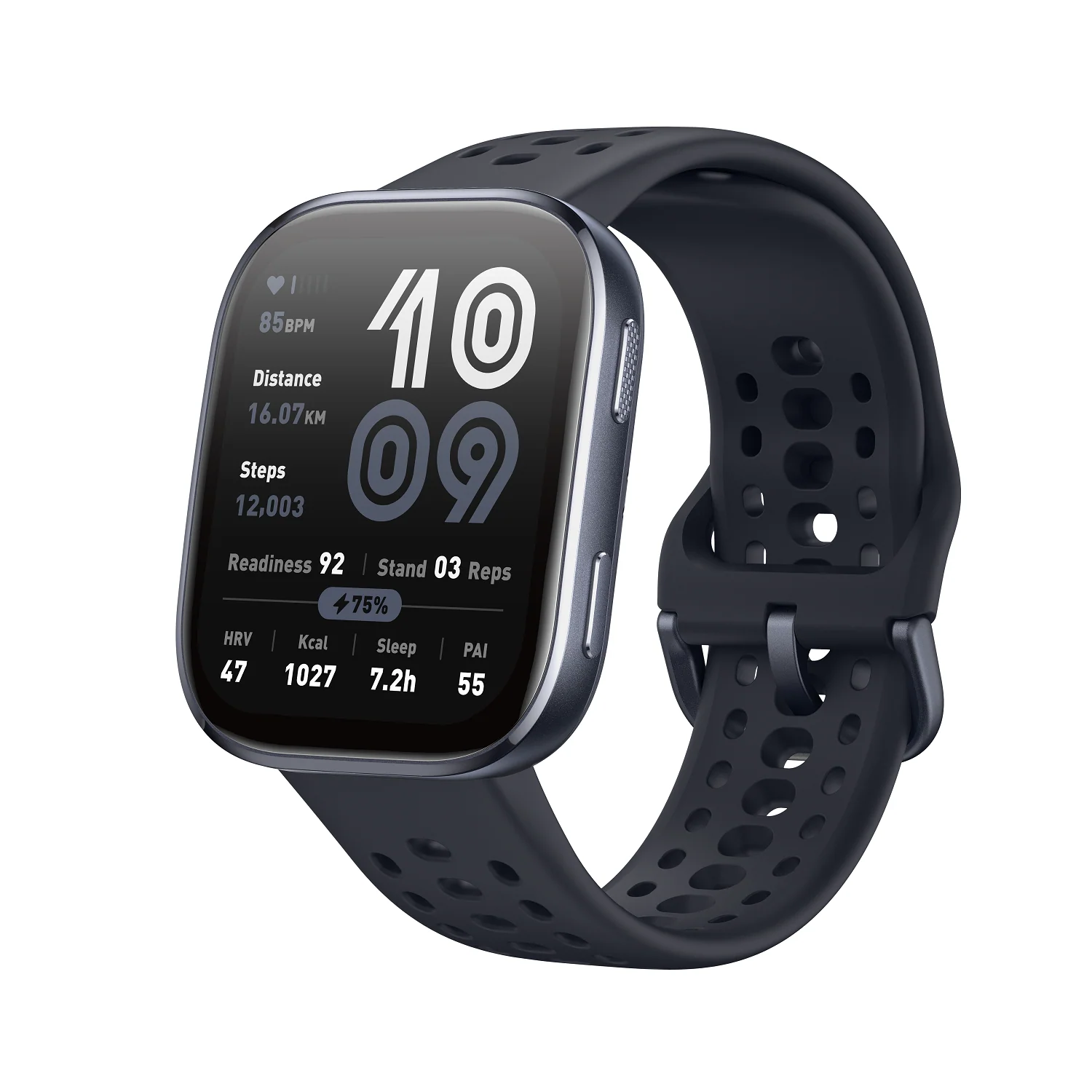
Best Ultra-Budget. Not sure running will stick? The Amazfit Bip 6 lets you find out for $80 without commitment. That price buys a genuinely nice AMOLED screen, built-in GPS, and a long battery – around 10 days of typical use – plus 140-plus sport profiles and the ability to export runs to Strava and other apps. As a first tracker to test the waters, nothing else offers this much for so little.
You do feel the price in the details. The GPS is single-frequency, so it can wander in dense urban areas, and its real-world GPS battery falls well short of the headline claim. The Zepp software has rough edges – messaging and voice features are unreliable, especially on iPhone – and the most useful coaching insights sit behind a Zepp Aura subscription (around $69/year) you can safely ignore. Treat the Bip 6 as a capable, low-stakes on-ramp rather than a precision running tool, and it's an easy recommendation. Our Amazfit Bip 6 review covers where it shines and where it cuts corners.
Fitbit Charge 6 – Best Slim Tracker for New Runners ($160)

Best Slim Tracker. Some beginners don't want a watch at all – they want something small they can wear all day and to bed. The Fitbit Charge 6 is that device: a slim $160 band with built-in GPS and, more importantly, one of the most motivating and least intimidating onboarding experiences in wearables. Fitbit's cheerful daily-activity view and encouraging nudges are brilliant at turning a non-exerciser into someone who moves, and it now folds in Google Maps, Wallet, and YouTube Music.
Be clear-eyed about its running limits, though. The Charge 6's GPS is slow to lock and its snug band can block the signal, so route maps aren't always reliable, and a single 30-minute GPS run can drain roughly a third of the battery. Several of Fitbit's better insights – detailed sleep, stress tracking – also require Fitbit Premium at $10/month. This is the pick for someone building the habit of moving who runs a few times a week, not for a runner chasing accurate splits. If that's you, one of the Garmins or the Coros will serve you far better. The Fitbit Charge 6 review has the full rundown.
How to Choose Your First Running Watch
Start with your phone. iPhone owners who want an all-in-one device should default to the Apple Watch SE 3; everyone else is better served by a dedicated running watch. From there, the decision comes down to how much hand-holding you want. If you'd like a plan that tells you what to run each day, Garmin Coach on the Forerunner 165 (or the cheaper Forerunner 55) is the gold standard for beginners. If you care more about GPS accuracy and going weeks between charges, the Coros Pace 4 is the value champion. And if you just want to dip a toe in, the Amazfit Bip 6 costs less than a pair of running shoes.
Two pieces of advice for new runners. First, don't overbuy. It's tempting to future-proof with a $600 multisport watch, but the flood of metrics tends to intimidate rather than motivate, and every watch here will outgrow your needs for a year or more. When you're genuinely ready to level up, our best running watches of 2026 guide covers the step-up options. Second, the best watch is the one you'll actually use – bright, simple, and quick to start beats a spec-sheet winner that gathers dust. Pick the one that fits your phone and your budget, then go run.