
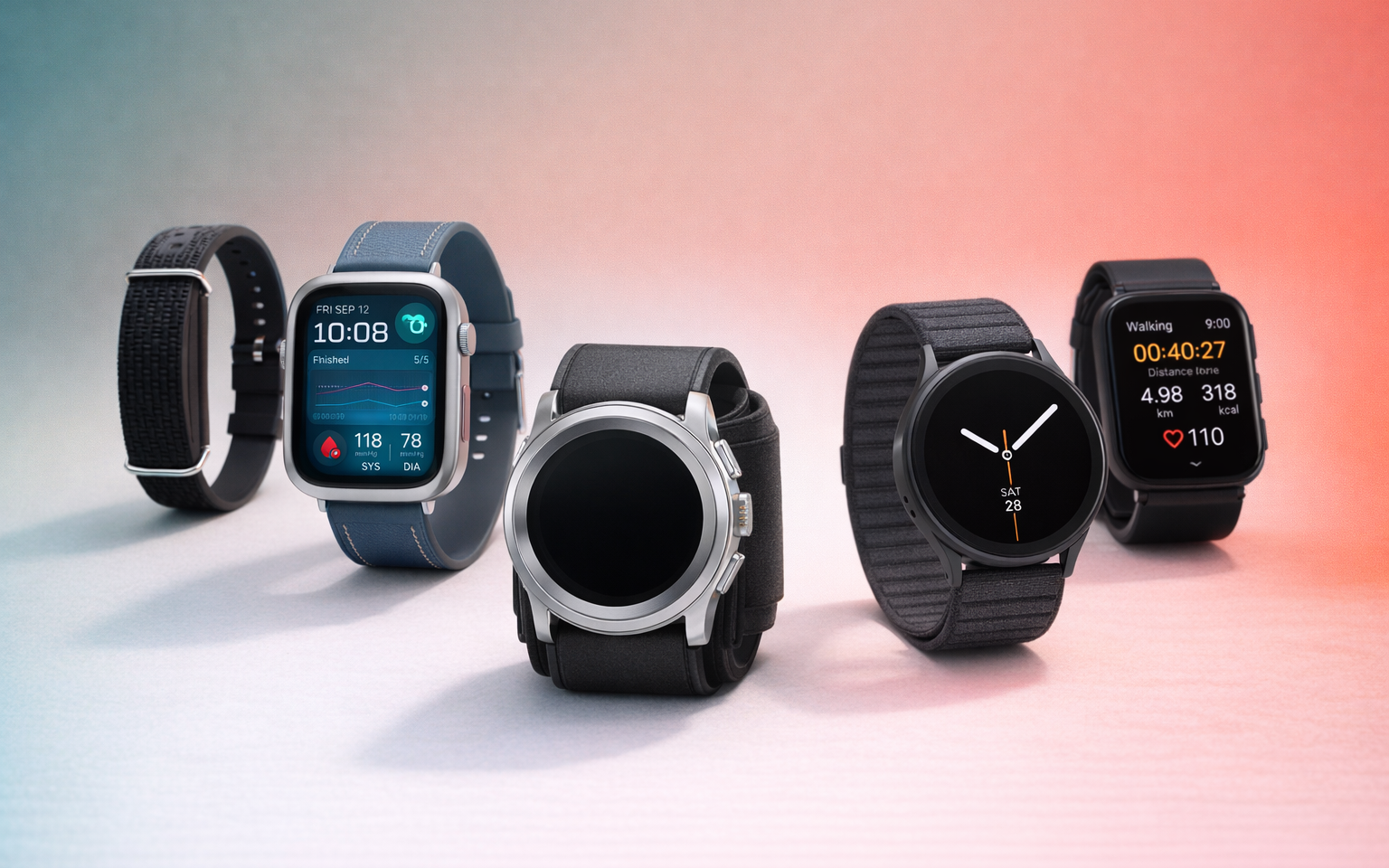
Blood pressure is the one vital sign most people actually need to watch, and it is also the one your smartwatch is worst at measuring. That tension defines this entire category. A watch that could give you a trustworthy blood pressure number on demand – without strapping on a cuff – would be genuinely useful. The problem is that most watches promising exactly that cannot deliver it, and the handful that can do so only by smuggling a real cuff onto your wrist.
So this guide splits cleanly in two. There are watches that inflate an actual cuff or use clinical-grade oscillometric sensing, and there are watches that estimate your blood pressure optically from the pulse in your wrist. The first group can approach the accuracy of a home arm monitor. The second group is convenient, continuous, and fundamentally an estimate – useful for spotting trends, not for diagnosing anything. Pick the wrong type for your needs and you will either be annoyed by a bulky cuff you never wanted or, far worse, trust a number you never should have. Every pick below is labeled by type – cuff or cuffless – so you always know which one you are getting.
Read This Before You Buy Anything
No wrist wearable has replaced the upper-arm cuff, and in 2026 the medical establishment is blunt about it. The most recent American Heart Association and American College of Cardiology guidance recommends against using cuffless blood pressure devices to diagnose or manage hypertension, because the category has not yet proven accurate and reliable enough through independent validation. That is the single most important fact in this guide.
Here is why. Optical, cuffless watches do not measure pressure directly. They read the shape and timing of your pulse through a green light on the sensor, then run that signal through an algorithm calibrated to a real cuff reading you provided earlier. The estimate drifts as your physiology changes, which is why these devices demand recalibration roughly every four weeks. Optical signals are also weaker on darker skin tones, which degrades reliability for a large slice of users. The result is a number that tracks your general direction reasonably well but should never be the basis for a medication decision.
Cuff-based watches sidestep most of this by doing the real thing in miniature – a band that tightens or an air bladder that inflates. They are bulkier, slower, and pricier, but they measure rather than infer. If you have diagnosed hypertension or your doctor wants real numbers, this is the only wrist category worth your money, and even then a validated arm monitor remains the gold standard. If you are a healthy person who wants to keep a loose eye on trends, a cuffless watch is a reasonable and far more wearable choice. Everything below keeps that distinction front and center.
Our Top Picks
Huawei Watch D2 – Best Overall
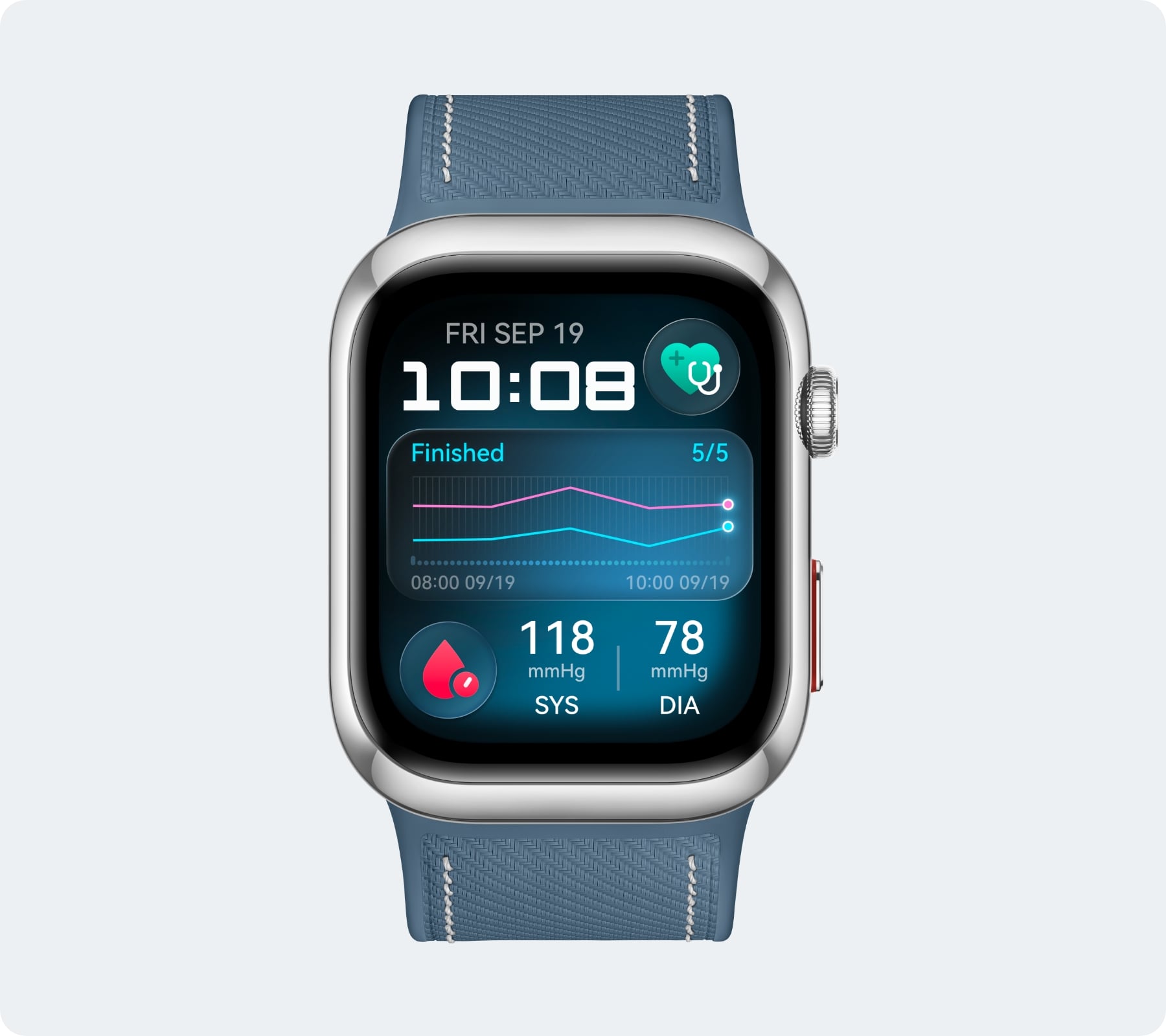
The Watch D2 is the closest anyone has come to putting a proper blood pressure monitor inside a watch you would actually want to wear every day – with one big asterisk for US buyers that we will get to. Huawei built a genuine inflatable cuff into the strap; press start, hold still, and the band tightens to take a real oscillometric-style reading rather than an optical guess. It carries European Union Medical Device Regulation and China NMPA medical certification, which puts it in a different trust bracket from the optical crowd, and it supports scheduled ambulatory readings so you can capture your pressure overnight or across a full day.
Accuracy is strong but not flawless. Readings land close to a home arm monitor when the watch is positioned correctly, though the D2 can be fussy about wrist placement and occasionally fails to complete a measurement on the first try. As an actual smartwatch it is excellent – a bright 1.82-inch AMOLED display, roughly a week of battery, and the polished fitness tracking Huawei is known for.
The catch is availability. Huawei does not sell the Watch D2 officially in the United States, and because its blood pressure feature makes a medical claim it has no FDA clearance here. American buyers are looking at import channels, with the warranty and support risks that implies. In markets where it is sold properly, though, nothing else balances medical-grade measurement and everyday wearability this well.
Omron HeartGuide – Best FDA-Cleared Option in the US
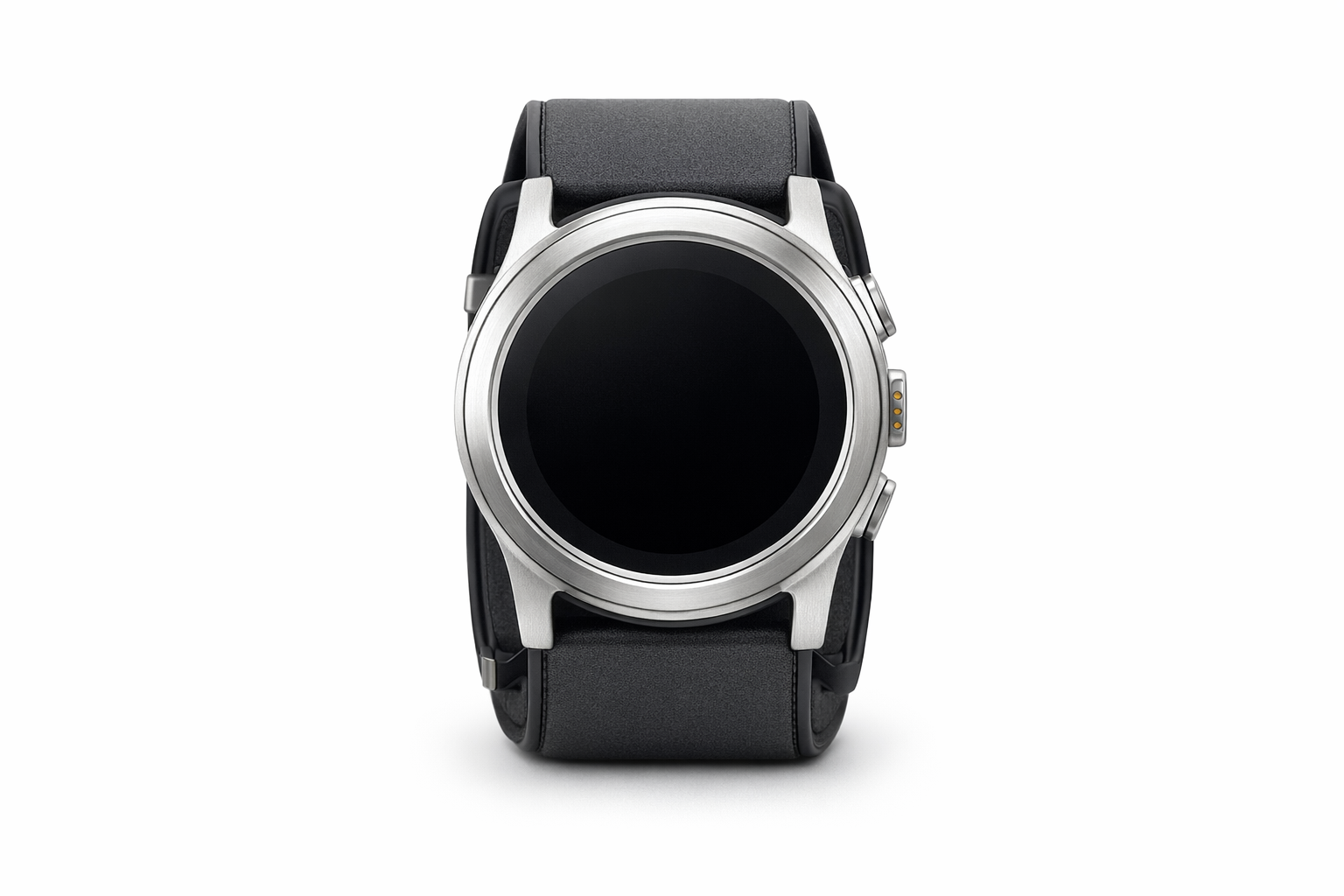
If you are in the United States and want a blood pressure watch you can actually trust and buy legitimately, the HeartGuide is still the answer years after its launch. It remains the only blood pressure smartwatch with FDA clearance, and it earns that status honestly: the watchband is a real oscillometric cuff, the same measurement principle clinical arm monitors use. Omron is a name doctors recognize, and readings sync to the HeartAdvisor app so you can track trends and share history with a physician.
You pay for that legitimacy in bulk and age. The HeartGuide is chunky and obviously a medical device first and a watch second, battery life runs only a couple of days, and its fitness and smart features are basic next to anything modern. Wrist measurements also demand that you hold your arm at heart level and stay still, or accuracy suffers. At around $500 with no subscription, it is expensive for what it does as a watch – but as a wrist-worn blood pressure monitor a US buyer can rely on, with the FDA behind it, it has no direct domestic rival.
Samsung Galaxy Watch 8 – Best for Everyday Trend Tracking
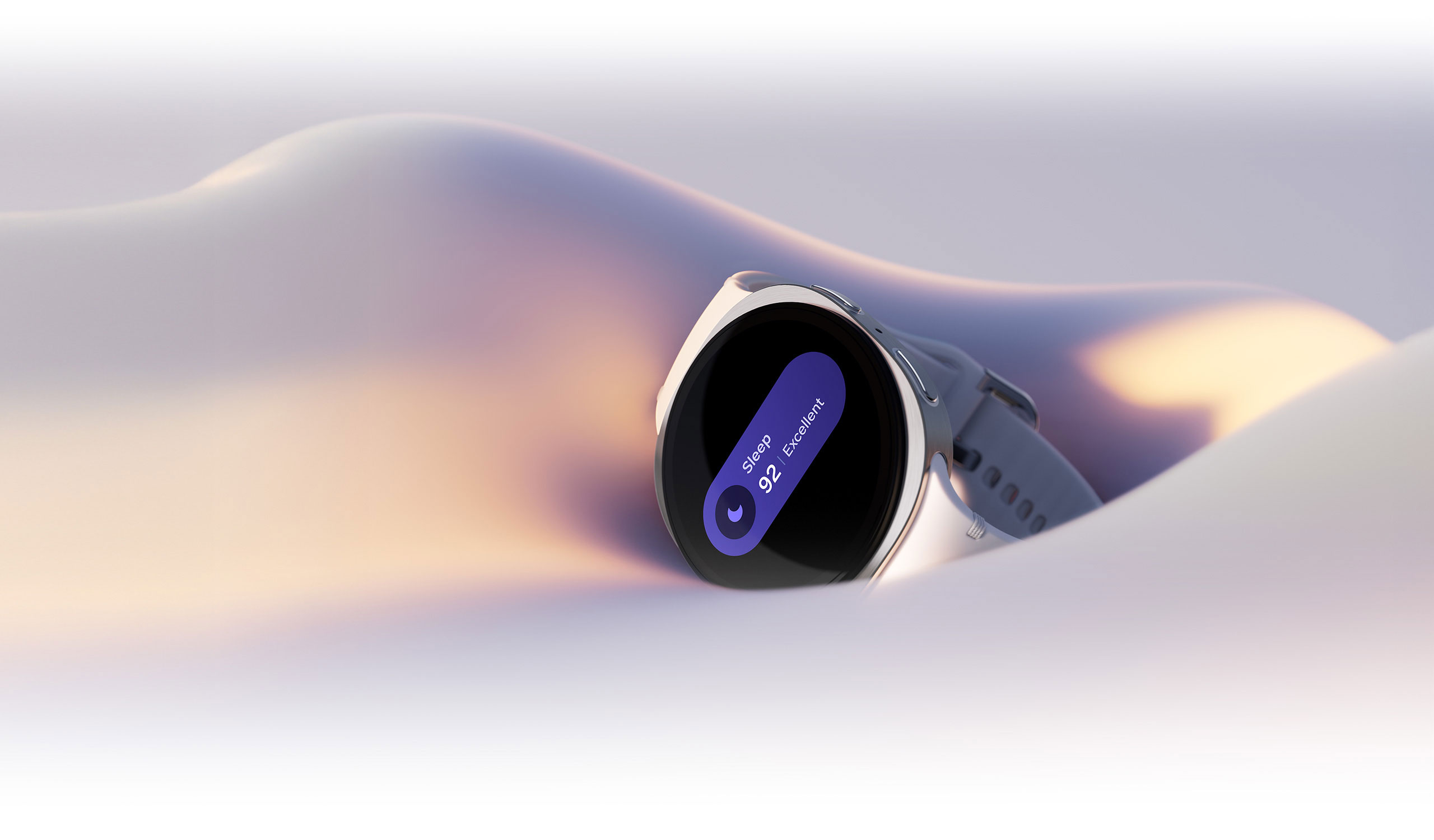
For most people who want blood pressure awareness baked into a watch they would wear anyway, the Galaxy Watch 8 is the sensible pick. Blood pressure monitoring finally reached US users in 2026 through the Samsung Health Monitor app, joining the ECG and the rest of Samsung's mature health suite in one of the best all-around smartwatches you can buy. Our Samsung Galaxy Watch 8 review covers the full package; here we care about the blood pressure piece specifically.
Be clear-eyed about what it is. This is cuffless, optical estimation, not measurement. You must calibrate it against a real arm cuff first, then recalibrate every 28 days, and Samsung ships it in the US as a wellness feature – not an FDA-cleared medical tool. Fresh after calibration it tracks within a handful of mmHg of a cuff for many users, but that accuracy decays as the calibration ages, which is the whole reason for the monthly reset. It is genuinely useful for watching whether your pressure is trending up or down over weeks; it is not something to diagnose hypertension with.
Two hard requirements catch people out: you need a Samsung Galaxy phone, because the Health Monitor app does not run on iPhone, and the feature is limited to Samsung's own recent watches. If you already live in Samsung's ecosystem, though, this adds meaningful trend data to a watch that also nails everyday smartwatch duties.
Aktiia Hilo Band – Best for 24/7 Passive Monitoring

The Hilo Band takes the opposite approach to everything above: instead of one deliberate reading, it captures your blood pressure passively about two dozen times a day, including while you sleep, and builds a picture of how your pressure actually behaves across real life rather than in the artificial calm of a single measurement. It is a slim band rather than a full smartwatch, which is the point – you forget you are wearing it, and it just collects data.
What makes the Hilo notable is credibility unusual for a cuffless device. In mid-2025 it became the first cuffless blood pressure monitor to receive FDA clearance for over-the-counter use, and Aktiia backs it with clinical validation against the same ISO standard used for traditional monitors. It still needs an initial calibration with a cuff and still carries the inherent limits of optical estimation, but among always-on wearables it is the one with the strongest evidence behind it.
The tradeoffs are its form and its cost structure. There is no display and no smartwatch functionality – this is a dedicated blood pressure tool. Pricing runs around £210 (roughly $210 to $280) with the first year of app membership bundled in and an annual renewal after that, so factor the recurring fee into the decision; US pricing follows its 2026 launch. For someone who wants to understand their blood pressure pattern over weeks and months without thinking about it, nothing else does passive tracking this credibly.
YHE BP Doctor Fit – Best Budget Cuff Watch

The BP Doctor Fit proves you do not have to spend $500 to get a real cuff on your wrist. Like the Huawei and Omron, it uses a genuine inflatable air cuff built into the strap rather than optical trickery, and its readings land within roughly 8 mmHg of a medical-grade reference – respectable for the price and far more trustworthy than any pure-optical budget watch. Battery life is a strong point, stretching to around ten days, and it throws in the usual fitness modes and sleep tracking.
Temper expectations to match the price. YHE is a small brand that has run its recent models through crowdfunding rather than traditional retail, so you are not buying the polish, support, or regulatory backing of an Omron or a Samsung. Like every wrist cuff it wants your arm held still at heart level for a clean reading. But if your goal is an occasional, genuinely cuff-based check without a flagship outlay, it is the most watch you can get for the money with a real measurement behind it.
How We Chose
Measurement method came first. We separated watches that take a real cuff or oscillometric reading from those that estimate optically, and we refused to treat the two as equivalent no matter how confident a spec sheet sounded. Regulatory and clinical backing came next – FDA clearance, EU or ISO validation, and published accuracy testing all counted heavily, because in this category unverified accuracy claims are effectively worthless.
From there we weighed the ordinary things: how wearable the device is day to day, battery life, whether it functions as a real smartwatch or a single-purpose monitor, ecosystem and phone requirements, ongoing subscription costs, and price against what you actually get. Above all we prioritized honesty about limits. A watch earns a place here for doing its job within clearly stated boundaries, not for pretending a wrist gadget can replace a clinic.
Who Should Buy What
If you have diagnosed high blood pressure or a doctor who wants real numbers, buy a cuff-based device – the Huawei Watch D2 if you can get it where you live, or the Omron HeartGuide if you are in the US and want FDA clearance behind your readings. Neither replaces a validated upper-arm monitor for critical decisions, but both give you trustworthy wrist readings between them.
If you are healthy and want to keep a casual eye on trends inside a watch you would wear anyway, the Samsung Galaxy Watch 8 is the pick – provided you carry a Samsung phone and accept the monthly recalibration. If you specifically want to understand your blood pressure pattern around the clock, including overnight, the Aktiia Hilo Band is the most credible passive tracker. And if budget is the deciding factor but you still want a genuine cuff reading, the YHE BP Doctor Fit delivers the measurement without the flagship price.
What to Avoid
Steer clear of the cheap "blood pressure smartwatches" that flood online marketplaces for $30 to $60. They estimate optically with no calibration step and no meaningful validation, and their numbers are essentially decorative. A watch that reports a blood pressure figure without ever asking you to calibrate against a real cuff is not measuring anything you should believe.
Do not expect blood pressure from the mainstream watches most people already own, either. The Apple Watch Series 11, Garmin's lineup, and Fitbit do not offer true blood pressure measurement, and no amount of third-party app enthusiasm changes that. If blood pressure is your priority, buy a device built for it. And whichever way you go, remember the ceiling: even the best of these is a supplement to, not a substitute for, a validated arm cuff and your doctor's own readings. For a broader look at what wrist wearables can and cannot track reliably, our best health monitoring watches guide puts blood pressure in context alongside ECG, temperature, and blood oxygen.
The Bottom Line
Blood pressure on the wrist is real in 2026, but only on your terms. Accept a cuff on your strap and you can get measurements worth trusting; insist on pure convenience and you get estimates worth watching but not banking on. The best blood pressure watch is the one whose limits match what you actually need – and the worst is any watch that hides those limits from you.