

For years the deal with bone-conduction headphones was simple: you traded bass for safety. You could hear the car coming, but your music sounded like it was leaking out of a phone in the next room. The Shokz OpenRun Pro 2 is the first pair that refuses to accept that trade. Shokz stapled a tiny air-conduction speaker onto its familiar titanium band, called the combination DualPitch, and handed the low end to a driver that actually moves air near your ear instead of buzzing against your cheekbone.
The result is the most complete open-ear headphone for runners yet. It is also $179.95, which is enough to buy a very good pair of sealed earbuds that will out-bass it every day of the week. So the tension here isn't whether these sound good for bone conduction – they do, comfortably the best in the category. It's whether "best in the category" is worth a premium price when the category itself is defined by a compromise. For the right runner, the answer is an easy yes.
Design & Build
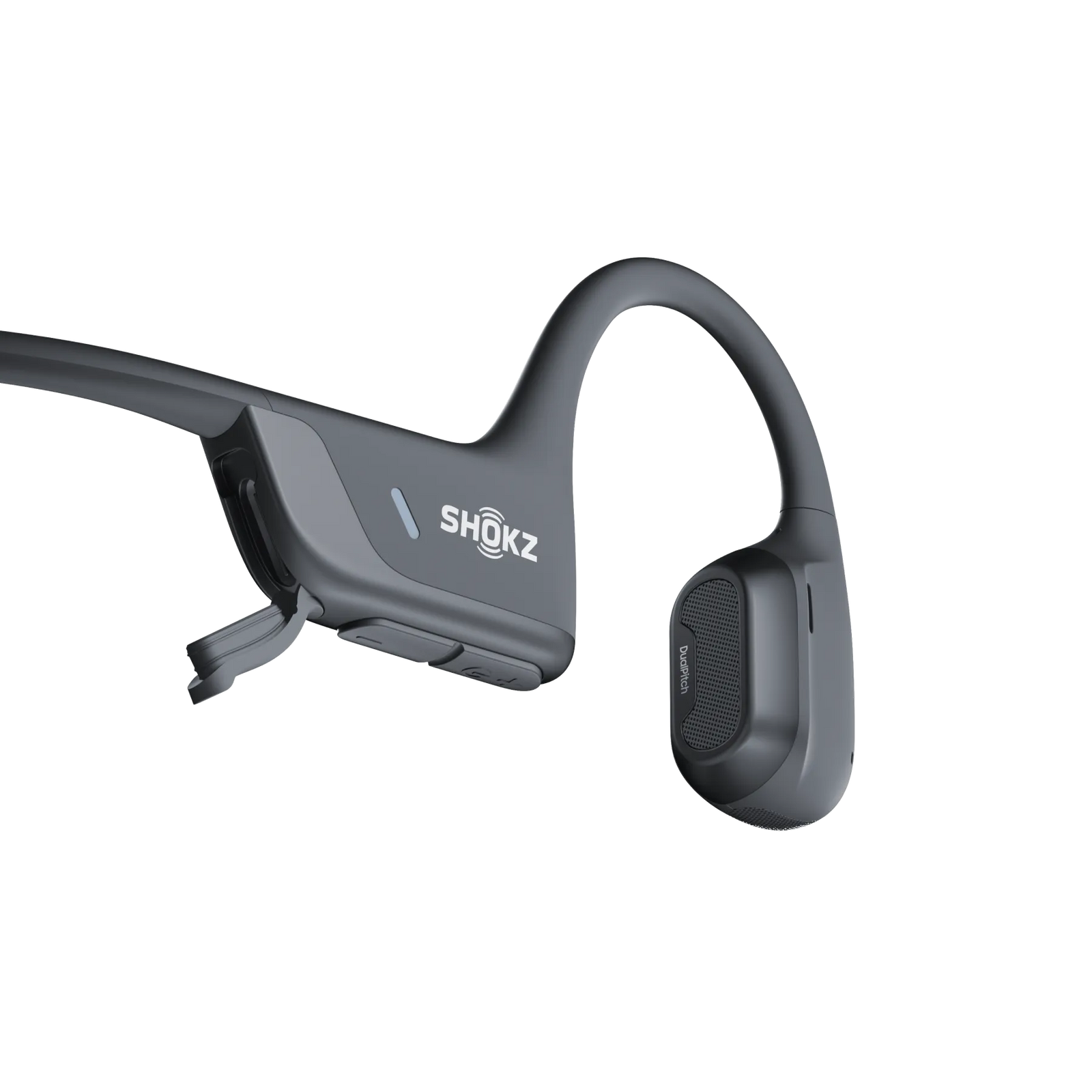
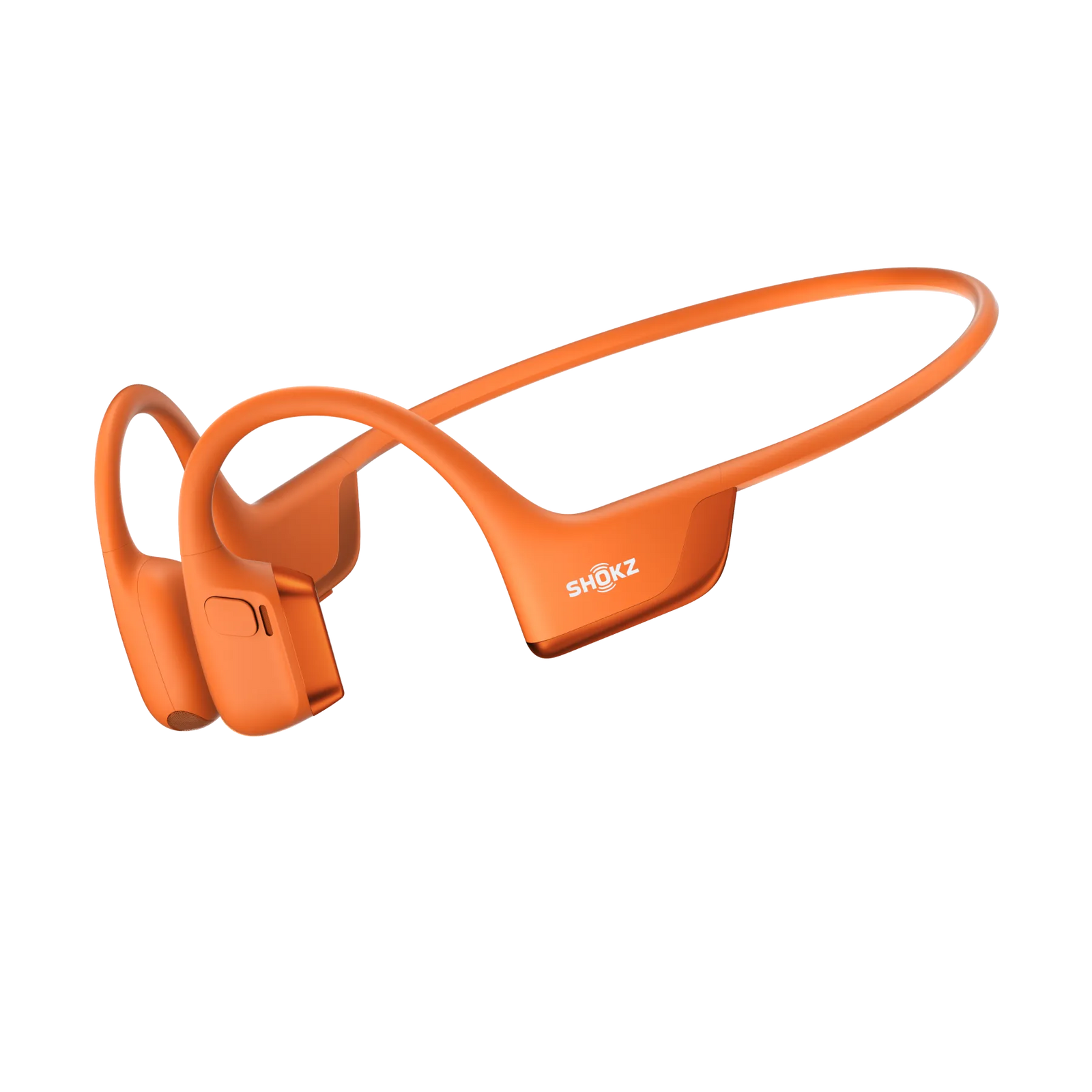
The OpenRun Pro 2 keeps the shape Shokz has spent years refining: a single flexible band that hooks over both ears and curves around the back of your neck. It's built around a titanium core, which is why a headphone that wraps your whole skull weighs only about 30 grams. Put it on and forget it – the band exerts just enough tension to stay locked through interval sprints and head-turns without ever pressing hard enough to notice on a long run. It plays nicely with sunglasses and cycling glasses too, which is not a given in this form factor.
Crucially, Shokz sells it in two sizes: Standard and Mini, the Mini band running roughly 21 mm shorter. That matters more than it sounds, because the band is not adjustable. Fit is fixed at purchase, and getting it wrong costs you on both comfort and sound – the bass driver only performs when the unit sits correctly against your head. Anyone with a smaller head should take the Mini seriously rather than defaulting to Standard.
Durability is rated IP55, which shrugs off sweat and rain but stops short of a dunking, so no swimming or showering. It's a slightly awkward spec, because the cheaper standard OpenRun carries a higher IP67 rating – you're paying more here for better sound and getting marginally less water protection. The USB-C port hides under a covered flap to keep moisture out. Colors span Black, Orange, Sky Blue, Lunar White, and a Silver edition. The one genuine design gripe is the controls: physical buttons that are hard to tell apart by feel, a problem that gets worse with gloves or mid-stride.

Sound & Situational Awareness
This is where the OpenRun Pro 2 earns its name. The core function of an open-ear running headphone is to let you hear a car, a cyclist's bell, or a training partner while your playlist runs underneath, and nothing does that better. Because your ear canals are completely unobstructed, ambient sound reaches you unfiltered – an advantage that even the best transparency-mode earbuds can't match, because they're still processing and rebroadcasting the world instead of just letting it in.
The DualPitch system is the upgrade that makes the rest of the experience credible. The bone-conduction transducers handle mids and highs; the new air-conduction speaker fills in bass that the previous generation simply couldn't produce. The difference is obvious – kick drums have actual impact, low synths land, and the tinny quality that plagued older bone-conduction headphones is largely gone. Just as welcome, the tickly vibration older Shokz models produced at high volume is far more controlled. Vocals and podcasts stay clear and intelligible even at a decent clip.
Set expectations correctly, though. This is excellent sound for an open-ear design, not a rival to a sealed earbud. Deep sub-bass is still limited, and in a strong headwind or a loud gym the open design means ambient noise physically drowns your music – there's no seal to protect it. Leakage exists but is modest; only someone standing close to you in a quiet room will catch what you're playing. On the road or trail, it's a non-issue.
Performance & Features
Connectivity runs on Bluetooth 5.3 with multipoint, so you can stay tethered to a phone and a watch or laptop at once and switch between them; the feature is toggled in the Shokz app. That app is the control center – real-time battery, firmware updates, multipoint management, and EQ. You get six presets (Standard, Vocal, Classic, Bass Boost, Treble Boost, Volume Boost) plus two custom profiles, and Bass Boost is worth living in if you want the air-conduction driver working hardest.
Call quality is the weak link. Shokz fits dual wind-resistant microphones with an AI noise-reduction algorithm and quotes aggressive background-rejection figures, but in practice the mic is merely adequate indoors and struggles noticeably in wind – exactly the conditions a runner takes calls in. Treat these as fitness headphones that can handle the occasional call, not as a headset.
Since these are built for the run itself, they belong alongside proper training hardware. Pair them with one of the best running watches of 2026 for pace and heart-rate data, or a full-featured running smartwatch if you want music, maps, and coaching on your wrist too.
Battery Life
Battery is a straightforward win. Shokz rates the OpenRun Pro 2 for 12 hours of playback, two more than the previous generation, and that figure holds up in normal use at sensible volumes. For most runners that's a full week or more of training between charges. When you do run dry, a 5-minute top-up via USB-C returns roughly 2.5 hours of playback – enough to cover almost any single session on a pre-run charge. There's no charging case here, since there's no case at all; the band charges directly. For the way people actually use these, the endurance is more than enough.

Who It's For / Who Should Skip
Buy the OpenRun Pro 2 if you run or ride outdoors and safety is non-negotiable – if you want a soundtrack without going deaf to traffic. Buy it if you hate the fatigue of in-ear tips on long efforts, if you wear glasses, or if you've bounced off transparency modes that never sound quite natural. If you're new to structured training and building a kit, these plus a solid beginner-friendly running watch is a genuinely excellent starting setup.
Skip them if bass is your priority, if most of your listening is in a loud gym or on a treadmill where awareness doesn't matter, or if you take a lot of calls on the move. In those cases a good sealed earbud gives you more sound for less money. And if you already own the original OpenRun Pro and are happy with it, the upgrade is real but not urgent unless the bass and USB-C charging specifically appeal.
The Verdict
Score: 85/100 – the best open-ear headphone a runner can buy right now, held back only by a premium price and a genuinely limited low end that no bone-conduction band will ever fully solve.
| Category | Weight | Score |
|---|---|---|
| Core Function | 30% | 88 |
| Build Quality | 15% | 84 |
| User Experience | 20% | 85 |
| Value | 20% | 78 |
| Battery | 15% | 90 |
| Overall | 100% | 85 |