
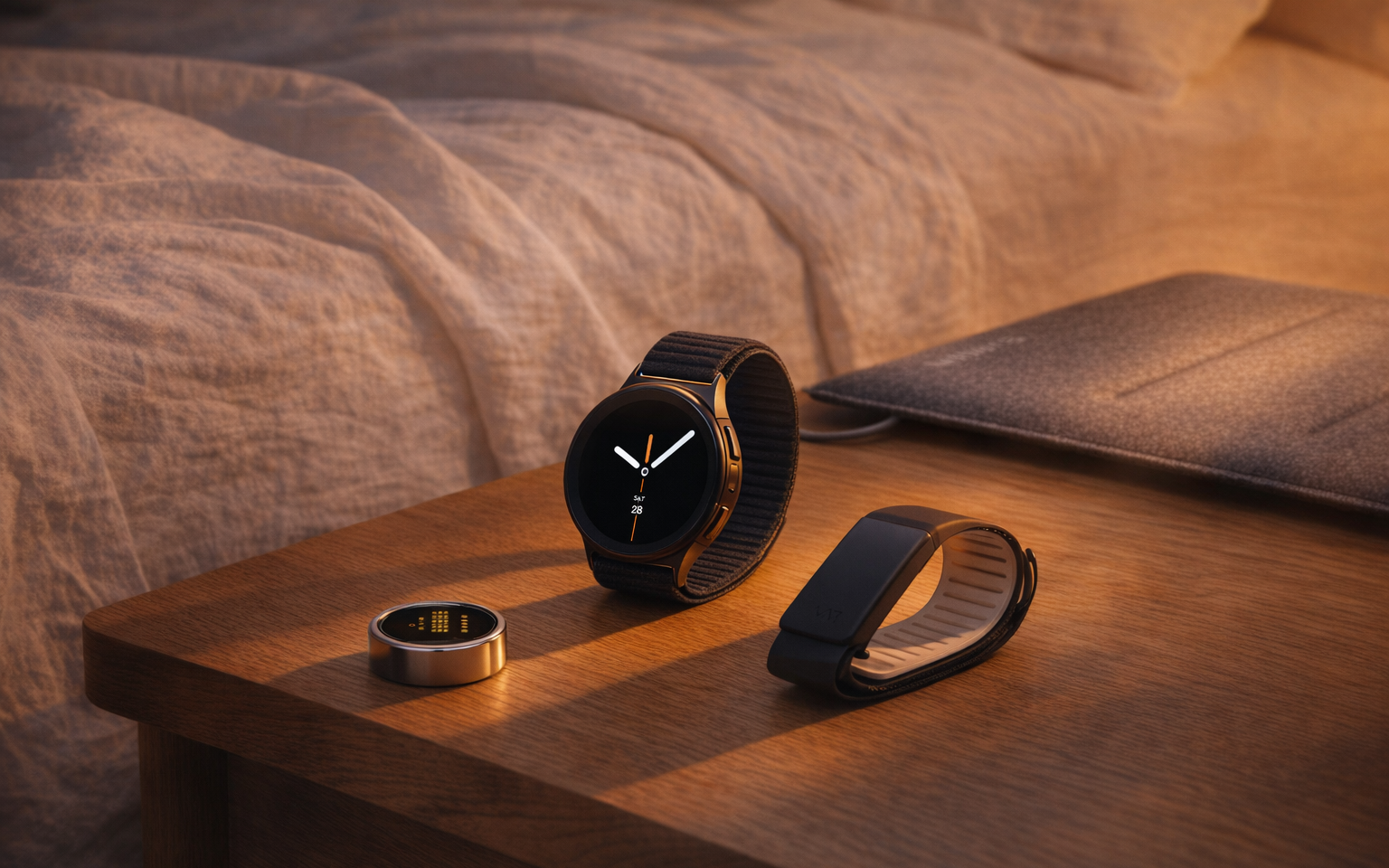
The best sleep tracker is the one you'll actually keep on all night. That sounds obvious, but it's the single fact that reshuffles this entire category. A device with lab-grade sensors is useless at 3 a.m. if it's sitting on a charger, and the most detailed dashboard in the world means nothing if the hardware is too bulky to sleep in. So before we get to accuracy, two tradeoffs decide almost everything here: wear-to-bed comfort and battery life, and whether you're willing to pay a monthly subscription for the insights.
Those two tensions pull in opposite directions across the field. Smart rings, screenless bands and bedside pads win the comfort-and-battery fight easily, because there's either nothing to notice or nothing to charge nightly. Flagship smartwatches deliver the richest health features but demand a nightly top-up, which is exactly the wrong habit for a sleep device. On cost, Oura and Whoop lock their best analysis behind ongoing fees, while a couple of our picks charge you once and never again.
Our overall pick is the Oura Ring 4: it's the most complete, most comfortable, most trustworthy sleep tracker you can buy, provided you accept the membership. But it isn't right for everyone, and this guide spans rings, watches, bands and a fully contactless bedside device so you can match the hardware to how you sleep. If you want the science behind the numbers first, our explainer on what sleep stages actually mean and what your tracker measures is a useful companion read.
Our Top Picks
- Best Overall Sleep Tracker: Oura Ring 4 – the gold standard for stages, HRV and readiness (~$349 + $5.99/mo membership)
- Best for Sleep Coaching & Recovery: Whoop 5.0 – sleep debt and recovery framing done better than anyone (hardware included, membership from ~$199/yr)
- Best Sleep Tracker You Can Wear for 30 Days: Withings ScanWatch 2 – a hybrid watch that actually stays on your wrist at night, no subscription (~$349.95)
- Best for Sleep Apnea Detection (Android): Samsung Galaxy Watch 8 – FDA-authorized sleep apnea feature, held back by nightly charging (~$349)
- Best Value Sleep Tracker: Fitbit Charge 6 – reliable staging and a free Sleep Score in a comfortable band (~$159.95)
- Best Bedside / Contactless Tracker: Withings Sleep Analyzer – tracks your whole night from under the mattress, nothing worn, no subscription (~$129.95)
Oura Ring 4 – Best Overall Sleep Tracker
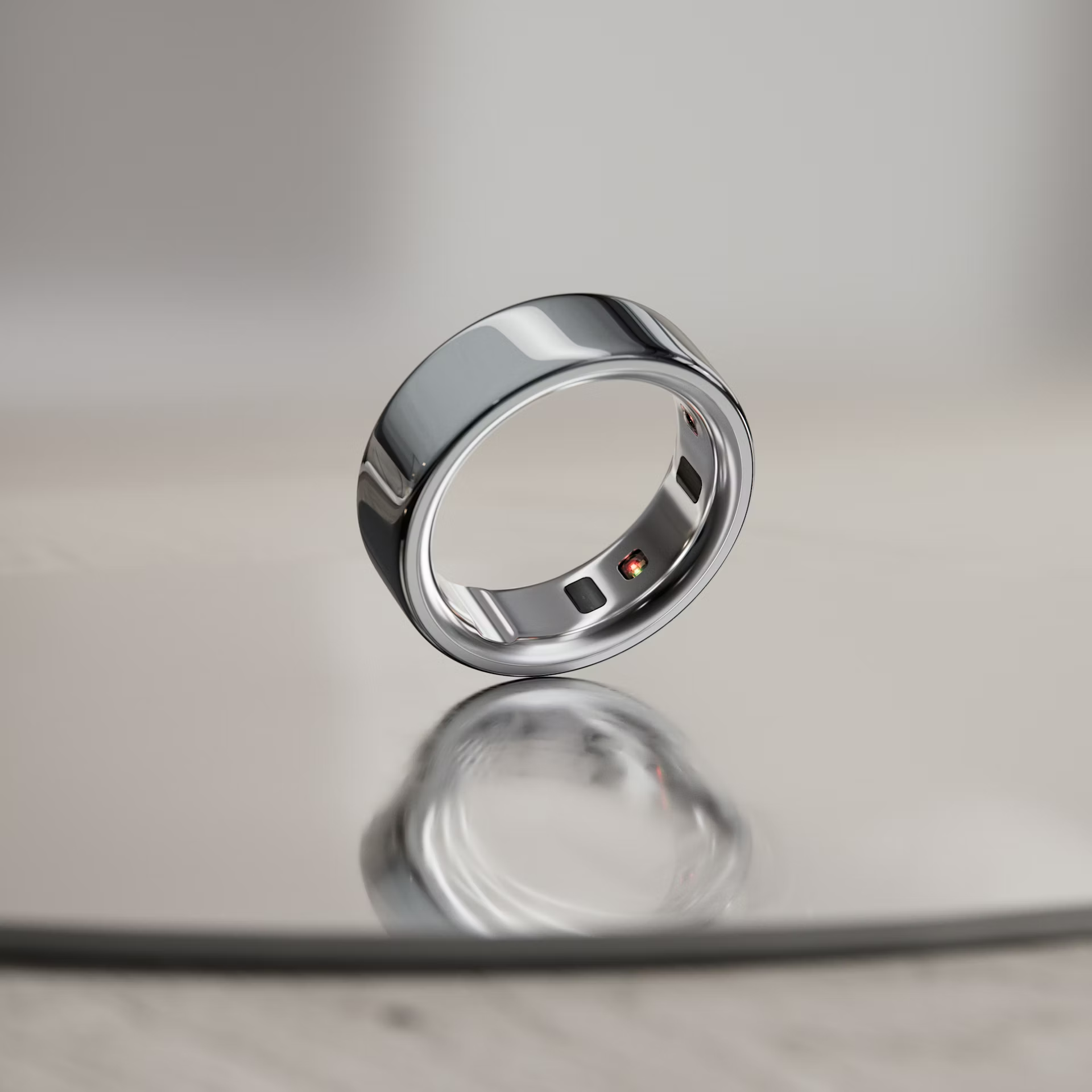
The Oura Ring 4 is the sleep-tracking benchmark the rest of this list is measured against. It reports light, deep and REM cycles alongside resting heart rate, heart-rate variability and overnight temperature trends, then rolls all of it into a morning Readiness score that tells you, in plain terms, whether to push or rest. The reason it earns the top spot isn't just the depth of data – it's that a ring is effortless to sleep in. There's no screen digging into your wrist, no band to loosen, and battery life spans several nights, so it's genuinely on you when it needs to be.
For sleep specifically, this is the most defensible choice for anyone who wants trend data they can trust over weeks and months. Temperature trends are the standout, flagging the run-up to illness or shifts in cycle before you feel them, and the stage estimates are among the most consistent in the category. This is the tracker for the person who takes sleep seriously and wants a clear, uncluttered readout each morning without wrestling with a watch UI.
The caveat is the money. The ring is around $349, and after the first year the insights sit behind a $5.99/month Oura membership – cancel it and you're left with only your three basic daily scores (Sleep, Readiness and Activity), with the detailed stage breakdowns, HRV and temperature trends all locked. You're also giving up on-wrist activity conveniences like GPS and notifications. If you specifically want the screenless approach but aren't sure whether Oura or Whoop suits you, our Whoop 5.0 vs Oura Ring 4 comparison breaks down the decision in detail.
Whoop 5.0 – Best for Sleep Coaching & Recovery
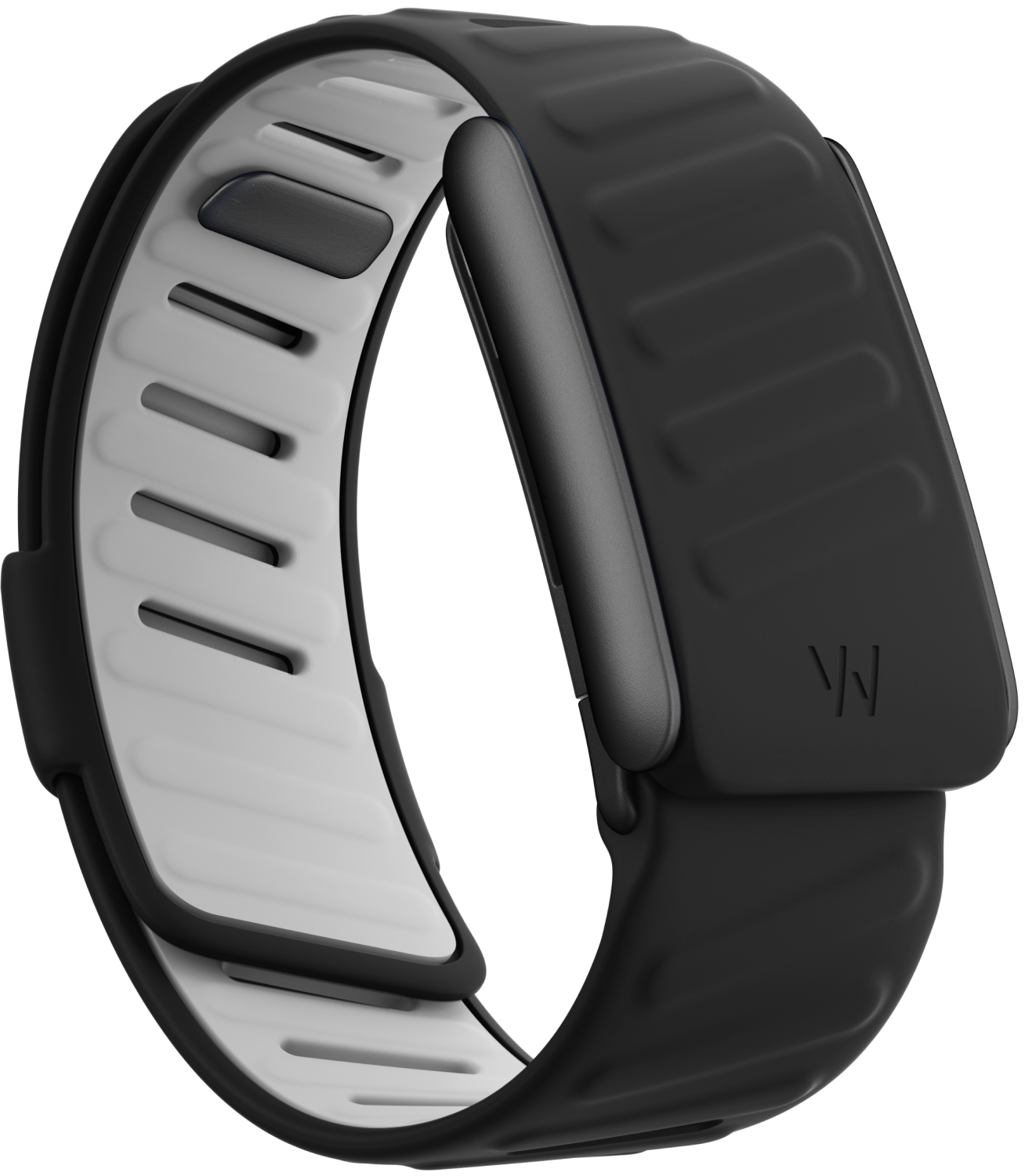
Where Oura hands you data, Whoop hands you a plan. The screenless Whoop 5.0 band frames every night around recovery: it tracks sleep performance and accumulated sleep debt, then its Sleep Coach tells you when to go to bed to hit a target and how last night's rest stacks up against the strain you put on your body during the day. That strain-versus-recovery loop is the clearest actionable model in the category, and it's why athletes and habitual overtrainers gravitate to it.
For sleep, the appeal is that the band all but disappears. There's no display to charge nightly, and the battery pack slides on without taking the sensor off your wrist, so tracking never has to stop – a real advantage for capturing an unbroken picture of your nights. If your goal is behavior change rather than a static readout, Whoop's coaching does more to actually move your sleep than a bare hypnogram ever will.
The catch is that Whoop is a subscription first and a device second. There's no way to buy the hardware outright and stop paying; membership starts around $199/year and the band is bundled in, but let the subscription lapse and the whole thing goes dark. If you're weighing whether that ongoing commitment pays off, our take on whether Whoop is worth it digs into who gets their money's worth.
Withings ScanWatch 2 – Best Sleep Tracker You Can Wear for 30 Days
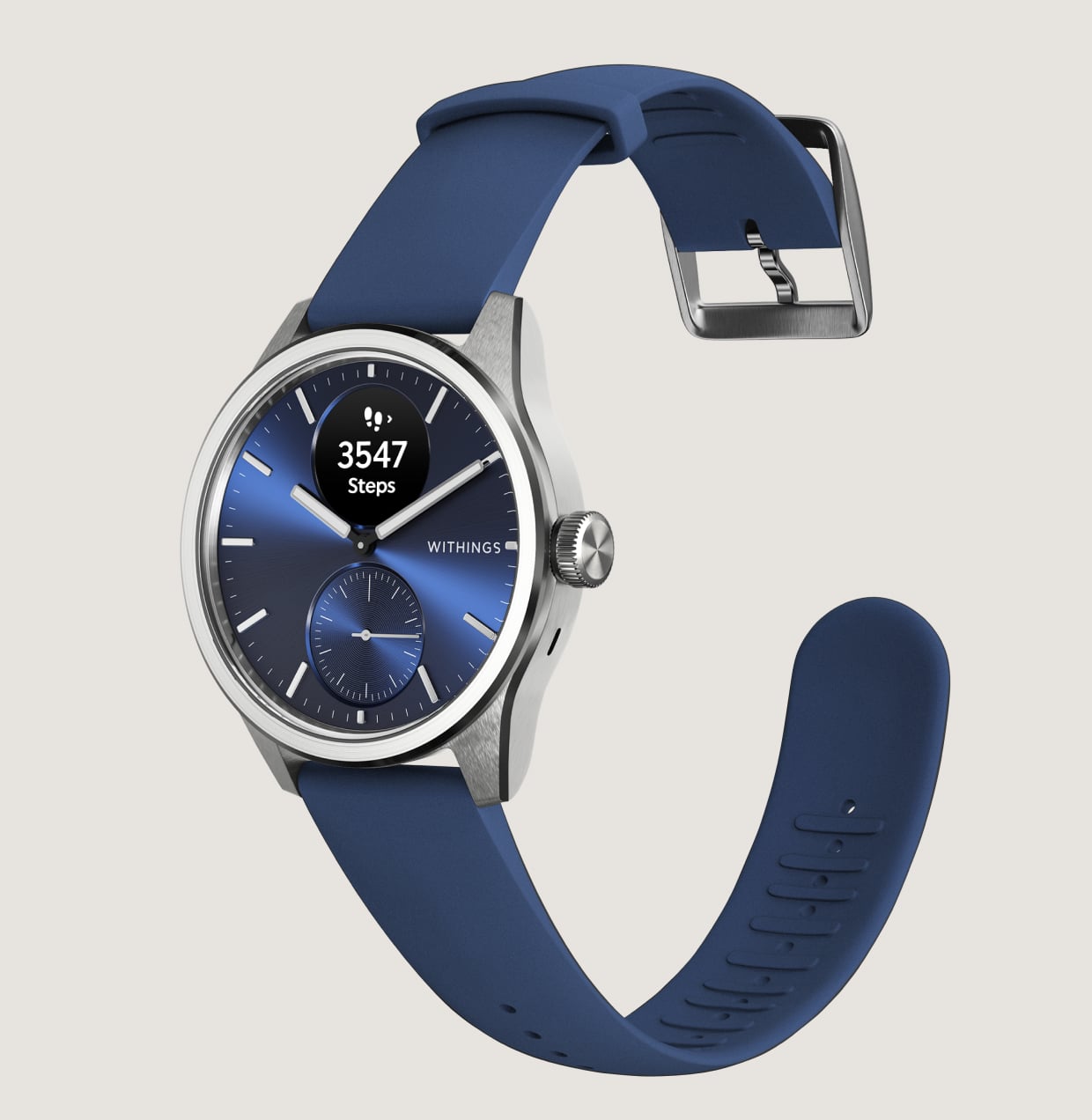
The Withings ScanWatch 2 solves the problem that quietly ruins most smartwatch sleep tracking: the charger. With up to around 30 days on a single charge, it's the rare wrist device you never have to take off at bedtime, which means it captures your nights consistently instead of whenever you remembered to top it up. It logs sleep cycles, heart rate and breathing disturbances, and presents them in Withings' clean Health Mate app.
It's also a hybrid, so it looks like a proper analog watch – real hands over a small monochrome display – rather than a slab of glass. For sleep, that traditional design is a feature, not a compromise: a slim case is far more comfortable to sleep in than a chunky flagship, and the multi-week battery removes the one habit that derails wrist-based tracking. This is the pick for someone who wants continuous, no-fuss sleep data and a watch that doesn't shout about being a computer.
Best of all, the core sleep tracking carries no subscription. Withings sells an optional Withings+ plan for extra coaching, but the stages, heart rate and breathing metrics are yours to keep for the one-time ~$349.95 price. The tradeoff is depth: you won't get the granular HRV-driven recovery scoring that Oura and Whoop build their whole experience around. For most people who just want to understand their sleep without paying monthly, that's a trade worth making.
Samsung Galaxy Watch 8 – Best for Sleep Apnea Detection (Android)
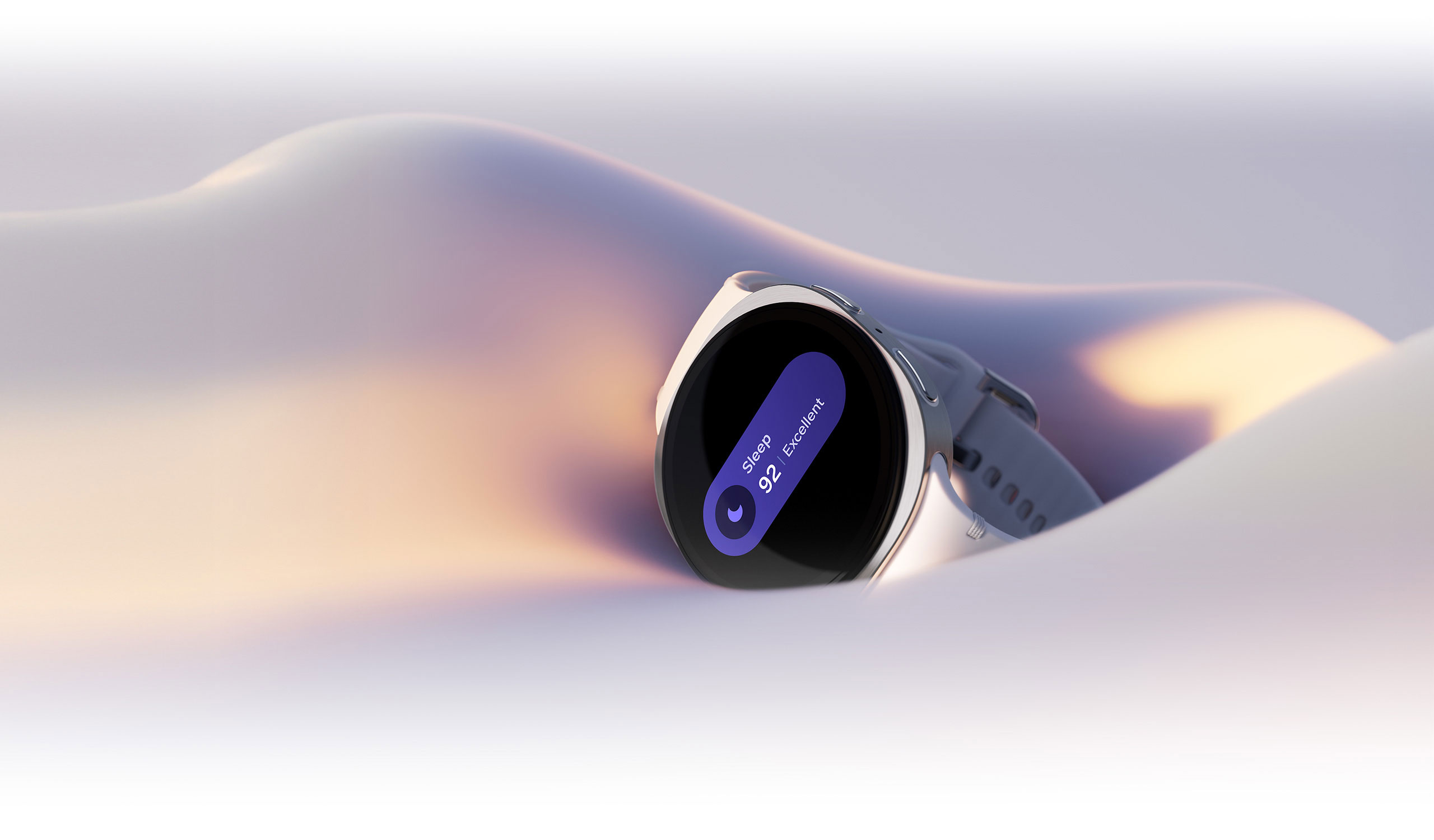
For Android users, the Samsung Galaxy Watch 8 offers something most trackers here can't: an FDA-authorized Sleep Apnea feature that watches for the breathing disruptions associated with moderate-to-severe obstructive sleep apnea. Paired with Samsung's sleep coaching and its overnight sleep score, it turns two nights of data into a genuine health signal that can prompt you to see a doctor. That clinical-grade capability is the reason to buy it for sleep.
Two things to know before you do. First, the apnea feature runs through the Samsung Health Monitor app and requires a Samsung Galaxy phone to activate – pair the watch with a non-Samsung Android phone and you lose access to it, along with ECG and blood pressure. Second, and more relevant to this guide, the Galaxy Watch 8 is a full smartwatch with roughly a day of battery, so you have to charge it daily. That's the exact weak point sleep tracking exposes: the natural time to charge a watch is overnight, which is precisely when you need it on your wrist.
The workable routine is to charge it while you shower or during a stretch of desk time, then wear it to bed. If you can commit to that habit and you're in Samsung's ecosystem, it's a legitimately powerful sleep-health tool at around $349. If you can't, a ring, band or the ScanWatch 2 will serve your sleep tracking far better.
Fitbit Charge 6 – Best Value Sleep Tracker

Not everyone needs recovery scores and clinical apnea screening – plenty of people just want to know how well they slept, in a comfortable band that doesn't cost a fortune. That's the Fitbit Charge 6. At around $159.95 it delivers dependable light/deep/REM staging, total time asleep and a nightly Sleep Score at no extra charge, and its slim, lightweight profile is easy to forget you're wearing to bed. Battery life runs roughly a week, so like our ring and hybrid picks, it stays on when it counts.
The Sleep Score alone answers the question most people are actually asking, and Fitbit's long track record with sleep gives its staging real credibility for the price. This is the tracker to recommend to a parent, a partner or a first-time buyer who wants trustworthy numbers without a learning curve or a monthly bill.
Fitbit does sit in between our free and subscription picks, though. The deeper Sleep Profile – the monthly analysis, the animal "sleep type," the long-term trend breakdowns – lives behind Fitbit Premium at around $9.99/month. The good news is that the core nightly data stays free forever, so you can skip Premium and still get a genuinely useful sleep tracker. For value, nothing else here comes close.
Withings Sleep Analyzer – Best Bedside / Contactless Tracker
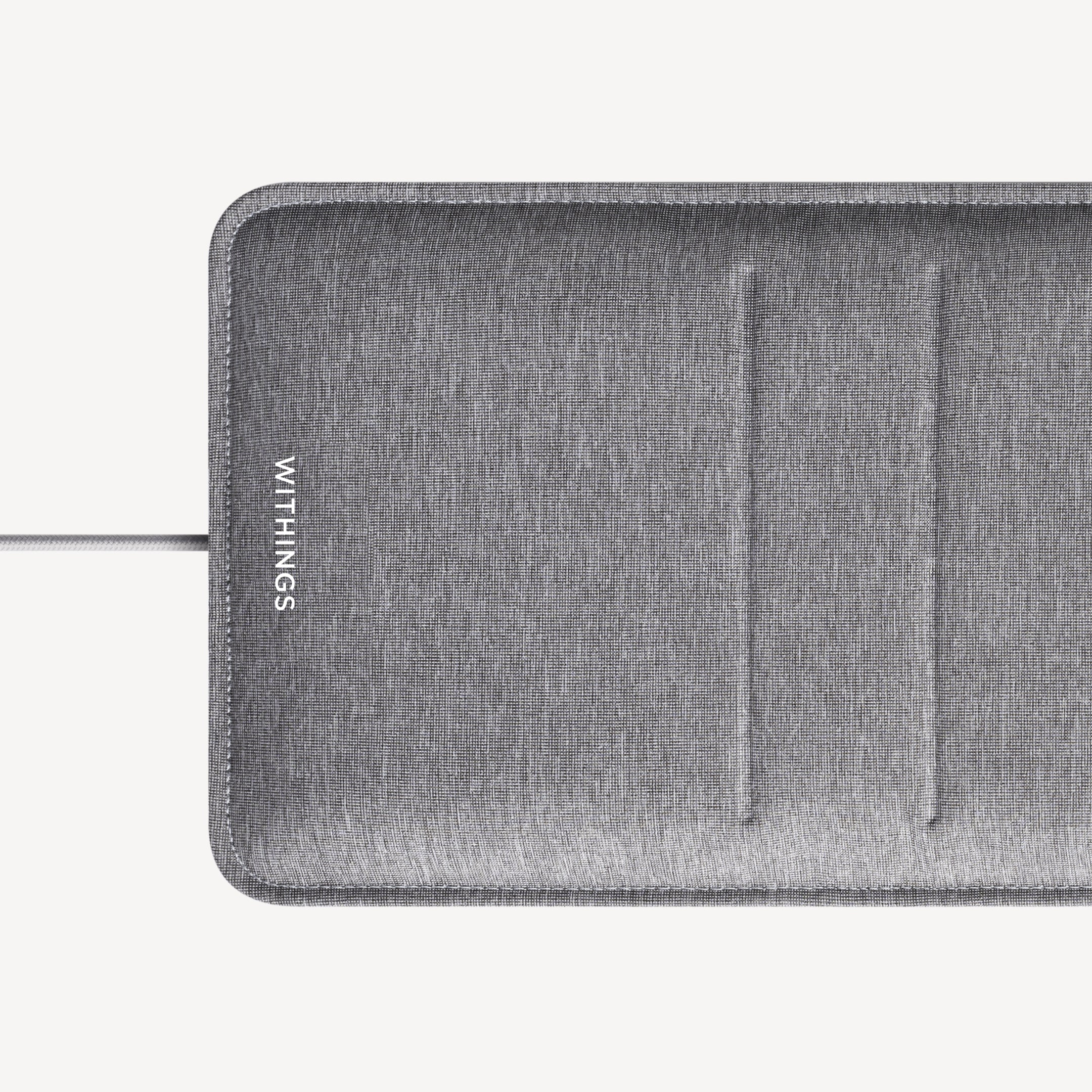
Some people will simply never wear anything to bed, and for them the Withings Sleep Analyzer is the answer. It's a thin pad that slips under your mattress beneath the pillow area and tracks your entire night with nothing on your body: sleep cycles, heart rate, snoring, and breathing disturbances, syncing automatically over Wi-Fi to the Health Mate app by morning. There's no ring to size, no band to fasten and, crucially, nothing to charge – it stays powered and simply works every night.
For sleep, contactless tracking is a genuinely different proposition. It's ideal for anyone who finds wearables uncomfortable, for restless sleepers who tug devices off in the night, and for people specifically worried about snoring and disordered breathing, since the pad surfaces breathing-disturbance patterns that a wrist device can miss. Availability of the formal apnea-index metric varies by region, so check what's offered where you live, but the core breathing and snoring insights are the reason to choose this over a wearable. And like the ScanWatch 2, there's no subscription – you pay ~$129.95 once.
The obvious limitation is that this is a pure sleep device. It does nothing during the day: no steps, no workouts, no heart rate away from the bed. It also tracks only your side of the mattress. If you want a single gadget for both fitness and sleep, look elsewhere on this list; if you want the least intrusive, most set-and-forget way to understand your nights, nothing beats a bedside pad.
How We Chose
Sleep tracking is where marketing claims and real-world usefulness diverge most, so we weighted this guide around what actually improves your understanding of your nights, not spec sheets.
- Sleep-stage credibility. We favored devices with a proven, consistent record of estimating light, deep and REM sleep, not just any tracker that prints a hypnogram. Consistency night to night matters more than a single impressive reading.
- Wear-to-bed practicality and battery. The best sensor is worthless if the device is off your body. We rewarded rings, bands, hybrids and bedside pads that stay on all night, and we treated nightly charging as the genuine drawback it is for a sleep device.
- Actionable insight. Raw stages are a starting point. We valued trackers that turn data into something you can act on – a readiness score, a sleep-debt figure, coaching, or a clinical apnea flag.
- Subscription value. We were clear-eyed about ongoing costs. A subscription can be worth it, but only if the insight justifies it, and we made sure to include strong no-subscription options for people who refuse to pay monthly.
- Comfort and friction. How pleasant a device is to live with at night – its bulk, its fit, whether you notice it at all – directly determines whether you'll gather enough data for any of it to matter.
Who Should Buy What
- The data-serious optimizer who wants the most complete, most trustworthy nightly picture and doesn't mind a subscription: the Oura Ring 4.
- The athlete or habitual overtrainer who wants coaching that ties sleep to daily strain and recovery: the Whoop 5.0.
- The set-it-and-forget-it wrist wearer who wants a good-looking watch, solid sleep data and no monthly fee: the Withings ScanWatch 2.
- The Android and Samsung-phone owner who wants clinical sleep apnea screening and will commit to charging during the day: the Samsung Galaxy Watch 8.
- The first-time or budget buyer who just wants a reliable Sleep Score in a comfortable band: the Fitbit Charge 6.
- The person who won't wear anything to bed, or who's most concerned about snoring and breathing: the Withings Sleep Analyzer.
What to Avoid
Don't buy a daily-charge flagship smartwatch purely to track sleep. If sleep is your only goal, a device that begs to be charged overnight is working against you, and a ring, band, hybrid or bedside pad will capture your nights far more reliably. Reserve the flagship watches for people who want the full smartwatch experience and treat sleep as a bonus.
Be skeptical of no-name "sleep rings" and cut-price trackers with no clinical grounding. The category has filled with cheap devices that produce confident-looking charts backed by nothing, and a sleep number you can't trust is worse than no number at all – every pick here has a real track record behind it.
Finally, go in with eyes open on subscriptions. Oura and Whoop are excellent, but their best features stop the day you stop paying, and those fees add up over years of ownership. If a recurring bill isn't for you, the ScanWatch 2, Fitbit Charge 6's free tier and the Withings Sleep Analyzer all deliver genuine sleep insight for a single upfront price.
The Bottom Line
There's no universally best sleep tracker – there's the one that fits how you sleep and what you'll tolerate on your body at night. The Oura Ring 4 is our overall pick because it pairs the deepest, most reliable data with hardware you'll barely notice, but if you won't pay a subscription, the ScanWatch 2 and Fitbit Charge 6 are outstanding, and if you won't wear anything at all, the Withings Sleep Analyzer tracks your whole night from under the mattress. Start with what you'll realistically keep using every single night. That decision matters more than any single feature on the box.