
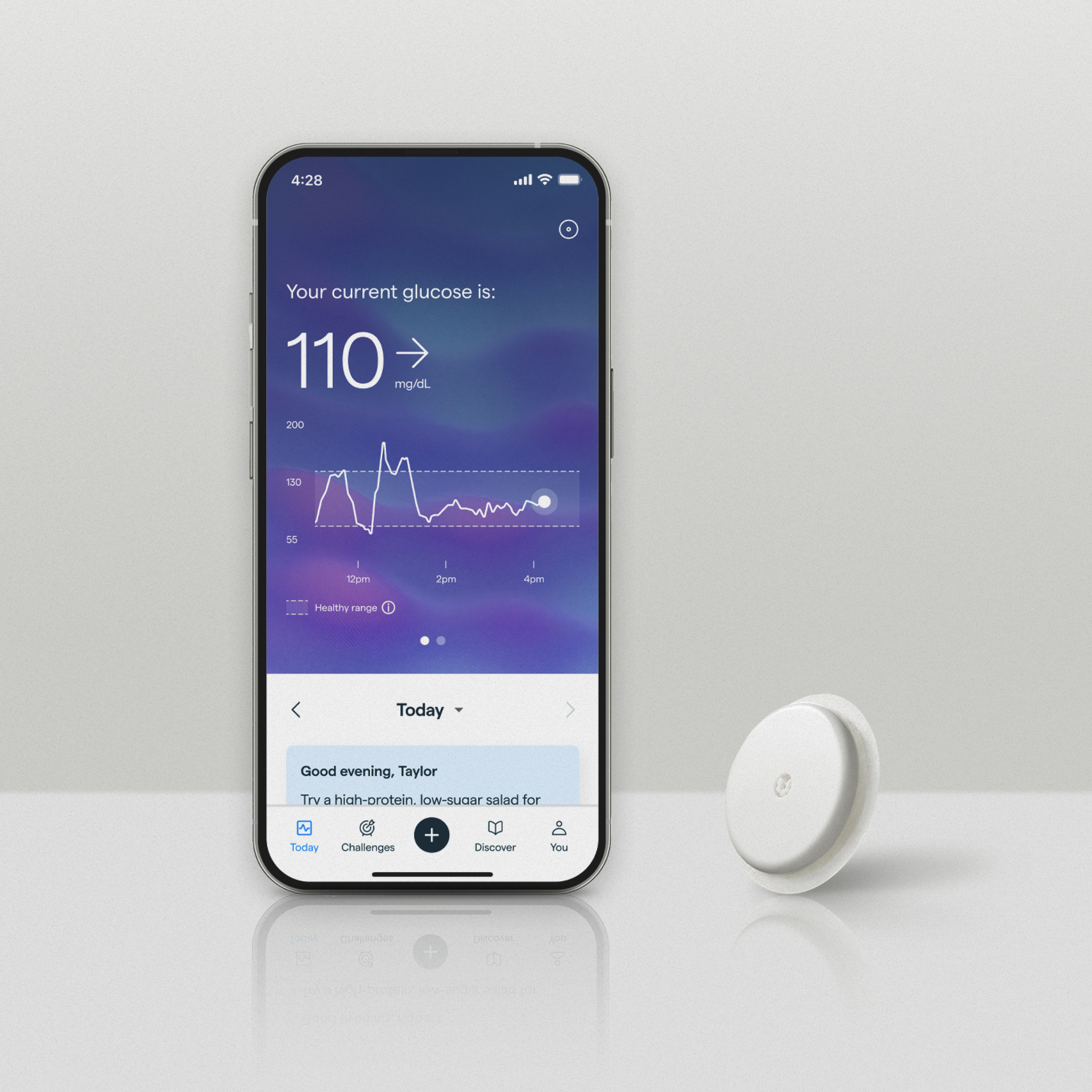
Abbott's Lingo is a small white disc that lives on the back of your arm for two weeks and quietly narrates one of your body's most private conversations: what your blood sugar does every time you eat, sleep, stress, or sweat. It is not a medical device in the way most people mean that phrase. Lingo is an over-the-counter wellness biosensor, cleared by the FDA in June 2024 for adults 18 and older who are not on insulin – explicitly for the metabolically curious, not for managing diabetes. That distinction is the whole review.
Because here is the honest tension at the center of Lingo: the hardware is excellent and the app is genuinely pleasant, but the science of glucose-tracking for healthy people is young and contested. Lingo is the most polished way yet to run a two-week experiment on your own metabolism. Whether that experiment is worth repeating month after month is a much harder question, and the answer for most people is no.
What Lingo Actually Is (and Isn't)
Lingo is a continuous glucose monitor (CGM), the same category of technology diabetics have relied on for years – but reframed as a consumer wellness gadget. It shares its sensor DNA with Abbott's medical-grade FreeStyle Libre line, then has the clinical features deliberately removed. There are no high or low glucose alarms, no prescription, no clinician in the loop, and it is not intended for diagnosis. You buy it like a fitness tracker, stick it on, and watch a graph.
What you get in exchange for that simplicity is friction-free access. It is the second OTC CGM to reach the US market, arriving just behind Dexcom's Stelo, and it sits in the same emerging space as wellness wearables like the Oura Ring 4: a device that measures a real biological signal and then asks you to decide what to do with it. The difference is that Lingo pierces your skin to get its data, and it reads the one metric – glucose – that the wellness industry has decided is the master key to energy, weight, and longevity.
It is worth being blunt about who Lingo is for. If you have diabetes and use insulin, this is not your device; you need the medically-cleared Libre or a Dexcom system with alarms. Lingo is for the healthy adult who wants to see, in concrete numbers, why they crash at 3 p.m. or which breakfast leaves them steady until lunch. As a self-education tool for that person, it works. As a permanent health fixture, its case is thin.
Design & Wear
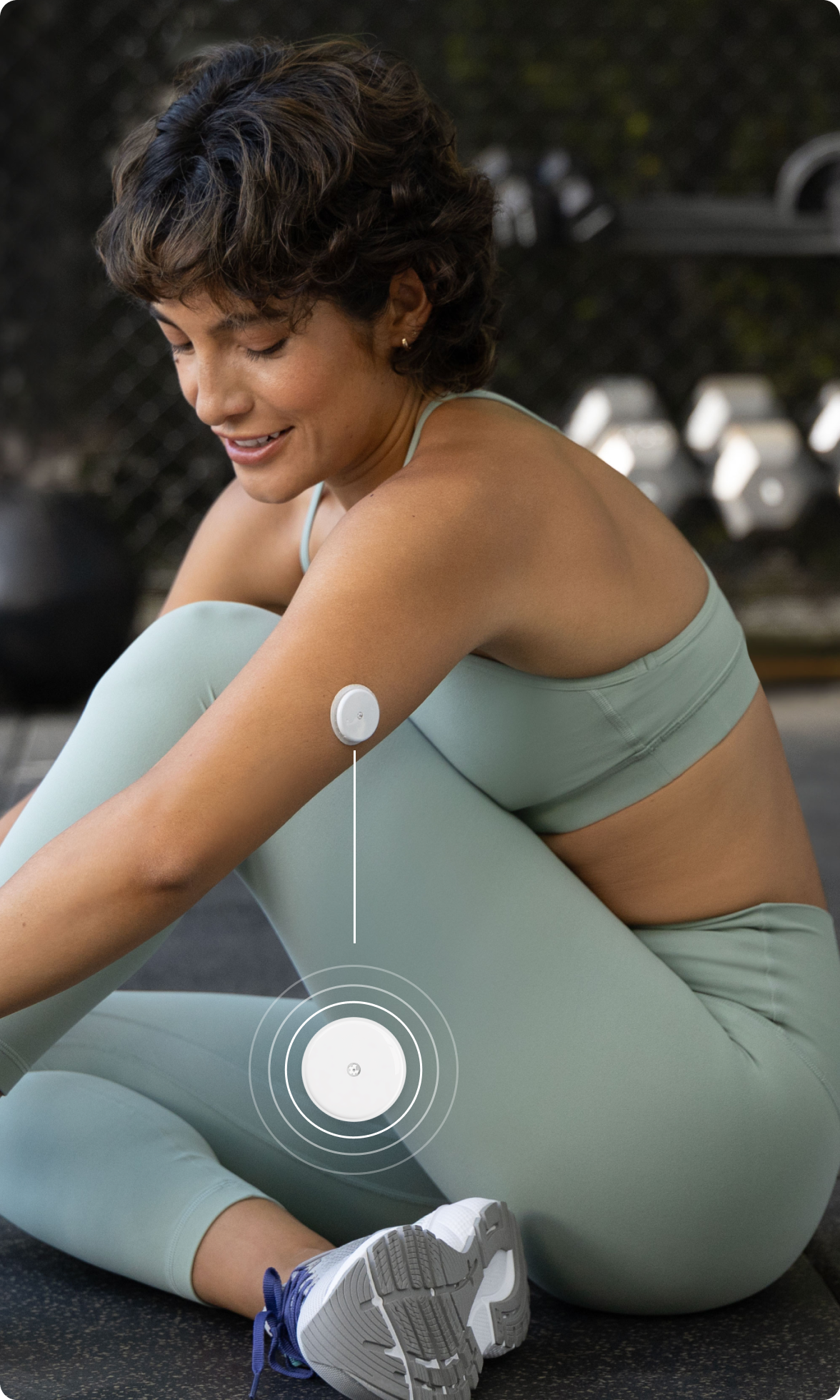
Application is the best part of the experience. The one-click applicator presses a hair-thin filament just under the skin on the back of the upper arm – closer to a firm stamp than an injection, with only mild soreness that fades within a day or two. There is no blood, no finger-prick calibration, and no separate reader to carry: the sensor is phone-only. You tap your phone to the sensor once via NFC to activate and pair it, then it streams a fresh reading over Bluetooth every single minute, 24/7 – a faster cadence than Stelo's 15-minute updates. After a 60-minute warm-up, the data starts flowing.
The sensor is comfortable and unobtrusive in daily life. It survives showers and swimming, disappears under sleeves, and you mostly forget it is there – until you sleep on that arm, which is genuinely awkward, or until it starts to peel.
Adhesion is Lingo's clearest hardware weakness. The sensor ships with minimal adhesive and no overlay patch, and it does not reliably survive the full 14 days for everyone. The uptime numbers tell the story plainly: roughly 77% of sensors last the full two weeks, but around 15% give out before day 11. If you sweat heavily, lift, or have kids and pets tugging at your sleeves, plan on buying separate adhesive patches to protect an investment that is otherwise counting down its own clock. Occasional Bluetooth dropouts that require a quick reconnect round out the minor irritations.
The App & Metabolic Coaching
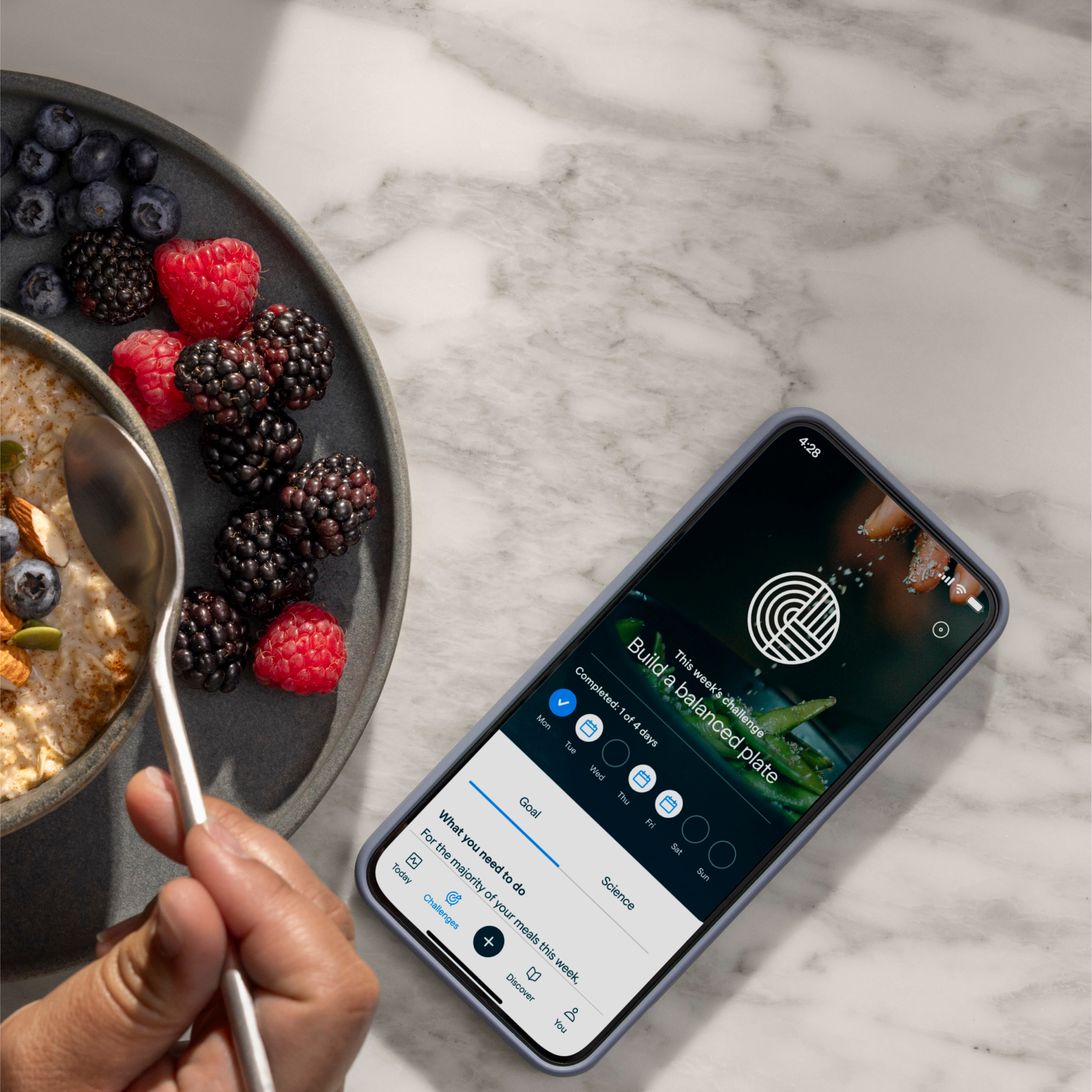
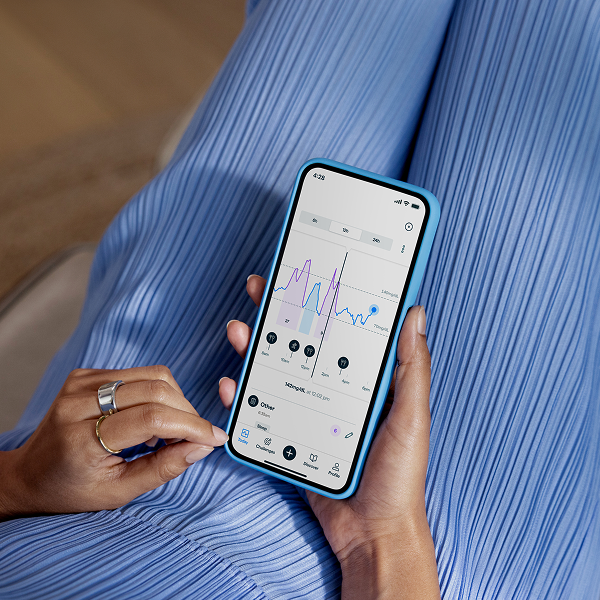
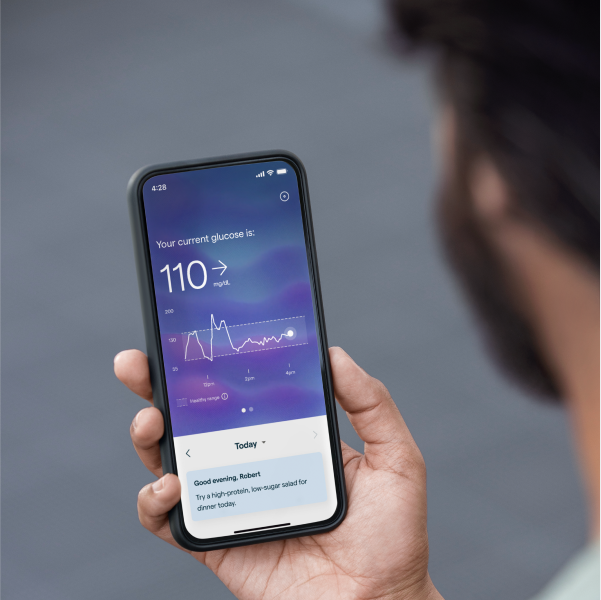
The Lingo app is where the product earns its wellness framing, and it is well done. The home screen is a clean, continuous glucose curve where spikes are obvious at a glance. The signature feature is the Lingo Count – a running daily score of your glucose spikes that functions as a metabolic-strain tally. Lower is steadier; the app nudges you to keep the number down through challenges, streaks, and gentle habit-building prompts. You log meals and workouts, and over a few days the app starts connecting specific foods and behaviors to specific spikes.
This gamified loop is effective at doing one thing: making you pay attention. Seeing a beloved breakfast spike you into the red is a more visceral lesson than any nutrition label. The insights genuinely accumulate – food composition, meal timing, sleep quality, and stress all visibly move the line.
But the coaching is guidance, not diagnosis, and the app economics deserve a hard look. Like WHOOP MG, which locks its best insights behind a subscription, Lingo's value proposition is inseparable from an ongoing spend – every insight you unlock is metered by a sensor that expires. And the market has noticed: app-store ratings are middling, with recurring user complaints about cost, sensor longevity, and the occasional questionable reading rather than the interface itself.
Accuracy & What the Data Really Tells You
For a consumer device, Lingo is accurate enough. Its reported MARD – the standard measure of how far CGM readings drift from a lab blood draw, where lower is better – lands at about 9.3%. Reported figures float around 8.3% for Dexcom's Stelo and 7.9% for the medical FreeStyle Libre 3, but those numbers come from separate manufacturer trials run under different protocols, so they are not strictly head-to-head measurements. Read them as ballpark indicators, not a precise ranking. On paper Lingo is the least precise of the three, yet all three are close enough that for spotting trends and spikes – which is all a wellness user needs – the gap is academic. Lingo will not pin down your exact number to clinical precision, but it will reliably show you the shape of your curve.
The deeper question is not whether the readings are accurate but whether they are useful for a healthy person, and here the honesty has to extend to the science itself. The evidence that glucose-response coaching improves outcomes in non-diabetics is genuinely thin. Blood-sugar responses to the identical meal vary from person to person and even day to day in the same person, so the "this food is bad for you" conclusions Lingo encourages can be less stable than the confident graph implies. Reputable researchers do not currently recommend routine CGM use for healthy adults, and glucose is only one input into metabolic health. Lingo presents its data with a certainty the underlying science has not yet earned. Treat the spikes as prompts for curiosity, not commandments.
The Real Cost
Lingo's pricing is deceptively approachable and quietly relentless. Abbott sells it in plans built around the 14-day sensor: a 2-week starter at $54 (one sensor), a 4-week plan at $89 (two sensors, about $44.50 each), and a 12-week auto-renewing subscription at $249 (six sensors, about $41.50 each). App access is bundled into every plan, it is HSA/FSA eligible, and there is a 30-day money-back guarantee.
Run the math and the wellness-CGM value question comes into sharp focus. The cheapest ongoing path is roughly $40 to $45 per sensor, or about $80 to $90 a month, indefinitely – north of $1,000 a year to keep a patch on your arm. That is the same subscription-wellness math we scrutinized in our look at whether WHOOP is worth it, except here the recurring cost buys a consumable that literally expires and must be repurchased. For a device whose core benefit is a set of lessons you largely learn in the first two to four weeks, a perpetual subscription is difficult to justify. The value is front-loaded; the billing is not.
Lingo vs. Stelo vs. FreeStyle Libre
Three sensors, three jobs. FreeStyle Libre 3 is the medical option – prescription-based, the most accurate of the trio on paper, and built for people actually managing diabetes with alarms and clinical integration. It is the wrong tool for casual wellness and priced accordingly through pharmacy channels.
Dexcom Stelo is Lingo's true rival: the other OTC wellness CGM. Stelo edges Lingo on reported accuracy, lasts 15 days to Lingo's 14, warms up in 30 minutes rather than 60, and connects to third-party apps like Apple Health and Oura. Stelo is also cleared to include adults with type 2 diabetes or prediabetes who are not on insulin, a slightly broader remit. Lingo counters with a slicker, more opinionated app, a genuinely useful spike-scoring system in the Lingo Count, and minute-by-minute readings. Choose Lingo for the better coaching experience; choose Stelo for better accuracy, longer wear, and an open ecosystem.
Who It's For / Who Should Skip
Buy Lingo if you are a healthy, curious adult who wants a structured two-to-four-week crash course in your own metabolism – someone motivated by seeing hard data on how meals, sleep, and stress move your blood sugar, and disciplined enough to cancel once the lessons land. As a finite experiment, it is the most polished option on the shelf.
Skip Lingo if you have insulin-dependent diabetes (you need a medical CGM, not this), if you are chasing a permanent daily metric – a good health-monitoring smartwatch delivers durable, subscription-free trends without a consumable on your arm – or if you are prone to anxiety about numbers, because a device that flags every spike can turn eating into a stress test. And if pure accuracy and an open app ecosystem matter most, Stelo is the smarter buy.
The Verdict
The Abbott Lingo is a very good product wrapped around an unresolved idea. The hardware is comfortable and painless, the app is the best in its young class, and the minute-by-minute data is real and legible. What holds it back is not execution but proposition: adhesion that fails too often, reported accuracy that trails its direct rival, and above all a subscription model that keeps charging long after the insights stop arriving – for benefits that the science has not yet firmly established for healthy people.
As a two-week window into your own body, Lingo is genuinely illuminating and easy to recommend. As a lifestyle subscription, it asks you to pay indefinitely for a lesson you mostly learn up front. Buy the starter plan, learn what your body is telling you, and then decide – with clear eyes – whether the graph is worth renewing.
| Category | Weight | Score |
|---|---|---|
| Core Function | 30% | 78 |
| Build Quality | 15% | 70 |
| User Experience | 20% | 76 |
| Value | 20% | 65 |
| Battery (sensor lifespan/uptime) | 15% | 74 |
| Overall | 73/100 |
The bottom line: A polished, honest window into your metabolism that's worth a two-week experiment, but hard to justify as a forever subscription.