
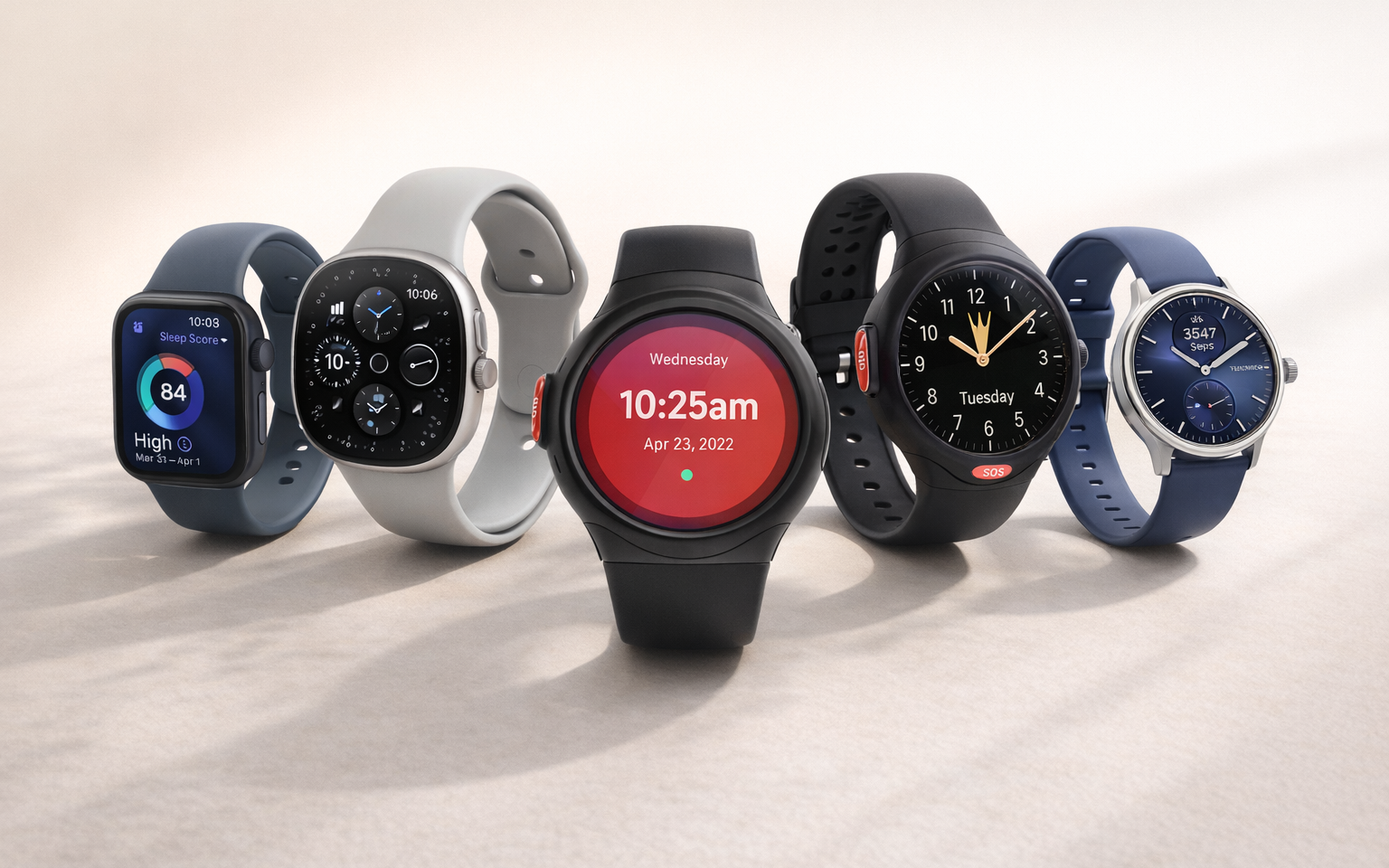
Choosing a watch for an older adult is not the same as choosing a fitness tracker. The question here is not "how many steps did I take" – it is "if I fall in the bathroom and can't get up, does help actually arrive?" This guide is built entirely around that question: fall detection, an emergency call that connects to someone who can send help, and an interface simple enough to use under stress. If your priority is activity, sleep, and everyday health instead, start with our best fitness trackers for seniors guide, which is fitness-first. This one is safety-first.
There is one tradeoff that shapes every recommendation below, so understand it before you spend a cent. A mainstream smartwatch with built-in Emergency SOS and fall detection is powerful, but it leans on a paired smartphone – and for that emergency call to go through when the phone is in another room or the wearer is out walking, the watch needs its own cellular plan or a caregiver standing by to answer. A dedicated medical-alert watch works differently: it has its own cellular built in and connects to a 24/7 professional monitoring center that stays on the line and dispatches help, with no smartphone required at all.
The two kinds of senior watch
The first kind is a consumer smartwatch – Apple Watch, Pixel Watch, Galaxy Watch. These detect hard falls, let you hold a button for Emergency SOS, and can auto-dial 911 and text your location to emergency contacts. They are brilliant devices, but the safety net has conditions: the calling and messaging features are most reliable when the watch has its own cellular plan, and setup usually runs through a paired phone. They shine for a tech-comfortable senior, or one with a nearby family member managing the account.
The second kind is a medical-alert watch, also called a PERS (Personal Emergency Response System). Devices like the MGMove and Bay Alarm Medical SOS Smartwatch look like ordinary watches but are really a button on your wrist that dials a staffed monitoring center. An operator answers, talks to you through the watch, and dispatches paramedics or a contact – every time, day or night. There is no phone to pair and no 911 dialing to think about, but you pay a monthly monitoring fee for that human on the other end.
Neither kind is universally "better." The right choice depends on who is wearing it and how much a caregiver can help. Here are our picks.
Apple Watch SE 3
Who it's for: An iPhone-owning senior (or one with an iPhone-owning adult child managing the account) who wants the strongest all-round safety net without paying flagship prices.
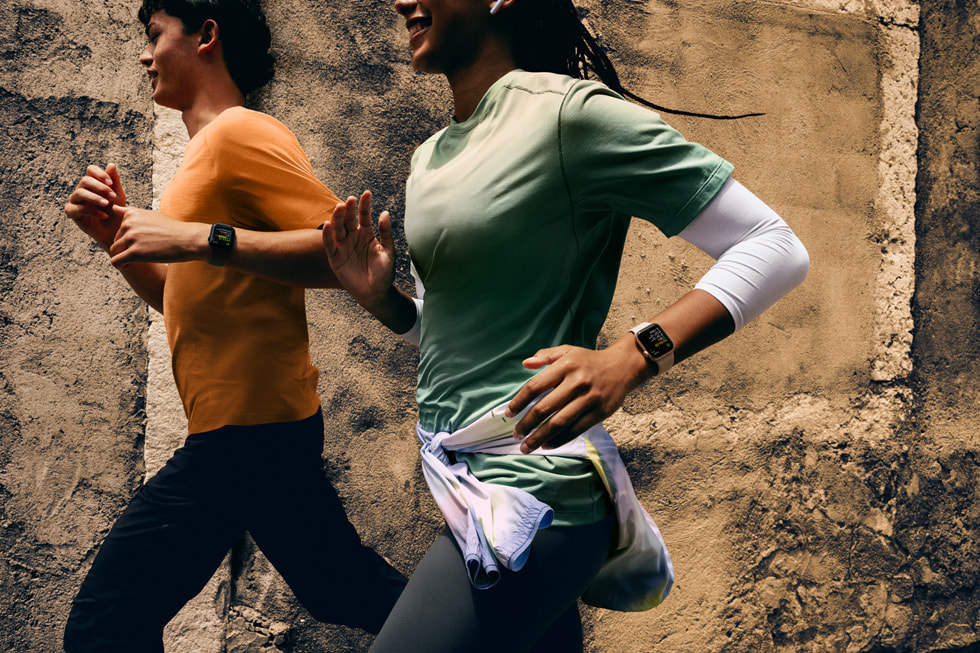
The Apple Watch SE 3 is the easiest device on this list to recommend, and at around $249 it is a genuine bargain for what it does. It handles fall detection the way you want it handled: sense a hard fall, wait about 60 seconds, and if the wearer stays motionless it automatically places an emergency call and sends location to emergency contacts. Crash detection and hold-the-button Emergency SOS round out the safety kit, and the SE 3 finally adds sleep apnea notifications.
The critical detail is cellular. On the GPS-only model, the SOS and auto-call features route through a paired iPhone, so they work best when the phone is nearby. Spend on the cellular version and add it to a carrier plan, and the watch can call for help on its own during a walk or in the garden – which, for fall protection, is the whole point.
For a senior who wants deeper health monitoring, the Apple Watch Series 11 is the step-up at around $399. It includes an always-on display, ECG, and blood oxygen, plus new FDA-cleared hypertension notifications. The SE 3 is the value play; the Series 11 is for the health-data enthusiast. Torn between Apple and Android? Our Apple Watch SE 3 vs Google Pixel Watch 4 comparison breaks the decision down.
Google Pixel Watch 4
Who it's for: An Android household that wants the most advanced automatic emergency detection money can buy right now.
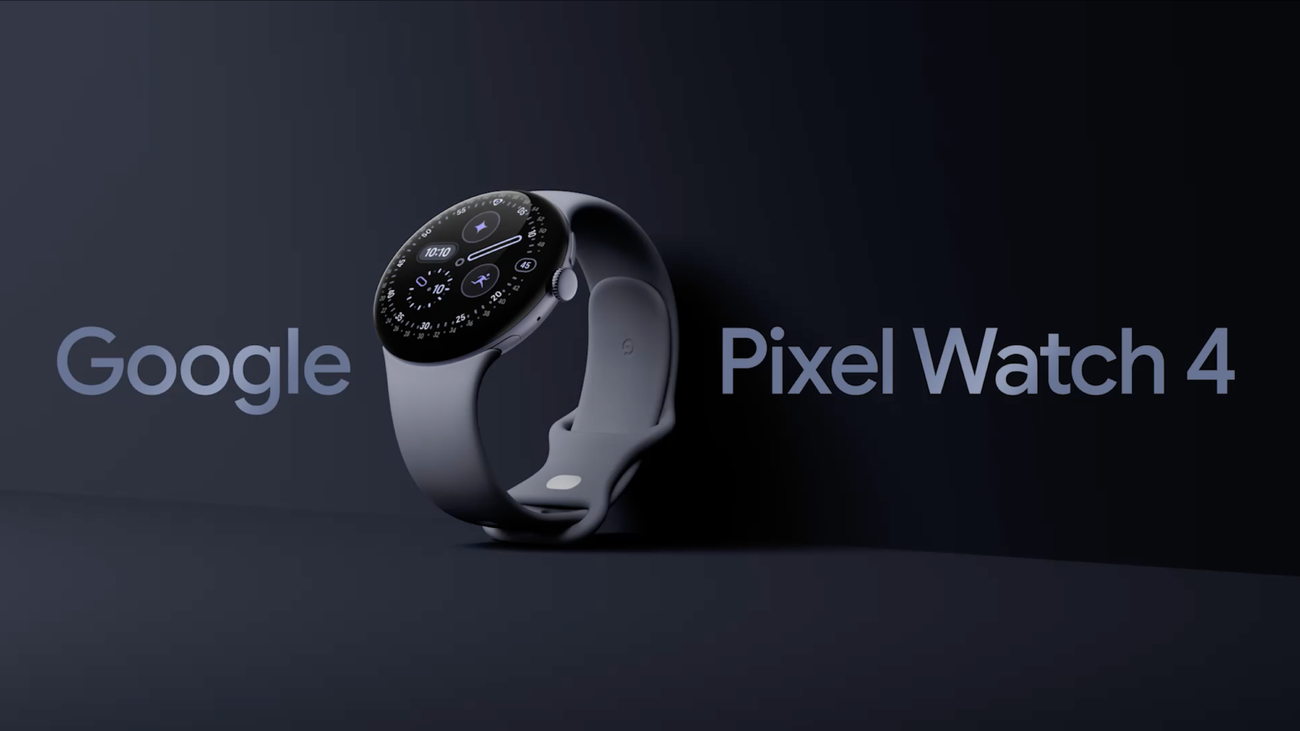
The Google Pixel Watch 4 starts around $349 and earns its place with one feature no Apple Watch can match: Loss of Pulse Detection. It continuously watches for the sudden absence of a pulse – the signature of cardiac arrest, a drug overdose, or certain respiratory failures – and if it detects one and the wearer doesn't respond to prompts, it automatically calls emergency services on their behalf. This is FDA-cleared and available in the US, and for a senior with cardiac risk it is a meaningful safeguard beyond ordinary fall detection. Like every feature here, it needs a connection to place that call – LTE on the cellular model, or a paired phone in Bluetooth range – and even then it may not catch every instance.
The Pixel Watch 4 also does the fundamentals well: AI-driven hard-fall detection, Emergency SOS, and, on the LTE model, Satellite SOS for areas with no cell coverage. As with the Apple Watch, the emergency features are most dependable on the cellular version. Battery runs about 40 hours on the larger model, and fast charging claws back most of a day's use in 15 minutes – useful for someone who forgets to charge overnight.
For a Samsung-phone household, the Samsung Galaxy Watch 8 is the sensible alternative at roughly $349. It offers hard-fall detection and Emergency SOS with the same 60-seconds-motionless trigger, and it integrates cleanly with Galaxy phones. It lacks Loss of Pulse Detection, so the Pixel keeps the safety crown on Android.
Medical Guardian MGMove
Who it's for: A senior who wants real 24/7 human help on their wrist and does not own – or does not want to fuss with – a smartphone.
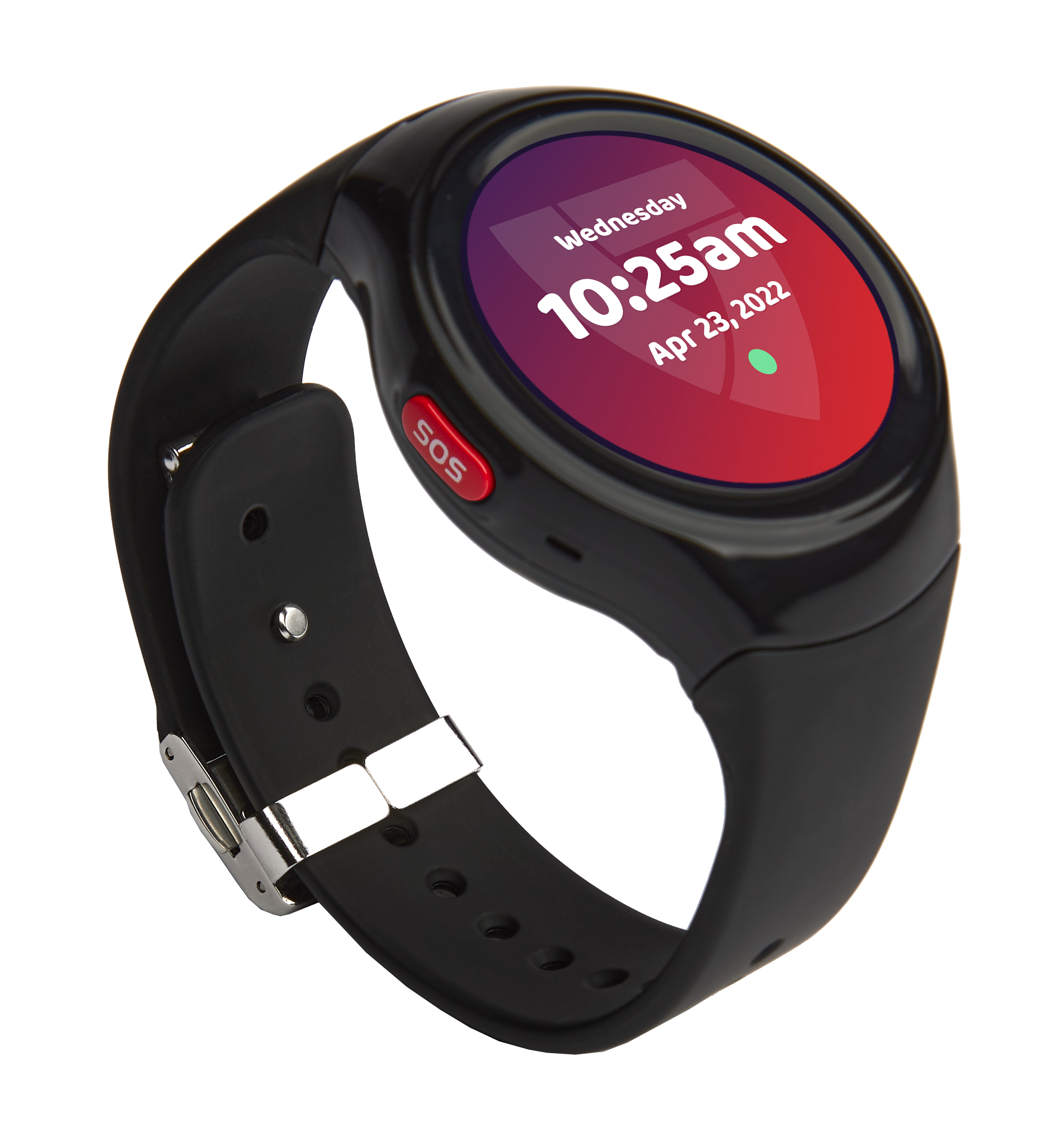
The Medical Guardian MGMove is our top dedicated medical-alert watch, and it solves the biggest weakness of every consumer smartwatch above: it does not need a phone. It has its own 4G LTE built in and connects directly to a 24/7 professional monitoring center. Press the button, and a trained operator answers through the watch's two-way speaker, sees your GPS location, and sends help – no 911 menus, no paired iPhone, no caregiver required to pick up.
The device costs about $199.95 up front, with monitoring starting around $39.95 per month. Fall detection is available as an add-on for roughly $10 per month, and it should be enabled for anyone at real fall risk. A further small add-on (about $5 per month) unlocks messaging, medication and appointment reminders, and the MyGuardian caregiver app, which lets family schedule reminders and check in remotely. It also does light everyday tasks – step counting and weather – so it feels like a normal watch rather than a "help button."
The tradeoffs are honest ones: the monthly fee is ongoing and permanent, and this is not a full smartwatch – no app store, no notifications from your phone, no ECG. That focus is exactly why it works for a less tech-comfortable wearer.
Bay Alarm Medical SOS Smartwatch
Who it's for: A budget-minded senior who wants monitored medical-alert protection with the lowest ongoing cost.
The Bay Alarm Medical SOS Smartwatch delivers the same core promise as the MGMove – a button to a staffed 24/7 monitoring center, over its own 4G LTE, with GPS location and two-way voice – at a lower monthly price. Basic monitoring runs about $39.95 per month with a one-time equipment fee of roughly $199, and automatic fall detection is available for about $10 per month on top. Like the MGMove, it needs no smartphone to work.
Its practical strengths are simplicity and value: a plain touchscreen with a clearly marked help button, step tracking, IP67 water resistance so it survives handwashing and rain, and pricing that undercuts most rivals over the life of the plan.
The one number to weigh carefully is battery. Bay Alarm rates the watch conservatively – figures around 6 to 18 hours appear in the specs, though many wearers get through a day or two between charges depending on how often the cellular radio wakes up. Either way, plan on a regular charging routine and treat it as a device you top up daily rather than weekly. For a senior who will keep to a charging habit, it is the best-value monitored watch here.
Withings ScanWatch 2
Who it's for: A senior whose priority is discreet, medical-grade health tracking and zero charging hassle – not fall protection.
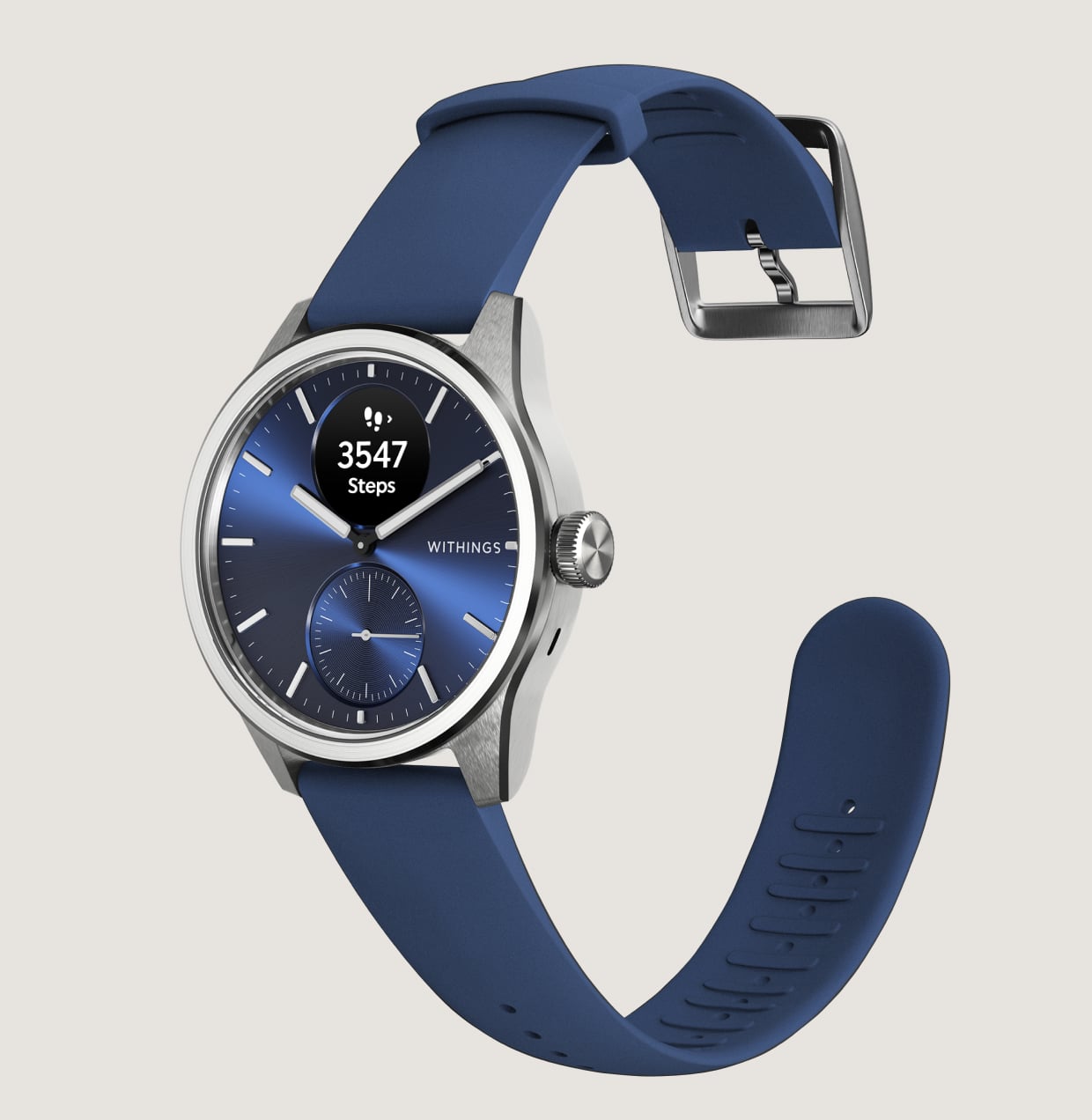
The Withings ScanWatch 2 is the outlier on this list, and it is here with a clear, important caveat. It is a hybrid analog watch – real hands over a small dial – with up to roughly 35 days of battery life, ECG with AFib detection, blood oxygen, and 24/7 temperature tracking. It looks like a classic wristwatch, not a gadget, which many older adults strongly prefer, and the month-long battery removes the single biggest daily friction point of every other watch here. It appears in our roundup of the best health-monitoring watches for good reason.
Here is the caveat, stated plainly: the ScanWatch 2 has no fall detection and no SOS or emergency button. It will not call anyone if the wearer falls. It is a superb passive health monitor and a terrible emergency device, and it should never be a senior's only safety layer. Recommend it for the health-focused, independent senior who is not at high fall risk – and if fall protection matters at all, pair it with a dedicated alert device like the MGMove or Bay Alarm on the other wrist. Around $350, with a smaller and larger case size available.
How We Chose
Our criteria for a senior safety watch are deliberately narrow, and they are not the same criteria we use for fitness trackers:
- Reliability of fall detection and SOS. Does the watch detect a real fall and act, and how does the emergency call actually get placed?
- Whether help genuinely reaches the person. A 911 auto-dial from a phone-tethered watch and a staffed monitoring center that stays on the line are very different guarantees. We weight the path that works away from home.
- Ease of setup and daily use. For a less tech-comfortable wearer, a device that needs constant phone pairing and account management is a liability. Big buttons and one obvious action win.
- Battery and charging burden. A watch that is dead on the charger protects no one. Long battery life and forgiving charging matter more here than in any other category.
- Price including ongoing fees. Monitored watches carry monthly costs for life. We weigh the total, not just the sticker.
Who Should Buy What
- iPhone household, wants the best value safety net: Apple Watch SE 3 (add cellular). Step up to the Series 11 only if deeper health data is the draw.
- Android household, wants the most advanced emergency detection: Google Pixel Watch 4 for its Loss of Pulse Detection. On a Samsung phone, the Galaxy Watch 8 is the natural alternative.
- No smartphone, wants guaranteed 24/7 human help: Medical Guardian MGMove – full-featured monitored watch with caregiver app and reminders.
- No smartphone, wants monitored protection on a budget: Bay Alarm Medical SOS Smartwatch – same core safety, lower monthly cost.
- Discreet health tracking, low fall risk, hates charging: Withings ScanWatch 2 – pair it with a dedicated alert device if fall protection is a concern.
What to Watch Out For
Built-in SOS is only as good as its connection. On a GPS-only Apple, Pixel, or Galaxy watch, the emergency call routes through a nearby phone. If the wearer walks the dog without their phone and falls, that call may never go out. For fall protection specifically, buy the cellular model and pay for the plan – or accept that a monitored medical-alert watch is the more dependable route.
Monitoring fees never stop. The MGMove and Bay Alarm carry monthly charges for as long as you use them, and fall detection is usually an extra add-on. Budget for the total over years, not the upfront device price.
Fall detection is not foolproof, and fit matters. No watch catches every fall – soft falls and slow slumps often go undetected – and a watch worn loose, or on the wrong wrist, detects worse and reads heart data worse. Wear it snug, on the wrist the manufacturer recommends, and treat fall detection as a backstop, not a guarantee. When in doubt, the manual SOS button is always the surest call for help.