
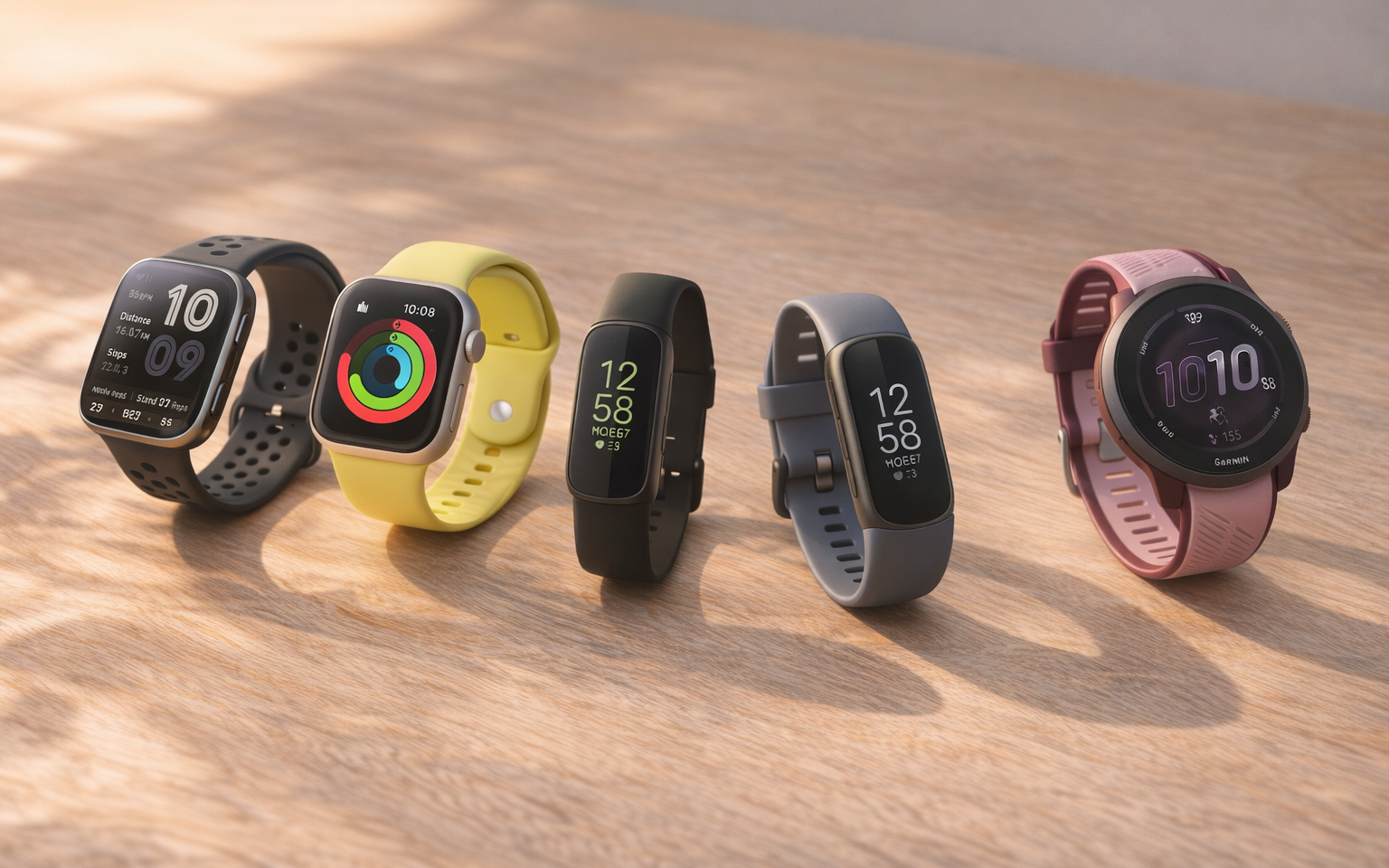
Counting your daily steps sounds simple, but the device on your wrist makes a bigger difference than you might expect. The gap between the most and least accurate step counter watches can reach several hundred steps per day – enough to skew your weekly totals by a meaningful margin. The good news: even budget trackers have gotten remarkably close to research-grade accuracy in 2026, so the real question isn't whether a wearable can count steps, but how much you want to spend for that last sliver of precision. For most people, the Fitbit Inspire 3 at $100 is the answer – but the right pick depends on your budget, your phone, and how obsessive you are about the number.
The two tradeoffs that matter most are accuracy versus price and battery life versus features. Garmin devices consistently top step-counting accuracy benchmarks, but they start at $249 and pack in far more than a casual walker needs. A $50 Xiaomi band gets you within a few hundred steps of the true count and lasts nearly three weeks on a charge. Meanwhile, feature-rich watches like the Apple Watch SE 3 offer the deepest app ecosystem but demand nightly charging – a dealbreaker if you want 24/7 step tracking without thinking about it. This guide cuts through the noise, matches six proven step counters to six different types of buyers, and flags the popular options that aren't worth your money.
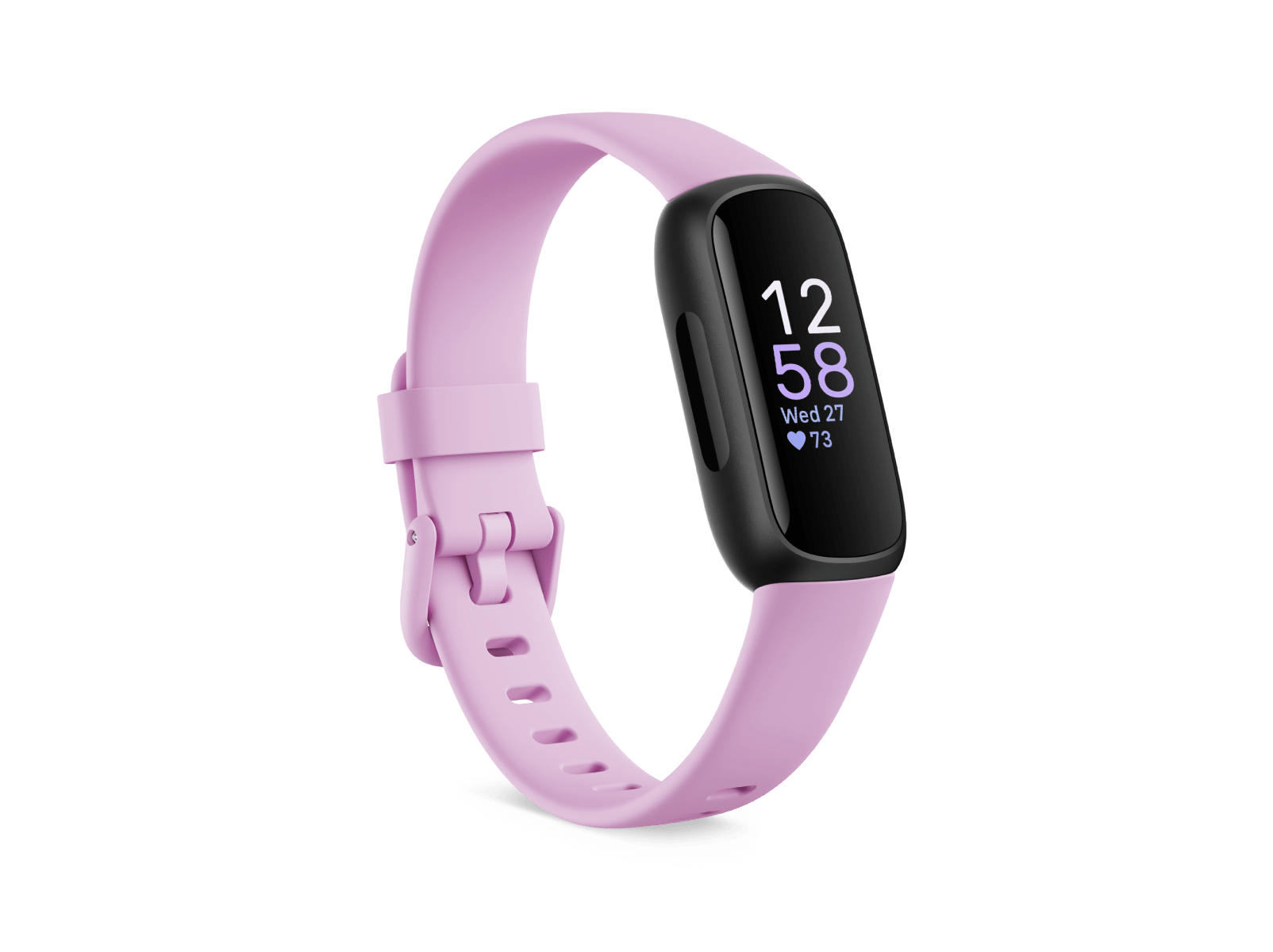
Fitbit Inspire 3 – Best Overall Step Counter ($100)
Best Overall. The Fitbit Inspire 3 hits the sweet spot that most step-focused buyers are actually looking for: strong accuracy, a clean interface, and enough battery life to forget about charging for over a week. Across controlled walk tests, it consistently lands within 35 steps of the actual count – a margin so small it's functionally perfect for daily use. The bright AMOLED screen puts your step count front and center the moment you raise your wrist, and the Fitbit app presents daily steps, distance, calories, and active minutes in one of the cleanest dashboards in the business.
This is the tracker for people who want to glance at their wrist, see a number, and get on with their day. There's no GPS clutter, no training load metrics, no recovery scores competing for attention. You clip-charge it every ten days, and it just works. If you're coming from a basic pedometer or tracking steps with your phone, the Inspire 3 is the most natural upgrade. We cover it alongside other affordable options in our best budget wearables under $100 guide.
The main caveat: there's no built-in GPS, so outdoor walks won't map your route unless you carry your phone. And while the free Fitbit tier covers daily stats, some deeper insights – like readiness scores and advanced sleep analysis – sit behind the $10/month Premium subscription.
Xiaomi Smart Band 10 – Best Budget Pick (~$50)
Best Budget Pick. At half the price of most competitors, the Xiaomi Smart Band 10 delivers step tracking that's genuinely hard to argue with. At normal to brisk walking speeds, it lands within 3% of the actual count – close enough that the difference between it and a tracker costing twice as much is invisible in daily use. The large AMOLED display is surprisingly vivid for the price, and the battery lasts up to 21 days – you'll charge it once or twice a month at most.
For first-time tracker buyers, college students, or anyone who isn't sure step counting will stick as a habit, the Smart Band 10 removes the financial barrier entirely. It also tracks heart rate, sleep, and blood oxygen, so you're getting a legitimate health tracker – not a toy pedometer.
The tradeoff is accuracy at slow walking speeds. When pace drops below a casual stroll – think window shopping or pushing a stroller – accuracy drops noticeably compared to pricier trackers. The Mi Fitness app also lacks the polish of Fitbit's or Garmin's platforms. But for $50, these are reasonable compromises.
Fitbit Charge 6 – Best Step Counter With GPS ($100)
Best Step Counter With GPS. The Fitbit Charge 6 is what you graduate to when you want step counting plus everything else a modern tracker can do – without jumping to a full smartwatch. Built-in GPS maps your walks and runs, the heart rate sensor supports real-time zone tracking, and Google integrations (Maps, Wallet, YouTube Music controls) add genuine smartwatch convenience to a band form factor. Step accuracy is strong – consistently within a few percent of the actual count across independent walk tests.
The Fitbit app remains one of the best for visualizing activity trends over weeks and months. If you're tracking steps as part of a broader fitness picture – maybe you walk 8,000 steps daily and run twice a week – the Charge 6 consolidates everything into a single device and a single app. It's the most capable tracker on this list that still feels like a fitness band rather than a miniature computer.
Two caveats worth knowing: some overcounting can occur during repetitive arm movements at a desk, and GPS reliability dips in dense urban areas with tall buildings. The Premium subscription issue also applies here – Fitbit gates some of its best analytical tools behind the paywall.
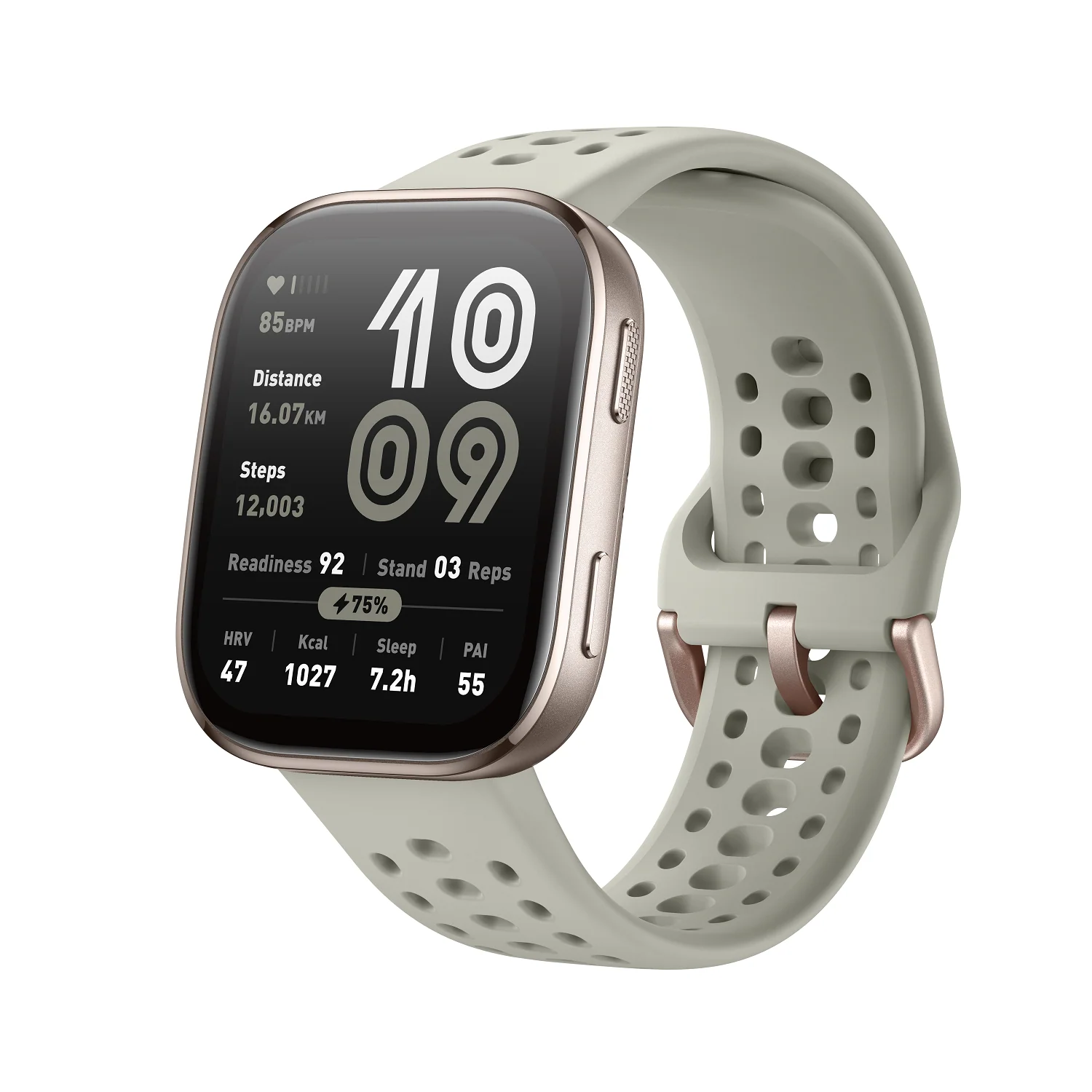
Amazfit Bip 6 – Best Simple Smartwatch for Steps ($79)
Best Simple Smartwatch. The Amazfit Bip 6 has the best false-step filtering in the budget category – its step-confirmation algorithm waits to verify you're actually walking before logging steps, which eliminates phantom counts during driving, cooking, or fidgeting at your desk. It also happens to have the largest, most readable step display in this price range: a 1.97-inch AMOLED screen that shows your count in big, bold numbers with no squinting or menu-diving required.
Battery life stretches to 14 days with typical use, and you get built-in GPS and offline maps – features that competitors at this price simply don't offer. For someone who wants a proper watch face, not a band, the Bip 6 delivers remarkable value.
The downsides are software-related. GPS accuracy can drift on wooded trails or narrow streets, and the Zepp app and operating system can feel sluggish compared to the fluidity of Fitbit's or Apple's platforms. If you care more about the hardware than the app experience, that's an easy tradeoff to accept.
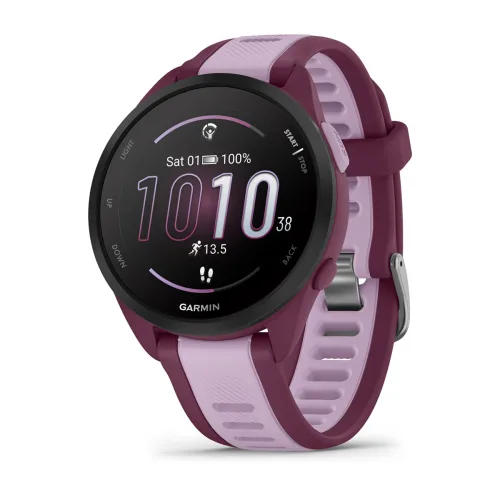
Garmin Forerunner 165 – Most Accurate Step Counter ($249)
Most Accurate. When raw step-counting precision is the priority, Garmin is in a class of its own. The Forerunner 165 uses the same accelerometer platform as the Forerunner 265, which was off by just 15 steps in a controlled 5,000-step walk – the closest any consumer wearable has come to a manual tally counter. The shared hardware means identical step-counting performance from the 165. Garmin's algorithms are particularly strong at filtering out non-walking arm movements, and peer-reviewed studies consistently rank Garmin among the most accurate consumer step-counting platforms.
Beyond steps, the Forerunner 165 adds Body Battery – an energy monitoring feature that contextualizes your step count within your overall recovery and exertion. Garmin Connect is the gold standard for activity data, with deep historical tracking and a community of millions. Battery life reaches up to 11 days in smartwatch mode, which is exceptional for a GPS watch with an AMOLED display.
The caveat is that the Forerunner 165 is overkill for someone who only cares about steps. The interface is more complex, the feature set is built for runners, and the $249 price is hard to justify if you'll never use training plans, VO2 max estimates, or race predictors. But if accuracy keeps you up at night – or if you walk seriously and also run – this is the device that won't leave you guessing.
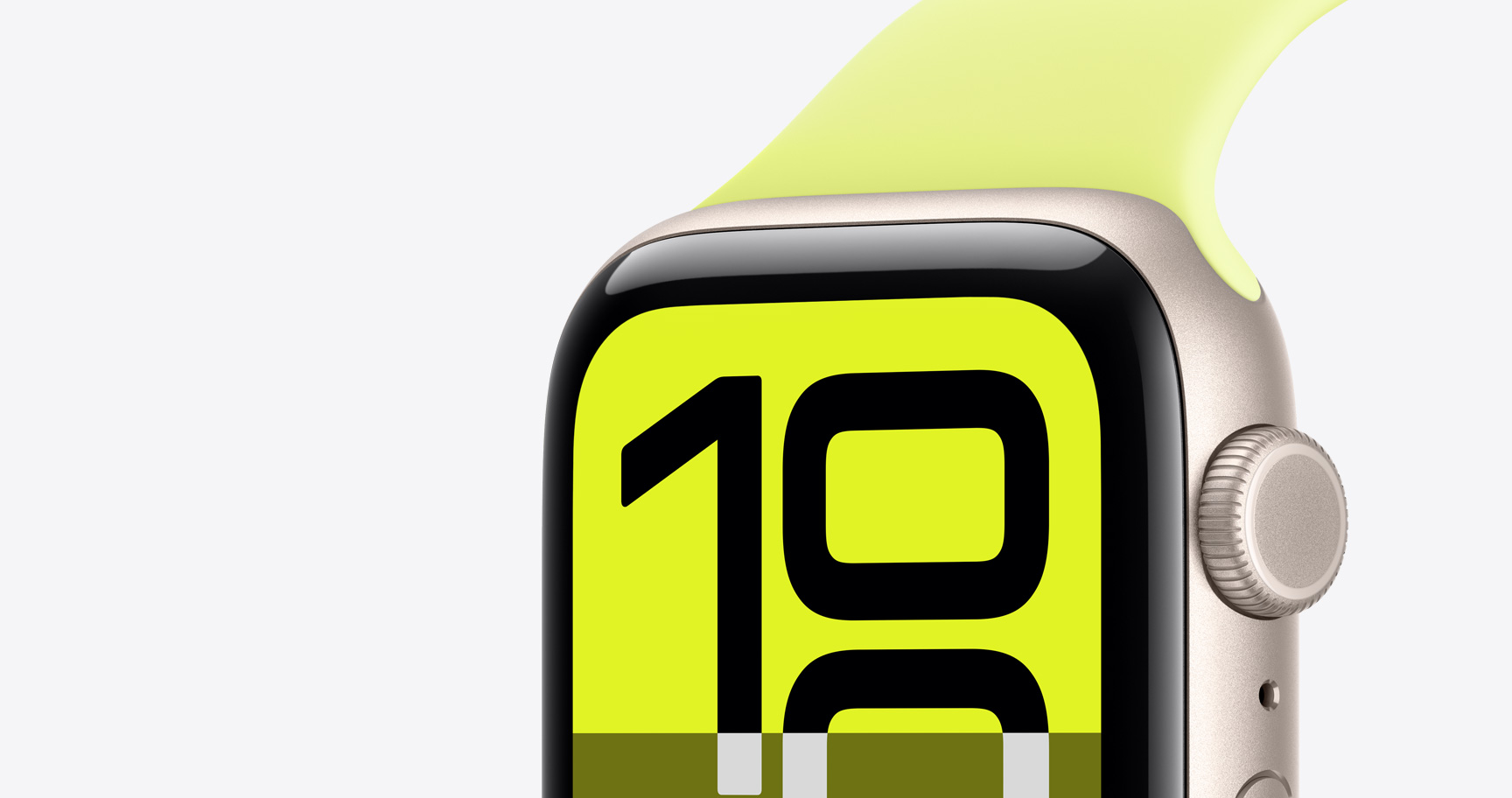
Apple Watch SE 3 – Best for iPhone Users ($249)
Best for iPhone Users. If you carry an iPhone and don't mind nightly charging, the Apple Watch SE 3 integrates step tracking into your life more seamlessly than any other device on this list. Steps flow automatically into the Health app, where they merge with data from every other Apple Health source you use. The Activity Rings system gamifies daily movement in a way that genuinely motivates, and 90-95% step accuracy in most walking scenarios means the data behind those rings is trustworthy.
Beyond steps, you get notifications, Apple Pay, fall detection, crash detection, and the full watchOS app ecosystem. No fitness band can match that breadth. For iPhone owners who want a step counter that also replaces pulling out their phone dozens of times a day, the SE 3 is the obvious choice. For a deeper look at how it handles broader fitness tracking, check out our best fitness trackers 2026 guide.
The dealbreaker for some will be battery life. Apple rates the SE 3 at 18 hours – which means nightly charging is non-negotiable. That makes it the worst endurance on this list by a wide margin. If you want to track steps around the clock – including sleep – you'll need to build a strict charging routine. That's a real lifestyle adjustment compared to the simplicity of every other pick here, where charging happens once a week or less.
How We Chose
We compared 18+ step counter watches across six criteria, weighted toward what matters most for step-focused buyers:
- Step counting accuracy: Devices with strong results in independent accuracy benchmarks and peer-reviewed validation ranked highest. A device that's off by 30 steps at 5,000 beats one that's off by 300.
- Step count visibility: How quickly and easily can you see your step count? Devices that surface steps on the default watch face or home screen ranked higher than those burying the number three swipes deep.
- Daily activity breadth: Steps alone tell an incomplete story. We favored trackers that also display distance, calories burned, and active minutes without requiring a phone.
- Battery life: For a device you're meant to wear all day, charging frequency matters. Real-world endurance outweighs manufacturer claims.
- App ecosystem quality: The companion app is where most people actually review their step data. Clean dashboards, trend visualization, and reliable syncing all factored in.
- Value within tier: We compared each device against others at its price point, not against the entire field. A $50 band doesn't need to beat a $249 watch – it needs to be the best $50 band.
Who Should Buy What
"I just want to count steps and nothing else." Get the Fitbit Inspire 3. It's accurate, simple, and the app is built around exactly this use case.
"I'm on a tight budget." The Xiaomi Smart Band 10 at $50 is the cheapest credible option. Step accuracy is solid at normal walking speeds, and 21-day battery means almost zero maintenance.
"I want step counting plus GPS and workout tracking." The Fitbit Charge 6 bridges the gap between basic tracker and smartwatch. Built-in GPS and heart rate zones give you room to grow beyond steps.
"I want a watch, not a band, but I don't want to spend much." The Amazfit Bip 6 gives you a large, readable watch face with exceptional false-step filtering at $79.
"Accuracy is everything." The Garmin Forerunner 165 is the most precise step counter you can buy. It's expensive for step counting alone, but unmatched if the number needs to be right.
"I have an iPhone and want it all." The Apple Watch SE 3 folds step tracking into the Apple ecosystem. Just accept the daily charging ritual.
What to Avoid
Samsung Galaxy Fit 3: Persistent reports of double-counting steps and sync failures between the band and Samsung Health make it hard to recommend. When you can't trust the number on your wrist, the entire point of a step counter collapses. The Samsung Galaxy Fit 3 vs Fitbit Inspire 3 comparison breaks down the differences in detail.
Screenless or subscription-gated devices: Products like the Whoop 5.0 and Oura Ring 4 are powerful health tools, but they're poor step counters. Whoop has no screen and requires a subscription to see any data. The Oura Ring counts steps from your finger, which is inherently less reliable than wrist-based tracking, and also lacks a display. If steps are your primary metric, you need a screen to see them.
Ultra-cheap no-name pedometer watches: The sub-$20 watches flooding online marketplaces may look like bargains, but they typically use low-quality accelerometers with no meaningful step-filtering algorithms. Error rates of 20-30% are common, and companion apps – if they exist – are often riddled with ads or data-privacy concerns. The Xiaomi Smart Band 10 at $50 is the floor for credible step tracking.