
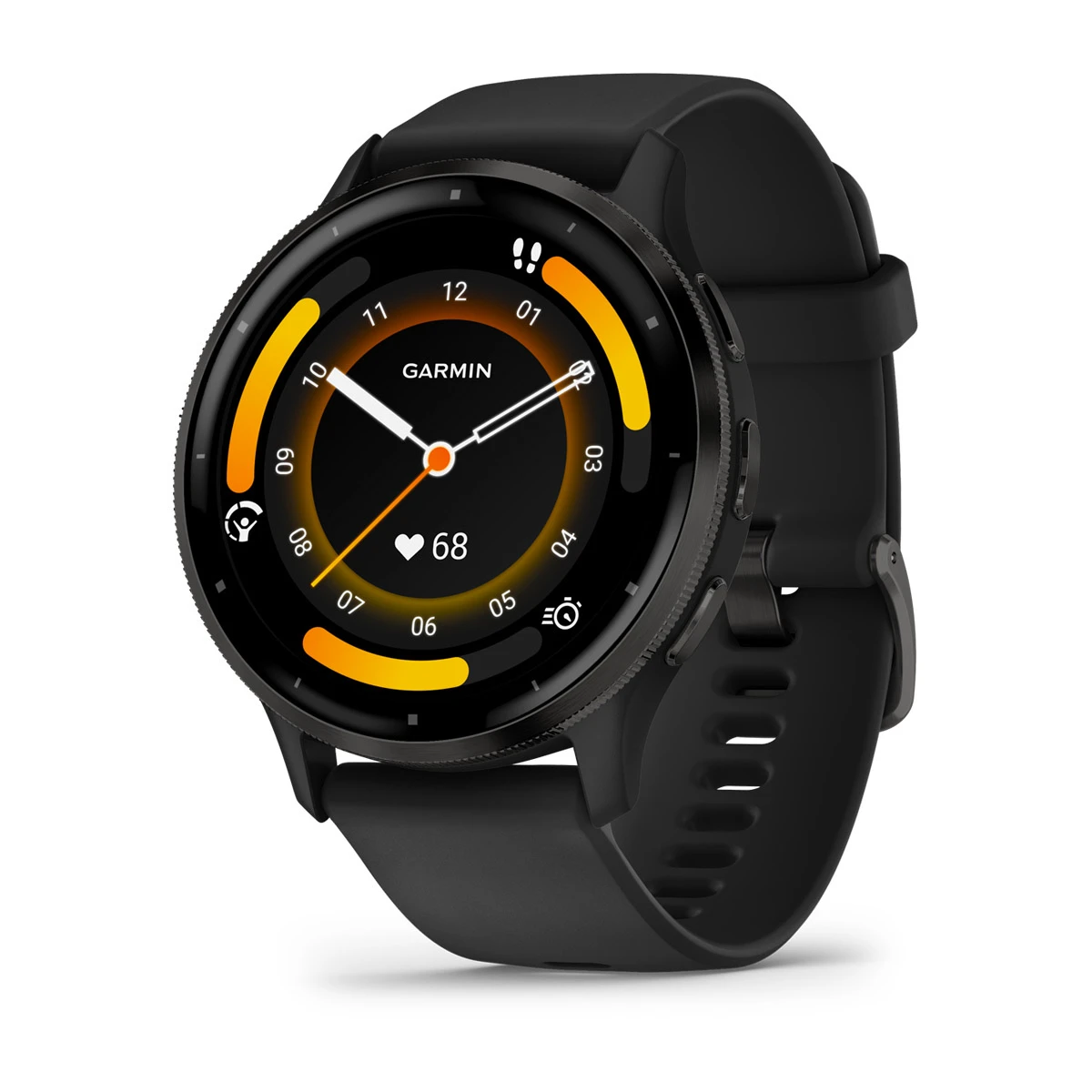
Your Garmin watch tracks steps, heart rate, sleep stages, and a dozen other metrics – but Body Battery is the one that actually changes behavior. It answers the question every athlete and fitness enthusiast asks every morning: should I push hard today, or back off? A single number between 5 and 100 tells you how much physiological energy your body has available right now, updated continuously throughout the day.
Body Battery synthesizes heart rate variability, stress, sleep quality, and physical activity into one actionable score. It is not a gimmick buried in a menu somewhere. For anyone using a Garmin watch seriously, it is the feature that ties everything else together – and once you understand how it works, it becomes the first thing you check before lacing up.
What Is Body Battery?
Think of it as a fuel gauge: 100 means a full tank, ready for anything. 5 means you are running on fumes. The score rises during rest and sleep and falls during exercise and stress – a continuous read on your available energy reserves rather than a once-a-day snapshot.
The feature first appeared on Garmin devices in 2018 and has been refined with every subsequent software update. It is now standard on virtually every current Garmin watch, from entry-level fitness trackers to flagship multisport computers.
How to Read Your Body Battery Score
Body Battery uses four score ranges, each corresponding to a general energy state:
76 to 100 – High energy. Your body is well recovered and ready for demanding physical or mental effort. This is the range where you want to be before a hard workout, a race, or a long, intense day. If you wake up in this zone, it is a green light to push.
51 to 75 – Moderate energy. You have a reasonable reserve, but not a full tank. Moderate-intensity workouts are fine. An easy run, a strength session, or a tempo ride are all viable. This is not the day for an all-out effort or a personal best attempt, but you are far from empty.
26 to 50 – Low energy. Your body is running down. Light activity – walking, yoga, easy spinning, mobility work – is appropriate. A hard session in this range is almost certainly counterproductive, adding training stress your body does not have the capacity to absorb productively.
5 to 25 – Very low energy. You are depleted. Rest is the priority. This range typically shows up after a combination of hard training, poor sleep, high life stress, illness, or alcohol consumption. The most productive thing you can do for your fitness in this zone is recover.
How Body Battery Works
Body Battery is powered by algorithms developed by Firstbeat Analytics, the Finnish sports science company Garmin acquired in 2020. Firstbeat has spent over two decades studying heart rate variability and its relationship to stress, recovery, and physical performance. Body Battery is the consumer-facing expression of that research.
The algorithm takes four primary inputs:
Heart rate variability (HRV). This is the foundation. HRV measures the variation in time between consecutive heartbeats – specifically, the RMSSD metric, which is the most sensitive beat-to-beat parameter for detecting shifts between sympathetic (fight-or-flight) and parasympathetic (rest-and-digest) nervous system states. High HRV generally signals a well-recovered, adaptable body. Low HRV signals accumulated fatigue or stress.
Stress level. Garmin derives a continuous stress score from your HRV patterns throughout the day. When your autonomic nervous system shifts toward a sympathetic-dominant state – whether from a hard interval session, a tense meeting, or fighting off an illness – stress rises and Body Battery drains. When the parasympathetic system takes over during relaxation or sleep, stress falls and Body Battery recharges.
Sleep quality and duration. The algorithm evaluates how long you slept, how much time you spent in deep and REM stages, and how restful that sleep actually was based on overnight HRV patterns.
Physical activity. Every workout, every walk, every flight of stairs drains Body Battery. The algorithm accounts for your individual fitness level, so the same absolute effort costs fewer points as your cardiovascular fitness improves.
These four inputs feed into a mathematical model that continuously recalculates your available energy reserves. The result is a single number that rises and falls in real time as your body's physiological state changes.
One important detail: the algorithm needs a calibration period. Body Battery requires about a week of consistent, all-day and overnight wear before the score stabilizes to your individual physiology, though full personalization can take up to two weeks. During that initial period, the numbers may seem erratic or disconnected from how you actually feel. Give it time.
What Drains and Recharges Body Battery
Understanding the inputs that move Body Battery up and down makes the score far more actionable.
What Drains It
Exercise. The most obvious drain. Intensity matters far more than duration: a 20-minute HIIT session can drain more points than a 60-minute zone-2 run. The drain also accounts for your fitness level, so the same absolute effort costs fewer points as your VO2 max improves over time.
Psychological stress. Work deadlines, arguments, financial worry, traffic – anything that activates your sympathetic nervous system shows up as Body Battery drain, even without a single step taken. This is one of the most eye-opening aspects of the metric for new users. Many people discover that their desk job drains more energy than their evening workout.
Illness and immune response. Even before symptoms fully present, the body's immune response raises resting heart rate and suppresses HRV. Body Battery often drops noticeably one to two days before you feel sick – a genuinely useful early warning signal.
Alcohol. Even moderate consumption elevates resting heart rate, suppresses HRV, and degrades sleep quality. The result is a Body Battery that barely recharges overnight and starts the next day dramatically lower than usual. This is one of the most consistent and visible effects in the data.
Poor or insufficient sleep. Short sleep duration, frequent waking, or low-quality sleep (insufficient deep and REM stages) reduces the overnight recharge significantly. A solid seven-to-eight-hour night of high-quality sleep can recharge Body Battery by 40 to 60 points. A short or disrupted night might add only 15 to 25, depending on individual physiology.
What Recharges It
Sleep. The primary recharging mechanism. Nothing else comes close. Quality matters as much as quantity – six hours of uninterrupted, deep-sleep-rich rest recharges more effectively than eight hours of fragmented, restless sleep.
Rest and relaxation. Sitting quietly, reading, watching a movie, or any low-stress activity allows modest recharging during the day, though the effect is small compared to sleep. A 20-minute nap during which you actually fall asleep can add a modest but meaningful boost.
Low stress states. Meditation, breathing exercises, and other parasympathetic-activating practices reduce your stress score and slow the rate of Body Battery drain. They do not recharge as dramatically as sleep, but they reduce the pace at which your reserves deplete.
What Has No Effect
Food and caffeine. This surprises many users, but neither eating nor drinking coffee has any direct impact on Body Battery. The algorithm does not account for caloric intake or stimulant consumption. You may feel more energized after a meal or an espresso, but the score will not reflect it. Body Battery measures physiological recovery state, not perceived alertness.
How to Use Body Battery for Training
Body Battery becomes genuinely powerful when you use it to make daily training decisions rather than just passively observing the number.
Check it first thing in the morning. Your morning score, taken before any activity, is the most reliable indicator of your recovery status. A score above 80 signals full recovery and readiness for a hard session. Between 60 and 80 means moderate effort is appropriate. Below 60 suggests an easy day or rest. A morning score that consistently fails to climb above 50 or 60 – even after what felt like a decent night of sleep – is a reliable signal of accumulated fatigue, and it often appears one to two days before you feel the overtraining symptoms subjectively.
Re-check before evening sessions. Athletes who glance at Body Battery before an afternoon or evening workout consistently make better intensity decisions. If a stressful workday has already drained you to 35, that planned interval session will produce diminishing returns. Swap it for an easy run or push the hard session to tomorrow.
Use it to confirm recovery. After a particularly hard training day or race, track how many days it takes for your morning Body Battery to return above 80. One day means you recovered efficiently. Two to three days is normal for heavy efforts. If it takes four-plus days consistently, your training load may be outpacing your recovery capacity.
Watch for multi-day trends. A single low score is not cause for alarm – everyone has a bad night or a stressful day. But three or more consecutive mornings with declining or plateauing scores in the 40-to-60 range is a reliable indicator of accumulating fatigue. This is the signal to insert an unplanned rest day before the fatigue manifests as poor performance, elevated injury risk, or illness.
Pair it with Training Readiness. On newer Garmin devices, Body Battery feeds into the broader Training Readiness score alongside sleep history, recovery time, HRV status, and training load. Use Body Battery for the in-the-moment energy read, and Training Readiness for the bigger-picture view of whether your body is absorbing your training program well.
Which Garmin Watches Have Body Battery?
Body Battery is available on virtually every current Garmin watch. If you have purchased a Garmin in the past several years, your device almost certainly supports it.
The feature is standard on the full Forerunner running line, including the Forerunner 265 and Forerunner 965. It is on every Venu and Vivoactive smartwatch, including the Venu 4 and Vivoactive 6. The entire Fenix and Epix adventure line includes it, as do the Enduro and Instinct series. Garmin's fitness trackers – the Vivosmart 5, Lily 2 Active, and Vivomove line – all support it as well.
If you are shopping for a new Garmin today and Body Battery is important to you, it is effectively a universal feature across the current lineup.
Body Battery vs the Competition
Body Battery is not the only energy or readiness metric in wearables. WHOOP uses a Recovery score (0 to 100%) that is calculated each morning based on overnight HRV, resting heart rate, respiratory rate, and sleep performance. Oura Ring produces a Readiness Score (0 to 100) combining HRV, body temperature, sleep, and previous-day activity. Fitbit offers a Daily Readiness Score drawing on HRV, resting heart rate, and sleep data.
Body Battery's primary advantage is that it updates continuously throughout the day rather than delivering a single morning snapshot. You can check it before an afternoon workout and see exactly how the day's accumulated stress and activity have affected your reserves – something a morning-only score cannot provide. It also requires no subscription, unlike WHOOP's mandatory monthly fee. The tradeoff is that WHOOP's system ties its recovery score directly to recommended daily strain targets, creating a more structured training framework for athletes who want explicit intensity prescriptions. Oura's ring form factor captures overnight HRV with high accuracy from the finger, where arterial proximity produces cleaner pulse signals than wrist-based optical sensors. Body Battery prioritizes accessibility and real-time utility over clinical-grade HRV precision – a reasonable tradeoff for the vast majority of users who want actionable guidance rather than research-grade data.
Tips to Improve Your Body Battery
Body Battery is not a score to "hack" – it reflects your actual physiological state. Improving it means improving your recovery habits.
Prioritize sleep consistency. Go to bed and wake up at roughly the same time every day, including weekends. Consistent sleep schedules produce higher-quality sleep and more predictable Body Battery recharges. Even a 30-minute shift in bedtime can measurably impact overnight recovery.
Wear the watch to bed. Body Battery depends on overnight HRV and heart rate data. If you remove the watch at night or charge it while you sleep, the algorithm loses its most important input window and the score becomes unreliable.
Manage non-training stress. Easier said than done, but the data makes the case persuasively. Many users discover their Body Battery drains more from work stress than from workouts. Breathing exercises, meditation, time in nature, or simply building deliberate downtime into your schedule all reduce the sympathetic load that silently eats into your recovery capacity.
Limit alcohol, especially close to bedtime. Alcohol within three to four hours of sleep dramatically suppresses overnight HRV and can reduce your Body Battery recharge by a third or more compared to an alcohol-free night.
Improve your aerobic fitness. A higher VO2 max correlates directly with Body Battery resilience. As your cardiovascular fitness improves, the same training loads drain fewer points, and your overnight recovery becomes more efficient. This is the long game: consistent training makes every future session cost less energy.
Wear the watch consistently. Gaps in data – removing the watch for hours during the day, skipping days of wear – degrade the algorithm's accuracy. The more continuous data it has, the more precisely it models your individual physiology. If the watch starts behaving erratically after a firmware update or extended period of non-wear, a restart can sometimes help recalibrate the sensors; see our guide on how to reset any Garmin watch for step-by-step instructions.
Body Battery works best when you stop thinking of it as a number to optimize and start treating it as a daily conversation with your own physiology. Check it in the morning, let it inform your training decisions, and over time you will develop an intuitive sense of how your habits, stress, and sleep translate into available energy. The number simply makes that conversation visible.