
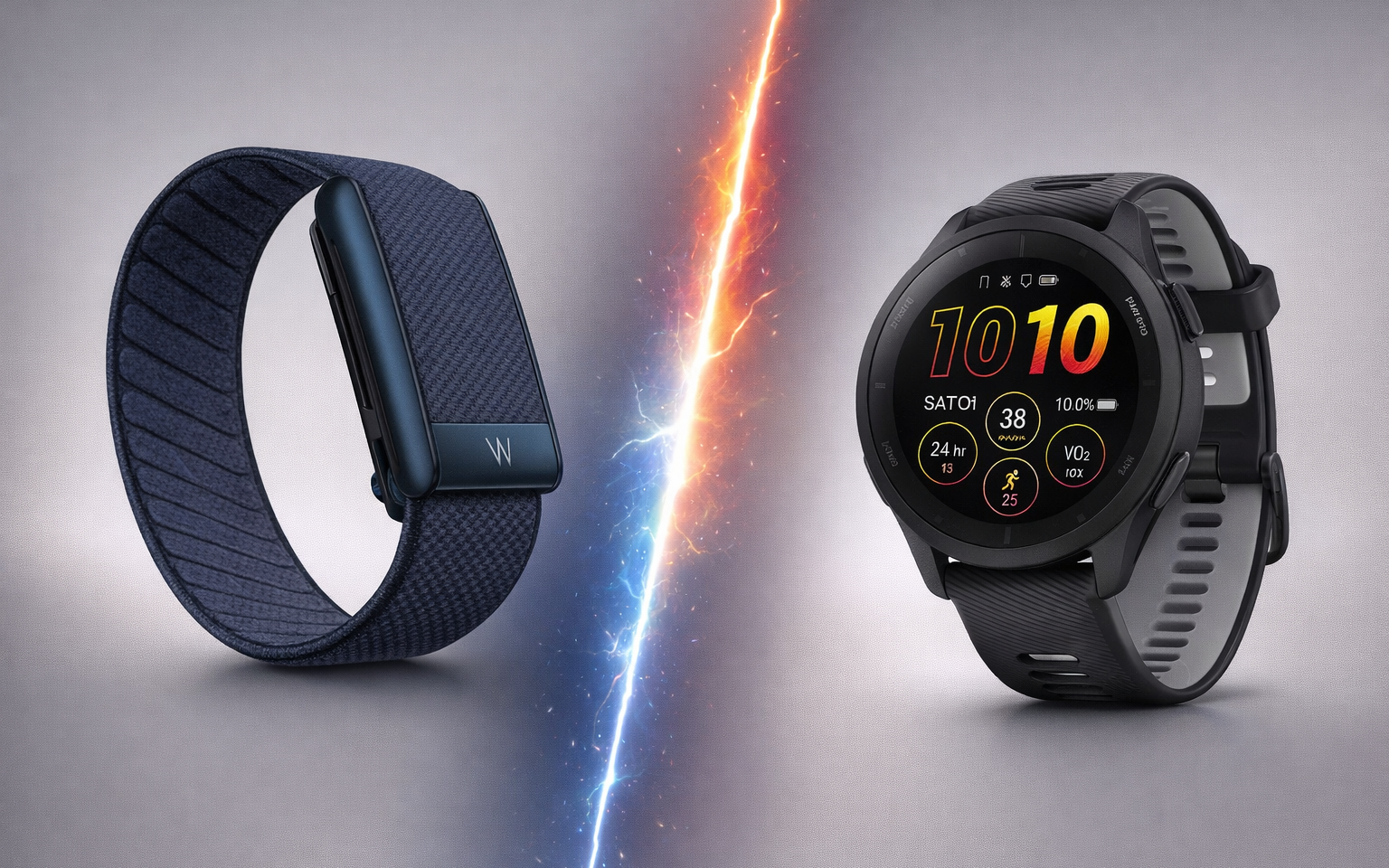
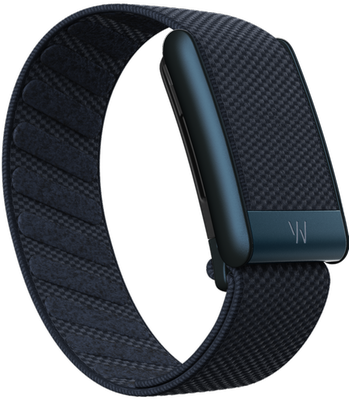
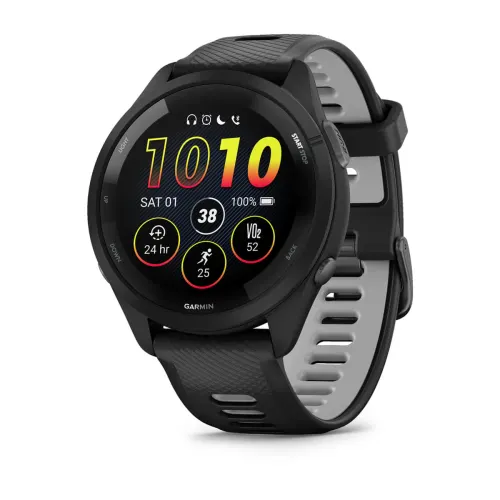
A screenless band that charges you monthly versus a GPS watch you buy once. The Whoop 5.0 and Garmin Forerunner 265 represent two fundamentally different philosophies about what a training wearable should do — and what it should cost. Whoop believes the future of athletic performance lives in recovery intelligence: track your body 24/7, distill that data into a daily readiness score, and let the algorithm tell you how hard to push. Garmin believes the watch on your wrist should do everything: map your runs, time your intervals, score your training load, play your music, and still last two weeks on a charge.
Both approaches have merit. But for most athletes, one of these devices makes a lot more sense than the other — and the answer has less to do with hardware specs than with how you actually train.
Recovery and Readiness
This is the category Whoop built its entire business around, and the lead is real.
The Whoop 5.0 delivers a daily recovery score synthesized from overnight HRV, resting heart rate, respiratory rate, skin temperature, and sleep performance. That score feeds directly into the Strain Coach, which adjusts your target training intensity based on how recovered you actually are — not how recovered you feel. The Sleep Coach goes further: before bed, it calculates exactly when you need to fall asleep to hit your recovery targets, then grades your sleep performance against that recommendation in the morning. At the Peak tier and above, the Healthspan feature estimates your biological age and pace of aging based on long-term physiological trends. No other wearable offers this depth of recovery intelligence in a single integrated system.
The Forerunner 265 is no slouch here, though. Training Readiness pulls from HRV status, sleep quality, recovery time, acute training load, and stress to produce a daily score telling you whether to go hard or back off. Body Battery provides a real-time energy gauge that depletes with activity and stress and recharges with rest. HRV Status tracks your heart rate variability trend over a rolling baseline — and Garmin's HRV readings track within 2ms of a Polar H10 chest strap, which is genuinely impressive for a wrist sensor.
The difference is philosophy. Whoop's recovery system is prescriptive: it tells you what to do. Garmin's is descriptive: it tells you what happened. The Strain Coach and Sleep Coach create a closed feedback loop — train, recover, sleep, repeat — that no Garmin watch replicates. Body Battery is useful, but it doesn't connect your sleep quality to your training plan with the same cause-and-effect clarity.
For athletes who structure their training around recovery, Whoop's system remains the gold standard. For athletes who want recovery data alongside their training metrics, Garmin provides more than enough.
Winner: Whoop 5.0
GPS, Sports Tracking, and Mid-Workout Data
This is where the comparison stops being close.
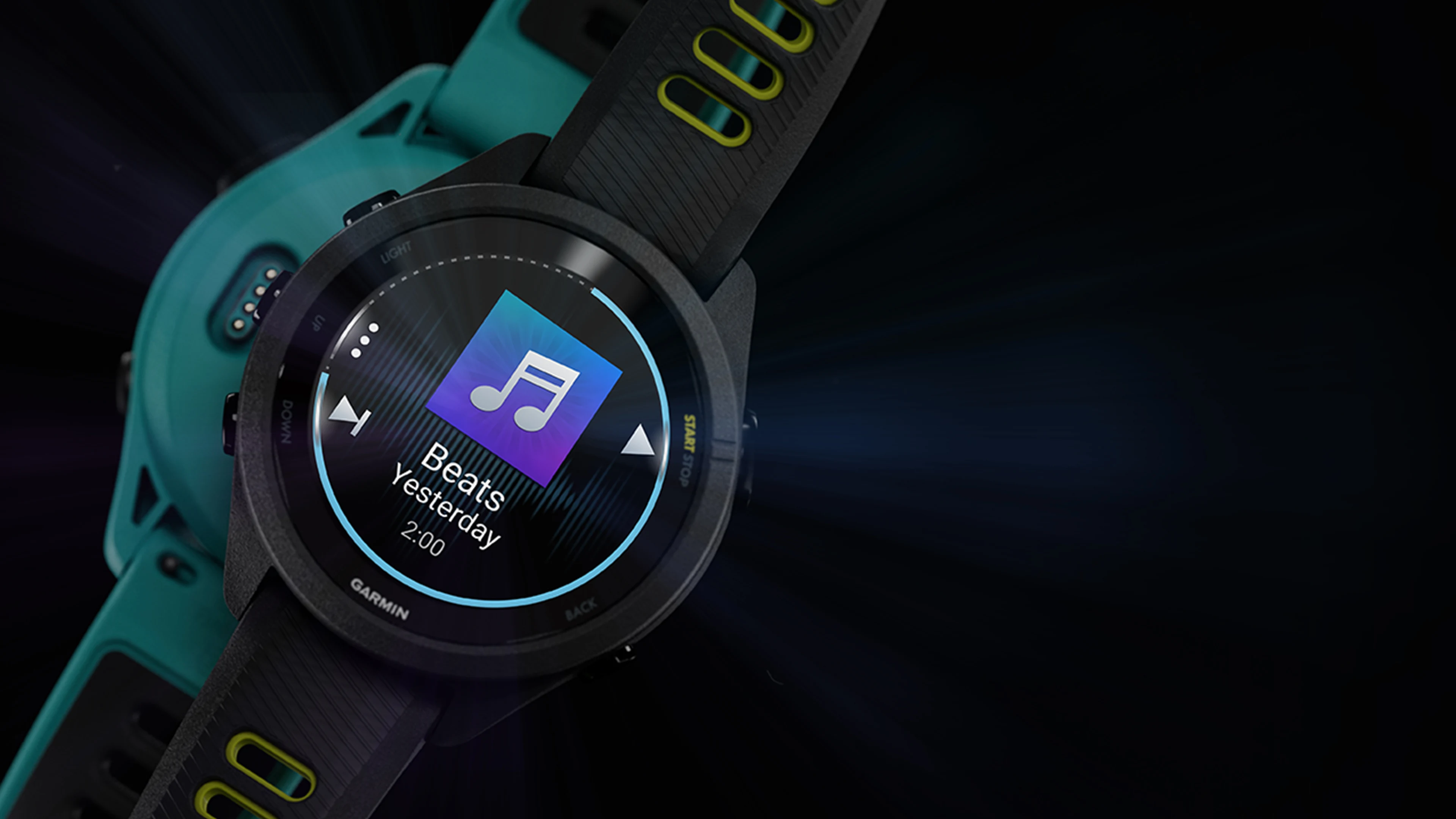
The Forerunner 265 packs multi-band GNSS with Garmin's SatIQ technology, which automatically selects the best satellite constellation for your environment. GPS accuracy is among the best available in any consumer wearable. Over 30 sport profiles cover everything from track running to open-water swimming, each with configurable data screens showing pace, heart rate zones, cadence, power, lap splits — whatever you need, displayed on a bright AMOLED touchscreen readable in direct sunlight.
Wrist-based running dynamics — ground contact time, vertical oscillation, stride length — previously required an external pod. The Forerunner 265 calculates them natively. Training Status evaluates whether your fitness is productive, peaking, or detraining based on your VO2max trend and training load. Add offline music from Spotify, Amazon Music, and Deezer, plus Garmin Pay for phone-free runs, and the Forerunner 265 is a genuinely self-contained training computer.
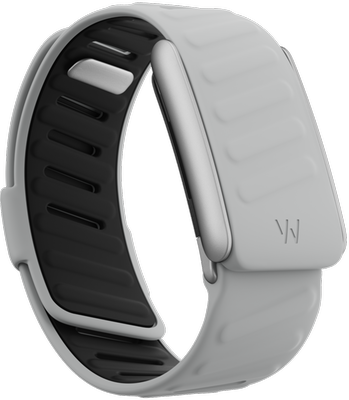
The Whoop 5.0 has no screen. No GPS. No on-device workout controls. It auto-detects activities and calculates a strain score from heart rate data, but if you want to see your pace mid-run, check your distance, or follow a course, you need your phone. There are no sport profiles, no interval timers, no lap buttons. The strain score is valuable post-workout — it quantifies how much physiological load your body absorbed — but it provides nothing in the moment.
For anyone who wants real-time training data during workouts, this is not a contest.
Winner: Garmin Forerunner 265 (decisive)
Sleep Tracking
Both devices take sleep seriously, but they approach it differently — and Whoop's approach is more actionable.
The Whoop 5.0 tracks all four sleep stages, generates a Sleep Performance score based on how much sleep you got relative to how much you needed, and provides a Sleep Coach that recommends optimal bedtimes tailored to your recovery needs. The sleep data feeds directly into the next morning's recovery score, creating a tangible connection between how you slept and how you should train. Sleep consistency metrics and trends over time round out what amounts to the most comprehensive sleep system in any fitness wearable.
The Forerunner 265 tracks sleep stages, provides a sleep score, monitors blood oxygen during the night, and includes a sleep coach with need-based recommendations. It integrates sleep data into the Morning Report and Training Readiness score. The data is solid and the interface is clean, but the insights are more observational than prescriptive. It tells you what happened last night. It doesn't reshape tomorrow's training plan based on the answer.
Both are accurate enough for consumer-grade sleep tracking — which means they get total sleep duration and broad patterns right while acknowledging that no wrist-worn wearable can precisely nail sleep stages with clinical accuracy. The practical difference is in what happens with the data after it's collected.
Winner: Whoop 5.0
Heart Rate Accuracy
This is closer than either brand's marketing would suggest.
The Whoop 5.0 uses a high-resolution optical sensor sampling 26 times per second. Worn on the bicep (via an optional band), accuracy reaches a 0.98 correlation with reference devices across endurance workouts — genuinely excellent. On the wrist, though, accuracy degrades meaningfully during high-intensity activities like CrossFit, HIIT, and functional fitness work. The sensor struggles with rapid arm movements, which is an inherent limitation of wrist-based optical HR, not a Whoop-specific flaw.
The Forerunner 265's Elevate V4 sensor delivers strong accuracy during steady-state exercise. HRV readings land within 2ms of a chest strap reference, and continuous heart rate tracking is reliable across most activities. Like every wrist-worn sensor, accuracy dips during high-movement exercises, though Garmin's tighter watch-style fit helps maintain better skin contact than a loose band.
Neither device achieves chest-strap accuracy from the wrist. Both are more than adequate for zone-based training and daily monitoring. The Whoop's bicep band option provides a genuine accuracy advantage for athletes willing to wear it — but it's an extra step, and the default wrist position doesn't outperform the Garmin.
Winner: Tie

Display, Design, and Comfort
Two radically different approaches to what a wearable should look like and feel like.
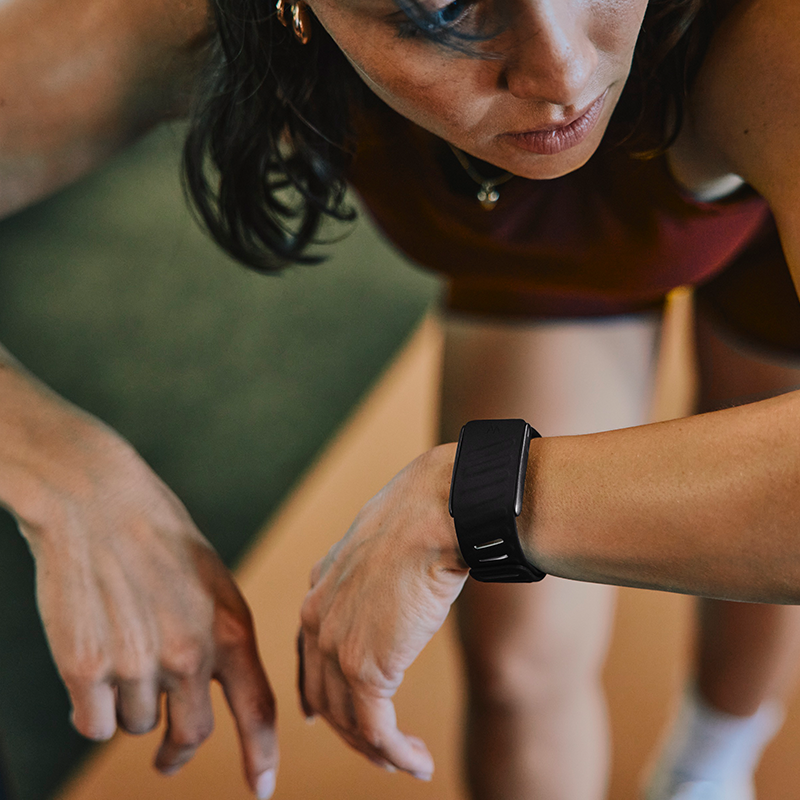
The Whoop 5.0 is a small, screenless pod embedded in a fabric band. It weighs almost nothing. It's 7% smaller than the Whoop 4.0, invisible under a sleeve, and genuinely comfortable for 24/7 wear including sleep. The absence of a screen is both its greatest strength — zero distractions, zero temptation to check notifications — and its greatest limitation. Every interaction requires pulling out your phone and opening the app. The band snaps on and off quickly, and the sensor pod can move to a bicep band or Whoop Body apparel for flexibility.
The Forerunner 265 is a proper watch with a 1.3-inch (46mm) or 1.1-inch (42mm/265S) AMOLED touchscreen. Colors are vivid, visibility in sunlight is excellent, and the always-on display means a quick glance gets you the time, your heart rate, or your next workout's details. Physical buttons provide tactile controls during wet or gloved workouts. It looks like a sport watch — not a fashion piece, but not out of place at dinner either. At 47g, it's heavier than the Whoop but lighter than most smartwatches.
For sleep comfort and forget-it-is-there wearability, Whoop wins. For actually displaying useful information on your body without reaching for your phone, Garmin wins. These are design choices, not flaws.
Winner: Depends on your priority
Battery Life
The Whoop 5.0 delivers 10 to 14 days of continuous use — a massive jump from the Whoop 4.0's 4-to-5-day lifespan. The slide-on battery pack means you never remove the device to charge, preserving continuous data collection. For a device whose entire value proposition depends on 24/7 monitoring, this is table-stakes battery life executed well.
The Forerunner 265 lasts up to 13 days in smartwatch mode with the always-on display disabled, or roughly 4 days with always-on display and regular GPS workouts. GPS mode delivers up to 20 hours — enough for an ultramarathon. Real-world use with 1 to 3 hours of daily GPS activity and always-on display lands around 4 days, which means weekly charging for most runners.
Raw numbers favor the Whoop slightly, but the Garmin's battery powers a GPS radio, an AMOLED screen, and Bluetooth music streaming. The Whoop's battery powers a sensor pod with no screen. The Garmin delivers dramatically more functionality per charge cycle. For practical use, both provide more than enough battery life to avoid anxiety.
Winner: Whoop 5.0 (on duration), Garmin FR 265 (on utility per charge)
Value and Cost of Ownership
This is where the philosophical divide becomes a financial one.
The Garmin Forerunner 265 costs $449.99. Once. Every feature — GPS, AMOLED display, training metrics, sleep tracking, music storage, Body Battery, Training Readiness, HRV Status — is included with no subscription, no tiers, no paywalls. Garmin provides free firmware updates for years. Over three years, the total cost is $449.99.
The Whoop 5.0 at the One tier ($199/year) includes the hardware but locks out Healthspan, Stress Monitor, and most of the features that differentiate Whoop from cheaper bands. The Peak tier ($239/year) unlocks the meaningful features — it's the real starting price. Over three years at Peak: $717. And if you want ECG and blood pressure insights, the Life tier ($359/year) pushes three-year costs to $1,077 — more than double the Garmin. Stop paying, and the Whoop becomes a paperweight. (Is the subscription worth it? That depends entirely on how much you use the recovery data.)
The Garmin asks for more money upfront but nothing afterward. The Whoop asks for less today but never stops asking. For anyone planning to wear their device for more than 18 months — and most serious athletes do — the Garmin is the substantially better financial deal.
Winner: Garmin Forerunner 265
Ecosystem and App Experience
The Whoop app is the best fitness app in the wearable space. The interface is clean, the data visualizations are excellent, the AI coach provides conversational insights based on your history, and the community features (teams, challenges) add a social layer. Strain coaching, sleep recommendations, and recovery trends are all presented with clarity and purpose. The app is the product — the band is just the sensor.
Garmin Connect is comprehensive but more utilitarian. Training plans, workout creation, detailed activity analysis, and long-term trend tracking are all available. The widget ecosystem on the watch itself is extensive. Connect IQ adds third-party apps and data fields. The depth is enormous, but the interface requires more effort to navigate, and the insights are less curated than Whoop's guided approach.
Both work on iOS and Android. Both integrate with Strava and TrainingPeaks. Garmin's broader ecosystem — compatible with power meters, chest straps, speed sensors, bike radars, and inReach devices — gives it an interoperability edge for multi-sport athletes with existing gear.
Winner: Whoop 5.0 (app quality), Garmin FR 265 (ecosystem breadth)
Who Should Buy What
Buy the Whoop 5.0 if you:
- Already own a GPS watch and want a dedicated recovery layer on top of your training data
- Compete in CrossFit, team sports, or strength-based disciplines where strain coaching matters more than GPS
- Want a distraction-free wearable that disappears on your wrist and tracks sleep without disruption
- Value prescriptive insights — being told what to do, not just what happened
- Are willing to commit to an ongoing subscription for continuous software development
- Want the best alternative to a smartwatch for pure health and recovery tracking
Buy the Garmin Forerunner 265 if you:
- Want a single device that handles GPS tracking, training metrics, recovery scoring, and daily use
- Run, cycle, swim, or do multisport training and need real-time performance data on your wrist
- Refuse to pay subscription fees for a device you already bought
- Want offline music, contactless payments, and a bright AMOLED display
- Prefer one-time ownership over indefinite rental
- Need a versatile fitness tracker that works across every sport without a phone in your pocket
The dual-wearable play: Serious endurance athletes increasingly wear both — Whoop on the bicep for 24/7 recovery data, Garmin on the wrist for GPS and training execution. If budget allows and you train at a competitive level, this combination covers every angle. But for most athletes, one device is plenty.
Our Verdict
The Garmin Forerunner 265 is the better wearable for the majority of athletes. It does more, costs less over time, requires no subscription, and delivers genuinely strong recovery and training metrics alongside best-in-class GPS tracking and a gorgeous AMOLED display. If you want one device on your wrist that handles everything from daily step tracking to marathon training to sleep monitoring, the Forerunner 265 makes the Whoop's subscription model hard to justify. (For an even more capable Garmin, the Forerunner 965 adds maps and a larger display.)
But calling the Whoop 5.0 the loser here misrepresents what it is. Whoop doesn't compete with the Forerunner 265 — it competes with the gap the Forerunner 265 leaves open. Recovery intelligence, prescriptive sleep coaching, and strain-based training guidance are genuinely better on the Whoop, and for athletes who build their programs around readiness data, that gap matters. The Whoop 5.0 at the Peak tier is a legitimate performance tool. It's just not a standalone one.
If you're choosing one device, choose the Garmin. If you're choosing a recovery system to layer on top of a training watch you already own, choose the Whoop. And if you're coming from a Whoop 4.0 and wondering whether to switch camps entirely — the Forerunner 265 can genuinely replace about 80% of what you use Whoop for, with GPS and a screen as a bonus. That last 20% of recovery depth is what justifies staying with Whoop.
Specs At A Glance
| Feature | Whoop 5.0 | Garmin Forerunner 265 |
|---|---|---|
| Price | $199/yr (One), $239/yr (Peak), $359/yr (Life) | $449.99 (one-time) |
| Display | None (screenless) | 1.3" AMOLED touchscreen (416x416) |
| Battery Life | 10-14 days | 13 days smartwatch / 20 hrs GPS |
| GPS | No (phone required) | Multi-band GNSS with SatIQ |
| Heart Rate Sensor | Optical PPG (26x/sec) | Garmin Elevate V4 (optical) |
| HRV Tracking | Continuous overnight | HRV Status (overnight, 3-week baseline) |
| Recovery Score | Yes (daily, with Strain Coach) | Training Readiness + Body Battery |
| Sleep Tracking | Sleep stages, prescriptive Sleep Coach | Sleep stages, sleep score, sleep coach |
| Sport Profiles | Auto-detect only | 30+ configurable profiles |
| Running Dynamics | No | Yes (wrist-based) |
| Music Storage | No | 8GB (Spotify, Amazon, Deezer) |
| Payments | No | Garmin Pay (NFC) |
| Water Resistance | IP68 (10m / 2 hours) | 5 ATM (50m) |
| Compatibility | iOS and Android | iOS and Android |
| Subscription Required | Yes | No |
| Weight | ~27g (with band) | 47g |
| ECG | Life tier only (Whoop MG hardware, $359/yr) | No |