
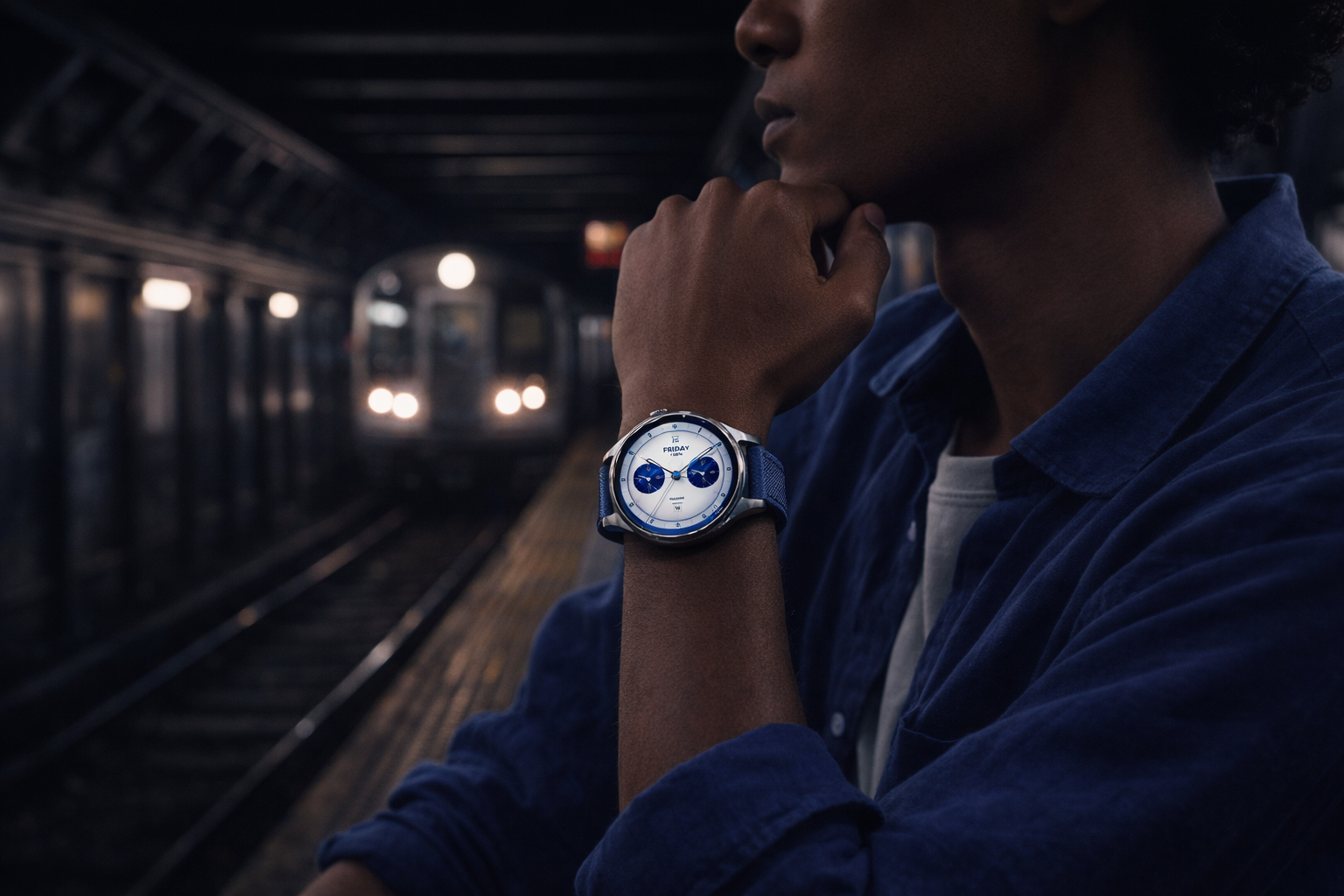
The Xiaomi Watch S4 has no business looking this good at this price. An aluminum alloy case, a 2200-nit peak brightness AMOLED display that outshines the Apple Watch Series 10, interchangeable bezels that let you swap the watch's entire personality in seconds, and a battery that lasts well over a week – all for roughly $160. On paper, it reads like a misprint. On the wrist, it reads like a warning shot to Samsung, Google, and Apple that the budget tier is coming for their lunch.
Almost. Because the Watch S4's hardware writes checks that its software cannot fully cash. HyperOS 2 is smooth and capable for the basics, but there is no third-party app store – no Spotify, no Google Maps, no WhatsApp beyond notification mirroring – and the closed ecosystem means this watch is playing a fundamentally different game than Wear OS or watchOS devices. iPhone users get a further-diminished experience. The question is not whether the S4 embarrasses watches twice its price – in several categories, it clearly does. The question is whether those categories are the ones that matter most to you.
Design & Build
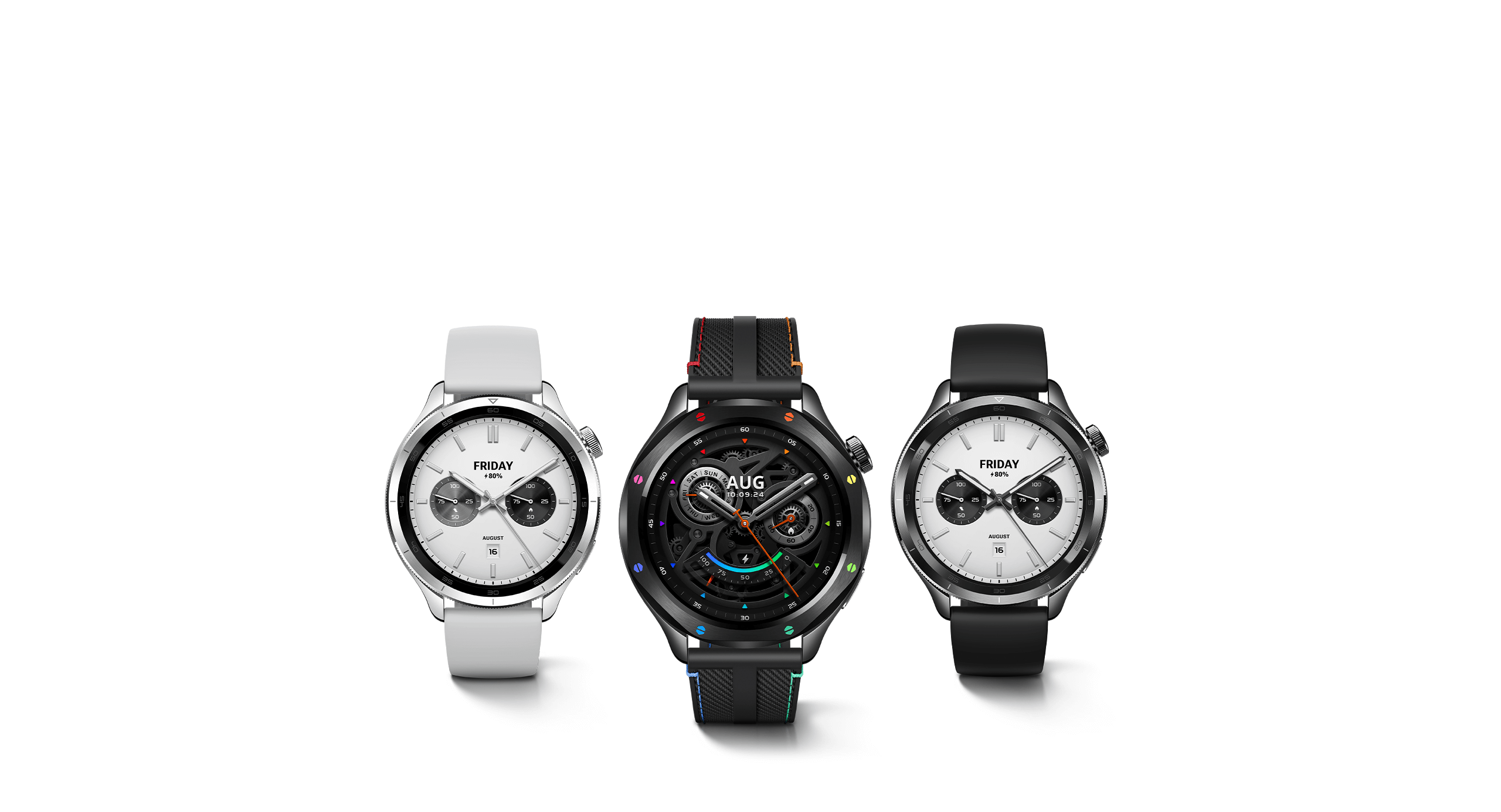
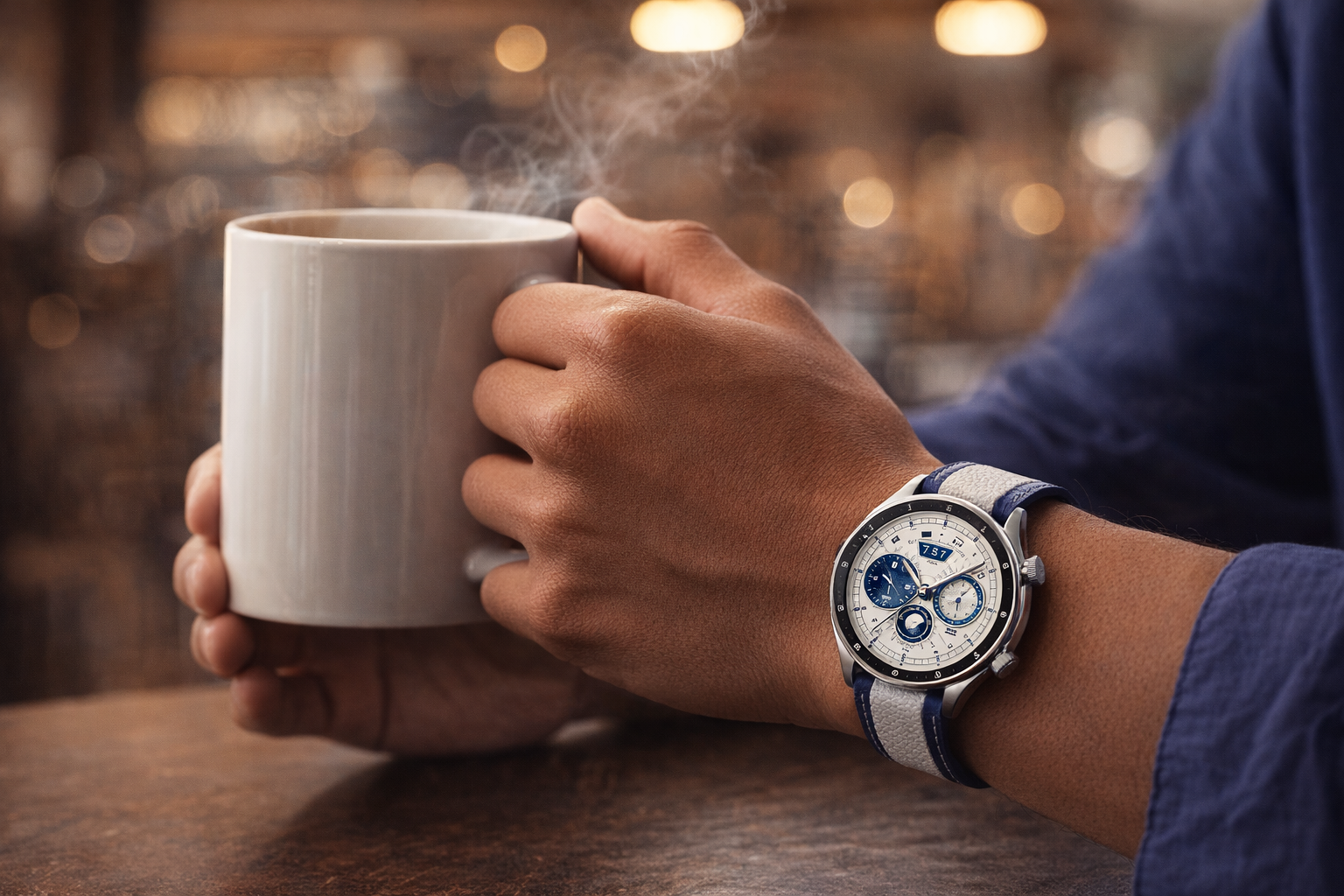
The Watch S4 looks and feels like a watch that costs considerably more than it does. The 47.3mm aluminum alloy case is finished with a PVD-processed high-gloss texture that, in the silver colorway, is nearly indistinguishable from stainless steel. At 44.5 grams without the strap, it sits light on the wrist – heavier than the Samsung Galaxy Watch 7 (33.8g for the comparable 44mm) but noticeably lighter than the chunky Garmin or Apple Watch Ultra alternatives it has no business being compared to but keeps inviting comparison with anyway.
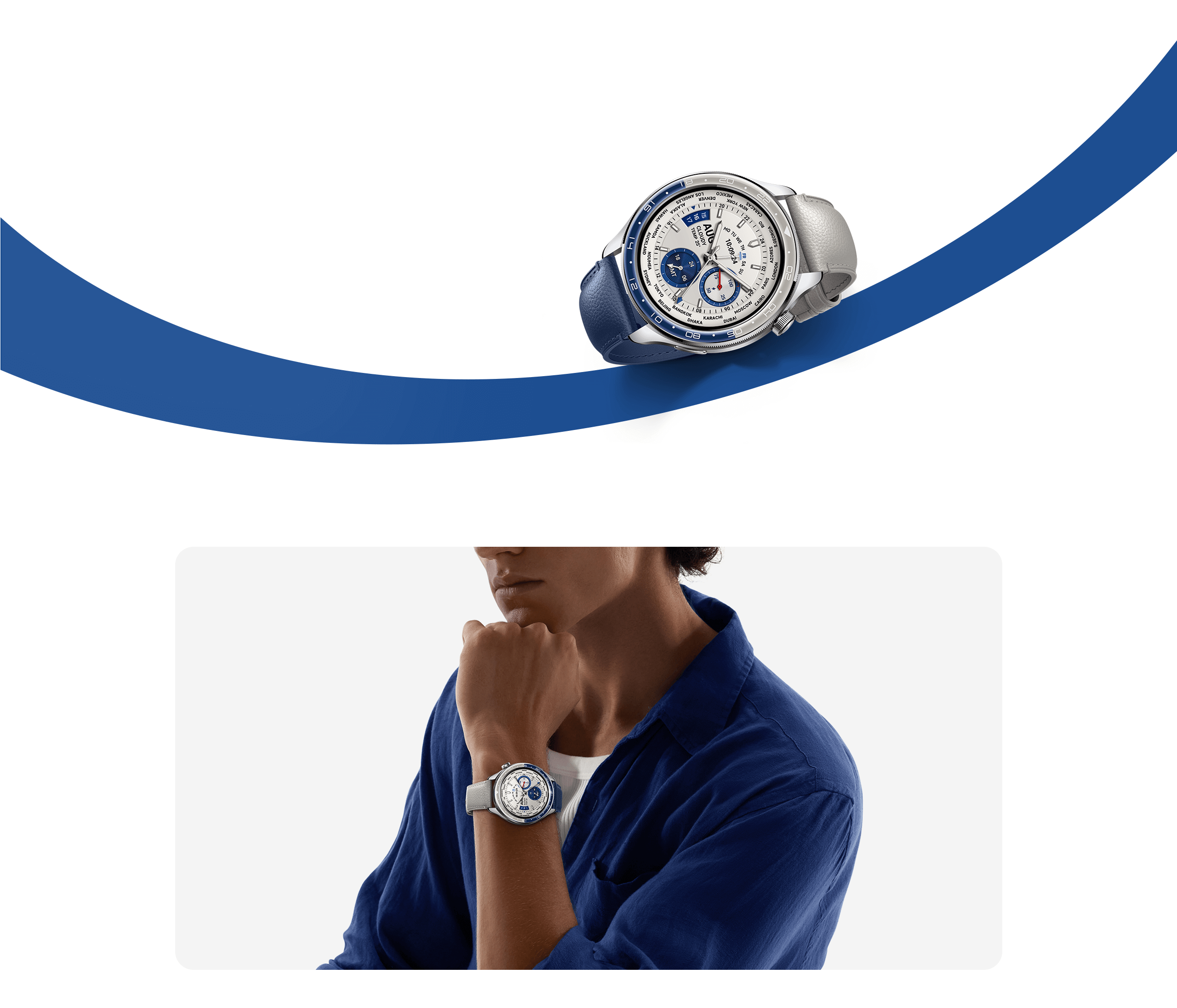
The signature feature is the interchangeable bezel system. A bayonet-style locking mechanism lets you twist off the bezel and snap on a replacement in seconds – no tools, no fuss. Xiaomi offers multiple bezel options, and the effect is transformative. A matte black sporty bezel for the gym, a polished silver ring for the office, a rainbow accent for the weekend. Combined with different straps and over 200 watch faces, the customization depth is unmatched at any price point, let alone this one.
The straps use standard 22mm quick-release lugs – a decision that deserves applause. Unlike Huawei's proprietary attachments or Apple's lock-in strategy, Xiaomi lets you use any 22mm strap from any manufacturer. The included fluororubber straps are comfortable and durable, but the freedom to swap in a leather band, a nylon NATO, or a metal bracelet from Amazon for $15 adds enormous practical value.
Water resistance is rated at 5 ATM, covering pool swimming and rain. The rotating crown on the right side is a meaningful upgrade from the S3's push buttons, providing satisfying tactile feedback and smooth scrolling through menus. A second flush-mounted button below the crown handles quick settings. Build quality at $160 is, frankly, outstanding.
Display
The 1.43-inch AMOLED display is the Watch S4's most aggressive punch above its weight class. The 466 x 466 pixel resolution at 326 PPI delivers sharp, legible text at any size, and colors are vivid without veering into oversaturation.
But the brightness is the headline. At 1500 nits in high brightness mode and a peak of 2200 nits, the Watch S4's display is brighter than the Apple Watch Series 10 (2000 nits), brighter than the Google Pixel Watch 3 (2000 nits), and dramatically brighter than its predecessor, the Watch S3, which topped out at a mediocre 600 nits. In direct sunlight – the real-world test that separates good displays from great ones – the S4 is effortlessly readable. For a $160 watch, this is absurd.
Always-on display is supported, with a unique AOD design for each watch face. The 60Hz refresh rate is standard for the category and perfectly adequate for smartwatch UI interactions. Xiaomi has also implemented a moisture-resistant touch algorithm that prevents water droplets from triggering phantom inputs – a small detail that matters during rainy runs.
Performance & Features
HyperOS 2 is the software that powers the Watch S4, and it is both the watch's quiet strength and its clear ceiling.
On-wrist, HyperOS 2 is responsive and well-organized. The rotating crown scrolls smoothly through app grids and notification lists. A top swipe reveals notifications, a bottom swipe accesses quick-toggle widgets, and the interface flows without the micro-stutters that plague budget Wear OS implementations. Xiaomi has refined the UI since the S3, and the improvement is tangible.
The feature set covers the core smartwatch essentials. Notifications from any app arrive promptly on both Android and iOS, though iPhone users lose some functionality – no on-wrist replies, no music player access. Bluetooth calling works through the dual-microphone system and onboard speaker, and call quality is serviceable for quick conversations. NFC supports Mastercard and Visa contactless payments in supported regions, though availability varies by market and some global units omit this feature – check before buying if tap-to-pay matters to you.
Quick gesture controls – wrist rotation, shake, finger snap – offer customizable shortcuts, though their recognition is inconsistent enough that they feel more like party tricks than reliable inputs.
Here is where the ceiling appears: there is no third-party app store. No Spotify. No Google Maps. No WhatsApp beyond notification mirroring. Approximately 30 built-in apps handle alarms, timers, weather, compass, barometer, and basic media controls, but the ecosystem is closed. Strava and Suunto integration exists through the Mi Fitness app's connected services feature on Android, which partially bridges the gap for fitness users, but the Watch S4 is fundamentally a standalone experience. For users embedded in Xiaomi's broader ecosystem – phones, earbuds, smart home devices – HyperOS 2 integrates these devices into a unified control hub. For everyone else, the software is functional but isolated.
Health & Fitness
The Watch S4 covers the health and fitness fundamentals competently, with some areas of genuine strength and a few notable gaps.
Heart rate monitoring uses an upgraded sensor rated at 98% accuracy in controlled conditions. In real-world use, the sensor tracks reliably during steady-state activities – walking, jogging, cycling at moderate intensity. During high-intensity interval training or rapid heart rate changes, accuracy drops, as it does on virtually every optical wrist sensor that is not an Apple Watch Ultra or Polar Verity Sense. For daily wellness monitoring, zone-based training, and general fitness tracking, the heart rate data is trustworthy.
Blood oxygen (SpO2) monitoring is available on-demand and during sleep. Stress tracking uses heart rate variability data, and breathing exercises are built in. There is no ECG, no skin temperature sensor, and no body composition analysis – features found on the Samsung Galaxy Watch 7 ($329) and Apple Watch Series 10 ($399). At $160, their absence is expected, not a failing.
Sleep tracking provides stage breakdowns – light, deep, REM – along with breathing rate and blood oxygen data overnight. The data is useful for establishing patterns and trends, but deep sleep estimates tend to run high, often logging 2+ hours nightly where more sophisticated trackers report less. Sleep tracking is best treated as directional guidance rather than clinical data.
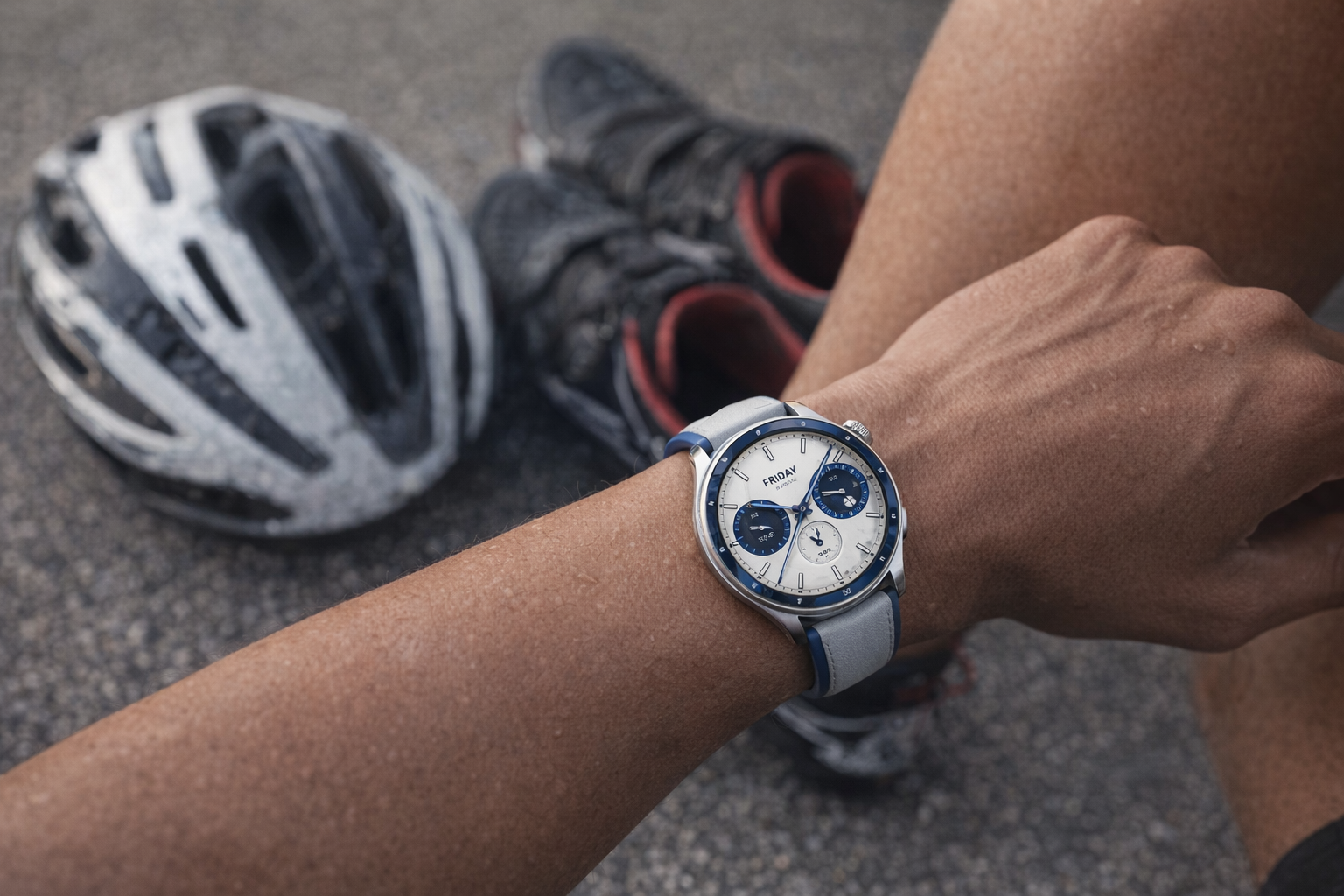
The 150+ sport modes cover everything from running and swimming to professional skiing with fall detection and running form analysis (vertical ratio, amplitude, ground contact time). The dual-band L1+L5 GNSS supports five satellite systems and locks a signal in roughly 40 seconds. GPS tracking is accurate in urban environments – distance error runs typically within 10-50 meters over a 7-8 kilometer route, competitive with Garmin-class hardware at this scale. In open sky conditions, the GPS is reliable. In dense tree cover or narrow urban canyons, accuracy can wander, as it does on most watches without Garmin's multiband antenna engineering.
For casual to moderate fitness users, the Watch S4 delivers more than enough. For data-obsessed athletes or anyone training for competitive events, the simplified fitness statistics and occasional tracking inconsistencies point toward a Garmin, Polar, or COROS instead.
Battery Life
Xiaomi claims 15 days of battery life from the 486mAh cell, and that number is achievable – if you disable always-on display, limit GPS workouts, and keep notifications to a minimum. In other words, if you use the watch like an expensive bracelet.
Under realistic daily use – notifications enabled, continuous heart rate monitoring, sleep tracking, always-on display off, and two to three GPS-tracked workouts per week – the Watch S4 delivers 8 to 12 days between charges. That is not 15 days, but it is still remarkable. The Samsung Galaxy Watch 7 lasts about 1.5 to 2 days. The Google Pixel Watch 3 manages 24-36 hours. The Apple Watch Series 10 needs nightly charging. The Watch S4 turns charging from a daily ritual into a weekly afterthought.
Enable always-on display and increase GPS usage, and the number drops to 4-6 days. Push everything to maximum – AOD, continuous SpO2, daily GPS workouts, heavy notification volume – and expect 2-3 days. Even in worst-case scenarios, the Watch S4 outlasts every mainstream Wear OS and watchOS competitor.
The 5-minute quick charge delivering 2 days of use is a practical lifesaver. Forgot to charge before a weekend trip? Five minutes on the magnetic dock before you leave, and the watch will survive the entire getaway. The magnetic 2-pin charger itself is the one annoyance – alignment can be fiddly, and in 2026, a proper magnetic puck would be welcome. But when you are charging once a week, the charger's inelegance is a minor footnote.
Who It's For / Who Should Skip
The Watch S4 is ideal for budget-conscious buyers who want a smartwatch that looks and feels premium without the premium price. If you care about build quality, display brightness, and battery endurance more than app ecosystem depth, the S4 is the best value in its class. Xiaomi phone owners get the most integrated experience, but any Android user will find a capable daily companion. Casual fitness users who want step tracking, heart rate monitoring, GPS-tracked runs, and sleep data without drowning in advanced metrics will be well served. And anyone who enjoys personalizing their watch – the interchangeable bezel system is a genuine differentiator that no competitor matches. If you want Wear OS and are considering staying in the Xiaomi family, the Xiaomi Watch 2 Pro offers full Google app access, though its software polish lags behind.
Skip the Watch S4 if third-party apps are essential to your smartwatch experience. No Spotify, no Google Maps, no WhatsApp replies – if that is a dealbreaker, spend the extra money on a Galaxy Watch or Pixel Watch. Serious athletes and competitive runners should look at a Garmin Vivoactive 5 or COROS for deeper training metrics, more reliable GPS, and robust third-party platform integration. iPhone users will find a diminished experience, with limited notification interaction and no music control. And if you need ECG, body temperature, or body composition tracking for health monitoring, the Watch S4 does not offer them.
The Verdict
The Xiaomi Watch S4 is one of the most impressive hardware packages in the budget smartwatch space. The 2200-nit AMOLED display, the aluminum alloy construction, the interchangeable bezel system, the dual-band GPS, and the 8-12 day real-world battery life represent a hardware value proposition that genuinely embarrasses competitors at twice the price. No Samsung Galaxy Watch 7 or Google Pixel Watch 3 can match this display brightness, this battery endurance, or this level of physical customization – and both cost nearly double.
The software is the equalizer. HyperOS 2 is smooth and efficient, but the closed ecosystem, absent app store, and limited smart features mean the Watch S4 cannot fully replace what a Wear OS or watchOS device offers in daily convenience. It is a superb watch and a competent fitness tracker that falls short as a full smartwatch platform.
For the right buyer – and there are a lot of right buyers at $160 – that trade-off is not just acceptable, it is brilliant. At this price, alternatives like the Amazfit Active 2 and Huawei Watch Fit 4 compete on value, but neither matches the S4's display or customization options. For more options, browse our best budget smartwatches and best smartwatches for Android guides.
| Category | Weight | Score | Weighted |
|---|---|---|---|
| Core Function | 30% | 72 | 21.6 |
| Build Quality | 15% | 82 | 12.3 |
| User Experience | 20% | 68 | 13.6 |
| Value | 20% | 92 | 18.4 |
| Battery | 15% | 82 | 12.3 |
| Overall | 100% | 78.2 → 78/100 |
Core Function (72/100): Heart rate tracking is reliable for daily use and steady-state exercise. GPS is accurate in most environments. 150+ sport modes and running form metrics add depth. Points deducted for oversimplified fitness statistics, sleep tracking that overestimates deep sleep, and heart rate drift during high-intensity intervals.
Build Quality (82/100): Aluminum alloy case with PVD finishing looks and feels premium. 5ATM water resistance. Standard 22mm lugs are a pro-consumer choice. The interchangeable bezel system is innovative and well-executed. The fiddly 2-pin magnetic charger is the only hardware miss.
User Experience (68/100): HyperOS 2 is snappy and intuitive on-wrist, and the rotating crown is a welcome input method. But the absence of third-party apps is a significant limitation. The Mi Fitness companion app is functional without being impressive. iOS experience is restricted. Gesture controls are unreliable.
Value (92/100): The hardware specification at EUR 160 / ~$160 is extraordinary. A 2200-nit AMOLED, aluminum construction, dual-band GPS, NFC, Bluetooth calling, and a rotating crown – this feature set belongs on a $300 watch. Competitors at this price (Amazfit Active 2, Honor Watch 5) do not match the build quality, display brightness, or customization options.
Battery (82/100): Real-world endurance of 8-12 days crushes every Wear OS and watchOS alternative. The 5-minute quick charge for 2 days of use is practical and well-implemented. Falls short of the marketed 15-day claim with features enabled, and the 2-pin charger is behind the times.
Score: 78/100 – The Xiaomi Watch S4 lands in Good territory, recommended with caveats. It proves that $160 can buy genuinely impressive smartwatch hardware – a display, build, and battery that compete with watches at $300 and above. The software limitations are real, but for buyers who prioritize physical quality, battery independence, and value over app ecosystem depth, the Watch S4 is the most compelling budget smartwatch available today. The Samsung Galaxy Watch FE and Amazfit Balance 2 remain strong alternatives if app ecosystem or tracking depth are higher priorities.