
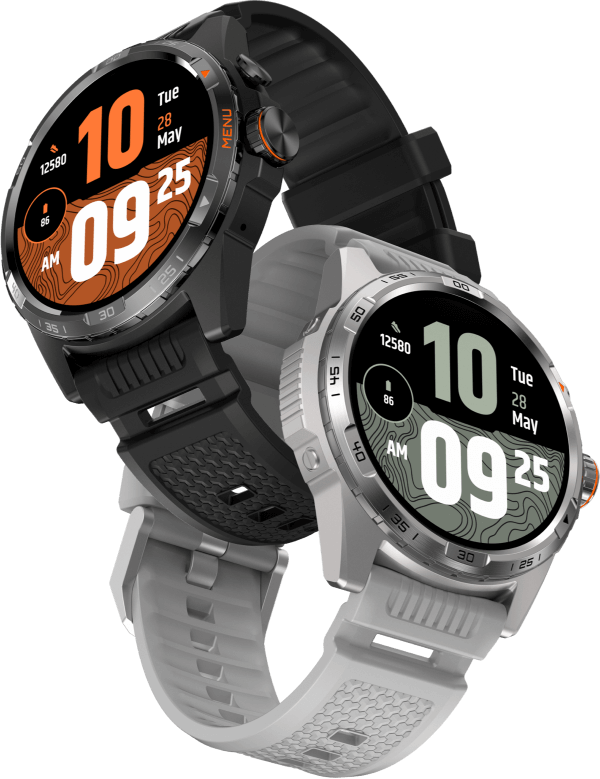
The TicWatch Atlas answers a question that has haunted Wear OS since its inception: can a smartwatch running Google's platform last more than two days? The answer, thanks to Mobvoi's dual-display trick, is a resounding yes. At $349, the Atlas undercuts the Samsung Galaxy Watch Ultra and Apple Watch Ultra 2 by hundreds of dollars while delivering a rugged, MIL-STD-810H-rated body and battery life that rivals a Garmin Instinct. It is, on paper, the budget Garmin rival that Android users have been waiting for – assuming the company behind it sticks around to support it.
But there is a complication that no spec sheet can resolve. Mobvoi has quietly pulled its TicWatch lineup from its own store and major retailers, pivoting the company toward AI products and fitness equipment. The Atlas still ships on Wear OS 4 with no confirmed path to Wear OS 5, and the company has committed only to "essential support" going forward. That transforms the buying decision from a straightforward hardware evaluation into a gamble on how long the software will remain viable.
Design and Build
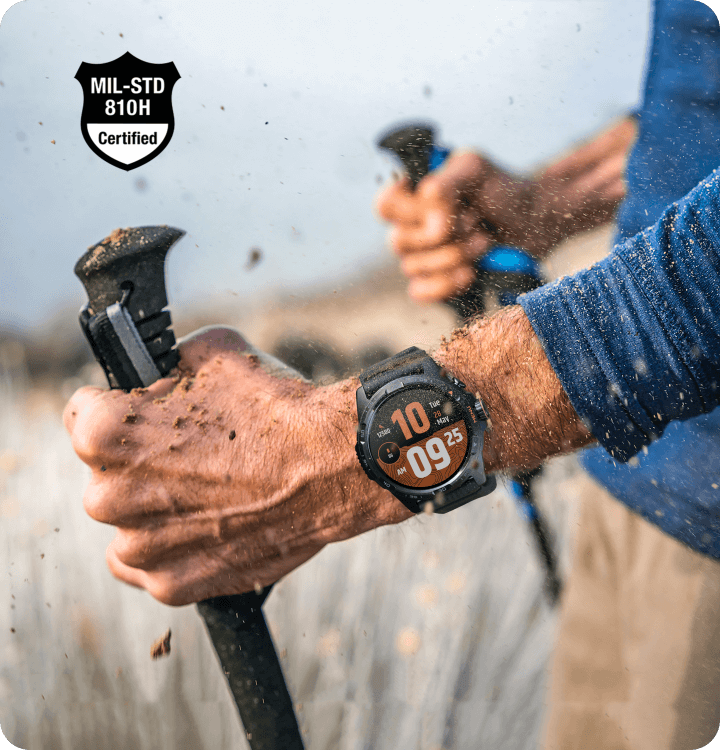
The Atlas wears its rugged credentials on its sleeve – or rather, on a 52.2mm case built from stainless steel, 7000-series aluminum, and high-strength nylon reinforced with fiberglass. At 47.2 grams without the band, it sits in the same neighborhood as competing adventure watches without feeling like a manacle. The raised bezel borrows the chunky, tool-watch aesthetic popularized by Garmin's Instinct line and the Casio G-Shock series, with orange accents around the crown and pusher that follow the current trend of rugged watches signaling their toughness through color.
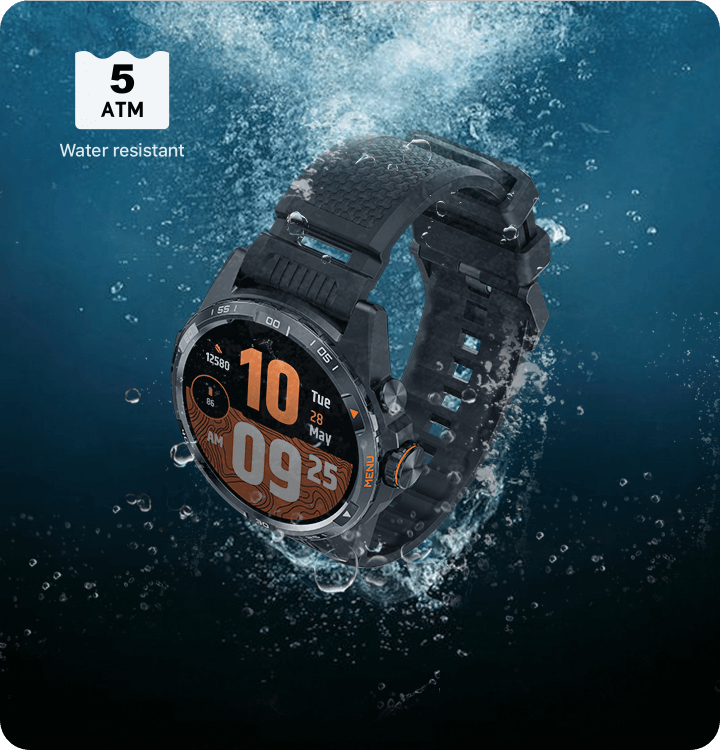
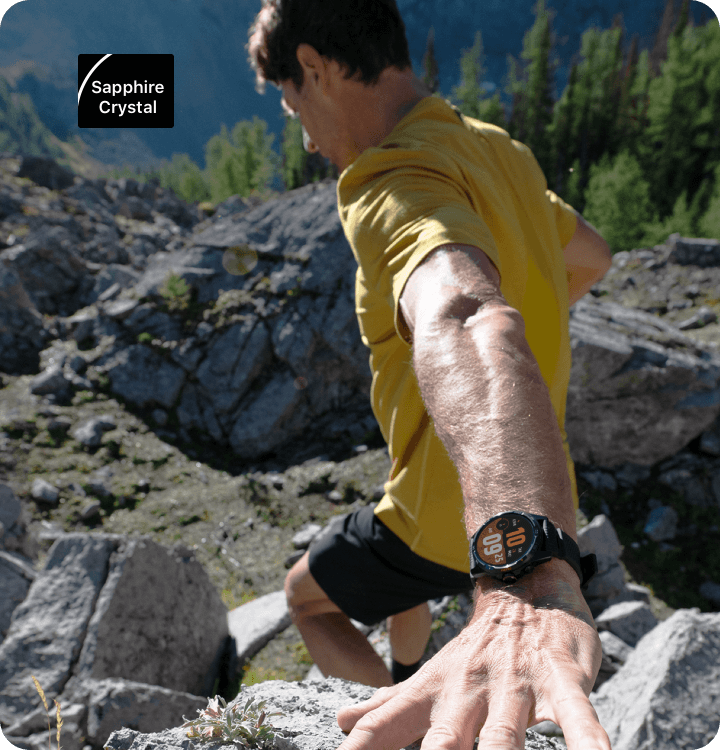
The 12.05mm thickness is reasonable for the category, and the fluororubber strap flexes comfortably around the wrist with enough adjustment holes to accommodate most sizes, though the spacing between those holes can leave the fit slightly too tight or too loose depending on wrist circumference. A sapphire crystal protects the display, and the watch carries MIL-STD-810H certification for shock, vibration, and temperature extremes alongside 5ATM water resistance. This is a watch built for trail runs and mountain hikes, not boardroom subtlety.
The criticism that sticks is the design's visual blandness. Mobvoi has iterated cautiously since the TicWatch Pro 5 Enduro, and the Atlas does not look meaningfully different from either predecessor. One case size and two color options – black and silver – offer minimal personalization. The pogo-pin charger with a USB-A cable feels like a relic, especially when competitors have moved to USB-C or magnetic charging solutions.
Display
The dual-display system is the Atlas's defining feature and its strongest argument against competitors on both sides of the price spectrum. A 1.43-inch AMOLED panel at 466 by 466 resolution handles the full Wear OS experience – notifications, apps, workout screens – with the brightness and color saturation expected of modern smartwatch displays. It is sharp, responsive, and easily readable indoors.
Layered on top of that AMOLED sits an FSTN (film-compensated super-twisted nematic) ultra-low-power display. This secondary screen takes over as the always-on display, showing time, date, step count, heart rate, and battery level while sipping power at a fraction of the AMOLED's draw. The transition between displays is seamless: raise your wrist or tap the screen, and the AMOLED fires up. Let your arm drop, and the FSTN takes over within a couple of seconds.
Outdoor visibility through the FSTN layer is strong. The reflective, high-contrast nature of the monochrome display means it remains legible in direct sunlight where AMOLED always-on modes wash out. The AMOLED itself, while vibrant, does not reach the peak brightness levels of Samsung's or Apple's flagship panels. Under harsh midday sun, the AMOLED can struggle, but the FSTN layer compensates by always being readable.
Performance and Features
A Snapdragon W5+ Gen 1 processor paired with 2GB of RAM and 32GB of storage keeps Wear OS 4 running without significant lag. App launches are snappy, scrolling through tiles is fluid, and the watch handles notification management, Google Maps, and third-party apps without the stutter that plagued earlier Mobvoi watches. The crown rotates to scroll through menus and works well in most contexts, though sensitivity can be erratic in certain interfaces – watch face customization, in particular, tends to overshoot selections with minimal input.
The software story is where enthusiasm dims. The Atlas ships with Wear OS 4, not the current Wear OS 5, and there is no confirmed upgrade timeline. Google Assistant remains absent, replaced by Mobvoi's own voice assistant, which is less capable and less integrated. Google services like Maps, Keep, and the Play Store are present and functional, but the missing Assistant means quick voice commands for smart home control, reminders, and contextual queries fall short of what Samsung and Google's own watches deliver.
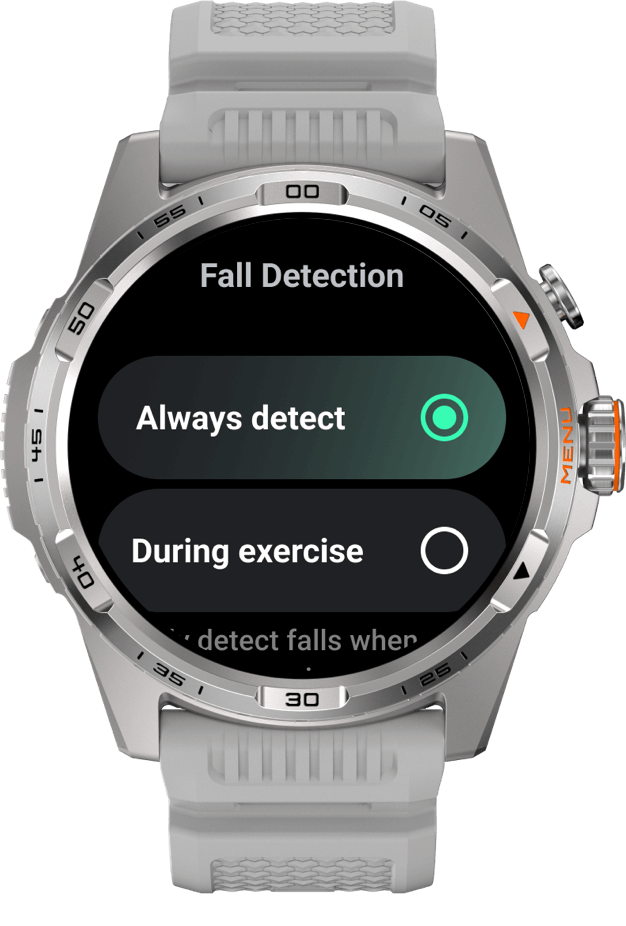
The Mobvoi Health companion app aggregates fitness and wellness data but does so with a sluggish interface and a cluttered layout. Sifting through heart rate trends, sleep analysis, and workout history requires more patience than it should. There are no proactive health insights or trend summaries – the app presents raw data and leaves interpretation to the user. Fall detection is a notable addition, though it generates false positives during abrupt movements like stepping off a ladder or performing certain gym exercises.
Health and Fitness
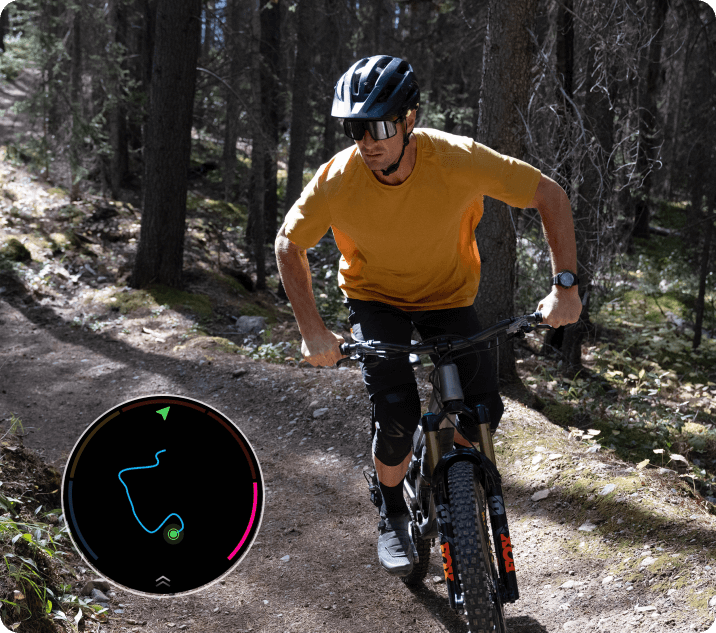
The Atlas offers over 110 workout modes spanning indoor and outdoor activities, from standard running and cycling to niche options like Pilates and rowing. Automatic workout detection is responsive – the watch picks up walking activity faster than most competitors, often recognizing movement within the first few minutes. GPS acquisition via five satellite systems (GPS, GLONASS, Galileo, BeiDou, QZSS) is consistently fast, typically locking a signal in under ten seconds.
GPS accuracy is adequate for recreational use but not exceptional. Routes generally track close to actual paths, but the Atlas tends to overestimate distance slightly – around 10 to 15 meters per mile on average. For recreational runners tracking general distance and pace, this is perfectly adequate. For training-plan precision or competitive athletes logging exact splits, it falls short of what Garmin and COROS deliver with their multi-band GPS implementations.
Heart rate monitoring tells a split story. For daily resting heart rate, walking, and moderate exercise, the optical sensor performs well, delivering readings that align closely with what a dedicated chest strap reports. During high-intensity or high-movement activities – particularly cycling – accuracy can degrade significantly, with some scenarios producing readings that diverge by meaningful margins from reference devices. Blood oxygen monitoring is available but carries the usual caveat of wrist-based SpO2: useful for spotting trends, unreliable for clinical precision. Sleep tracking captures duration and stages but struggles to distinguish between lying awake in bed and actual sleep onset, a weakness that inflates sleep time estimates.
Battery Life
This is where the Atlas earns its keep. The 628mAh battery is larger than most Wear OS competitors, and the dual-display system extracts remarkable endurance from it. In full smart mode – AMOLED active, notifications flowing, GPS workouts tracked – the Atlas comfortably delivers two to three days of use. Light usage days with minimal fitness tracking see battery drain of only 10 to 15 percent over 24 hours. Heavy days with GPS workouts, sleep tracking, and constant notifications still leave roughly half the battery after a full day.
Switch to Essential Mode, which disables the AMOLED and runs exclusively on the FSTN display, and the advertised battery life reaches 45 days. That figure requires stripping the watch of everything that makes it a smartwatch, but it remains a legitimate option for extended backcountry trips where charging is impossible. A 30-minute charge restores roughly two days of smart-mode use, which softens the inconvenience of the USB-A pogo-pin charger.
For context, the Samsung Galaxy Watch Ultra manages two to three days depending on always-on display settings. The Pixel Watch 3 lasts about a day with always-on display active – adequate, but not comfortable. The Garmin Vivoactive 6 crushes the Atlas in pure battery terms – weeks in smartwatch mode – but offers no touchscreen and no Wear OS app ecosystem. The Atlas occupies a genuinely unique position: the only Wear OS watch that can last a long weekend without a charger in meaningful smart mode.
Who It's For / Who Should Skip
The TicWatch Atlas makes the most sense for Android users who want Wear OS app access, Google services integration, and rugged outdoor capability without the $650-plus price tags of Samsung's Galaxy Watch Ultra or Apple's Ultra 2. Buyers who value battery life above all else in a smartwatch and are comfortable with the limitations of a company whose long-term commitment is uncertain will find genuine value here, especially at the discounted prices now commonly available below $250. For more options, browse our guide to the best smartwatches for Android.
Skip the Atlas if software longevity matters to you. The absence of a Wear OS 5 update, the missing Google Assistant, and Mobvoi's apparent pivot away from smartwatches entirely create real risk that this watch will feel increasingly dated within a year. Serious athletes who depend on precise GPS and heart rate data during intense training should look at Garmin or COROS, where sensor accuracy and training analytics are in a different league. Anyone with smaller wrists should also be aware that the 52.2mm case is the only option – there is no smaller variant.
The Verdict
The TicWatch Atlas is a paradox: genuinely excellent hardware undermined by software uncertainty and a manufacturer that appears to be walking away. The dual-display system remains the cleverest solution to Wear OS battery anxiety, the build quality punches above its price, and the core fitness tracking is solid for recreational use. Under normal circumstances, this would be an easy recommendation for budget-conscious outdoor enthusiasts.
But circumstances are not normal. Mobvoi's retreat from the smartwatch market means buying the Atlas today requires accepting that Wear OS 4 may be as good as the software gets, that bug fixes and feature updates may slow to a trickle, and that the companion app could stagnate. The hardware will keep working, but the smartwatch experience depends on software support that no longer seems guaranteed. For alternatives worth considering, see the OnePlus Watch 3 or our roundup of the best smartwatches.
| Category | Weight | Score |
|---|---|---|
| Core Function | 30% | 72 |
| Build Quality | 15% | 85 |
| User Experience | 20% | 62 |
| Value | 20% | 65 |
| Battery | 15% | 90 |
| Overall | 100% | 73/100 |
At full retail, the Atlas is a tough sell given the uncertainty. At the deep discounts now appearing as stock clears, it becomes a more interesting proposition – a capable piece of outdoor hardware with a ticking clock on its software relevance. The dual-display system answers the battery question definitively. Whether Mobvoi will be around to answer anything else remains very much open. Buy at a discount if you treat it as capable hardware with a finite software lifespan; skip at full price.