
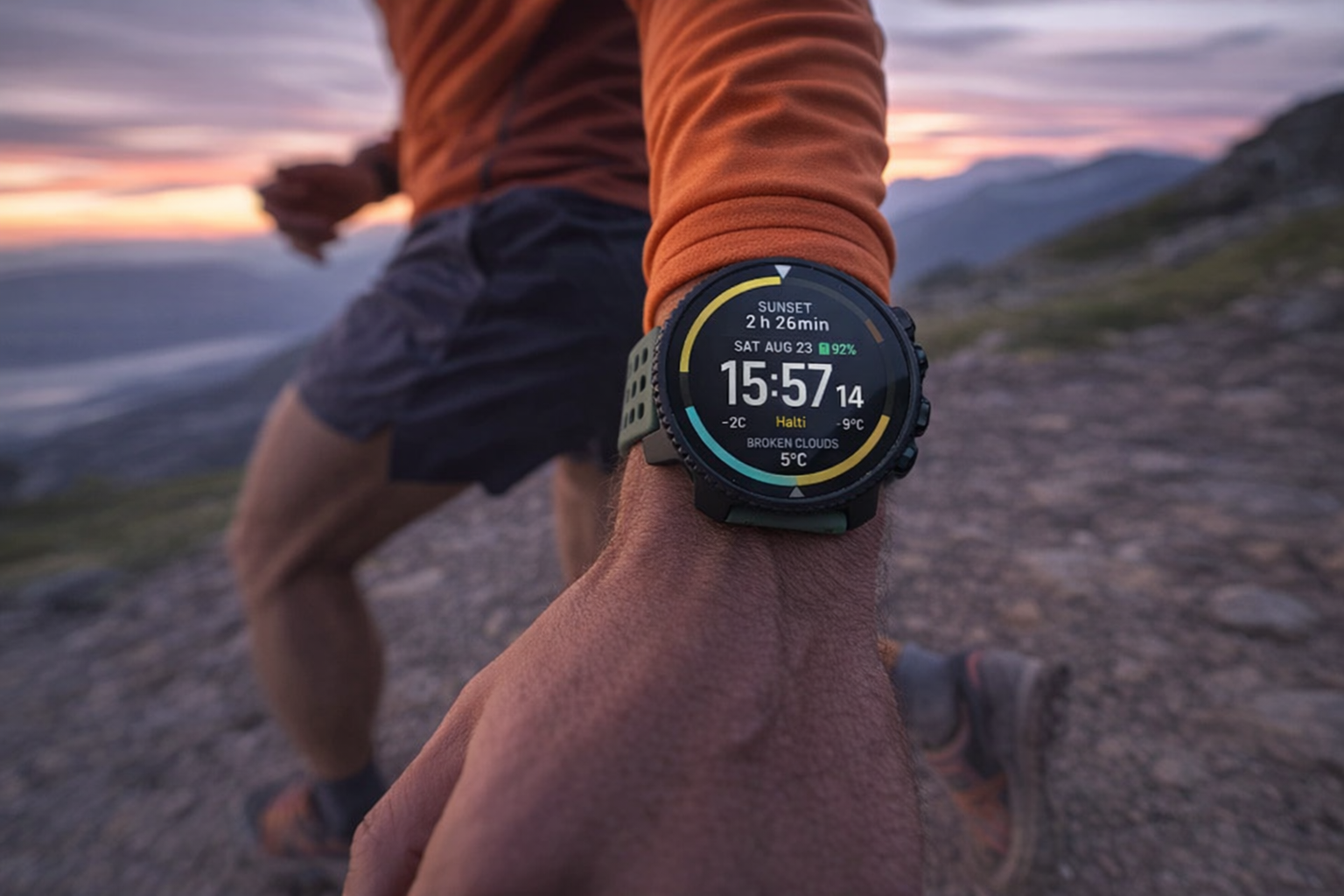
For years, recommending a Suunto over a Garmin Fenix required an asterisk. Great hardware, yes – but the software lagged, the heart rate sensor was unreliable, and the ecosystem felt two generations behind. The Suunto Vertical 2 changes that equation. Announced on September 30, 2025 and available from October 15, 2025, it swaps the old MIP display for a gorgeous 1.5-inch AMOLED, packs a proper LED flashlight into the bezel, and somehow delivers class-leading battery life while doing it. At $599 for stainless steel and $699 for titanium, it undercuts the Garmin Fenix 8 AMOLED by $300 to $400. That price gap alone demands attention. But the Vertical 2 doesn't just compete on value – it competes on substance.
This is the watch that signals Suunto's pivot from "respected niche brand" to "legitimate contender." The question is whether the software and ecosystem have caught up to the hardware. The answer is: mostly, yes – with stubborn exceptions. There is no offline music, no NFC payments, and no routable maps. Sleep tracking is unreliable. If those are requirements, the Garmin Fenix 8 still wins. But for the trail athlete who prioritizes battery life, GPS accuracy, and value, the Vertical 2 makes a powerful case.
Design & Build
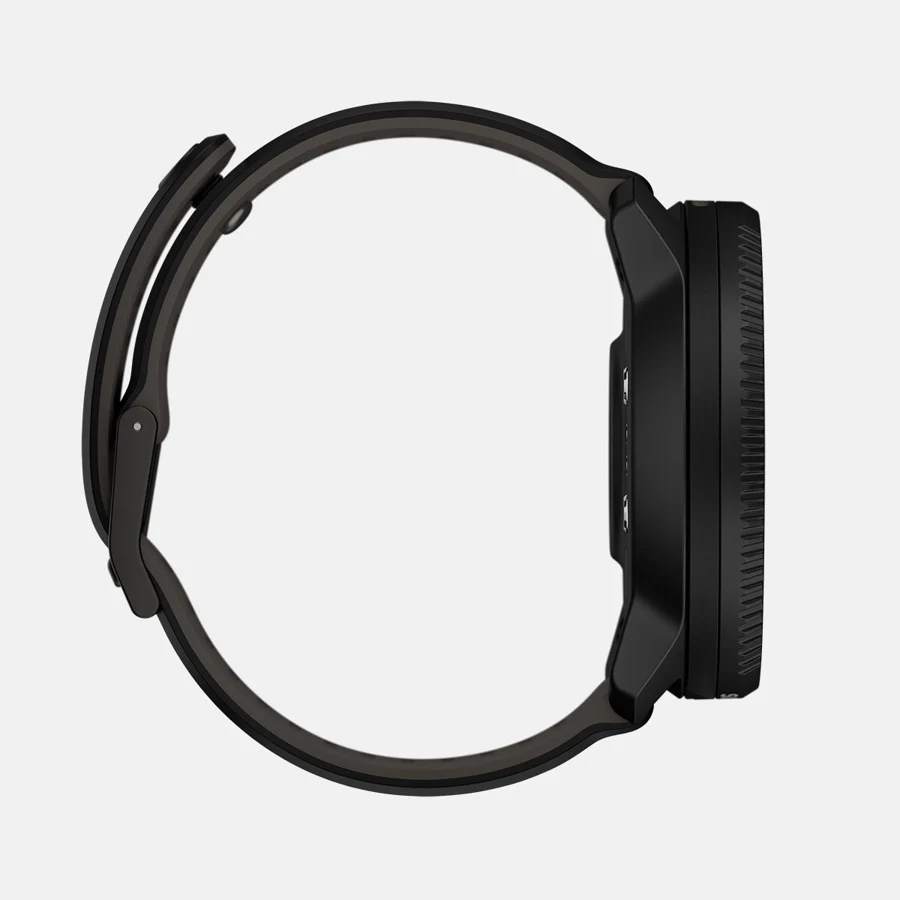
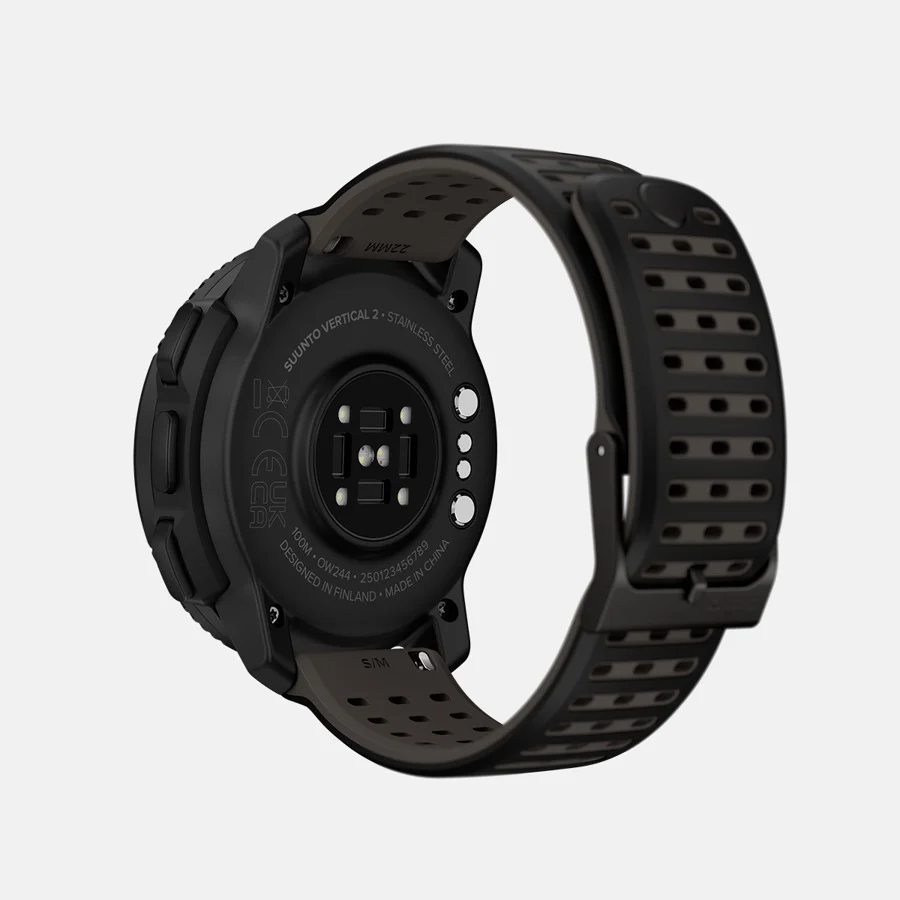
The Vertical 2 wears its Finnish heritage on its sleeve. The 49mm case is chunky and unapologetic, hewn from either stainless steel (87g) or grade-5 titanium (74g), both topped with sapphire crystal glass. There is nothing delicate about this watch, and that is the point. The titanium model strikes a compelling balance – light enough for all-day wear, tough enough that you stop worrying about doorframes and rock faces. At 13.6mm thick, it sits on the wrist with authority, though the flat-back sensor housing design keeps it from rocking during push-ups or sleep.
Three physical buttons handle most navigation: top-right for selection and start/stop, middle-right for back/lap, and bottom-right for a customizable shortcut. There is no rotating crown like the Fenix 8 or digital dial like the COROS VERTIX 2S, which means scrolling through menus relies on the touchscreen or repeated button presses. During sweaty intervals, the buttons are more reliable than the screen. During map browsing, the touchscreen is essential. The lack of a crown is a trade-off – some will miss it, others will never notice.
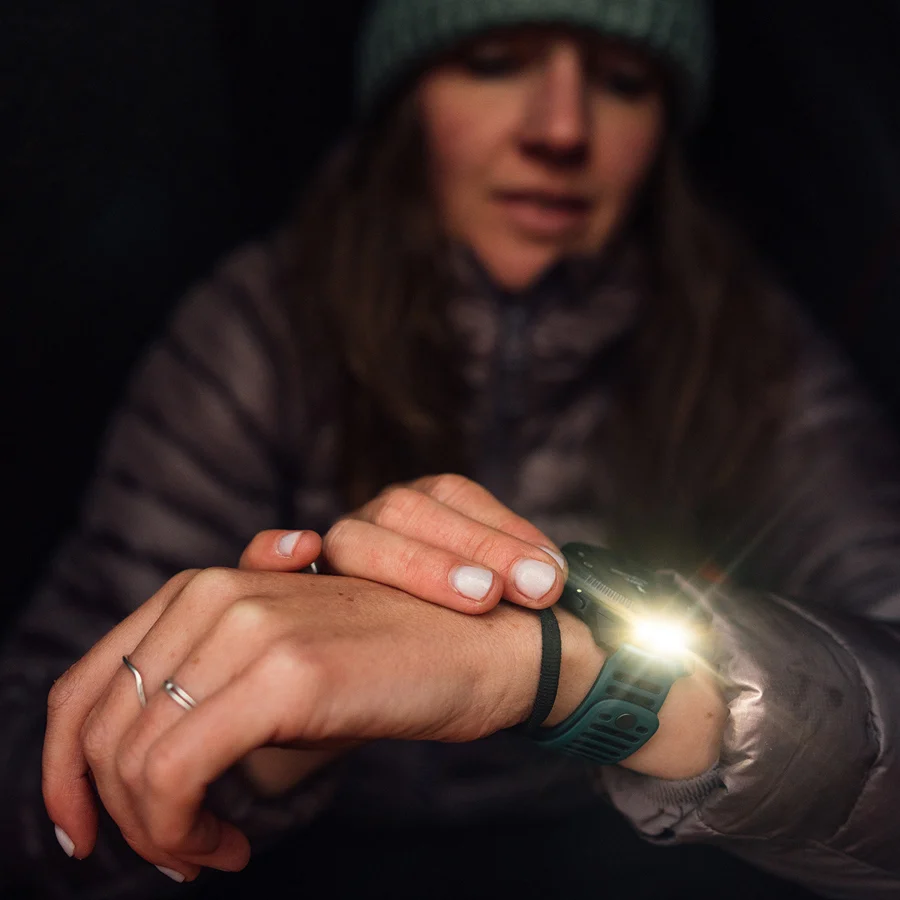
And then there is the flashlight. Suunto embedded a multi-LED array into the top of the bezel – two white LEDs and one red LED – and it is genuinely useful, not a gimmick. White mode offers four brightness levels (25%, 50%, 75%, and 100%), while the red LED preserves night vision in camp. An SOS flash pattern and a red alert mode round out the safety features. Garmin popularized the flashlight concept with the Fenix 7X and carried it into the Fenix 8, but Suunto's implementation holds its own – the LED housing is visibly larger, and the beam is bright enough to surprise you on full power. The initial firmware shipped with clunky flashlight software that required navigating a full-screen menu, but subsequent updates improved accessibility. The flashlight still cannot be toggled during active sport recording without exiting the data screen, which is an annoyance Suunto needs to address. Garmin's flashlight UI remains more refined.
Water resistance is rated at 100 meters (10 ATM), matching the Fenix 8 and COROS VERTIX 2S. This is a proper adventure watch built for conditions that would destroy a smartwatch.
Display
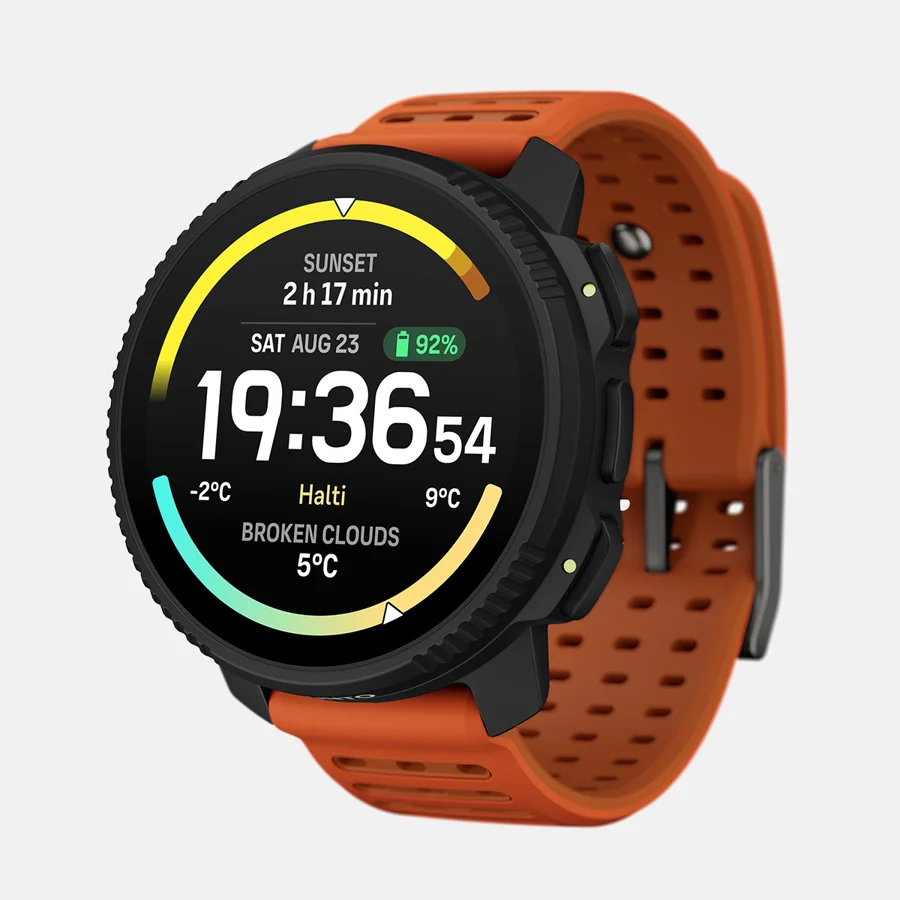
Suunto's transition from MIP to AMOLED is the defining story of this generation, and the result is excellent. The 1.5-inch LTPO AMOLED panel pushes 466 x 466 pixels at up to 2,000 nits peak brightness. That is a significant jump from the COROS VERTIX 2S's 1.4-inch MIP panel (280 x 280 pixels), and it edges out the Garmin Fenix 8 AMOLED's 1.4-inch screen in both size and resolution.
In direct sunlight, the display remains perfectly readable – a concern that AMOLED skeptics can put to rest. Maps pop with vivid color and surprising detail, elevation contours are easy to trace, and workout data is crisp at a glance. Low-light performance is even better; the deep blacks and saturated colors make the interface feel premium in a way MIP never could.
There is one quirk worth noting. With the always-on display disabled, the screen takes a beat to wake when you flick your wrist, and the perceptible lag can be mildly annoying mid-stride when you just want to check your pace. The solution is to enable always-on display, which Suunto has optimized well enough that the battery hit is modest – roughly 5 to 10 hours off the headline GPS figure, depending on mode. Given the enormous battery reserves, that trade-off is easy to accept. The always-on display itself, however, uses a heavily dimmed watch face that can be difficult to read in bright conditions – a minor frustration that a future software update could address with better AOD face designs.
Navigation & GPS
The Vertical 2 supports dual-frequency (multi-band) GNSS across all five major satellite systems: GPS, GLONASS, Galileo, BeiDou, and QZSS. GPS accuracy is excellent. On mountain routes with dense tree cover, cliff sections, and steep elevation changes, tracks are tight and reliable. Canyon switchbacks that trip up single-band receivers pose no problem for the multi-band system. Distance accuracy exceeds 99% in open terrain. This is a massive improvement over older Suunto watches and puts the Vertical 2 on par with the best GPS performers in the category, including the Garmin Fenix 8 and COROS VERTIX 2S.
Open-water swimming GPS remains a weak spot – an industry-wide problem that the Vertical 2 does not solve. Wrist-based GPS struggles with intermittent water submersion, and triathlon-focused swimmers should temper expectations for that specific use case.
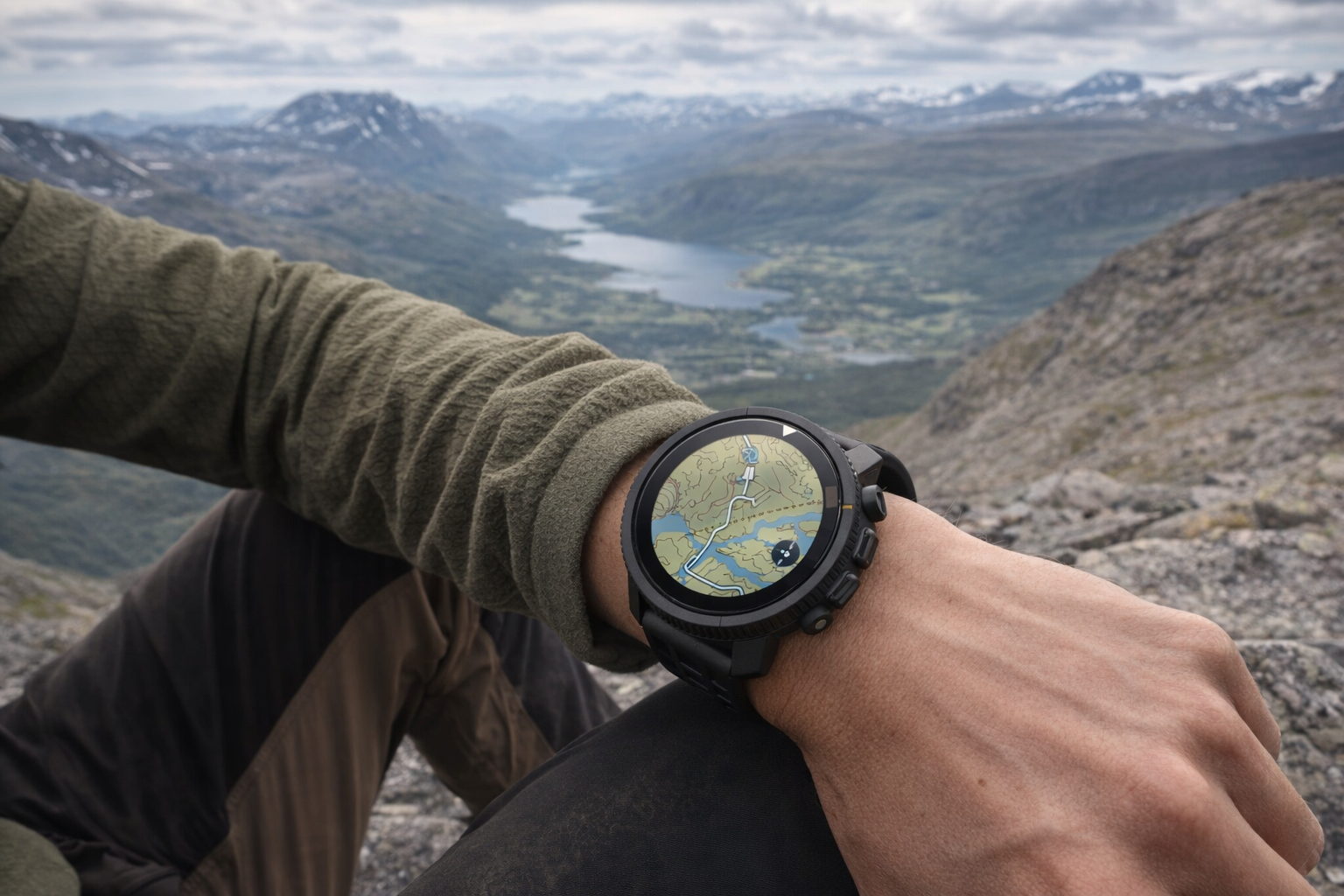
Navigation is where Suunto's ambition and execution don't quite align. The full-color offline topographic maps are beautiful – vivid, detailed, and stored on 32GB of internal memory. They download via WiFi and render gorgeously on the AMOLED screen. But the navigation workflow has friction. Routes require manual toggling, and getting turn-by-turn directions involves extra steps compared to Garmin's seamless approach. The maps are not routable – the watch cannot generate routes on the fly the way the Fenix 8 can, which is a meaningful limitation for athletes who improvise mid-adventure. Route capacity is also limited to roughly 10-12 routes at a time despite that generous 32GB storage, which feels unnecessarily restrictive for thru-hikers planning multi-section treks. Garmin still owns the navigation experience, but Suunto has closed the gap meaningfully – the maps themselves are arguably prettier, and the off-route alerts work reliably.
Health & Fitness Tracking
The redesigned optical heart rate sensor – shared with the Suunto Race 2 – represents a generational leap for Suunto. Previous models earned a reputation for unreliable wrist-based HR, to the point where serious athletes routinely paired a chest strap. The Vertical 2's new flat-back sensor housing delivers markedly better results. In steady-state aerobic efforts – running and cycling – the optical sensor tracks within roughly 4 BPM of a chest strap reference, a marked improvement over previous Suunto hardware. Occasional wobbles at the onset of high-intensity intervals are brief and consistent with the limits of any optical sensor on the market. For HIIT and grip-intensive activities like strength training or racquet sports, a chest strap is still recommended. For the vast majority of training scenarios, the Vertical 2's heart rate data is fully trustworthy without an external sensor. That alone is a sea change for Suunto.
SpO2 (blood oxygen) monitoring is available on demand and overnight, plus HRV (heart rate variability) measurements feed into recovery and readiness metrics. The unified Recovery Score consolidates sleep, HRV, and training load into a single daily readiness number – a useful simplification that competes with Garmin's Body Battery and Polar's Nightly Recharge.
Over 115 sport modes cover everything from trail running and mountain biking to cross-country skiing and open-water swimming. SuuntoPlus apps – up to three running simultaneously during a workout since a January 2026 firmware update – extend on-wrist metrics, and each sport profile remembers its own sensor connections, intensity zones, and screen layouts. The AI-powered Suunto Coach delivers structured training plans tailored to fitness level and schedule, though the recommendations still lack the nuance and depth of Garmin's training load analytics. Suunto is closing the gap on training intelligence, but Garmin Connect's ecosystem remains deeper and more mature.
Sleep tracking is the weakest link in the health suite. The watch detects sleep phases and provides a summary in the app, but accuracy is inconsistent – it tends to count any motionless period as sleep, inflating totals for restless sleepers. If granular sleep data matters, the Garmin Fenix 8 and Polar Vantage V3 both do it better.
Software & App Experience
The Suunto app has improved considerably from the frustrating experience of two years ago. Strava and Komoot integration works reliably, TrainingPeaks syncs are supported, activity syncing is faster, and the interface is cleaner. The watch UI itself benefits from the new Ambiq Apollo510 processor, which doubles the speed of the previous chip and makes swiping through menus and loading maps noticeably snappier.
But the Suunto app still lacks the depth and polish of Garmin Connect. Data field customization for watch faces and sport screens requires the mobile app rather than on-watch editing, which adds friction. Notification support is read-only – no quick replies, no actionable alerts. And there is no offline music storage, no NFC tap-to-pay, and no third-party app store. If you rely on wrist-based music during runs or contactless payments at the coffee shop, the Vertical 2 will not help. The Garmin Fenix 8 offers both.
Lingering sync issues persist, particularly with iOS after firmware updates. Data discrepancies between watch and app – different stats for the same activity – surface occasionally and can be frustrating. Suunto's update cadence has been steady, and major bugs from the initial launch have been resolved, but the software experience still feels a step behind the hardware ambition. The app is now good. Garmin Connect is still great.

Battery Life
This is where the Suunto Vertical 2 makes its strongest and most unambiguous case. Suunto claims up to 65 hours in Performance mode (dual-band GPS, best accuracy), 75 hours in Endurance mode (single-band), 110 hours in Ultra mode (no wrist HR), 250 hours in Tour mode (GPS-only with 2-minute logging intervals), and 20 days in smartwatch mode with heart rate monitoring active.
Those numbers hold up in practice. Running dual-frequency GPS with always-on display and active navigation – the most demanding configuration – the watch burns approximately 2% battery per hour, extrapolating to roughly 50 hours of continuous use. Dial back to Endurance mode or disable always-on display, and the 65-hour claim is entirely achievable.
For context: the Garmin Fenix 8 AMOLED 47mm delivers approximately 35 hours in All Satellite + Multi-Band mode with gesture wake, dropping to around 28 hours with always-on display enabled. The COROS VERTIX 2S, with its battery-sipping MIP display, claims 43 hours of dual-band GPS. Among AMOLED adventure watches, the Suunto Vertical 2 is the battery king, and it is not close. Suunto has effectively closed the gap that always existed between AMOLED and MIP battery life, and that alone is a technical achievement worth celebrating.
One notable absence from the original Vertical: solar charging is gone. The AMOLED panel replaces the solar ring, meaning all battery life comes from the internal cell. Given the massive gains in efficiency, this is a fair trade – but ultramarathon runners who counted on solar topping during multi-day events will notice.
Charging uses a new magnetic puck design that attaches securely – a welcome improvement over previous Suunto chargers that had a tendency to disconnect.
Who It's For / Who Should Skip
Buy the Suunto Vertical 2 if you: - Want the best AMOLED battery life in an adventure watch, full stop - Need serious GPS accuracy and offline maps at a price significantly below the Garmin Fenix 8 - Value titanium build quality and sapphire glass without paying $1,000+ - Can live without offline music and NFC payments - Are a trail runner, ultramarathoner, hiker, or mountain athlete who prioritizes navigation and endurance over smartwatch features
Look elsewhere if you: - Demand the best navigation software and deepest training analytics – get the Garmin Fenix 8 ($999+), which still leads on ecosystem depth, routable maps, music storage, and NFC - Want maximum raw battery life regardless of display type – the COROS VERTIX 2S ($699) offers 118 hours standard GPS in a titanium MIP package, though its dual-band figure is actually lower than the Vertical 2's - Need the lightest possible premium watch for racing – the Polar Vantage V3 ($600) weighs 57g with superior sleep tracking, though its battery cannot match the Vertical 2 - Prize Apple ecosystem integration and cellular independence – the Apple Watch Ultra 3 ($799) offers the best smartwatch experience with cellular, but its 12-hour GPS battery life is in a different category entirely
The Verdict
Score: 86/100
| Category | Weight | Score | Weighted |
|---|---|---|---|
| Core Function (GPS, sport modes, mapping) | 30% | 86 | 25.8 |
| Build Quality (materials, durability, flashlight) | 15% | 90 | 13.5 |
| User Experience (display, app, smartwatch features) | 20% | 73 | 14.6 |
| Value (price vs. competition) | 20% | 89 | 17.8 |
| Battery Life | 15% | 93 | 13.95 |
Weighted total: 85.65, rounded to 86/100
The Suunto Vertical 2 is the most complete adventure watch Suunto has ever built, and the clearest signal yet that the Finnish underdog is not content to play second fiddle. The AMOLED display is gorgeous, the battery life defies what should be possible from an AMOLED panel, the GPS accuracy is genuinely excellent, and the titanium model at $699 embarrasses the Garmin Fenix 8's $999+ starting price. The flashlight is a welcome addition that goes beyond novelty into genuine trail utility.
Where the Vertical 2 falls short is in the details that separate a very good watch from a dominant one. Sleep tracking is unreliable. Navigation, despite beautiful maps, still involves more friction than Garmin's polished system – and the lack of routable maps is a real limitation. The absence of music and NFC payments narrows daily-use appeal. And the Suunto app, while much improved, has not reached Garmin Connect's depth.
But here is the bottom line: for the trail runner, ultramarathoner, or mountain athlete who needs a watch that can survive a 50-hour effort on a single charge, deliver accurate GPS data through dense canopy, and look sharp doing it – the Suunto Vertical 2 delivers. At this price, with this battery life, it is not just a comeback. It is a genuine contender. If you are comparing top options, see our guide to the best outdoor watches and best running watches for the full picture.