
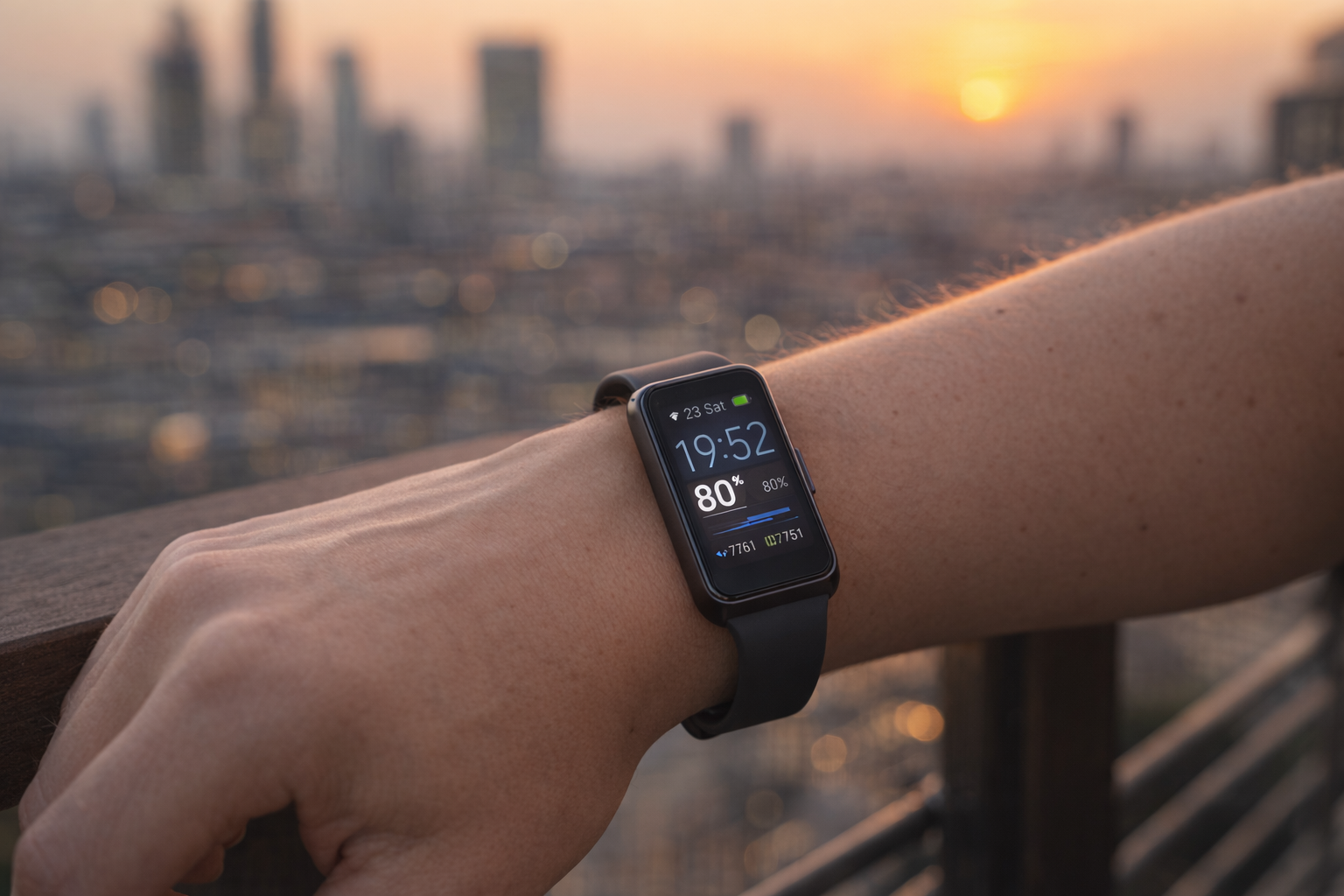
Samsung has been absent from the budget fitness tracker market since the Galaxy Fit 2 in 2020, and Xiaomi and Fitbit carved it up in the meantime. The Galaxy Fit 3 is Samsung's re-entry at $59.99 – and it nails the fundamentals with a gorgeous display and solid health tracking. The catch? No built-in GPS means runners and cyclists hit a wall the moment they want accurate distance data without their phone strapped to their arm.
That tension runs through the entire Galaxy Fit 3 experience – and understanding where Samsung invested and where it cut corners reveals exactly who this tracker is built for.
Design and Build
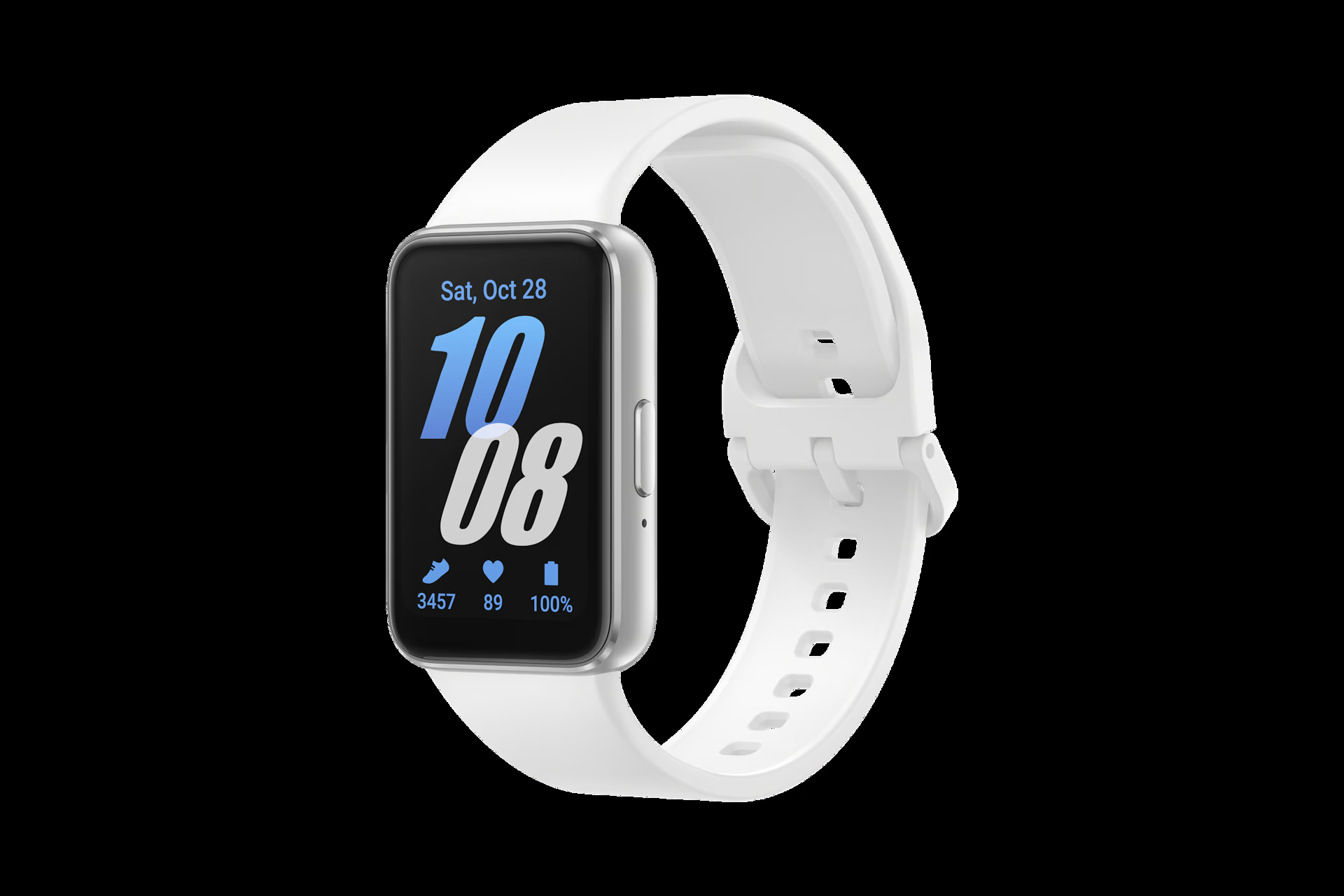
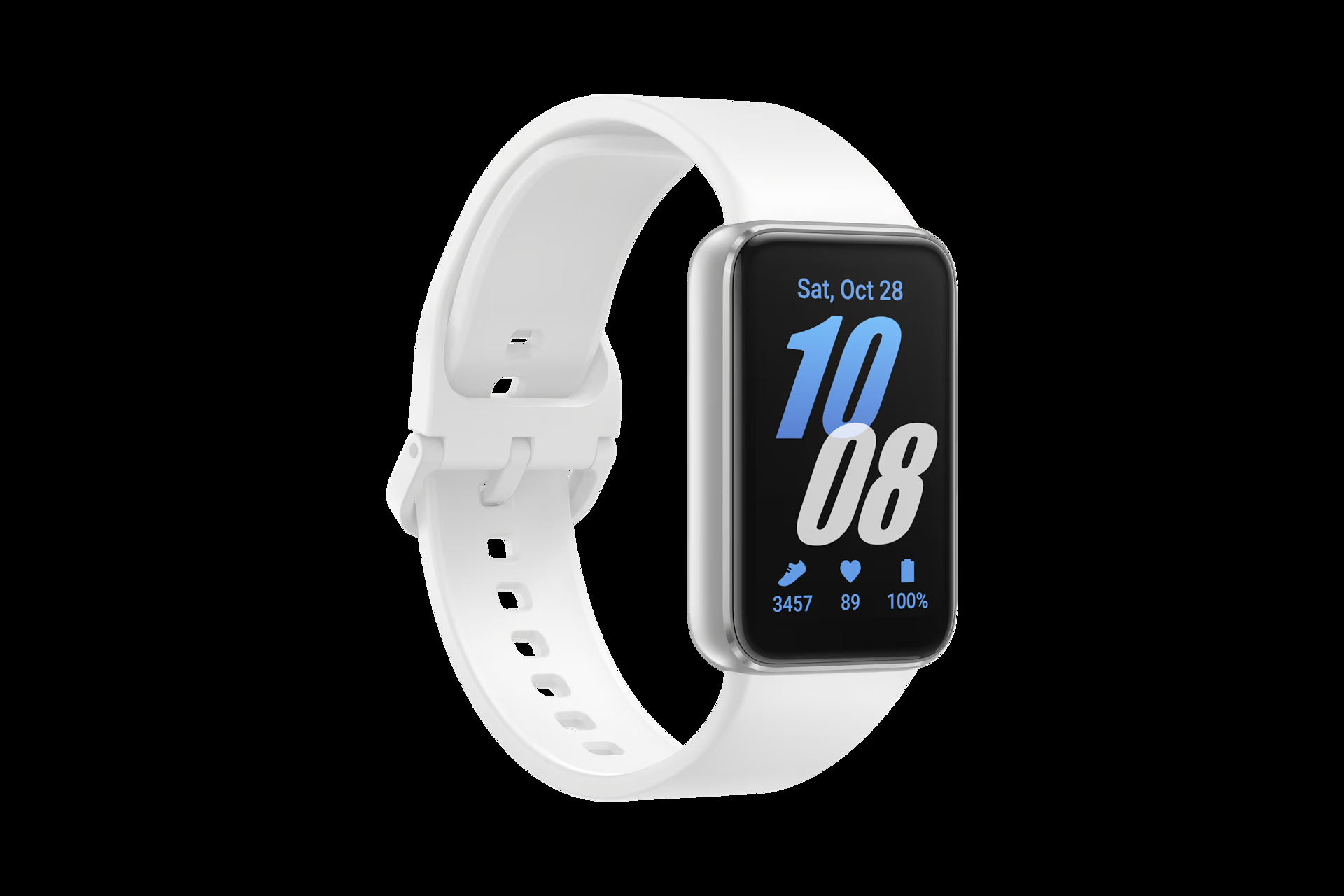
The Galaxy Fit 3 looks like a miniature smartwatch rather than a traditional fitness band, and that is entirely to its credit. The rectangular aluminum frame feels premium in ways that a $60 price tag has no business delivering. At under 37 grams with the band, it practically disappears on the wrist. Side sleepers and light sleepers will appreciate that this is one of the most comfortable trackers to wear overnight.
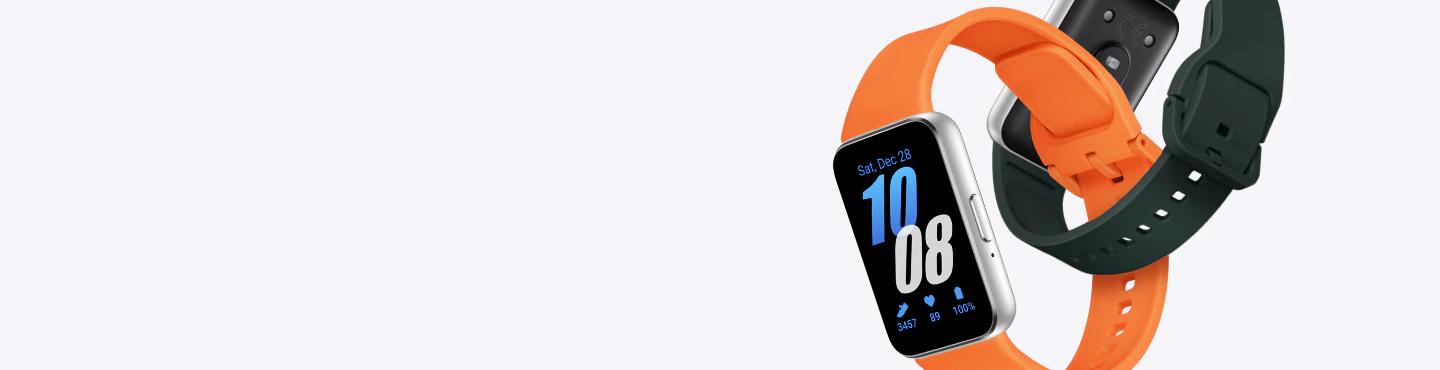
Three color options are available: Gray with a black band, Silver with a white band, and Pink Gold with a champagne band. The proprietary quick-swap band system makes changing straps easy, though it does lock you into Samsung's ecosystem for replacements. The included sports loop band is soft and breathable, though extended wear in hot conditions can trap sweat against the skin.
Water resistance checks the right boxes: 5ATM plus IP68 means shower-safe, pool-safe, and dust-proof. The single physical side button paired with the touchscreen provides intuitive navigation. Build quality is impressive for the price, though the materials do communicate "budget" when placed next to a Galaxy Watch.
Display
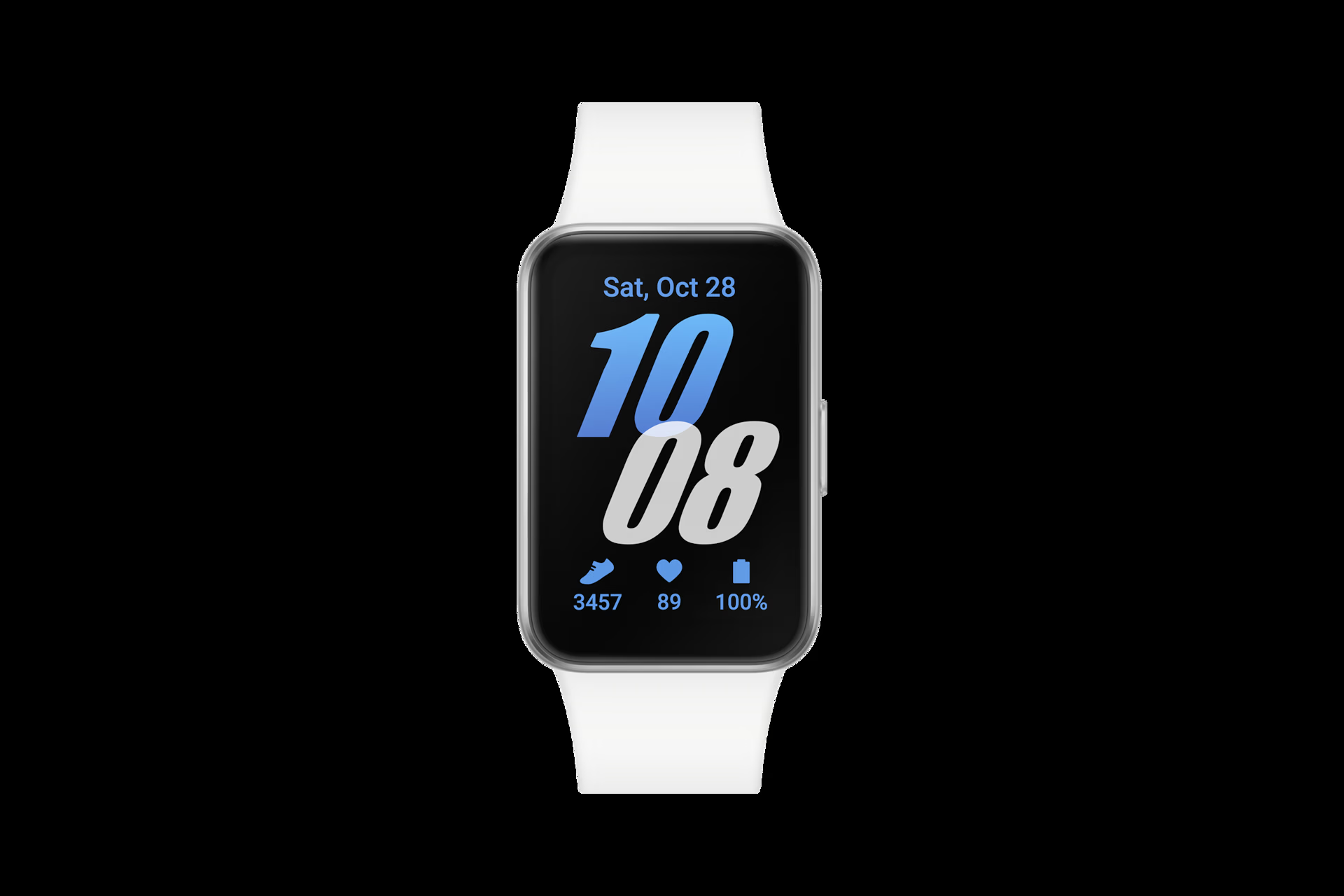
The 1.6-inch AMOLED panel is the Galaxy Fit 3's strongest selling point. At 256 x 402 resolution with 16 million colors, it produces rich blacks, vivid workout screens, and legible text that genuinely surprises at this price point. An ambient light sensor handles auto-brightness effectively, and most situations require no more than 70 percent brightness – even direct sunlight rarely demands a full crank.
Always-on display is available and functions well, though it comes at a steep battery cost. Over 100 watch faces are available through Samsung, ranging from minimalist to information-dense, though meaningful customization is limited. Only the Photos watch face allows true personalization; the rest are take-it-or-leave-it presets.
The display is easily the best feature of the Galaxy Fit 3 and the clearest differentiator from cheaper competitors.
Performance and Features
The Galaxy Fit 3 runs FreeRTOS rather than Wear OS, which means no third-party app support but also means a smooth, lag-free experience on modest hardware (16MB RAM, 256MB storage). Swiping between screens, scrolling through menus, and launching workout modes all happen without stutter or delay. The responsiveness rivals trackers costing twice as much.
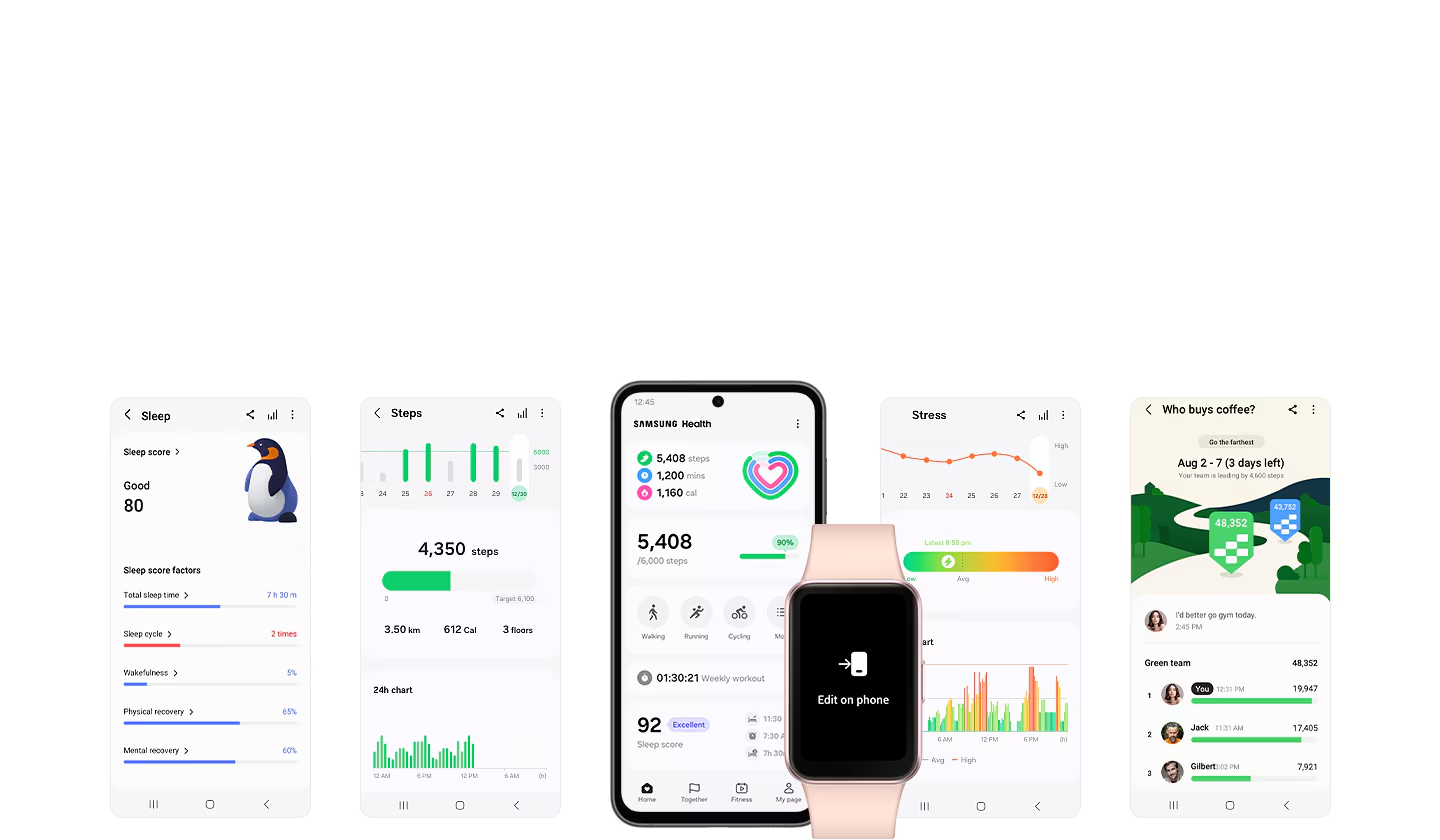
Samsung Health serves as the companion app, and it remains one of the more polished health platforms on Android. Data syncs over Bluetooth 5.3 and populates detailed dashboards for steps, heart rate, sleep, stress, and workouts. The depth of insight available in the app compensates for the limited on-device statistics – the Fit 3's small screen can only show so much, so meaningful analysis happens on the phone.
Notification support is solid. Texts, calls, and app alerts come through clearly on the AMOLED display, and canned text replies work for quick responses. Media control and a camera remote (on Samsung phones) round out the smart features. What you will not find: a microphone, speaker, NFC payments, or any form of voice assistant. These omissions are expected at this price, but worth noting for anyone hoping to leave their phone behind.
One compatibility note that cannot be buried: the Galaxy Fit 3 works exclusively with Android phones running Android 10 or later. No iPhone support whatsoever. This is a Samsung-and-Android-only proposition.
Where the Fit 3 stumbles – and stumbles hard – is outdoor fitness tracking, which hinges on a GPS capability it simply does not have.
Health and Fitness Tracking
The sensor suite includes an optical heart rate monitor, accelerometer, gyroscope, barometer, and light sensor. That covers heart rate, SpO2 (blood oxygen), stress monitoring, and sleep tracking – the essentials for wellness-oriented users.
Heart rate accuracy is adequate for casual monitoring. Resting and average heart rate readings generally land within a few beats of a chest strap reference. High-intensity intervals are where the optical sensor struggles, with readings lagging or missing spikes – a common limitation at every price point, but more pronounced here than on mid-range competitors.
Sleep tracking delivers Samsung's full coaching experience, including a "sleep animal" classification system that assigns one of eight archetypes – labels like "Nervous Penguin" or "Cautious Deer" – with tailored sleep improvement tips based on patterns. The data captures sleep stages, blood oxygen during sleep, and (with a compatible Samsung phone) snoring detection via the phone's microphone. Sleep timing accuracy is reasonable for trend-tracking purposes, though individual night measurements can drift by 20 to 30 minutes. Some users report larger discrepancies, particularly around detecting brief wake periods.
The tracker supports over 100 workout types with automatic workout detection. For gym sessions, yoga, and indoor cycling, it handles the basics: duration, heart rate, and calories. The problem surfaces with any outdoor activity that benefits from distance measurement.
Without built-in GPS, the Galaxy Fit 3 relies on a Bluetooth connection to the phone's GPS for route and distance data. In practice, connected GPS is inconsistent. Distance measurements can deviate significantly depending on connection stability and phone placement. Without a phone, the tracker estimates distance from stride length and step count, which tends to undermeasure actual distance. For anyone who cares about pace or distance accuracy, this is the Galaxy Fit 3's most significant failing.
Battery Life
Samsung claims up to 13 days on a single charge. Real-world usage with standard settings – raise-to-wake enabled, continuous heart rate monitoring, occasional workout tracking, and regular notifications – delivers seven to ten days comfortably. That is excellent for any wearable, let alone one at this price.
Enable always-on display, however, and battery life drops to around 3.5 days. That is still usable but transforms the charging experience from "forget about it" to "plan around it."
Charging uses a proprietary two-pin magnetic cable. No charger brick is included. A dead-to-65-percent charge takes about 30 minutes, and a full charge completes in under two hours. The proprietary cable is mildly annoying – lose it and you are ordering a replacement from Samsung – but magnetic alignment makes connection foolproof.
Who Should (and Shouldn't) Buy It
The Galaxy Fit 3 is purpose-built for a specific buyer: someone already in the Samsung and Android ecosystem who wants a lightweight, attractive tracker for daily health awareness. Step counting, heart rate trends, sleep insights, and smartphone notifications – these core functions work well and look good doing it. First-time fitness tracker buyers will also find the $59.99 price removes the financial risk of discovering whether wearable health tracking fits their lifestyle.
Runners, cyclists, or anyone who trains by pace and distance should look elsewhere. The absent GPS is not something you work around – it is a fundamental limitation that undermines the outdoor fitness tracking experience. The Fitbit Charge 6, despite costing more, includes built-in GPS and Google ecosystem integration. The Garmin Forerunner lineup offers serious training tools at a higher price. The Xiaomi Smart Band 9, at a lower price, pairs with a broader range of phones including iPhones and delivers 21 days of battery life, though it also lacks GPS.
iPhone users are completely excluded. And Android users outside the Samsung ecosystem should know that while the Fit 3 works with other Android phones via the Galaxy Wearable app, the setup is less seamless and some features (snoring detection, camera remote) are Samsung-phone exclusive.
If you want a step up in features without breaking the bank, the Amazfit Bip 6 delivers built-in GPS and a larger display at a competitive price. The Huawei Watch Fit 4 offers a more fully featured fitness experience with GPS in a similar slim form factor. For those willing to spend a bit more for a proper smartwatch experience, the Amazfit Active 2 and Garmin Lily 2 Active are worth considering. And for a broader look at what is available across price points, see our guides to the best fitness trackers and best budget wearables under $100.
The Verdict
The Samsung Galaxy Fit 3 punches well above its $59.99 price on display, battery, and daily health tracking. But no built-in GPS and no iPhone support draw hard lines around its audience. Within those lines, it is one of the best values in wearables. Outside them, look elsewhere.
Score: 77/100
| Category | Weight | Score |
|---|---|---|
| Core Function | 30% | 68 |
| Build Quality | 15% | 78 |
| User Experience | 20% | 76 |
| Value | 20% | 88 |
| Battery | 15% | 80 |