

Every product category needs its iPhone moment – the device that makes skeptics reconsider and early adopters feel vindicated. For smart glasses, that moment arrived not with a flashy heads-up display or holographic projections, but with a pair of Wayfarers that could take photos, play music, and answer questions without looking like a science experiment strapped to someone's face. The Ray-Ban Meta smart glasses, first launched in 2023, did what Google Glass never could: they convinced millions of people to willingly put a camera on their face and wear it in public without embarrassment.
The Gen 2 model, released in September 2025 at a starting price of $379, does not reinvent the formula. It does not need to. Instead, it addresses the two most legitimate complaints about the original – battery life that barely lasted an afternoon, and video quality that felt like an afterthought – while letting Meta's rapidly improving AI software do the heavy lifting on the features side. The result is a product that remains, by a comfortable margin, the benchmark against which every other pair of smart glasses will be measured – though the privacy questions that come with a face-worn camera remain real and unresolved.
Design and Build: Fashion First, Tech Second
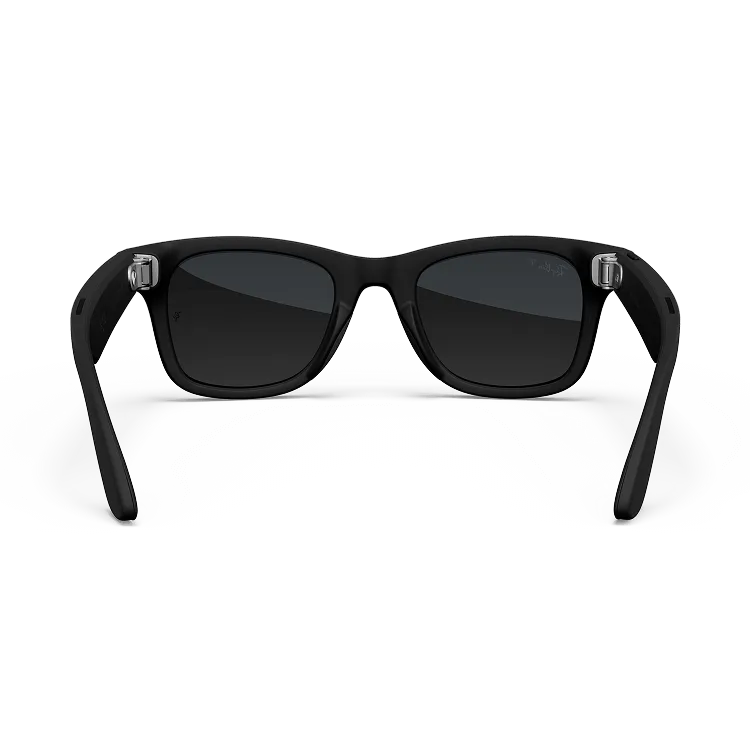
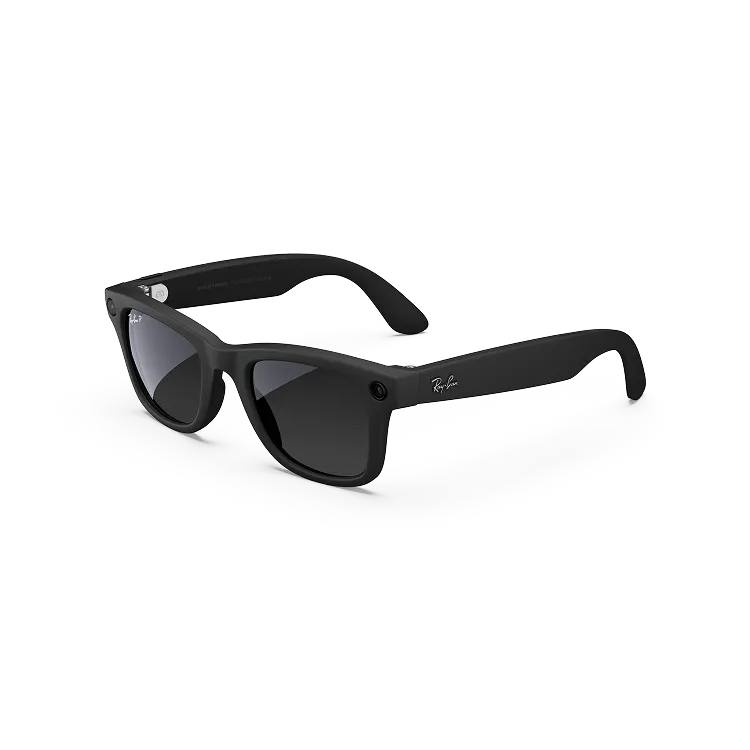
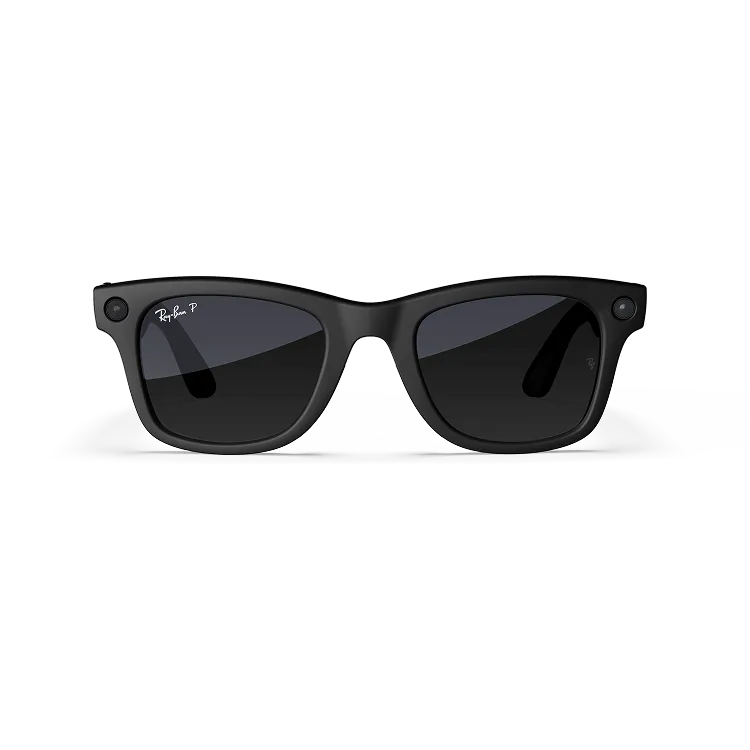
The Gen 2 maintains the exact same frame designs as its predecessor – Wayfarer, Headliner, and Skyler – and that is entirely the point. These look like Ray-Bans because they are Ray-Bans, designed and manufactured by EssilorLuxottica with the same attention to style that has kept the Wayfarer iconic for decades. The tech is hidden in the temples, which are slightly thicker than standard frames but not enough to draw stares or questions.
At roughly 50 grams (weight varies by frame style and lens type), the Gen 2 is marginally heavier than standard Ray-Bans but lighter than most people expect smart glasses to be. Comfort over a full day of wear is genuinely good – the weight distribution across the nose bridge and ears is well-balanced, and the extra heft becomes easy to ignore within the first hour. New seasonal colorways like Cosmic Blue and Skyler Mystic Violet add welcome variety beyond the standard black and tortoise options.
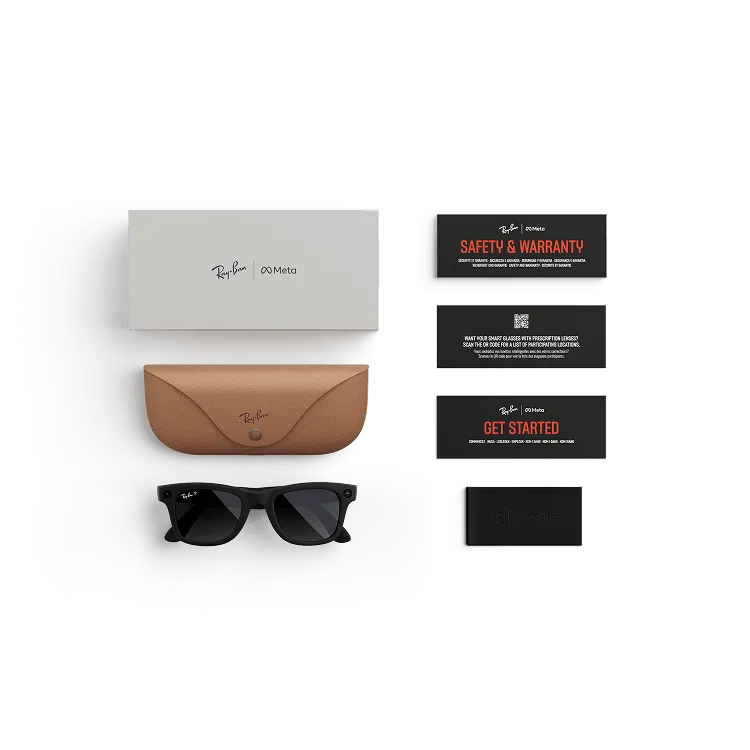
Prescription lenses are available through Ray-Ban's standard channels, which is a significant advantage over competitors that lock you into plano lenses. Transition lenses are also an option, though they push the price toward $459 and beyond. The frames carry an IPX4 water-resistance rating, meaning they handle sweat and light rain but should not be submerged. For a device that lives on your face during outdoor activities, that level of protection is adequate if not generous.
Camera and Video: The Upgrade That Matters
The camera hardware tells a split story. For still photos, the 12MP ultra-wide sensor is identical to the Gen 1, capturing images at 3,024 by 4,032 pixels. The quality is respectable for social sharing – colors are accurate, dynamic range is decent in good light, and the first-person perspective produces genuinely unique shots that a phone camera simply cannot replicate. In low light, the results fall off noticeably, and no one should expect phone-level computational photography from a sensor this small.
Video is where the Gen 2 earns its upgrade. The jump to 3K Ultra HD resolution at 30 frames per second – or 1200p at 60fps for smoother action footage – delivers more than twice the pixel count of the original's 1080p maximum resolution. The difference is immediately visible: footage is sharper, more detailed, and finally feels worthy of sharing beyond Instagram Stories. Ultrawide HDR processing helps with dynamic range, and upcoming features like hyperlapse and slow-motion modes will further expand creative options.
Livestreaming directly to Instagram and Facebook remains a standout capability. The first-person perspective creates an intimacy that traditional camera setups cannot match, and content creators have increasingly adopted the glasses for exactly this reason. Framing remains the primary challenge – without a viewfinder, composing shots requires developing an intuition for where the camera is pointing relative to your line of sight.
Internal storage sits at 32GB, enough for over 500 photos or 100 thirty-second video clips before needing to offload via the Meta View app.
Meta AI and Smart Features: Getting Smarter, Getting Useful
The AI story is arguably more important than the hardware story. When the Gen 1 launched, Meta AI was a novelty – a voice assistant that could answer basic questions but offered little reason to choose it over pulling out a phone. Two years of aggressive software development have changed that equation substantially.
Multimodal AI is the headline feature. Point the glasses at a menu in a foreign language and ask for a translation. Look at a plant and ask what species it is. Scan a barcode and get price comparisons. The glasses use their camera to see what you see and provide contextual answers through the built-in speakers. When it works – and it works more often than not – the experience feels like a genuine glimpse of how AI will integrate into daily life. When it does not, the failure is usually a matter of processing delay or an overly vague query rather than a fundamental flaw.
Live translation currently supports six languages – English, French, Italian, Spanish, German, and Portuguese – with offline language packs available for situations without connectivity. Six is far short of Google Translate's 70-plus, but the supported languages cover the majority of international travel scenarios. The translation feature alone makes a compelling case for anyone who previously dismissed the glasses as a gimmick.
Voice commands handle the basics reliably: sending messages, making calls, setting reminders, controlling music playback, and asking general knowledge questions. The five-microphone array does an impressive job of isolating your voice from background noise, though windy outdoor environments can still cause issues. A major software update in late 2024 introduced Live AI and real-time translation, bringing noticeably faster AI response times and more natural conversational flow.
Third-party app integration is expanding, with partners like Disney and 18Birdies (golf) developing smart glasses experiences. This ecosystem play signals that Meta sees these glasses as a platform, not just a product.
Battery Life: The Problem, Solved
Battery life was the Gen 1's most glaring weakness. Four hours of mixed use meant the glasses often died before the workday ended, and heavy camera or AI use could drain them even faster. The Gen 2 addresses this directly, claiming up to eight hours of typical use – and independent benchmarks broadly confirm it.
Expect five to six hours of active use involving a mix of music streaming, occasional AI queries, and periodic photo and video capture. Continuous music playback at moderate volume stretches to around five and a half hours. Heavy video recording and sustained AI conversations will pull that number down, but the baseline has shifted enough that most users can get through a full day without anxiety.
Fast charging adds 50 percent capacity in just 20 minutes, and the updated charging case provides up to 48 hours of additional power – enough for six full charge cycles on the go. For a product category where four to six hours is the expected range, the Gen 2 comfortably exceeds the standard.
Audio: Better Than You Expect, With Limits
The open-ear speaker design is a deliberate trade-off: you hear your surroundings while listening to music or taking calls, which is safer and more socially aware than earbuds but fundamentally limited in audio fidelity. Bass is present but not deep. Mids and highs are clear and pleasant at moderate volumes. At higher volumes, sound leaks to nearby listeners – not ideal for a quiet office, perfectly fine for a walk or bike ride.
Call quality is a genuine strength. The five-microphone system with beamforming technology produces crisp, clear voice pickup that is genuinely superior to holding a phone to your ear. Professional meetings, casual calls, and voice commands all benefit from this microphone array.
Music playback is best understood as a convenience feature rather than an audiophile pursuit. For podcasts, audiobooks, and casual listening, the speakers deliver a satisfying experience. For critical listening, reach for dedicated headphones.

Privacy and Social Acceptability: The Elephant on Your Face
A small white LED on the front of the glasses illuminates when the camera is active – a concession to privacy that is visible at conversational distance but easy to miss from across a room. Meta deserves credit for including it, but the indicator does not fully resolve the tension inherent in face-worn cameras.
Privacy concerns are not hypothetical. In 2024, Harvard engineering students demonstrated that the glasses' livestream feature could be paired with facial recognition tools to identify strangers in real time. Reports of individuals recording others without clear consent have prompted university warnings and renewed debate about surveillance norms. Separately, European digital rights group NOYB has challenged Meta's broader AI training data practices under GDPR – a reminder that the privacy questions surrounding Meta's ecosystem extend well beyond the glasses themselves. Meta's approach to cloud storage for voice recordings, which allows manual deletion but limits opt-out options, adds another layer to the privacy calculus.
In practice, the social reaction is far milder than most buyers expect. The glasses look enough like standard Ray-Bans that the majority of people do not notice or do not care. But "most people do not notice" is different from "everyone consents," and buyers should be thoughtful about when and where they activate the camera. The era of conspicuous smart glasses stigma may be fading, but the ethical questions they raise are not.

Who It Is For
The Ray-Ban Meta Gen 2 is ideal for content creators who want hands-free, first-person capture for social media. It suits frequent travelers who will benefit from live translation and AI-assisted navigation of unfamiliar environments. It works for professionals who take calls throughout the day and want superior hands-free audio. And it appeals to anyone who has been curious about smart glasses but refused to wear something that looked like a prototype.
Who Should Skip
Anyone who prioritizes camera quality above all else will be better served by a phone. Those deeply uncomfortable with Meta's data practices should look elsewhere – or at minimum, carefully review the privacy settings. Audiophiles seeking immersive music playback will find the open-ear speakers insufficient. And Gen 1 owners who are satisfied with their current battery life and do not shoot much video have limited reason to upgrade at a $379 price point.
If the Ray-Ban Meta aesthetic does not suit your face or your style, the Oakley Meta HSTN offers the same Meta platform in a sportier frame. For buyers who want an AR display rather than a camera-first device, the Even Realities G1 and Halliday Glasses take a fundamentally different approach to smart eyewear. And if immersive AR content is the priority over everyday wearability, the XREAL One Pro delivers a more ambitious – if less practical – vision of the category. For a broader comparison of everything available, see our guide to the best smart glasses in 2026.
The Verdict
Score: 81/100 – Excellent
| Category | Weight | Score |
|---|---|---|
| Core Function (camera, AI, audio, livestreaming) | 30% | 80 |
| Build Quality (frame, comfort, style, durability) | 15% | 88 |
| User Experience (app, ease of use, social acceptability) | 20% | 78 |
| Value (price vs. alternatives at $379) | 20% | 76 |
| Battery Life (8 hours claimed / 5-6 hours real) | 15% | 85 |
The Ray-Ban Meta Gen 2 does not dazzle with breakthrough innovation – it wins by executing the fundamentals well enough that no competitor comes close. Doubled battery life, meaningfully better video, and a maturing AI platform make these the definitive smart glasses for anyone who wants the category's benefits without its traditional compromises.