
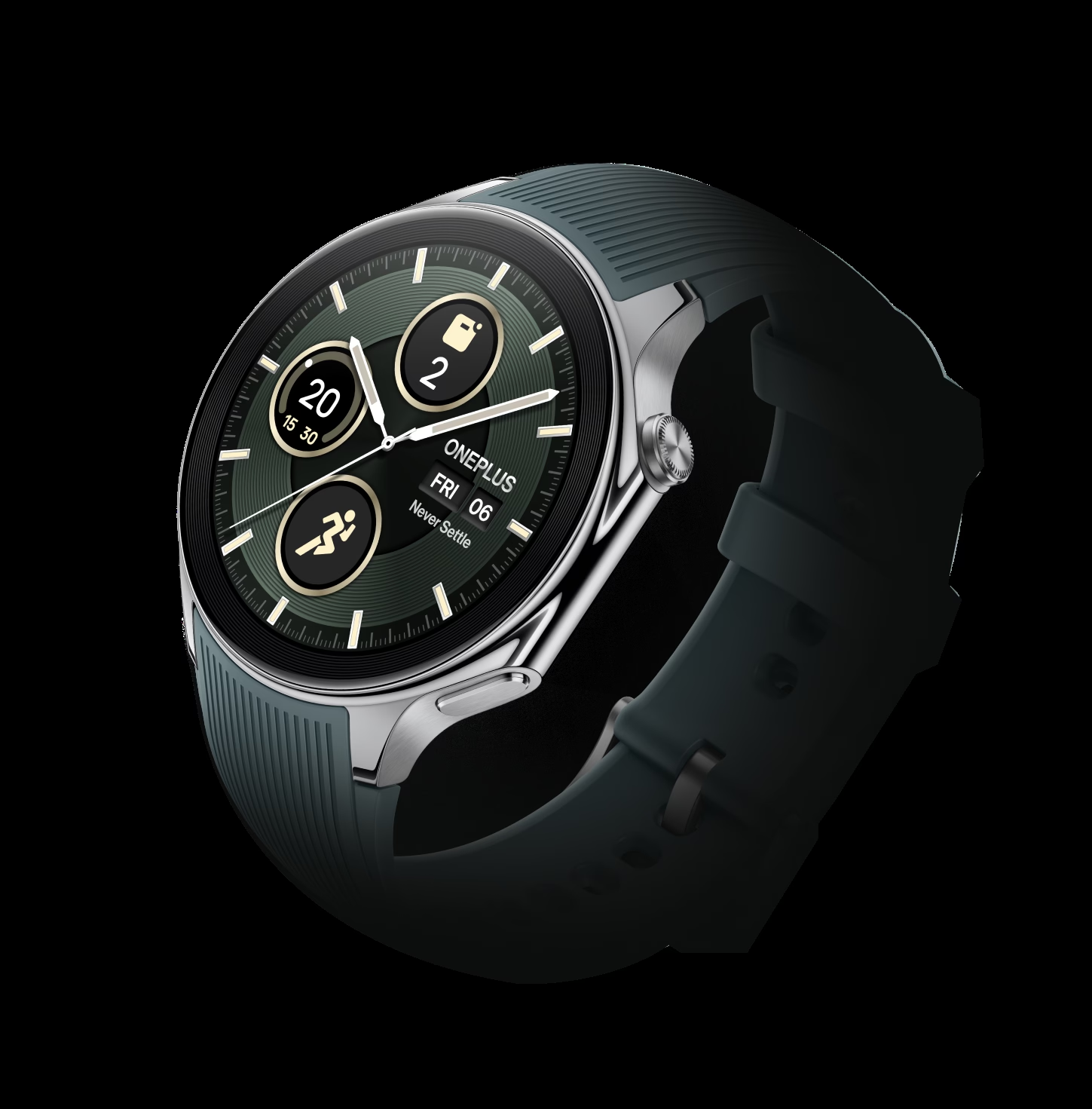
The smartwatch industry has an unspoken rule: if it runs Wear OS, charge it every night. The OnePlus Watch 2 breaks that rule so completely that it reframes what Android wearable owners should expect from battery life. Three to four days between charges – with full Wear OS 4 functionality, notifications, and health tracking running continuously – is not a marketing fantasy here. It is the lived reality of the dual-chipset architecture OnePlus engineered into this $299 watch.
But OnePlus extracted that endurance from a watch that weighs 80 grams on the wrist, comes in a single 46mm-only case size, and skips health features that Samsung and Google consider standard. The OnePlus Watch 2 is a genuinely impressive piece of engineering that asks a specific question: how much bulk and compromise will you accept for the freedom of a multi-day battery?
Design and Build
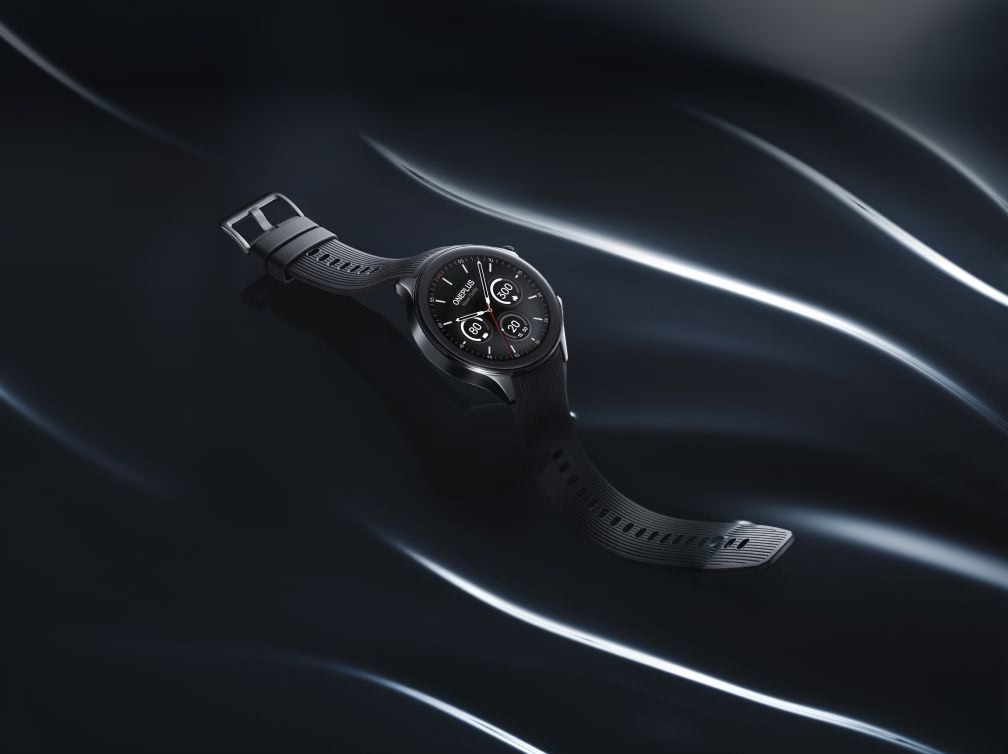
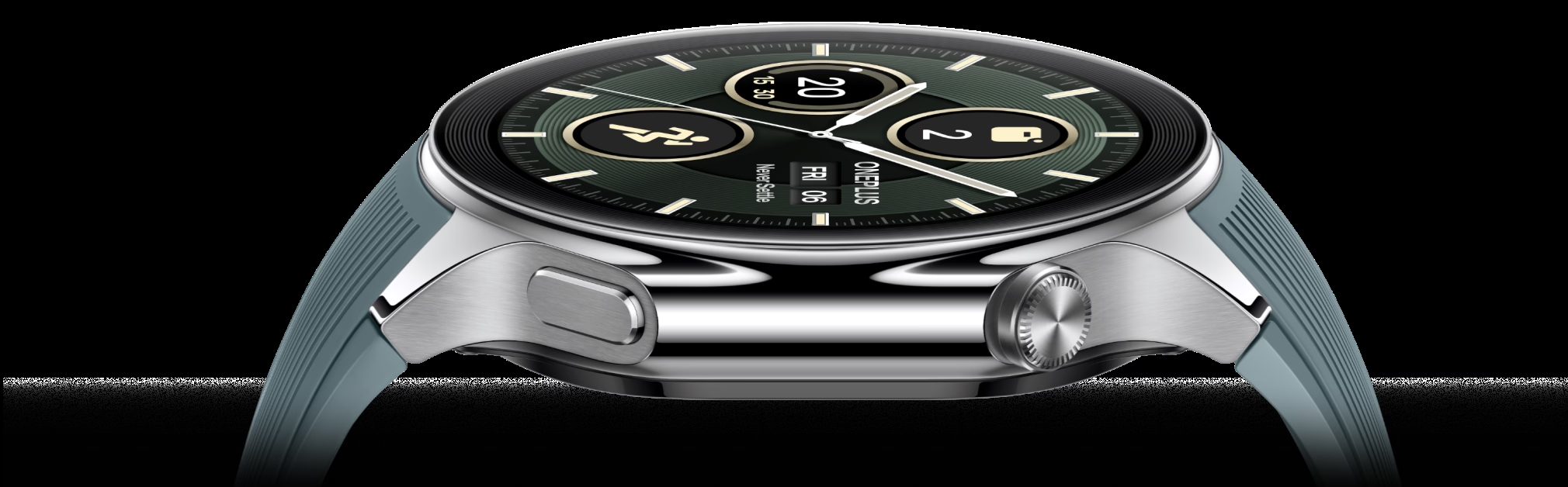
The OnePlus Watch 2 makes a strong first impression out of the box. The stainless steel case has a dense, polished quality that communicates premium craftsmanship, and the sapphire crystal display cover adds genuine durability. Available in Black Steel and Radiant Steel at launch (with a Nordic Blue edition added later), the design leans toward classic round-watch aesthetics rather than sporty smartwatch styling.
The problem is size. At 47 x 46.6 x 12.1mm, this is a large watch by any standard, and at roughly 49 grams without the band – jumping to approximately 80 grams with the fluoroelastomer strap attached – it sits heavily on the wrist. There is no 42mm or 40mm option. Anyone with a wrist circumference under about 170mm will find it overwhelming, and even on larger wrists, the thickness makes it catch on shirt cuffs and press uncomfortably during certain sleeping positions.
The strap itself is comfortable fluoroelastomer with a traditional buckle and a standard 22mm width, making replacements easy to find. The lugs have a slight gap between the case and band that is visually distracting, though it has no functional impact.
One design decision deserves particular criticism: the crown button. It looks exactly like a rotating digital crown – the kind found on Apple Watch and Galaxy Watch that lets you scroll through menus with a twist. It even rotates freely. But it does nothing when turned. It functions only as a clickable button. This is a genuinely baffling choice that creates a false expectation every single time you reach for it.
The IP68 and 5ATM water resistance ratings, combined with MIL-STD-810H military durability certification, mean the watch handles rain, swimming, and rough treatment without complaint. The build quality is not in question. The size is.
Display
The 1.43-inch AMOLED panel runs at 466 x 466 pixels, producing sharp text and vivid colors at a pixel density of roughly 326 PPI. Peak brightness reaches 1,000 nits in high-brightness mode, which proves adequate for outdoor readability in most conditions, though direct midday sun can still challenge visibility.
The always-on display mode works well, showing time and essential complications without requiring a wrist raise, but enabling it roughly halves the battery life – bringing that four-day figure closer to two days. The 60Hz refresh rate delivers smooth scrolling and animations throughout the Wear OS interface.
One annoyance: the sapphire crystal, while highly scratch-resistant, acts as a fingerprint and smudge magnet. In certain lighting angles, the glass also produces noticeable glare. Neither issue affects daily usability, but they detract slightly from the premium look.
Performance and Features
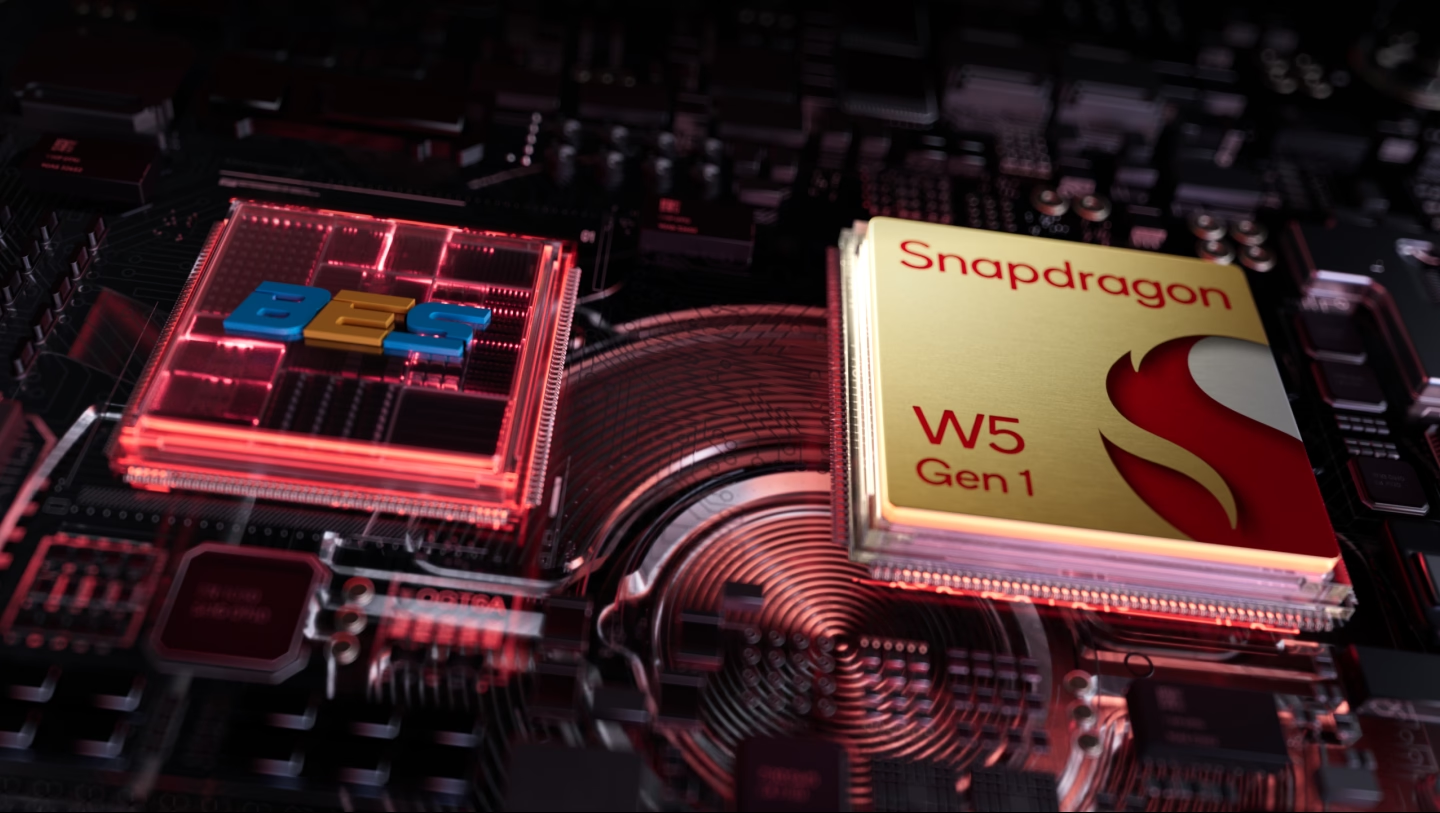
Under the hood, the OnePlus Watch 2 runs the Qualcomm Snapdragon W5 Gen 1 chipset built on a 4nm process, paired with 2GB of RAM and 32GB of internal storage. This is the same primary processor powering the best Wear OS watches in 2024, and performance reflects it: apps launch quickly, the interface scrolls without stutter, and multitasking between Google Maps navigation and music playback works smoothly.
The key innovation is the secondary BES2700 co-processor running a lightweight RTOS (Real-Time Operating System) alongside Wear OS 4. When the full Wear OS experience is not needed – when the watch is passively tracking health metrics, displaying time, or sitting idle on the wrist – the system offloads processing to this efficient secondary chip. The Snapdragon W5 Gen 1 only wakes for app interactions, notifications, and heavy processing tasks. This is how OnePlus achieves multi-day battery life without sacrificing the Wear OS app ecosystem.
Wear OS 4 delivers the full Google experience: Google Maps for turn-by-turn navigation, Google Pay for contactless payments via NFC, Google Assistant for voice commands, and full Play Store access for third-party apps. The selection of available Wear OS apps continues to grow, and popular options like Spotify, Strava, and various watch face apps install and run without issue.
OnePlus layers its own software touches on top, including the OHealth companion app for health data and some custom watch faces. These customizations are functional but lack the polish of Samsung's One UI Watch or Google's Pixel-native experience. Notification handling occasionally stumbles – delayed and invisible notifications are a real frustration, and software updates have only partially resolved the problem.
Connectivity includes Bluetooth 5.0, dual-band Wi-Fi (802.11 a/b/g/n), NFC, and dual-frequency GPS (L1+L5) with support for GLONASS, Galileo, BDS, and QZSS. The notable absence is LTE: there is no cellular variant, so the watch requires a nearby phone for calls and messages.
OnePlus commits to three years of software updates and three years of quarterly security patches – a meaningful commitment, but still a notable shortfall when Samsung promises four OS updates and five years of security patches, and Apple has historically supported watches for five or more years. For a $299 investment, that limited runway is worth factoring into any purchase decision.
Health and Fitness
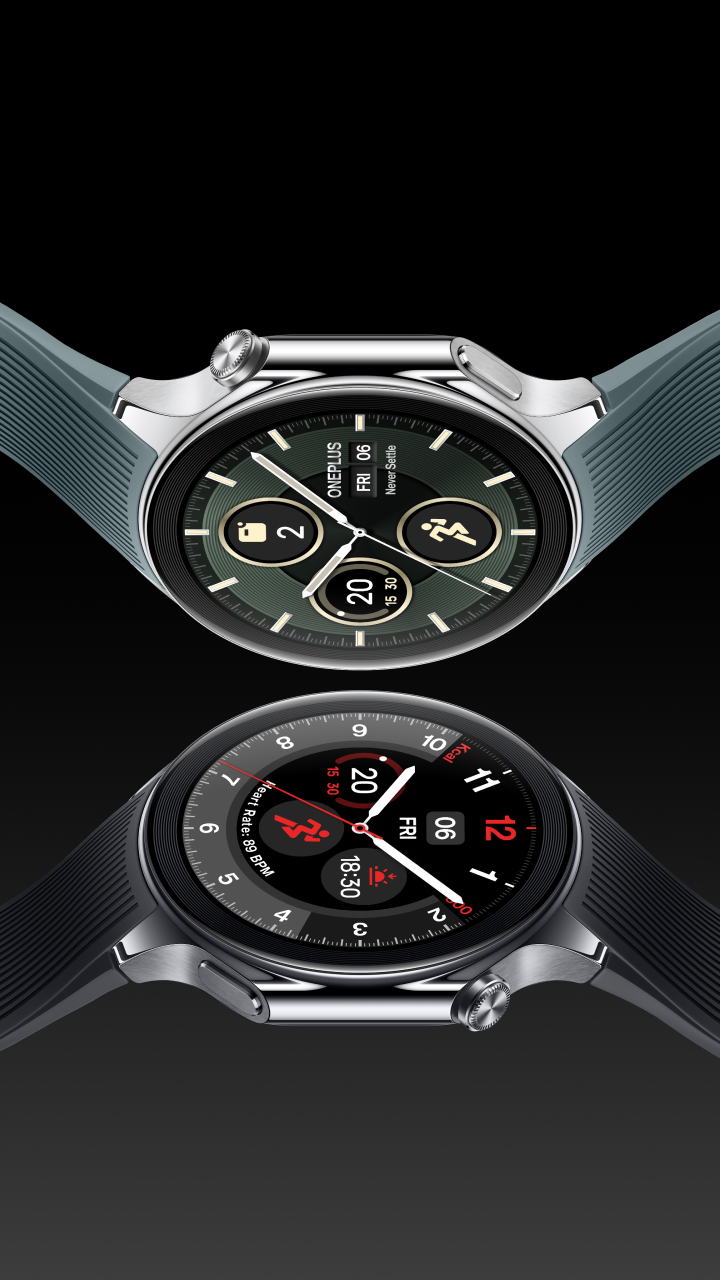
The OnePlus Watch 2 includes the expected sensor array for 2024: optical heart rate monitor, SpO2 blood oxygen sensor, accelerometer, gyroscope, barometer, compass, and ambient light sensor. It supports over 100 workout modes and includes automatic workout detection for common activities like walking and running.
The results, unfortunately, are mixed. Resting heart rate measurements align reasonably well with dedicated health devices, but during high-intensity exercise, readings can skew high by 10 or more beats per minute compared to a chest strap. Step counting shows meaningful variance from competitors, occasionally differing by several thousand steps in a day. Sleep tracking captures duration but offers limited insight into sleep stages, and measurements can run 20-30 minutes longer than a dedicated sleep tracker like the Oura Ring.
GPS performance with the dual-frequency system is generally adequate for casual runners and cyclists, but route accuracy is not on par with Garmin or even Samsung. Tracks occasionally drift several meters off the actual path, and urban canyon performance in areas with tall buildings shows noticeable inaccuracies.
The missing features list matters more than the inaccuracies. There is no ECG, no skin temperature sensor, no fall detection, and no menstrual cycle tracking. The Samsung Galaxy Watch 7 includes all of these at the same $299 price point. The Apple Watch Series 9 offers the same health features at a higher $399 entry price. For anyone whose primary motivation is health monitoring, the OnePlus Watch 2 trails the competition.
The OHealth companion app consolidates health data in a clean interface but offers minimal actionable insights compared to Samsung Health's detailed analysis or Apple Health's trend reporting. Health Connect integration exists but remains inconsistent, with incomplete data syncing to Google Fit and Strava.
Battery Life
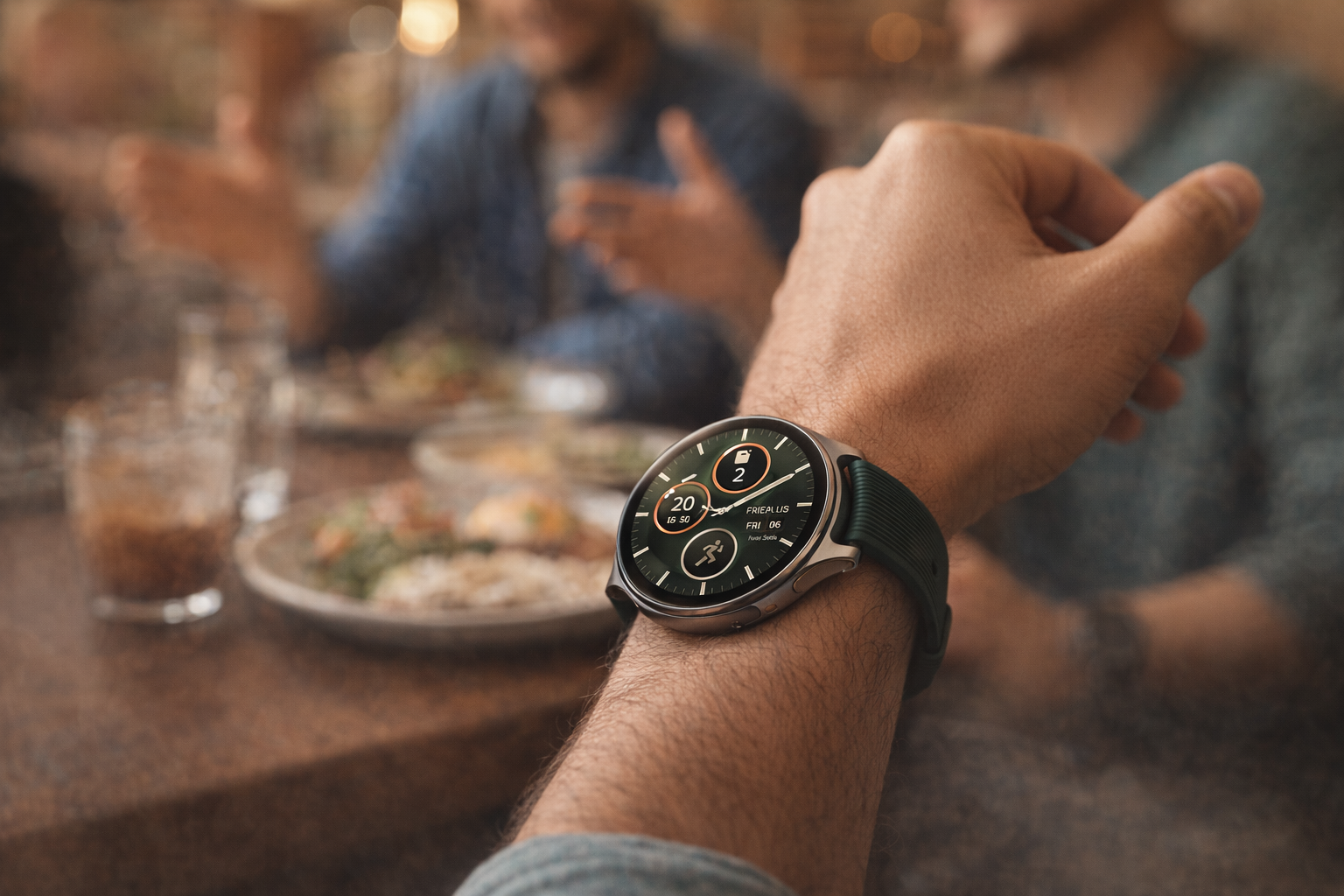
This is the headline, the reason this watch exists, and the feature that justifies every other compromise. The 500mAh battery, managed by the dual-chipset architecture, delivers genuinely transformative endurance for a Wear OS smartwatch.
In real-world use with always-on display disabled, notifications active, continuous heart rate monitoring, and occasional GPS workouts, three to four days between charges is consistently achievable. Enable the always-on display and expect roughly two to two and a half days. Push it hard with multiple GPS-tracked workouts, heavy app use, and AOD, and the floor is still around two days – roughly double what a Galaxy Watch 6 or Pixel Watch 2 delivers under similar conditions.
Power Saver mode strips the watch down to basic timekeeping, step counting, and heart rate monitoring on the RTOS co-processor alone, extending battery life to approximately 12 days. It is a useful travel feature for situations where full smartwatch functionality is not needed.
Charging speed matches the battery's capacity. The 7.5W VOOC magnetic charger fills the watch from empty to 100% in approximately one hour, with a quick 10-minute charge adding enough juice for a full day. The charging puck uses a standard USB-C cable connection rather than a proprietary integrated cable – a thoughtful design choice that means any USB-C cable works as a replacement.
One important caveat: the Wear OS 5 update released in late 2024 caused significant battery drain on affected devices, with the watch barely lasting a full day post-update. OnePlus has acknowledged the issue, but as of early 2026, a reliable fix has not been confirmed across all affected devices. It is a reminder that software updates can disrupt the battery advantage that defines this device.
Who It's For
The OnePlus Watch 2 earns a strong recommendation for a specific buyer: the Android user who is tired of charging a smartwatch every night, wants full Wear OS app access, and has the wrist size to accommodate a 46mm case. If multi-day battery life is the feature that has kept you on a Garmin or Amazfit instead of Wear OS, this is the watch that bridges that gap. The OnePlus Watch 3 has since arrived with improved health sensors and even longer battery life, making it the better buy for those willing to spend more.
OnePlus phone owners benefit the most from the ecosystem integration, but the watch works with any Android phone running Android 8.0 or later.
Who Should Skip
Skip this watch if any of the following apply:
- Wrist circumference is under 170mm
- Accurate health and fitness tracking is a primary requirement
- Advanced health features like ECG or fall detection matter
- iOS is your platform
- A smaller or lighter watch is important for sleep comfort
- Long-term software support factors into value calculations
The Samsung Galaxy Watch 7 or Google Pixel Watch 3 serve those needs better despite their battery limitations. For a broader view of what is available, our guides to the best smartwatches for Android and the best smartwatches cover the full field.
The Verdict
The OnePlus Watch 2 proves that multi-day battery life and Wear OS are not mutually exclusive. Its dual-chipset architecture is a genuine innovation that every Wear OS manufacturer should study. At $299, it undercuts the Pixel Watch 2 and matches the Galaxy Watch 6 while offering roughly double to triple the battery endurance of either.
But innovation in one dimension does not excuse mediocrity in others. The health tracking is average, the companion app is basic, the single large case size excludes a significant portion of potential buyers, and the three-year software update commitment still trails Samsung's four years. The non-functional rotating crown is a minor but persistent annoyance that reflects a lack of attention to detail in the user experience.
This is a very good watch with one exceptional feature and several meaningful shortcomings. It earns its recommendation, but it earns it with caveats. For alternatives worth considering, the Mobvoi TicWatch Pro 5 Enduro takes a similar dual-display approach to battery life.
| Category | Weight | Score |
|---|---|---|
| Core Function | 30% | 72/100 |
| Build Quality | 15% | 75/100 |
| User Experience | 20% | 68/100 |
| Value | 20% | 76/100 |
| Battery | 15% | 95/100 |
| Overall | 100% | 76/100 |
WearableBeat Score: 76/100 – Good, recommended with caveats.