

The Oakley Meta HSTN is the best smart glasses available for an active lifestyle – and an easier recommendation than its Limited Edition launch price suggested. Starting at $399 for standard configurations (just $20 more than the $379 Ray-Ban Meta Gen 2), Meta and Oakley's first collaboration delivers genuinely superior optics, meaningfully longer battery life, and video stabilization that finally makes action footage usable. The $499 Limited Edition with PRIZM 24K Polarized lenses remains a premium ask, but the standard HSTN lineup prices PRIZM performance within striking distance of its Ray-Ban sibling. For runners, cyclists, skiers, and anyone who treats the outdoors as their default setting, the HSTN makes a compelling case. For everyone else, the Ray-Ban Meta's style versatility still wins.
The pitch is straightforward. Take everything that made the Ray-Ban Meta Gen 2 the surprise hit of the smart glasses category – Meta AI, hands-free capture, open-ear audio – and rebuild it inside Oakley's performance eyewear DNA. PRIZM lenses replace standard tints. A larger battery doubles the runtime compared to the Gen 1 Ray-Bans. 3K video recording and dramatically improved stabilization replace the occasionally shaky 1080p of the original Ray-Ban Meta. On paper, it is the definitive upgrade for active users. In practice, limited style options and a sport-first aesthetic keep the HSTN in a lane rather than on the throne.

Design and Build
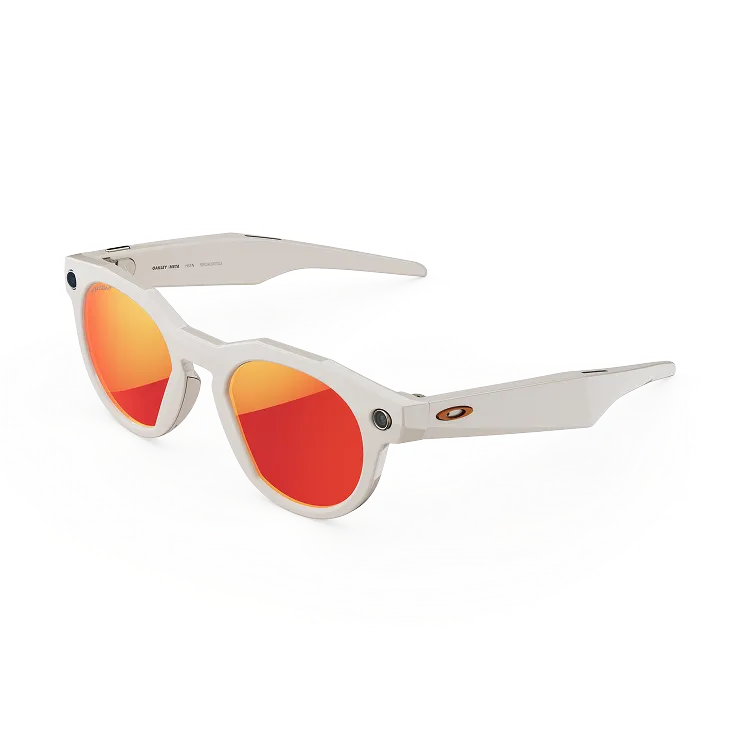
The HSTN frame borrows its name from Oakley's existing sunglass line, and the design language is unmistakably sporty. Rounded lenses sit inside angular, slightly aggressive frames that make no attempt to disguise what they are. Where the Ray-Ban Meta Wayfarer disappears into a casual outfit, the HSTN announces itself. That is either a feature or a bug depending on personal style tolerance – the Warm Grey and gold Limited Edition polarized model, in particular, draws strong reactions in both directions.
At 53 grams, the HSTN sits in the same weight class as the Ray-Ban Meta (approximately 49 grams for Gen 1), and that marginal difference is imperceptible during wear. The frames hug temples more snugly than the Wayfarer, which is a deliberate choice for sport performance. During runs and high-movement activities, the tighter fit prevents the bouncing and slippage that can plague the looser Ray-Ban frames. For extended casual wear, however, that snugness can create pressure points, particularly around the nose bridge, which runs slightly wider than expected.
Build quality is excellent. The frames feel robust without being heavy, and the IPX4 water resistance rating handles sweat, rain, and splashes without issue. That said, IPX4 is not submersion-proof – these stay out of the pool and off the paddleboard. The charging case is notably larger than the Ray-Ban Meta's slim case and does not fit comfortably in a pants pocket, though it compensates with a substantially larger battery that provides up to 48 hours of supplemental charge.
Frame and lens options have expanded significantly since the initial Limited Edition launch. The HSTN now ships in six configurations: Warm Grey with PRIZM Ruby, Black with PRIZM Polar Black, Brown Smoke with PRIZM Polar Deep Water, Black with Transitions Amethyst, Clear with Transitions Grey, and Black with Clear lenses. The Limited Edition Warm Grey with PRIZM 24K Polarized is a separate model priced at $499. The Transitions options are a meaningful addition, adapting from fully clear indoors to fully dark outside, which partially addresses the "sunglasses-only" limitation that plagued the launch model. Standard configurations start at $399.
PRIZM Lens Technology
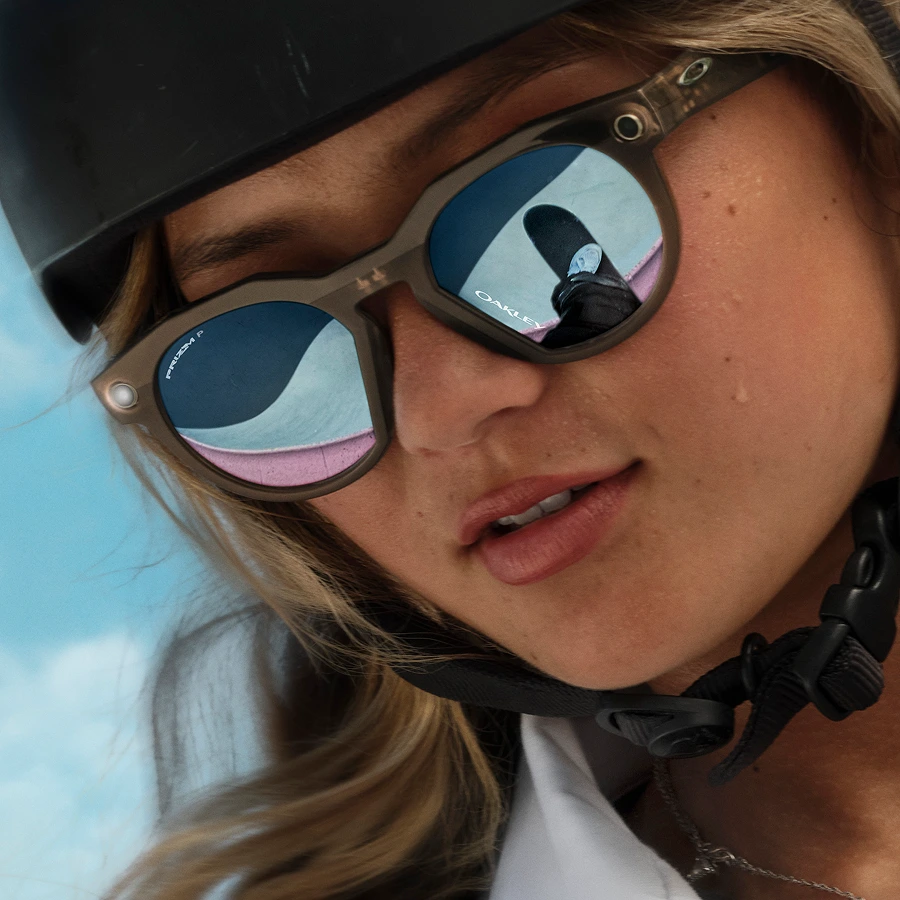
This is where Oakley's heritage justifies the partnership. PRIZM is Oakley's proprietary lens technology that fine-tunes individual wavelengths of color to enhance contrast and detail for specific environments. The difference between looking through PRIZM lenses and standard tinted sunglasses is immediately apparent – greens are richer, edges are sharper, and depth perception in bright conditions improves noticeably. The PRIZM 24K Polarized lenses on the Limited Edition cut glare with an effectiveness that standard polarization simply does not match.
For athletes and outdoor enthusiasts, PRIZM is not a gimmick. Trail runners benefit from enhanced ground detail that helps pick out roots and rocks – the kind of contrast improvement that is difficult to appreciate in a store but obvious within the first mile on a shaded single-track. Cyclists gain better contrast against road surfaces. Skiers see terrain definition that flattens under standard lenses. The Deep Water Polarized option is purpose-built for water sports, cutting surface glare to reveal subsurface detail. These are lenses designed by a company that has spent decades optimizing eyewear for sport performance, and the quality shows.
The Transitions lens options add indoor-outdoor versatility that pure PRIZM sunglasses lack. The Amethyst Transitions lenses shift from clear to a purple-tinted dark, while the Grey Transitions follow a more traditional clear-to-dark path. Response time is solid – the lenses darken within 30 seconds of UV exposure and clear within a few minutes indoors. This makes the Transitions variants the most practical choice for anyone who wants to wear the HSTN beyond outdoor activities.
Camera and AI Features
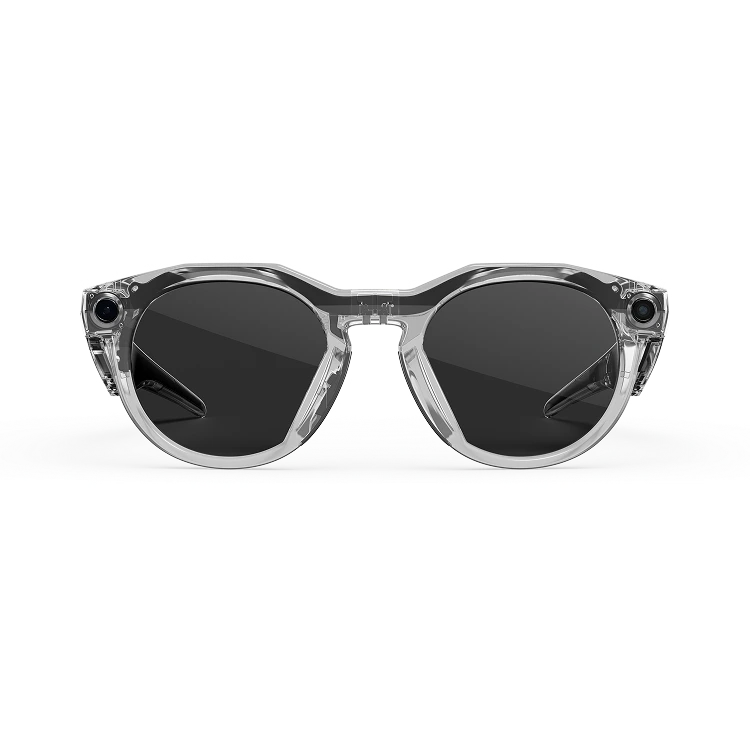
The HSTN carries a 12-megapixel camera with a 100-degree ultrawide field of view, positioned over the left eye with an LED indicator light above the right. Photo quality is serviceable for social sharing – images look good on an Instagram Story or a text message, though they skew oversaturated in overcast conditions and lack the dynamic range of a dedicated phone camera. The ultrawide lens also means hats, hair, and fingers frequently creep into the frame's edges, a quirk that takes some adjustment.
Video is where the HSTN makes its strongest argument for active users. 3K resolution delivers noticeably sharper footage than the original Ray-Ban Meta's 1080p, and the improved electronic stabilization at 1080p is genuinely impressive during high-motion activities. Running footage that would have been a jittery mess on the first-generation Ray-Ban Meta comes out smooth and watchable on the HSTN. For anyone capturing trail runs, ski descents, or cycling routes, the stabilization is the single most compelling upgrade. The Ray-Ban Meta Gen 2 has since matched the HSTN's 3K resolution, though the Oakley retains its stabilization advantage during vigorous movement.
The practical reality, however, is that 3K recording at 30fps produces footage that works beautifully for social media but falls short of action camera standards. Color science remains limited compared to a GoPro, and the 30fps cap means fast motion still lacks the crispness that 60fps would provide. The HSTN is not replacing a chest-mounted action camera for serious content creation, but it captures moments that would otherwise go unrecorded because pulling out a phone mid-stride is not an option.

Audio Quality
The open-ear speakers built into the HSTN's temples deliver a noticeable step up in volume and clarity over the Ray-Ban Meta. Audio playback sounds louder and fuller, which matters enormously during outdoor use where wind noise and ambient sound compete with whatever is playing. At moderate volumes, sound leakage is minimal – people standing nearby will not hear a podcast. At higher volumes, particularly above 75%, the speakers become audible to those within a few feet.
For phone calls, the HSTN performs well in calm environments and adequately in light wind. Heavy wind remains the enemy of all open-ear audio, and no amount of engineering has solved that yet. Music quality is genuinely good for the form factor – bass is present if not powerful, mids are clear, and the spatial quality of open-ear delivery creates a natural, non-isolating listening experience that is ideal for outdoor exercise where situational awareness matters.
Five hours of continuous music playback is achievable. Pairing with Spotify, Apple Music, and Amazon Music is seamless, and the touchpad on the right temple provides intuitive playback and volume control.
Battery Life
The rated battery life is up to 8 hours of typical use, and real-world performance lands in the 6-7 hour range with moderate use combining music playback, occasional AI queries, and periodic photo or video capture. That doubles the Ray-Ban Meta Gen 1's 4-hour ceiling and puts the HSTN comfortably into "full workday" territory for light use. Heavy video recording compresses that number – expect around an hour of continuous 3K capture before the battery demands attention.
The charging case is the unsung hero of the battery story. With up to 48 hours of supplemental charge, a full case plus fully charged glasses can comfortably cover a multi-day trip without seeking a wall outlet. The case recharges fully in about 3.5 hours via USB-C. The Ray-Ban Meta Gen 2 has now closed this battery gap with its own 8-hour rating, but the HSTN's larger charging case provides the same 48-hour supplemental reserve as the Ray-Ban Meta Gen 2's case.
For the smart glasses category, 6-7 hours of real-world use is strong. This is a device meant to be worn during activities, not from wake to sleep, and the battery comfortably covers a morning run, an afternoon hike, or a full day at a ski resort with charge to spare.
The Meta AI Experience
The HSTN runs the identical Meta AI platform as the Ray-Ban Meta, which means every software feature, update, and improvement that reaches the Ray-Bans arrives on the Oakleys as well. "Hey Meta" activates the AI assistant for voice queries, real-time identification of objects and landmarks, live translation supporting English, Spanish, French, German, Italian, and Portuguese, and the increasingly useful visual intelligence features that can describe what the camera sees.
Meta's track record of consistent software updates is a genuine strength. Features like AI-edited video compilations, improved voice recognition, and expanded language support have all arrived post-launch, and the HSTN benefits from the same update cadence as the much larger Ray-Ban Meta user base. The Meta View app manages media transfer, settings, and firmware updates, and it works without fuss on both iOS and Android.
The AI features are more useful in an active context than a casual one. Asking Meta AI to identify a plant on a trail, translate a sign while traveling, or provide weather updates without reaching for a phone feels natural when hands are occupied with trekking poles, handlebars, or ski poles. The "look and ask" functionality – pointing the camera at something and asking a question – works reliably in good lighting and struggles in low light or with distant subjects, same as on the Ray-Bans.
Who Should Buy / Who Should Skip
Buy the Oakley Meta HSTN if:
- Running, cycling, skiing, hiking, or water sports are regular activities and capturing those moments hands-free matters.
- PRIZM lens quality is a genuine priority – the optical experience is meaningfully better than standard smart glasses lenses.
- The sportier aesthetic fits personal style, and frame variety is less important than performance.
- Battery life that lasts a full active day without anxiety is a requirement.
- Video stabilization quality during movement is a priority – the HSTN's stabilization during vigorous activity remains a step ahead of the Ray-Ban Meta Gen 2.
Skip the HSTN and consider the Ray-Ban Meta if:
- Prescription lenses are needed with maximum flexibility. The HSTN does offer official prescription support through LensCrafters, including Transitions and Oakley Authentic Prescription lenses, with a -6.00 to +4.00 range. Third-party providers like Lensology and Tajima Direct offer additional options. However, the Ray-Ban Meta provides a wider selection of prescription-compatible frames across its Wayfarer, Headliner, and Skyler lines – more frame choices mean a better chance of finding the right fit.
- Everyday versatility matters more than sport performance. The Ray-Ban Meta Gen 2 offers multiple frame styles and a broader range of color options that blend into casual and professional settings.
- Casual, blend-in aesthetics are preferred over sport-forward styling. The HSTN's angular, athletic frames are unmistakable – there is no "incognito" option.
- Budget is tight. The Ray-Ban Meta Gen 2 starts at $379, only $20 less than the standard HSTN at $399, but the Gen 1 can still be found from select retailers for as low as $299 for anyone willing to forgo 3K video and the longer battery.
If you are exploring the broader smart glasses landscape, the Even Realities G1 takes a minimalist approach with a nearly invisible form factor, while the Halliday Glasses and XREAL One Pro push into AR display territory. For a full comparison of the latest options, see our best smart glasses guide.

The Verdict
Everything the HSTN promises to active buyers, it delivers. PRIZM lenses provide optical quality no competitor matches, the battery comfortably covers a full day of outdoor activity, and video stabilization during movement is a genuine leap forward. Meta AI ensures the software platform keeps pace with the Ray-Ban line indefinitely, and Oakley's build quality inspires the confidence to wear these during serious physical activity.
The pricing picture has also improved dramatically since the $499 Limited Edition launch. With standard configurations starting at $399 – just $20 above the Ray-Ban Meta Gen 2 – the HSTN's PRIZM advantage comes at a surprisingly modest premium. That changes the calculus significantly: the question is no longer whether PRIZM lenses are worth a steep upcharge, but whether the sport-first aesthetic and fewer frame options fit into daily life. For athletes and outdoor enthusiasts who already own performance sunglasses, the answer is an easy yes. For everyone else, the Ray-Ban Meta Gen 2's style versatility across Wayfarer, Headliner, and Skyler frames makes it the more flexible daily driver.
A camera that still trails phone quality, six frame configurations versus the Ray-Ban's broader lineup, and an aesthetic that does not blend into non-athletic settings are what keep this at 77 rather than higher. Excellent for the right buyer, but narrower in scope than a universal recommendation.
| Category | Weight | Score | Weighted |
|---|---|---|---|
| Core Function (Camera/AI/PRIZM) | 30% | 78/100 | 23.4 |
| Build Quality | 15% | 82/100 | 12.3 |
| User Experience | 20% | 72/100 | 14.4 |
| Value | 20% | 74/100 | 14.8 |
| Battery | 15% | 80/100 | 12.0 |
| Overall | 100% | 76.9 → 77/100 |
Oakley Meta HSTN: 77/100
Core Function scores well on PRIZM quality and stabilization, though the camera still falls short of phone quality and AI features are identical to the Ray-Ban Meta. Build Quality is excellent with a snug sport-oriented fit and solid IPX4 protection, dinged slightly by the bulky case. User Experience benefits from official prescription support via LensCrafters but is held back by fewer frame options and a polarizing sport aesthetic. Value is strong – at $399 for standard models, the PRIZM premium over the $379 Ray-Ban Meta Gen 2 is minimal, though the $499 Limited Edition stretches that advantage. Battery is strong for the category with 6-7 real-world hours and a generous 48-hour charging case.