

The Movano Evie Ring tells the story of a product that launched before it was ready, pulled from sale to fix its problems, and came back – only to stumble again. It is, in concept, one of the most thoughtful smart rings on the market: an open-band design that flexes with the natural swelling women experience throughout their menstrual cycles, paired with a subscription-free app focused on female health metrics. No other smart ring has taken that approach, and it deserves real credit.
But credit for ambition does not translate into a recommendation. The Evie Ring's second act has not resolved the fundamental issues that derailed its first: hardware that fails too often, health data that cannot be trusted, and an app that remains years behind competitors. Worse still, parent company Movano Health is in the process of merging with an AI infrastructure firm, raising serious questions about the long-term future of the Evie platform. Hardware failure rates remain high, and customer support is virtually nonexistent when things go wrong. For a device that asks to become part of daily health monitoring, that combination is disqualifying.
Design and Comfort
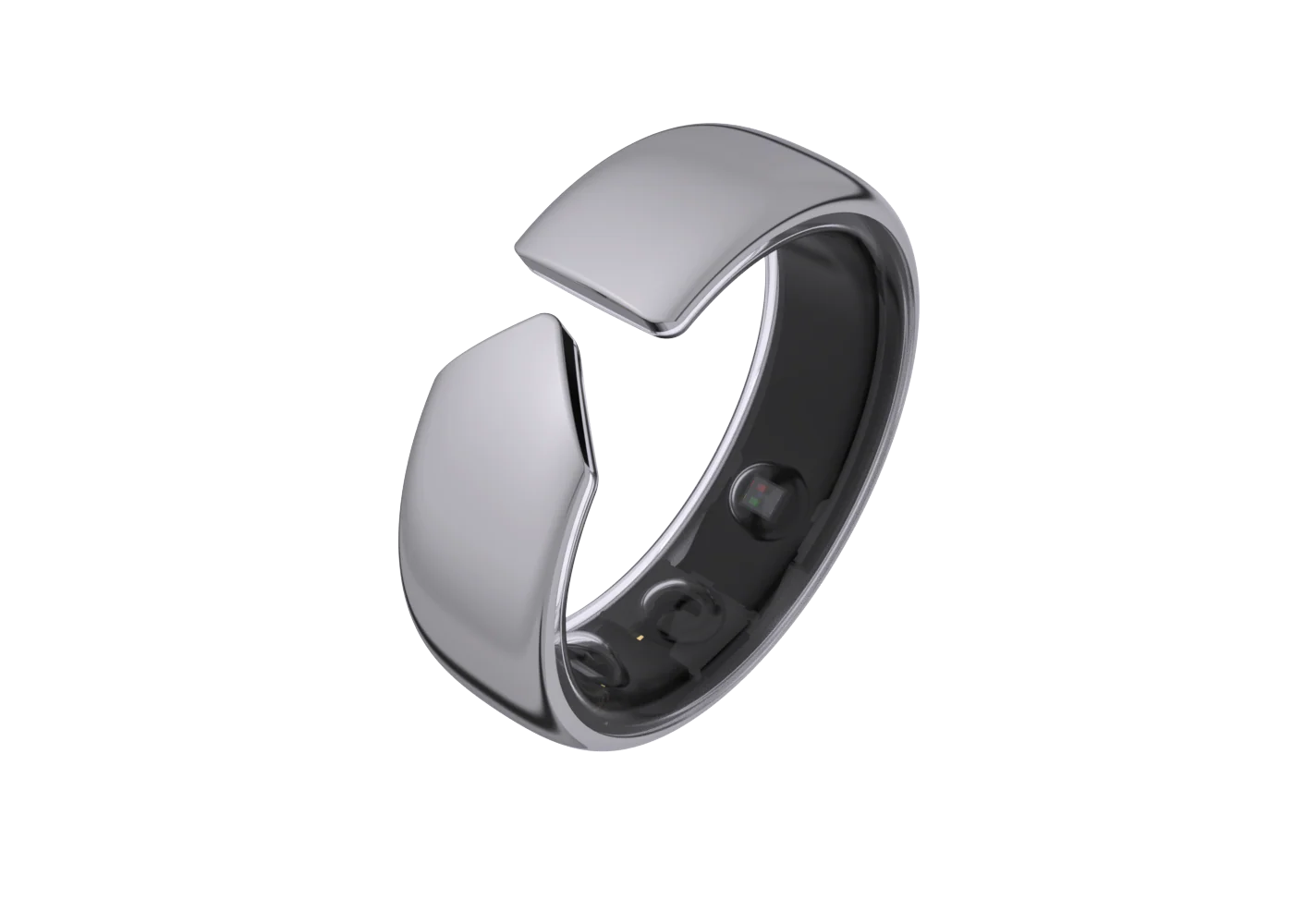
The Evie Ring's open-band design is its single most compelling feature – and genuinely unlike anything else in the smart ring category. Where the Oura Ring 4, Samsung Galaxy Ring, and RingConn all use closed-band designs, the Evie's flexible gap allows the ring to accommodate micro-fluctuations in finger size. For women whose fingers swell before menstruation, during pregnancy, or with temperature changes, this is a meaningful quality-of-life advantage. Sizing a traditional smart ring always involves compromise between a snug fit for sensor accuracy and enough room for swelling days. The Evie sidesteps that tradeoff entirely.
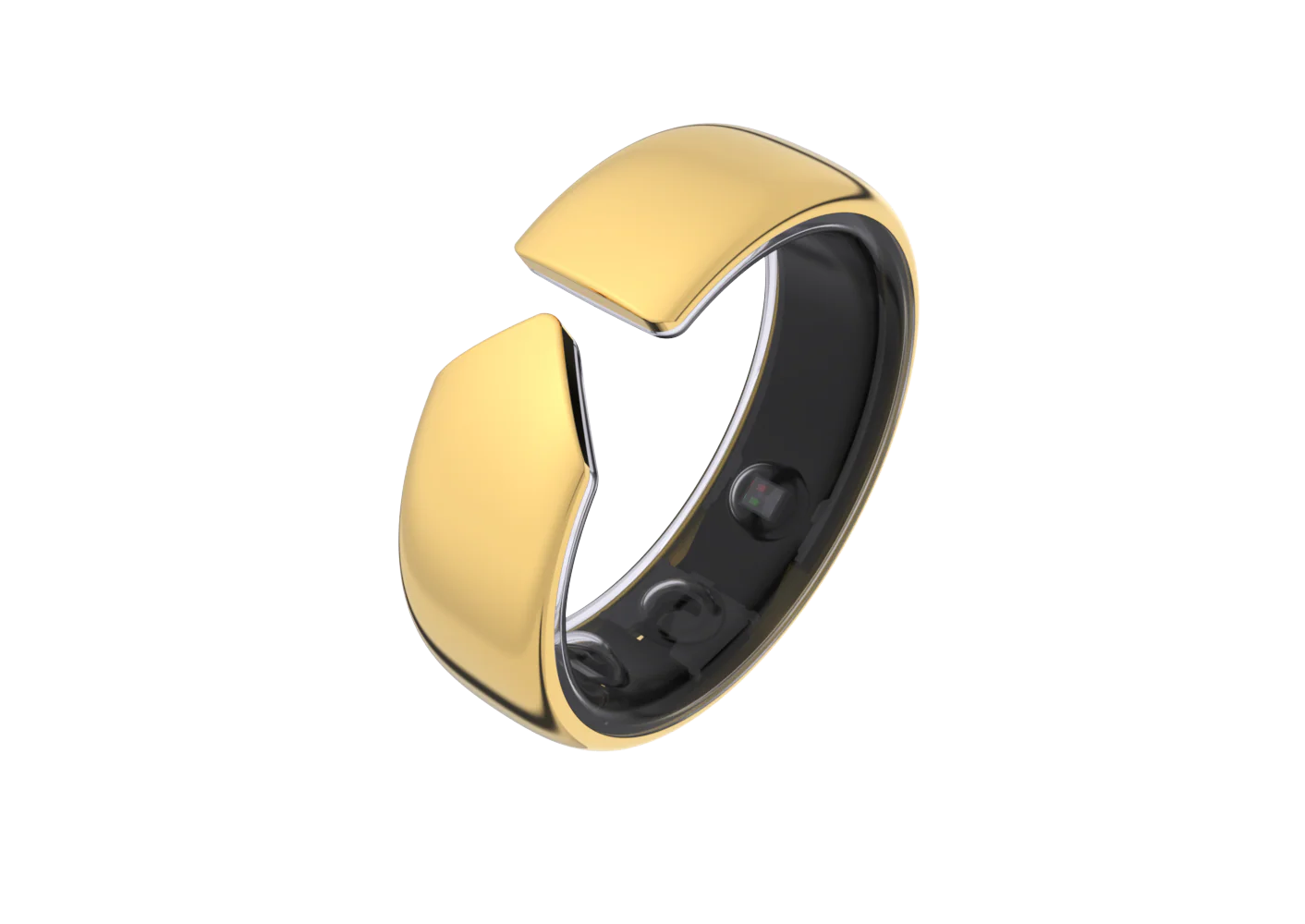
The ring is built from Liquidmetal, a zirconium-based amorphous alloy, with a scratch-resistant titanium PVD coating. It comes in silver, gold, and rose gold across sizes 5 through 12, and Movano offers a free sizing kit – a welcome touch. At 3.2 to 3.7 grams depending on size and 8mm wide by 3mm thick, the Evie is reasonably lightweight, though it reads a touch bulkier on the finger than the slim Oura Ring 4.
The open-band design does introduce trade-offs. The gap can catch on hair and clothing, a minor but recurring annoyance. More concerning is durability: the exposed sensor array on the underside is vulnerable to pressure and impact in a way the fully enclosed bodies of competing rings are not. For daily wear, the Evie looks the part of premium jewelry, but it does not inspire the same confidence as the solid titanium construction of the Oura or Samsung rings.
Water resistance is limited to one meter – enough for handwashing and light splashes, but nowhere near the 100-meter rating on the Oura Ring 4 or the 10ATM on the Samsung Galaxy Ring. Swimmers and anyone who prefers not to think about removing their ring before a shower should look elsewhere.

Health and Fitness Tracking
The Evie Ring packs an impressive-sounding sensor array for its size: red and green LEDs, infrared PPG sensors, photodiodes, a skin temperature sensor, and a 3D accelerometer. It tracks heart rate, resting heart rate, heart rate variability, blood oxygen (SpO2), respiration rate, skin temperature variation, steps, active minutes, distance, and calories burned. On paper, this covers the essentials.
In practice, the data coming off these sensors is unreliable enough to undermine the ring's usefulness. Step counting consistently overestimates activity – in direct comparison testing, the Evie logged over 8,200 steps on a day when a Samsung wearable counted roughly 5,600. That is a roughly 46% inflation that renders the metric meaningless for anyone trying to track actual activity levels.
Sleep tracking is similarly problematic. Sleep and wake time detection can be off by 30 minutes to an hour, and sleep sessions fail to record at all or capture only incomplete data. The updated sleep algorithm introduced with the relaunch improved stage breakdown (REM, light, deep), but if the ring cannot reliably detect when sleep begins and ends, the stage data built on that foundation is suspect.
The most frustrating gap is cycle tracking. The Evie Ring is explicitly marketed as a women's health device, yet its menstrual cycle tracking relies on manual logging rather than biomarker-driven prediction. The ring has a skin temperature sensor capable of detecting the basal body temperature shifts associated with ovulation – the same approach the Oura Ring 4 uses effectively. But the Evie does not leverage its own hardware for this purpose. For a ring whose entire identity is built around women's health, this is a significant miss. The Oura Ring 4 and even the Samsung Galaxy Ring now offer temperature-based cycle insights that make the Evie's manual approach feel outdated.
Workout tracking is equally bare-bones. There is no way to specify workout types, which means no granular data on how different exercises affect heart rate zones or recovery. An auto-activity detection feature was promised for late 2024 and has since rolled out, recognizing walking, biking, running, and general workouts. It is a step forward but still far behind the workout intelligence in Oura or Samsung's platforms.
Movano introduced EvieAI in beta in January 2025, a virtual wellness assistant trained on over 100,000 medical journals. At launch it operated as a standalone Q&A tool; integration with ring health data is a planned future capability. Even once connected, an AI layer built on top of unreliable underlying data is only as useful as that data allows.

App Experience
The data the Evie Ring collects is only as useful as the app that presents it – and here, too, the story is one of progress that has not yet arrived. The Evie Ring app has improved meaningfully since the initial launch. The addition of Apple Health integration in March 2025 addressed one of the loudest complaints from early adopters – data was previously siloed entirely within the Evie app with no way to export or sync. Android support, added in late 2024, opened the ring to a much larger audience after an iOS-only launch that excluded more than half of potential users.
The app offers a health snapshot view that presents daily metrics at a glance, and the recent addition of multi-day trend graphs for sleep metrics, resting heart rate, HRV, and temperature variability is a welcome improvement. Goal-setting is handled well, with weekly step and active-minute targets rather than the daily nag approach many fitness apps take.
That said, the app remains basic compared to the polished, insight-rich experiences offered by Oura and Samsung Health. Data presentation is clean but shallow. Where Oura provides Sleep Scores, Readiness Scores, and detailed trend analysis with actionable recommendations, the Evie app mostly presents raw numbers without meaningful context. The EvieAI assistant attempts to fill this gap, but it is still in its early stages and cannot compensate for the overall lack of depth in the platform.
Setup and pairing can be frustrating. Bluetooth connection issues are common, and pairing the ring reliably requires multiple attempts. Once connected, syncing can be slow and occasionally fails to pull overnight sleep data – a critical failure for a device whose primary value proposition is passive health monitoring.
Battery Life
The Evie Ring lasts approximately four days on a single charge, with a charge time of roughly 60 minutes from 10% to 90% via the included portable charging case. That case holds 10 or more full charges, which means extended trips without a wall outlet are not a concern – a thoughtful design choice.
However, four days of battery life is middling by current smart ring standards. The Oura Ring 4 delivers five to eight days depending on size and usage, and the Samsung Galaxy Ring manages up to six days for most sizes (seven for the largest). Even the RingConn Gen 2 pushes past the Evie's mark. When every additional day of battery life means one less thing to think about, falling short of competitors is a tangible disadvantage. The charging case partially compensates, but having to charge more often than an Oura means more windows of missed overnight sleep data.
Who It's For / Who Should Skip
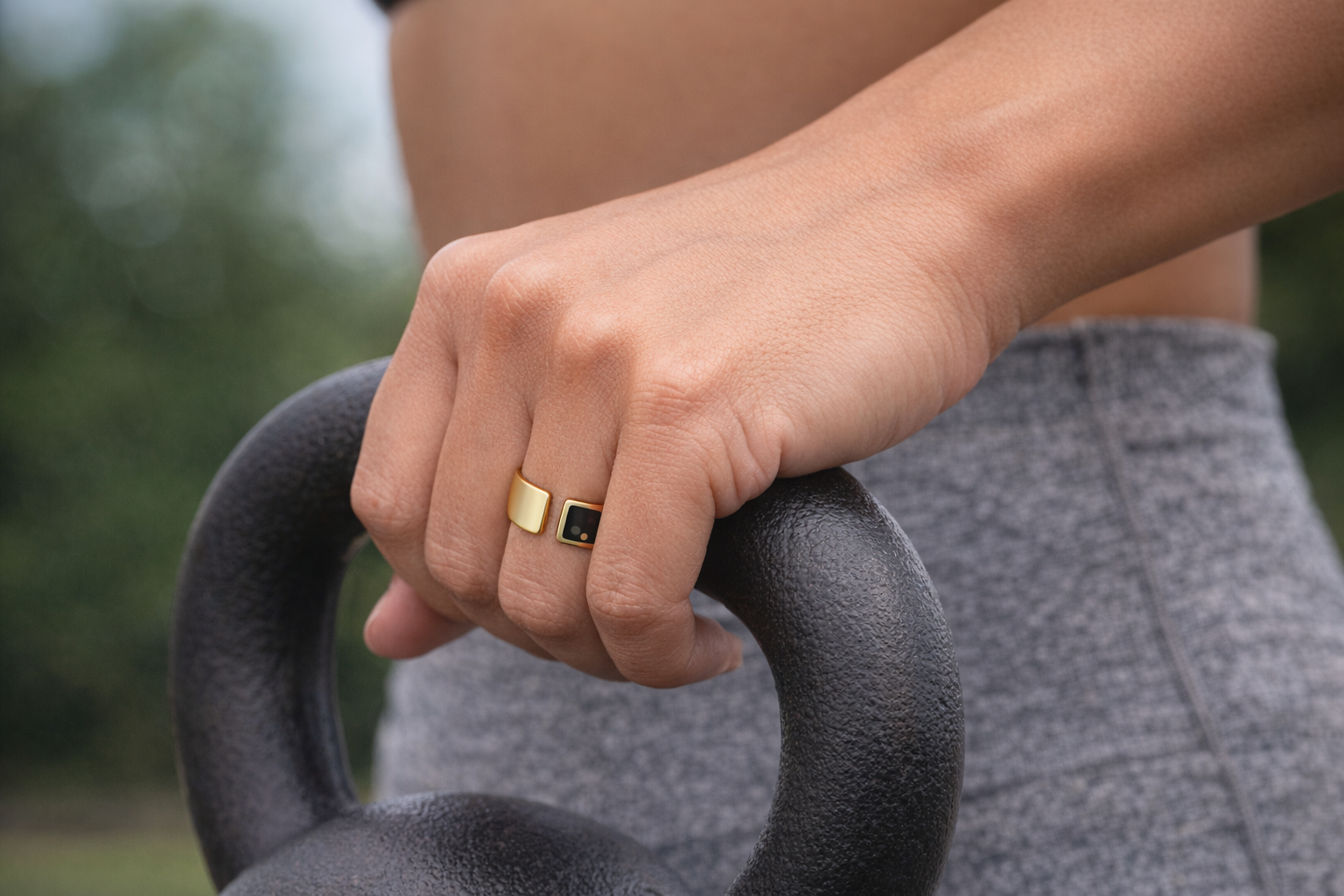
Consider the Evie Ring if: The open-band design solves a genuine problem for those who experience significant finger swelling, and no competing ring offers this. If sizing has been a major barrier to smart ring adoption and the subscription-free model is financially appealing, the Evie addresses both concerns. It works best as a casual wellness tracker for someone who wants general health awareness without demanding precision.
Skip the Evie Ring if: Accurate health data matters. The step count inflation, sleep tracking discrepancies, and lack of biomarker-driven cycle prediction mean this ring cannot be trusted for serious health monitoring. Anyone training for fitness goals, tracking ovulation for family planning, or monitoring chronic health conditions should choose the Oura Ring 4 for its superior accuracy and insight engine, or the Samsung Galaxy Ring for its deep integration with the Galaxy ecosystem. The Oura Ring 3 remains available at a lower price point for those who do not need the latest hardware. The RingConn also offers a subscription-free alternative with better reliability, though it lacks the Evie's women-specific focus. For a broader look at wearable options beyond rings, see our guide to the best fitness trackers and the best smartwatches for women.
The reliability question remains the dealbreaker. Hardware failure rates are too high for a device meant to be worn every day, and Movano Health's pivot toward an AI infrastructure merger raises real questions about future software updates, warranty support, and platform continuity that buyers must weigh seriously.
The Verdict
The Movano Evie Ring earns a 48/100 – placing it firmly in the "not recommended" category. The gap between what this ring promises and what it delivers is too wide, and the uncertain future of the platform makes investing $269 a gamble.
| Category | Weight | Score | Weighted |
|---|---|---|---|
| Core Function | 30% | 45/100 | 13.5 |
| Build Quality | 15% | 50/100 | 7.5 |
| User Experience | 20% | 50/100 | 10.0 |
| Value | 20% | 45/100 | 9.0 |
| Battery | 15% | 55/100 | 8.25 |
| Total | 100% | 48/100 |
The Evie Ring is a cautionary tale about what happens when a genuinely good idea meets execution that is not ready for market – twice. The open-band design remains brilliant, and the no-subscription model is the right call for consumers tired of recurring fees. But a health tracker that delivers inaccurate health data, hardware that fails at unacceptable rates, and a parent company that is redirecting toward an AI infrastructure merger and away from the product category add up to a device that cannot earn a recommendation. The Oura Ring 4 remains the category leader for a reason. For those allergic to subscriptions, the Ultrahuman Ring Air offers a more reliable subscription-free alternative. The Evie Ring needs a third act – and a company fully committed to writing it.