
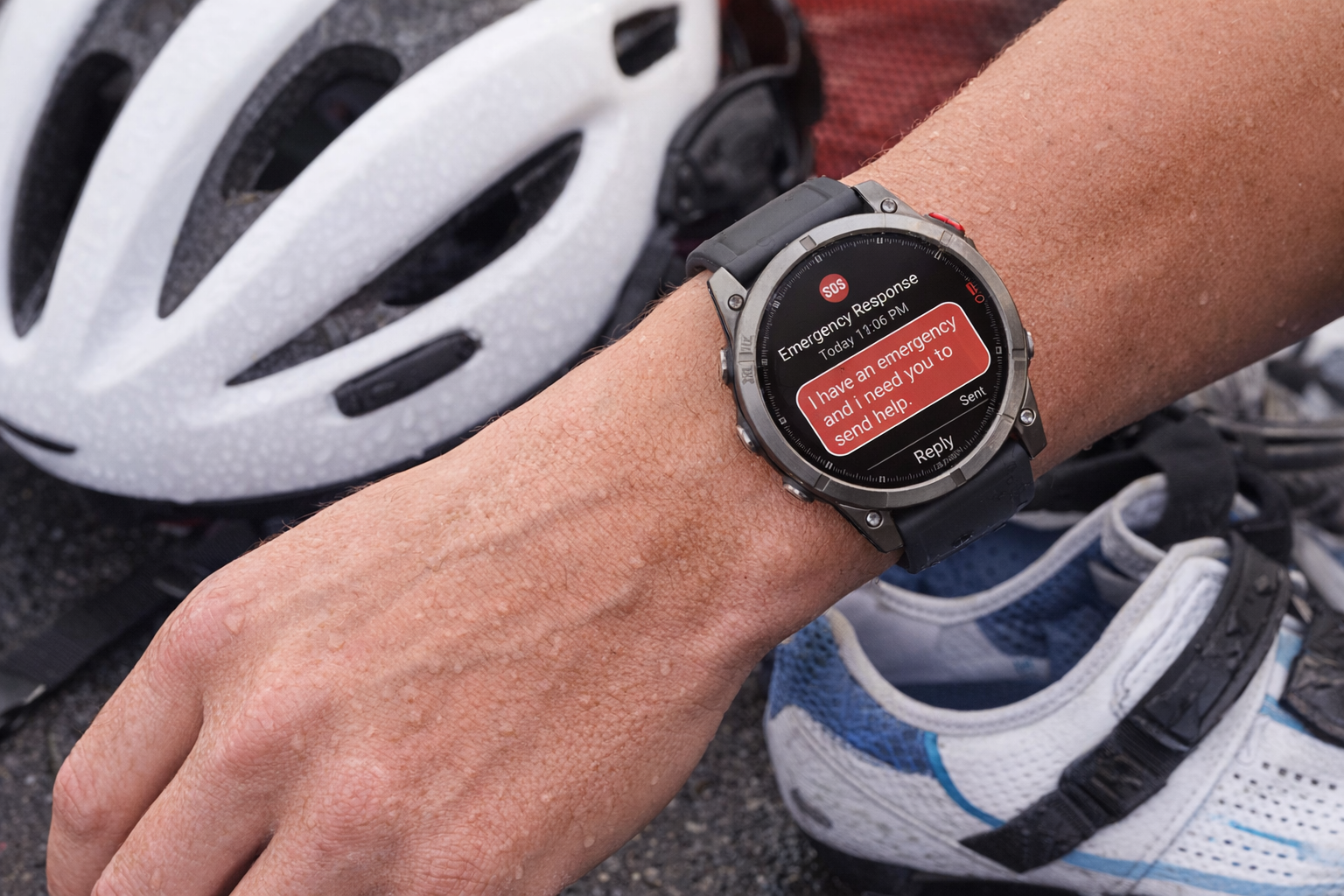
The Garmin Fenix 8 Pro is the first adventure watch that can call for rescue from anywhere on Earth – no phone, no dedicated satellite communicator required. It takes the already-dominant Fenix 8 platform and grafts LTE cellular and inReach satellite messaging directly into a titanium-and-sapphire package. For backcountry athletes who've stared at a dead zone and wished their watch could be a lifeline, this is the watch that finally delivers. Mostly.
The "mostly" matters. The Fenix 8 Pro comes in two display variants – a $1,199 AMOLED and a $1,999 MicroLED – and choosing wrong will cost you either $800 or your patience. There's also a mandatory $7.99/month subscription, satellite messaging that falls short of a standalone inReach device, and a missing 43mm case size that locks out smaller-wristed athletes entirely. At 80/100, this is a superb tool with specific and significant caveats.
Design & Build
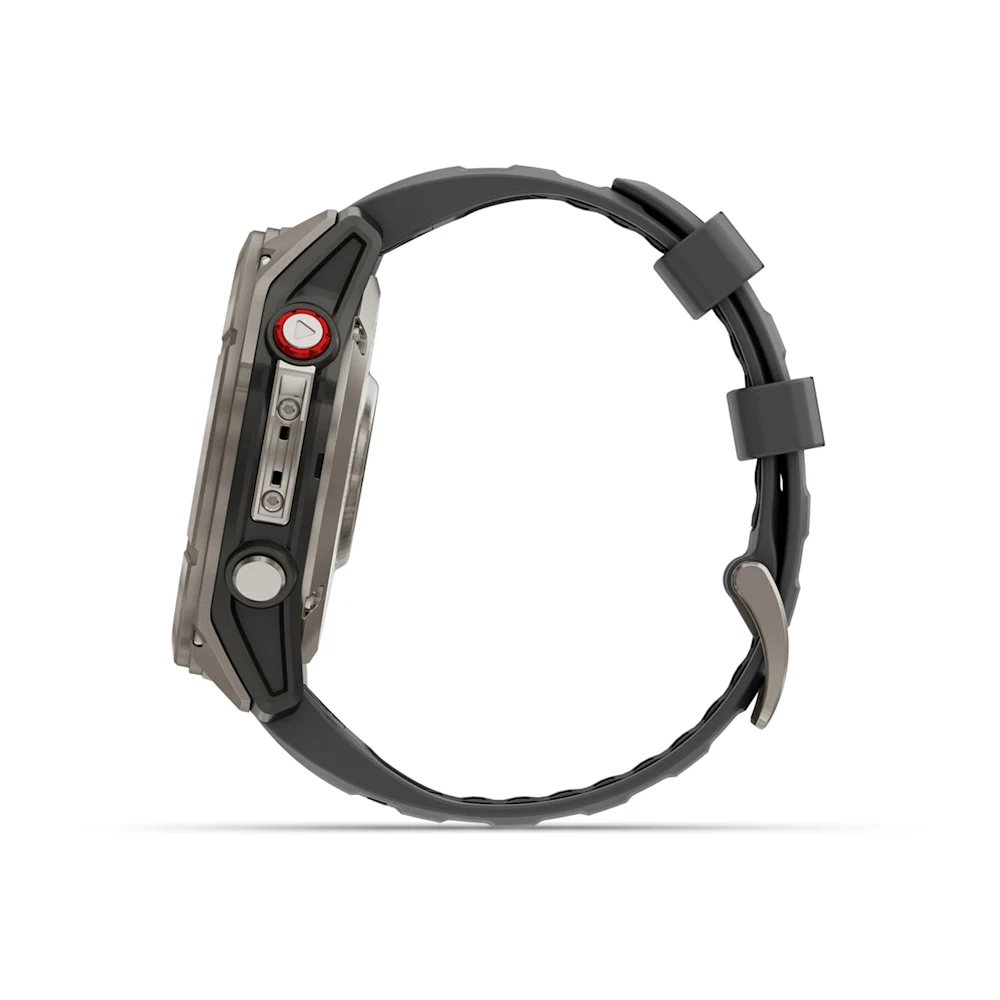
The Fenix 8 Pro shares its DNA with the standard Fenix 8, and that's a compliment. The titanium case with sapphire crystal is tank-like in the best sense – the kind of watch you stop babying after the first week because nothing you do seems to mark it. It carries 10 ATM water resistance and a 40-meter dive rating, which means it handles everything from open-water swims to recreational scuba without flinching.
What's different is the bulk. At 16mm thick – up from the Fenix 8's 13.8mm – the Pro makes its presence known on your wrist. That extra 2.2mm accommodates the LTE-M antenna and satellite communication hardware, and there's no way around the physics. On a large wrist, it's assertive but manageable. On a smaller wrist, it's a problem – and Garmin has made that problem worse by eliminating the 43mm case size entirely. The LTE antenna simply won't fit in the smaller housing. If you wore the Fenix 7S or Fenix 8 in the 43mm size, there is no Fenix 8 Pro for you. That's a genuine omission that shuts out a significant portion of the adventure-watch audience, particularly smaller-wristed athletes and many women.
The 47mm AMOLED model weighs approximately 77 grams, the 51mm AMOLED comes in at approximately 88 grams, and the 51mm MicroLED tops out at 93 grams. For reference, the Apple Watch Ultra 3 weighs 61.6 grams. None of these are light watches, but the weight distribution across the wide case keeps them from feeling top-heavy during dynamic movement.
Build quality is impeccable. The five-button layout is crisp and positive, even with gloves. The rotating crown remains one of the best input methods on any sport watch – far superior to swiping a touchscreen with sweaty or wet fingers. Every detail communicates durability and intent.
Display
This is where the Fenix 8 Pro's story splits in two, and understanding the split is critical to making the right purchase.
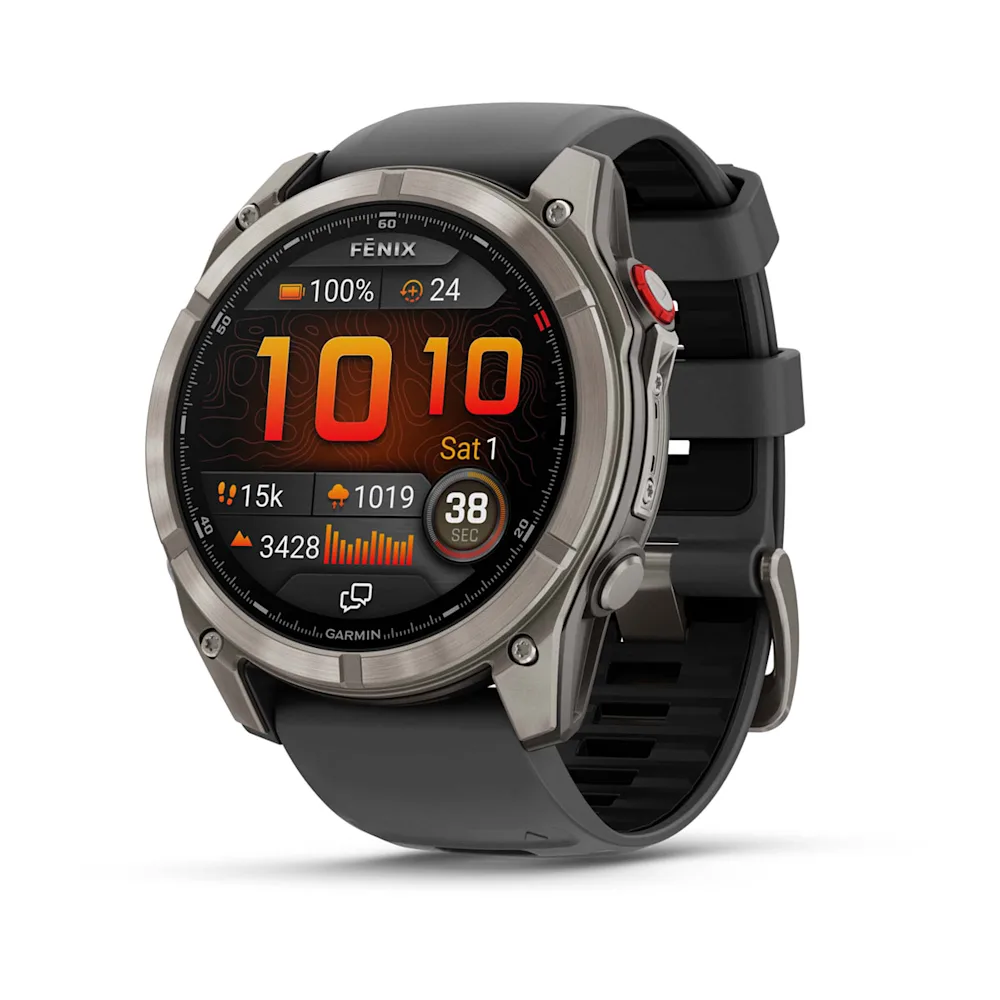
The AMOLED model pushes a 1.4-inch, 454 x 454 pixel panel at roughly 2,000 nits peak brightness. It is gorgeous – deep blacks, vibrant colors, and excellent outdoor visibility. Maps are crisp and easy to read at a glance. The always-on display is genuinely useful without torching battery life the way it does on lesser watches. For 95% of use cases, this display is more than bright enough, even under direct high-altitude sun.
The MicroLED model is the world's first consumer MicroLED smartwatch display. It packs over 400,000 individual LEDs into the same 1.4-inch, 454 x 454 resolution and peaks at a staggering 4,500 nits. On paper, that's transformative. In practice, the visibility improvement over the 2,000-nit AMOLED in real-world outdoor conditions is marginal. Human eyes struggle to perceive brightness differences at the extreme top of the range, and the AMOLED was already excellent in sunlight. The MicroLED does offer better uniformity and theoretically superior longevity since individual pixels can't burn in the way OLED subpixels can. But those are abstract advantages on a watch you'll likely replace in 3-5 years.
The display math is simple: the AMOLED gives you 90% of the visual experience for 60% of the price and dramatically better battery life. The MicroLED is a fascinating glimpse at the future of display technology – but it's a $1,999 glimpse, and the future isn't quite here yet.
The Connectivity Story
This is the headline feature and the most nuanced part of the Fenix 8 Pro. LTE and satellite messaging on an adventure watch sounds like an instant sell. The reality is more complicated – and it's worth understanding exactly what you're buying before you spend $1,199 or more.
LTE: Useful but Imperfect
The Fenix 8 Pro uses an LTE-M (Category M1) antenna for cellular connectivity. This allows the watch to send and receive messages, trigger LiveTrack sharing, and provide a communication lifeline without your phone nearby. For trail runners who leave their phones behind, or for athletes who want their emergency contacts to follow their route in real time, it's a meaningful capability.
But LTE-M is not the same as the LTE radio in your smartphone – or even the 5G in the Apple Watch Ultra 3. The antenna is smaller, the power budget is tighter, and the result is noticeably weaker signal acquisition. In areas with strong LTE coverage, it works well. In fringe-coverage areas – exactly the kinds of places where you'd most want connectivity – it becomes unreliable. The watch offers three LTE modes: Always On, Auto, and Off. Always On maintains a constant connection but can drain roughly a third of the battery in 24 hours. Auto mode conserves power by connecting only when the watch needs to send data, but it has a critical limitation: it won't receive incoming messages. You can call out, but nobody can reach you unless you've left the radio on.
For comparison, the Apple Watch Ultra 3's 5G RedCap radio offers seamless, phone-like connectivity that the Garmin's LTE-M can't match. The Garmin's cellular is functional for outbound safety communication, but it is not a standalone phone replacement.
Satellite Messaging: Safety Net, Not Safety System
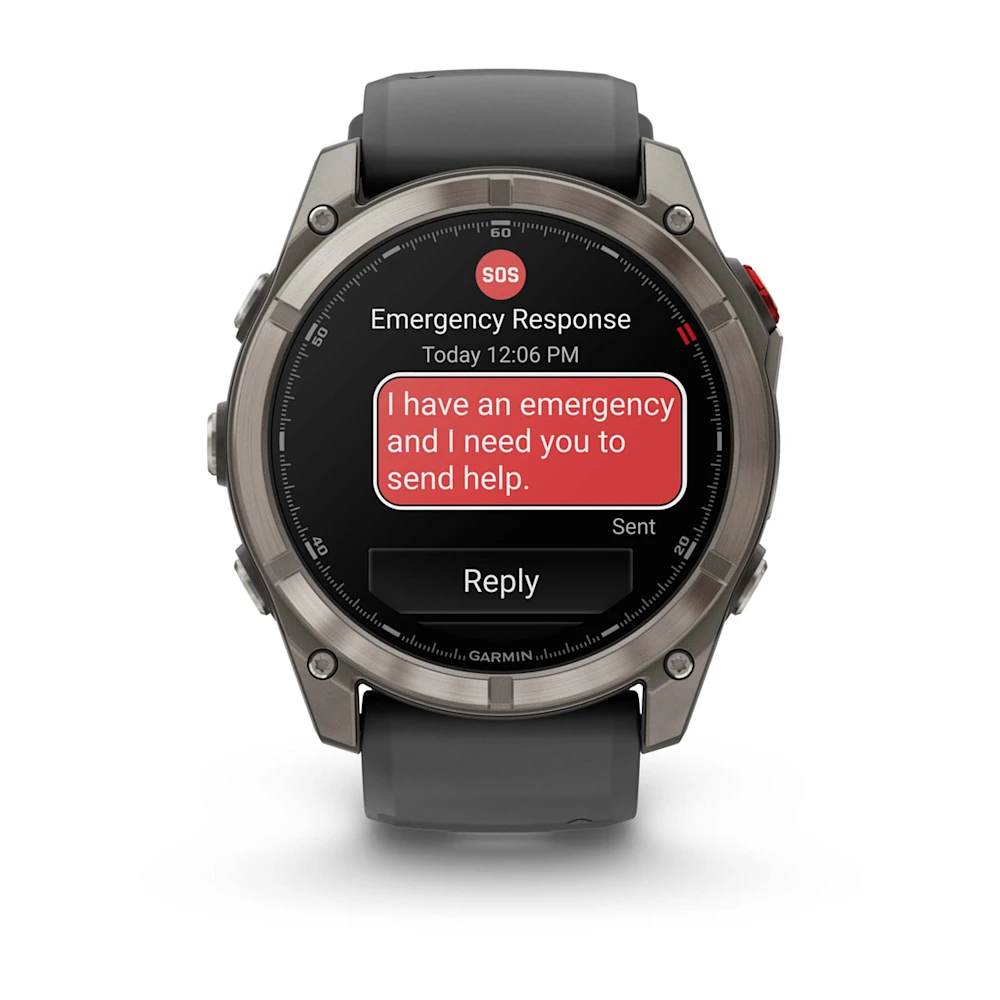
The inReach satellite messaging built into the Fenix 8 Pro is the most important feature to understand – and the easiest to misread. It allows SOS triggering and two-way text messaging via satellite. In an emergency, you can trigger an SOS to Garmin's 24/7 rescue coordination center – though coverage depends on the geostationary satellite network, which works across most populated regions but not at extreme northern latitudes. That capability is real, and it could save your life.
But the implementation has significant limitations that separate it from Garmin's standalone inReach devices. First, satellite messaging requires manual activation – you must open the widget, wait for the watch to acquire a satellite lock (which can take 30-60 seconds with a clear sky view), and then send your message. There's no automatic breadcrumb tracking the way a dedicated inReach Mini 2 provides, where your position is silently transmitted at set intervals throughout your hike. If you're incapacitated, an inReach Mini 2 clipped to your pack has been broadcasting your location all along. The Fenix 8 Pro has not.
Second, the satellite constellation used for non-emergency messaging is geostationary, which means coverage degrades at higher latitudes. Backcountry users in Canada, Scandinavia, Alaska, Scotland, or the northern Rockies may struggle to send casual check-in messages. Emergency SOS has broader coverage than general messaging, but routine "I'm safe" messages to family become unreliable in exactly the kind of remote northern wilderness where you'd want them most.
Third, and this matters: there's a mandatory $7.99/month subscription for LTE and satellite services. That's on top of whatever you're already paying for Garmin Connect+. Apple offers satellite SOS on the Apple Watch Ultra 3 free for the first two years with no ongoing fee during that period. When you're already spending $1,199 on hardware, a perpetual monthly fee for core safety features feels like a legitimate grievance – especially when the competition bundles it in at no extra cost.
Think of the Fenix 8 Pro's connectivity as supplementary safety insurance – not a replacement for a standalone inReach on serious expeditions, and not as seamless as Apple's satellite implementation. If you're a weekend trail runner who occasionally hits dead zones, it's great peace of mind. If you're planning a two-week traverse through the Canadian Rockies, bring a dedicated inReach too.
Performance & Features
Strip away the connectivity story, and the Fenix 8 Pro is still the most capable sport watch on the market – because it's built on the Fenix 8 platform, which is already the deepest feature set in the category.
GPS Accuracy
GPS performance is best-in-class, full stop. Multi-band GNSS with support for GPS, GLONASS, Galileo, BeiDou, and QZSS delivers consistently accurate tracks across every terrain type. Dense forest canopy, urban canyons, steep cliff faces – the Fenix 8 Pro handles them all with minimal drift. Marathon runners will appreciate tracks that match certified course distances with remarkable precision. This is the kind of GPS accuracy that makes you trust your watch more than your memory of the trail.
For serious athletes who obsess over pace accuracy and distance precision, the Fenix 8 Pro sets the standard. The COROS VERTIX 2S and Suunto Race are both excellent GPS performers, but neither consistently matches the Fenix 8 Pro's precision across varied terrain.
Sports & Ecosystem
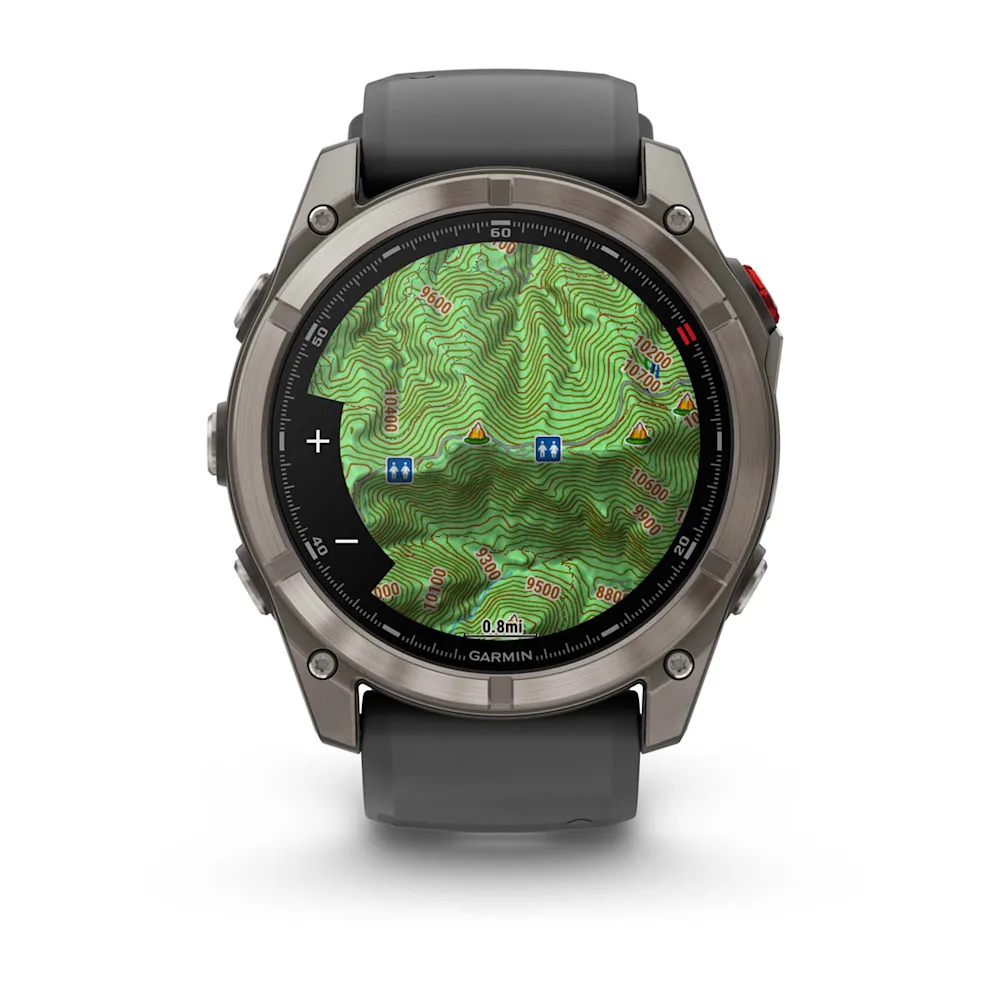
The Garmin ecosystem remains the deepest in wearables. Garmin Connect offers training load analysis, recovery metrics, race predictor, daily suggested workouts, and integration with virtually every training platform – TrainingPeaks, Strava, Komoot, and more. The watch supports offline maps with turn-by-turn navigation, full-color topographic detail, and a ClimbPro feature that breaks upcoming climbs into segments with gradient and distance data. For mountain athletes, ClimbPro alone is worth the Garmin premium.
Sport profiles cover everything from trail running and mountain biking to backcountry skiing, open-water swimming, and technical diving. The rotating crown makes scrolling through data screens mid-effort effortless. Garmin Pay supports contactless payments. Offline music storage works with Spotify, Amazon Music, and Deezer. This is the complete package – no compromises on smartwatch utility.
Health & Fitness
The Fenix 8 Pro inherits the Fenix 8's Elevate Gen 5 optical heart rate sensor and adds a few headline health features.
ECG: The watch can record a single-lead electrocardiogram directly from the wrist, flagging atrial fibrillation. It's not a replacement for medical monitoring, but it's a meaningful addition for athletes who want periodic cardiac screening – particularly older endurance athletes or those with a family history of heart rhythm issues.
Heart rate accuracy is strong across most activities. Steady-state running and cycling track within 2-3 BPM of a chest strap. High-intensity intervals see occasional lag at the onset of hard efforts – a universal limitation of optical wrist sensors – but the data is reliable enough for training zone management without an external strap.
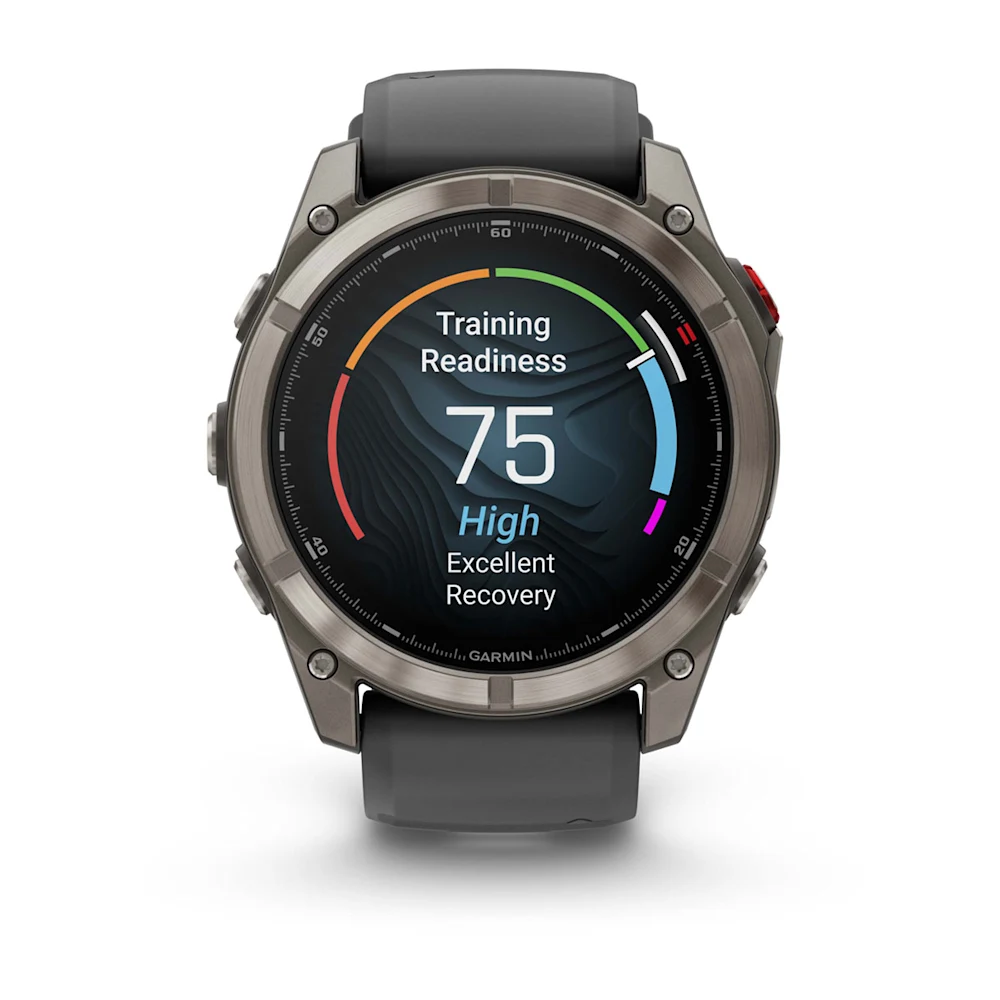
SpO2 monitoring provides blood oxygen readings on demand and overnight, useful for altitude acclimatization tracking. Skin temperature sensing feeds into sleep and recovery metrics. HRV (heart rate variability) tracking drives Garmin's Body Battery and recovery advisor, both of which remain among the best readiness metrics in the category – intuitive, actionable, and reasonably accurate over time.
Sleep tracking is competent but not class-leading. It captures sleep stages and provides a sleep score, though it occasionally miscategorizes light dozing as deep sleep. The Polar Vantage V3 and Apple Watch Ultra 3 both deliver more granular and accurate sleep data.
Battery Life
Battery life is where the Fenix 8 Pro's model choice becomes most consequential, and where the MicroLED's case falls apart.
AMOLED Models
The 47mm AMOLED delivers approximately 15 days in smartwatch mode, 30 hours in multiband GPS, and 8 hours with GPS, LTE, and music running simultaneously. The 51mm AMOLED stretches those numbers to 27 days, 53 hours, and 15 hours respectively – a substantial improvement if you can wear the larger case.
With LTE in Always On mode, expect roughly a third of your battery to drain over 24 hours in smartwatch mode. That effectively halves your usable battery window. Running GPS with active LTE tracking cuts your outdoor time to single-digit hours on the 47mm model. The practical approach is to keep LTE in Auto or Off mode during daily use and activate it only for adventures – which somewhat undermines the "always connected" promise.
For context, the standard Fenix 8 AMOLED 47mm delivers up to 16 days in smartwatch mode (the larger 51mm manages 29 days). The Pro's LTE and satellite hardware consumes meaningful power even when those radios are off, trimming the baseline.
MicroLED Model
Here's where the numbers get uncomfortable. The 51mm MicroLED manages just 10 days in smartwatch mode – versus 27 days for the same-size AMOLED. In multiband GPS, it drops to 34 hours versus 53. The MicroLED display technology, for all its brightness advantages, draws substantially more power than AMOLED, and the difference is not marginal.
Ten days of smartwatch battery life is fine by Apple Watch standards but deeply disappointing by Garmin adventure watch standards. The entire Fenix proposition has always been "go further, charge less." The MicroLED variant abandons that identity – and for $700 more than the AMOLED. The COROS VERTIX 2S, at $699, delivers 40 days of smartwatch battery. The standard Fenix 8 51mm lasts 29 days. Paying $1,999 for a Garmin that lasts 10 days is a hard sell, no matter how bright the screen gets.
Who It's For / Who Should Skip
Buy the Fenix 8 Pro AMOLED if you: - Run ultra-distance trail races where LTE tracking and satellite SOS provide genuine safety value - Mountaineer, ski tour, or adventure in remote terrain and want emergency communication built into your watch rather than clipped to your pack - Already own and love the Garmin ecosystem and want the most complete expression of it - Can absorb the $7.99/month subscription without resentment - Want the best GPS accuracy available in an adventure watch
Buy the standard Fenix 8 instead if you: - Rarely venture beyond cell coverage – you're paying a $100-$200 premium for features you won't use - Are a road runner, triathlete, or gym athlete who doesn't need off-grid communication - Want the longest possible battery life from a Garmin AMOLED watch - Are value-conscious and would rather spend the savings on a chest strap or running power meter
Skip the MicroLED entirely unless you: - Are a display technology enthusiast with $2,000 to spend on a curiosity - Genuinely don't mind charging your Garmin every 10 days
Look elsewhere if you: - Want seamless LTE and free satellite SOS – the Apple Watch Ultra 3 ($799) does both better and cheaper, though battery life is significantly shorter and the ecosystem is Apple-only - Need maximum battery life above all – the COROS VERTIX 2S ($699) offers 40 days smartwatch and 118 hours GPS in a titanium package, though without any cellular or satellite connectivity - Want a premium adventure watch at a lower price – the Suunto Vertical 2 ($449) delivers 40 hours of GPS with excellent accuracy and a gorgeous AMOLED display
The Verdict
Score: 80/100 – The most capable adventure watch ever built, held back by connectivity rough edges, a steep subscription, and a MicroLED variant that doesn't justify its existence.
| Category | Weight | Score | Weighted |
|---|---|---|---|
| Core Function (GPS, sports, connectivity) | 30% | 90 | 27.0 |
| Build Quality (titanium, sapphire, durability) | 15% | 85 | 12.75 |
| User Experience (software, LTE reliability, UI) | 20% | 78 | 15.6 |
| Value (price, subscription, vs. competition) | 20% | 68 | 13.6 |
| Battery Life (real-world with LTE) | 15% | 72 | 10.8 |
The Garmin Fenix 8 Pro AMOLED is the right watch for a specific kind of athlete: someone who pushes into remote terrain, values the Garmin ecosystem's unmatched depth, and sees $1,199 plus $7.99/month as reasonable insurance for off-grid safety. At $100 over the comparable Fenix 8 titanium/sapphire tier, the LTE and satellite capabilities represent a fair premium for genuine added utility. GPS accuracy is the best in the business. The sports and health feature set is the deepest available. The build quality inspires total confidence.
But the rough edges are real. LTE-M is weaker than smartphone radios. Satellite messaging is manual and latitude-limited. The subscription fee stings when Apple bundles satellite SOS at no extra cost. The 43mm size is gone. And the MicroLED model, despite being a genuine technological marvel, delivers battery life that contradicts the core promise of a Garmin adventure watch – all for $800 more than the AMOLED.
Buy the 47mm or 51mm AMOLED Pro if you need what it offers. Admire the MicroLED from afar. And if you don't venture off-grid often enough to justify the subscription, the standard Fenix 8 remains the smarter buy. If you are still weighing your options, our guide to the best outdoor watches covers the full landscape, and our best running watches roundup is worth a look for athletes focused on performance over expedition features.