

The Versa line was supposed to be Fitbit's answer to the Apple Watch – an affordable smartwatch that could track your health, run apps, store music, and keep you connected without breaking the bank. The Versa 3 got reasonably close. It had third-party app support, offline music playback via Deezer and Pandora, Wi-Fi, and a growing ecosystem that justified calling it a smartwatch. Then the Versa 4 arrived, and Fitbit started subtracting.
Third-party apps: gone. Music storage: gone. Wi-Fi: disabled despite the hardware still sitting inside the case. Google Assistant: gone entirely, despite Google literally owning Fitbit. What remains is a well-built fitness tracker with strong battery life and reliable sleep tracking – wrapped in hardware that promises more than the software delivers. The Versa 4 is not a bad product. It is a diminished one, and the gap between what it is and what it should have been defines the entire experience.
Design & Build
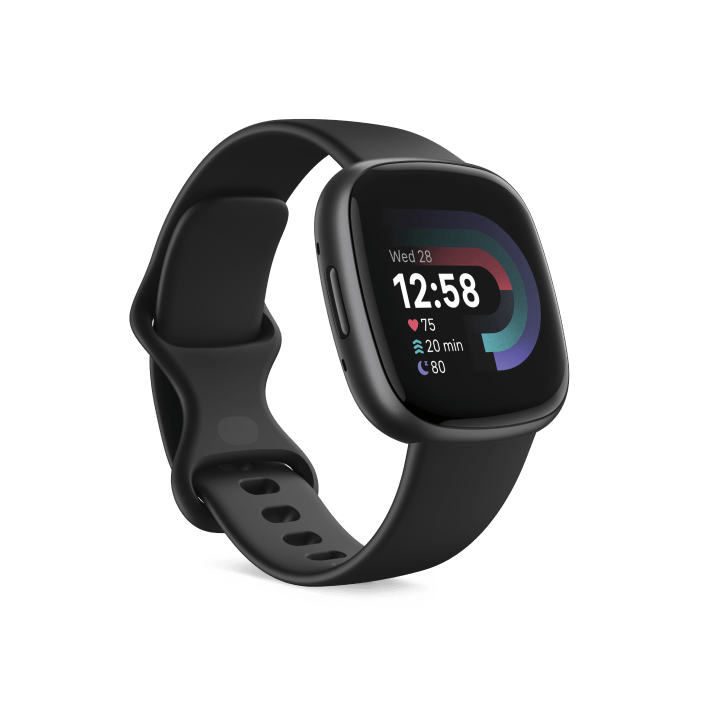
The physical improvements over the Versa 3 are real and worth acknowledging. The case weighs approximately 37.6 grams – marginally lighter than the Versa 3 – and is noticeably thinner, and the return of a physical side button – replacing the Versa 3's universally criticized capacitive touch groove – is the single best decision Fitbit made with this generation. The button provides tactile, reliable navigation that the capacitive strip never could. It is baffling that Fitbit removed it in the first place, and a relief that common sense prevailed.
The aluminum case with rounded-square design language remains attractive without being ostentatious. Three colorways – Black/Graphite, Waterfall Blue/Platinum, and Pink Sand/Copper Rose – cover the basics. The infinity band system uses a quick-release mechanism for easy swapping, and the bands themselves are soft silicone that sits comfortably against skin for extended wear, including overnight sleep tracking. Water resistance at 5ATM (50 meters) means pool swimming, rain, and shower exposure are all fine.
As a piece of hardware on the wrist, the Versa 4 is the best-feeling Versa yet. The irony is that the hardware improved while everything running on it got worse.
Display
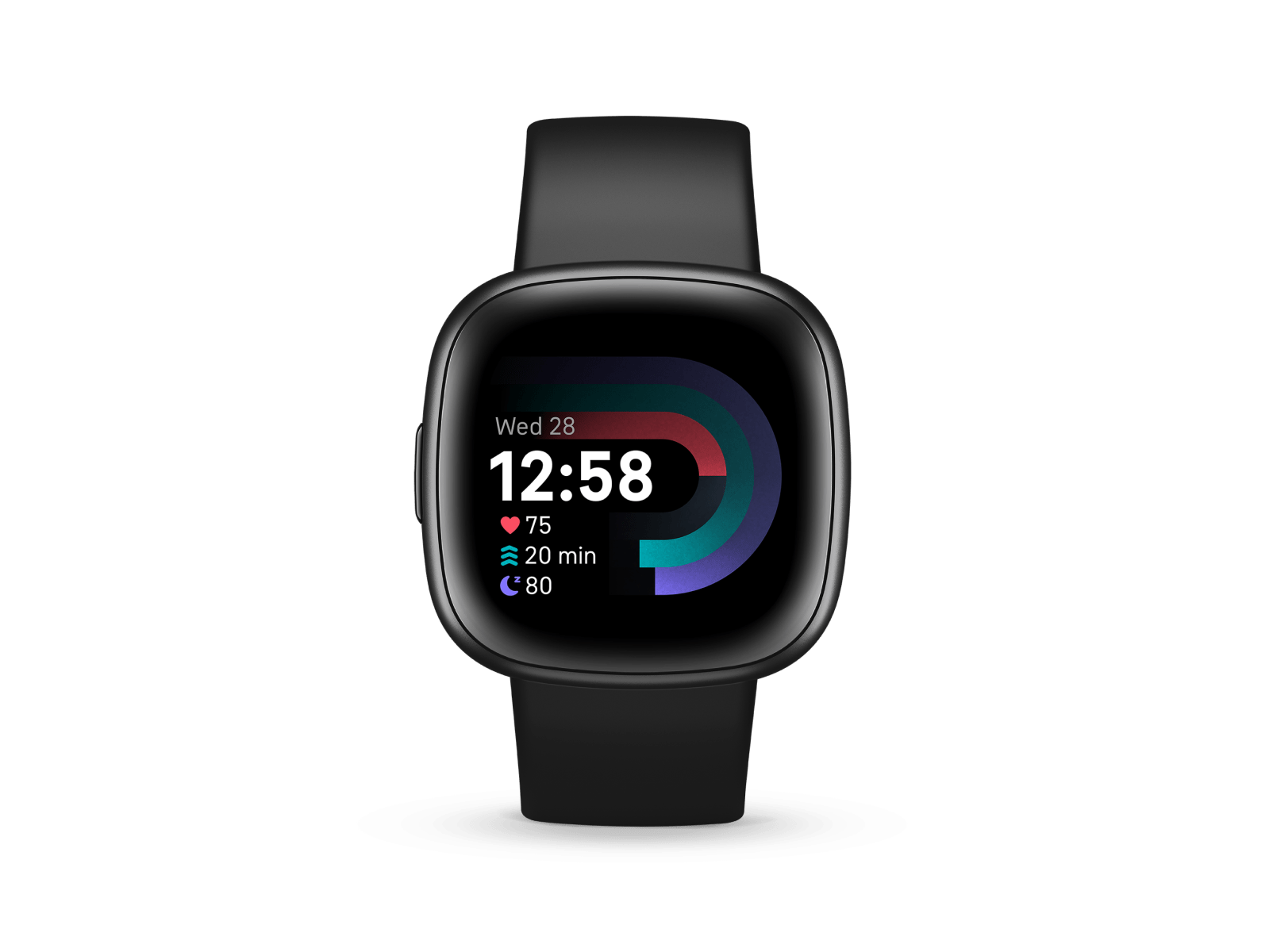
The 1.58-inch AMOLED touchscreen carries over from the Versa 3 without meaningful changes. It remains a good display: bright enough for outdoor visibility, colorful enough to make watch faces and workout data pop, and responsive to touch input. Resolution is adequate at this screen size, with sharp text and clean iconography throughout the interface.
An always-on display option exists but cuts battery life from six-plus days to roughly two to three days – a steep trade-off that most users will avoid. Without AOD, the screen wakes via wrist raise or button press, and the gesture recognition works reliably in most orientations.
The display is not the problem with the Versa 4. It is perfectly serviceable for its price class, competitive with what Samsung and Apple offer in their budget tiers. The screen faithfully renders the limited software that Fitbit allows to run on it.
Performance & Features
This is where the Versa 4 story turns from minor refinement to genuine regression. The list of features removed from the Versa 3 reads less like product simplification and more like planned obsolescence.
Third-party apps are completely gone. The Versa 3 supported an App Gallery with options from Starbucks, Spotify, and various third-party developers. The Versa 4 ships with nine pre-installed apps and no mechanism to add more. There is no app store. There is no sideloading. The watch runs exactly what Fitbit decided it should run, and nothing else. For a device marketed as a smartwatch in 2022, this is an extraordinary limitation.
Music storage and playback have been removed entirely. The Versa 3 could store music locally and play it through Bluetooth headphones – a genuine convenience for phone-free runs and gym sessions. The Versa 4 cannot. There is no offline music. There are no streaming app integrations on the watch. Even basic music controls for phone playback were absent at launch, though Spotify and YouTube Music phone controls were eventually added via updates.
Wi-Fi hardware exists inside the Versa 4 but is deliberately disabled. The Versa 3 used Wi-Fi for faster syncing and music downloads. Fitbit chose to deactivate the capability in software, presumably to differentiate the product line or reduce support complexity. The hardware is there. The feature is not.
Google Assistant is absent entirely despite Google literally owning Fitbit. The watch ships with only Amazon Alexa as a voice assistant – and unlike the Versa 3, which eventually gained Google Assistant through a software update, the Versa 4 never received it. Google has since discontinued Assistant support even on older Fitbit devices that had it. The omission from a Google-owned company's product defies logic and signals where Fitbit sits in Google's priority list.
Snore and noise detection were also removed, minor features but part of the pattern of subtraction.
On the positive side, the Versa 4 expanded exercise modes from 20 to over 40, adding profiles for weightlifting, dancing, and other activities. The interface feels snappier navigating through menus. Google Maps turn-by-turn directions and Google Wallet were added through post-launch updates, providing genuine utility. Alexa voice commands work for timers, alarms, and quick questions.
But these additions do not offset the removals. Going from 20 to 40 exercise modes matters little when most of those modes capture only heart rate and workout duration without sport-specific metrics. Competitors like Amazfit and Huawei offer comparable or better exercise tracking for less money. The net feature balance between Versa 3 and Versa 4 is clearly negative.
Health & Fitness
Strip away the smartwatch frustrations, and the Versa 4 performs its core health tracking duties with reasonable competence. This is still a Fitbit, and Fitbit's health tracking ecosystem remains one of its genuine strengths.
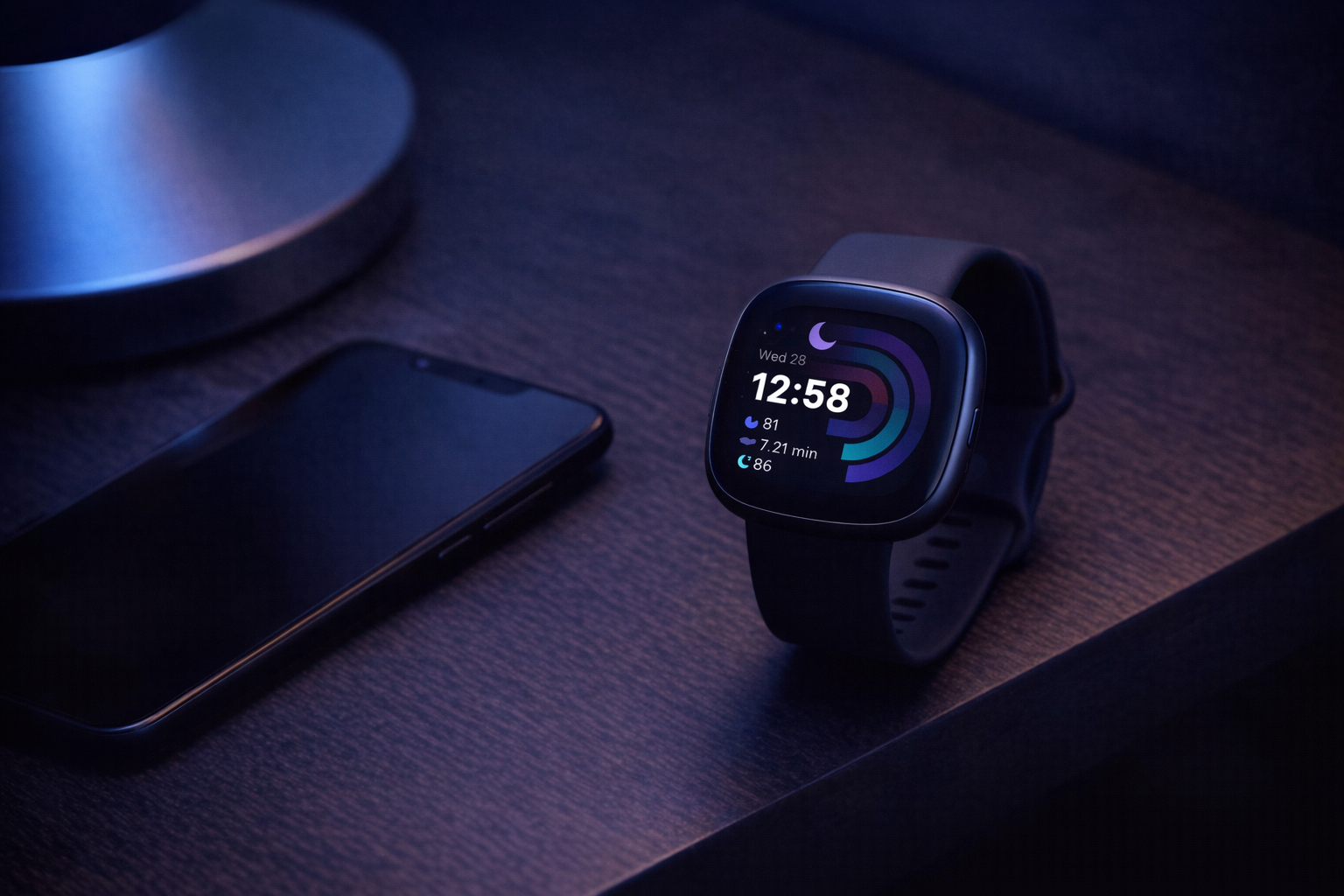
Sleep tracking is the standout. Sleep stages (light, deep, REM), sleep score, and the Sleep Profile feature provide detailed overnight analysis that competes with the best in the category. Nap detection works, bedtime reminders are useful, and the Fitbit app presents sleep data in a format that is both informative and actionable. The skin temperature sensor tracks overnight variations that can flag illness or cycle-related changes.
Daily activity tracking – steps, distance, calories burned, Active Zone Minutes, hourly movement reminders – works as expected. Step counts are generally reliable for daily tracking purposes. The altimeter tracks floors climbed accurately.
Heart rate monitoring is a more mixed picture. The optical sensor provides adequate resting and general activity heart rate data, but loses accuracy during high-intensity exercise. An overly steep heart rate spike at the start of workouts is a known issue, and Active Zone Minutes calculations suffer as a result – the watch may award zone minutes inaccurately when the heart rate reading does not match actual exertion. For casual fitness tracking, the HR sensor is fine. For any training that depends on accurate zone data, it falls short of what Garmin and Apple deliver.
SpO2 monitoring runs overnight and provides blood oxygen trends. It works but is not medical-grade and should be treated as a general wellness indicator rather than a diagnostic tool.
GPS performance is functional but unreliable compared to dedicated running watches. Routes generally track correctly in open environments, but accuracy degrades noticeably in tree cover or urban settings. For logging approximate distances on runs and walks, the GPS does its job. For anyone who cares about precise pace data or route mapping, Garmin's budget offerings deliver meaningfully better results.
A significant caveat: several of the more detailed health features – including Daily Readiness Score and expanded Sleep Profile analytics – require a Fitbit Premium subscription at $9.99 per month after the included 6-month trial expires. The watch effectively holds some of its own capabilities hostage behind a paywall, which feels particularly aggressive on a device that already removed features from its predecessor.
Battery Life
Battery life is the Versa 4's most unambiguous win. Fitbit claims six-plus days, and real-world use confirms five to six days is consistently achievable with standard settings: notifications enabled, 24/7 heart rate tracking, SpO2 overnight, and occasional GPS workouts. This is not a theoretical best-case number – it is what the watch actually delivers in daily use.
The fast charging capability is genuinely impressive: 12 minutes on the magnetic charger provides enough power for a full day of use, making it possible to top off during a morning shower and never worry about a dead watch. A full charge from zero takes roughly two hours.
With always-on display enabled, battery drops to two to three days – still better than an Apple Watch but a significant reduction that undermines the feature's practicality. With heavy GPS use (daily hour-long tracked workouts), expect closer to four days.
In a market where the Apple Watch SE dies every night and the Samsung Galaxy Watch FE barely survives two days, the Versa 4's battery life is a legitimate competitive advantage. It is the one area where the watch clearly exceeds expectations and justifies its existence against more feature-rich alternatives.
Who It's For
The Versa 4 makes sense for a narrow audience:
- Budget-conscious buyers picking it up at the discounted $120-$150 street price who want basic fitness and sleep tracking with a color touchscreen and GPS
- Fitbit ecosystem loyalists already invested in the app and community features who do not need third-party apps or music storage
- Non-technical users who want a simple, clean interface without the complexity of Wear OS, watchOS, or even Garmin's deeper menus
- Sleep tracking enthusiasts who prioritize Fitbit's excellent overnight analytics above all else
Who should skip it:
- Versa 3 owners – this is a downgrade, not an upgrade. Keep your Versa 3.
- Music listeners who want phone-free audio during workouts – the Versa 4 cannot do this at all
- Anyone who values third-party apps – there are none, and there never will be
- Runners who care about GPS accuracy – the Garmin Forerunner 165 or even the Garmin Vivoactive 5 deliver substantially better positioning
- Value-focused buyers – the Fitbit Charge 6 (regularly discounted to around $100) offers most of the same health tracking in a lighter package, while the Samsung Galaxy Watch FE at $199 offers a full smartwatch experience
The Verdict
The Fitbit Versa 4 is a product at war with itself. The hardware team delivered a lighter, thinner, more comfortable watch with a better button and solid battery life. The software team – or more likely, the product strategy team – gutted the features that made the Versa line worth buying. The result is a device that tracks health competently but fails to justify its existence as a smartwatch, fails to justify its price relative to both cheaper Fitbit trackers and similarly-priced full smartwatches, and most damningly, fails to justify itself as a successor to the Versa 3.
At its current discounted price of $120-$150, the Versa 4 is a passable budget fitness tracker with excellent battery life and strong sleep tracking. At its original $229.95 asking price, it was a product that charged smartwatch money for fitness band capabilities. The Fitbit Premium subscription requirement for full feature access adds insult to the equation.
The Versa 4 is not broken. It works. It tracks. It lasts. But "it works" is the lowest possible bar for a product line that once aspired to challenge the Apple Watch. The decision to remove features rather than add them turned what should have been a refinement into a retreat.
| Category | Weight | Score | Weighted |
|---|---|---|---|
| Smartwatch & Fitness Features | 30% | 58 | 17.4 |
| Build Quality | 15% | 78 | 11.7 |
| User Experience | 20% | 62 | 12.4 |
| Value | 20% | 58 | 11.6 |
| Battery | 15% | 85 | 12.75 |
| Total | 100% | 65.85 |
WearableBeat Score: 66/100