
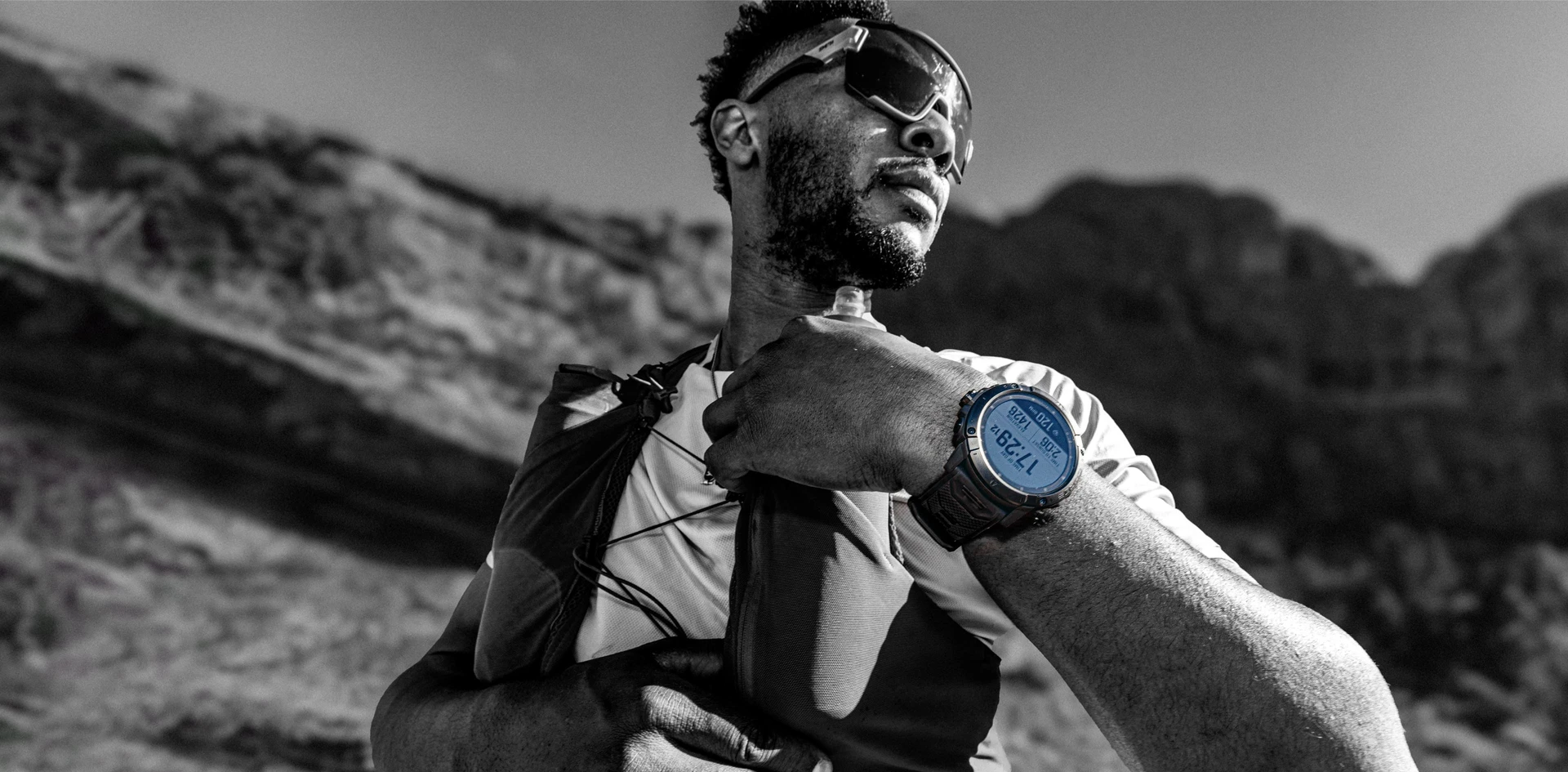
The Coros Vertix 2S is the most GPS-accurate, longest-lasting adventure watch you can buy for under $700 – and it still isn't the best one. At $699, it undercuts the Garmin Fenix 8 by $300 while delivering 118 hours of GPS battery life and dual-frequency satellite accuracy that matches or beats Garmin's latest chipset. The titanium-and-sapphire build is genuinely tough. But inconsistent wrist-based heart rate tracking, a dated software ecosystem, and missing quality-of-life features like display brightness control keep pulling this watch back from the top spot it otherwise deserves.
That tension between genuine capability and incremental progress defines the Vertix 2S experience. This is unquestionably the best watch Coros has ever made, and for first-time buyers entering the premium adventure watch category, it represents a compelling value proposition. But the "S" upgrade from the Vertix 2 is harder to justify – most improvements amount to an antenna redesign and a sensor swap – and a few persistent software limitations keep Coros from fully closing the gap with Garmin's ecosystem.
Design and Build
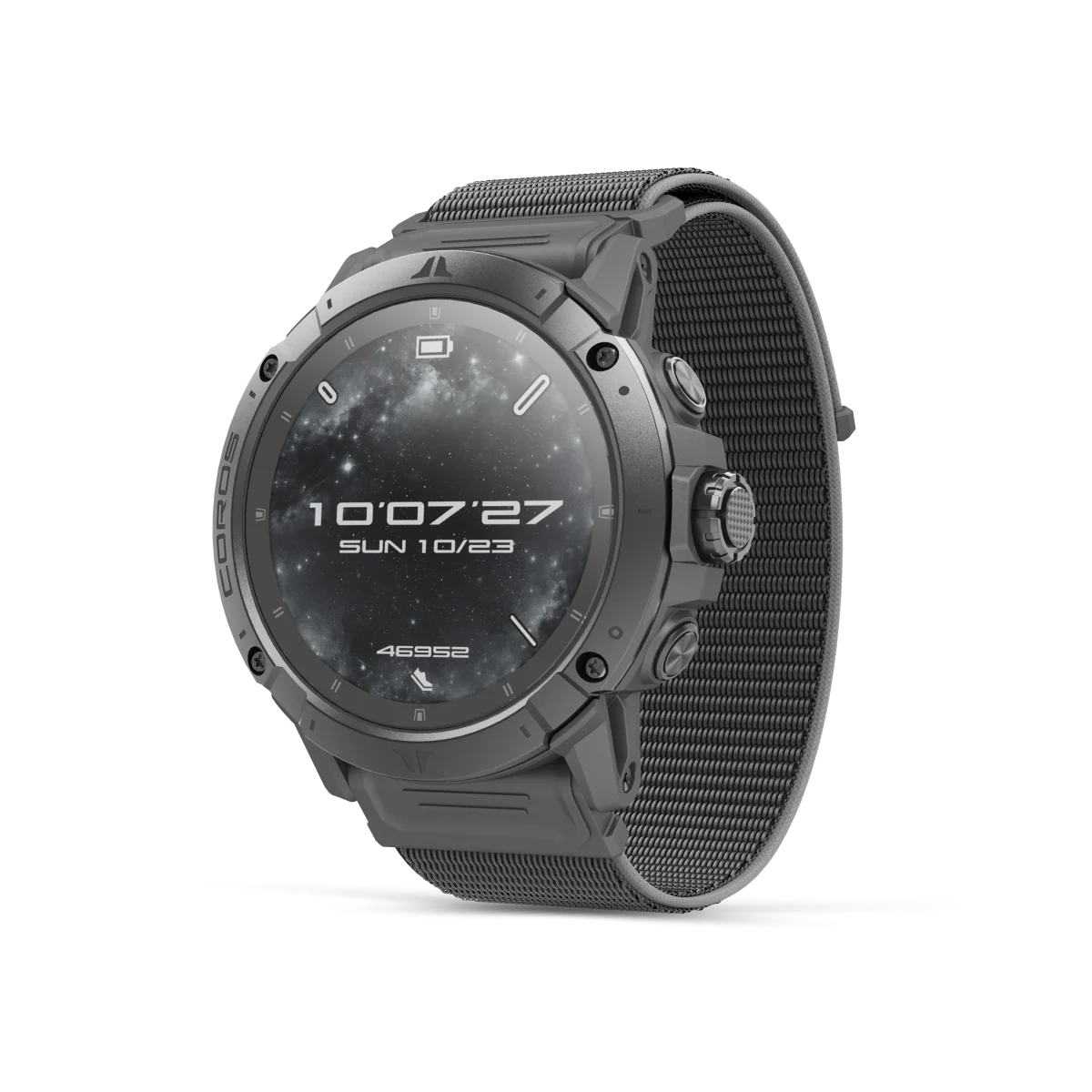
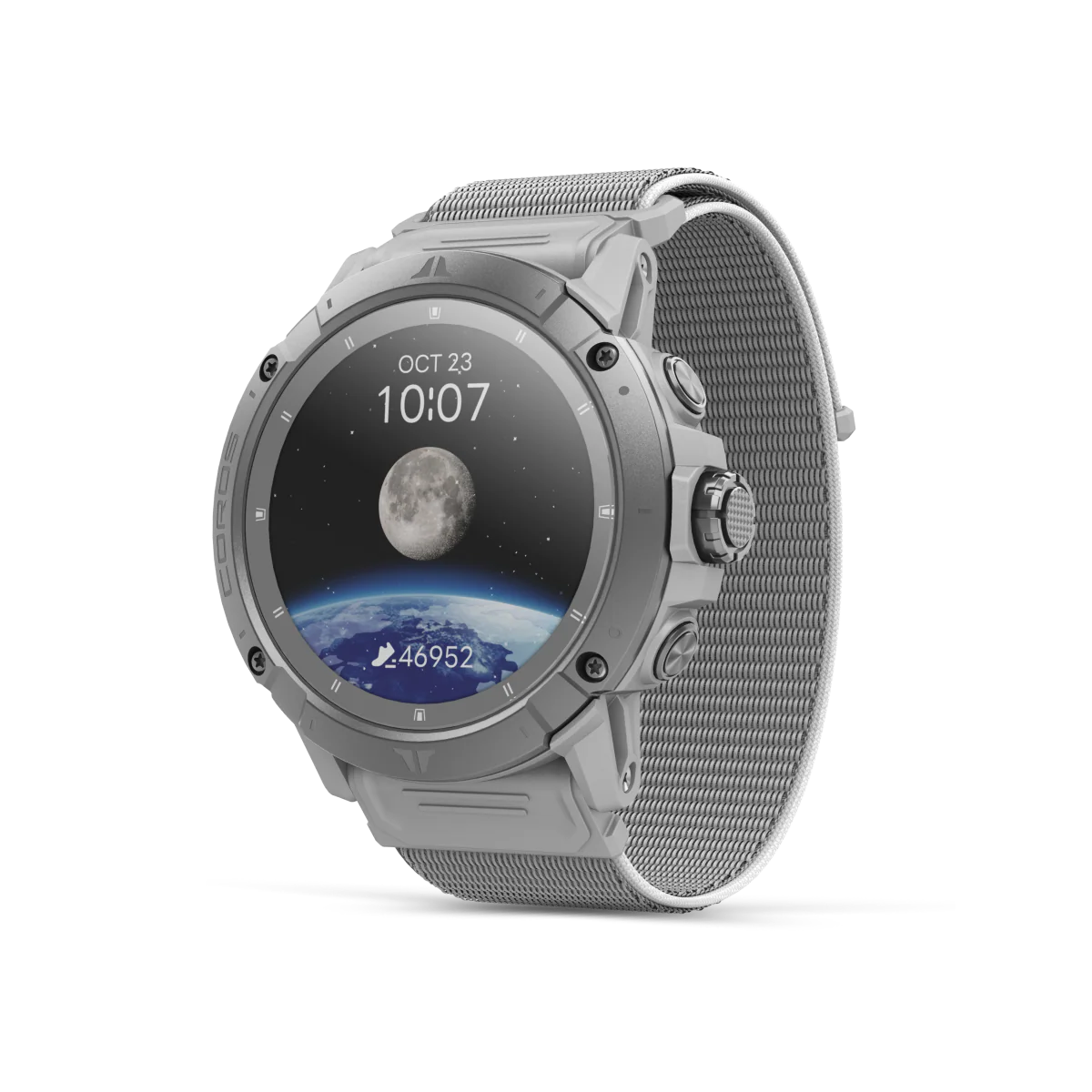
The Vertix 2S is not a subtle watch. The 50.3mm case has actually grown slightly thicker than its predecessor, from 15.7mm to 16.0mm, making it one of the largest adventure watches on the market. It dwarfs the Garmin Fenix 8 on the wrist and sits noticeably above a Suunto Vertical. At 87g with the silicone band (70g with the nylon strap), it carries real heft.
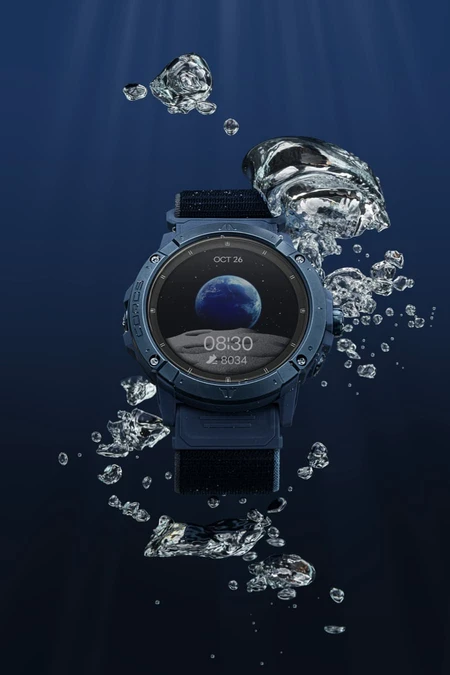
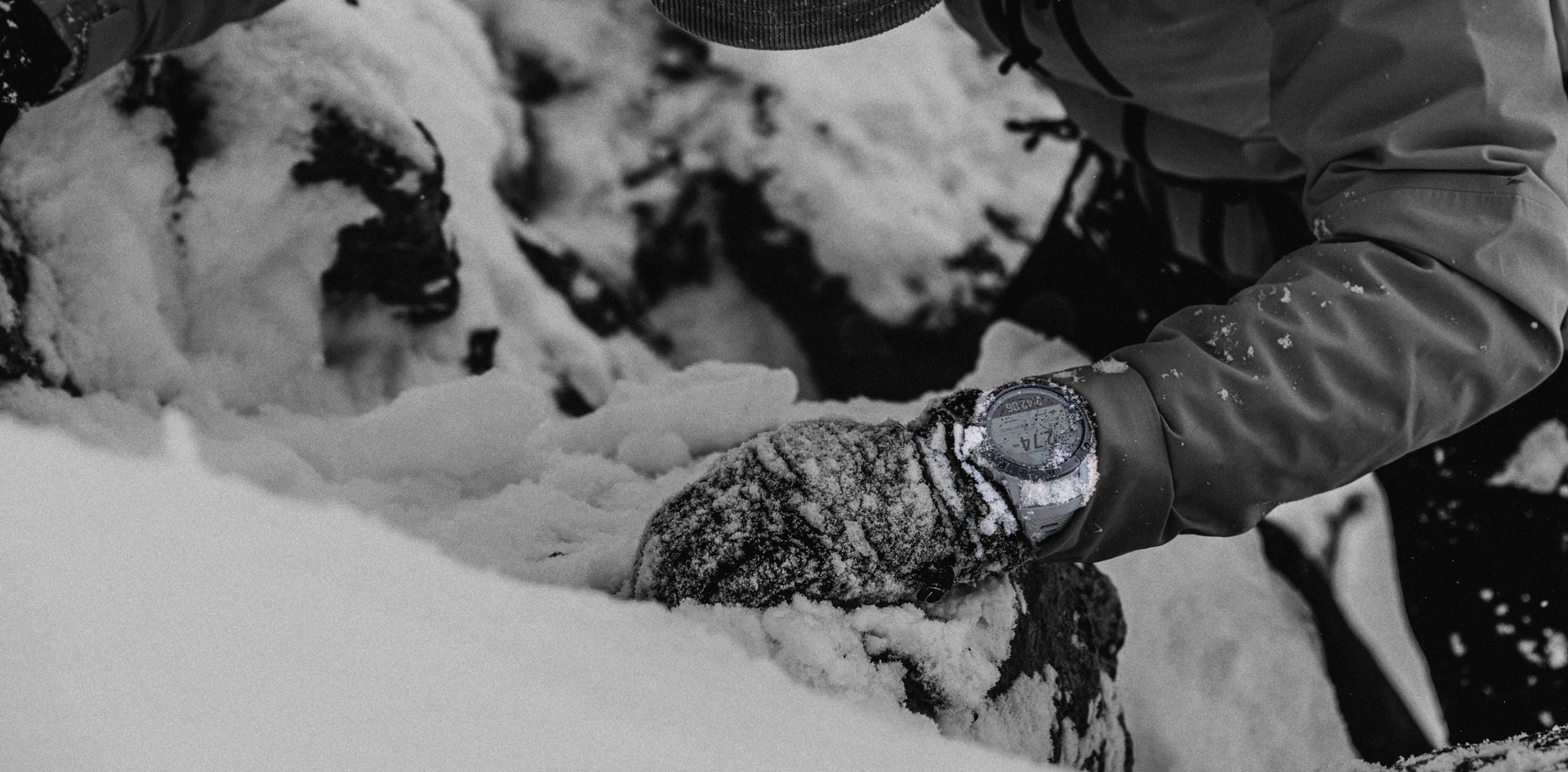
Build quality, however, is beyond reproach. The Grade 5 titanium alloy bezel with PVD coating shrugs off impacts that would scar stainless steel, and the sapphire crystal – nearly ten times harder than standard glass – resists scratches with ease. Water resistance is rated at 10 ATM (100 meters), and the operating temperature range spans a punishing -22 degrees F to 122 degrees F. This is a watch built to survive alpine expeditions, desert ultramarathons, and everything between.
Coros includes both silicone and nylon bands in the box with a Quick Fit connector, which is a generous touch at this price point. The nylon band is the better choice for extended wear, shaving 17g and breathing better during long efforts. The rotating titanium crown works flawlessly with gloves, and the two physical buttons provide reliable tactile feedback when touchscreen operation is impractical.
Comfort is subjective but polarizing. The watch sits fine during daytime activity, but the thickness and weight make sleep tracking a challenge. Anyone with smaller wrists will find the case overwhelming.
Display
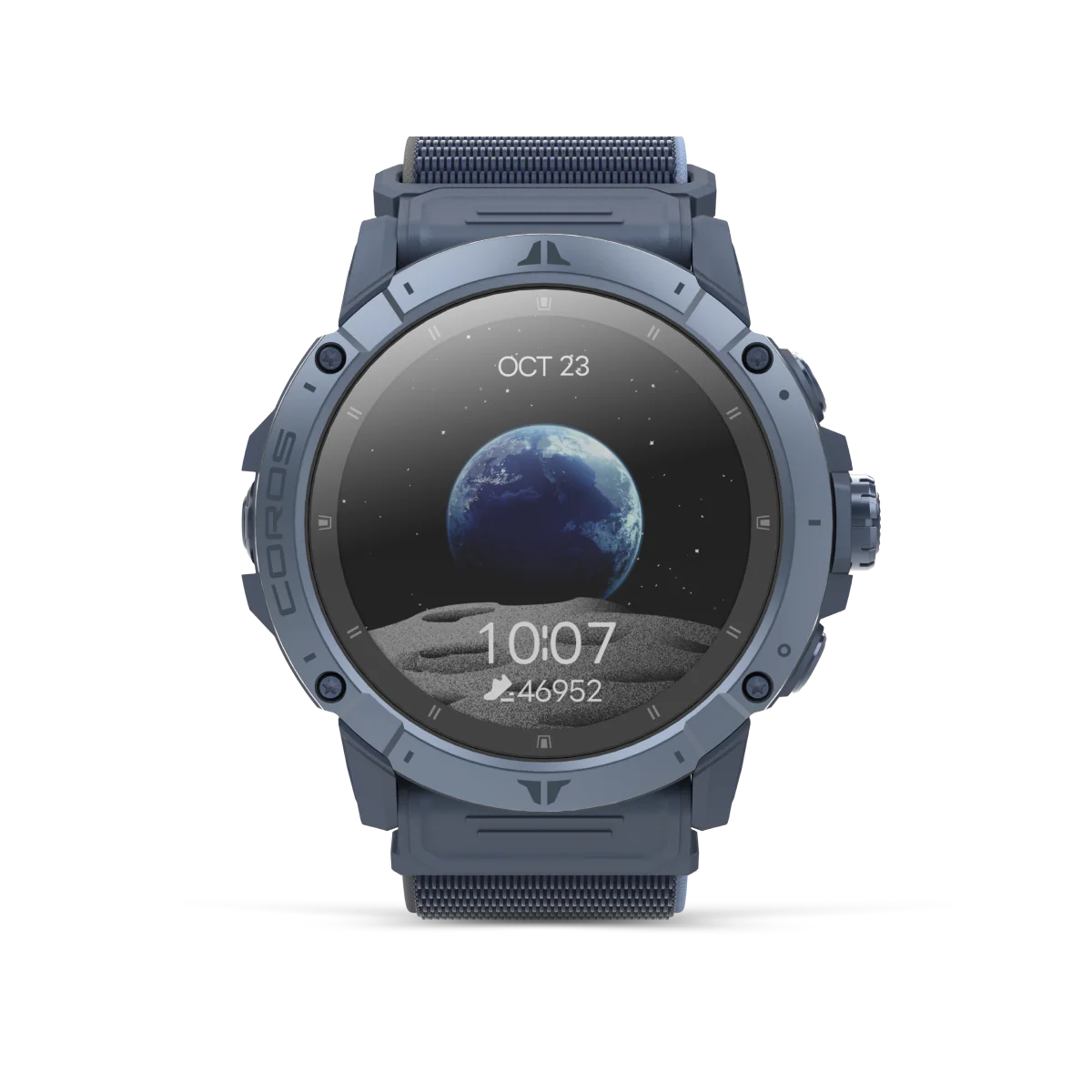
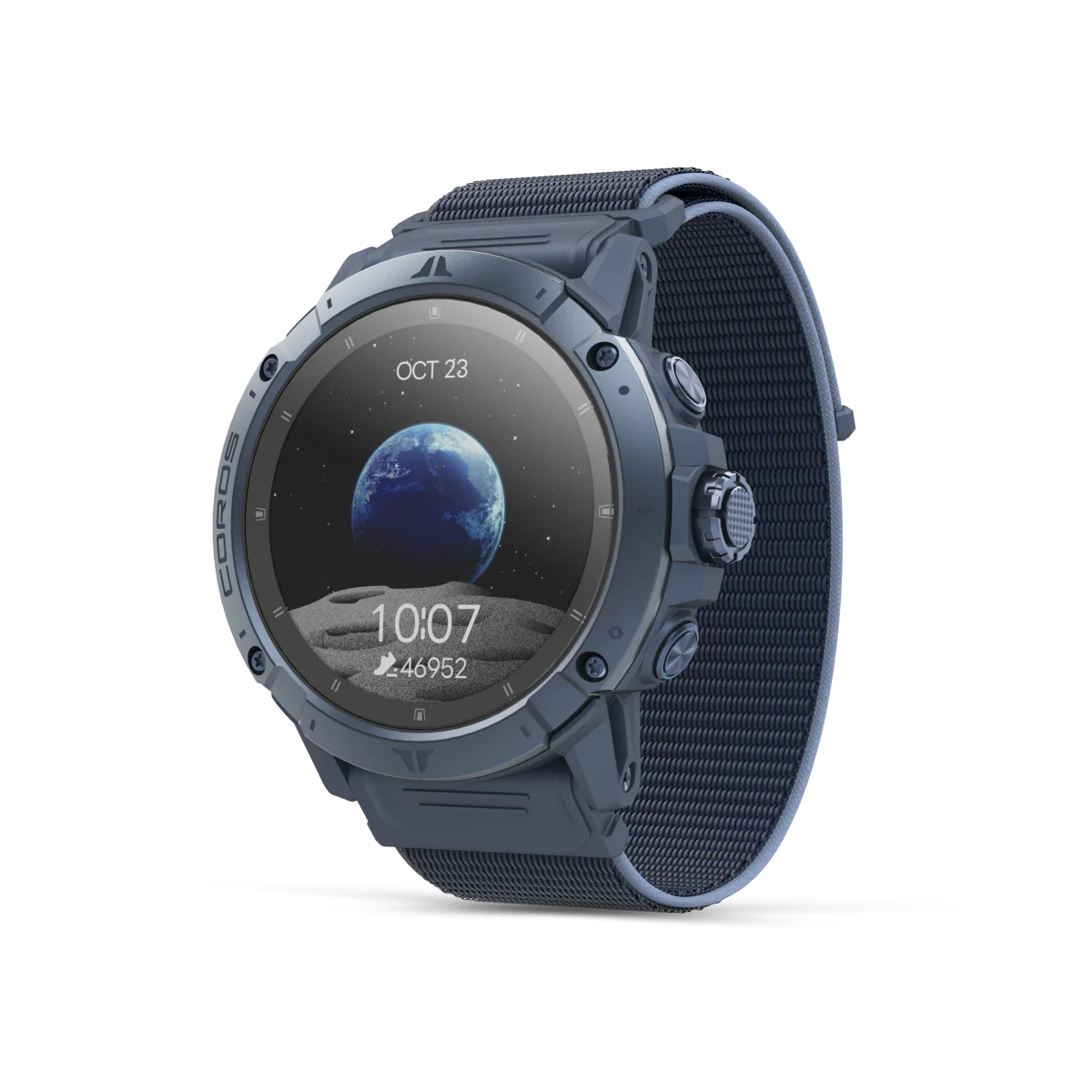
The 1.4-inch memory-in-pixel (MIP) LCD display runs at 280 x 280 resolution with 64 colors. In bright sunlight, this technology shines – literally. MIP displays gain visibility as ambient light increases, making the Vertix 2S supremely readable on exposed ridgelines, open water, and sun-drenched trails where AMOLED screens wash out.
The always-on nature of the display means glanceable data without the wrist-raise gesture that plagues competitors. Multiple data fields are legible simultaneously during activities, and the larger screen size compared to the Coros Pace 3 or Apex 2 makes a meaningful difference when navigating topographic maps.
The tradeoff is real, though. Indoors and in low light, the screen appears dull and washed out compared to the Garmin Fenix 8 AMOLED or even the Apple Watch Ultra 3. There is no brightness adjustment – the backlight is either on or off, activated by button press or wrist gesture. This is a significant usability gap. Competitors at this price point offer granular brightness control, and the omission feels like a cost-cutting measure that undermines an otherwise premium package.
The touchscreen is responsive and adds convenience for scrolling through data screens and navigating maps, but sensitivity calibration needs work. In wet conditions – rain, swimming, sweaty wrists – phantom touches trigger unintended screen changes. Disabling touch during specific activities is possible, but the default behavior is an annoyance.
Performance and Features
GPS accuracy is the headline upgrade, and it delivers. The Vertix 2S uses a redesigned antenna and optimized dual-frequency GNSS algorithm, pulling signals from all five major satellite constellations: GPS, GLONASS, Galileo, BeiDou, and QZSS. The L1+L5 dual-frequency reception meaningfully improves positioning in challenging environments – dense urban canyons, steep mountain valleys, and heavy tree canopy.
In trail running, the Vertix 2S tracks ridgelines and singletrack with tight, consistent lines. Quarter-mile splits on a track tick over with metronomic precision. In urban environments with tall buildings, performance approaches what Garmin achieves with its latest-generation chipsets. The improvement over the original Vertix 2 is immediately visible when overlaying GPS tracks.
Head-to-head with the Garmin Fenix 8, the results are closer than the price gap suggests. In half-marathon distance GPS track comparisons, the Vertix 2S frequently plots tighter lines on trails and singletrack where the Fenix 8 drifts into adjacent terrain or draws wider arcs. Neither watch is flawless, but the Vertix 2S holds its own against a watch that costs significantly more.
The notable weakness is open-water swimming. GPS tracking in open water remains inconsistent, with the watch occasionally plotting waypoints far from the actual swim path. This is a persistent Coros issue across multiple hardware generations and remains unresolved.
Navigation capabilities are solid if not class-leading. The Vertix 2S offers non-routable topographic maps with offline capability, turn-by-turn navigation along planned routes, and Navigation Mirroring that syncs complex routes between phone and watch. Map rendering on the MIP display lacks the visual polish of Garmin's implementation, but the functional information is all present. The 32GB of onboard storage accommodates extensive map coverage.
Climbing features represent Coros's strongest differentiator. Dedicated modes for bouldering, indoor climbing, and multi-pitch outdoor routes track pitch counts, route grades (V-scale and YDS), fall detection (indoor and outdoor lead climbing only – not available in bouldering), auto pitch-type detection, and ascent metrics. No competitor matches this depth of climbing-specific data.
Music storage supports offline playback from 32GB of onboard storage, but the implementation feels dated. There is no Spotify, Apple Music, or any streaming service integration. Loading music requires downloading MP3 files from a computer and transferring via USB – a workflow that feels like 2018.
The Coros app ecosystem continues to improve with regular firmware updates, and the interface strikes a good balance between depth and accessibility. However, notification rendering on the watch display lags behind Garmin and Apple in polish and readability.
Health and Fitness Tracking
The upgraded optical heart rate sensor features five LEDs and four photodetectors, matching the hardware from the Coros Pace 3. This represents a meaningful improvement over the Vertix 2's sensor, but the results remain inconsistent. During steady-state efforts and easy runs, readings track reasonably close to a chest strap reference. During intervals and high-intensity work, discrepancies of plus or minus 12 BPM are common, and performance varies unpredictably – sometimes nailing a difficult session, sometimes missing on a straightforward one.
The honest assessment is that optical heart rate on the Vertix 2S is middle-of-the-pack. It trails Polar's Grit X2 Pro and Apple Watch Ultra 2 for wrist-based accuracy. Anyone serious about heart rate training zones should pair an external chest strap or arm band sensor via Bluetooth or ANT+.
SpO2 monitoring, HRV tracking, and stress measurements are all present. Sleep tracking captures naps and overnight sleep automatically, providing recovery scores and sleep stage breakdowns. The data is useful for trend analysis but should not be treated as medical-grade.
Training load metrics exist but carry a notable quirk: the weekly training load display resets on a fixed day each week rather than showing a true rolling average. A separate Load Impact metric provides a 7-day rolling view, but the primary weekly display's reset behavior can be jarring for athletes accustomed to Garmin's continuous load tracking. Stress calculations during workouts provide little actionable insight compared to Garmin's Body Battery or Polar's Nightly Recharge.
The mandatory calorie goal during setup – with no option to disable it – is a minor but telling annoyance that reflects Coros's less mature software philosophy.
Battery Life
Battery life is the Vertix 2S's most unassailable advantage. The official ratings are 40 days in smartwatch mode (with sleep tracking), 118 hours in standard GPS mode, 73 hours with all satellite systems active, and 43 hours in dual-frequency mode. Real-world usage aligns closely with these claims: running eight to ten hours per week with full GPS tracking drains approximately 30 percent of the battery over a month. For ultrarunners, the standard GPS endurance means events lasting 50-plus hours without needing a charge.
These numbers are slightly lower than the original Vertix 2 (which claimed 140 hours of standard GPS and 240 hours in UltraMax mode), a tradeoff of the more power-hungry optical heart rate sensor and the absence of the UltraMax mode on the 2S. The reduction is meaningful on paper but the remaining capacity still embarrasses virtually every competitor. The Garmin Fenix 8 47mm AMOLED manages roughly 47 hours of GPS. The Suunto Vertical 2 offers comparable endurance but at a higher price.
Charging uses a proprietary connector on the watch body rather than a standard USB-C port – Coros's own adapter is required, even though the adapter itself accepts a USB-C cable on the other end, which is an increasingly frustrating choice as the industry standardizes on a single connector. One more cable to pack, one more cable to lose.
Who It's For
The Coros Vertix 2S is built for a specific user: the ultrarunner, mountaineer, multi-day trekker, or adventure racer who needs a watch that lasts as long as they do. If battery life is the deciding factor and you refuse to carry a charging cable into the backcountry, nothing else at this price touches it. For more options in this category, see our best outdoor watches guide.
Climbers get the most sport-specific value here. The bouldering, multi-pitch, and indoor climbing modes are the most sophisticated in the industry, and the durability spec sheet matches the demands of granite and ice.
First-time premium adventure watch buyers coming from a Coros Pace Pro, Apex 2, or an older Garmin will find a substantial upgrade across every metric.
Who Should Skip
Current Vertix 2 owners should wait. The antenna and sensor improvements are real but do not justify a $699 outlay when the Vertix 2 remains fully supported with firmware updates. Hold out for the Vertix 3.
Runners who prioritize wrist-based heart rate accuracy over battery life should look at the Polar Vantage V3 or Garmin Forerunner 965, both of which deliver more reliable optical HR.
Anyone who values display quality, smartwatch features, or a polished software experience will find the Garmin Fenix 8 AMOLED a better fit despite the higher price. The ecosystem gap is real.
Swimmers should also be cautious. Open-water GPS tracking remains a weakness, and there are better options from Garmin for aquatic accuracy.
The Verdict
The Coros Vertix 2S is an excellent adventure watch that falls just short of being a great one. Its GPS accuracy now competes with the best in the business, battery life remains effectively unmatched at this price, and the titanium-sapphire build quality will outlast most of the adventures it tracks. But inconsistent heart rate accuracy, a dated music implementation, the lack of brightness control, and a software ecosystem that still trails Garmin in depth and polish prevent it from claiming the overall crown.
For the right buyer – the endurance athlete who needs maximum battery life in a premium, durable package – the Vertix 2S delivers where it matters most. At $699, it undercuts the Garmin Fenix 8 by $300 while matching or exceeding it in GPS accuracy and battery endurance. That is a genuine value proposition. Just know that the savings come with software compromises. If you're still weighing your options, our best running watches roundup covers the full landscape.
| Category | Score | Weight |
|---|---|---|
| Core Function (GPS, tracking, sport modes) | 84 | 30% |
| Build Quality (materials, durability, design) | 90 | 15% |
| User Experience (display, app, software, music) | 72 | 20% |
| Value (price vs. features vs. competition) | 82 | 20% |
| Battery Life | 95 | 15% |
Overall Score: 84/100