
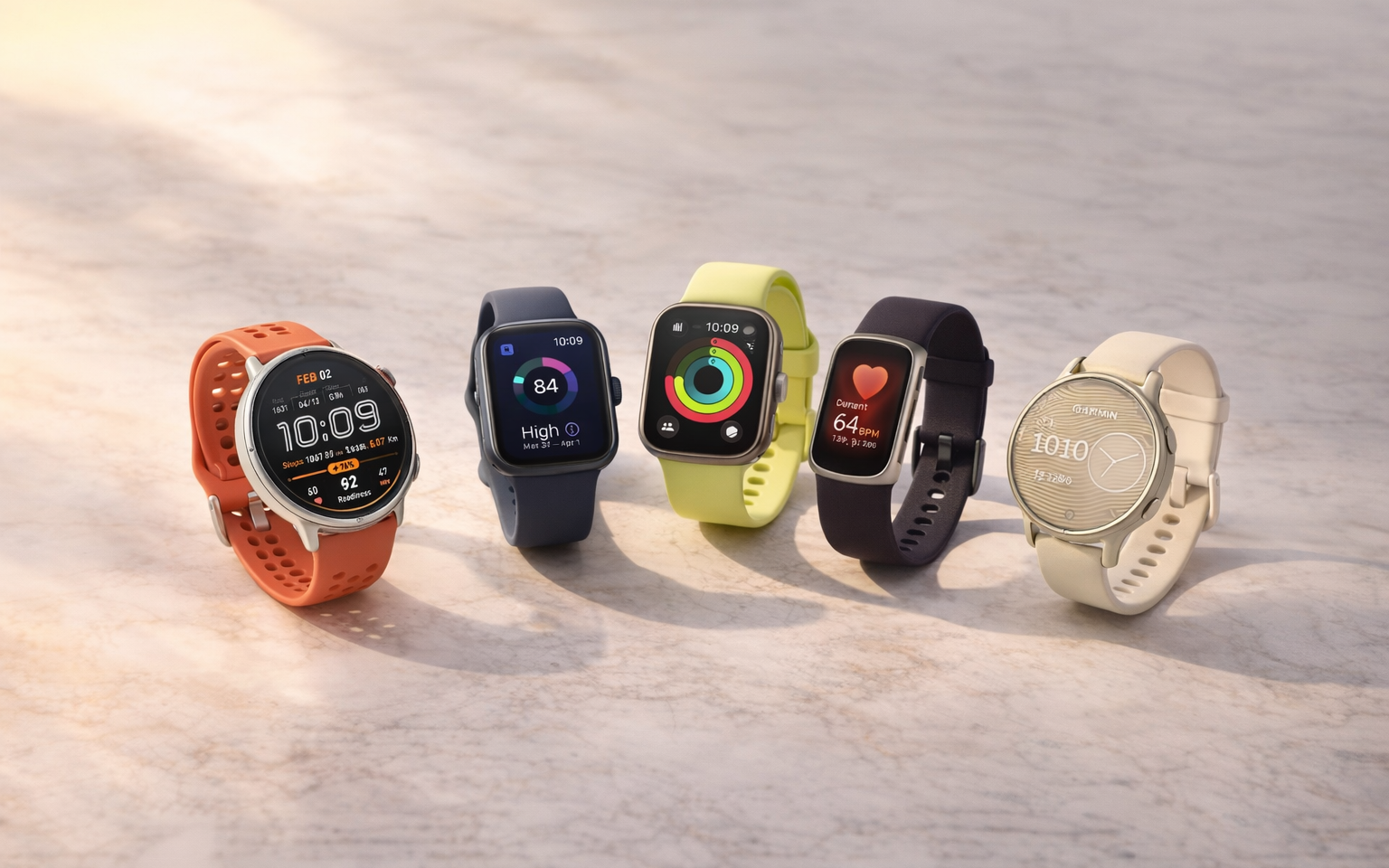
Most smartwatch buying guides are written for a 44mm wrist. They lead with the Apple Watch Ultra or the Samsung Galaxy Watch 7 – watches that look proportionate on a broad wrist and comically oversized on anything smaller. If you have ever tried on the default recommendation and felt like you were wearing a hockey puck, this guide is for you.
The tradeoffs here are real. Smaller watches mean smaller batteries, smaller screens, and sometimes fewer sensors. Style-forward designs sometimes sacrifice GPS or always-on displays. The best smartwatch for a woman who runs half-marathons is not the same watch that belongs on the wrist of someone who wants a health-monitoring timepiece she can wear to a dinner party. Five watches actually solve the problem – starting with the one we'd buy ourselves.
One watch we considered and rejected deserves mention upfront: the Samsung Galaxy Watch FE. Despite its 40mm size and attractive price, our review concluded it's a poor value – three-year-old internals priced like current hardware, with battery life that struggles to survive a single day. It doesn't belong in this guide, and we explain why in the "What to Avoid" section below.
Best for Style-Conscious Fitness: Garmin Lily 2 Active
$299.99 | 38 x 38mm | 29g | 9-day battery (smartwatch), 9 hours GPS
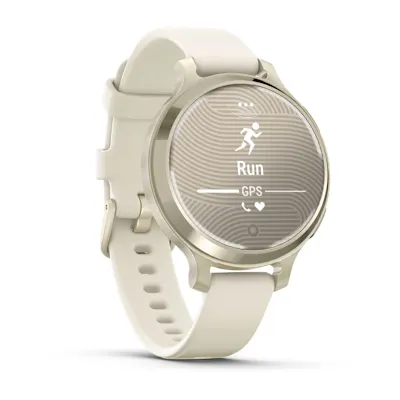
The Garmin Lily 2 Active is the watch the fitness industry should have built five years ago. It looks like jewelry. It trains like a sports watch. And at 38mm with a 29-gram weight, it actually fits on a smaller wrist without cantilevering off the edge.
The headline feature is what Garmin calls a "hidden display" – a patterned lens that, when the screen is off, looks like a decorative watch face rather than a dormant rectangle of glass. Raise your wrist or press a button and the monochrome LCD activates instantly. The result is a watch that reads as fashion-forward in a meeting and transforms into a GPS running watch the moment you step outside.
That "Active" designation in the name is important. The base Lily 2 requires your phone for GPS. The Lily 2 Active has built-in GPS with GLONASS and Galileo support, giving you accurate pace and distance data without carrying your phone on runs – impressive for a watch this small. The 32 activity profiles cover running, cycling, pool swimming, strength training, yoga, pickleball, and more.
Garmin's software ecosystem is the other reason this watch earns the top position. Body Battery – Garmin's proprietary energy metric that combines HRV, sleep quality, stress, and activity data – becomes genuinely useful after a few days of wear. Morning Report delivers a daily readout of sleep quality, recovery, and calendar events. Women's health tracking includes cycle logging and symptom tracking. Garmin Pay handles contactless payments via NFC.
The caveats are honest ones. Nine hours of GPS is adequate for half-marathon training but will have ultrarunners looking elsewhere. The monochrome display has no always-on mode, which means a subtle glance at your wrist won't show you the time without a deliberate raise or tap. There's no onboard music storage, so Spotify stays on your phone.
Who it's for: Women who want a capable GPS running and fitness watch in a design that transitions from workout to dinner without changing wrists. The sweet spot for style-first athletes who've refused to accept that "serious fitness watch" and "attractive watch" are mutually exclusive.
Best for iPhone Users: Apple Watch SE 3
$249.00 | 40mm or 44mm | 26.3g (40mm) | 18-hour battery
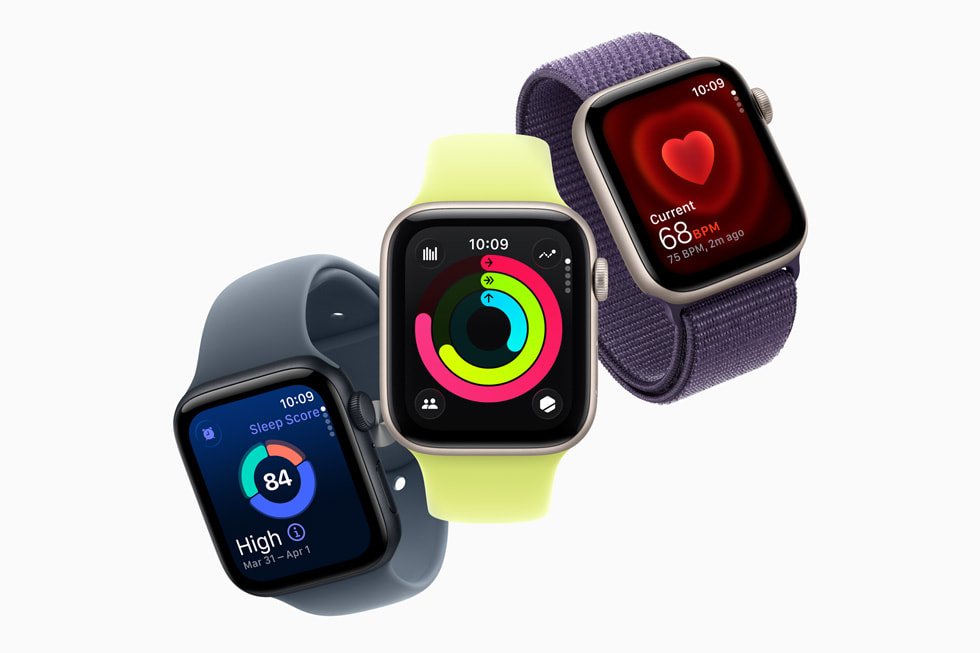
If you own an iPhone, no watch integrates as seamlessly as the Apple Watch SE 3. Notifications route perfectly, Siri works reliably, Apple Pay is the standard, and the health ecosystem – shared with iPhone's Health app – pulls data from sleep, cycle tracking, and workouts into a single coherent picture. The 40mm case weighs just 26.3 grams and sits proportionally on smaller wrists without the visual heft of the 44mm option.
The most important upgrade from its predecessor is the always-on Retina display. Previous SE models required an awkward wrist flick to check the time. The SE 3 shows your watch face continuously – behavior you expect from any watch that costs $250. Peak brightness hits 1,000 nits, which handles most indoor and outdoor conditions adequately, though it's half the brightness ceiling of the Series 11.
Under the hood, the SE 3 runs the same S10 chip as Apple's $799 Ultra 3. Apps open instantly. Animations don't stutter. Double Tap – squeeze your index finger and thumb to answer calls, pause music, or dismiss notifications – works identically to how it functions on more expensive Apple Watches. Performance is not the compromise here.
The health feature set defines the SE 3's place in the lineup. The temperature sensor enables cycle tracking with retrospective ovulation estimates – meaningful for women monitoring fertility. Sleep apnea detection works on this model. Fall Detection and Crash Detection are present. What's missing: no ECG, no blood oxygen sensor, no passive hypertension alerts. The SE 3 is a capable wellness device; it's not a medical-grade monitor.
Battery life demands daily charging, full stop. Apple rates it at 18 hours. Real-world use with always-on display and a daily workout tracks closer to 16-17 hours before it needs a cable. The fast charging compensates meaningfully – 45 minutes from empty to 80% means a shower-time top-up can save a day. But if charging every evening sounds like a dealbreaker, the Withings ScanWatch 2 or Garmin Lily 2 Active are the alternatives.
Who it's for: iPhone users who want the most integrated watch experience available, are comfortable with daily charging, and don't need ECG or SpO2 monitoring. The right entry point into the Apple Watch ecosystem without paying for sensors you may never use.
Best for Health Monitoring: Withings ScanWatch 2
$349.95 | 38mm or 42mm | 34.6g (38mm) | Up to 30-day battery
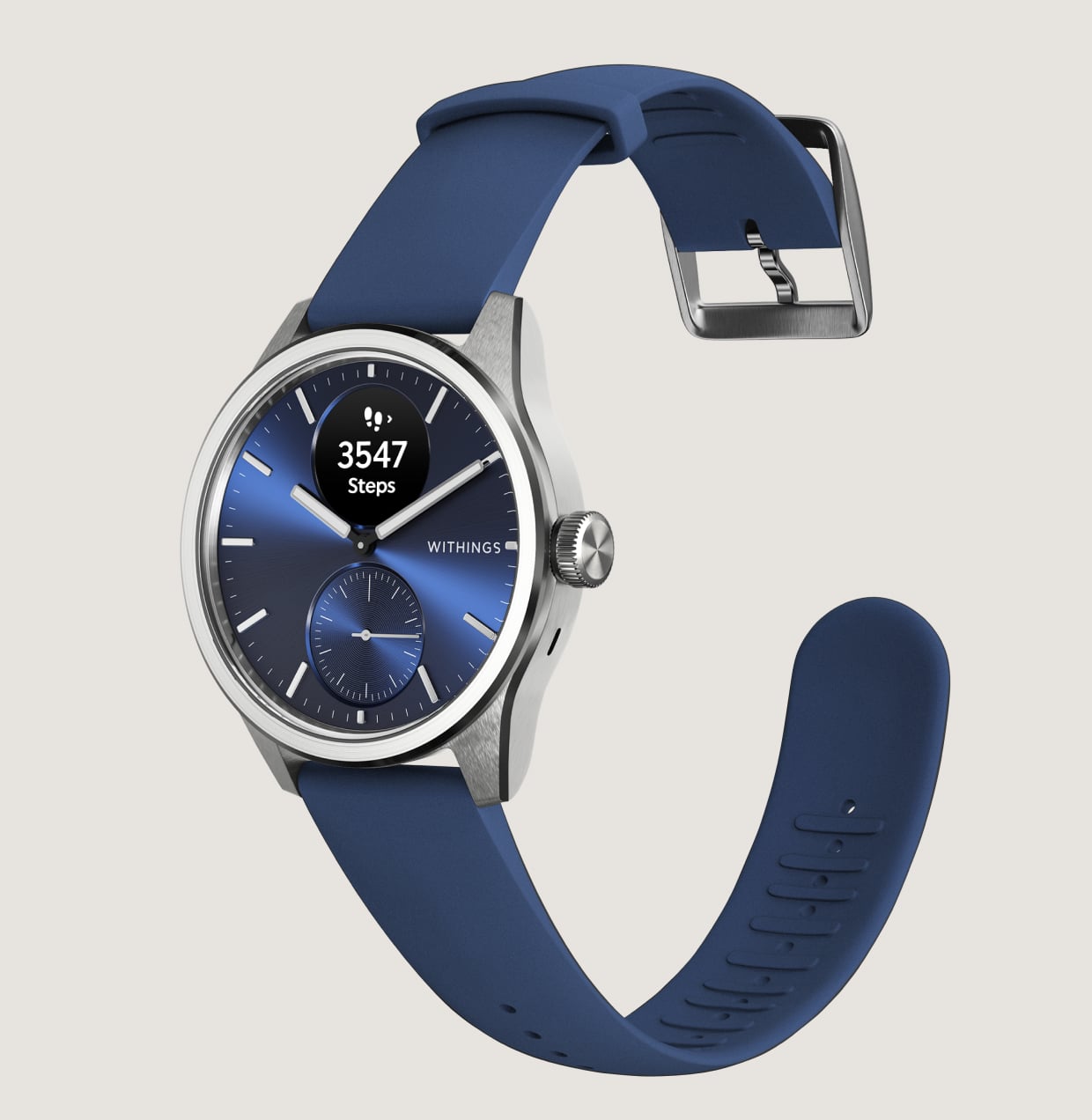
There is a specific type of person who will love the Withings ScanWatch 2 without reservation: someone who wants real health monitoring without looking like they're wearing a health monitor. The ScanWatch 2 is a stainless steel watch with sapphire crystal glass and analog hands that sweep around a traditional dial. The only indication that it tracks anything is a small grayscale OLED display at 12 o'clock, visible only when you need it.
The health credentials are the strongest in this guide. The ScanWatch 2 carries an FDA-cleared ECG for atrial fibrillation detection – press the crown for 30 seconds and it records a readable single-lead electrocardiogram. The TempTech24/7 module monitors continuous body temperature, establishing a baseline and flagging deviations that signal illness or hormonal shifts. SpO2 monitoring during sleep feeds a sleep apnea detection algorithm that flags breathing disturbances. Multi-wavelength PPG heart rate monitoring uses 16 channels for accuracy that holds up in daily activities and moderate workouts. This is a genuinely sophisticated health device wearing a watch's clothes.
The 30-day battery life is transformative in context. Apple Watch users charge every night. Garmin Lily 2 Active users charge every nine days. ScanWatch 2 users charge once a month. That's not a marginal improvement – it fundamentally changes the relationship between you and your watch.
The 38mm case is the right choice for smaller wrists. At 34.6 grams without a strap, it's heavier than the all-aluminum alternatives but lighter than it looks. The 18mm band width on the 38mm model means most aftermarket straps fit – swap the silicone for a metal mesh bracelet and this passes for a dress watch in any setting.
The limitations are structural. GPS is connected-only: you need your phone for distance tracking during outdoor workouts. The display shows one data point at a time – navigating between metrics requires pressing the crown repeatedly. Third-party apps don't exist here. You cannot pay with this watch. For dedicated fitness athletes or anyone who needs full smartwatch functionality, this isn't the right tool. But for health monitoring and all-day wearability in a package that looks like a proper watch, nothing in this guide comes close.
Who it's for: Style-conscious women who prioritize serious health monitoring – particularly heart health – over fitness performance features, want a watch that works in formal settings, and are willing to pay a premium to stop thinking about charging.
Best Budget Pick: Amazfit Active 2
$99.99 | 44mm | 29.5g | Up to 10-day battery
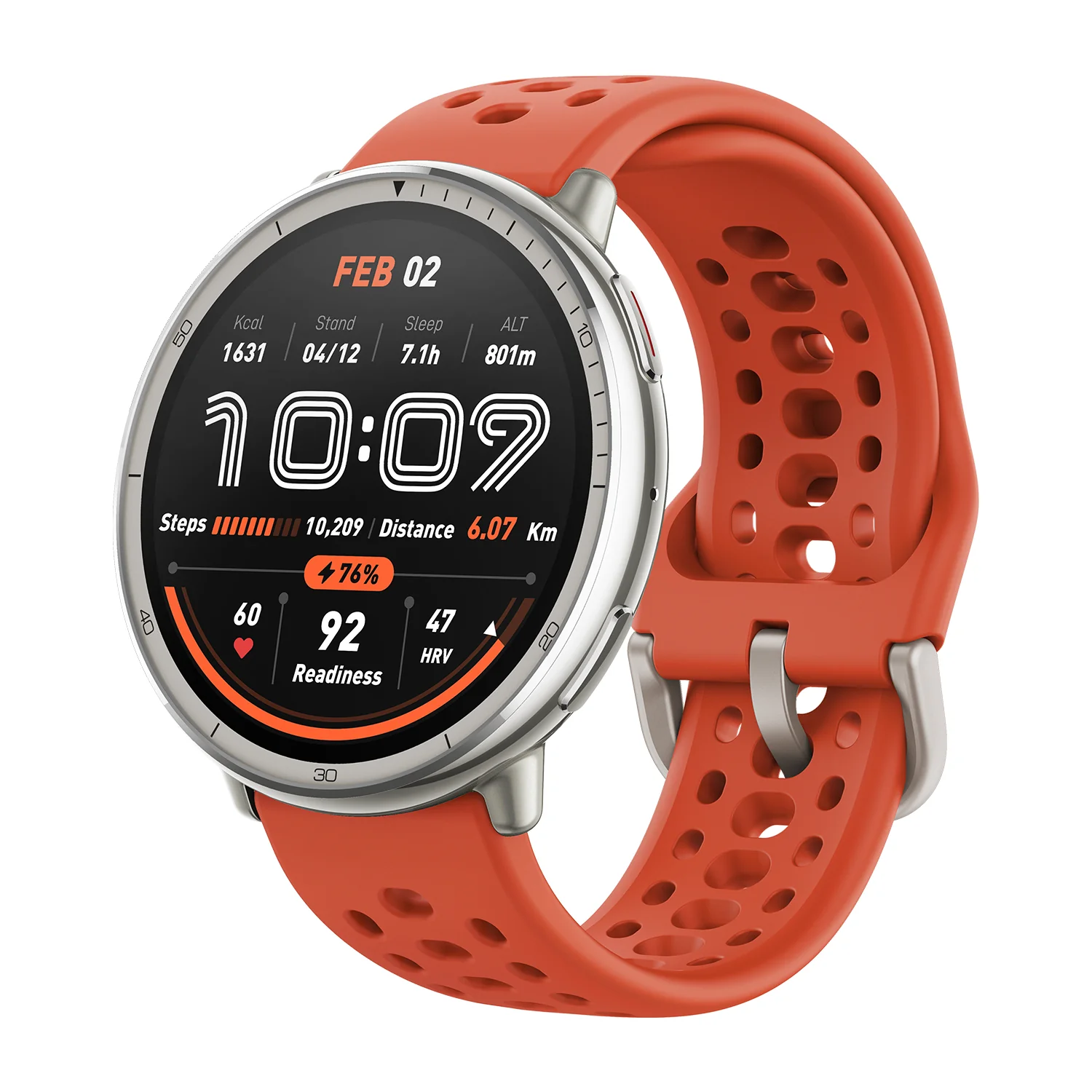
At $99, the Amazfit Active 2 makes everything else in this guide look overpriced. The AMOLED display hits 2,000 nits peak brightness – matching the Samsung Galaxy Watch 7 at one-third the cost. Battery life stretches 8-9 days in real-world use. The stainless steel bezel looks premium at a price point that typically delivers plastic. And it includes offline maps, a feature that costs $450+ on Garmin's dedicated GPS watches.
The trade-offs are real but calibrated honestly. GPS accuracy is inconsistent – fine for training load and general route awareness, not suitable for race-pace analysis. Heart rate tracking holds up during steady-state cardio but loses accuracy during fast intervals and strength circuits. The Zepp OS software is functional rather than elegant. The app ecosystem is thin.
The 44mm case is the meaningful caveat for small-wrist buyers. At 43.9 x 43.9mm, the Active 2 is the largest watch in this guide, and it wears like it. On a genuinely small wrist – 150mm or under – it may feel bulky. The 20mm quick-release pins mean third-party bands are easy and cheap to swap, but the case footprint doesn't shrink. If size is your primary constraint, the Garmin Lily 2 Active at $300 offers better proportions. If budget is the binding constraint, the Active 2 delivers remarkable hardware for $99.
Who it's for: Budget-conscious buyers who want 10-day battery life, a bright AMOLED display, and comprehensive fitness tracking without paying flagship prices or accepting subscription fees. The right choice if you're not yet ready to spend $250+ on a first smartwatch.
Best Fitness Band: Fitbit Charge 6
$159.95 | 36.73 x 23.09 x 11.20mm | 15g (case only) | Up to 7-day battery

The Fitbit Charge 6 is not a smartwatch. It's a fitness band, and it's the best fitness band available in 2026. For anyone who finds even the smallest smartwatch too large, too heavy, or too visually prominent, the Charge 6 offers a compelling alternative: a 15-gram case in a slim band form factor that disappears on the wrist, paired with a health sensor suite that rivals devices costing twice as much.
The sensor package is the story. The Charge 6 carries ECG for AFib detection, EDA sensors for stress monitoring via electrodermal activity scans, SpO2 for overnight blood oxygen, a skin temperature sensor, and a heart rate monitor that borrows algorithms from the Pixel Watch 2 – a meaningful accuracy upgrade over the Charge 5. Sleep tracking is where the Charge 6 earns its place: sleep stage detection, breathing rate monitoring, HRV tracking, and a daily Sleep Score that consistently reflects actual rest quality. For anyone whose primary use case is health monitoring and sleep optimization, this is the most capable device in this guide per dollar spent.
Google's influence shows in the integrations. Google Maps turn-by-turn navigation displays directly on the band during walks and bike rides. Google Wallet handles NFC payments. YouTube Music controls work from the wrist. These additions don't make the Charge 6 a smartwatch, but they expand its utility meaningfully.
The GPS antenna design is the known weakness. Built-in GPS tracking tends to run short on distance – a problem carried forward from the Charge 5 without resolution. For runners who need accuracy, either carry your phone for connected GPS or accept the discrepancy. The 1.04-inch AMOLED display, while sharp indoors, tops out at 450 nits – visibly dimmer in direct sunlight than any smartwatch in this guide.
A Google account is now mandatory for setup, and some of the most valuable health insights sit behind the Fitbit Premium paywall. If you're already in Google's ecosystem, neither is serious friction. If you're not, factor in the account migration and the $10/month subscription when evaluating total cost.
Who it's for: Women who want the smallest, lightest wearable with best-in-class sleep tracking. Also the right choice for anyone who finds smartwatch sizing uncomfortable during sleep, or who'd rather wear something closer to a bracelet than a watch.
How We Chose
Every pick in this guide had to clear four hurdles before earning a recommendation.
Wrist size and proportions. A 46mm watch on a 145mm wrist doesn't just look wrong – it's uncomfortable, slides during workouts, and catches on everything. We prioritized watches at 40mm or under in case diameter, with meaningful attention to weight. The heaviest case in this guide, the Withings ScanWatch 2 at 34.6g, earns its weight through stainless steel construction that justifies the trade-off. The lightest, the Fitbit Charge 6 at 15g, barely registers.
Design that works beyond the gym. The best fitness watch you'll actually wear daily is the one that doesn't force you to change before a meeting or dinner. Every pick here passes a basic all-day wearability test. A watch that lives in your gym bag because it looks wrong at the office is no use to anyone.
Health features that match real priorities. Cycle tracking, sleep monitoring, heart rate accuracy, ECG availability, and stress monitoring all factored into each selection. We didn't award credit for sensors that don't work reliably – GPS accuracy, heart rate consistency during high-intensity exercise, and sleep stage precision all received scrutiny.
Honest value assessment. A watch that costs $200 should do $200 worth of work. Where watches fell short of their price point, they didn't make this guide – which is why one well-known option at $200 appears in "What to Avoid" instead.
Who Should Buy What
You run at least twice a week and care about looking good doing it: Garmin Lily 2 Active. It's the only watch in this guide with built-in GPS, a serious fitness platform, and an aesthetic that doesn't announce "sports watch" to everyone in the room.
You're on iPhone and want the most seamless experience available: Apple Watch SE 3. Nothing integrates better with iOS, and the 40mm size works on smaller wrists without being the smallest watch in the lineup. Plan to charge every night.
You have concerns about heart health or sleep quality, and want a watch you'd wear to a formal event: Withings ScanWatch 2. The FDA-cleared ECG and 30-day battery make it uniquely valuable for health-conscious wearers who don't want to look like they're wearing a health device.
You want a capable smartwatch but can't justify $300+: Amazfit Active 2. At $99 with a 10-day battery and 2,000-nit AMOLED display, it overdelivers at its price point. The 44mm case is the largest in this guide, so handle one before buying if your wrists are on the smaller side.
You want the smallest, lightest option with best-in-class sleep tracking: Fitbit Charge 6. The 15-gram case barely registers on the wrist, and no band-form-factor tracker tracks sleep better.
You have a very small wrist (under 150mm) and style is paramount: Garmin Lily 2 Active, specifically. Its 38 x 38mm square case and 29-gram weight are proportioned for the wrists that most round-watch designs ignore entirely.
What to Avoid
Samsung Galaxy Watch FE ($199.99). The 40mm case size and circular design make it look like it belongs in a women's smartwatch guide – and that's the problem. It's a repackaged Galaxy Watch 4 from 2021, running on an Exynos W920 processor that produces visible stuttering in day-to-day navigation. The 247mAh battery delivers roughly 22-24 hours of real-world use, which means it regularly dies before your second day ends. Our review scored it 56/100 and concluded the watch "should stay on the shelf." At $200, the Galaxy Watch 6 regularly sells for $150-180 and is a substantially better device – or any of the five picks in this guide is a smarter use of that money.
Any smartwatch over 44mm if your wrists are smaller. The current trend toward larger case diameters – 45mm, 46mm, even 49mm for the Apple Watch Ultra – produces watches that are genuinely uncomfortable on wrists under 160mm. Physical specs matter here more than marketing. Check the case dimensions before buying, not just the headline size number.
Fitness bands that lock their best features behind a subscription paywall. Some trackers reserve the most useful health insights – detailed sleep coaching, advanced readiness scores, personalized training recommendations – behind monthly fees. If the features you actually want require a subscription, add that cost to the hardware price when comparing against the options above. A $99 tracker with a mandatory $10/month subscription costs $219 over its first year.