
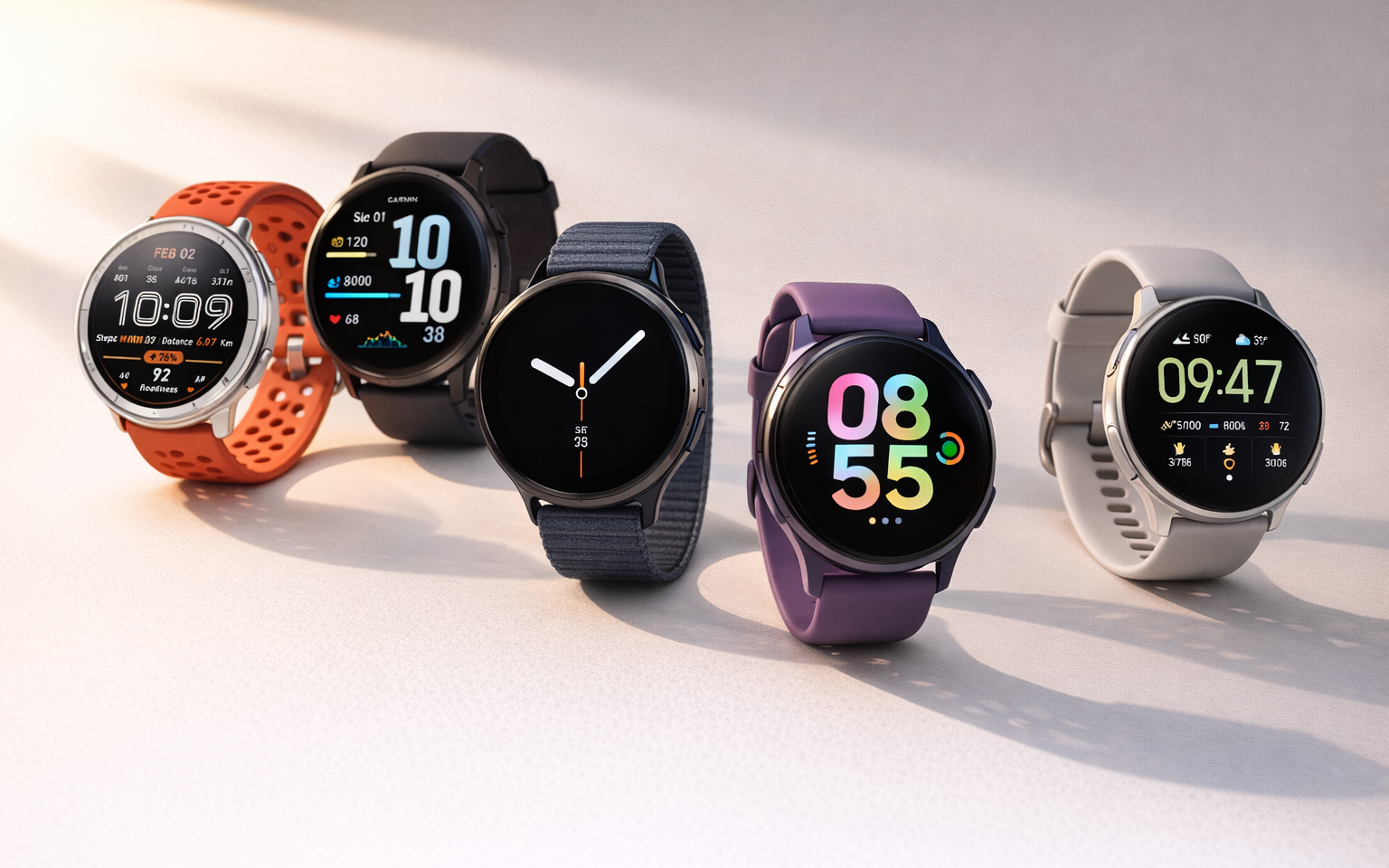
The smartwatch market has shifted beneath our feet. A $100 watch now does roughly 80% of what a $400 flagship can – and the gap is shrinking fast. Apple finally fixed its most persistent weakness (battery life, at long last). Google built a watch you can actually repair. And Amazfit delivered a budget option so capable it forces you to ask what, exactly, you're paying $300 more for.
Our top pick for most people is the Apple Watch Series 11 if you own an iPhone, and the Google Pixel Watch 4 if you're on Android. But the right choice depends on three things: the phone in your pocket, how seriously you take fitness, and how much you're willing to spend.
Two fundamental tradeoffs define every purchase in this category. The first is battery life versus features: the more a smartwatch does, the faster it dies. Garmin stretches to 12 days; Apple and Samsung still demand a nightly charge. The second is ecosystem lock-in. Apple Watch only works with iPhone. Pixel Watch only works with Android. Samsung works best with Galaxy phones but pairs with any Android device. Garmin and Amazfit play nice with everyone. Choose your watch with your phone in mind, or you'll regret it within a week.
Below are our five picks for 2026 – from the best overall to the best value – each built for a different buyer.

Best for iPhone Users: Apple Watch Series 11
Price: $399 (aluminum) / $699–$799 (titanium cellular)
Apple finally fixed the one thing that kept the Apple Watch from being a no-compromise recommendation: battery life. The Series 11 delivers genuine all-day-and-night battery – 24+ hours of real use, not the optimistic marketing math Apple has leaned on in the past. That single improvement transforms how the watch fits into daily life. Sleep tracking, which was always technically possible but practically absurd when you needed to charge overnight, is now a real feature rather than a theoretical one.
The health sensor suite is the strongest in Apple's lineup. FDA-cleared hypertension alerts represent a meaningful step forward in preventive health monitoring – not just data collection, but actionable warnings. The 2000-nit AMOLED display handles direct sunlight without issue, and at 30.3 grams for the 42mm aluminum model, it remains one of the lightest full-featured smartwatches available.
5G RedCap connectivity replaces the older LTE radio in cellular models, offering better coverage and lower power consumption. The Ion-X glass is twice as scratch-resistant as the previous generation, which addresses another long-standing complaint. And the broader Apple ecosystem integration – unlocking your Mac, finding your AirPods, Apple Pay on your wrist – remains unmatched by any competitor.
The honest caveat: the S10 chip is identical to last year's Series 10. There is no processing upgrade here. If you own a Series 10, the battery improvement alone may not justify the cost. This is also, as always, an iPhone-only device. No amount of hardware excellence changes that limitation. If you carry an Android phone, stop reading this section and move on.
Who should skip: Series 10 owners who are satisfied with their current battery life, and anyone without an iPhone.
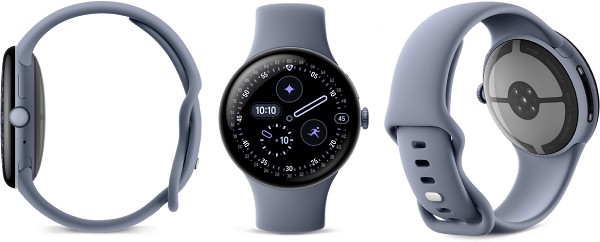
Best for Android Users: Google Pixel Watch 4
Price: $349 (41mm WiFi) / $399 (45mm WiFi) / LTE from $449
The Pixel Watch line spent its first two generations playing catch-up. The Pixel Watch 4 is the first model that genuinely leads. One deal-breaker to know upfront: that gorgeous domed display scratches easily – Gorilla Glass 5 is good, but the curved profile catches edges and surfaces that a flat display would shrug off. A screen protector is practically mandatory. If that's a non-starter for you, skip ahead.
For everyone still here: the headline feature for safety-conscious buyers is Satellite SOS on LTE models – emergency communication when you're beyond cell range. The standout for daily use is Gemini AI with "Raise to Talk", which turns the watch into a surprisingly capable voice assistant that understands context and handles multi-step requests.
The display is a beast. At 3,000 nits – compared to the Apple Watch Series 11's 2,000 nits – it ties the Galaxy Watch 8 for the brightest smartwatch screen available. Battery life hits 40 hours on the 45mm model, which comfortably clears two full days for most users – a significant advantage over both Apple and Samsung.
What truly sets the Pixel Watch 4 apart, though, is that it's the most repairable smartwatch ever made. Google partnered with iFixit to offer official replacement parts and guides, earning a 9/10 repairability score – unheard of in a category where sealed cases and glued-in batteries are the norm. In a market defined by planned obsolescence, this is genuinely groundbreaking. It signals a watch built to last more than two upgrade cycles.
The other caveat worth noting: several of the best features, including advanced health insights and detailed sleep analysis, require an active Fitbit Premium subscription. The base experience is still good, but the premium experience has a recurring cost that Google doesn't always make obvious upfront.
Who should skip: Anyone who resents subscription fees for health features they expected to be included, and iPhone users (it won't work with iOS at all).
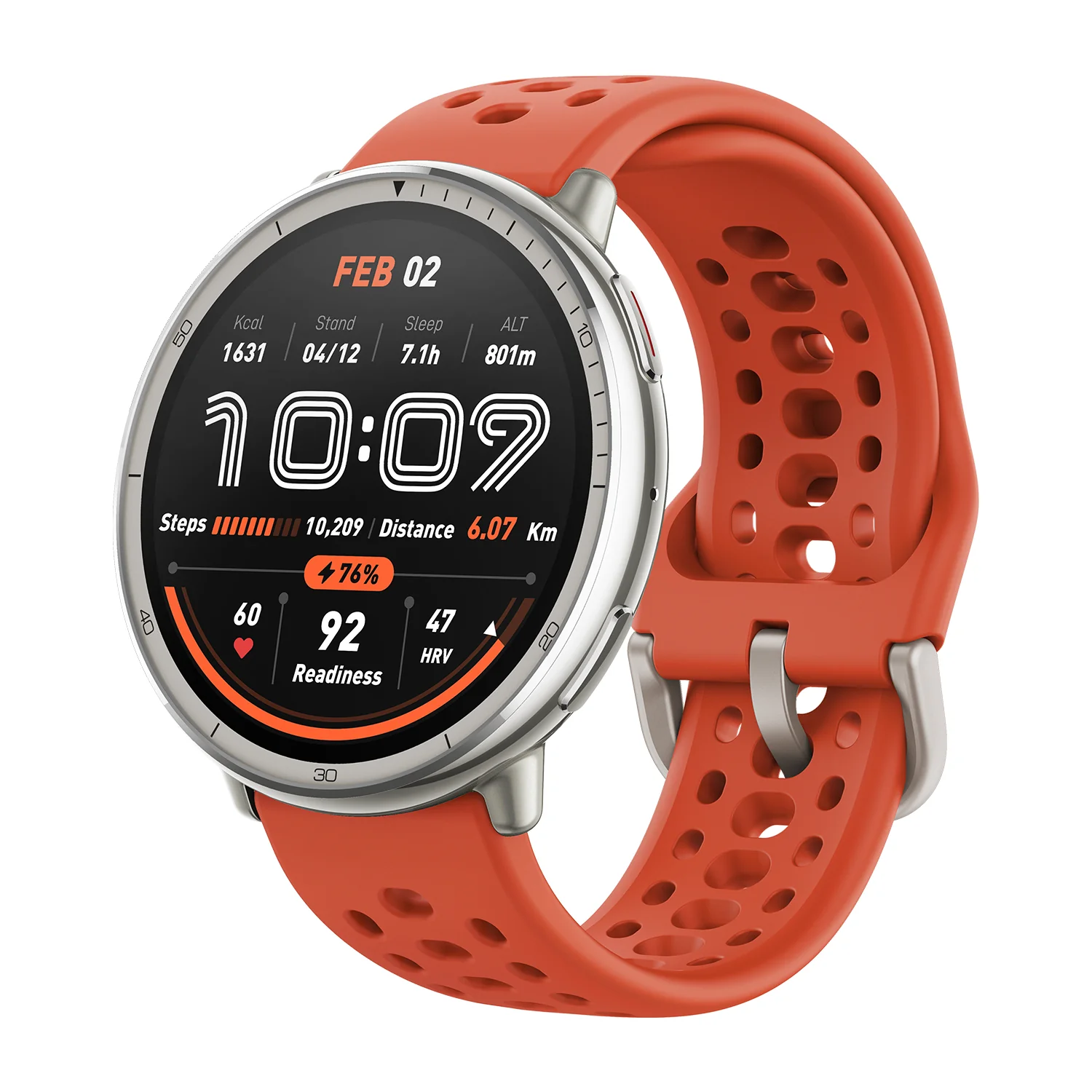
Best Budget: Amazfit Active 2
Price: $99.99
The Amazfit Active 2 proves the smartwatch market has been overcharging us for years. At $100, it delivers a 2000-nit AMOLED display, offline maps with turn-by-turn navigation, Bluetooth calling, and a stainless steel bezel – features that cost three to four times as much from Apple, Google, or Samsung. Battery life stretches to up to 10 days, which means weekly charging instead of nightly. It weighs just 29.5 grams, supports standard 20mm watch bands (no proprietary nonsense), offers 5ATM water resistance, and covers 160+ sport modes without requiring any subscription.
For the vast majority of people who want notifications on their wrist, basic fitness tracking, and a watch that doesn't die before dinner, the Active 2 is more than enough. It works with both iPhone and Android, which makes it the most platform-flexible option on this list. The no-subscription model means every feature is available from day one, with no recurring costs lurking behind a paywall.
The tradeoffs are where the $300 price gap becomes visible. GPS accuracy can drift noticeably on runs – fine for casual joggers who want a rough distance estimate, but unreliable for runners training to specific paces. Heart rate readings tend to read high during intense intervals, which undermines the reliability of heart-rate-zone training. The UI is clunky compared to watchOS or Wear OS – navigation feels a generation behind, and third-party app support is minimal.
None of that matters if your primary use case is "tell time, show notifications, track steps, last a week." For that, the Active 2 is not just the best budget option – it's arguably the best value in the entire smartwatch market.
Who should skip: Serious runners or cyclists who depend on GPS accuracy, anyone who wants a deep third-party app ecosystem, and users who prioritize interface polish.
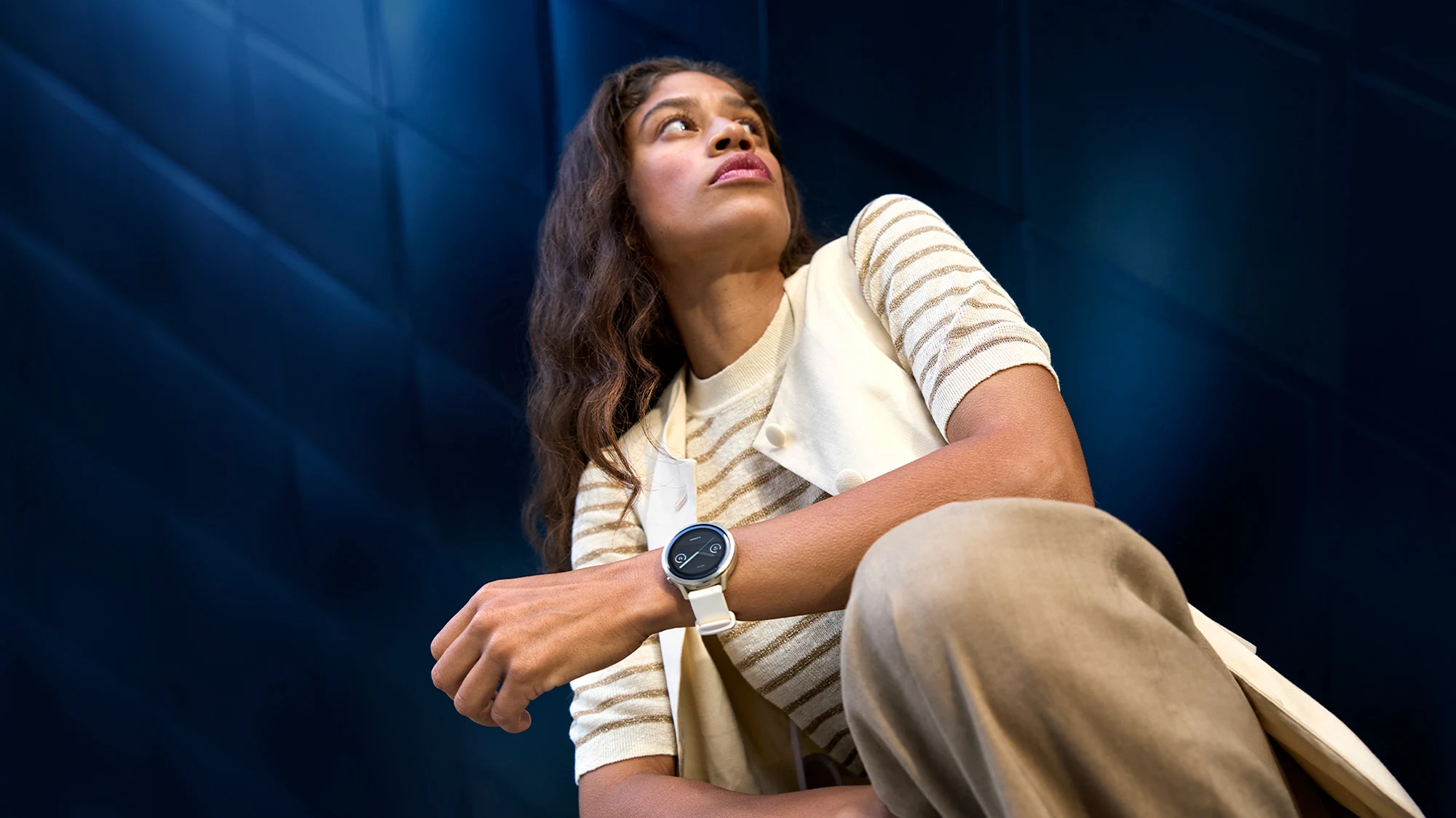
Best for Fitness Enthusiasts: Garmin Venu 4
Price: $549.99
The Garmin Venu 4 is built for people who care more about training metrics than notification management. Its 12-day battery life (around 4 days with always-on display) means you can wear it through an entire training block without thinking about a charger. Dual-band GPS locks onto satellites faster and holds accuracy through urban canyons, dense tree cover, and winding trails where cheaper watches lose their minds. For runners, cyclists, hikers, and triathletes, GPS accuracy isn't a nice-to-have – it's the entire point.
The Elevate Gen 5 heart rate sensor pairs with ECG, SpO2, and skin temperature monitoring to deliver a health-tracking suite that rivals dedicated medical wearables. But the real depth is in Garmin's software stack: Training Readiness, Training Status, and Body Battery work together to tell you not just what you did, but whether you should do more or rest. These aren't gimmicks. They're the product of over a decade of sports science integration, and no competitor matches the granularity of Garmin's recovery and readiness analytics.
Hardware-wise, the Venu 4 is the first Garmin that looks genuinely appropriate outside the gym. The fiber-reinforced polymer case with stainless steel bezel and 1.4-inch AMOLED display at 454x454 resolution give it a premium feel that previous Venu models lacked. A built-in LED flashlight is one of those features you don't think you need until you're walking the dog at 6 AM in January.
The price is the obvious barrier. At $549.99, it's $100 more than the Venu 3 and $150 more than the Apple Watch Series 11. For casual users who walk 30 minutes a day and want to see their steps, this is absurd overkill. The interface, while functional, lacks the polish and fluidity of Apple's or Google's software. Notifications work, but managing them isn't a pleasure. This is a fitness tool first and a smartwatch second – and the price reflects that priority.
Who should skip: Casual users who don't train with structure, anyone who prioritizes app ecosystem and notification management over fitness depth, and budget-conscious buyers.
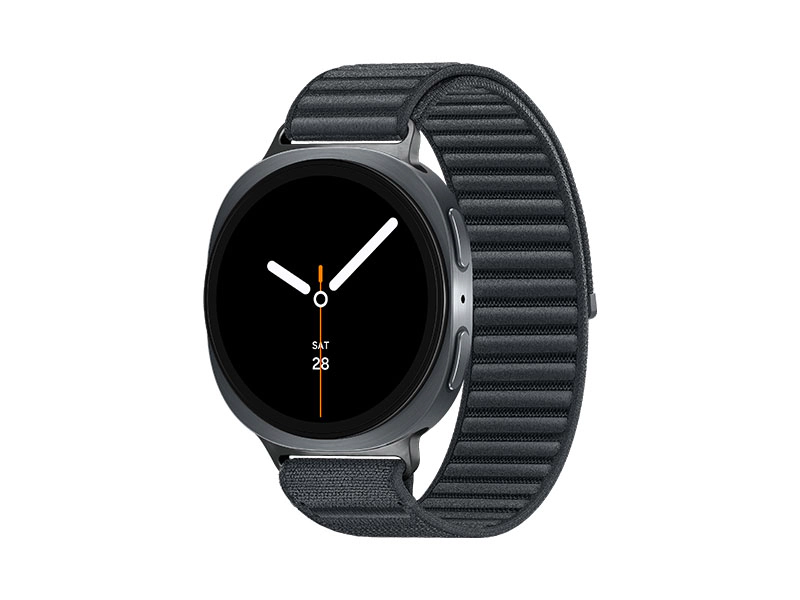
Best for Samsung Galaxy Owners: Samsung Galaxy Watch 8
Price: $349 (40mm) / $379 (44mm)
The Galaxy Watch 8 is the most technically impressive Wear OS watch available – but two things to know before you invest: battery life still demands nightly charging, and Samsung's new Dynamic Lug band system breaks backward compatibility with every Galaxy Watch band you already own. If you've built a band collection, that's a bitter pill.
With that said, the hardware is genuinely excellent. Its 3,000-nit Super AMOLED display ties the Pixel Watch 4 for the brightest in the category. The 3nm Exynos W1000 processor – carried over from the Watch 7, but still the fastest chip in any Wear OS watch – makes every interaction feel instantaneous. App launches, transitions, and voice commands all respond without the micro-delays that plagued earlier Galaxy Watches. At 8.6mm thick (11% thinner than the Watch 7), it sits flatter on the wrist and slides under shirt cuffs more easily.
Samsung's BioActive sensor remains the most comprehensive single-sensor health package in any smartwatch, covering ECG, SpO2, blood pressure monitoring, and body composition analysis. The Running Coach AI provides real-time form feedback and pacing guidance that adapts to your fitness level – a feature that bridges the gap between Samsung's smartwatch approach and Garmin's fitness-first philosophy. Native Gemini AI integration handles voice queries and on-device tasks capably, though it lacks the Pixel Watch 4's hands-free "Raise to Talk" activation.
The $50 price increase over the Watch 7 is also difficult to justify when the improvements, while real, are incremental.
The Galaxy Watch 8 is the right choice if you own a Samsung Galaxy phone and want the tightest possible integration – Samsung Health sync, phone camera control, Samsung Pay with MST, and seamless Galaxy Buds switching. It's a good upgrade if you're coming from a Watch 4 or Watch 5. But if you already own a Watch 6 or Watch 7, the improvements are marginal enough that waiting another generation makes more financial sense.
Who should skip: Watch 6 or Watch 7 owners, anyone frustrated by nightly charging, and buyers who've invested heavily in older Galaxy Watch bands.
How We Chose
Our picks are based on five weighted criteria:
- Battery life and charging behavior. How long does the watch last on a charge, and how disruptive is the charging routine? A watch that dies at 8 PM is a watch that fails at its job.
- Health and fitness tracking accuracy. Heart rate, GPS, sleep staging, SpO2 – not just whether features exist, but whether independent benchmarks and real-world reports confirm the data is reliable.
- Display quality and outdoor visibility. Peak brightness, resolution, and readability in direct sunlight. A beautiful display that washes out outdoors is a liability.
- Build quality and daily wearability. Weight, thickness, water resistance, scratch resistance, and comfort during extended wear including sleep.
- Value relative to competition. What you get for the price compared to alternatives at the same tier and the tier above. A $100 watch that matches a $350 watch on core features scores higher than a $550 watch with marginal improvements over a $400 competitor.
Ecosystem compatibility also weighed heavily in every decision. The best smartwatch is the one that works seamlessly with the phone you already own.
Who Should Buy What
You own an iPhone and want the best smartwatch experience: Apple Watch Series 11. Nothing else works with iOS, and this year's model finally eliminates the battery complaint that held back every previous generation.
You own an Android phone (non-Samsung) and want a premium smartwatch: Google Pixel Watch 4. The 40-hour battery, satellite SOS, and repairability make it the most well-rounded Android option.
You own a Samsung Galaxy phone: Samsung Galaxy Watch 8 if you want the deepest integration with Samsung's ecosystem. Pixel Watch 4 if you value battery life over Samsung-specific features.
You want a fitness-first watch and train with structure: Garmin Venu 4. No other watch on this list matches its training analytics, GPS accuracy, or multi-day battery life. Works with both iPhone and Android.
You want a capable smartwatch and don't want to spend more than $100: Amazfit Active 2. It handles the core smartwatch jobs – notifications, basic fitness tracking, long battery life – at a quarter of the flagship price. Works with both platforms.
You're buying a gift and don't know what phone they use: Amazfit Active 2 or Garmin Venu 4. Both are platform-agnostic and don't require ecosystem buy-in.
What to Avoid
Watches from brands with no verifiable track record or support infrastructure. If you can't find independent reviews, published specifications, or a working customer support channel, treat that as a disqualifier – not necessarily because the hardware is bad, but because you'll have no recourse when something breaks. This includes the flood of unbranded or white-label watches on Amazon that appear under a new name every few months.
Previous-generation watches at near-current prices. The Galaxy Watch 7 at $299 when the Watch 8 is $349 is not the deal it appears to be. You're saving $50 for a watch that's already a generation behind on processor, display, and software support. The same applies to the Apple Watch Series 10 – if the discount isn't at least 30%, buy current.
Smartwatches that require subscriptions for basic health features without clear disclosure. Some watches advertise health tracking capabilities on the box but lock detailed insights, trends, and actionable recommendations behind a monthly subscription. Know what's included before you buy, not after. If a brand makes it hard to find subscription requirements before purchase, assume the worst.