
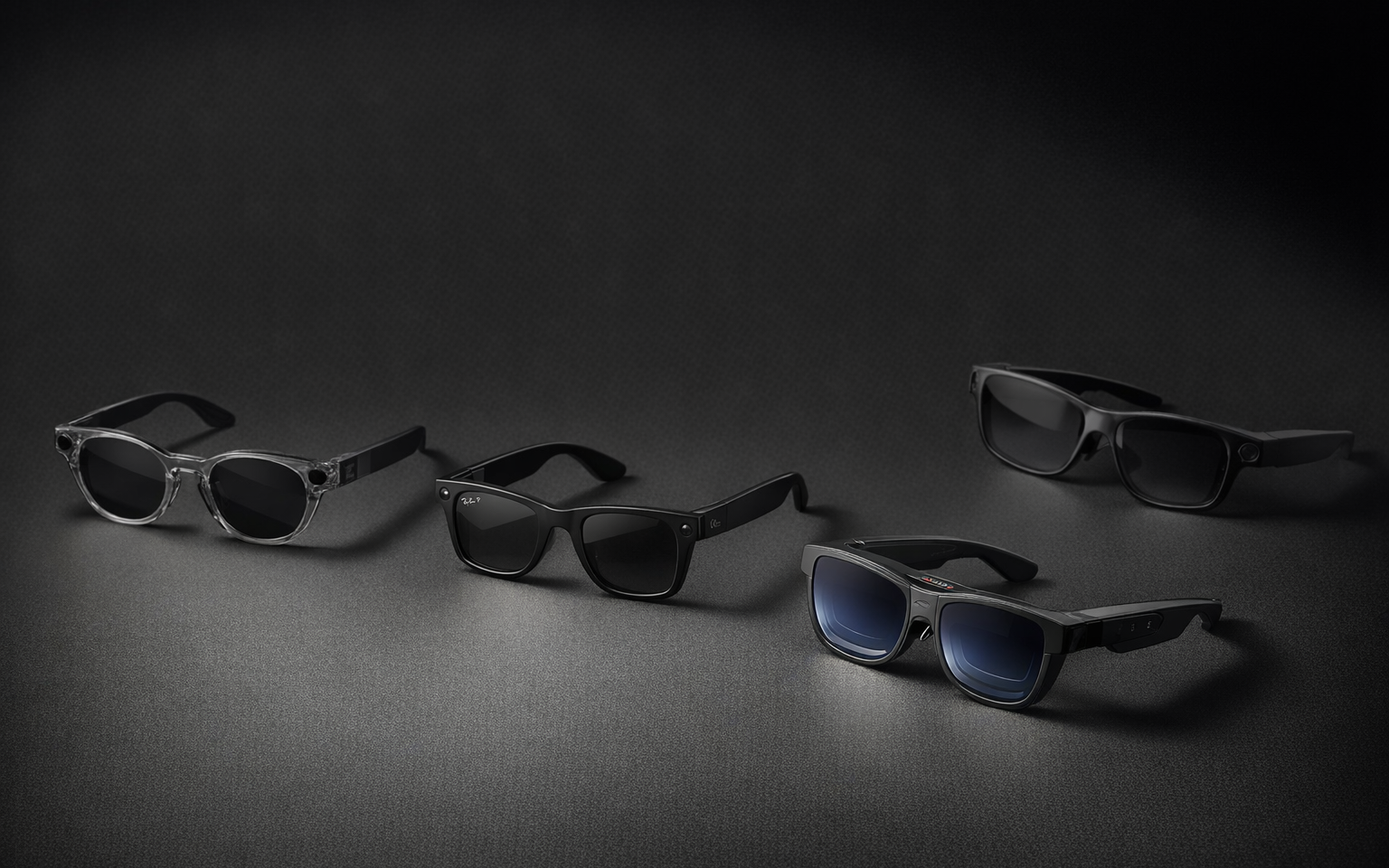
Smart glasses have finally grown up. What started as a niche curiosity dominated by clunky prototypes and privacy panic has matured into a legitimate product category with real variety – and real utility. In 2026, there are three distinct types of smart glasses worth your attention, each built around a fundamentally different idea of what "smart" means on your face.
AI camera glasses like the Ray-Ban Meta Gen 2 and Oakley Meta HSTN put a discreet camera and voice-activated AI assistant into frames that look like ordinary sunglasses. They don't have a display. Instead, they capture photos and video, answer questions, and pipe audio through open-ear speakers – all without pulling your phone out of your pocket. AR display glasses like the XREAL One Pro and Viture Luma Pro strap a massive virtual screen to your face, turning any seat on any train into a private cinema or portable gaming monitor. And minimalist HUD glasses like the Even Realities G1 take the opposite approach: a tiny, monochrome notification strip baked into what looks like a regular pair of titanium-frame eyeglasses.
The tradeoffs across these categories are real. Camera glasses sacrifice screen real estate for all-day wearability and social acceptability. AR display glasses deliver jaw-dropping visuals but require a wired connection to a phone, laptop, or handheld console. HUD glasses look the most normal but do the least. No single pair does everything well, which is exactly why this guide exists. We compared more than a dozen smart glasses across all three categories – evaluating display quality, camera intelligence, comfort, battery life, ecosystem compatibility, and value – to find the best option for every type of buyer.
Ray-Ban Meta Gen 2 – Best Overall
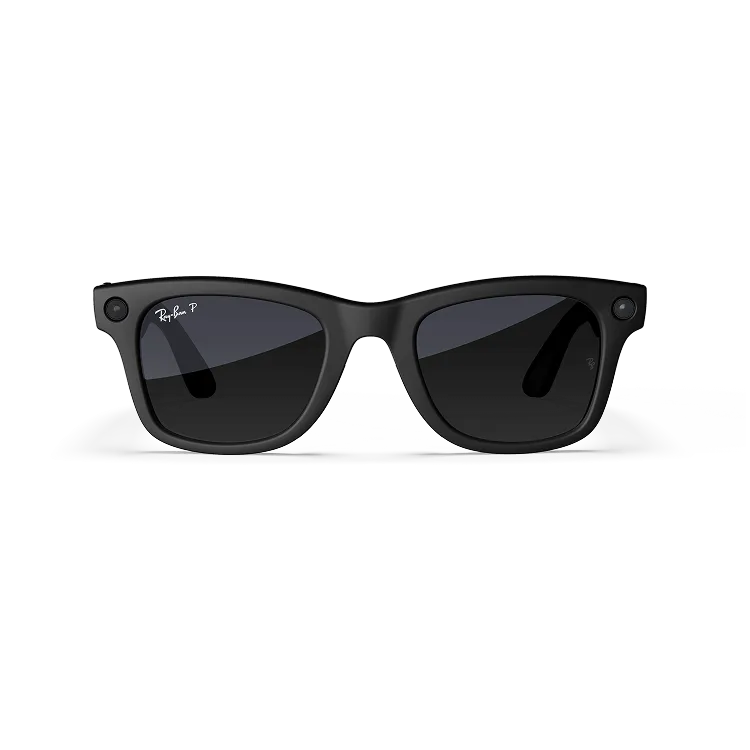
The Ray-Ban Meta Gen 2 is the smart glasses equivalent of a Swiss Army knife: it does a remarkable number of things well enough that most people will never need anything else. Starting at $379, these are the easiest recommendation in the category because they nail the one thing every other smart glasses maker struggles with – they look and feel like a normal pair of Ray-Bans.
The second-generation model brings a meaningful camera upgrade to 12 megapixels with 3K Ultra HD video at 30fps and 1200p at 60fps. The footage is genuinely usable for social media and casual documentation, not the grainy novelty clips that earlier smart glasses produced. Battery life stretches to around eight hours of mixed use, which is enough to get through a full day without babysitting the charging case. And Meta's AI assistant, powered by Llama 4, is surprisingly competent at answering questions about what the camera sees – point at a restaurant menu in another language and ask for a translation, or hold up a plant and ask what species it is.
The frames come in multiple classic Ray-Ban silhouettes – including Wayfarer, Skyler, and Headliner – with over 150 frame and lens combinations including prescription, Transitions, and polarized options. That level of customization matters because it means these can be your actual everyday glasses, not a gadget you grab off the nightstand for special occasions. The main caveat is the absence of any display: there's no screen, no HUD, no visual feedback whatsoever. Everything happens through audio and your phone's companion app. For most people, that's a perfectly fine tradeoff. For those who want a screen, keep reading.
XREAL One Pro – Best for AR/XR Entertainment
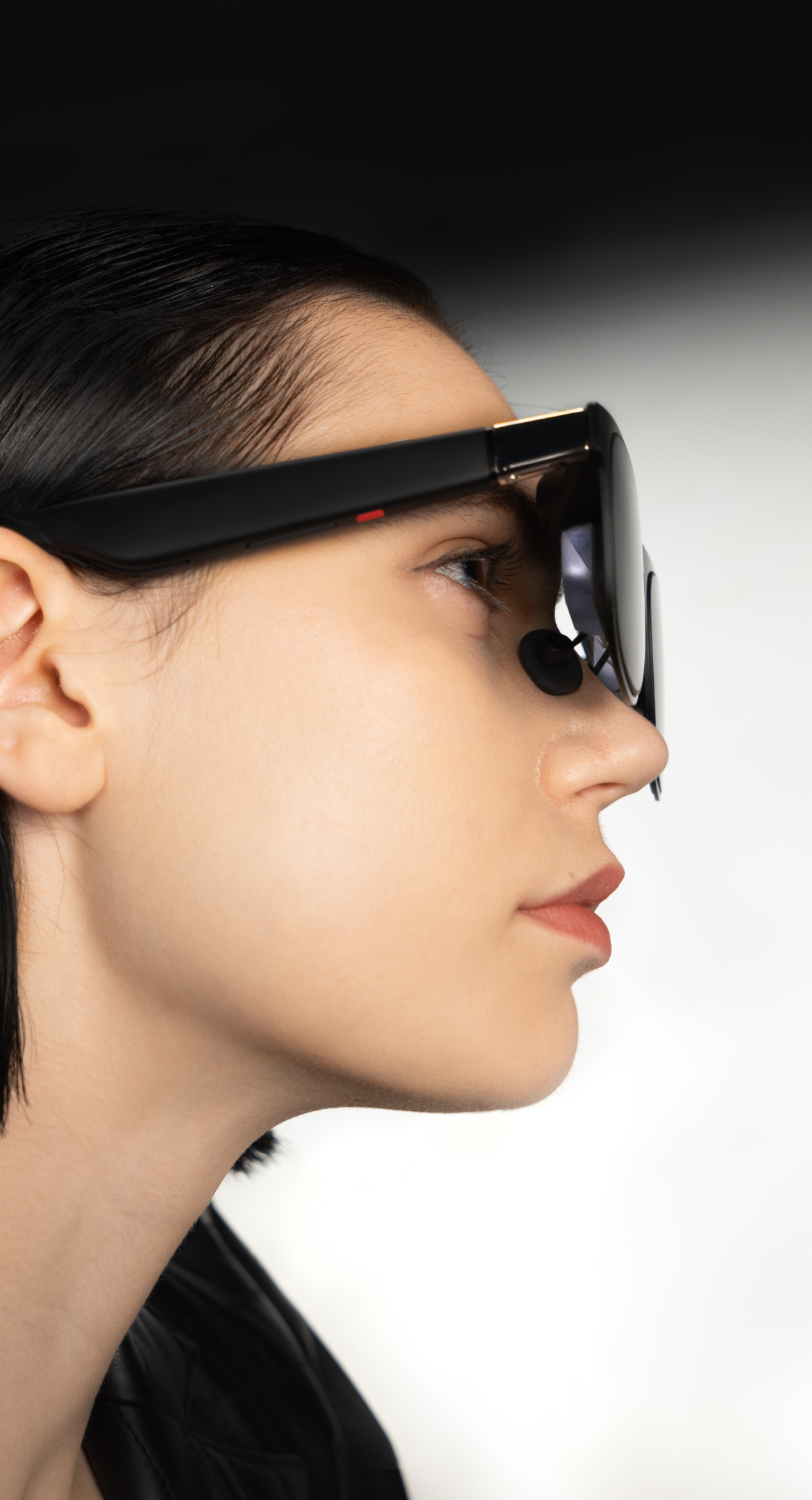
If your primary goal is strapping a giant virtual screen to your face for movies, gaming, or productivity, the XREAL One Pro is the best way to do it. At $649, it delivers the sharpest, most stable AR display in any consumer glasses available today.
The dual Sony 0.55-inch micro-OLED panels run at 1080p per eye with a 120Hz refresh rate and 700 nits of perceived brightness, creating a 171-inch virtual screen at a simulated four-meter viewing distance. The 57-degree field of view is among the widest in its class. But the real differentiator is XREAL's proprietary X1 spatial computing chip, which delivers native 3DoF head tracking with an extraordinarily low 3ms motion-to-photon latency. The image stays locked in space when you move your head – no wobble, no drift, no nausea-inducing lag. Add the optional XREAL Eye accessory and you get full 6DoF spatial anchoring for a genuinely immersive workspace.
The One Pro works with anything that outputs video over USB-C: iPhones, Android phones, Steam Deck, ROG Ally, MacBooks, and Windows PCs. Audio comes from Bose-tuned open-ear speakers built into the temples, which sound better than they have any right to at this form factor. At 87 grams, the glasses are heavier than standard eyewear and you'll notice the weight during extended sessions, but they're a featherweight compared to any VR headset. The key limitation is the wired tether – these glasses need a physical USB-C connection to a host device, so there's always a cable involved.
RayNeo Air 4 Pro – Best Budget AR Display

The RayNeo Air 4 Pro makes an absurdly compelling case at $299. These are the first AR glasses with HDR10 support, and the visual difference is immediately obvious – colors are richer, contrast is deeper, and the overall image has a dimensionality that SDR glasses simply cannot match.
The 0.6-inch micro-OLED displays deliver a 201-inch virtual screen at 1200 nits of brightness with a 120Hz refresh rate and 3,840Hz PWM hybrid dimming to eliminate flicker. RayNeo's custom Vision 4000 chip handles real-time upscaling from SDR to HDR and can convert 2D video to 3D on the fly. The four-speaker audio system, tuned in collaboration with Bang & Olufsen, is a genuine surprise at this price point – the sound tube design reduces leakage significantly, which means you get decent bass and clear dialogue without blasting everyone sitting next to you.
At 76 grams, the Air 4 Pro sits in the same weight class as its pricier competitors. The tradeoff for that $299 price tag is a narrower field of view compared to the XREAL One Pro and less sophisticated head tracking. If you want the absolute best AR display experience money can buy, the XREAL One Pro justifies its premium. But if you want 85 percent of that experience for half the price – and especially if HDR content matters to you – the RayNeo Air 4 Pro is a steal.
Even Realities G1 – Best Minimalist HUD
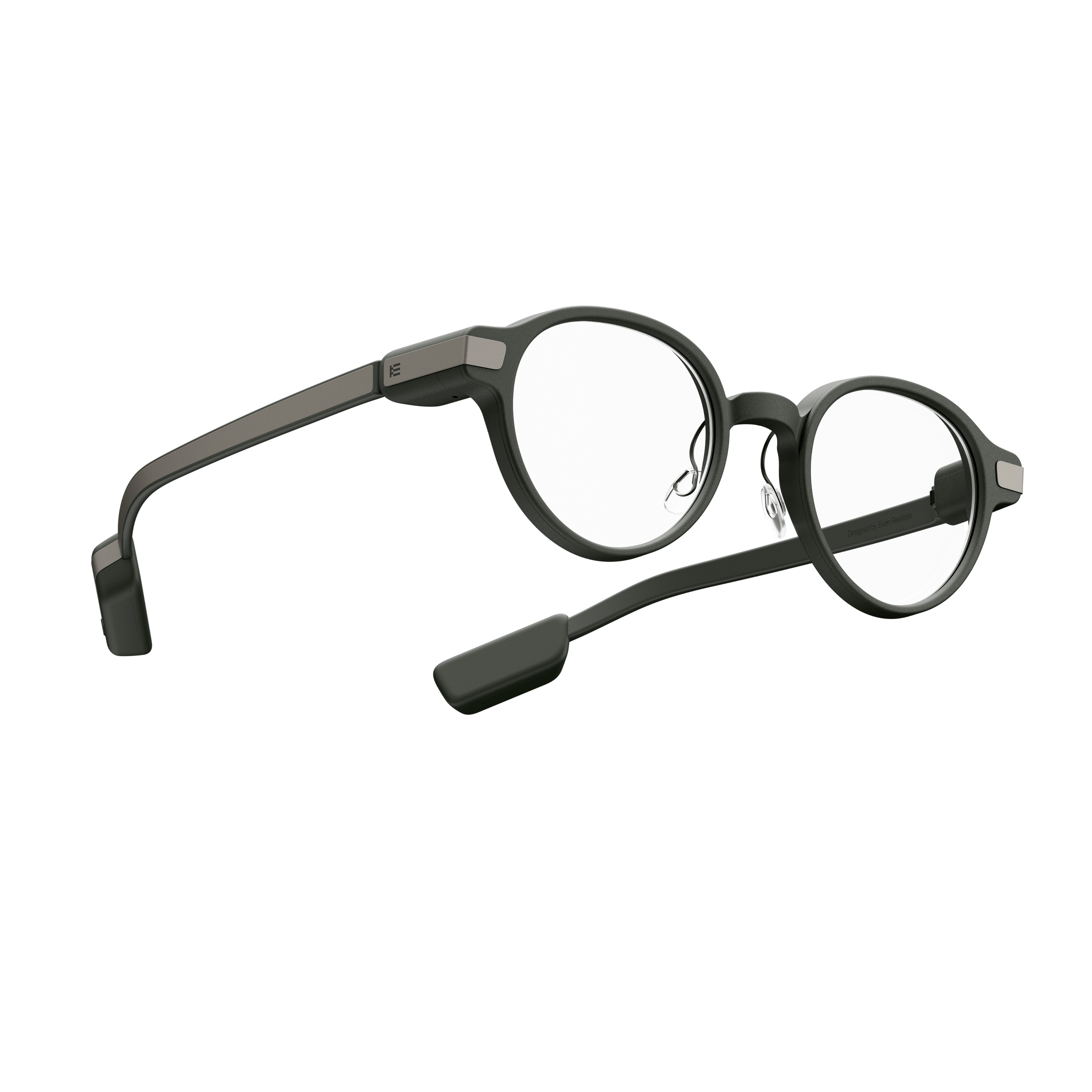
The Even Realities G1 represents a completely different philosophy of smart glasses. Where every other product on this list wants to wow you with cameras or massive virtual screens, the G1 wants to disappear entirely into your daily life – and it succeeds.
Built from magnesium alloy with titanium brackets at just 44 grams, the G1 is the only smart glasses that genuinely pass as normal eyeglasses. Most people will never notice anything unusual about them, which is precisely the point. The display is a tiny rectangular waveguide in each lens showing a 640 x 200 green monochrome readout – think old-school dot matrix, not cinematic. It shows the time, phone notifications, calendar events, stock tickers, and news headlines. Tap the temple tips and you can dictate notes or talk to an AI assistant. The companion app enables turn-by-turn navigation, real-time translation, and a teleprompter mode.
The G1 comes in two frame styles – the panto-shaped G1A and the squared-off G1B – with multiple color options and support for prescription lenses at an additional $150. Clip-on sunglasses are available for $100 more. At $599, the G1 is not cheap, especially considering it has no camera and no built-in speakers – audio comes through paired Bluetooth earbuds or headphones. But the people who want this product know exactly who they are: professionals who need glanceable information without the social awkwardness of bulkier smart glasses, frequent travelers who want navigation without looking at their phone, and anyone who has been waiting for smart glasses that actually look like glasses.
Oakley Meta HSTN – Best for Sports and Active Use
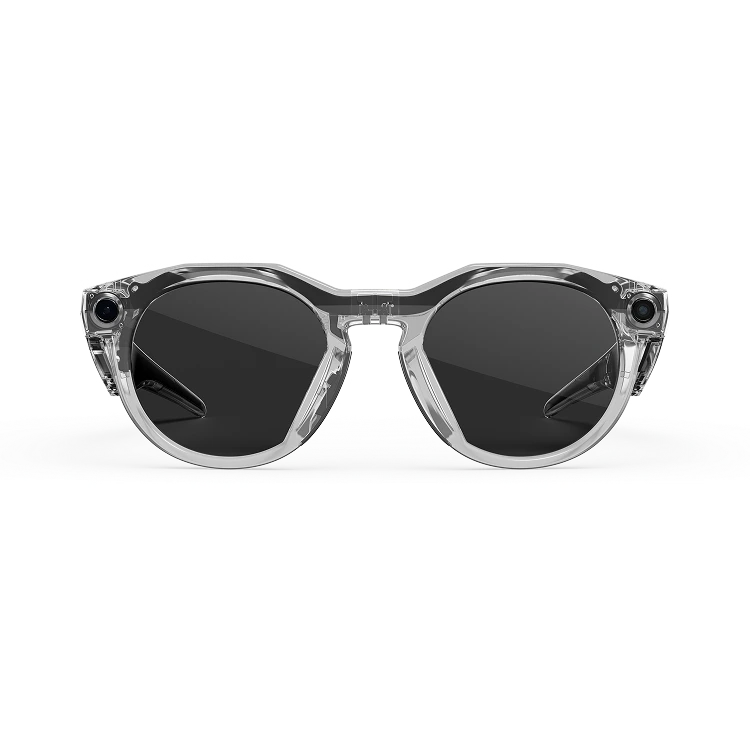
The Oakley Meta HSTN takes the same Meta AI platform found in the Ray-Ban Meta Gen 2 and wraps it in a frame designed for movement. Starting at $399 with limited editions at $499, these are the most capable smart glasses for active lifestyles – running, cycling, hiking, or any activity where you want hands-free capture without worrying about your eyewear.
The HSTN shares the 12MP camera and 3K video recording of its Ray-Ban sibling, but Oakley's contribution goes beyond aesthetics. The IPX4 water resistance rating means sweat and light rain won't kill them. The Prizm lenses – available in both standard and polarized variants – are genuinely best-in-class sports optics that enhance contrast and color in specific environments. And battery life reaches approximately eight hours of continuous use, with the charging case providing up to 48 hours of total charge capacity – meaning you can top off on the go multiple times before the case itself needs a plug.
The bold HSTN silhouette looks distinctly sporty, which is a feature or a drawback depending on your wardrobe. You won't wear these to a dinner party, but that's not what they're for. Prescription lenses are available through LensCrafters and SportRx, though the bold HSTN frame won't suit every face or every occasion – you get one silhouette or nothing. But for anyone who wants the Meta AI camera platform in a frame built to survive an actual workout, the HSTN is the clear pick.
Viture Luma Pro – Best Value AR Display
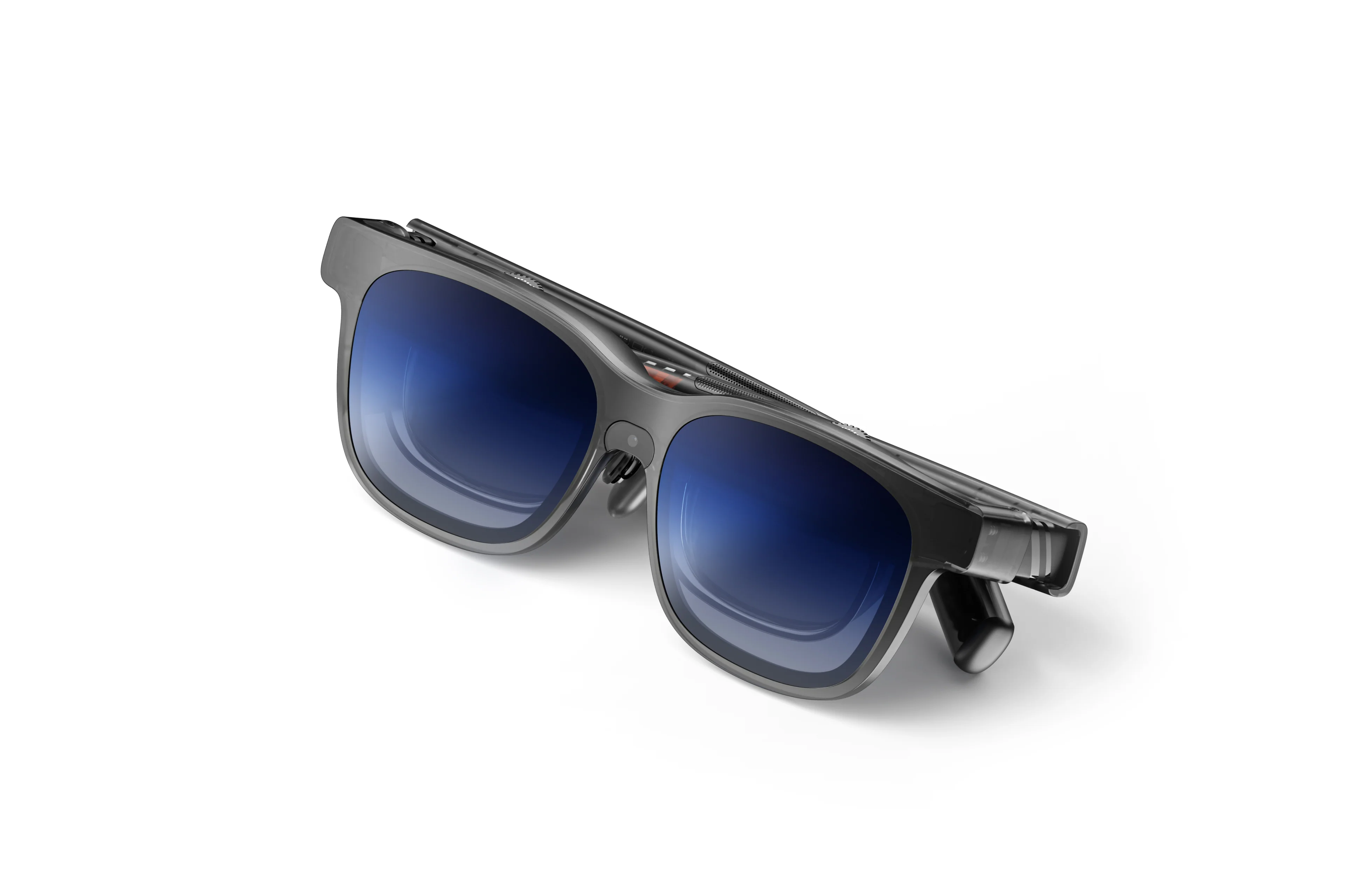
At $499, the Viture Luma Pro slots neatly between the budget RayNeo Air 4 Pro and the premium XREAL One Pro, delivering a 1200p display with a 52-degree field of view that punches well above its price class.
The OLED panels offer 1920 x 1200 resolution per eye at 120Hz with 1000 nits of brightness and a 152-inch virtual screen – sharper than anything in this price range. The slim optical design keeps the profile compact, and the built-in myopia adjustment handles prescriptions up to -4.0 diopters without inserts. An electrochromic film darkens the lenses with a single tap for total immersion, which is a thoughtful touch for use in bright environments. The Harman-tuned audio system delivers surprisingly full sound with respectable bass.
The Luma Pro is also one of the first AR display glasses to offer XR compatibility with the Nintendo Switch 2, via the optional Mobile Dock accessory. For the full console experience, you'll need the optional Mobile Dock ($129) for HDMI connectivity, and power users may want the Neckband ($299), a wearable Android computer that turns the glasses into a standalone device – though that pushes the total investment to $927. As a pure display accessory for a phone, laptop, or handheld, the Luma Pro offers the best balance of image quality, comfort, and price in the AR display category.
Ray-Ban Meta Display – Best for Early Adopters Who Want a Screen

The Ray-Ban Meta Display, priced at $799 including the required Neural Band wrist controller, is the most ambitious smart glasses on the market – and the most polarizing. These are the first Meta glasses with a built-in display that actually shows useful information in your line of sight, bridging the gap between the camera-only Ray-Ban Meta and a full AR headset.
The monocular waveguide display sits in the right lens with a 600 x 600-pixel resolution, a 20-degree field of view, and up to 5,000 nits of brightness – an impressively dense waveguide display. You can read text messages, see caller ID, view Meta AI responses, frame photos before capturing them, and replay videos you've recorded. It also supports live translation overlays and a handful of first-party apps. The 12MP camera shoots 3K video, and the Neural Band – a wrist-worn controller – lets you navigate the interface through subtle hand gestures.
Battery life runs about six hours with light display use but drops significantly during display-intensive tasks like video calling or live translation. The frames are noticeably thicker than standard Ray-Bans, and third-party app support remains limited. Availability outside the US remains limited, so international buyers should check local availability before committing. This is a first-generation display product with first-generation compromises, but for those willing to pay the premium, it offers a genuine glimpse of where all smart glasses are headed.
How We Chose
Every product in this guide was evaluated across six criteria.
Display quality and optics came first for AR display glasses. Resolution, brightness, field of view, refresh rate, and color accuracy all matter, but the real test is whether the virtual screen looks good enough that you forget you're looking through tiny lenses two inches from your eyeballs.
Camera and AI features mattered most for camera glasses. Megapixel counts tell part of the story, but video stabilization, low-light performance, and the intelligence of the AI assistant separate the useful from the gimmicky.
Comfort and style are non-negotiable for any product you wear on your face for hours. Weight under 90 grams, frame options that don't scream "tech gadget," and the availability of prescription lenses all factored heavily into our picks.
Battery life remains the Achilles heel of the category. Any smart glasses that can't make it through a full day of moderate use without a recharge got marked down significantly.
Ecosystem compatibility determines how useful the glasses actually are. Cross-platform support – iOS and Android, gaming handhelds, no single-manufacturer lock-in – was a meaningful factor in every pick.
Value doesn't mean cheapest. It means the best combination of features, build quality, and longevity for the price asked. A $599 pair that lasts three years and works flawlessly is a better value than a $199 pair that frustrates you into a drawer within a month.
Who Should Buy What
If you want to capture everyday moments without pulling out your phone, the Ray-Ban Meta Gen 2 is the default answer. Family gatherings, travel, walks with the dog – it records your perspective naturally, and nobody treats you like you're wearing a surveillance device because the frames look completely normal.
If you want a portable movie theater or gaming screen, the XREAL One Pro at $649 is the premium choice, and the RayNeo Air 4 Pro is the budget-friendly alternative. The XREAL's sharper display and superior head tracking justify the premium for heavy users; the RayNeo's HDR10 support and $299 price make it the smarter entry point for the curious. For more options in this category, see our roundup of the best AR display glasses.
If you want glanceable notifications and navigation without looking like a cyborg, the Even Realities G1 is the only real option. It's the smart glasses for people who think all other smart glasses look ridiculous.
If you work out and want hands-free capture during activities, the Oakley Meta HSTN is purpose-built for sweat, rain, and movement. The Prizm lenses alone are worth the upgrade over the Ray-Ban Meta for outdoor athletes.
If you want to see the future of smart glasses right now and have $799 to spend, the Ray-Ban Meta Display is the most forward-looking product in this guide. It's chunky and limited, but that in-lens display changes the entire interaction model.
If you want the best balance of screen quality and price for gaming or streaming, the Viture Luma Pro at $499 hits a sweet spot that's hard to argue with, especially for Nintendo Switch 2 owners. Those looking to use AR glasses as a monitor replacement for productivity will also find the Luma Pro a solid contender.
What to Avoid
The RayNeo X3 Pro ($1,099-$1,299) is a fascinating product with genuinely impressive binocular full-color AR powered by Qualcomm's Snapdragon AR1 Gen 1. On paper, it sounds like the future. In practice, battery life struggles to hit even an hour of real use despite a claimed five hours, and the software experience feels barren. At over a thousand dollars, that's a hard sell when the category is moving this fast. Wait for the next generation.
Ultra-cheap no-name AR glasses under $150 are flooding Amazon and AliExpress. Most use low-resolution LCD panels with washed-out colors, offer no head tracking, and have build quality that won't survive a month of regular use. The RayNeo Air 4 Pro at $299 is the floor for a worthwhile AR display experience.
Any smart glasses with a camera but no recording indicator light should be an automatic disqualification. Reputable brands like Meta include LED indicators that signal when the camera is active. Products that skip this feature – or make it easy to disable – create the exact privacy concerns that nearly killed this product category once already. Don't contribute to the problem.