
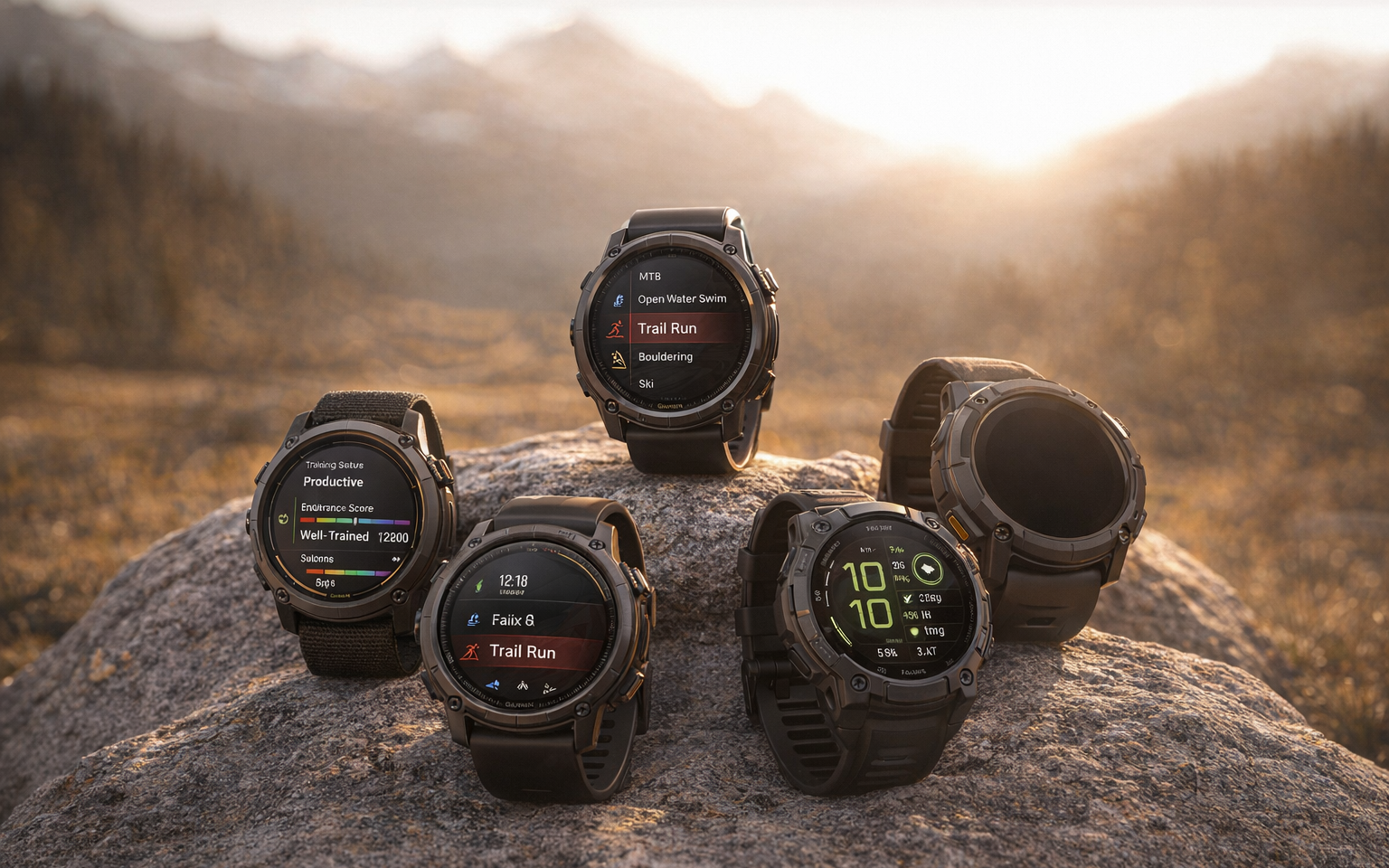
If you need one answer: the Garmin Enduro 3 at $900 is the best pure endurance outdoor watch available in 2026 – 320 hours of GPS battery, full maps, and 63 grams on the wrist. But if you are a weekend hiker, a weight-obsessed trail runner, or someone locked into the Apple ecosystem, the right watch is different. The gap between a well-matched pick and an expensive mistake has never been wider.
We cover eight watches spanning $280 to $1,000, chosen to serve every level of outdoor ambition. The fundamental tension in this category is still battery versus features versus weight versus price, and none of those tradeoffs have disappeared – they have just shifted. Solar charging has matured enough to matter. AMOLED displays no longer destroy battery life the way they once did. And the sub-$400 tier now offers offline maps that used to require a $700 Garmin. The category has genuinely never been more competitive.
This guide is for trail runners, hikers, mountaineers, ultrarunners, anglers, and anyone who spends serious time in the backcountry and wants a wrist device that keeps up. If you run on pavement three days a week and hike once a year, any of the budget picks will serve you well. If you are planning a multi-week thru-hike or a 100-mile race, read all the way to the premium tier – the differences at that level are not trivial.
Our Top Picks
| Pick | Watch | Price | Best For |
|---|---|---|---|
| Best Budget Outdoor Watch | Amazfit T-Rex 3 | $280 | Budget hikers who want maps and rugged build |
| Best Lightweight Trail Runner | Coros Pace Pro | $299 | Weight-obsessed trail and ultrarunners |
| Best Value Adventure Watch | Coros Nomad | $349 | Hikers, trail runners, and anglers who want real navigation |
| Best Solar-Powered Rugged Watch | Garmin Instinct 3 Solar | $400 | Expedition hikers who prioritize solar battery above all |
| Best AMOLED Multisport Under $500 | Suunto Race 2 | $499 | Endurance athletes who want a premium display under $500 |
| Best for Apple Ecosystem | Apple Watch Ultra 3 | $799 | iPhone users who want one device for everything |
| Best for Ultra-Endurance | Garmin Enduro 3 | $900 | Ultrarunners and thru-hikers who need maximum battery |
| Best Overall Outdoor Watch | Garmin Fenix 8 | from $999 | Athletes who demand the most capable wrist device available |
Individual Picks
Best Budget Outdoor Watch – Amazfit T-Rex 3
Price: $280
The Amazfit T-Rex 3 delivers a remarkable amount of capability for the money. Dual-band GPS holds accuracy that competes with watches costing twice as much. The 1.5-inch AMOLED display hits 2,000 nits, making it fully readable in direct sunlight – a spec you would expect on a $600 watch. Battery life reaches 27 days in smartwatch mode and 42 hours with GPS active. At $280, that combination is genuinely hard to argue with.
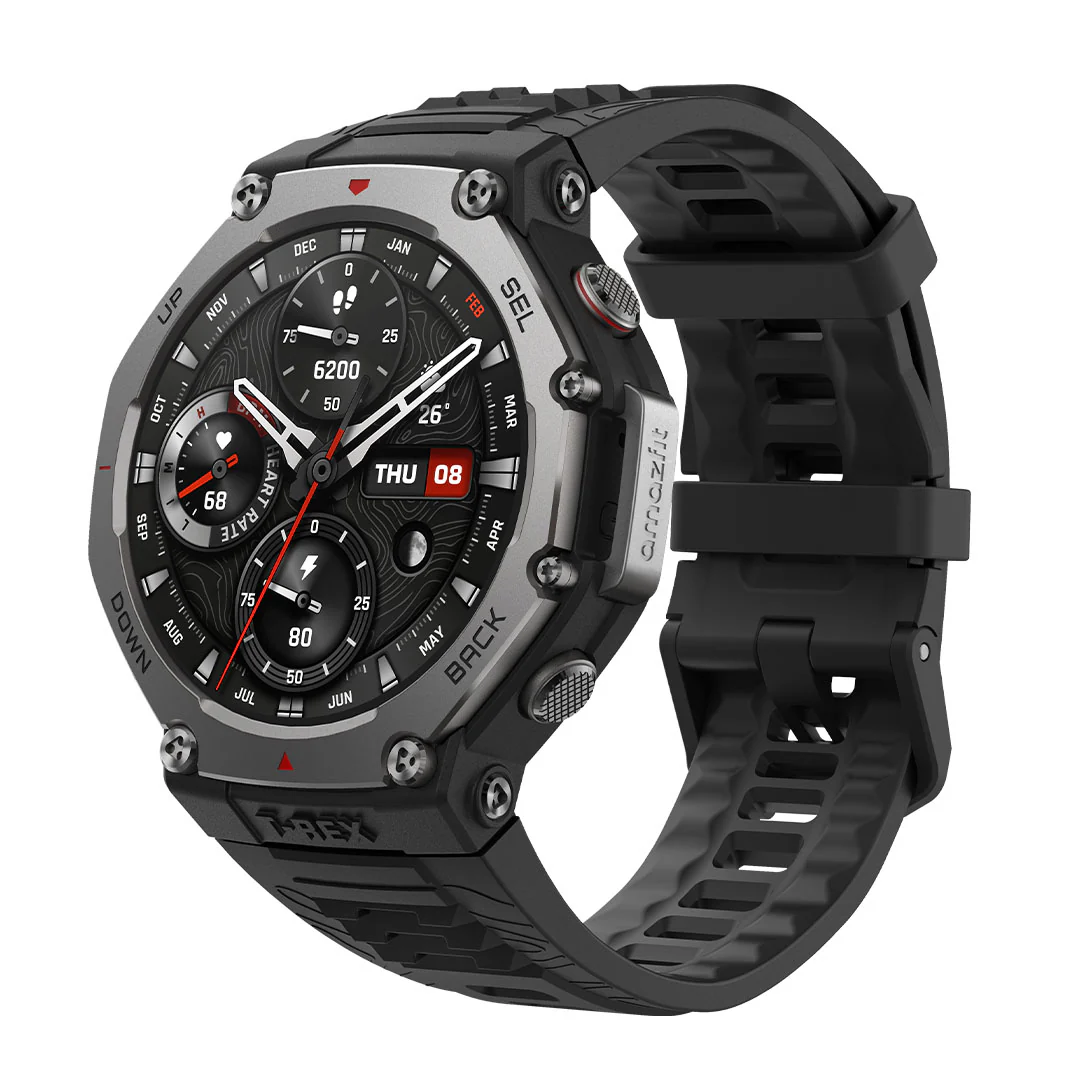
Ruggedness checks out on paper and in practice. The T-Rex 3 carries 10 ATM water resistance and a 45-meter freediving certification, putting it ahead of several more expensive competitors in water capability. Offline maps are included, which is still an uncommon feature below $300. For a weekend hiker who wants navigation, solid GPS, and a watch that survives rain, mud, and the occasional river crossing, the T-Rex 3 delivers real value.
The compromises are real and worth understanding before you buy. Zepp OS – Amazfit's proprietary software – is functional but unpolished, and the third-party app ecosystem is thin. Heart rate accuracy can degrade at high intensities, which is common across budget optical sensors – pair an external heart rate monitor for structured training. There is no solar charging, no streaming music, and the Gorilla Glass scratches more easily than expected for a watch marketed on durability.
Best for: Budget-conscious hikers and casual adventurers who want offline maps and a rugged build without flagship pricing.
Key caveat: Heart rate readings become unreliable during intense workouts – pair an external heart rate monitor for any serious training.
Best Lightweight Trail Runner – Coros Pace Pro
Price: $299
At 37 grams, the Coros Pace Pro is among the lightest AMOLED GPS watches you can buy – lighter than most running watches regardless of display technology. That number matters to trail and ultrarunners in a way it simply does not to casual hikers, and Coros has built the rest of the watch to match that priority. Dual-frequency GPS tracks switchbacks and tree cover with precision that single-band watches routinely miss. Battery life hits 38 hours with GPS active and 20 days in smartwatch mode – numbers that would have seemed implausible in a sub-40-gram package two years ago.

The 1.3-inch AMOLED display reads clearly at 1,500 nits, and offline topographic maps are included without a subscription. The Coros platform has matured substantially – training load metrics, pace analytics, and race prediction tools are genuinely competitive with Garmin's ecosystem for running-focused athletes. At $299, the Pace Pro represents the strongest pure performance-to-price ratio in the lightweight trail category.
The weight savings come with real tradeoffs in construction. The polymer case and mineral glass scratch far more easily than sapphire-equipped competitors, and the watch does not carry the kind of hardened build required for rock scrambles or technical mountaineering. There is no NFC for payments, no music streaming, and the 46mm case wears larger than the light weight suggests. For runners who live on trails, the Pace Pro is exceptional. For harsh backcountry use with real objective hazards, it is not the right tool.
Best for: Trail and ultrarunners who prioritize weight above all and want strong GPS accuracy without Garmin prices.
Key caveat: Not built for harsh backcountry abuse – the polymer case and mineral glass will not survive rock scrambles or frequent impacts.
Best Value Adventure Watch – Coros Nomad
Price: $349
The Coros Nomad is not just a better-equipped Pace Pro – it is a different kind of watch. Where the Pace Pro is built for athletes who count grams, the Nomad is built for adventurers who want navigation depth, angling features, and voice journaling. At $349, it delivers full offline color topographic maps with street and trail names – a capability that used to cost $500 minimum. The Nomad also ships with one of the more unusual feature sets in the category – dual-microphone voice journaling with GPS geo-tagging lets you record notes on the trail without stopping to type, and dedicated fishing modes – including shore, boat, surf, kayak, and fly – make it the only watch on this list that takes angling seriously as an activity.

Battery life is strong: 22 days in smartwatch mode and up to 50 hours with all-systems GPS, or 34 hours in the most accurate dual-frequency mode. At 49 grams with a nylon band, the Nomad wears comfortably for all-day hikes without the bulk of heavier expedition watches. The navigation package – offline topos, route planning, breadcrumb tracking – competes directly with watches $150 more expensive.
The omissions are specific enough to matter for certain buyers. Water resistance stops at 5 ATM, which is half the standard offered by most competitors at this price – the Nomad is rated for swimming and surface water activity but is not suitable for diving or high-impact water sports. There is no flashlight, no auto-rerouting when you leave a planned route, and no music streaming. Training load tracking resets weekly rather than using a rolling window, which undermines long-term fatigue management for athletes doing structured training blocks.
Best for: Hikers, trail runners, and anglers who want serious navigation capability at sub-$350, and anyone who wants to journal on the trail.
Key caveat: 5 ATM water resistance is a hard limit – not suitable for diving, kayaking, or any serious water activity.
Best Solar-Powered Rugged Watch – Garmin Instinct 3 Solar
Price: $400
No watch on this list is harder to kill. The Garmin Instinct 3 Solar combines MIL-STD-810 military toughness with 10 ATM water resistance and a construction philosophy that prioritizes survival above all else. The solar charging variant, in adequate sunlight, approaches an effectively unlimited battery for steady outdoor use – a spec that bears out across independent testing under sustained outdoor conditions. Garmin's multi-band GPS with SatIQ technology delivers the same satellite positioning platform found in the $1,000 Fenix 8. A built-in flashlight, fishing modes, skiing modes, and hunting features round out a feature set aimed squarely at multi-week expeditions.
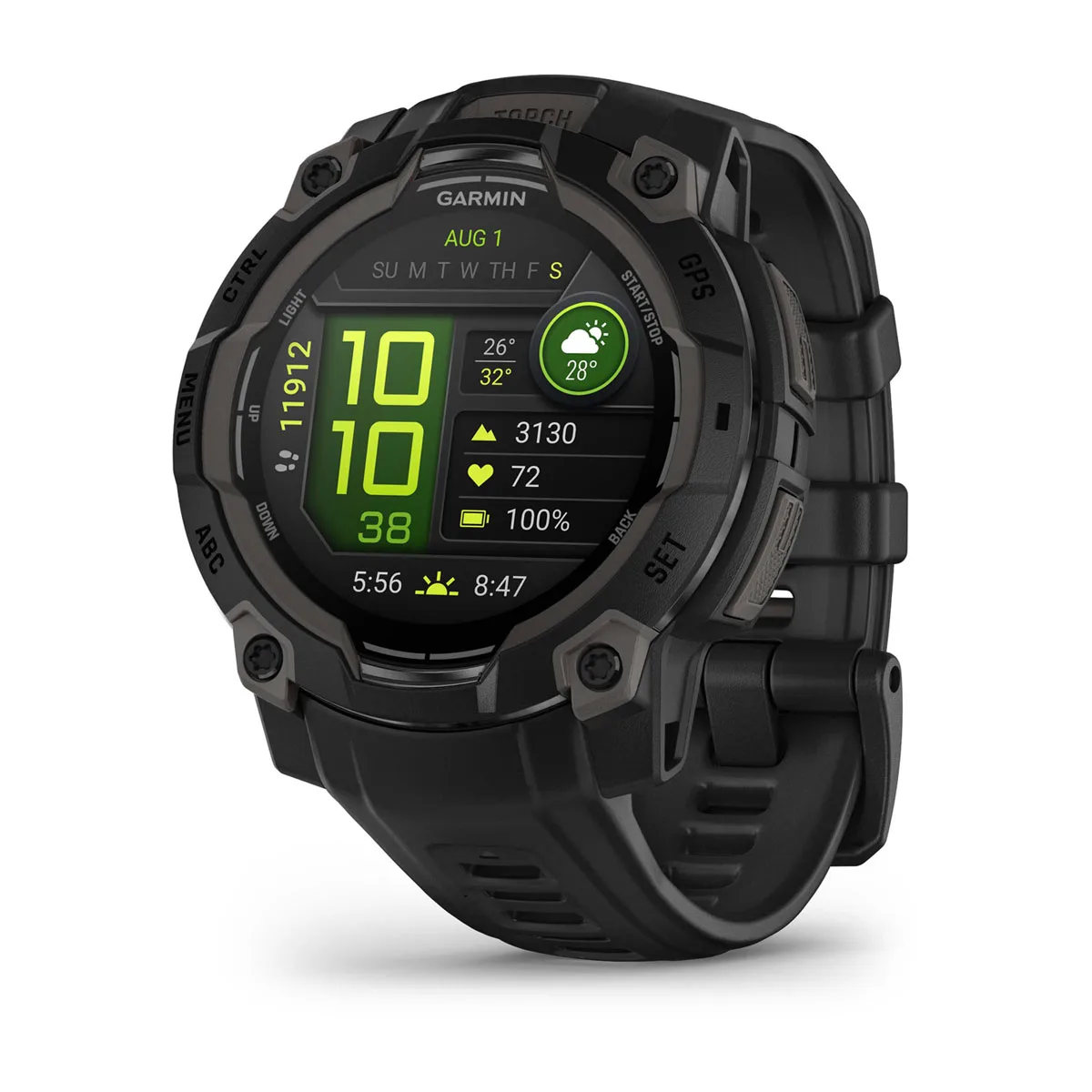
The Instinct 3 Solar runs the full Garmin ecosystem: Garmin Connect integration, Body Battery, advanced sleep tracking, and the same training metrics that have made Garmin the default choice for serious outdoor athletes for over a decade. The MIP display, while dim by AMOLED standards, is readable in direct sunlight without any power drain. For an expedition hiker who needs a watch that works for three weeks without a charger, this is the strongest option on this list.
The limitation at $400 is significant and deserves direct acknowledgment: there are no built-in offline maps. At a price point where both Coros picks include full topographic navigation, the absence of maps on the Instinct 3 Solar is a meaningful gap. The MIP display, while functional outdoors, looks noticeably dim when you walk indoors.
Best for: Garmin loyalists and expedition hikers who need maximum solar battery and extreme durability for multi-week backcountry trips.
Key caveat: No built-in offline maps – the Instinct 3 Solar uses breadcrumb navigation only. If topographic maps are a priority, the Coros Nomad at $349 delivers more in that specific area.
Best AMOLED Multisport Under $500 – Suunto Race 2
Price: $499
The Suunto Race 2's strongest argument is its display. The 1.5-inch AMOLED panel at 2,000 nits and 466 by 466 pixels is among the best screens available on any endurance watch – genuinely better than what Garmin offers at twice the price in several respects. Sapphire crystal comes standard across all variants, not as an expensive upgrade. The titanium model weighs 65 grams. Full offline maps ship on 32 gigabytes of storage. Battery reaches 16 days in smartwatch mode and 55 hours with GPS active – enough to cover even the longest ultramarathon efforts. Suunto Coach, the platform's AI-driven training advisor, provides more contextual guidance than earlier Suunto iterations.
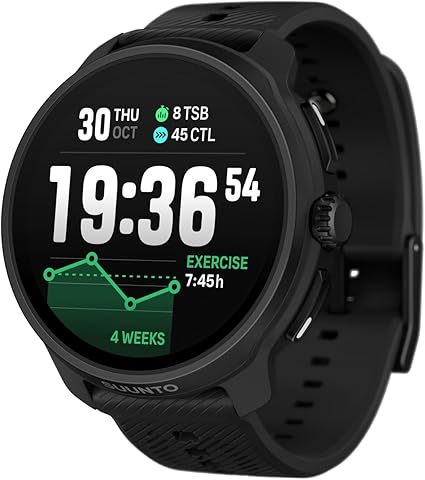
The Race 2 competes specifically against Garmin's mid-tier and wins on display quality, glass, and in some cases weight. For endurance athletes – trail runners, cyclists, triathletes – who spend long hours in bright sunlight staring at data and want sapphire glass protection at a sub-$500 price, the Race 2 makes a compelling case. It is the only watch on this list that delivers both sapphire and AMOLED under $500.
The smartwatch functionality is minimal. There is no offline music, no NFC payments, and no third-party app ecosystem worth mentioning. Heart rate accuracy, while significantly improved over the original Race, can still spike during high-intensity intervals – a persistent challenge across optical wrist sensors. The steel model reaches 76 grams, which is noticeable on the wrist during long efforts. Suunto's companion app, while improved, still trails Garmin Connect in depth and polish.
Best for: Endurance runners and trail athletes who prioritize the best possible AMOLED display and sapphire glass protection under $500.
Key caveat: Smartwatch features are essentially absent – no music, no payments, no third-party apps – this is a sport watch first and only.
Best for Apple Ecosystem – Apple Watch Ultra 3
Price: $799
The Apple Watch Ultra 3 earns its place on this list not because it out-specs dedicated GPS watches – it does not – but because it does something no other watch here manages: it functions as a satellite communicator, dive computer, dual-band GPS tracker, cellular device, and full smartwatch in a single 49mm titanium case. The 3,000-nit display is the brightest ever shipped on a smartwatch. Satellite two-way messaging works without a phone or cellular signal. The 100-meter water resistance and 40-meter dive computer certification are genuine. Dual-band GPS accuracy competes with Garmin in most real-world conditions.
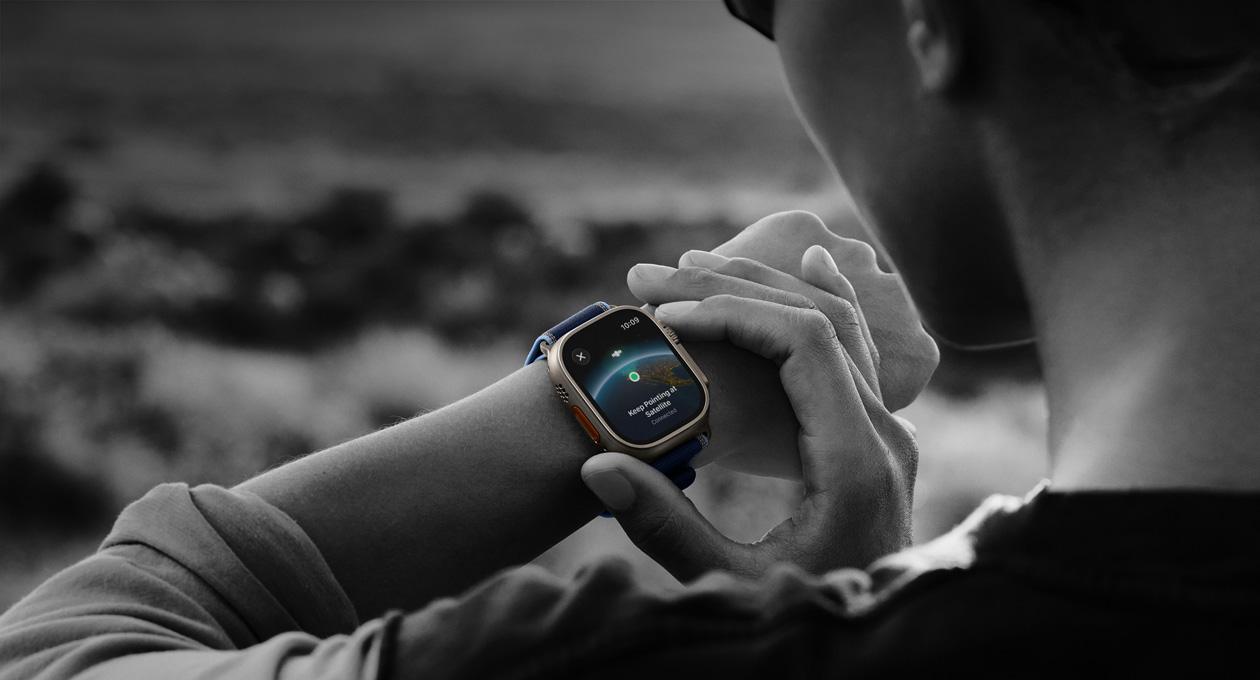
For an iPhone user who adventures seriously but also uses their watch daily for payments, notifications, fitness tracking, and communication, the Ultra 3 eliminates the compromise of carrying a second device. The cellular connectivity and satellite messaging capability represent a genuine safety advantage on remote routes. The sapphire display and recycled titanium construction hold up to sustained outdoor use.
The GPS battery life of approximately 14 hours is the shortest on this list by a substantial margin – and for multi-day backcountry trips without a charging solution, it is a hard disqualifier. Total battery life reaches roughly 42 hours in normal use, or up to 72 hours in Low Power Mode – but GPS-active time still caps at around 14 hours in standard mode. Training analytics – VO2 max estimation, training load, recovery metrics – trail dedicated platforms like Garmin by a meaningful margin. The Ultra 3 requires an iPhone; Android users have no path in. The S10 chip carries over from 2024 without meaningful performance upgrades.
Best for: iPhone users who adventure and want one device for everything – GPS tracking, satellite communication, dive computer, and daily smartwatch.
Key caveat: The 14-hour GPS battery makes multi-day backcountry trips without charging infrastructure effectively impossible.
Best for Ultra-Endurance – Garmin Enduro 3
Price: $900
The Garmin Enduro 3 answers a specific question better than any watch available: what is the most capable ultra-endurance GPS watch you can buy? Ninety days of smartwatch battery with solar charging. Three hundred twenty hours of GPS battery with solar – meaning you could run a GPS-tracked 100-miler, recover, run another, and still not need a charger. At 63 grams in a 51mm case, the Enduro 3 is significantly lighter than the Fenix 8 51mm Solar, a difference that registers meaningfully at mile 60 of a mountain race. The sapphire crystal, titanium DLC bezel, and built-in LED flashlight meet the durability standard expected at this price.
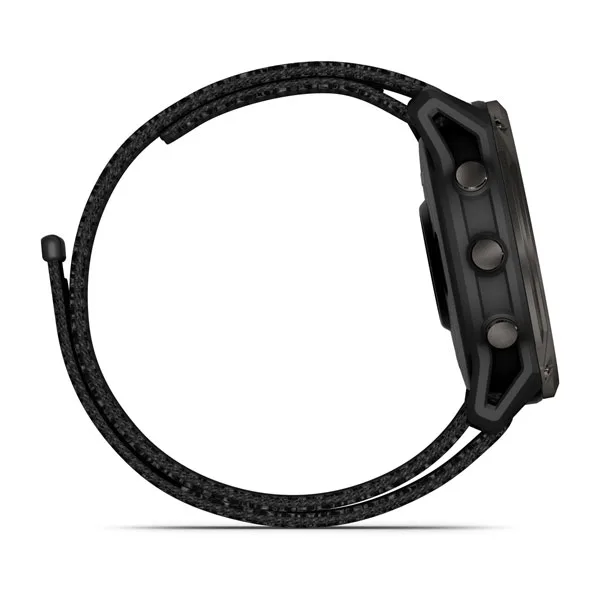
Software parity with the Fenix 8 is the Enduro 3's most underappreciated strength. Full TopoActive offline maps, ClimbPro ascent planning, PacePro race strategy, multi-band GPS with SatIQ – every training and navigation tool available in the $1,000 flagship is present in the Enduro 3 at $100 less. For ultrarunners and thru-hikers who have already concluded that battery life is the most important spec, the Enduro 3 is the definitive answer.
The compromises are specific. The Enduro 3 ships in one size – 51mm – and does not fit smaller wrists comfortably. The MIP display, while excellent in sunlight, looks significantly worse than an AMOLED panel in low-light conditions, which matters during pre-dawn starts and evening finishes. There is no speaker or microphone and no dive sensor. For athletes who do not need to dive and can live with MIP in the dark, these are manageable tradeoffs.
Best for: Ultrarunners, thru-hikers, and expedition athletes who require maximum battery life and minimum weight, and can accept a single large size.
Key caveat: The single 51mm size fits larger wrists only – there is no smaller option regardless of budget.
Best Overall Outdoor Watch – Garmin Fenix 8
Price: from $999.99
The Garmin Fenix 8 holds the top position not because it dominates any single category but because it is the only watch on this list that excels across every category simultaneously. AMOLED or Solar display variants – your choice. A 40-meter dive computer for underwater tracking. Full TopoActive offline maps across all models. The deepest training intelligence platform available on a wrist device: daily suggested workouts, Body Battery, Training Readiness, HRV Status, and Stamina tracking. A built-in speaker and microphone. A flashlight. 10 ATM water resistance. Thirty-two gigabytes of storage with offline music and contactless payments.
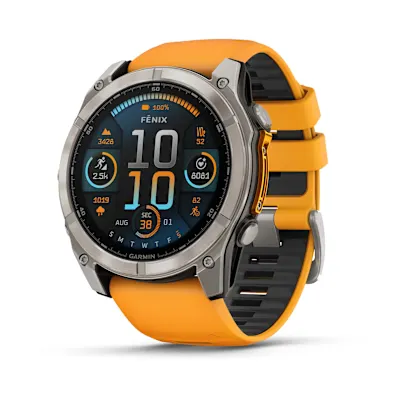
The athletes the Fenix 8 serves best are those whose outdoor lives do not fit neatly into a single discipline. Divers who trail run. Mountaineers who also swim. Triathletes who backpack. The Fenix 8 does not require you to choose – it brings a complete and deeply integrated tool for every activity without compromise between them. The Garmin ecosystem, from Connect IQ apps to Garmin Connect training analysis, remains the most mature in the category.
Value is the honest objection to the Fenix 8. The Enduro 3 at $100 less offers full software parity – identical maps, training metrics, and GPS accuracy – at lower weight with vastly superior battery life, and the main things the Fenix 8 adds are the dive computer and the AMOLED display option. If you do not dive and do not specifically want AMOLED, the Enduro 3 is the more rational purchase. Heart rate sensor technology did not advance from the Fenix 7 Pro generation. Enabling always-on display cuts battery from 16 days to approximately 7 days.
Best for: Athletes who demand the single most capable wrist device available and whose activities span diving, running, hiking, swimming, and mountaineering.
Key caveat: The Enduro 3 delivers full software parity at lower weight and $100 less – the Fenix 8's premium primarily buys a dive computer and the option for AMOLED.
How We Chose
GPS Accuracy
Multi-band and dual-frequency GPS is the baseline for outdoor use in 2026 – not a premium feature. Single-frequency receivers drift under tree cover, in canyon terrain, and in urban canyons, producing the kind of track errors that make route data useless. Every watch on this list uses multi-band positioning. If a watch skips this spec to cut costs, it does not belong on trail regardless of what the marketing says.
Battery Life
A full day of GPS tracking is the floor, not the target. Multi-day battery capability is the differentiator that separates outdoor watches from fitness trackers with maps. We weigh battery life heavily in the value assessment because it directly determines whether a watch is useful in the backcountry or just on the trailhead.
Navigation
Offline maps are now table stakes for any watch above $300, and we treat their absence as a meaningful limitation worth calling out directly. The ability to navigate without a phone signal – using topographic maps with contour lines, trail names, and route tracking – is the difference between a tool and a liability when conditions change. Breadcrumb-only navigation is acceptable only at the budget tier.
Durability
10 ATM water resistance and MIL-STD-810 certification or equivalent are the standards we look for. Sapphire crystal is strongly preferred over Gorilla Glass or mineral glass, particularly for watches positioned at $400 and above. We note glass type for every pick because it is one of the most common regrets among buyers who skip it.
Value
Price alone does not determine value – the question is what you get relative to what else you could buy. The $280 T-Rex 3 delivers extraordinary value. The $1,000 Fenix 8 delivers good value if you need everything it offers, and poor value if you do not. We evaluate every pick against the alternatives at its price point and name the cases where a different choice makes more sense.
Who Should Buy What
Weekend day-hikers on a budget – The Amazfit T-Rex 3 at $280 covers everything a weekend hiker needs: offline maps, solid GPS, rugged construction, and enough battery to handle a long weekend without charging.
Trail runners who count grams – The Coros Pace Pro at $299 is the clear choice for athletes where watch weight shows up in race-day calculations. Nothing else at this price comes close to 37 grams with dual-frequency GPS and offline maps.
Hikers and anglers who want maps without breaking the bank – The Coros Nomad at $349 delivers the most complete navigation package under $400, plus fishing-specific features that nothing else on this list touches.
Multi-week expedition hikers who need solar – The Garmin Instinct 3 Solar at $400 is the pragmatic choice for anyone spending weeks at a time away from power sources. The solar performance is real. Accept the lack of maps and carry a phone or dedicated GPS for navigation.
Endurance runners and trail athletes wanting the best display – The Suunto Race 2 at $499 delivers sapphire glass and the best AMOLED display in the sub-$500 category. If you spend hours watching data in bright sunlight, the display upgrade is meaningful.
iPhone users who adventure – The Apple Watch Ultra 3 at $799 makes sense specifically for athletes deeply embedded in the Apple ecosystem who want one device that handles adventure tracking, satellite communication, and daily life without compromise.
Ultrarunners and thru-hikers – The Garmin Enduro 3 at $900 is the clearest recommendation in the guide for athletes whose events or routes exceed 24 hours. Nothing else combines battery life, weight, and software depth at this level.
The "I want everything" athlete – The Garmin Fenix 8 starting at $999 is the answer for multi-discipline athletes who dive, run, hike, and swim and want one watch that handles all of it without any asterisks.
What to Avoid
Watches without multi-band GPS. Single-frequency GPS was acceptable in 2022. In 2026, it is a compromise that will cost you track accuracy on any technically demanding route – under tree cover, in canyons, on switchbacks at elevation. The chipset improvement is not incremental; it is the difference between a usable trail track and a drift-filled approximation. Do not accept single-frequency GPS at any price in this category.
Unverified brands claiming military-grade durability without independent validation. The phrase "military-grade" appears on watches that cost $40 and watches that cost $1,000, and the certification means nothing if it has not been independently verified. MIL-STD-810 is a real standard with specific drop, temperature, and shock tests. Brands that reference it without documentation, or use phrases like "military-inspired," are using marketing language rather than engineering standards. Stick with manufacturers who publish the specific MIL-STD-810 test methods passed, and treat any claim that cannot be verified with appropriate skepticism.