
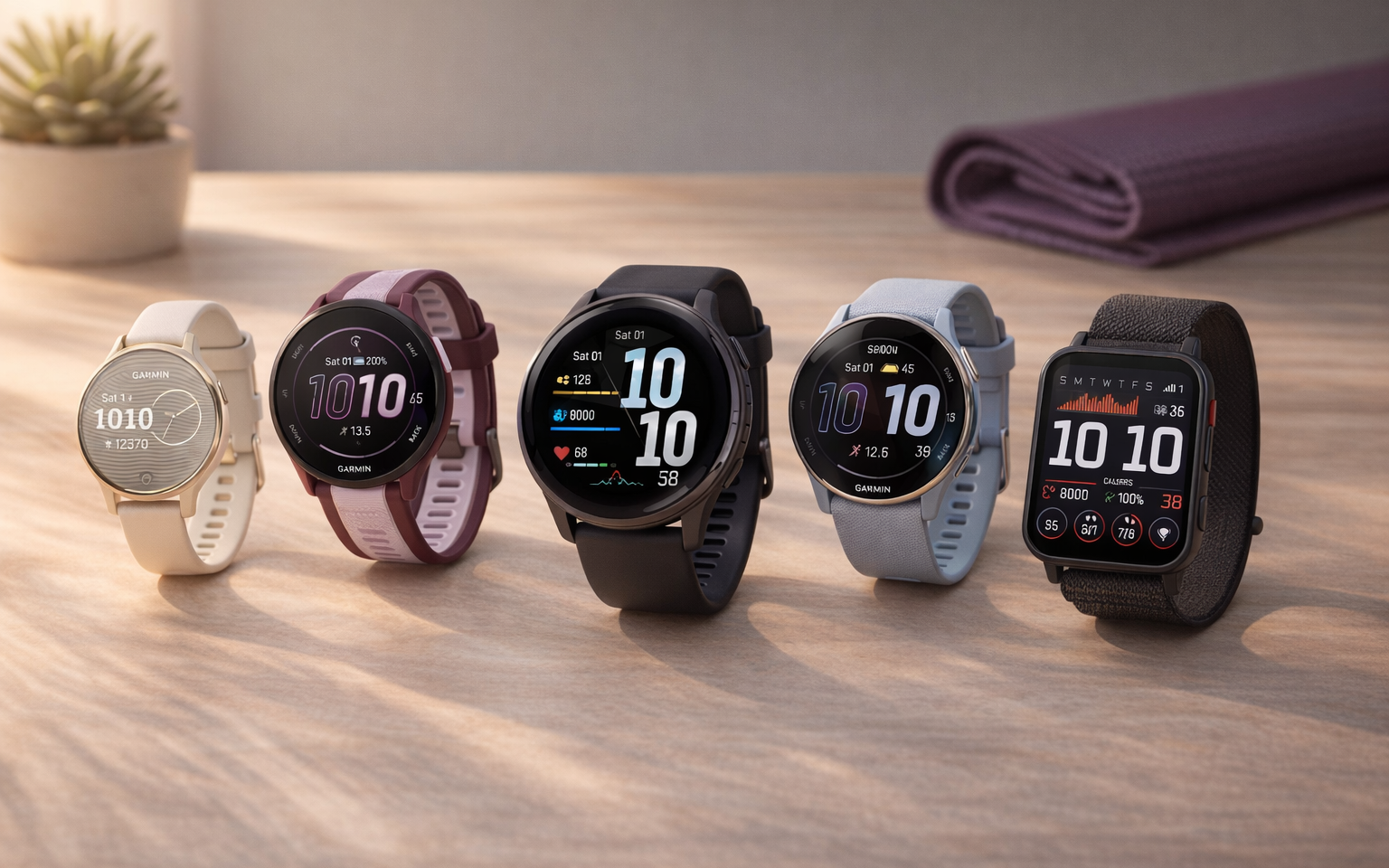
Garmin makes the best fitness watches on the market – but finding the right one as a woman still takes more work than it should. Most Garmin models are designed around a 46mm-and-up case size that overwhelms smaller wrists, and the company's marketing tends to lead with triathlon training and mountain climbing rather than the health and lifestyle features that matter to a broader audience. The good news: Garmin's 2025-2026 lineup includes more small-wrist options, better women's health tracking, and more stylish designs than ever before.
The key tradeoffs come down to three decisions. First, size versus features: the smallest Garmin watches sacrifice GPS, advanced training metrics, or display quality to stay compact. Second, battery life versus display: AMOLED screens look stunning but drain faster than Garmin's traditional MIP displays. Third, fitness depth versus lifestyle breadth: a dedicated running watch gives you better training data, but a lifestyle watch covers more ground for everyday health tracking, payments, and music. The best smartwatches for women span multiple brands, but if you want Garmin's battery life, GPS accuracy, and health ecosystem, these are the six models worth buying.
Our top pick is the Garmin Venu 4 in the 41mm size – it strikes the best balance of design, health features, and fitness tracking for most women. But the right Garmin depends entirely on how you plan to use it, and there are strong picks at every price point from $250 to $800.
Garmin Venu 4 – Best Overall
$549.99
The Garmin Venu 4 is the most complete Garmin watch for women who want a single device that handles fitness, health, and daily life. The 41mm size option sits comfortably on smaller wrists, and the stainless steel bezel gives it a refined look that works with both workout gear and business casual. The 1.2-inch AMOLED display is vibrant, sharp, and easy to read at a glance – a genuine step up from the Venu 3.
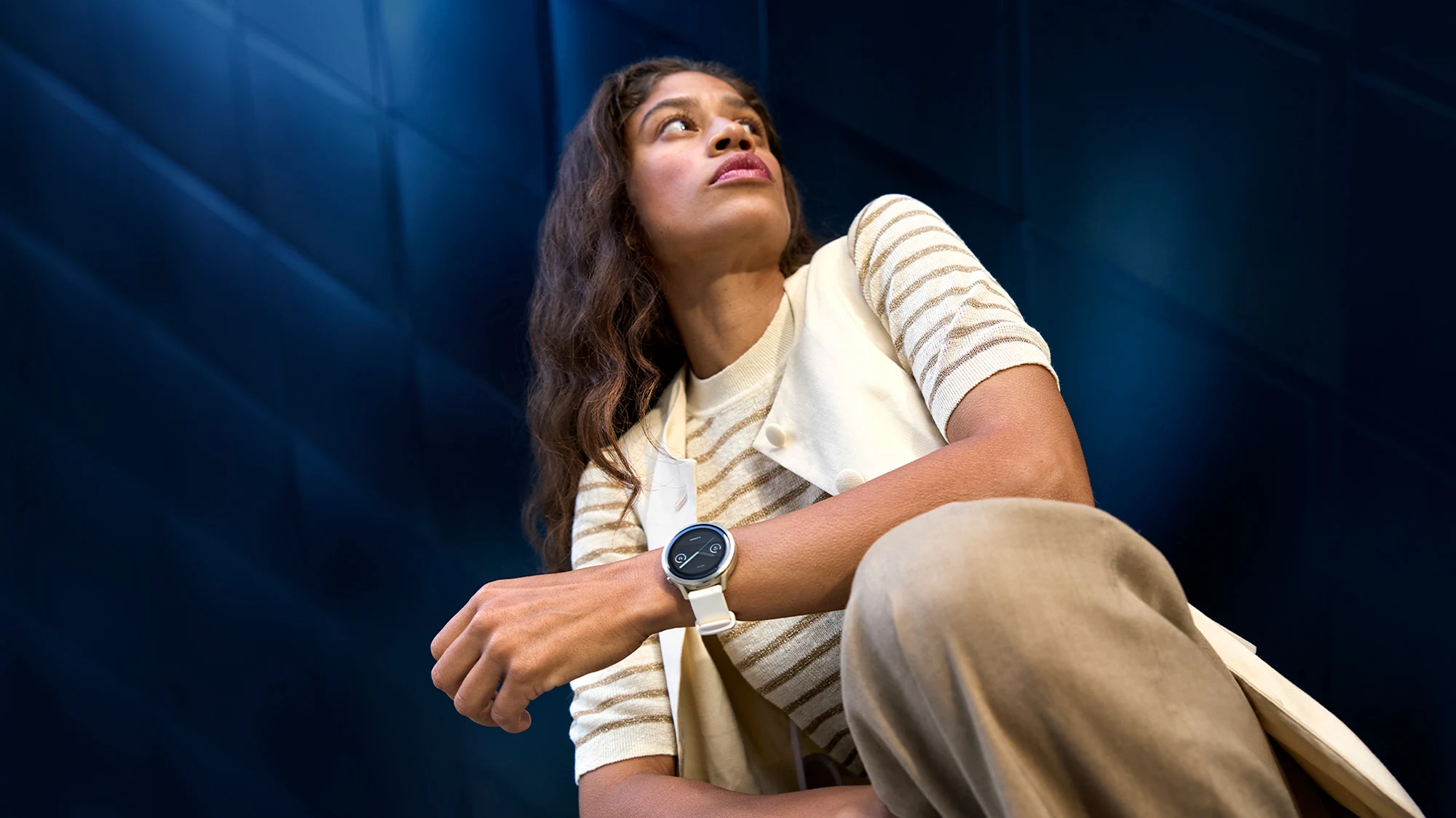
Women's health tracking is comprehensive. Menstrual cycle tracking uses wrist-based skin temperature data to improve period predictions and estimate ovulation windows. Pregnancy tracking lets you follow your pregnancy week by week with symptom logging, mood tracking, baby movement monitoring, and educational content. These features are accessible directly from the watch face, not buried in submenus. Beyond women's health, the Venu 4 delivers Garmin's full suite: Body Battery energy monitoring, sleep coaching, stress tracking, Lifestyle Logging, and Training Readiness scores that adapt your daily workout recommendations.
The main drawback is price. At $550, the Venu 4 costs nearly twice as much as the Vivoactive 6 and delivers many of the same core features. The premium buys you a better display, superior GPS with multi-band support, and exclusive features like Lifestyle Logging – worthwhile upgrades, but not essential for everyone. Battery life runs up to 10 days in smartwatch mode, dropping to around 3 days with the always-on display enabled – excellent by smartwatch standards, modest by Garmin standards.
Garmin Lily 2 Active – Best for Style
$299.99
The Garmin Lily 2 Active is the only Garmin watch designed specifically to not look like a fitness tracker. The 38mm aluminum case weighs just 29 grams and features a patterned lens that displays a fashionable watch face when the screen is off. Flick your wrist and the hidden grayscale touchscreen activates with your health data, notifications, and workout metrics. The patterned lens and slim profile give it a jewelry-grade look no other Garmin achieves.
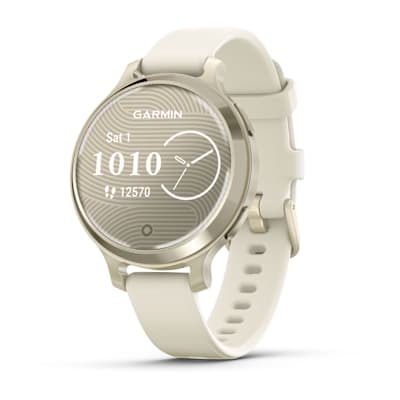
The "Active" version finally solves the biggest complaint about the original Lily line: it has built-in GPS. You can run, walk, or cycle without carrying your phone and still get accurate distance and pace data. The watch includes over 30 activity profiles, blood oxygen monitoring, all-day stress tracking, and Garmin's full women's health suite with menstrual cycle and pregnancy tracking. Battery life runs up to 9 days in smartwatch mode, dropping to about 9 hours with continuous GPS – adequate for most workouts but limiting for long runs or hikes.
The tradeoff for that compact design is a smaller, lower-resolution display that can feel cramped when reading notifications or navigating menus. There is no music storage, and the fitness metrics are a tier below what the Venu and Forerunner lines offer – no Training Readiness, no HRV Status, no race predictor. The Lily 2 Active is the right watch for women who prioritize aesthetics and want capable health tracking without wearing something that screams "athlete." For serious training, look elsewhere.
Garmin Forerunner 265S – Best for Running
$449.99
The Garmin Forerunner 265 line includes the 265S – a 42mm, 39-gram variant built for runners with smaller wrists. The "S" stands for small, and the difference is meaningful: 4mm narrower and noticeably more proportional on a slim forearm than the standard 46mm Forerunner models. Despite the smaller size, the 1.1-inch AMOLED display is bright and sharp enough to read pace, heart rate, and lap data mid-run without squinting.

The training features are where the 265S separates itself from lifestyle watches. Multi-band GPS with SatIQ technology delivers best-in-class positioning accuracy, even in urban canyons and dense tree cover. Training Status, Training Load, Daily Suggested Workouts, Race Predictor, Morning Report, HRV Status, and Endurance Score give serious runners a complete picture of their fitness progression. The best running watches in 2026 lean heavily on Garmin's Forerunner line for good reason – the depth of running analytics is unmatched.
Women's health tracking is fully supported, with menstrual cycle and pregnancy tracking accessible through the watch and Garmin Connect. Battery life hits 15 days in smartwatch mode and 24 hours with GPS active – enough for a marathon and then some. The 265S lacks the lifestyle polish of the Venu 4 (no Lifestyle Logging, simpler watch face designs), but for women who run regularly and want the best training data in a wrist-friendly package, nothing in Garmin's lineup competes.
Garmin Vivoactive 6 – Best Value
$299.99
The Garmin Vivoactive 6 delivers an astonishing amount of watch for $300. The 42mm case with a 1.2-inch AMOLED display at 390x390 resolution looks and feels like a watch that costs twice the price. At 36 grams with the band, it sits comfortably on smaller wrists without feeling like a toy. The Metallic Pink Dawn and Lunar Gold colorways are particularly attractive options that lean into style without compromising the sporty aesthetic.
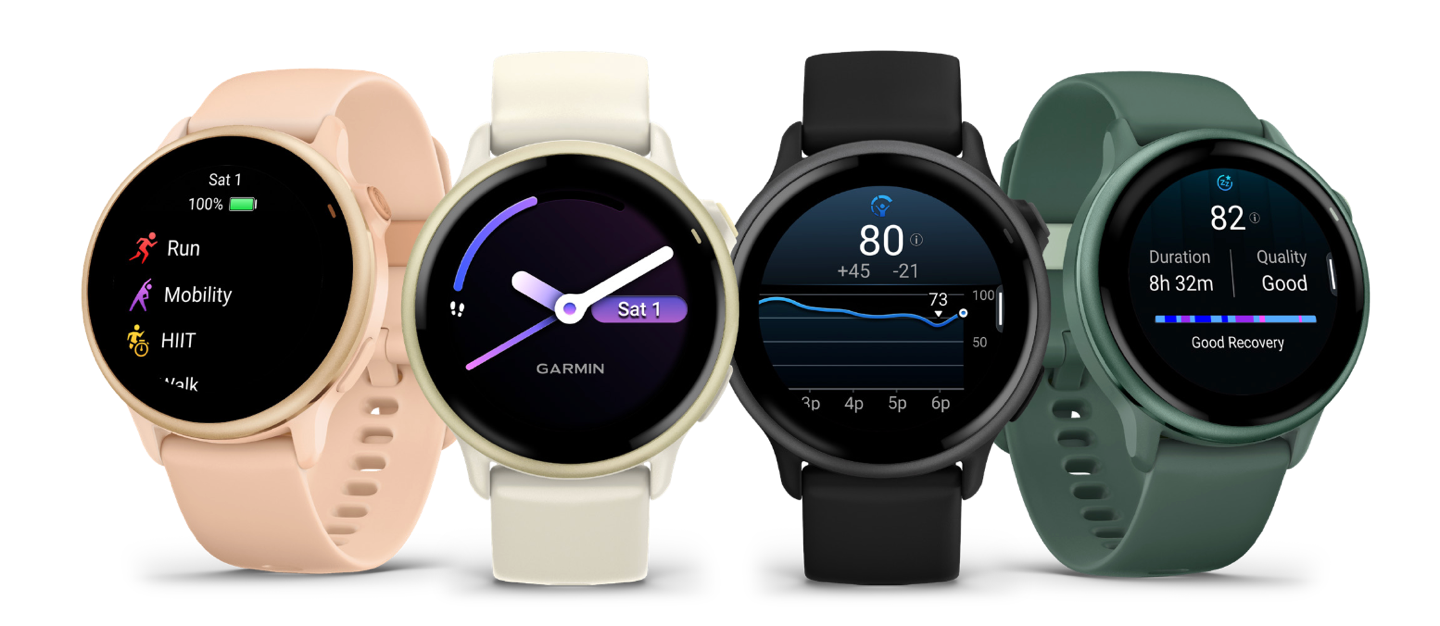
Feature-wise, the Vivoactive 6 covers the essentials and then some. It tracks over 80 sports, includes wrist-based heart rate and blood oxygen monitoring, offers Body Battery and stress tracking, supports Garmin Pay for contactless payments, and stores music from Spotify, Amazon Music, and YouTube Music for phone-free workouts. PacePro pacing strategies, Running Power, and route following are included – features that previously required stepping up to the Forerunner or Venu lines. Battery life reaches 11 days in smartwatch mode, among the best for any AMOLED watch at this price.
The compromises are real but manageable. GPS accuracy is a step below the Venu 4 and Forerunner 265S – no multi-band GPS, so expect occasional drift in challenging environments. Training Readiness is absent, meaning the watch does not adapt daily workout suggestions as intelligently. And the single 42mm size means it may feel slightly large on very petite wrists (under 140mm circumference). But dollar for dollar, the Vivoactive 6 is the smartest entry point into the Garmin ecosystem for women who want solid fitness tracking, health monitoring, and smartwatch convenience without a premium price tag.
Garmin Venu X1 – Best Premium
$799.99
The Garmin Venu X1 is the thinnest and most visually striking Garmin ever made. At just 7.9mm thick and 40 grams, with a titanium case back and sapphire crystal lens, it wears more like a high-end fashion watch than a fitness tracker. The 2-inch AMOLED display is enormous by Garmin standards and genuinely beautiful – colors pop, text is crisp, and the always-on display mode transforms it into something you actually want visible on your wrist.
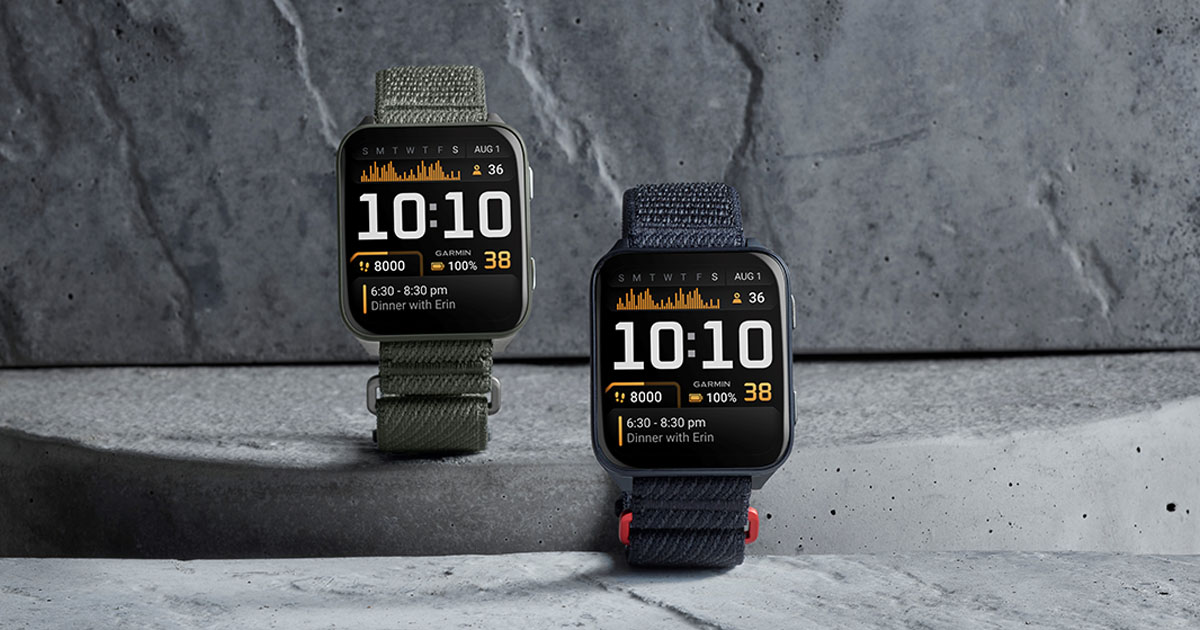
The feature set matches the premium price. Full women's health tracking with menstrual cycle and pregnancy support, Garmin's complete training and recovery suite, a built-in flashlight, NFC payments, music storage, and the refined Lifestyle Logging feature all make the cut. Battery life varies dramatically by usage: up to 8 days with the raise-to-wake display and around 2 days with always-on mode enabled. The ultra-thin profile means the battery is physically smaller than what the Venu 4 carries, making power management more of a consideration.
A note on sizing: The Venu X1 has a rectangular 41 x 46mm case in a single size – potentially oversized for women with wrists under 150mm. The ultra-thin 7.9mm profile mitigates this significantly; a watch that hugs your wrist at under 8mm thick feels smaller than a 42mm watch that sits 12mm tall. For women with medium to larger wrists who want the most refined, premium Garmin experience available, the X1 is in a class by itself. For smaller wrists, the Venu 4 in 41mm is the safer bet.
Garmin Forerunner 165 – Best Budget Running Watch
$249.99
The Garmin Forerunner 165 is the cheapest way into Garmin's running ecosystem without sacrificing the features that actually matter. The 43mm case weighs just 39 grams and includes a 1.2-inch AMOLED display – the same size and technology found on watches costing $200 more. It looks and feels like a proper running watch, not a budget compromise.
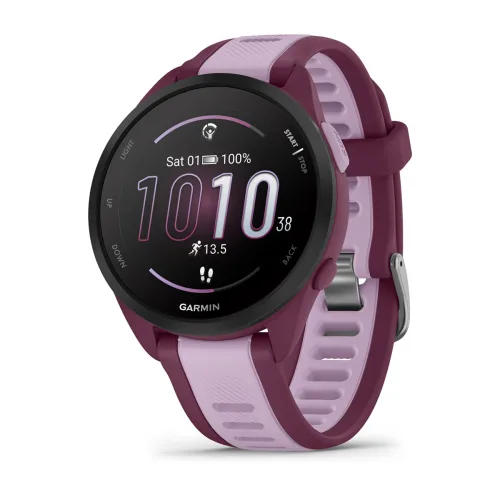
For new and intermediate runners, the Forerunner 165 delivers the core training tools: GPS tracking with solid accuracy, daily suggested workouts, race predictions, Training Effect scores, Morning Report, and wrist-based running dynamics. Women's health tracking includes menstrual cycle logging and pregnancy tracking through the Garmin Connect app. Battery life is strong at 11 days in smartwatch mode and up to 19 hours with GPS, enough for most training runs and even some longer efforts.
What you give up compared to the 265S is the advanced tier of training analytics: no multi-band GPS, no Training Status, no HRV Status, no Endurance Score. Unlike the 265S, there is no smaller "S" variant – the 43mm case is the only option. Music storage requires stepping up to the Forerunner 165 Music edition. For women starting their running journey or returning after a break, the Forerunner 165 is the right watch – it provides everything a developing runner needs without paying for features that only matter at a competitive level.
How We Chose
Every watch on this list was chosen against five criteria specific to women's needs:
Size and wrist fit. Priority went to watches available in 42mm or smaller, or models that wear small despite their dimensions (the Venu X1's 7.9mm thickness, for example). Garmin still does not offer "S" versions of most of its 2025-2026 models, so case diameter, weight, and thickness all matter.
Women's health tracking. Menstrual cycle tracking with skin temperature integration and pregnancy tracking are baseline requirements. Every watch on this list supports both features through Garmin Connect, with on-wrist access to cycle data.
Battery life. Garmin's primary advantage over Apple Watch and Samsung Galaxy Watch is battery measured in days, not hours. Battery life – especially GPS endurance for active users – was a significant factor.
Value relative to features. The gap between a $300 Vivoactive and a $550 Venu is meaningful. Each watch on this list justifies its price relative to the alternatives at its tier.
Style and versatility. A watch you don't want to wear is a watch that stays in the drawer. Band options, color choices, display quality, and overall design refinement all shaped the final selections.
Who Should Buy What
The everyday health tracker who wants step counting, sleep analysis, stress monitoring, and women's health tracking in an attractive package should start with the Vivoactive 6 ($300). It covers 90% of what most people need at the lowest price point for a full-featured Garmin smartwatch.
The style-conscious minimalist who hates the look of sports watches and wants something that passes as jewelry should choose the Lily 2 Active ($300). Built-in GPS makes it genuinely functional; the design makes it genuinely wearable in every context.
The regular runner training for 5Ks to half marathons and wanting real training data should invest in the Forerunner 265S ($450). The "S" size was made for smaller wrists, and the training analytics are best in class.
The new runner or casual exerciser wanting a capable watch without overspending should grab the Forerunner 165 ($250). It is the best value in Garmin's running lineup by a wide margin.
The "I want the best" buyer with budget flexibility should choose the Venu 4 in 41mm ($550) for the most balanced experience, or the Venu X1 ($800) for the most premium hardware.
What to Avoid
The Garmin Instinct 3 ($399.99) looks appealing for outdoor adventures, but the smallest size is now 45mm after Garmin discontinued the 40mm "S" variant that existed in the Instinct 2 generation. On wrists under 160mm, the 45mm case with its chunky bezel and protruding antenna overpowers the wrist. The rugged aesthetic also limits versatility – it looks great on a trail but awkward at brunch. Women who want a capable outdoor watch should consider the Forerunner 265S instead, which handles trail running and hiking admirably in a more wrist-friendly package.
The Garmin Forerunner 970 ($749.99) is a phenomenal running watch – for people with larger wrists. The 47mm case is among the biggest in Garmin's lineup, and unlike the Fenix 8 which at least offers a 43mm option, the Forerunner 970 comes in one size only. The feature set overlaps significantly with the Forerunner 265S for everyday training purposes, making the size penalty hard to justify unless you specifically need the 970's advanced mapping and ultra-endurance features.