
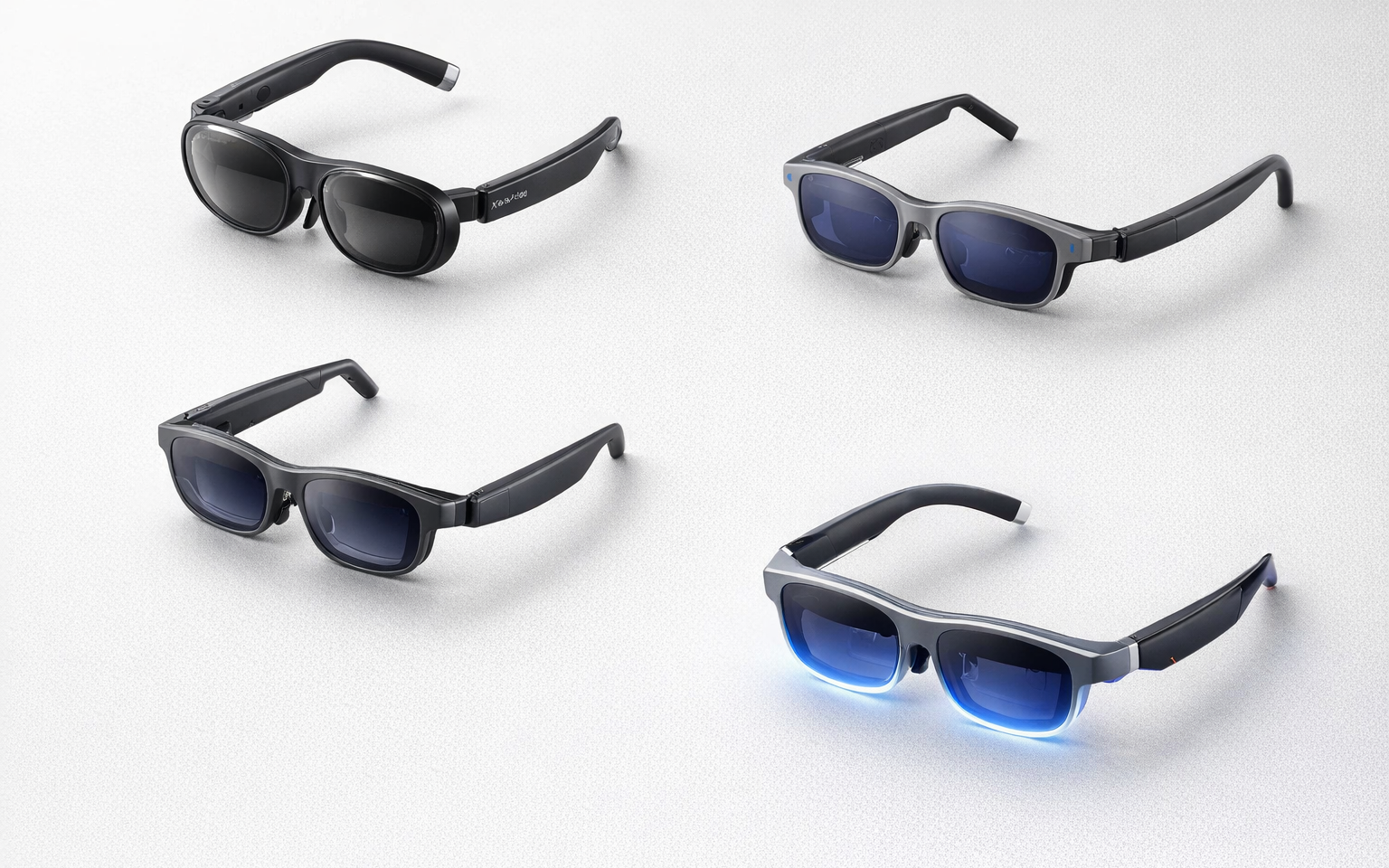
Two picks stand above the rest: the XREAL One Pro for enthusiasts who want the widest, most immersive experience, and the XREAL 1S for everyone else who wants excellent quality without overspending.
AR display glasses have crossed a threshold. What started as a niche curiosity for early adopters is now a legitimate category with real competition, meaningful differentiation, and – finally – products worth recommending without a long list of caveats. These glasses replace your monitor, your TV, or your in-flight entertainment with a massive virtual screen floating in front of your eyes. Plug into a phone, laptop, Steam Deck, or gaming console and you get a private 200-inch-plus display that fits in a glasses case.
The tradeoffs that define this category remain real, though. Field of view versus weight is the central tension – a wider FOV means more glass, more optics, and more grams pressing on your nose. Spatial computing features like head-tracked virtual desktops add genuine utility but also add cost and complexity. Brightness matters enormously if you plan to use these anywhere other than a dark room, but brighter panels push prices up. And software ecosystems vary wildly: some of these glasses are essentially dumb monitors, while others offer multi-window spatial environments that start to feel like a lightweight Vision Pro.
2026 is the breakout year. The number of credible options has roughly doubled since last year, and the floor on quality has risen sharply.
Top Picks
XREAL One Pro – Best Overall
~$599 street / $649 MSRP | 57° FOV | 1080p per eye | 120Hz | 87g
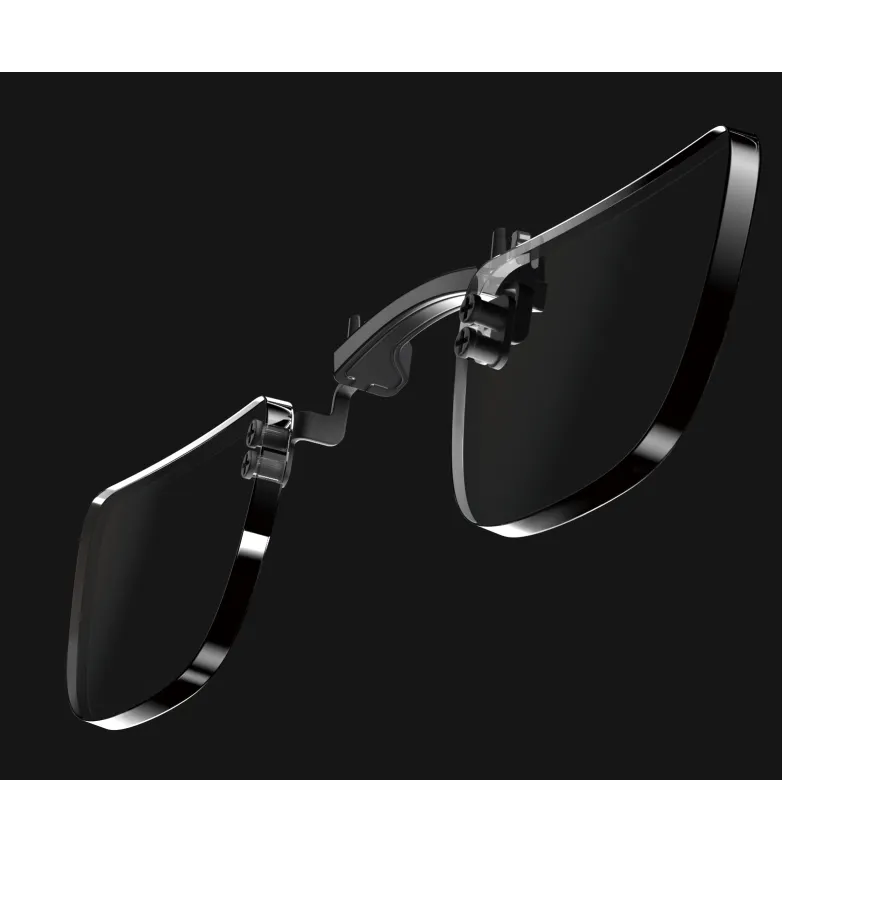
The XREAL One Pro earns the top spot because it delivers the widest field of view of any shipping AR display glasses – 57 degrees – and backs it up with a mature spatial computing platform that actually works. Against the 50° or 52° competitors in this roundup, that FOV gap translates directly to immersion – the wider the field, the closer the virtual screen gets to filling your vision rather than framing it.
The display uses Sony Micro-OLED panels running at 1080p per eye and 120Hz, which means smooth motion, deep blacks, and vibrant color. XREAL's proprietary X1 spatial chip provides rock-solid 3DoF head tracking – the virtual screen stays pinned in space as you move your head, with no perceptible lag or drift. This is upgradable to 6DoF with accessories. The Bose-tuned open-ear speakers are the best audio in the category, delivering surprising bass depth without the isolation of headphones. Electrochromic dimming lets you darken the lenses electronically, shifting from see-through to fully immersive with a tap.
The Nebula software ecosystem is the most developed in the category, offering multi-window virtual desktops, curved-screen modes, and broad device compatibility across phones, laptops, and consoles. It is the closest any of these glasses come to being a genuine productivity tool rather than just a media viewer.
The caveats are real. At $599 street – and potentially exceeding $850 once you add accessories like the 6DoF upgrade or prescription inserts – this is an expensive proposition. At 87g, it is the second-heaviest option here, and you will notice that weight during extended sessions. And while 1080p per eye is perfectly fine for movies and gaming, newer competitors have moved to 1920x1200 panels that render small text more crisply, making the One Pro slightly less ideal for pure productivity work. The XREAL One Pro is for the buyer who prioritizes immersion above all else and is willing to pay for it.
XREAL 1S – Best for Most People
$449 | 52° FOV | 1920x1200 per eye | 120Hz | 82g
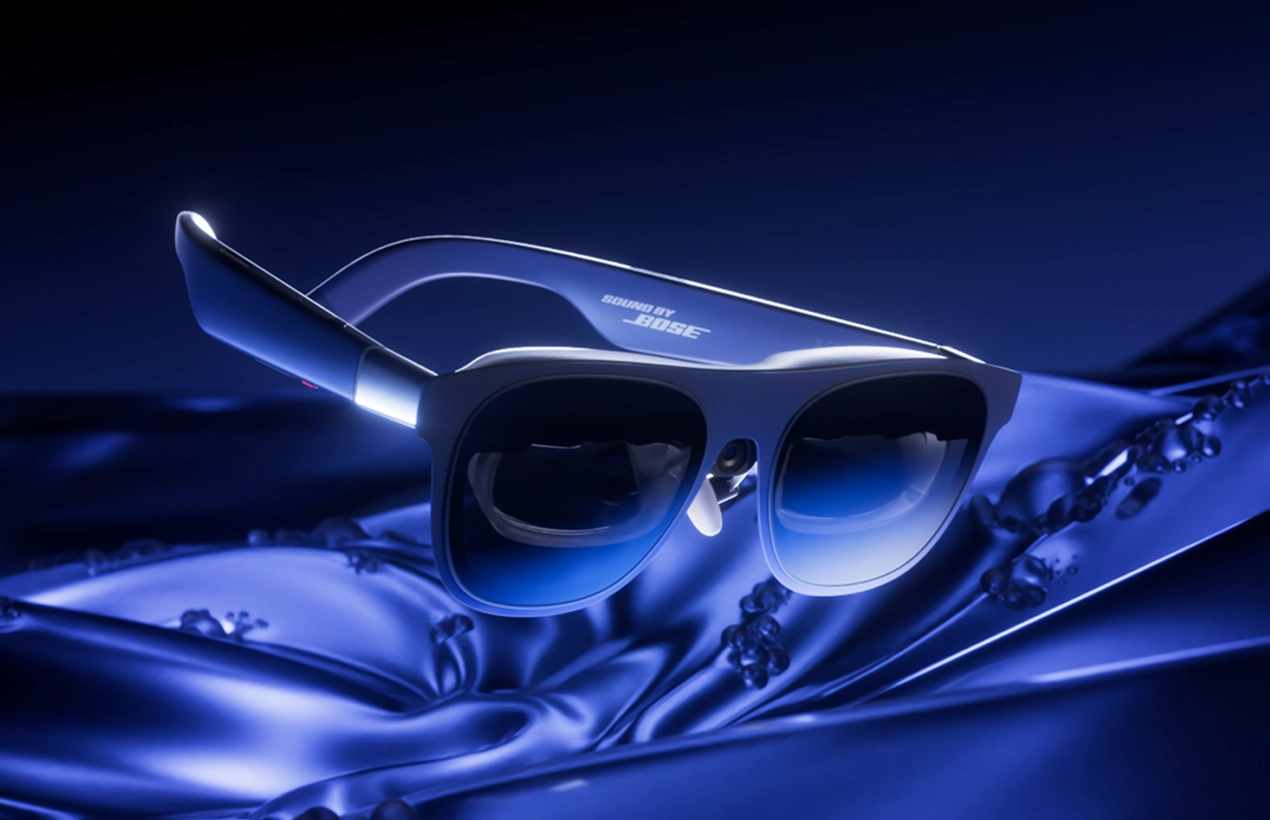
For 90% of people, the 1S is the better buy over the One Pro. That is not a hedge – it is the honest math. You get the same X1 spatial chip, the same Bose-tuned audio, the same Real 3D support, and a higher-resolution 1920x1200 display at a price that is $150 less. The resolution bump matters most for productivity: text on virtual browser windows is crisper and more readable, and the extra vertical pixels give you more usable workspace.
At 82g, it is five grams lighter than the One Pro, which translates to marginally better long-session comfort. The build quality and design language are consistent with XREAL's current lineup – these are a premium product, not a budget compromise.
The sacrifice is field of view. At 52 degrees, the 1S gives up 5° compared to the One Pro, and for immersive movie watching or gaming, that difference is noticeable. The virtual screen feels slightly more contained and slightly less enveloping. For most use cases – commute entertainment, desktop replacement on flights, casual gaming – 52° is more than sufficient. But if maximum immersion is your primary goal, the One Pro justifies its premium. The XREAL 1S is the sweet spot of the entire category: excellent display, full spatial computing, and the best value in the category.
RayNeo Air 4 Pro – Best Budget
$299 | 50° FOV | 1080p per eye | 1200 nits | 76g
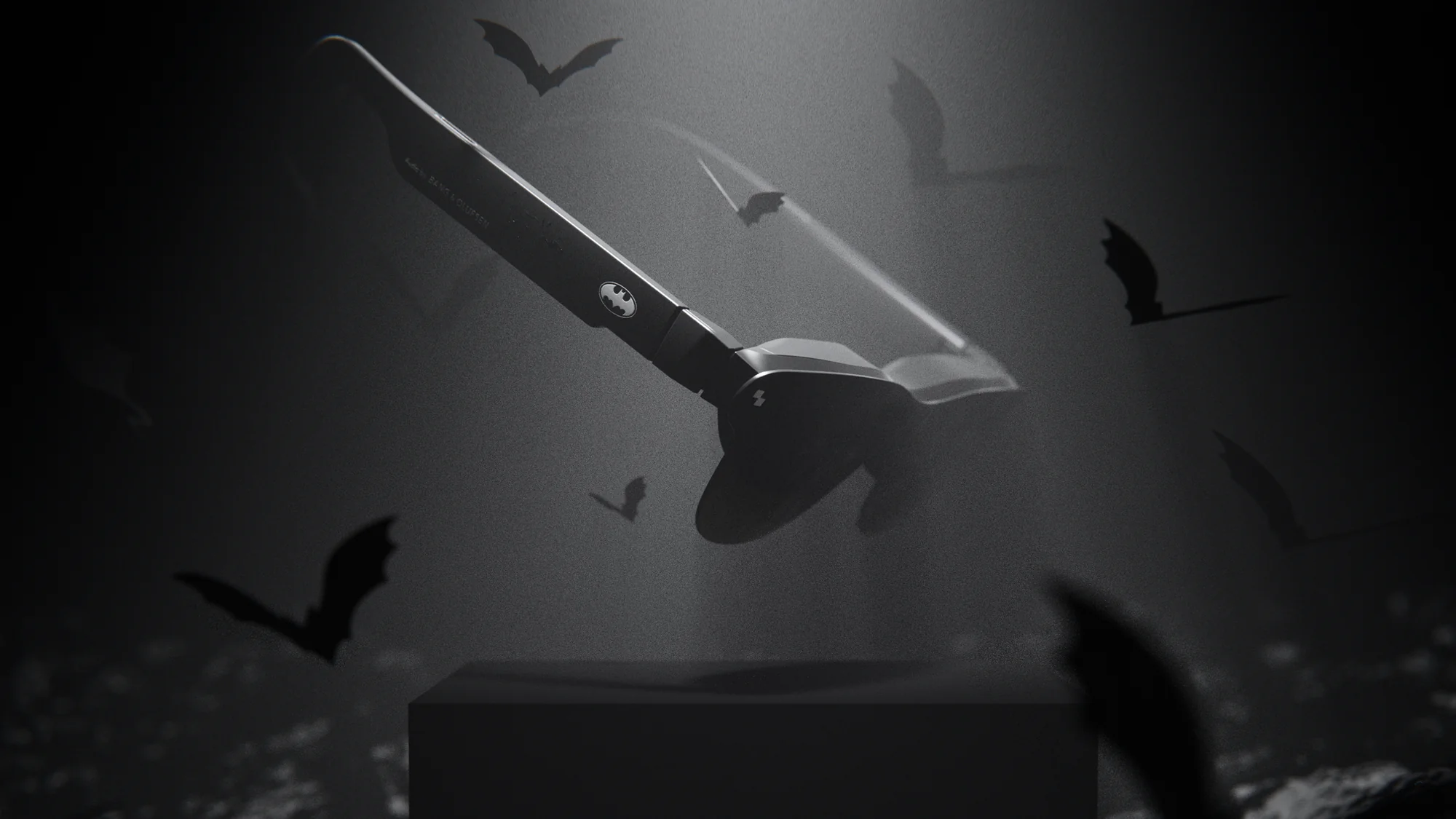
The RayNeo Air 4 Pro is the first product in this roundup that makes AR display glasses feel like a genuinely accessible purchase. At $299, it undercuts the competition by $150 or more – and it does so while carrying a spec sheet that would have been flagship-tier 18 months ago. The headline feature is HDR10 support, a first for the category, paired with a staggering 1,200 nits of brightness and a 200,000:1 contrast ratio. In practice, this means the Air 4 Pro produces the most vivid, punchy image here, particularly in bright environments where dimmer panels wash out.
The B&O-tuned 4-speaker system reduces sound loss by 80% compared to conventional open-ear speaker designs, and the audio quality punches above its price class. At 76g, comfort is excellent. A notable bonus: the Air 4 Pro works natively with DJI drones for FPV flying with a head-mounted display, a use case that none of the other picks address.
The tradeoffs at this price are predictable. There is no electrochromic dimming – you get plastic light-blocking shields that snap on, which work but lack the elegance and adjustability of electronic dimming. There is no spatial computing chip, which means no head-tracked virtual screens; the image moves with your head rather than staying fixed in space. The software ecosystem is thinner than XREAL's. And the 50° FOV is the narrowest among the recommended picks (tied with the Rokid Max 2). The RayNeo Air 4 Pro is ideal for the first-time buyer or budget-conscious user who wants outstanding picture quality without the spatial computing complexity.
VITURE Luma Pro – Best for Movies
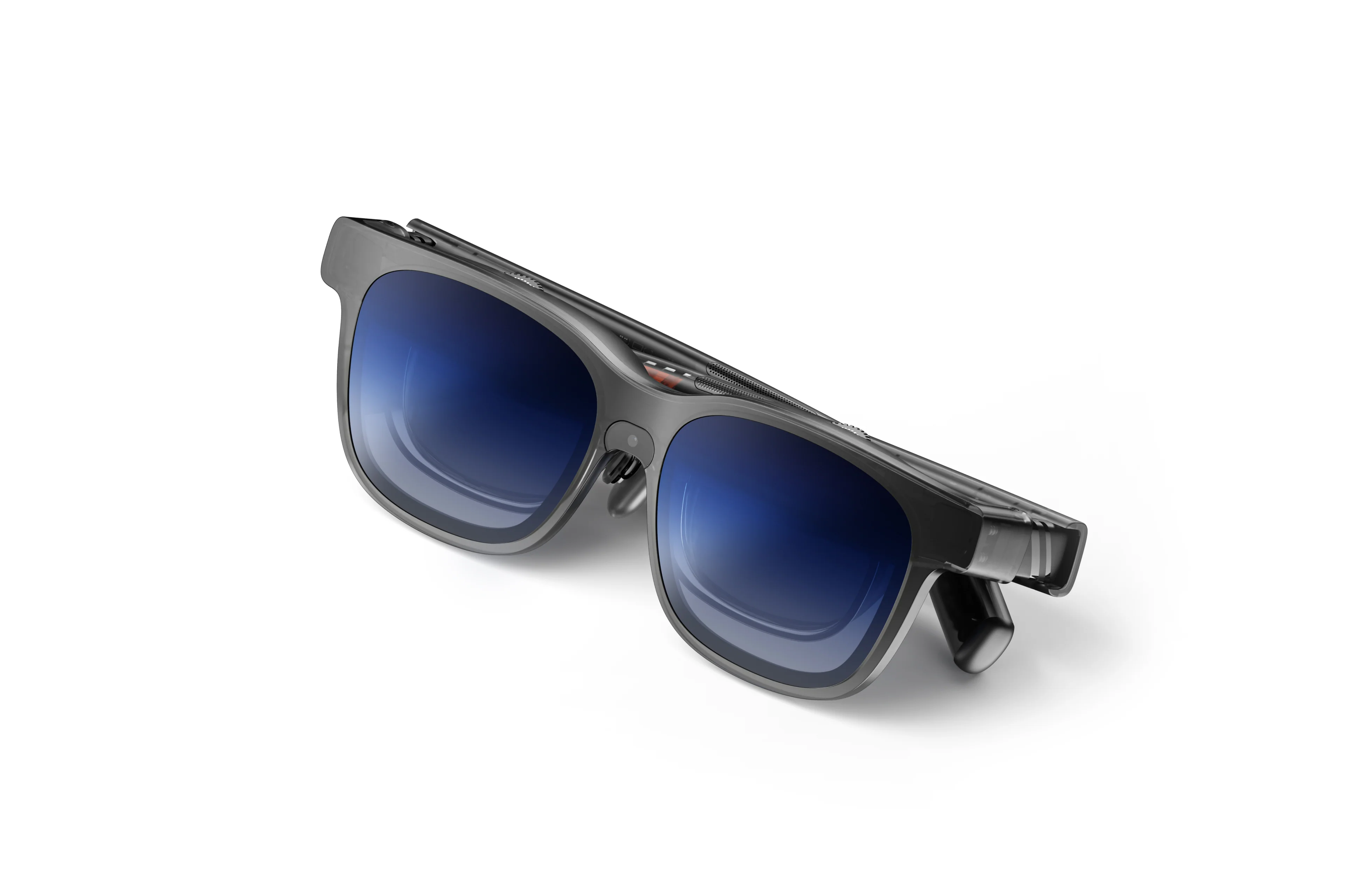
$499 | 52° FOV | 1920x1200 per eye | 1000 nits | 120Hz | 79g
The VITURE Luma Pro is engineered for cinematic viewing, and it delivers. The combination of 1920x1200 resolution, 1,000 nits brightness, and electrochromic dimming produces a rich, detailed, and deeply immersive movie-watching experience. When you darken the lenses fully and queue up a well-mastered film, the Luma Pro disappears and the content takes over – which is exactly the point.
The design is the most fashion-forward in the category: a translucent frame with configurable RGB accent lighting that looks like something you might actually want to wear in public. HARMAN-tuned audio is competent for dialogue and ambient sound. Built-in myopia adjustment to -4.0D means a significant portion of glasses wearers can skip prescription inserts entirely, which is a meaningful convenience and cost savings. At 79g, comfort is solid for two-hour movie sessions.
The significant caveat is what users describe as the "fit lottery." The optical sweet spot on the Luma Pro is narrow, and head shape, nose bridge width, and interpupillary distance all affect whether you can achieve full edge-to-edge clarity. Some users dial it in immediately; others never quite get there. The audio, while tuned by HARMAN, can sound thin and tinny at higher volumes compared to the Bose-tuned XREAL speakers. The VITURE Luma Pro is the pick for dedicated movie watchers who prioritize picture quality and design – but try before you commit if possible.
Rokid Max 2 – Best for Glasses Wearers
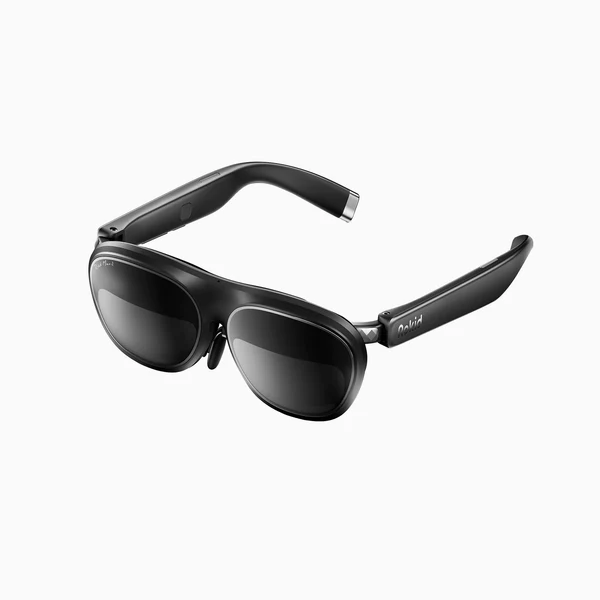
~$399 street / $529 MSRP | 50° FOV | 1080p per eye | 600 nits | 75g
The Rokid Max 2 solves a problem that frustrates a huge portion of the potential audience: prescription accommodation. Its built-in diopter adjustment from 0 to -6.0D is the widest range in the category, covering the vast majority of nearsighted users without any inserts, adapters, or extra cost. You twist a dial, the image snaps into focus, and you are done. For anyone who has dealt with the hassle and expense of custom prescription lens inserts – which typically run $70-$100 and take weeks to arrive – this is a genuine selling point.
At 75g, the Max 2 is the lightest option here, and it shows during extended wear. The 215-inch virtual screen is well-suited to media consumption and pairs naturally with handheld gaming devices like the Steam Deck. The price has dropped to roughly $399 street, making it a competitive mid-range option.
The limitations are significant, though. At 600 nits, the display is the dimmest in this roundup, and it struggles in anything brighter than a dim room. There is no electrochromic dimming. The software ecosystem is thin compared to XREAL and VITURE. And critically, the 1080p-per-eye resolution combined with the dimmer panel makes the Max 2 a poor choice for productivity – small text is noticeably less sharp than on the 1200p competitors. The Rokid Max 2 is the clear pick for glasses wearers who want simplicity, light weight, and media consumption without the prescription lens hassle.
VITURE Beast – One to Watch
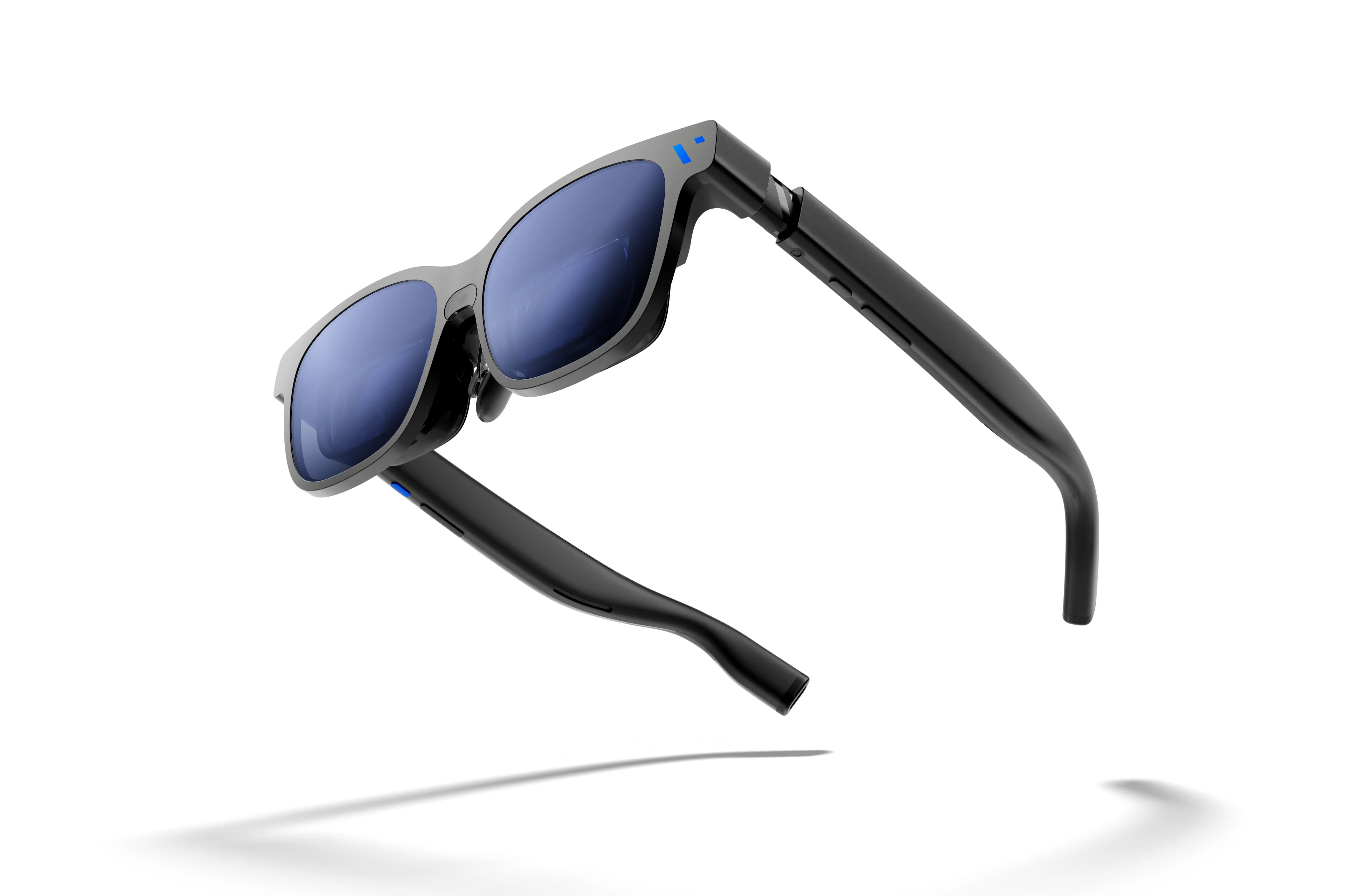
$549 | 58° FOV | 1920x1200 per eye | 1250 nits | 9-level electrochromic | ~96g (preproduction)
On paper, the VITURE Beast has the most impressive spec sheet in the category: the widest FOV at 58 degrees, the brightest display at 1,250 nits, a premium magnesium-aluminum build, and immersive real-time 2D-to-3D conversion. Its 9-level electrochromic dimming is the most granular available. These are not incremental improvements – they represent a meaningful generational leap in raw capability.
However, the Beast has been shipping since late 2025 with key features still unactivated – the full 1200p/120Hz mode was locked behind a firmware update at launch. That the full feature set remains locked months after shipping is a meaningful caution – hardware this ambitious deserves to be judged on what it actually does, not what it promises. At a preproduction weight of ~96g, it is the only option here that exceeds the 90g threshold where extended wear starts to cause fatigue for most users – though final production weight may differ.
Do not buy the VITURE Beast today as your primary device. It is listed here because its potential is too significant to ignore, but potential is not performance. Check back in mid-2026 once the software matures, the full feature set is activated, and real-world impressions accumulate. This is a "watch this space" pick, not a recommendation.
How We Chose
We evaluated every major AR display glasses product currently shipping (and one that arrived with caveats) across six criteria.
Display quality encompasses resolution, brightness, contrast ratio, and HDR support. A great display is the foundation – everything else is secondary if the image does not look good. Field of view is the single most important spec for immersion; the difference between 46° and 57° is the difference between watching a TV across the room and sitting in a theater. Comfort and weight matter enormously because these products sit on your face for extended periods – anything above 90g becomes fatiguing within an hour for most people. Software ecosystem and device compatibility determine whether the glasses are a simple external monitor or a spatial computing platform. Value is assessed not just on sticker price but on what you get relative to alternatives at nearby price points. And prescription lens accommodation – whether through built-in diopter adjustment or affordable insert options – affects whether a huge segment of potential buyers can use the product at all.
Who Should Buy What
"I want the best experience money can buy." The XREAL One Pro delivers the widest FOV, the best audio, and the most complete spatial computing platform. Budget accordingly – accessories push the total past $850.
"I want the best value." The XREAL 1S has a higher-resolution display than the One Pro, costs $150 less, and is the right choice for the vast majority of buyers. This is where most people should land.
"I'm on a budget or buying my first pair." The RayNeo Air 4 Pro at $299 offers HDR, class-leading brightness, and a competent overall package without the spatial computing complexity. An excellent entry point.
"I mainly watch movies and want the best picture." The VITURE Luma Pro combines high resolution, strong brightness, electrochromic dimming, and cinematic design. Just make sure the fit works for your face.
"I wear glasses and hate dealing with inserts." The Rokid Max 2 has the widest built-in diopter range and the lightest weight. It is purpose-built for your frustration.
"I want to wait for the next big thing." Keep an eye on the VITURE Beast. If it delivers on its spec sheet once the software matures, it could reset the category.
What to Avoid
VITURE Pro XR. Superseded by the Luma Pro within VITURE's own lineup. Its 46° FOV is noticeably smaller than everything recommended above, and there is no reason to choose it over the newer model at a similar price.
Any product promising "true AR" at consumer prices. Real augmented reality – persistent digital objects overlaid on the physical world, like a sunglasses-form-factor Apple Vision Pro – does not exist at consumer scale yet. Products making this claim are overpromising. The glasses in this guide are virtual display devices, and they are excellent at that job. For a broader look at the category, see our best smart glasses roundup.
Cheap no-name AR glasses under $150. These invariably use lower-quality optics with poor light uniformity, chromatic aberration at the edges, and insufficient brightness. They cause eye strain within 30 minutes and will sour you on the entire category. Spend the extra money on the RayNeo Air 4 Pro and get something that actually works.