
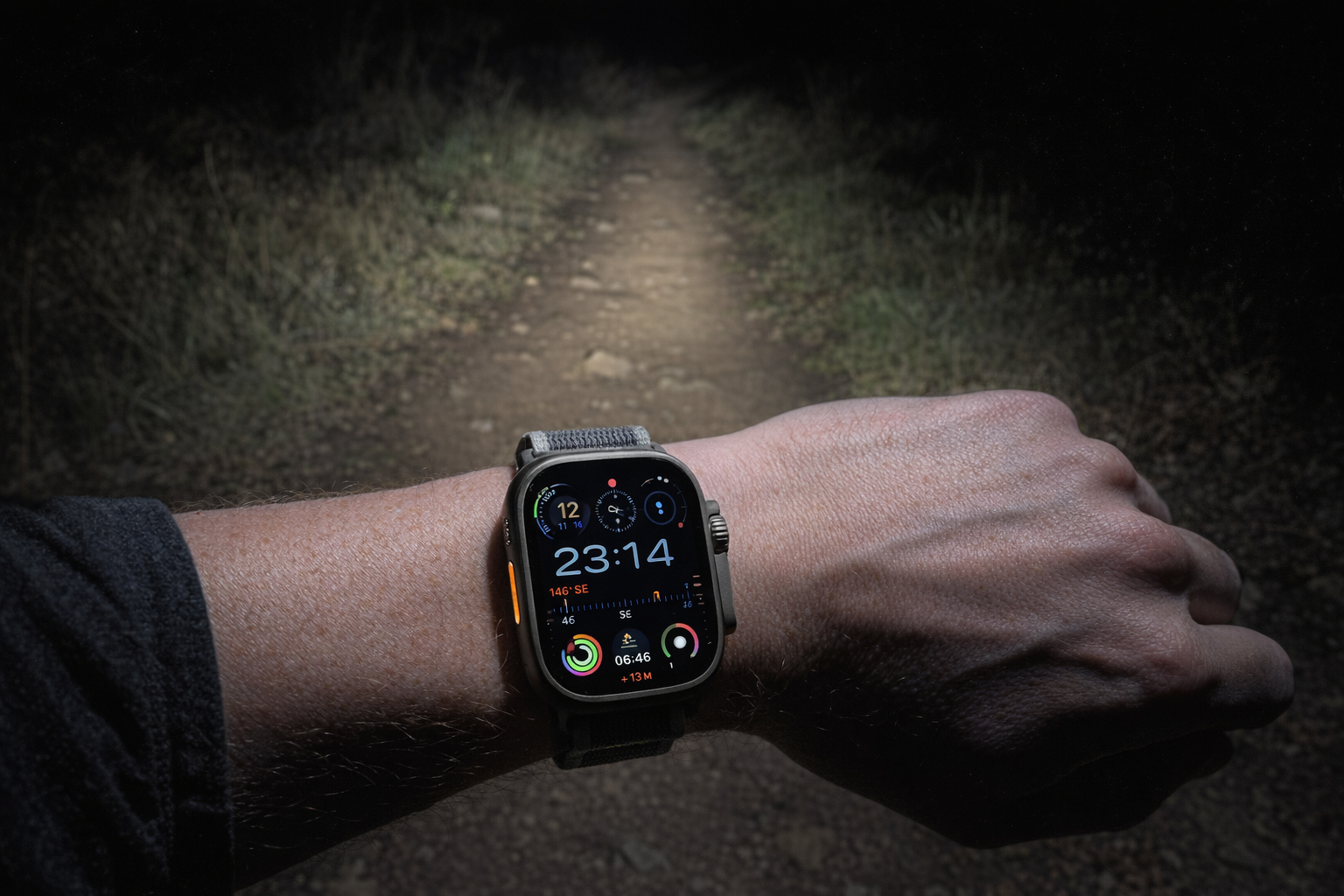
The original Apple Watch Ultra arrived in 2022 as Apple's first real bid for the adventure watch market – ambitious, polarizing, and imperfect. A year later, the Ultra 2 did what Apple does best with second-generation hardware: it fixed the problems without breaking what worked. A display boosted from 2,000 to 3,000 nits, an S9 chip that moved Siri entirely on-device and enabled the new double-tap gesture, 64GB of storage (up from 32GB), and a precision-finding U2 chip – all at the same $799 price point. None of these changes make for dramatic marketing copy, but together they transformed the Ultra from a promising rough draft into a polished, daily-wearable flagship.
Now, more than a year after launch, the Ultra 2 has settled into a comfortable position. Holiday discounts have pushed it into the $699-$749 range, and the watch has benefited from continuous watchOS refinements that keep expanding its capabilities. This is no longer a first-year experiment. It is the most complete smartwatch Apple has ever shipped.
Two caveats remain from the original Ultra: the 49mm case is still too large for wrists under 145mm, and battery life, while best-in-class for Apple Watch, is still a fraction of what Garmin and Coros deliver for multi-day backcountry use.
Design and Build
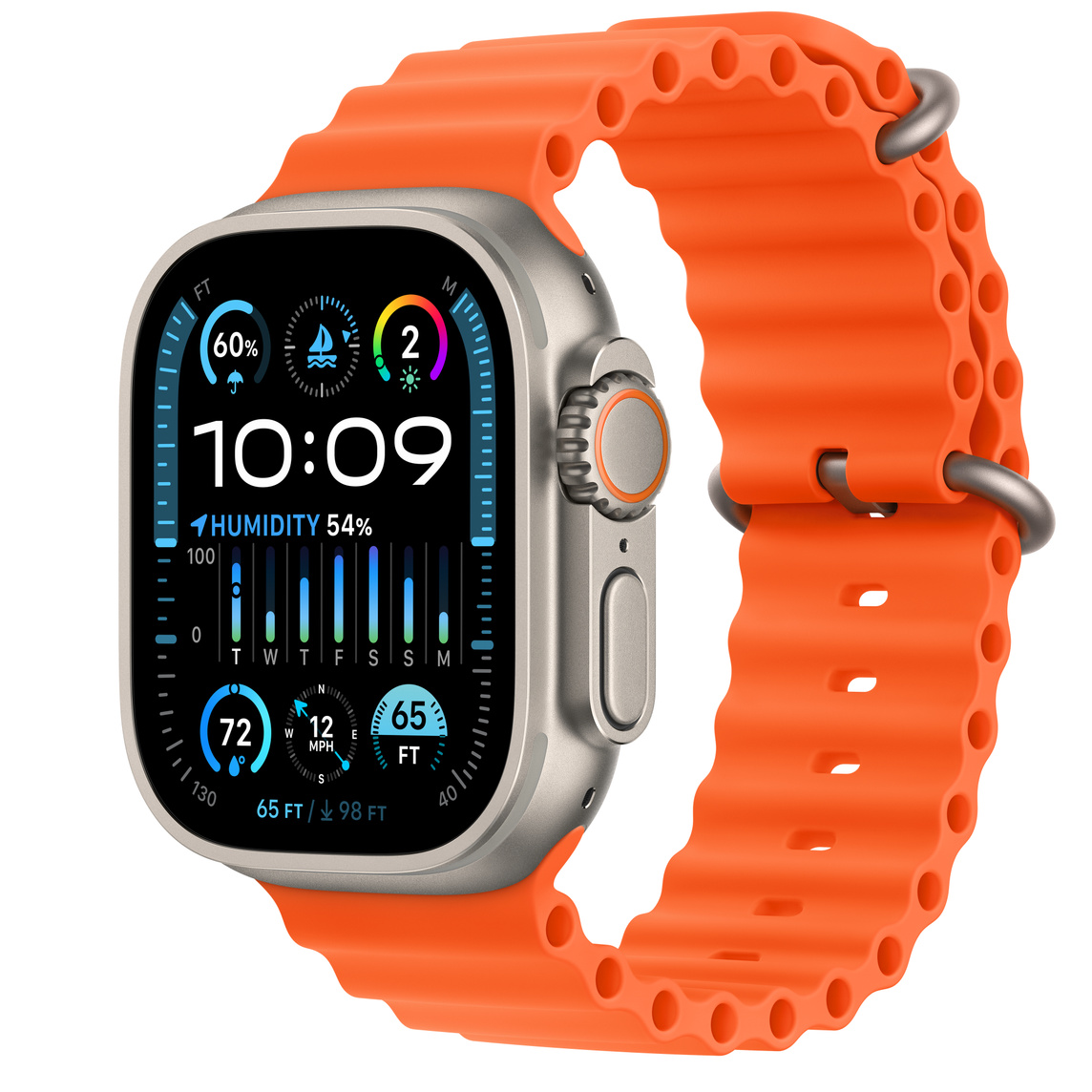
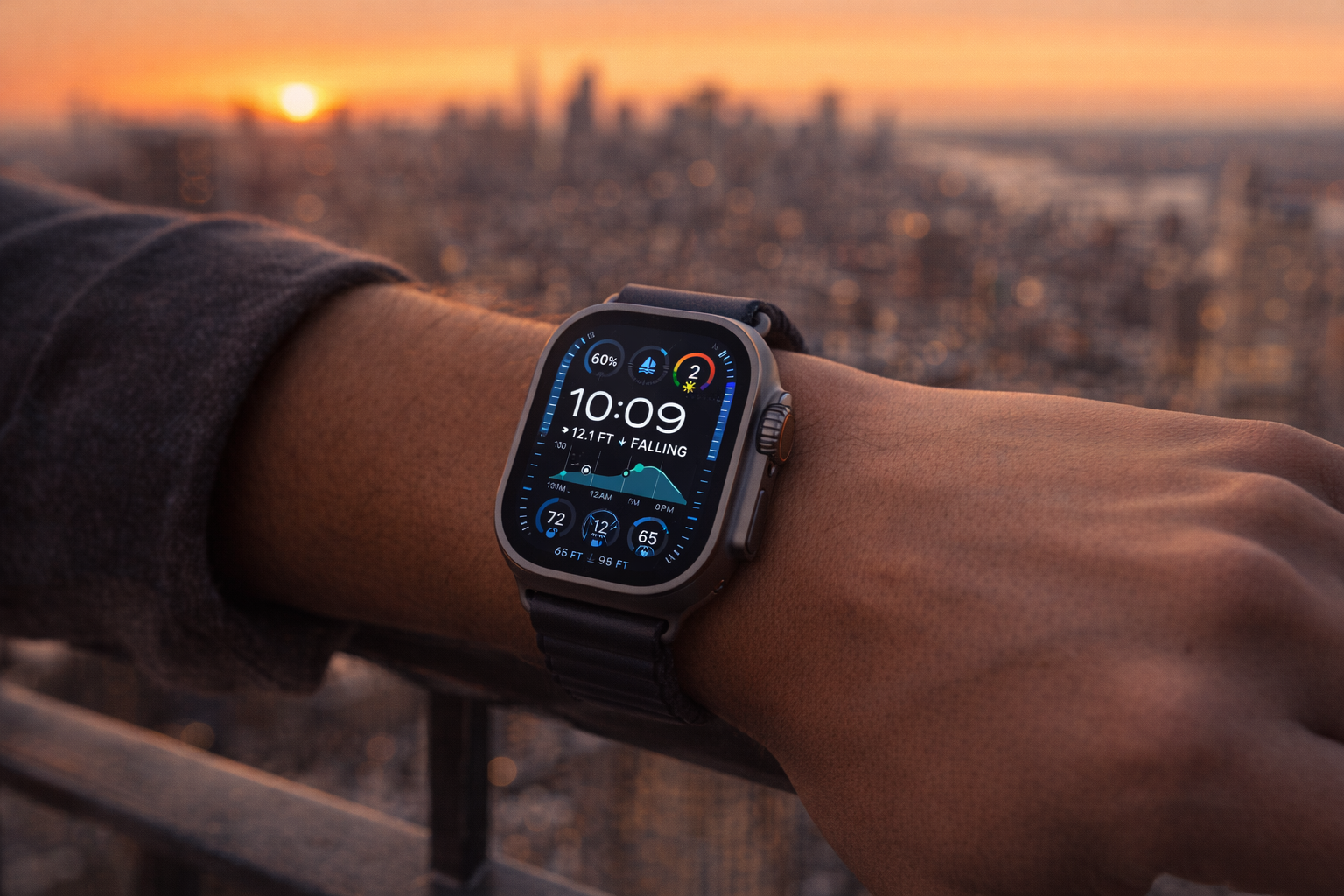
The Ultra 2 is physically identical to its predecessor, and that is entirely fine. The 49mm Grade 5 titanium case remains one of the most overbuilt smartwatch enclosures on the market. At 61.4 grams (natural titanium) with a 49 x 44mm face and 12mm case depth, this is a substantial piece of hardware. The flat sapphire crystal sits recessed within raised titanium edges that absorb impacts before they reach the display – a design decision that has proven its worth over thousands of real-world wrist knocks.
The signature orange Action Button on the left side and the protruding crown guard on the right remain the Ultra's most distinctive visual elements. The Action Button is genuinely useful once configured – mapping it to workout start, waypoint drop, or dive functions eliminates fumbling through menus during activity. The crown guard, initially divisive for its aggressive look, does exactly what it promises: accidental crown activations during push-ups, rock scrambles, and wetsuit sleeves are a non-issue.
Apple addressed one subtle but important complaint from the original Ultra: the side button is less sensitive to accidental presses, reducing the phantom Siri activations that plagued the first generation during vigorous exercise. It is a small fix that eliminates a daily annoyance.
Comfort depends entirely on wrist size and expectations. The 49mm case fits wrists from 130 to 210mm, and the three band styles – Ocean, Alpine Loop, and Trail Loop – cover everything from diving to ultrarunning. The Trail Loop remains the standout for daily wear, striking a balance between security and breathability. Anyone accustomed to a 42mm or 44mm Apple Watch will feel the size difference for the first week. After that, the flat display and relatively even weight distribution make it disappear during activity. Sleep tracking with the Ultra 2 is viable but not ideal; the case thickness makes side-sleeping awkward for some.
Water resistance is rated at 100 meters (WR100) with EN 13319 certification for recreational diving to 40 meters. The built-in depth gauge and water temperature sensor activate automatically when submerged, and the Oceanic+ app transforms the watch into a functional dive computer for recreational scuba. This remains a capability no other smartwatch matches.
Display
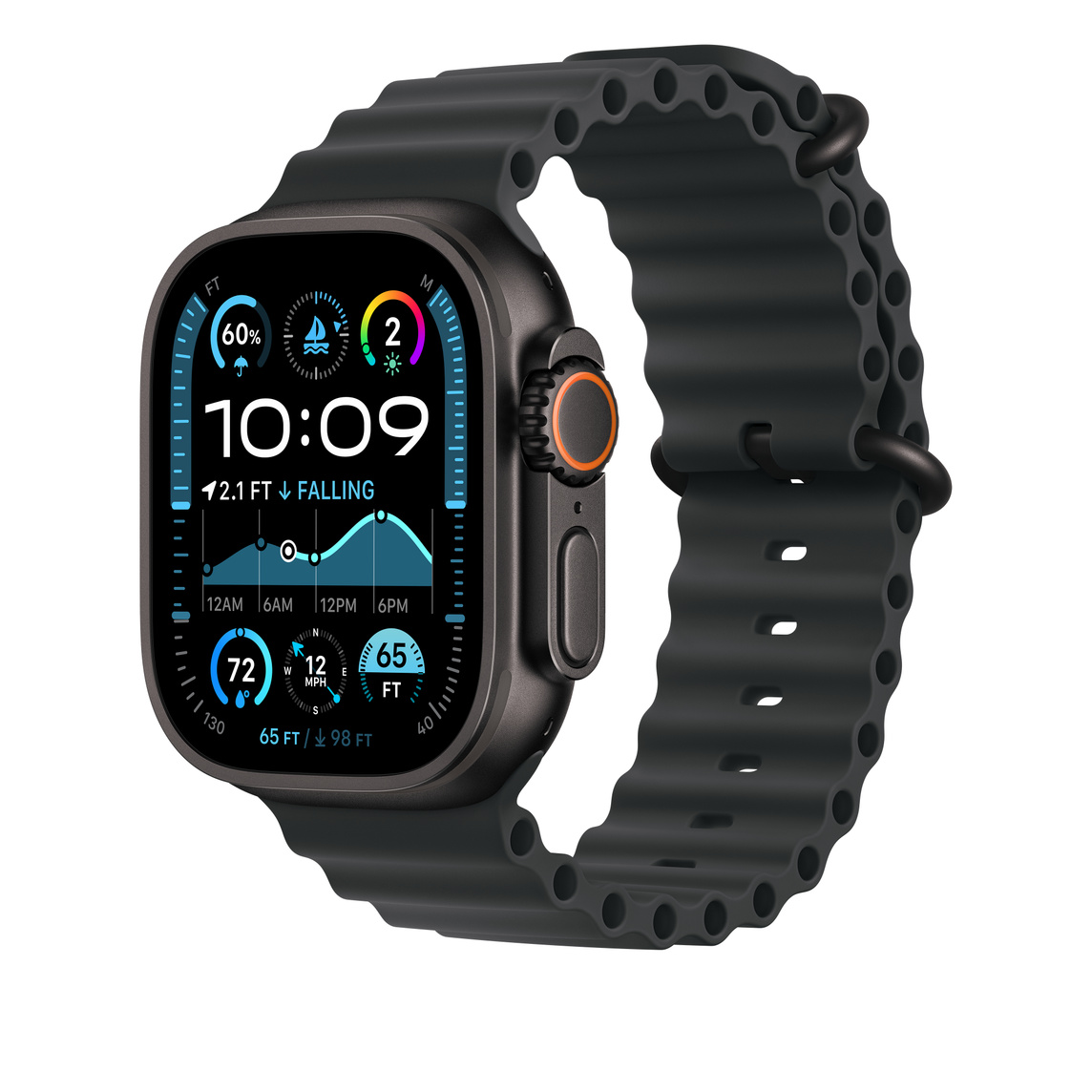
The jump from 2,000 nits to 3,000 nits is the single most impactful hardware upgrade on the Ultra 2, and it is immediately obvious in direct sunlight. The 1.92-inch OLED display, running at 410 x 502 pixels across 1,185 square millimeters of display area, was already the largest and sharpest in Apple's lineup. At 3,000 nits peak brightness, it becomes the most legible outdoor smartwatch display available – brighter than even the iPhone 15 Pro's peak output.
The difference matters most during outdoor workouts. Glancing at pace, heart rate, or navigation data mid-run in harsh midday sun requires zero squinting and no wrist angle adjustment. The always-on display dims to 1 nit minimum for nighttime wear, providing a functional bedside clock without lighting up a dark room.
This brightness advantage over the original Ultra is the single strongest reason to choose the Ultra 2 over a discounted first-generation model. Every other improvement is welcome but incremental; the display upgrade is transformative for anyone who trains outdoors.
Performance and Features
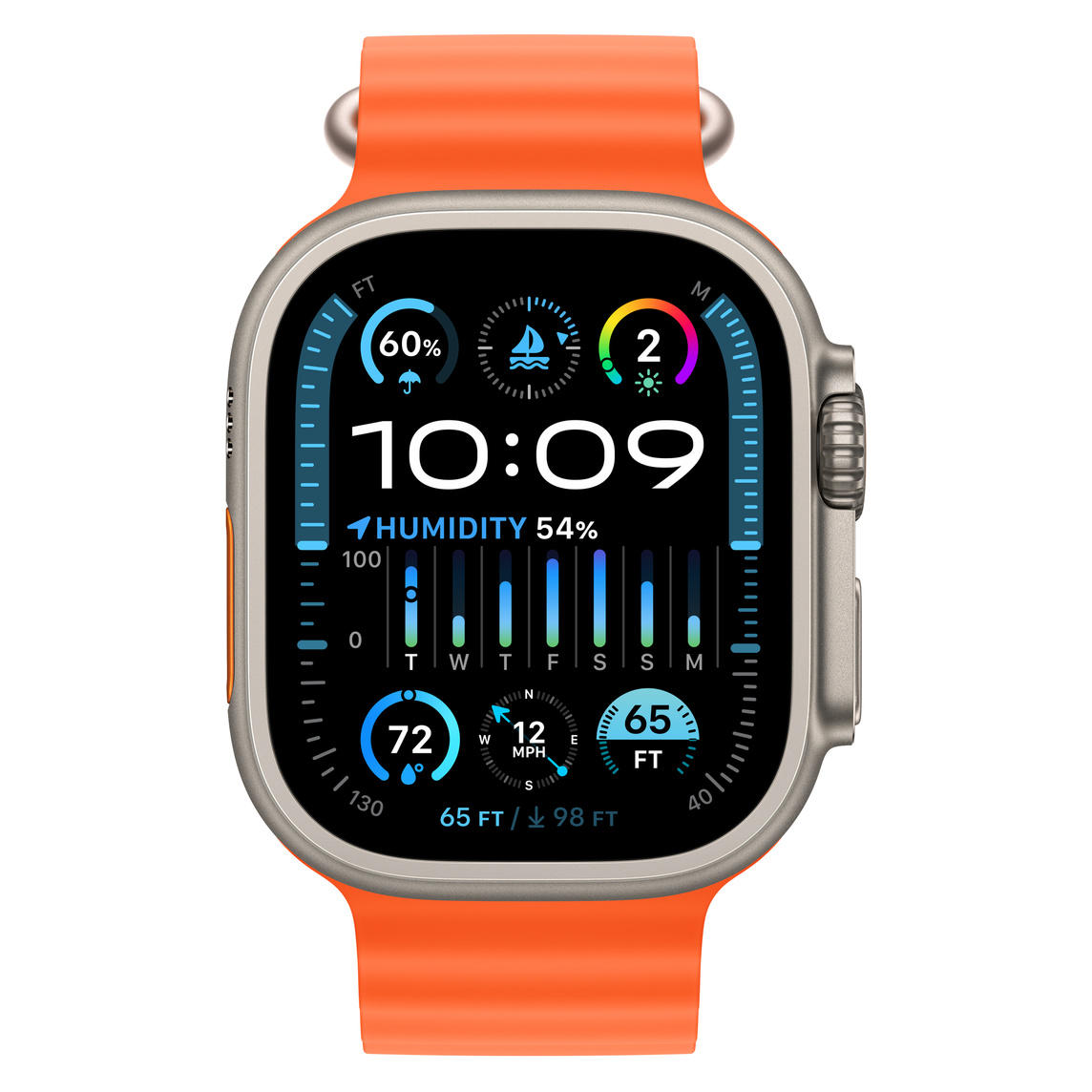
The S9 SiP (System in Package) is the engine behind the Ultra 2's most meaningful new capabilities. With 5.6 billion transistors – 60 percent more than the S8 – and a four-core Neural Engine that runs twice as fast, the S9 enables three headline features that the original Ultra simply could not deliver.
On-device Siri processes requests locally without requiring a Wi-Fi or cellular connection. Response times drop from roughly three seconds to under two, and health data queries ("What was my resting heart rate last night?") now resolve entirely on the watch. For anyone who previously dismissed Siri on Apple Watch as too slow and unreliable, the S9 version is a genuine course correction.
Double Tap uses the Neural Engine to detect when the index finger and thumb of the watch hand tap together twice, enabling one-handed control without touching the screen. Answering calls, snoozing alarms, scrolling through the Smart Stack, and controlling media playback all work with a pinch gesture. The detection algorithm runs continuously in the background with no perceptible battery impact. In practice, the gesture works well – occasional misses happen, particularly with cold hands or gloves, but false positives are rare.
Precision Finding for Find My leverages the second-generation Ultra Wideband (U2) chip to provide directional guidance when locating a nearby iPhone 15 or later. The watch displays distance and a directional arrow, turning a frustrating couch-cushion search into a five-second retrieval. It is a minor feature that delivers disproportionate daily satisfaction.
Storage doubled to 64GB, which matters primarily for offline music and podcast libraries. The 30 percent faster GPU keeps animations fluid and app launches snappy, though the real-world difference from the S8 is subtle outside of Siri interactions.
Health and Fitness
The Ultra 2's optical heart rate sensor remains one of the most accurate wrist-based sensors available. Heart rate accuracy, benchmarked against Polar H10 chest straps, places the Ultra 2 at or near the top of wrist-based rankings – matching or exceeding dedicated fitness bands and competing smartwatches from Garmin, Samsung, and WHOOP across running, cycling, and sleep monitoring. Heart rate tracking during steady-state cardio is excellent; high-intensity interval work introduces slightly more variance, but the Ultra 2 handles rapid heart rate transitions better than most optical sensors.
Sleep tracking accuracy is similarly strong. Sleep staging accuracy, measured against clinical-grade reference devices, lands at approximately 73 percent for REM and deep sleep and 86.5 percent for light sleep – placing it ahead of the Oura Ring Gen 4 and well ahead of Samsung and Garmin equivalents.
GPS performance benefits from dual-frequency L1/L5 multiband GNSS. In open-sky conditions – trails, roads, parks – the Ultra 2 tracks with tight, consistent lines that match top-tier Garmin units like the epix Pro. Across a half-marathon distance, GPS deviation is typically within plus or minus 0.07 miles of actual course distance. The weakness, consistent across all multiband smartwatches, is dense urban environments with tall buildings, where signal reflections introduce occasional drift.
The watchOS platform has steadily expanded the Ultra 2's sport capabilities since launch. Cycling power meter support, custom workout intervals, running form metrics (via compatible accessories), and improved swimming stroke detection have all arrived through software updates. The training load and recovery insights remain less sophisticated than what Garmin offers, but for the majority of athletes who want reliable tracking without a PhD in periodization, the Ultra 2 delivers.
Battery Life
Apple rates the Ultra 2 at 36 hours of normal use and 72 hours in Low Power Mode. Real-world performance consistently meets or slightly exceeds the standard claim. A typical day of all-day wear with notifications, a 60-minute GPS workout, and overnight sleep tracking lands at roughly 30-35 percent battery drain – comfortably reaching two full days before needing a charge with lighter use patterns.
For context, that means charging every other morning for most users. It is the best battery life in the Apple Watch lineup by a wide margin, and it eliminates the daily charging ritual that has defined every previous Apple Watch. However, it remains a fraction of what dedicated adventure watches deliver. The Garmin Fenix 8 manages 16 days or more of regular use depending on configuration; the Coros Vertix 2S stretches to 36 days in smartwatch mode. Anyone planning multi-day backcountry trips without access to power will still need a Garmin or Coros on their wrist.
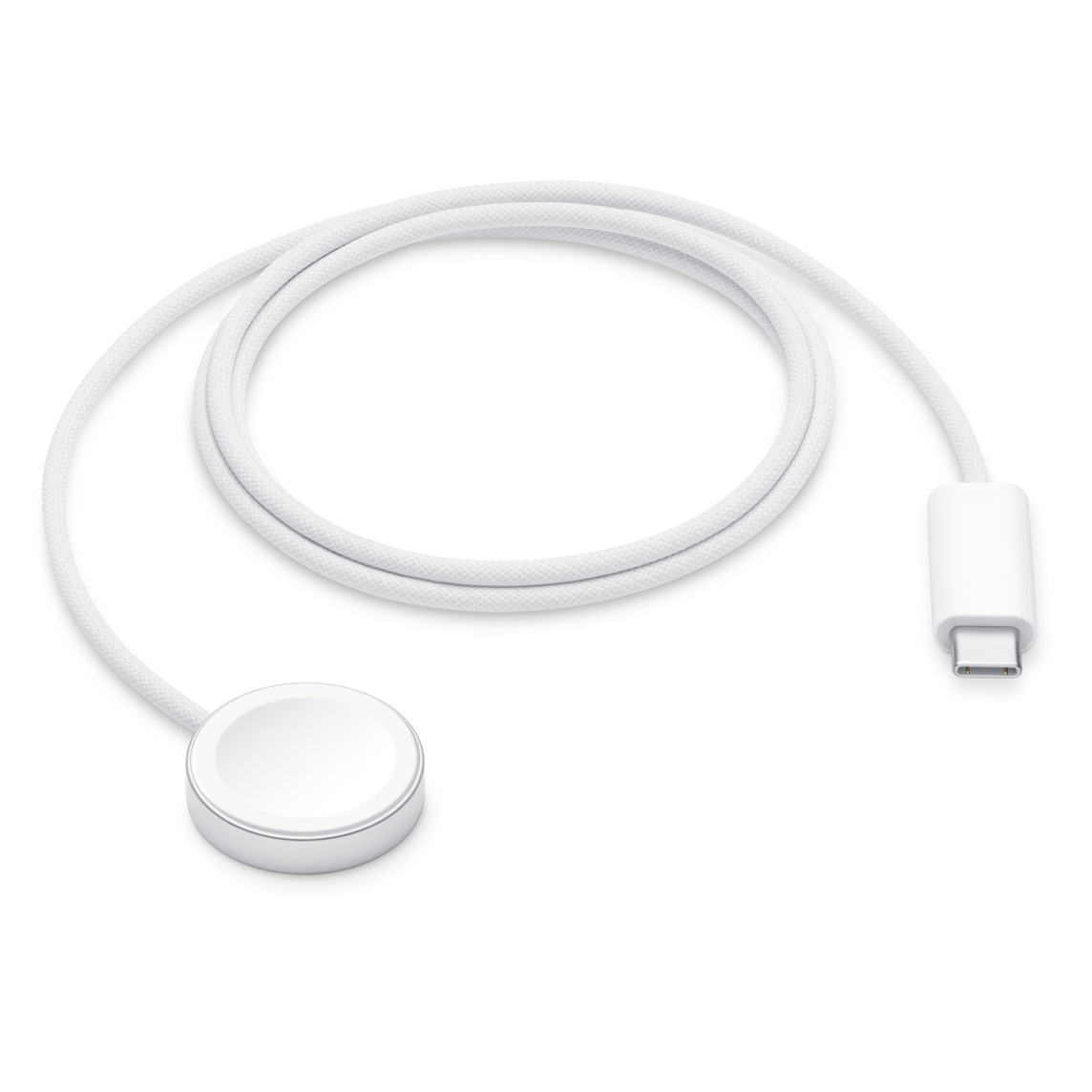
Charging is fast, reaching 80 percent in about an hour via the magnetic USB-C charging puck. The practical reality for most Ultra 2 owners: top off during a morning shower every other day and never think about battery anxiety again. By Apple Watch standards, that is a revelation.
Who It's For
The Apple Watch Ultra 2 is the right choice for iPhone owners who want the best smartwatch experience and are willing to wear a larger case to get it. Runners, cyclists, swimmers, hikers, and general fitness enthusiasts who train outdoors will benefit most from the bright display, accurate GPS, and reliable heart rate tracking. Recreational divers get a genuinely useful dive computer on their wrist. Anyone frustrated by daily Apple Watch charging will appreciate the two-day battery cadence.
At its current discounted price in the $699-$749 range, the Ultra 2 undercuts the Garmin Fenix 8 by $250-$500 while offering superior smartwatch integration, a brighter display, and comparable heart rate accuracy.
Who Should Skip
Dedicated endurance athletes who need multi-day GPS battery life, advanced training load analytics, or sport-specific metrics like running power and stamina should look at the Garmin Fenix 8 or Garmin Enduro 3. The Apple Watch ecosystem, while improving, does not match Garmin's depth for serious training analysis.
Anyone with smaller wrists (under 145mm) or strong preferences for lighter, thinner watches should consider the Apple Watch Series 10, which delivers most of the same health and fitness features in a dramatically more wearable package.
Android users need not apply. The Ultra 2 requires an iPhone XS or later and offers zero functionality without one.
The Verdict
The Apple Watch Ultra 2 represents Apple's most refined wearable to date – a watch that took every meaningful complaint about the original Ultra and addressed it without inflating the price. The 3,000-nit display alone justifies the generational upgrade, and the S9 chip's on-device Siri and double-tap gesture add genuine daily utility. Heart rate and GPS accuracy compete with the best in the industry, battery life finally breaks the daily-charge cycle, and the titanium build quality will outlast multiple watchOS generations.
It is not a watch for everyone. The 49mm case is too large for many wrists, the battery cannot touch purpose-built adventure watches, and the training analytics remain a step behind Garmin for serious athletes. But for the vast majority of iPhone owners who want a single device that handles fitness tracking, notifications, health monitoring, and outdoor adventure with equal competence, the Ultra 2 at its current discount pricing is the best value in premium smartwatches. If you need the latest features like satellite messaging, check out our Apple Watch Ultra 3 review to see whether the upgrade is worth it. And if you spend most of your time on trails and peaks, our guide to the best outdoor watches covers the full competitive landscape.
| Category | Score | Weight |
|---|---|---|
| Core Function (GPS, HR, sport tracking, sensors) | 88 | 30% |
| Build Quality (titanium, durability, water resistance) | 92 | 15% |
| User Experience (display, S9 chip, Siri, double-tap, watchOS) | 89 | 20% |
| Value (price vs. features vs. competition) | 85 | 20% |
| Battery Life | 78 | 15% |
Overall Score: 87/100