
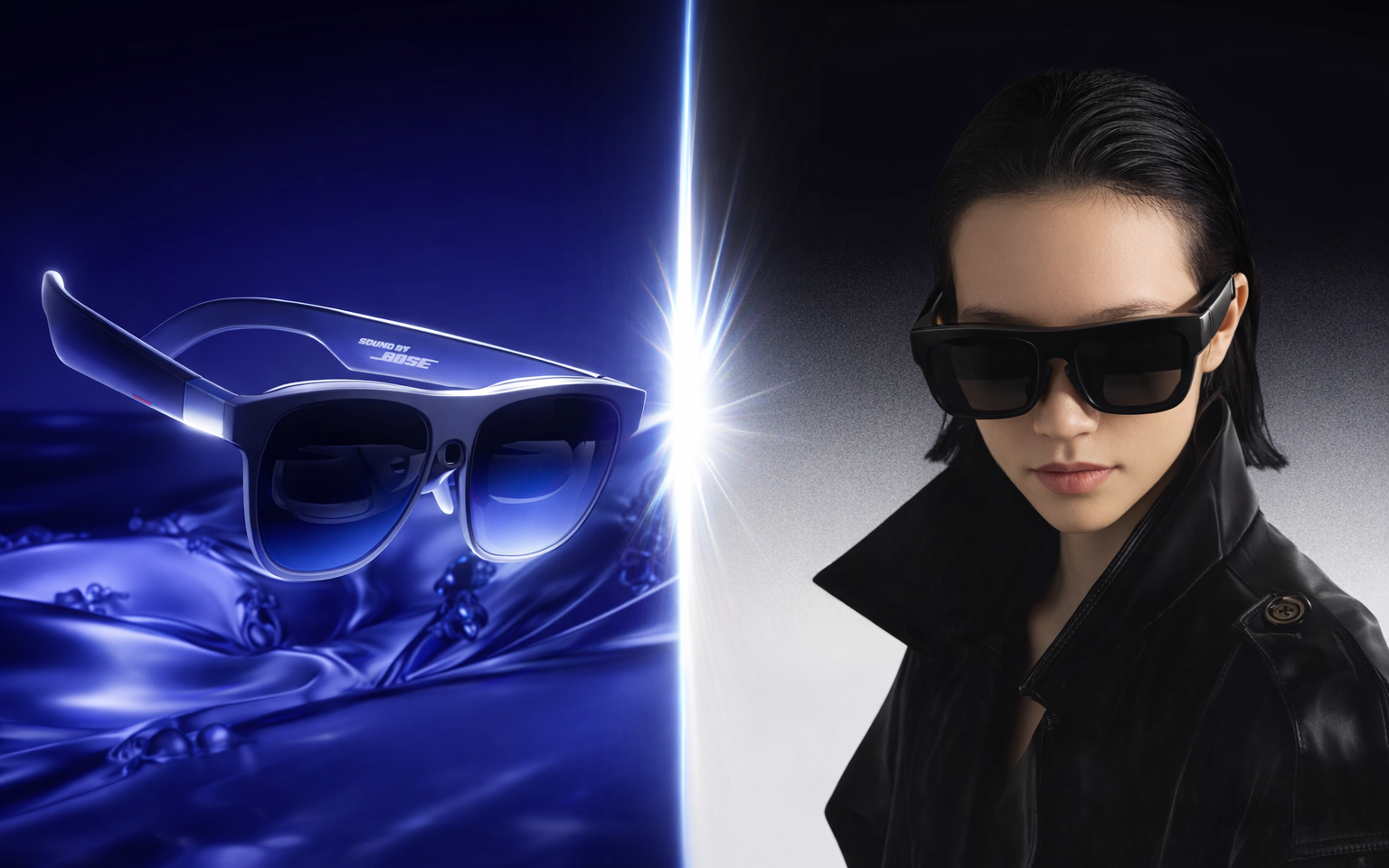
Two AR glasses. Same brand. Same X1 spatial chip. Same 3ms latency. Same Bose-tuned speakers. One costs $449, the other $599. The gap between them is simultaneously smaller and larger than those numbers suggest -- because the things the One Pro does better are exactly the things that matter most for long-term use, while the 1S counters with a spec advantage that looks devastating on paper.
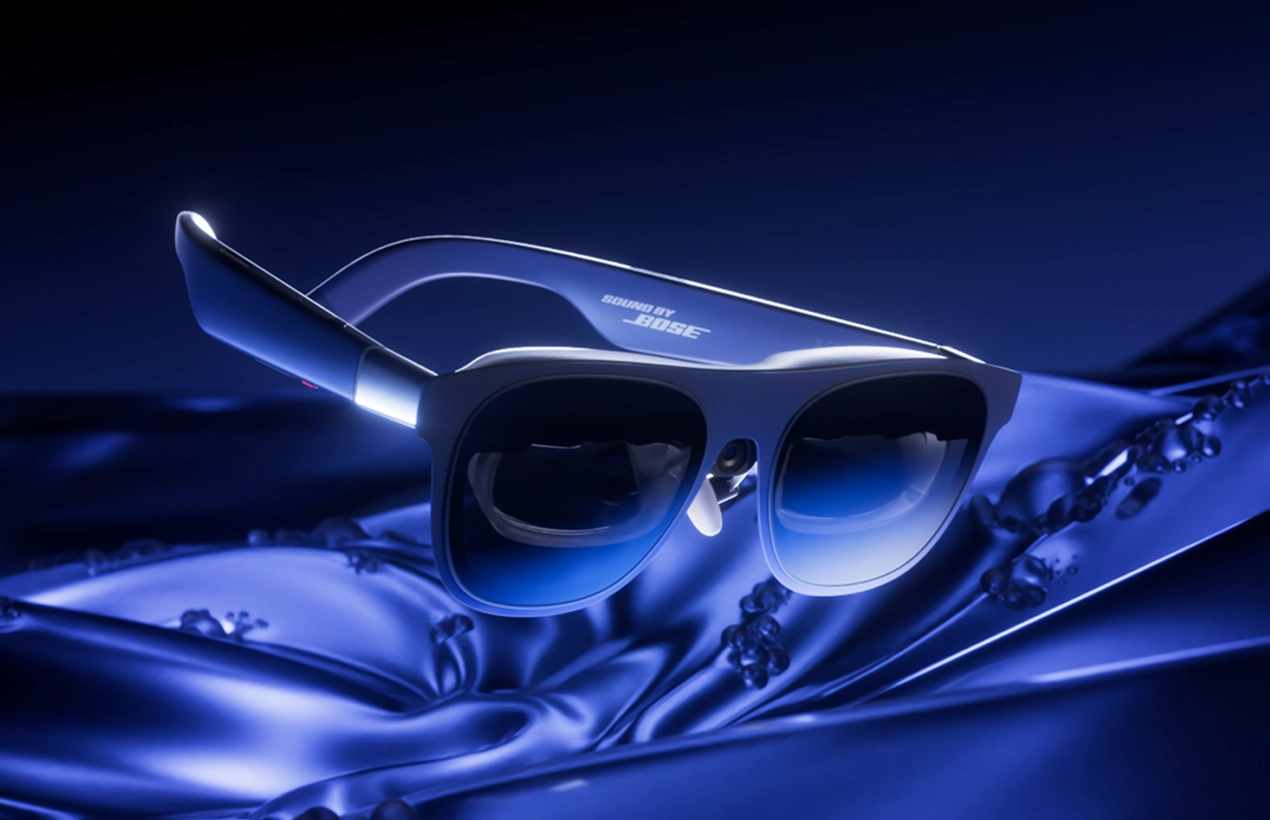
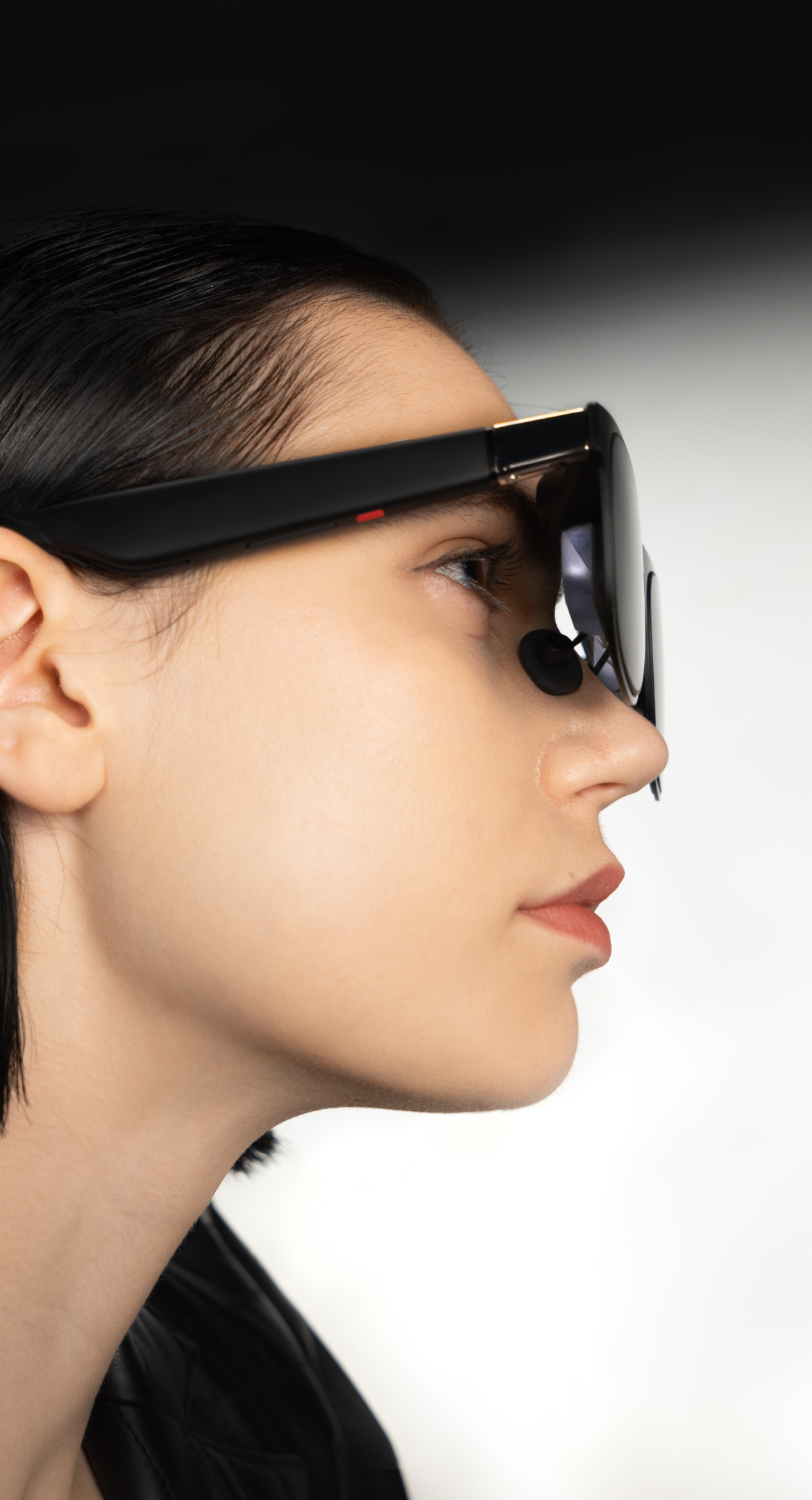
This is the most interesting internal rivalry in wearable tech right now.
Display Resolution: The 1S's Secret Weapon
Start with the number that surprises everyone: the cheaper Xreal 1S has higher resolution than the One Pro. Each eye gets a Sony Micro-OLED panel running at 1920x1200 in a 16:10 aspect ratio. The One Pro? 1920x1080 at 16:9. That is 120 extra vertical pixels per eye on the budget model.
The difference is not subtle. The 1S's taller image fills more of the vertical field, and the 16:10 aspect ratio is a perfect native match for the Steam Deck's display output -- no black bars, no scaling artifacts. For anyone using these glasses primarily as a portable gaming screen, the 1S renders a cleaner, more pixel-complete image than its more expensive sibling.
Text clarity benefits too. Small UI elements, subtitles, and browser text carry slightly more definition on the 1S thanks to that extra pixel density packed into a marginally smaller field of view. The resolution advantage is real and visible.
Edge: Xreal 1S
Field of View and Optics: Where the Pro Earns Its Name
The One Pro fires back with the single most impactful optical upgrade in the current AR glasses generation: a 57-degree field of view delivered through Xreal's X-Prism flat-prism optics.
The 1S offers 52 degrees via traditional birdbath optics. Five degrees sounds trivial. It is not. That gap translates to roughly 20% more visible screen area on the One Pro, and the perceptual effect is immediate. The virtual screen on the One Pro feels genuinely expansive -- a 171-inch equivalent at four meters versus the 1S's more modest frame. Movies feel more cinematic. Productivity layouts feel less cramped. The extra peripheral coverage reduces the "peering through binoculars" sensation that all AR glasses share to some degree.
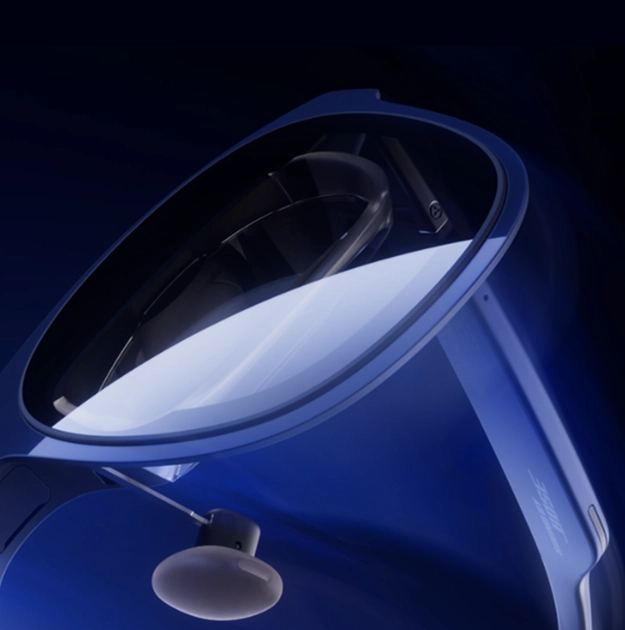
The X-Prism optics also give the One Pro a slightly thinner front profile, contributing to a more refined form factor. The electrochromic dimming -- three modes from clear to full theater blackout -- provides light control that the 1S matches but cannot exceed.
There is a trade-off. The One Pro's wider field occasionally shows slight softness at the extreme edges -- a common characteristic of flat-prism designs. But the center 90% of the One Pro's image is pristine, and most viewing happens there. The wider canvas outweighs the minor edge penalty for the vast majority of use cases.
Edge: Xreal One Pro
Comfort and Wearability
The 1S weighs 82 grams. The One Pro weighs 87 grams. Five grams is perceptible over long sessions, but barely. Both sit comfortably for an hour or two without the nose-bridge fatigue that plagues heavier competitors.
Where the One Pro gains ground is fit customization. It ships in two IPD-specific SKUs (57-66mm and 66-75mm), covering approximately 95% of interpupillary distances. The 1S relies on a one-size approach with three interchangeable nose pad sizes. Both work, but the One Pro's IPD-matched design delivers a more consistent sweet spot for the optics -- less time fidgeting, more time watching.
The One Pro's thinner front profile from the X-Prism optics also distributes weight slightly more evenly, reducing the front-heavy sensation that birdbath designs carry. Extended sessions feel marginally better balanced.
Both models share the same prescription lens insert system (purchased separately, starting around $50-60), the same temple arm design, and the same spring-hinge mechanism. Neither will win fashion awards. Both look like chunky sport sunglasses -- functional, not subtle.
Heat is worth mentioning. Both models use the same X1 chip and run noticeably warm during Real 3D conversion, enough that some sessions may need interruption. The One Pro's thinner optical assembly provides marginally better heat dissipation, but the difference is small.
Edge: Xreal One Pro (slight)


Audio
Both models feature speakers tuned through Xreal's collaboration with Bose, housed in the temple arms with a directional open-ear design. The audio DNA is shared, and the core character is the same: clear mids, decent stereo separation, and enough spatial presence to make movie watching enjoyable without headphones.
The One Pro pulls ahead on bass response. The frequency range extends to 20Hz-20kHz, delivering noticeably fuller low-end than the 1S. Action movies and music benefit from the added depth. The 1S's speakers sound thinner by comparison -- functional for dialogue and casual listening, but lacking the body that makes the One Pro's audio genuinely impressive for open-air drivers.
Neither model replaces proper headphones. Sound leakage is significant on both at comfortable listening volumes -- anyone sitting next to you on a plane will hear your content. For private listening, pair Bluetooth earbuds with your source device.
Edge: Xreal One Pro
Software and Ecosystem
This is the category where the gap narrows to nearly nothing. Both glasses run on the same Xreal X1 spatial computing chip. Both deliver native 3DoF tracking with identical 3ms motion-to-photon latency. Both support the same viewing modes: Follow Mode (screen moves with your head), Anchor Mode (screen locked in virtual space), and Ultrawide Mode for panoramic multi-window layouts.
Both now support Real 3D -- the AI-powered 2D-to-3D conversion that launched alongside the 1S at CES 2026 and rolled out to the One and One Pro via firmware update within weeks. The feature converts any on-screen content into stereoscopic 3D in real time, and it works surprisingly well for cinematic content, though the frame rate drops to around 30fps, making it impractical for active gaming.
The Nebula companion app (available on Android, macOS, and Windows in beta) manages settings, brightness, IPD calibration, and screen aspect ratios for both models. The Windows version remains rough -- occasional lag and interface quirks persist -- but core functionality works. Neither model requires the app for basic plug-and-play operation, which is a strength of Xreal's approach. Plug in a USB-C cable, and the display lights up in seconds.
Compatibility is identical. Any USB-C device with DisplayPort output works: iPhones (15 and later, excluding iPhone 16e), MacBooks, Windows laptops, Steam Deck, ROG Ally, and Android phones with DP-Alt mode. The optional Xreal Neo hub ($119) adds a 10,000mAh battery and video passthrough for devices that lack native DisplayPort output -- most notably the Nintendo Switch 2, which requires the Neo hub to work with either pair of glasses.
Edge: Draw
Value Proposition
The 1S costs $449. The One Pro's MSRP is $649, though the current street price sits at $599 -- a discount that has held since late 2025 and may fluctuate with tariff-driven pricing adjustments (Xreal briefly raised the list price to $769 in early 2026 before market reality brought the actual selling price back down).
At the $599 real-world price, the gap is $150. At $649 MSRP, it is $200. Either way, the One Pro asks a significant premium for a wider field of view, better optics, slightly superior audio, and improved comfort engineering -- while actually delivering lower per-eye resolution.
The 1S, meanwhile, gives you 90% of the One Pro's functionality with sharper pixel density, the same X1 chip, the same tracking performance, and the same Real 3D capability. For someone whose primary use case is "big portable screen for gaming and movies," the 1S delivers virtually the same experience for substantially less money.
The One Pro justifies its premium for users who prioritize immersion breadth (that 57-degree FoV makes a meaningful difference), who want the best optical design currently available in consumer AR glasses, or who plan to push into spatial computing workflows where the wider canvas and cleaner optics matter.
Edge: Xreal 1S
Who Should Buy the Xreal 1S ($449)
The 1S is the right choice for portable entertainment and gaming users who want a big, sharp virtual screen without spending flagship money. If the Steam Deck, ROG Ally, or Nintendo Switch 2 is your primary source device, the 1S's 16:10 aspect ratio and higher resolution make it the technically superior match. It is also the better pick for budget-conscious buyers entering the AR glasses space for the first time -- it delivers the core magic of head-tracked spatial display at a price that does not sting.
Who Should Buy the Xreal One Pro ($599)
The One Pro is for enthusiasts and daily-driver users who want the widest, most immersive viewing experience available. The 57-degree field of view transforms movie watching and productivity use in a way the 1S cannot match. If you plan to use AR glasses as a serious monitor replacement for travel -- anchoring multiple windows, working in spatial layouts, watching content for hours -- the One Pro's superior optics, wider canvas, better audio, and improved comfort engineering justify every dollar of the premium. Content creators and AR early adopters who want the most capable hardware in the category should not hesitate.
Our Verdict
The Xreal One Pro wins this comparison -- but the 1S makes it uncomfortable.
The One Pro's 57-degree field of view, X-Prism optics, and fuller audio create a meaningfully better viewing experience that compounds over time. The wider canvas is not a spec-sheet abstraction; it changes how content feels. Movies gain presence. Productivity layouts gain breathing room. The overall polish of the optical system -- thinner profile, less stray light, electrochromic dimming that actually works across three distinct modes -- reflects a more mature, more refined product.
But the 1S is the spoiler that keeps the One Pro honest. Higher resolution per eye, identical spatial tracking, the same Real 3D engine, and a $150-200 price advantage make it genuinely difficult to tell a casual buyer they need the Pro. For most people using AR glasses a few times a week for gaming and movies, the 1S is not just good enough -- it is excellent, and it will leave them wondering what the extra money actually buys.
The One Pro is the better product. The 1S is the better deal. The right choice depends entirely on whether you are buying a weekend toy or a daily tool.
Specs at a Glance
| Spec | Xreal 1S | Xreal One Pro |
|---|---|---|
| Price | $449 | $599 (street) / $649 (MSRP) |
| Weight | 82g | 87g |
| Display | Sony Micro-OLED, 1920x1200/eye | Sony Micro-OLED, 1920x1080/eye |
| Aspect Ratio | 16:10 | 16:9 |
| Field of View | 52 degrees | 57 degrees |
| Optics | Birdbath | X-Prism (flat prism) |
| Brightness | 700 nits perceived | 700 nits perceived / 5,000 nits peak |
| Refresh Rate | 120Hz | 120Hz |
| Chip | Xreal X1 | Xreal X1 |
| Tracking | 3DoF native | 3DoF native |
| Latency | 3ms | 3ms |
| Dimming | Electrochromic (3 modes) | Electrochromic (3 modes) |
| Audio | Bose-tuned speakers | Bose-tuned speakers |
| IPD | One-size + 3 nose pads | Two SKUs (57-66mm / 66-75mm) |
| Real 3D | Yes (native) | Yes (via update) |
| Virtual Screen | Up to 500" | 171" at 4m / 310" ultrawide |
| Connection | USB-C DisplayPort | USB-C DisplayPort |
| Battery | None (host-powered) | None (host-powered) |
| Companion App | Nebula | Nebula |