
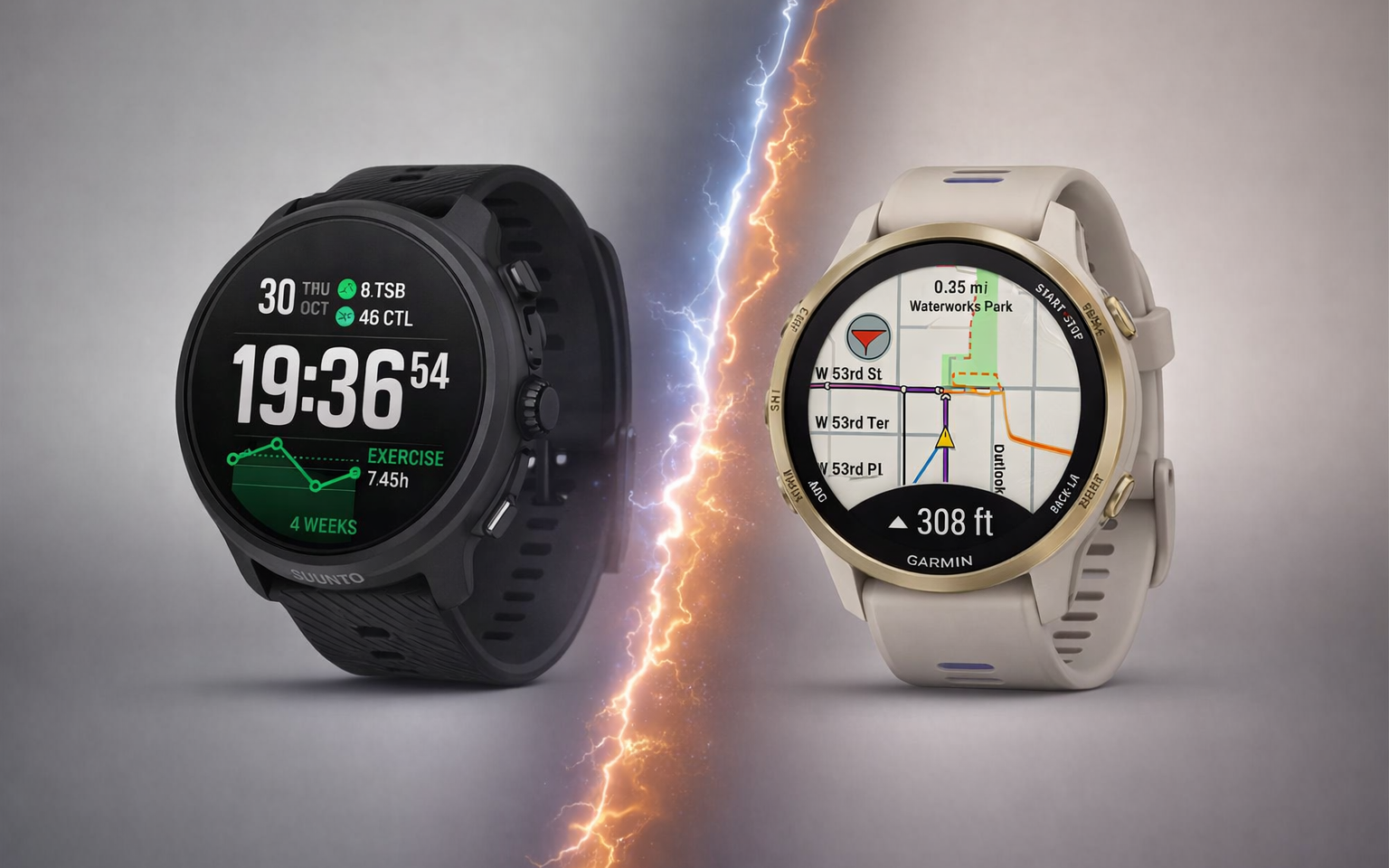
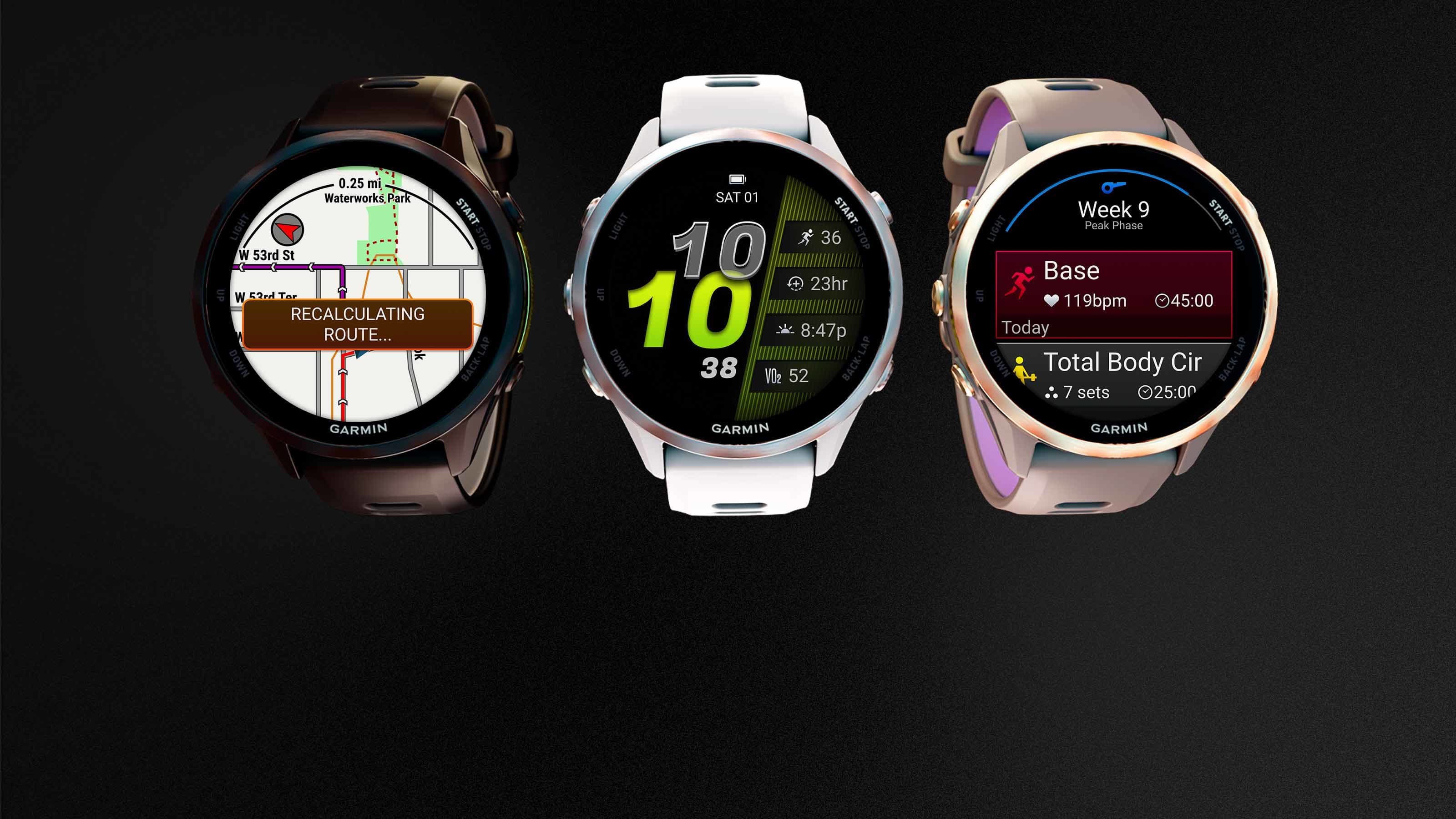
Is the Garmin Forerunner 970 $250 better than the Suunto Race 2? That's the real question here. Both pack AMOLED displays, dual-frequency GPS, offline maps, and enough training metrics to make a sports scientist blush -- but one costs $499 and the other $749. That gap buys a quality pair of running shoes, a race entry, or three months of coaching.
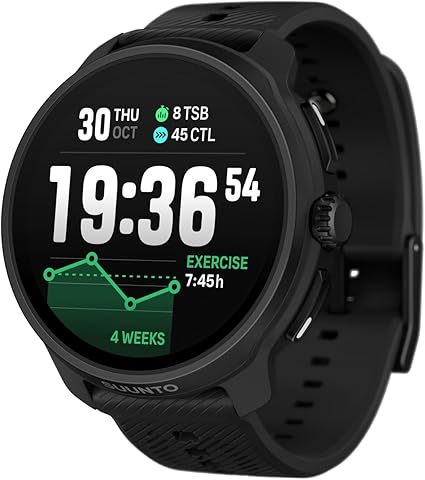
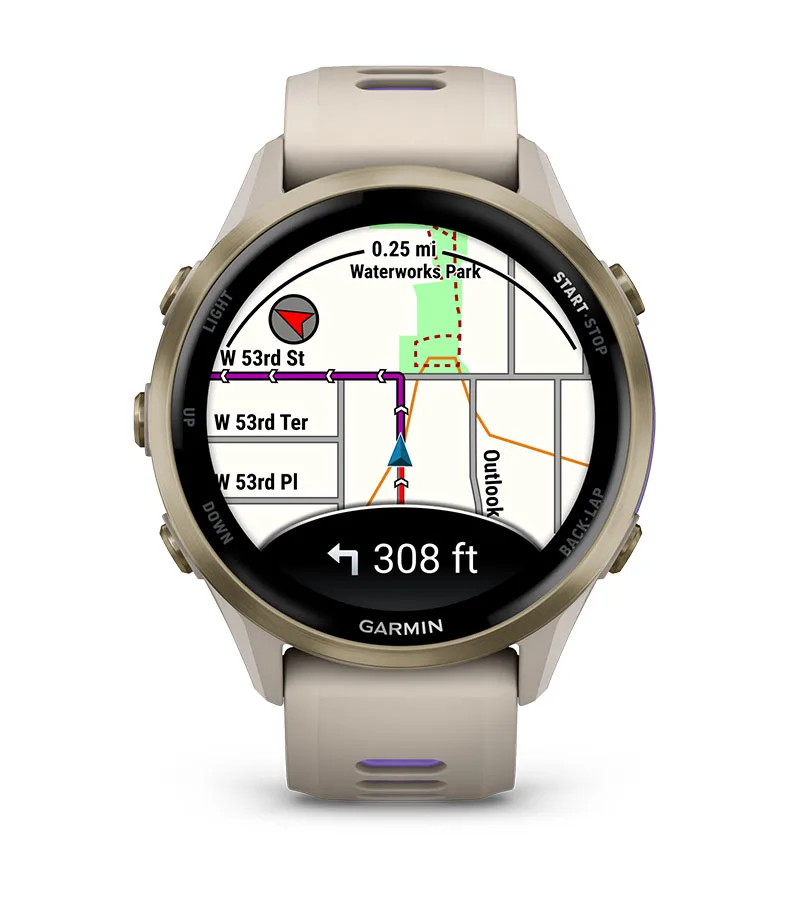
The Forerunner 970 is the better running watch in most measurable ways. But when Suunto delivers 90% of the experience for 67% of the price, the conversation gets interesting fast. Here's how these two flagship running watches stack up, category by category, and who should buy which.
Training Features and Software
The Forerunner 970 is a training powerhouse. Garmin's ecosystem has had years to mature, and it shows. You get Garmin Coach adaptive training plans, daily suggested workouts calibrated to your fitness and recovery, Training Readiness scores, and the new Running Tolerance metric that helps you understand how much weekly volume your body can actually handle. The 970 also introduces Running Economy and Step Speed Loss -- though both require the separate $170 HRM 600 chest strap to function, which is worth noting when tallying the true cost of ownership.
The Suunto Race 2 takes a different approach. Its training tools are solid -- you get training load tracking, recovery insights, HRV monitoring, and sleep analysis -- but the depth doesn't match Garmin's. Suunto leans on its SuuntoPlus app system to extend functionality, offering modular add-ons like TrainingPeaks integration and various sport-specific tools. The catch: you can only run three SuuntoPlus apps simultaneously (raised from two in a January 2026 firmware update), which still feels somewhat restrictive. Suunto's app has improved significantly, but Garmin Connect remains the gold standard for training analysis, workout creation, and long-term trend tracking.
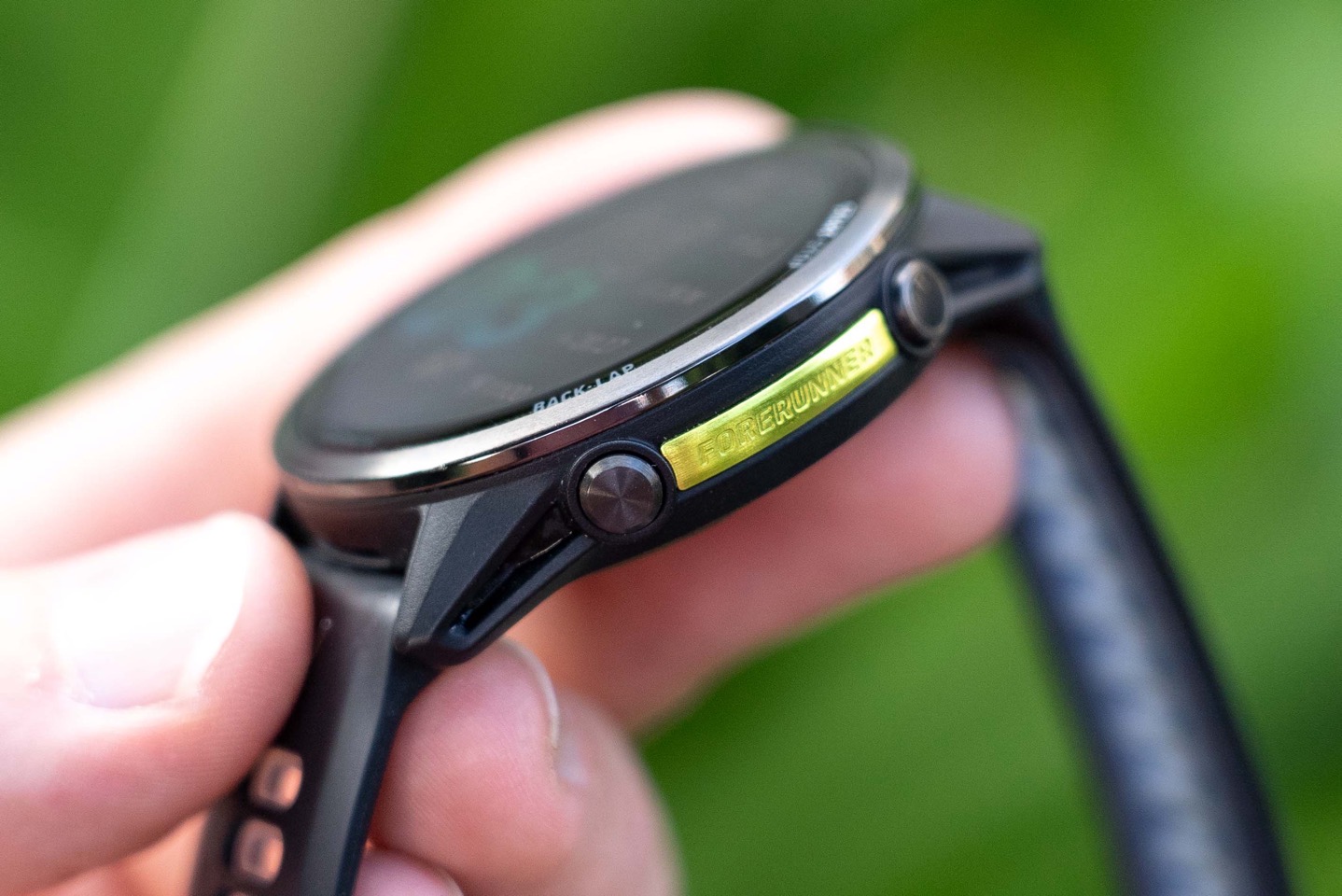
The Garmin also packs features the Suunto simply doesn't have: a built-in speaker and microphone for phone calls, an ECG sensor for atrial fibrillation detection, and an LED flashlight for early morning or late evening runs. These aren't gimmicks -- the flashlight alone is genuinely useful for visibility and safety.
Winner: Garmin Forerunner 970. The training feature gap is real, especially for data-driven athletes. But the hidden cost of the HRM 600 to unlock the 970's best new metrics tempers the advantage.
GPS and Sensor Accuracy
Both watches use dual-frequency, multi-GNSS satellite systems, and both deliver excellent GPS accuracy. Tracks are clean through urban canyons, under tree cover, and on winding trails. The Forerunner 970's new satellite chip is marginally more consistent in the most demanding signal environments -- think dense city marathon corridors between skyscrapers -- but in everyday running scenarios, the difference is negligible.
Heart rate accuracy is where the story gets more nuanced. The Forerunner 970's Elevate Gen 5 sensor is best-in-class for wrist-based optical heart rate, tracking reliably across steady runs, intervals, and even strength training. The Suunto Race 2 has made massive strides here -- the redesigned sensor layout is a genuine improvement over the notoriously unreliable sensor on the original Race. It's now trustworthy for steady-state runs and much more usable during interval work. But it still can't quite match Garmin's consistency at the extremes, particularly during high-intensity efforts with rapid heart rate changes.
Winner: Garmin Forerunner 970, but the gap has narrowed dramatically. For most runners, both are accurate enough to train by without a chest strap.
Display and Build
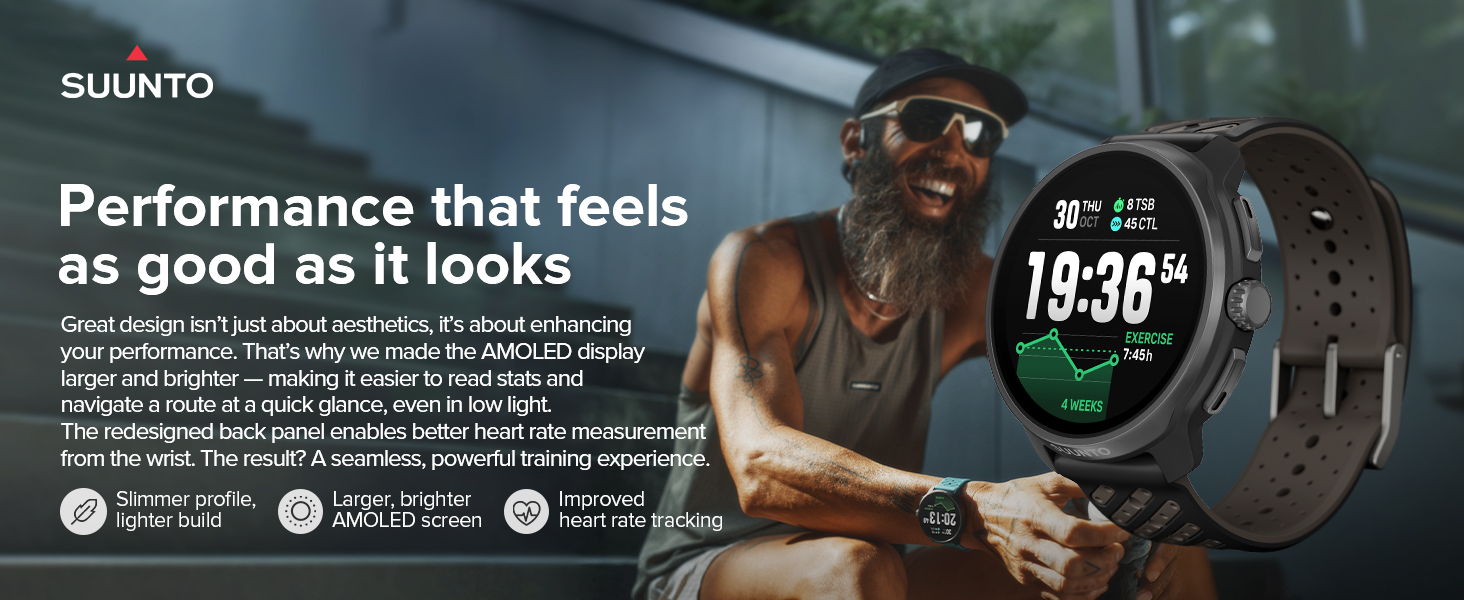
The Suunto Race 2 actually has the larger display: 1.5 inches compared to the Forerunner 970's 1.4 inches, both AMOLED. The Race 2's screen pushes up to 2,000 nits of brightness with a thinner bezel that makes the display feel even more expansive. It's a gorgeous panel that's easily readable in direct sunlight.
The Forerunner 970 counters with Garmin's brightest-ever AMOLED display and a sapphire crystal lens — though the Suunto also ships with sapphire glass across all variants, so scratch resistance is a wash. The 970 gets the premium build treatment with a titanium bezel across all variants, compared to the Race 2's steel (or optional titanium at $599). At 56 grams, the Forerunner 970 is noticeably lighter than the Race 2's 76 grams in steel or 65 grams in titanium.
At 49mm and 47mm respectively, both land in the mid-to-large category. The Forerunner 970 wears smaller and lighter on the wrist -- an advantage for runners with slimmer wrists or anyone who simply prefers a less imposing watch. The Suunto pushes back with 100m water resistance versus the Garmin's 50m (5 ATM), a meaningful difference for open-water swimmers and triathletes who want extra margin.
Winner: Draw. The Suunto has the bigger, brighter screen and deeper water resistance. The Garmin is lighter and wears better on smaller wrists. Both have sapphire glass.
Battery Life
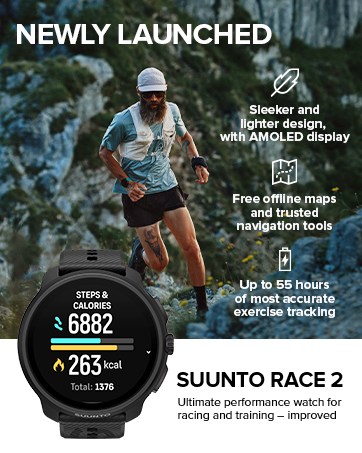
This is where the Suunto Race 2 flexes hardest. With 55 hours of GPS battery life in its most accurate dual-frequency mode (in practice, expect 48-50 hours depending on settings), it absolutely demolishes the Forerunner 970's 21 hours in all-systems dual-frequency mode. That's more than double. In smartwatch mode, the Race 2 stretches to 18 days versus the 970's up to 15 days.
For ultrarunners, multi-day hikers, or anyone who simply hates charging their watch, this gap is enormous. The Forerunner 970 will get most runners through a marathon or even a 50K without worry, but the Suunto can handle a 100-mile race without needing a top-up. That's a fundamentally different capability.
Winner: Suunto Race 2, and it's not close. This is the single biggest advantage either watch holds in this entire comparison.
Maps and Navigation
Both watches ship with offline topographic maps and turn-by-turn navigation. Garmin's TopoActive maps are the most detailed in the business, with comprehensive trail data, points of interest, and topographic detail that goes beyond what any competitor offers. Route planning in Garmin Connect is smooth, and the 970 supports breadcrumb navigation, course following, and back-to-start routing.
The Suunto Race 2 offers free downloadable offline maps through the Suunto App, with Climb Guidance for trail runners and Heatmaps to discover popular routes. The mapping experience is good -- but Garmin's is better. Map rendering is faster, the data is richer, and the integration with Garmin's broader navigation tools (including the ClimbPro feature for segmented climb analysis) gives it a clear edge.
One connectivity note: the Garmin supports both ANT+ and Bluetooth for external sensors, while the Suunto is Bluetooth only. If you have legacy ANT+ sensors -- a power meter, older chest strap, or speed/cadence sensor -- the Garmin won't force you to replace them.
Winner: Garmin Forerunner 970. Better maps, better navigation tools, and broader sensor compatibility.
Ecosystem and Daily Use
Garmin Connect is one of the most comprehensive fitness platforms available. Years of development have produced an ecosystem with deep third-party integration, Connect IQ apps and watch faces, music storage with Spotify and Amazon Music support, Garmin Pay, and the new ability to take phone calls directly from the watch via the built-in speaker. The Forerunner 970 also stores 32GB of data, maps, and music -- enough to load entire playlists for phone-free runs.
Suunto's ecosystem has improved but remains a step behind. The Suunto App handles syncing, route planning, and basic analysis well, and integration with Strava, TrainingPeaks, and 200+ other services is solid. But the watch itself lacks music storage, NFC payments, a speaker, and a microphone. It's a focused training tool rather than a wrist-bound extension of your phone. For some runners, that focus is a feature, not a bug -- but it's a narrower package by any measure.
Winner: Garmin Forerunner 970. The ecosystem depth and daily-use features aren't even comparable.
Value and What You Get for the Money
At $499, the Suunto Race 2 delivers a 1.5-inch AMOLED display, market-leading GPS battery life, dual-frequency GPS, offline maps, 115+ sport modes, and genuinely improved accuracy. At $749, the Garmin Forerunner 970 adds deeper training analytics, superior maps, ECG, a flashlight, speaker/mic, music storage, and a lighter titanium build.
The Forerunner 970's feature list justifies a premium, but a $250 premium is steep -- especially when you factor in the additional $170 for the HRM 600 chest strap needed to unlock the 970's headline new metrics. A fully loaded Garmin setup approaches $920. The Suunto gives you the core of what serious runners need at a price that leaves room in your budget for gear that might actually make you faster.
For the titanium Suunto Race 2 at $599, the value proposition gets even more compelling: you're getting a titanium-and-sapphire build with superior battery life for $150 less than the base Garmin.
Winner: Suunto Race 2. Dollar for dollar, feature for feature, the value equation favors Suunto decisively.
Who Should Buy What
Buy the Suunto Race 2 if you: - Run ultras, multi-day events, or simply hate charging your watch - Want a premium AMOLED running watch without the premium price tag - Prioritize battery life and core training features over ecosystem bells and whistles - Are a trail runner who needs maps and exceptional GPS endurance - Don't need music storage, phone calls, or ECG on your wrist
Buy the Garmin Forerunner 970 if you: - Want the absolute deepest training analytics available in a running watch - Value Garmin's ecosystem, Connect IQ apps, and music storage - Need ANT+ compatibility for existing sensors - Want premium extras like ECG, flashlight, and on-wrist phone calls - Are a data-obsessed runner willing to invest in the full Garmin setup including the HRM 600
Our Verdict
The Garmin Forerunner 970 is the better running watch. Its training features are deeper, its ecosystem is richer, its GPS accuracy is marginally sharper, and its maps are the best in the business. If you want the single most capable running watch money can buy and price is secondary, it's the one to get.
But the Suunto Race 2 is the smarter purchase for most runners. It matches or beats the Garmin where it matters most to everyday athletes -- battery life, display quality, and core training accuracy -- while saving you $250 (or more, once you factor in the HRM 600). Suunto has closed the gap dramatically with the Race 2, and the days of Garmin being the only serious option at this level are over.
The $250 you save buying the Suunto buys a lot of miles. For the majority of runners, those miles matter more than the Garmin's extra features ever will.
Specs at a Glance
| Spec | Suunto Race 2 | Garmin Forerunner 970 |
|---|---|---|
| Price | $499 (steel) / $599 (titanium) | $749 |
| Display | 1.5" AMOLED, 466x466, 2000 nits, sapphire | 1.4" AMOLED, 454x454, sapphire |
| Case Size | 49 x 49 x 12.5 mm | 47 x 47 x 12.9 mm |
| Weight | 76g (steel) / 65g (titanium) | 56g |
| GPS Battery | 55 hrs (dual-frequency) | 21 hrs (all systems + multi-band) |
| Smartwatch Battery | Up to 18 days | Up to 15 days |
| Water Resistance | 100m | 50m (5 ATM) |
| GPS | Dual-frequency GNSS | Multi-band GNSS |
| Heart Rate | Optical (redesigned) | Elevate Gen 5 + ECG |
| Storage | 32 GB | 32 GB |
| Maps | Offline topo maps (free) | TopoActive maps (preloaded) |
| Music | No | Yes (Spotify, Amazon, etc.) |
| Speaker/Mic | No | Yes |
| Flashlight | No | Yes (LED) |
| Sensor Connectivity | Bluetooth | ANT+ and Bluetooth |
| Sport Modes | 115+ | 90+ |
| Bezel Material | Stainless steel / Titanium | Titanium |