
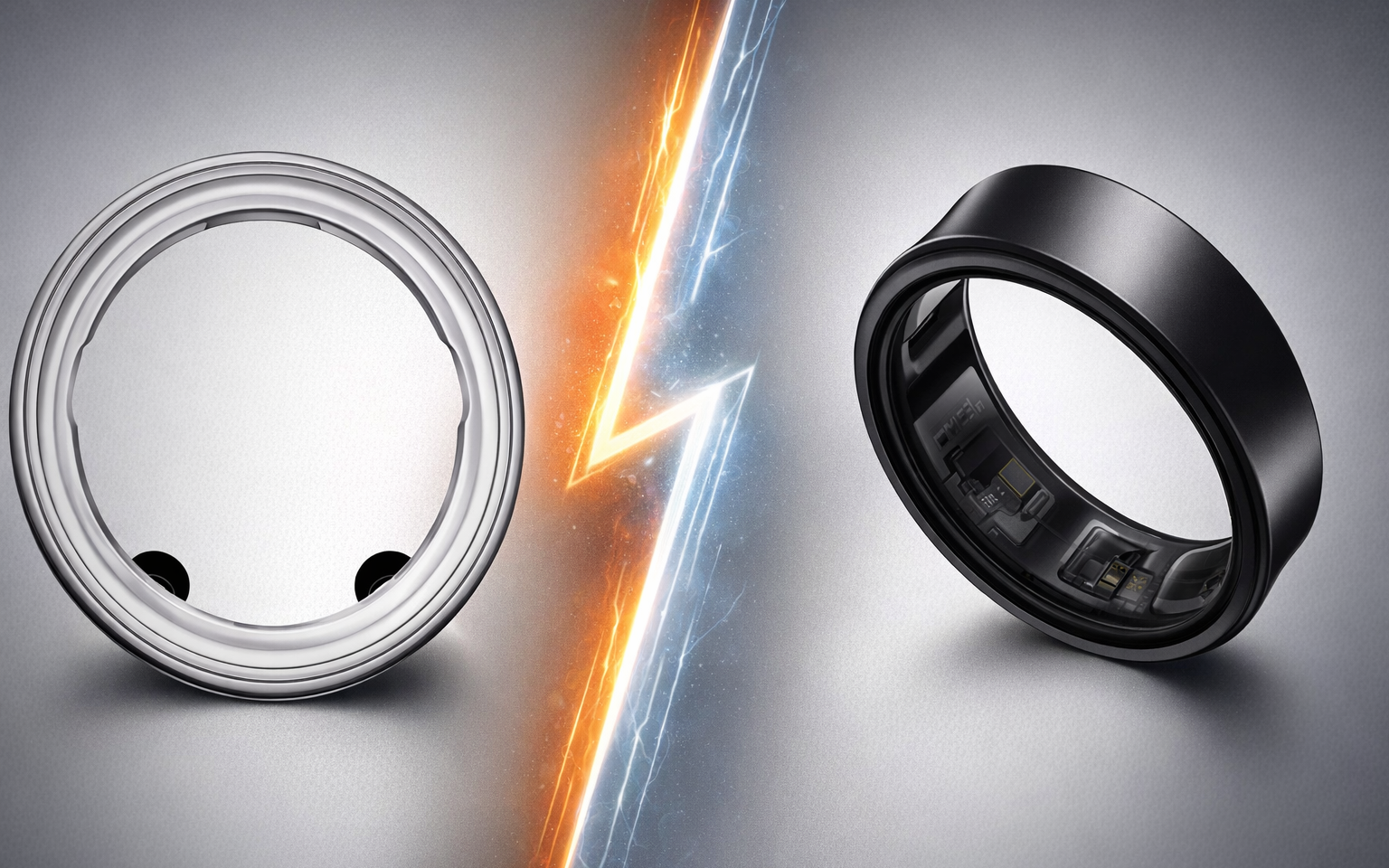
There are only two smart rings that most people should seriously consider in 2026. One is the undisputed category leader, backed by years of clinical research and a software platform that genuinely changes how you understand sleep. The other is a well-built first-generation product that does something the leader refuses to: let you own the full experience outright, without a recurring bill attached.
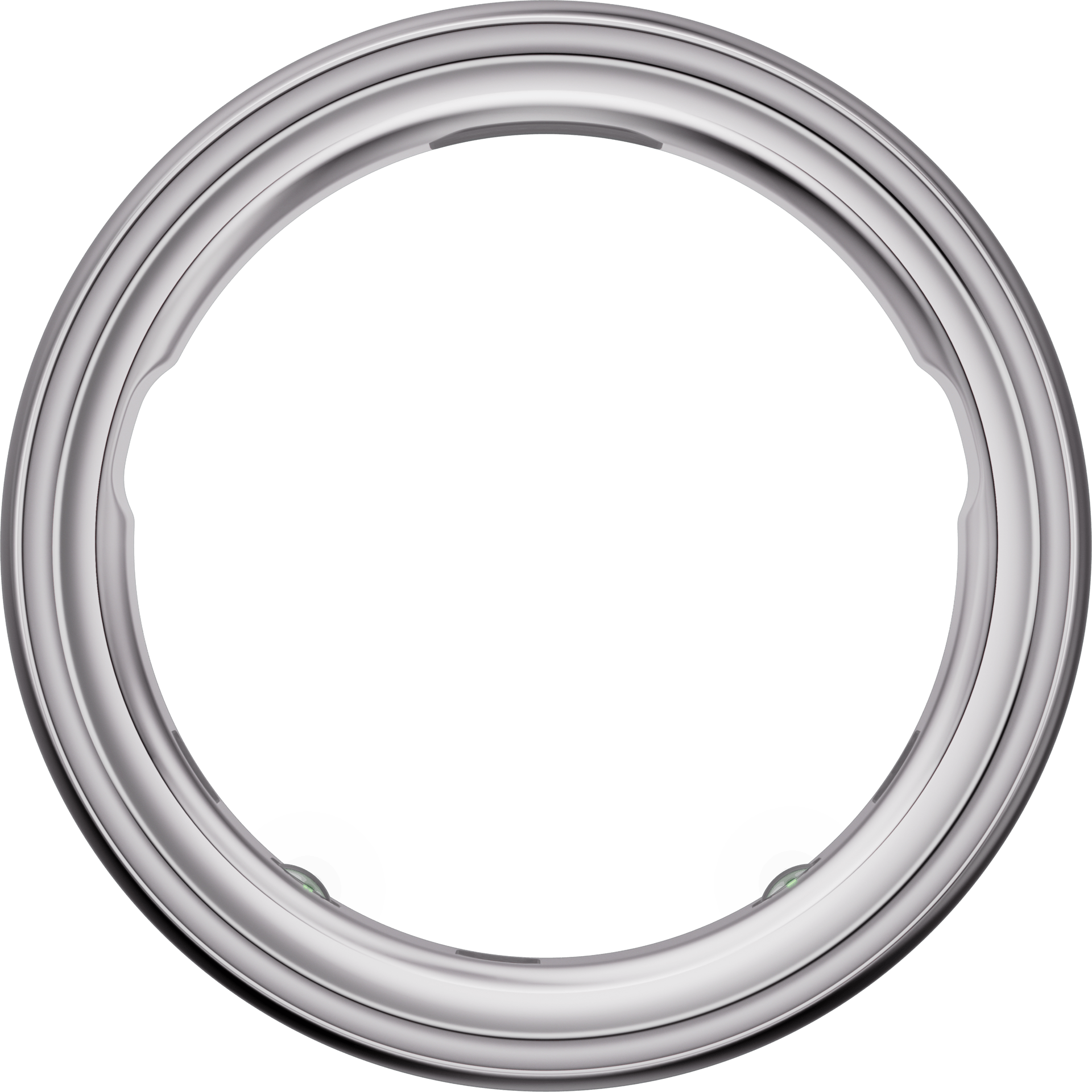
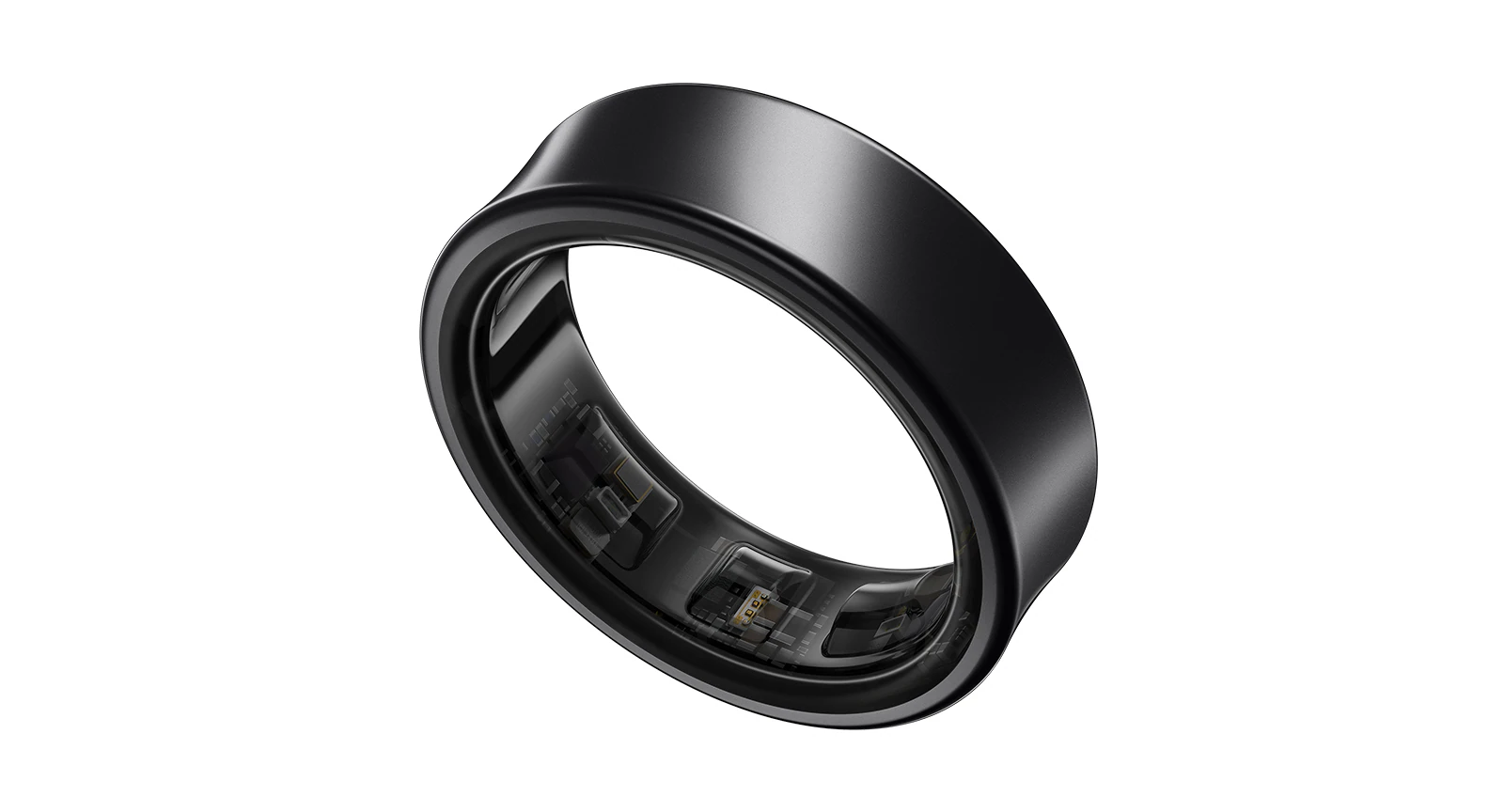
The choice between the Oura Ring 4 and the Samsung Galaxy Ring comes down to a question that goes beyond specs: how much is subscription-free ownership worth to you, and are you willing to accept real trade-offs in accuracy to get it? Your phone's operating system may also make the decision for you before you even compare features.
The performance gap is wider than it appears in specs. The cost argument is more complicated than the sticker prices suggest.
Subscription and Total Cost of Ownership
This is the most important category, and it deserves to be examined honestly.
The Samsung Galaxy Ring costs $399.99 upfront with no subscription — ever. The Oura Ring 4 starts at $349 but requires a $5.99/month membership to unlock nearly all meaningful features. Skip the subscription and you get readiness, sleep, and activity scores — raw numbers without the context, trends, or AI-driven coaching that make those scores useful.
The math on three years of ownership depends on how you pay: billed monthly, the Oura Ring 4 totals roughly $565 ($349 + $215.64 in subscription fees). On the annual plan at $69.99/year, the three-year total comes to approximately $559 ($349 + $209.97). Either way, the Galaxy Ring stays at $399.99. Over five years, the Oura total on the monthly plan reaches approximately $699 or more. The Galaxy Ring never charges you another cent.
What the subscription actually buys: The Oura app has expanded significantly since launch, adding an AI-powered Oura Advisor, meal logging with nutritional analysis, fertility-window predictions, stress and resilience metrics, and a revamped interface that surfaces personalized daily priorities. These are not trivial additions. The subscription funds continuous software improvements, new health features, and AI coaching that the Galaxy Ring simply does not receive at the same pace.
The verdict on cost: If you plan to keep a smart ring for two or more years and you actually engage with health data, the Oura subscription pays for itself in the depth of insight it unlocks. If you want a set-and-forget wellness tracker without financial commitment, the Galaxy Ring wins this category outright.
Ecosystem and Compatibility
This is the category that eliminates the Galaxy Ring from consideration for roughly half the potential market.
The Samsung Galaxy Ring does not work with iPhones. There is no workaround, no limited compatibility mode, and no official timeline for iOS support. Functionality requires Android 11 or higher, and while the ring technically works with any qualifying Android phone via Samsung Health, the most capable features — including advanced sleep coaching, Energy Score insights, and the gesture controls for camera and alarm — require a Samsung device running One UI 6.1.1 or later. Galaxy Ring users without a Samsung phone receive a significantly reduced feature set.
The Oura Ring 4 works with both iOS and Android, connecting through a single, polished app that delivers the same experience regardless of your phone brand. For iPhone users, the Galaxy Ring is simply not an option.
Beyond platform compatibility, the Galaxy Ring’s two-app requirement — Samsung Health for health data and the Galaxy Wearable app for device management — creates friction that the Oura’s unified single-app experience avoids. Toggling between apps to find different pieces of data is a persistent annoyance that Oura users never encounter.
Sleep Tracking Accuracy
Sleep tracking is the primary reason most people buy a smart ring, and this is where the gap between these two products is widest.
The Oura Ring 4 is the benchmark. Its 18-path multi-wavelength PPG sensor array delivers roughly 5% better accuracy than Apple Watch and 10% better than Fitbit in four-stage sleep classification — advantages documented in controlled comparisons against clinical-grade EEG equipment, where Oura and its closest rival Ultrahuman performed most accurately. The Galaxy Ring showed inconsistent results in those same conditions, with nightly performance that varied enough to call the algorithm’s consistency into question. The real-time pathway selection system determines which of the available measurement paths through your finger delivers the cleanest signal, resulting in reliable data even if your ring shifts slightly during the night.
The Oura Ring 4 distinguishes between sleep stages — light, deep, and REM — with a level of consistency that rivals medical-grade polysomnography tools at a consumer price point.
The Galaxy Ring’s sleep tracking is solid for a first-generation product. It correctly identifies sleep onset and wake time, tracks heart rate and skin temperature overnight, and produces a morning Energy Score. Where it struggles is consistency: some nights the data closely matches Oura; on others, there are meaningful discrepancies that suggest the algorithm is still being refined. Samsung has not yet published independent clinical validation for its sleep staging algorithms — a notable gap for anyone relying on the data for health decisions.
If sleep is your primary motivation for buying a smart ring, the Oura Ring 4 is not even close. It operates in a different tier.
Blood Oxygen and Health Metrics
This is the Galaxy Ring’s most significant hardware weakness, and it is a serious one.
SpO2 readings on the Galaxy Ring are unreliable. Documented nights show blood oxygen drops into clinically alarming ranges — readings as low as 75% SpO2 — while other wearables on the same wrist reported normal levels throughout. The sensor is restricted to sleep-only monitoring and cannot produce an on-demand daytime reading. For anyone monitoring blood oxygen for health reasons — sleep apnea screening, altitude tracking, respiratory wellness — the Galaxy Ring’s SpO2 data cannot be trusted.
The Oura Ring 4 is not a medical device either, but its continuous pulse oximetry is meaningfully more stable. Its overnight SpO2 tracking, while still a wellness indicator rather than a clinical tool, does not produce the wild swings documented on the Galaxy Ring.
Neither ring offers ECG or blood pressure measurement. Both track skin temperature, heart rate variability, and respiratory rate. Resting heart rate is an area of particular strength for the Oura Ring 4: its measurements achieve 99.9% reliability against medical-grade ECG — a level of accuracy that extends to all-day heart rate monitoring and forms the foundation for the readiness and recovery scoring that drives its platform. The Oura Ring 4 also adds validated cycle tracking with period prediction that updates estimates nightly — though generating initial predictions requires approximately two months of baseline temperature data — a feature Samsung has not matched at comparable accuracy.
App Experience and Software
The subscription is not static. Since launch, Oura has added an AI-powered Oura Advisor, meal logging with photo analysis, fertility prediction improvements, resilience scoring, expanded partner integrations, and a redesigned interface that organizes data into Today, Health, and Vitals tabs. The Today view surfaces a single personalized priority — a stress-relevant metric if you’re depleted, a readiness score if you’re primed for a hard workout. These features are what the $5.99/month subscription is actually paying for.
New features arrive regularly and roll out to all current ring hardware without additional hardware purchase.
Samsung Health is genuinely strong for users already invested in the Galaxy ecosystem — the integration with Galaxy Watch and Galaxy AI is seamless in ways that Oura cannot match. But the depth of insight, the pace of software innovation, and the polish of the coaching layer lag Oura’s platform by a meaningful margin. The two-app requirement remains an unresolved friction point.
Comfort and Design
Both rings are excellent to wear. The engineering required to make a medical sensor array comfortable enough to sleep and exercise in for years is non-trivial — and both companies have succeeded.
The Samsung Galaxy Ring is among the lightest smart rings available at 2.3–3.3g, depending on size, and its slightly flatter interior profile feels noticeably slim on the finger. It comes in sizes 5–15 in three finishes: Titanium Black, Titanium Silver, and Titanium Gold. The concave exterior gives it a distinctive silhouette that reads as jewelry rather than gadget. The 10ATM water resistance rating (100 meters) is identical to the Oura Ring 4.
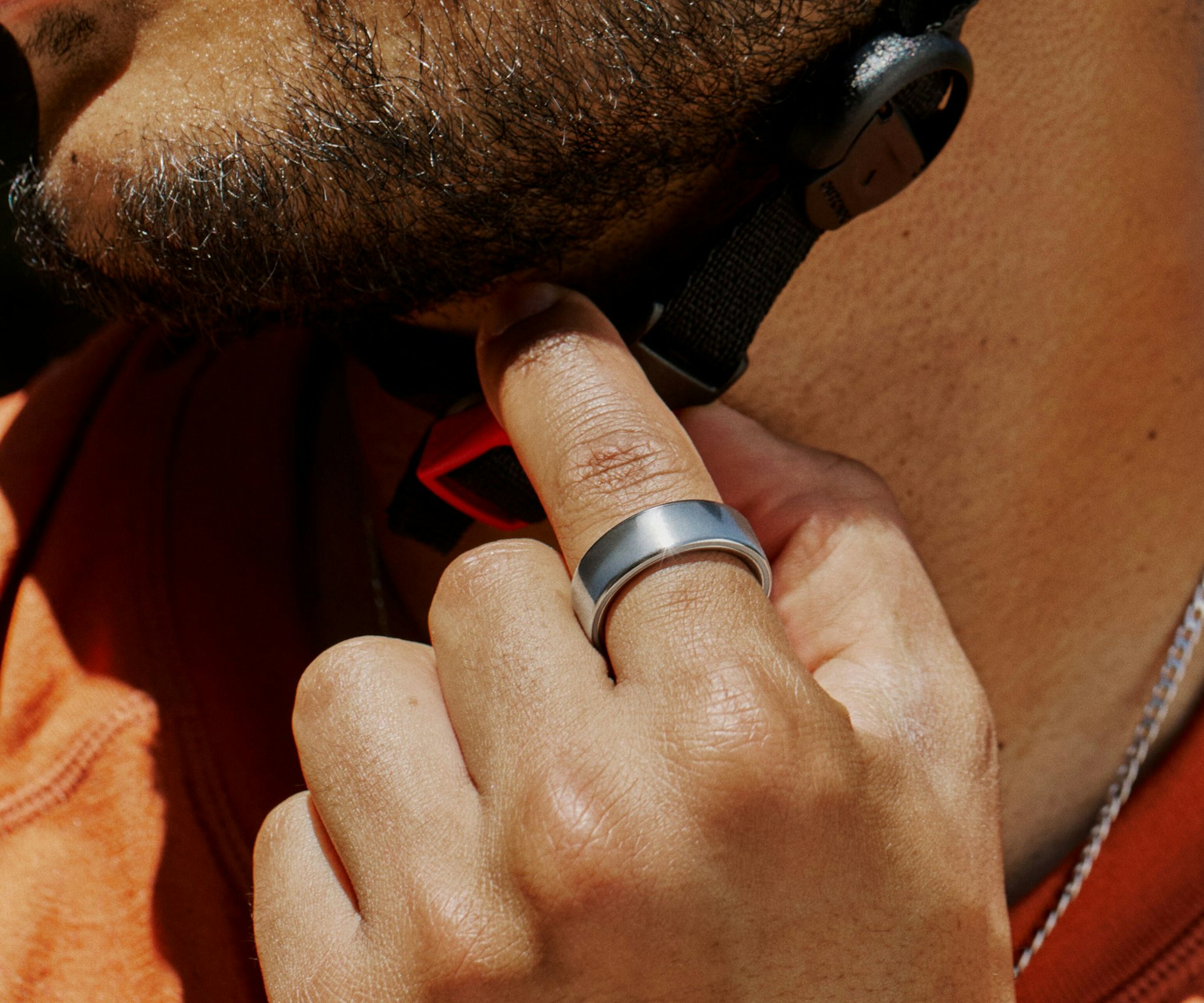
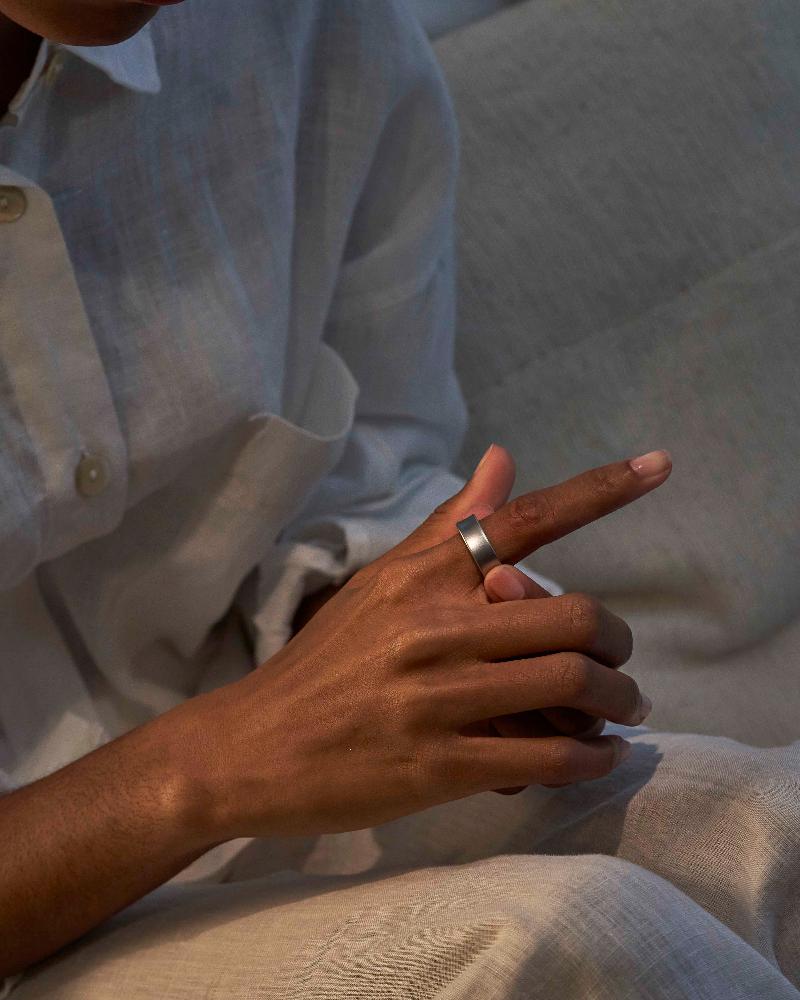
The Oura Ring 4 weighs 3.3–5.2g across its broader size range of 4–15, making it accessible to people with smaller or larger fingers. It offers six finishes — Silver, Black, Gold, Stealth, Rose Gold, and Brushed Silver — which gives it a meaningful aesthetic edge for people who care about ring appearance. Both use Grade 5 titanium construction.
The Oura Ring 4’s recessed sensors sit flush against the inner surface, reducing the bump sensation during wear. The Galaxy Ring’s interior sensor bumps are more prominent, particularly noticeable during overnight wear for some users.
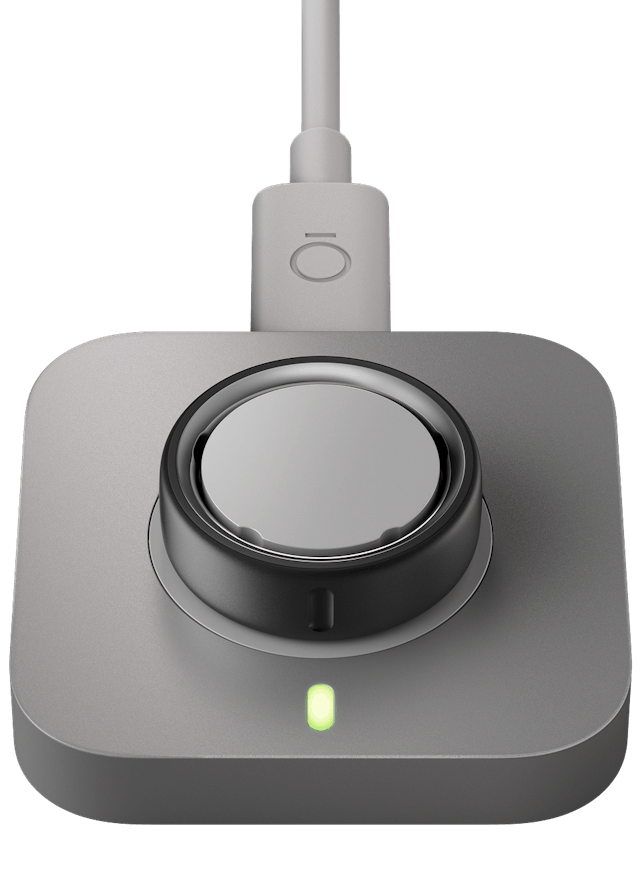
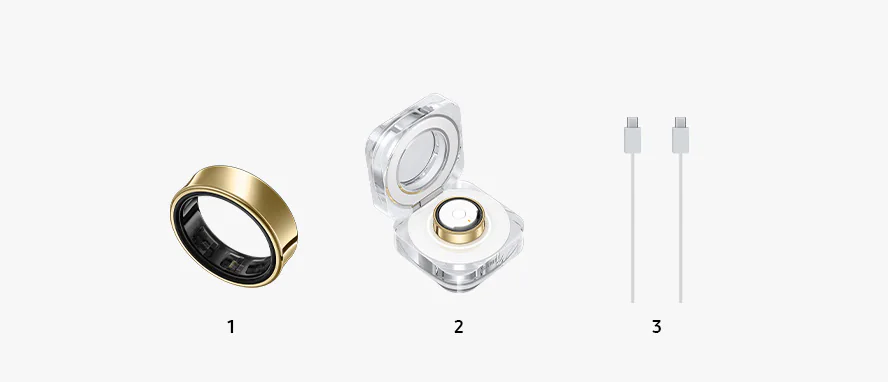
The Galaxy Ring includes a portable charging case with its own 361mAh battery that can fully charge the ring up to 1.6 times — translating to up to 14 days of ring use without requiring an outlet. The Oura Ring 4 ships with a stationary charging dock that requires a power source. For travelers, the Galaxy Ring’s charging case is the single most practical advantage it holds over the Oura Ring 4.
Battery Life and Charging
Both rings claim approximately seven days of battery life. Real-world performance is more nuanced.
The Oura Ring 4 consistently delivers six to seven days, falling short of its advertised 5–8 day maximum in most usage patterns. The Galaxy Ring performs similarly, with smaller sizes (5–7) typically reaching six days and larger sizes (12–15) occasionally hitting seven.
Where Samsung decisively wins is the charging experience. The Galaxy Ring’s portable case eliminates the anxiety of finding an outlet, particularly while traveling. The case charges the ring from zero to 40% in approximately 30 minutes and reaches a full charge in about 90 minutes. The ring and case together provide roughly two weeks of total power autonomy.
The Oura Ring 4’s charging dock is stationary and tethered to an outlet. It charges efficiently, but the form factor means you must plan around outlet availability in ways Galaxy Ring users simply do not.
Workout Tracking
Neither ring excels at workout tracking.
Heart rate accuracy during exercise is unreliable on both rings. Optical sensors on the finger face fundamental physics challenges when tracking elevated, variable heart rates during high-intensity movement. The Oura Ring 4 handles walking and light activity well but produces inconsistent readings during strength training or high-intensity cardio. The Galaxy Ring has identical limitations.
Samsung tracks walking and running with reasonable step count accuracy. Oura’s automatic activity detection covers over 40 activity types and generally identifies workouts correctly — but the heart rate data quality during those workouts is inconsistent regardless of ring.
If workout tracking is your primary goal, both rings will disappoint. A dedicated sports watch or fitness tracker remains the better tool for that specific need.
Who Should Buy the Oura Ring 4
Buy the Oura Ring 4 if: - You’re willing to pay $5.99/month for a platform that continuously improves - Sleep quality is your primary health concern and you want the most validated tracking available - You use an iPhone — the Galaxy Ring is not an option for you - You’re committed to long-term health optimization and will actively engage with the app’s coaching features - Comprehensive women’s health tracking, including cycle prediction and fertility insights, is important to you - You want a wider range of sizes (4–15) or more finish options
Who Should Buy the Samsung Galaxy Ring
Buy the Samsung Galaxy Ring if: - You use an Android phone and have a strong philosophical objection to subscription-based hardware - SpO2 monitoring is not a priority for you — the Galaxy Ring’s blood oxygen sensor is unreliable - You want the lightest possible ring and the most travel-friendly charging solution - You are already in the Samsung ecosystem with a compatible Galaxy phone for full feature access - Basic sleep tracking, step counting, and energy monitoring are sufficient for your needs - Budget certainty matters: one upfront payment, no recurring fees
Our Verdict
The Oura Ring 4 is the better smart ring — and it isn’t particularly close on the metrics that matter most: sleep tracking accuracy, app depth, software innovation, cross-platform compatibility, and the breadth of health features. The clinical validation behind its algorithms, the continuous improvement of its platform, and the genuinely useful AI coaching layer justify both the premium price and the subscription for anyone serious about understanding their health.
The subscription objection is legitimate and worth taking seriously. Over three to five years, the total cost of ownership is meaningfully higher than the Galaxy Ring. But the Oura Ring 4 without a subscription is a ring with a raw score and no context. You are not buying a device — you are buying access to a health platform. Evaluated on that basis, the $5.99/month is reasonable for what it delivers.
The Samsung Galaxy Ring earns its place as the right choice for a specific buyer: Android-first, subscription-averse, satisfied with foundational sleep and activity data, and ideally already in the Samsung ecosystem. Its hardware is genuinely excellent. Its charging case is one of the best quality-of-life features in the smart ring category. And for users who find the Oura subscription model objectionable on principle, Samsung offers a legitimate — if less capable — alternative.
Ignore the SpO2 data on the Galaxy Ring entirely. Trust the sleep trends with appropriate skepticism. And if you own an iPhone, the decision has already been made for you.
Specs At A Glance
| Oura Ring 4 | Samsung Galaxy Ring | |
|---|---|---|
| Price | $349 | $399.99 |
| Subscription | $5.99/month (required) | None |
| 3-Year Total Cost | ~$565 (monthly) / ~$559 (annual) | $399.99 |
| Weight | 3.3–5.2g | 2.3–3.3g |
| Sizes | 4–15 | 5–15 |
| Material | Grade 5 Titanium | Grade 5 Titanium |
| Water Resistance | 100m | 10ATM (100m) |
| Battery Life (real-world) | 6–7 days | 5–7 days |
| Charging | Stationary dock | Portable charging case |
| Case Battery | N/A | Up to 1.6 full charges |
| iOS Support | Yes | No |
| Android Support | Yes | Yes (Android 11+) |
| Best Features Require | Any smartphone | Samsung phone (One UI 6.1.1+) |
| Sleep Tracking | Class-leading | Solid, inconsistent |
| SpO2 | More stable | Unreliable |
| ECG | No | No |
| Cycle Tracking | Yes (validated) | Basic |
| AI Coaching | Yes (Oura Advisor) | Limited |
| Finishes | 6 | 3 |
| App Count | 1 | 2 |