
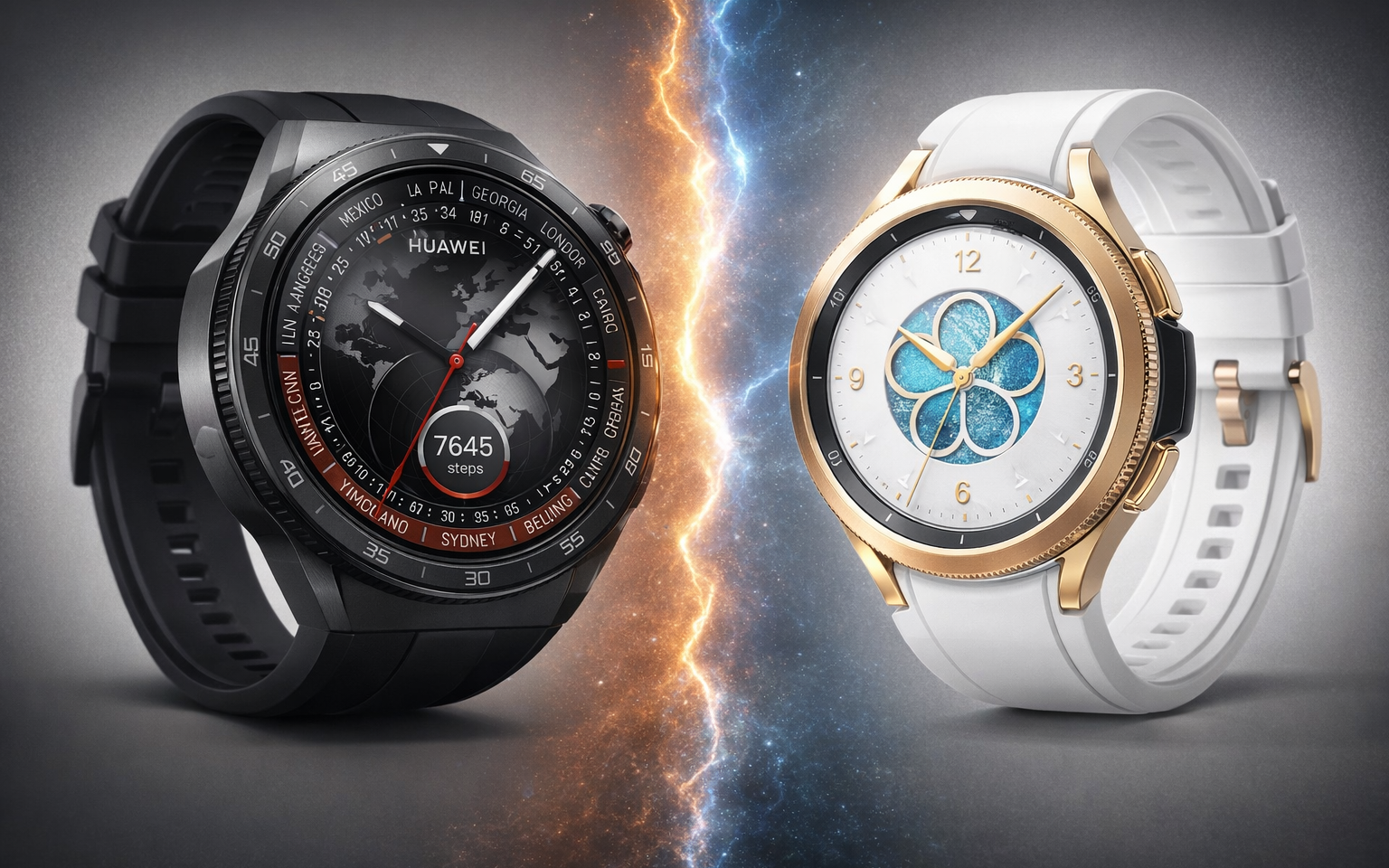
The premium smartwatch market has split into two opposing philosophies, and there is no better illustration than the Huawei Watch GT 5 Pro and the Samsung Galaxy Watch 8 Classic. One promises to last two weeks on a single charge and track your health with medical-grade sensors. The other offers the full breadth of Google's app ecosystem, an AI assistant on your wrist, and a mechanical rotating bezel that makes every other smartwatch feel like a touchscreen slab.
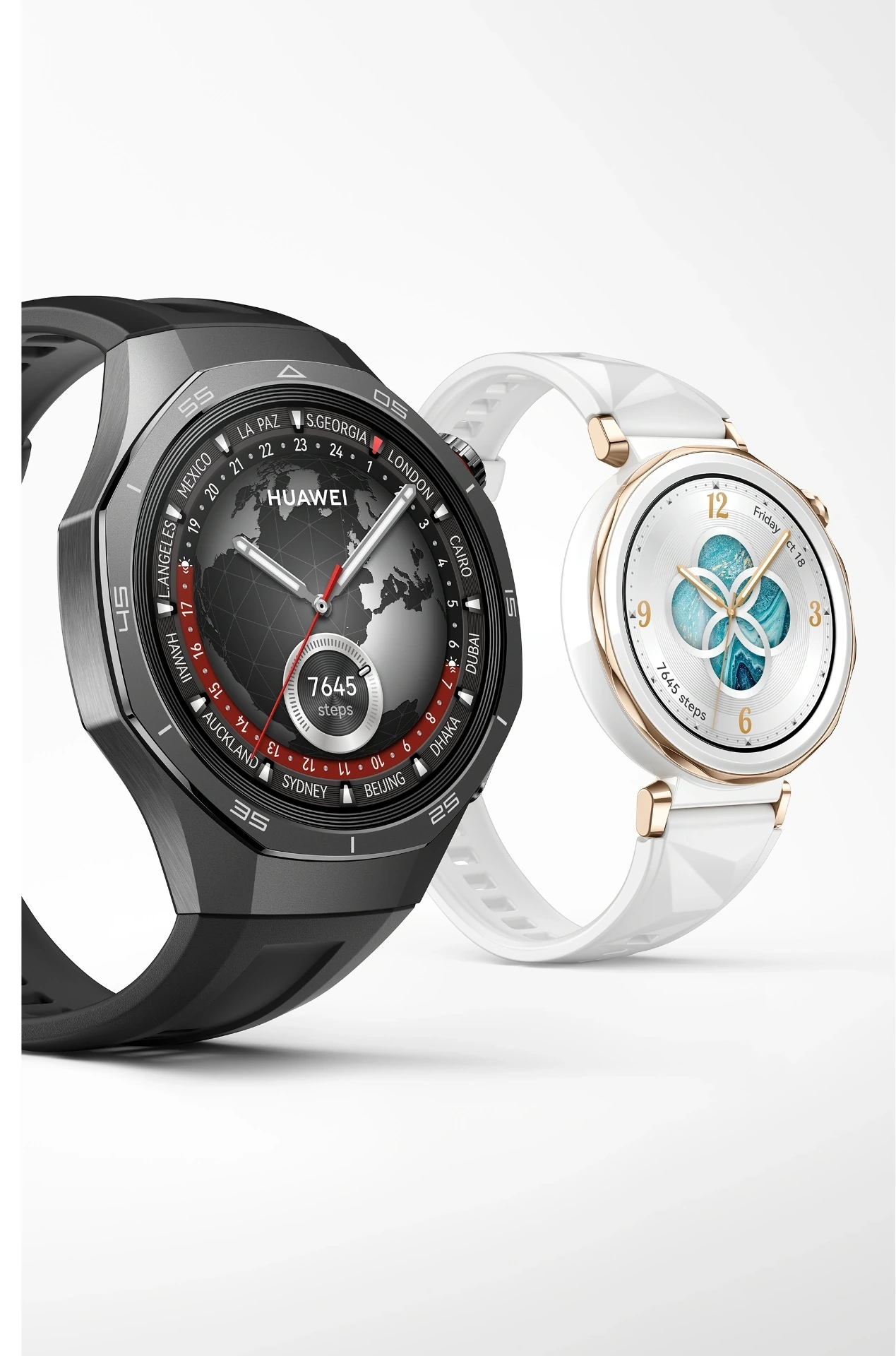
This is not a debate about which watch is technically superior. It is a question about what you actually want a wristwatch to do. If you value autonomy -- the ability to leave your charger at home for a week-long trip -- the answer looks very different than if you value versatility, with Google Maps navigation, Spotify streaming, and Gemini AI a bezel twist away. The price gap only makes the decision more interesting: the Huawei undercuts the Samsung by roughly $150 while delivering materials that look and feel more expensive.
The tradeoffs surface in every category -- but they hit hardest in battery life.
Battery Life
This is the category that defines the entire comparison, and it is not close.
The Huawei Watch GT 5 Pro is rated for up to 14 days on its 524mAh battery, and real-world usage consistently delivers 9 to 10 days with notifications, heart rate monitoring, and regular workouts. Even with the always-on display active -- which cuts battery life significantly -- the GT 5 Pro manages roughly 5 days. That is still longer than most smartwatches last in their default mode. Weekend warriors and travelers who hate carrying chargers will find this transformative.
The Samsung Galaxy Watch 8 Classic, running a full Wear OS installation on its 445mAh cell, lives in a completely different reality. Samsung does not officially rate the Classic's battery life in days -- it measures in hours. Real-world performance lands at approximately 36 to 40 hours with raise-to-wake mode and typical use including daily workouts and sleep tracking. Turn on the always-on display and expect closer to 25 to 30 hours. That is the top tier of Wear OS battery performance in 2026, but it still means charging every day or every other day.
The math is stark: the Huawei lasts roughly five times longer between charges. For anyone who has ever forgotten a proprietary watch charger on a business trip, that gap is not an abstraction -- it is the difference between a functioning watch and an expensive bracelet.
Winner: Huawei Watch GT 5 Pro -- by a landslide.
Design & Build
Both watches target the premium end of the market, and both deliver materials that justify their price tags -- though through different design languages.
The Huawei Watch GT 5 Pro features an aerospace-grade titanium case with a distinctive octagonal bezel and sapphire crystal glass. At 46.3 x 46.3 x 10.9mm and 53g (for the 46mm model), it wears surprisingly light for a watch of this size. Huawei also offers a 42mm ceramic variant for those who prefer a smaller, dressier option. The overall aesthetic leans sporty-elegant -- this is a watch that transitions from a trail run to a dinner table without looking out of place. The fluoroelastomer strap is comfortable, though some find it bulky.
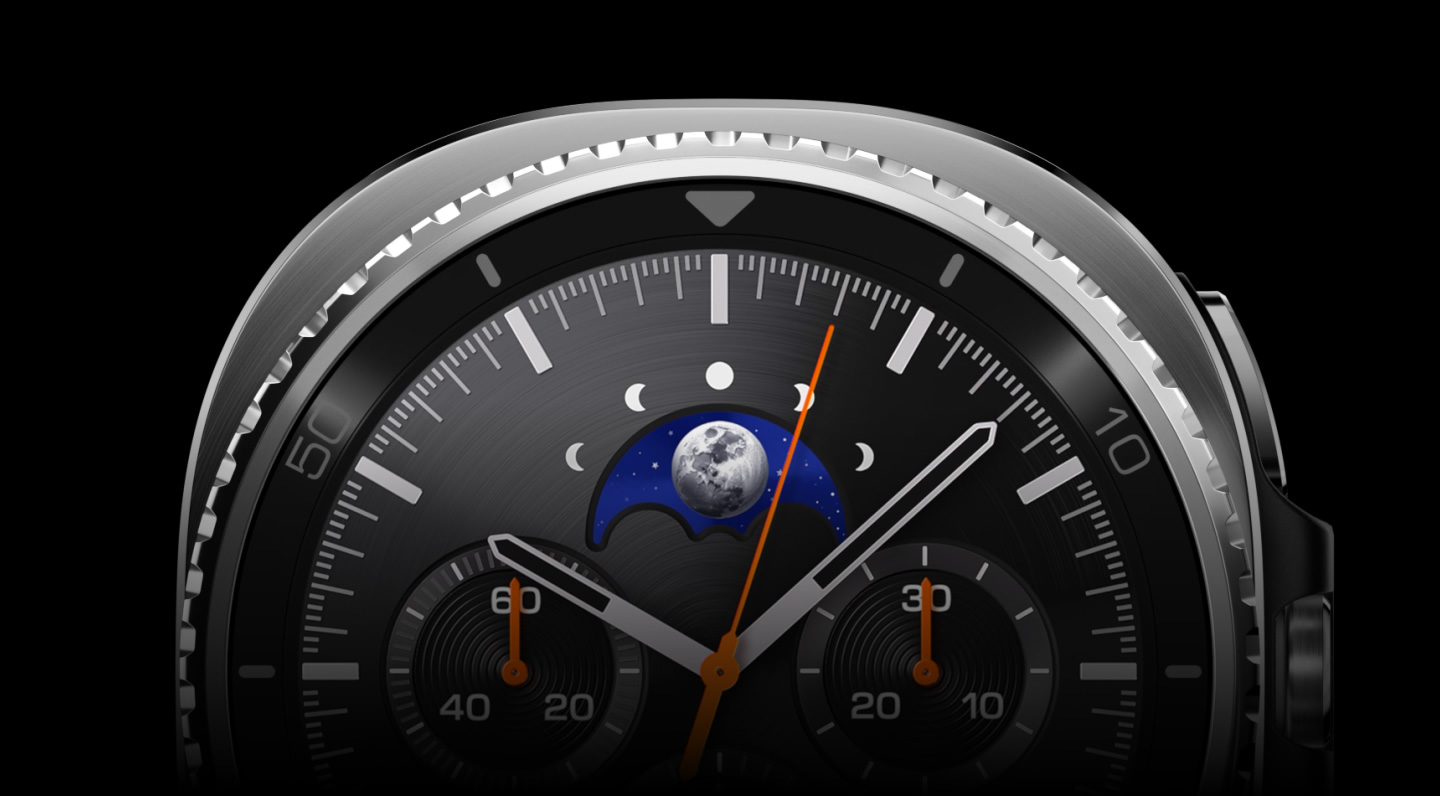
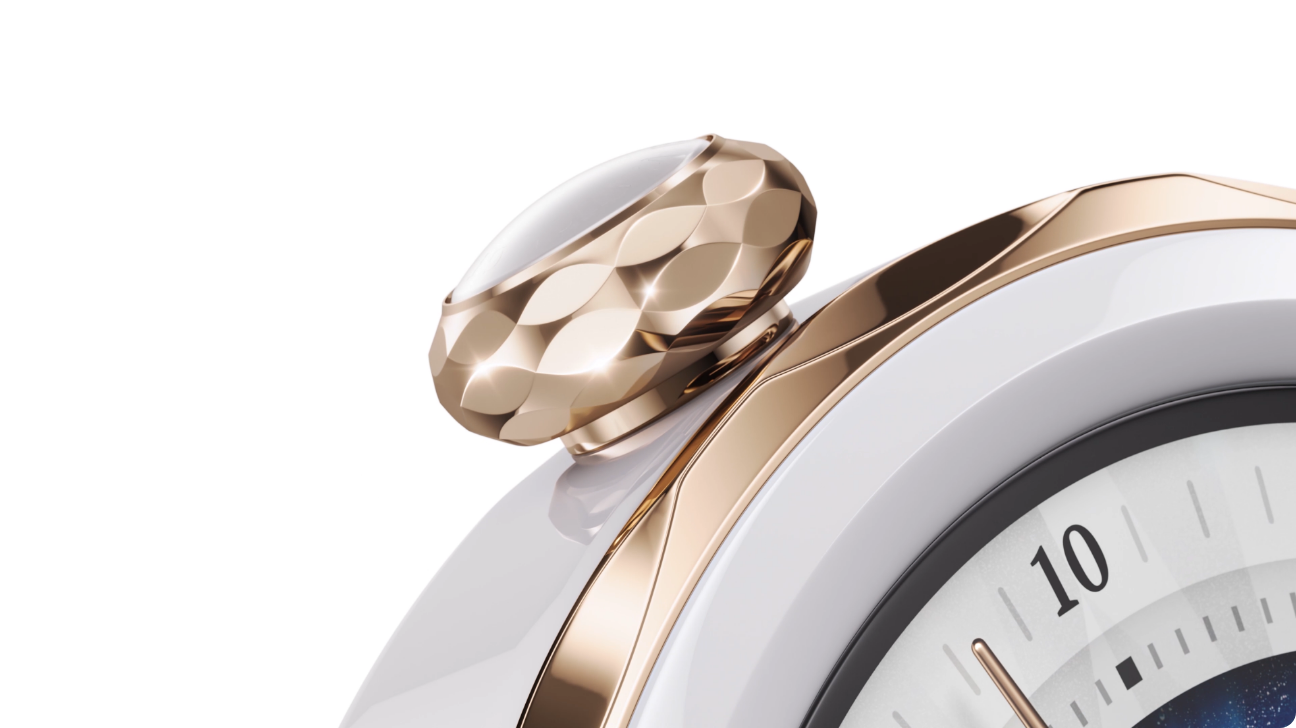
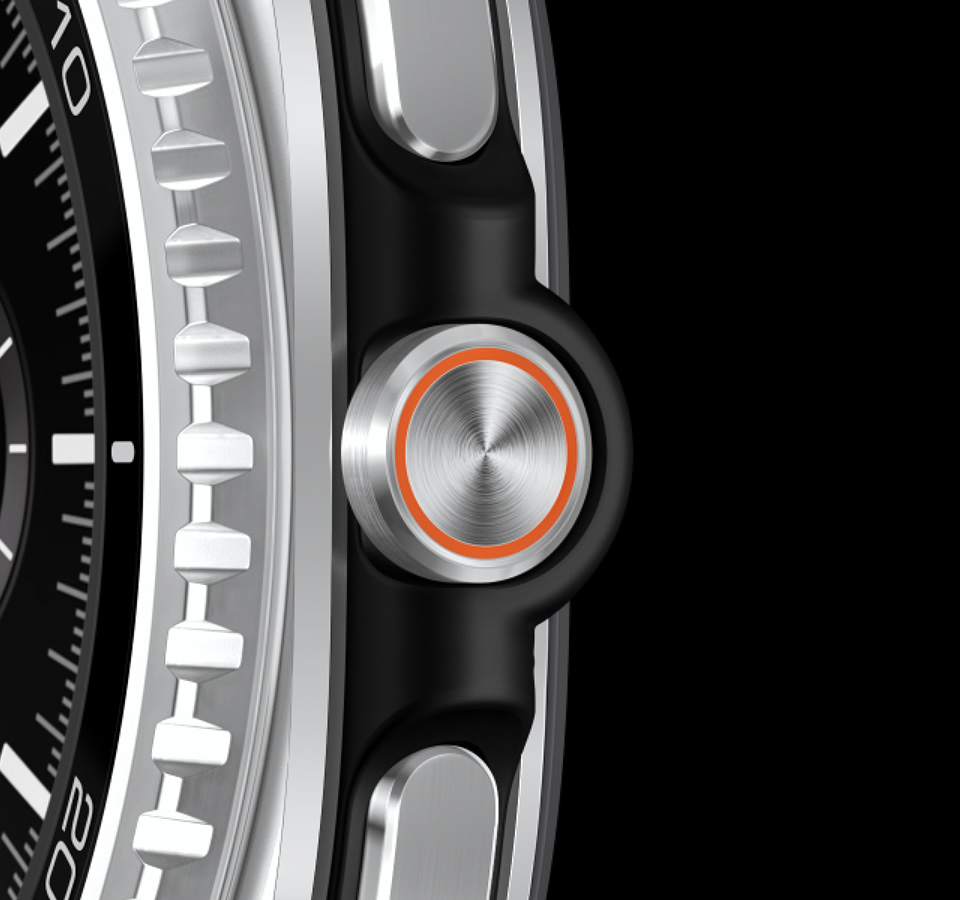
The Samsung Galaxy Watch 8 Classic takes a fundamentally different approach to form. At 46.4 x 46 x 10.6mm and 63.5g, it is noticeably heavier on the wrist. This is not a round watch: the case adopts a squircle (rounded-square) shape borrowed from Samsung's Galaxy Watch Ultra, with a circular glass panel and rotating bezel sitting atop a square-cornered body. It is a polarizing departure from the round Classic lineage. The stainless steel case and sapphire crystal deliver a premium feel, but the Ultra-derived industrial shape will be the first thing prospective buyers either love or reject. The signature feature is the physical rotating bezel, which returns after Samsung skipped the entire Classic lineup for the Watch 7 generation in 2024. The ridges are deep, the clicks are satisfying, and it remains the most intuitive physical navigation method on any smartwatch.
The Classic also inherits the Ultra's programmable Quick Button -- a third physical button that can launch workouts, toggle the flashlight, or trigger other shortcuts. It is a genuine usability upgrade. The tradeoff is the new Dynamic Lug system for band swaps -- a redesign necessitated by the squircle case shape -- which is fiddly and breaks compatibility with older Galaxy Watch bands.
The GT 5 Pro is the lighter, more versatile-looking watch. The Galaxy Watch 8 Classic is the bolder statement piece with better physical controls. Neither is a wrong choice, but the Huawei's titanium construction is objectively a more premium material than stainless steel at a lower price point.
Winner: Draw -- titanium elegance versus rotating bezel tactility is a matter of personal taste.
Health & Fitness Tracking
Both watches pack serious health sensor suites, but they approach wellness tracking from different angles.
The Huawei Watch GT 5 Pro debuts the TruSense system, a multi-sensor array that covers heart rate, SpO2, skin temperature, respiratory rate, ECG, and -- notably -- arterial stiffness detection. The arterial stiffness feature measures pulse wave velocity to evaluate vascular health, comparing results against age-matched baselines. It is not a gimmick: arterial stiffness is a clinically recognized marker for cardiovascular risk, and having it on the wrist is a meaningful addition for health-conscious users. The ECG function is certified in multiple markets. GPS accuracy is strong, backed by dual-frequency GNSS (L1+L5) tracking.
Huawei has also invested heavily in sport-specific modes: free diving with depth tracking (certified to EN13319), golf with course mapping and swing analysis, and trail running with route uploads. These are not checkbox features -- the golf mode in particular is deep enough to replace a dedicated golf GPS for casual players.
The Samsung Galaxy Watch 8 Classic counters with its BioActive sensor, which uniquely offers body composition analysis via bioelectrical impedance -- measuring skeletal muscle mass, body fat percentage, and body water. For fitness enthusiasts tracking recomposition, this feature remains exclusive to Samsung and genuinely useful over time.
Samsung's newer additions include an antioxidant index that measures carotenoid levels through the skin in five seconds, plus an AGEs (Advanced Glycation End-products) index that tracks metabolic aging markers. These are novel metrics -- neither carries medical certification, and the practical value of the readings remains unproven. The Watch 8 Classic also supports ECG, SpO2, sleep apnea detection, and continuous heart rate monitoring.
The Samsung benefits from Google Fit and Samsung Health integration, with a more polished data presentation layer and broader third-party app support for health data. The Huawei Health app is functional but limited in its third-party ecosystem.
Winner: Huawei Watch GT 5 Pro -- arterial stiffness detection and deeper sport-specific tracking edge out Samsung's broader but less clinically distinctive health suite.


Display
The Samsung Galaxy Watch 8 Classic wins the display battle on raw specs. Its 1.34-inch Super AMOLED panel peaks at a staggering 3,000 nits -- bright enough to read clearly in any outdoor condition. The resolution of 438 x 438 pixels at 327 PPI is sharp, and the sapphire crystal protection comes standard.
The Huawei Watch GT 5 Pro has a slightly larger 1.43-inch AMOLED display, but it peaks at 1,200 nits -- less than half of Samsung's brightness. At 466 x 466 pixels and 326 PPI, it matches Samsung for sharpness. In normal indoor use, the difference is imperceptible. Outdoors in direct sunlight, the Samsung's advantage becomes apparent and meaningful.
Both watches offer always-on display modes, though the Huawei's implementation carries a far smaller battery penalty proportionally.
Winner: Samsung Galaxy Watch 8 Classic -- 3,000-nit peak brightness is a commanding advantage for outdoor use.
Software & Ecosystem
This is Samsung's strongest category and Huawei's most significant limitation.
The Galaxy Watch 8 Classic runs Wear OS 6 with One UI 8 Watch, backed by the 3nm Exynos W1000 processor and 2GB of RAM. It has full access to the Google Play Store, meaning Spotify, Google Maps, WhatsApp, Strava, and thousands of other apps work natively on the wrist. Google Gemini is built in as an AI assistant, enabling multi-step voice commands and natural language queries directly on the watch. LTE connectivity is available for standalone use without a phone. Samsung promises four years of OS updates, carrying the watch through 2029.
The Huawei Watch GT 5 Pro runs HarmonyOS 5.0 with 32MB of RAM and 4GB of storage. There is no Google Play Store. Third-party app support is extremely limited -- essentially restricted to Huawei's own AppGallery, which offers a fraction of the apps available on Wear OS. There is no LTE option, no standalone music streaming from major services, and no AI assistant. NFC payments are available in select European markets through third-party wallet apps, though provider availability has been inconsistent -- outside supported markets, including the US, there is no NFC payment functionality. The watch can make Bluetooth calls through a connected phone, but it cannot operate independently.
For anyone who wants their smartwatch to function as a miniature smartphone on the wrist -- responding to messages, navigating with maps, streaming music -- the Samsung is the only viable option here. The Huawei is a purpose-built health and fitness instrument that handles notifications and calls but draws a firm line at app-based functionality.
Winner: Samsung Galaxy Watch 8 Classic -- full Wear OS with Google Play and Gemini AI is an entirely different class of software experience.
Value
The Huawei Watch GT 5 Pro starts at approximately EUR 399 for the 46mm model with a fluoroelastomer strap (approximately $350 via third-party retailers -- Huawei does not officially sell in the US), rising to around EUR 499 for the full titanium bracelet version. For that price, you get aerospace-grade titanium, sapphire crystal, ECG, arterial stiffness detection, and two-week battery life.
The Samsung Galaxy Watch 8 Classic starts at $499.99 for the 46mm Bluetooth model, climbing to $549.99 with LTE. The stainless steel case, rotating bezel, Wear OS ecosystem, 64GB storage, and Gemini AI are included. Band compatibility issues with previous Galaxy Watch accessories are a hidden cost for upgraders.
The Huawei delivers more premium hardware materials at a lower price point. The Samsung delivers a vastly more capable software platform at a higher price. Whether the Wear OS ecosystem and rotating bezel are worth the $150-200 premium depends entirely on how you use a smartwatch. If you primarily want health tracking, fitness metrics, and a watch that does not need constant charging, the Huawei's value proposition is exceptionally strong. If you need apps, maps, and AI on your wrist, the Samsung justifies its premium.
Winner: Huawei Watch GT 5 Pro -- titanium and sapphire with two-week battery life at EUR 399 is difficult to beat on pure material value.
Who Should Buy What
Buy the Huawei Watch GT 5 Pro if:
- Battery life is your top priority -- charging once a week instead of every other day changes the ownership experience entirely
- You want premium materials (titanium, sapphire) without paying $500+
- Health monitoring depth matters more than app breadth -- ECG and arterial stiffness detection are clinically meaningful features
- You are a golfer, diver, or trail runner who wants dedicated sport modes
- You do not need standalone apps, maps, or music streaming on your wrist
- You are comfortable with a watch that is primarily a health and fitness instrument, not a phone extension
Buy the Samsung Galaxy Watch 8 Classic if:
- You want a true smartwatch with full app support, Google Maps, Spotify, and thousands of third-party apps
- The rotating bezel is non-negotiable -- it remains the best physical navigation method on any smartwatch
- You value Google Gemini AI on your wrist for voice commands and queries
- You need LTE connectivity for phone-free operation
- You are already invested in the Samsung or broader Android ecosystem
- Daily or every-other-day charging does not bother you
Our Verdict
The Huawei Watch GT 5 Pro takes this comparison. The combination of a two-week battery life, aerospace-grade titanium construction, clinically relevant health sensors (ECG plus arterial stiffness), and a price that undercuts the Samsung by $150 or more creates a value proposition that is hard to argue against. For the majority of smartwatch buyers -- people who want reliable health tracking, workout logging, and notifications without the anxiety of daily charging -- the GT 5 Pro delivers everything that matters and skips the things that most people rarely use.
The caveat is significant: the Huawei Watch GT 5 Pro is not a smartwatch in the way most people understand the term. It cannot run third-party apps, navigate with Google Maps, stream Spotify, or hold a conversation with an AI assistant. If those capabilities matter to you -- and for a meaningful number of buyers, they absolutely do -- the Samsung Galaxy Watch 8 Classic is the clear choice. The rotating bezel, Wear OS ecosystem, and Gemini AI integration make the Classic the most complete Android smartwatch available, and the $500 price tag is reasonable for what it delivers.
But for the combination of premium materials, clinical health depth, and multi-day battery freedom -- the Huawei Watch GT 5 Pro is the better watch for more people.
Specs at a Glance
| Spec | Huawei Watch GT 5 Pro (46mm) | Samsung Galaxy Watch 8 Classic (46mm) |
|---|---|---|
| Display | 1.43" AMOLED, 466x466, 1,200 nits | 1.34" Super AMOLED, 438x438, 3,000 nits |
| Case Material | Aerospace-grade titanium | Stainless steel |
| Glass | Sapphire crystal | Sapphire crystal |
| Weight | 53g | 63.5g |
| Dimensions | 46.3 x 46.3 x 10.9mm | 46.4 x 46 x 10.6mm |
| Processor | Proprietary | Exynos W1000 (3nm) |
| RAM / Storage | 32MB / 4GB | 2GB / 64GB |
| OS | HarmonyOS 5.0 | Wear OS 6, One UI 8 Watch |
| Battery | 524mAh (up to 14 days) | 445mAh (up to 40 hours) |
| Water Resistance | 5ATM + IP69K, EN13319 dive-rated | 5ATM + IP68, MIL-STD-810H |
| Health Sensors | HR, SpO2, ECG, arterial stiffness, skin temp | HR, SpO2, ECG, BIA body composition, AGEs, antioxidant |
| GPS | Dual-frequency (L1+L5) | Dual-frequency (L1+L5) |
| Connectivity | Bluetooth 5.2, NFC | Bluetooth 5.3, Wi-Fi, NFC, LTE optional |
| Rotating Bezel | No | Yes |
| App Store | Huawei AppGallery (limited) | Google Play Store (full) |
| Price | From EUR 399 (~$350 third-party) | From $499.99 |