
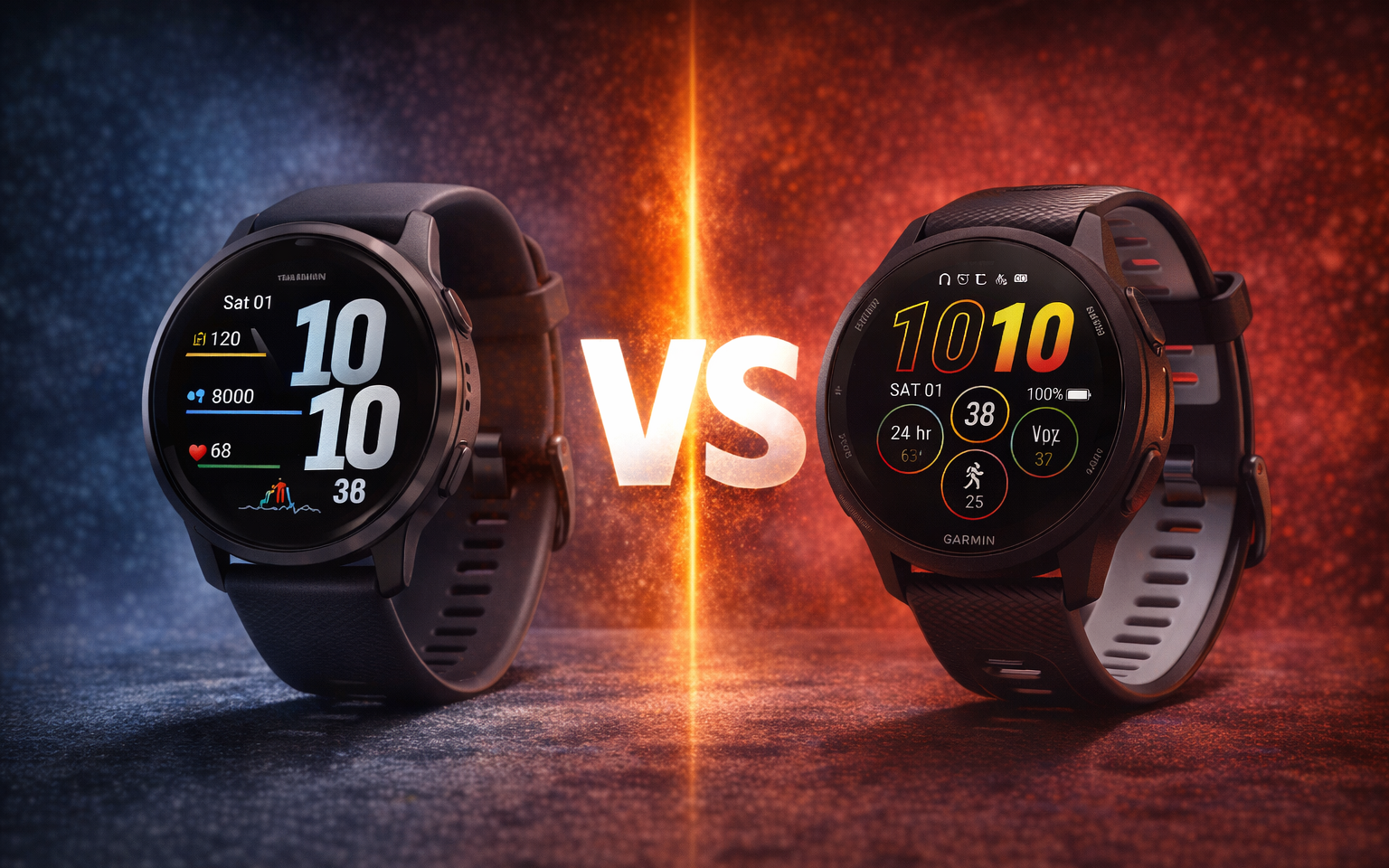
Garmin sells over a dozen watches across its Venu and Forerunner lineups, and from the outside, they can look suspiciously similar. Both lines offer AMOLED displays, optical heart rate sensors, GPS tracking, and access to the same Garmin Connect ecosystem. Both track runs, bike rides, swims, and dozens of other activities. Both measure sleep, stress, Body Battery, and HRV status. On paper, you might wonder why Garmin bothers making two separate product lines at all.
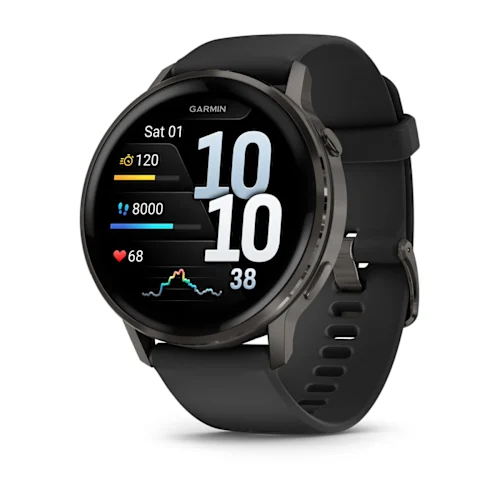
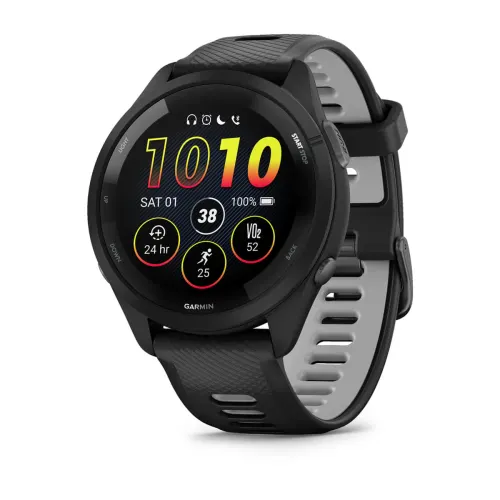
But strap a Venu 4 to one wrist and a Forerunner 265 to the other, and the differences reveal themselves within a single training week. These are watches built on fundamentally different philosophies, optimized for different daily routines, and designed for people who define "fitness" in very different ways. Choosing the wrong line means either paying for training depth you will never use or missing the tools you actually need. The distinction comes down to a deceptively simple question: do you train, or do you work out?
Here is how the two lines compare across every category that matters — and who should buy which.
The Core Philosophy
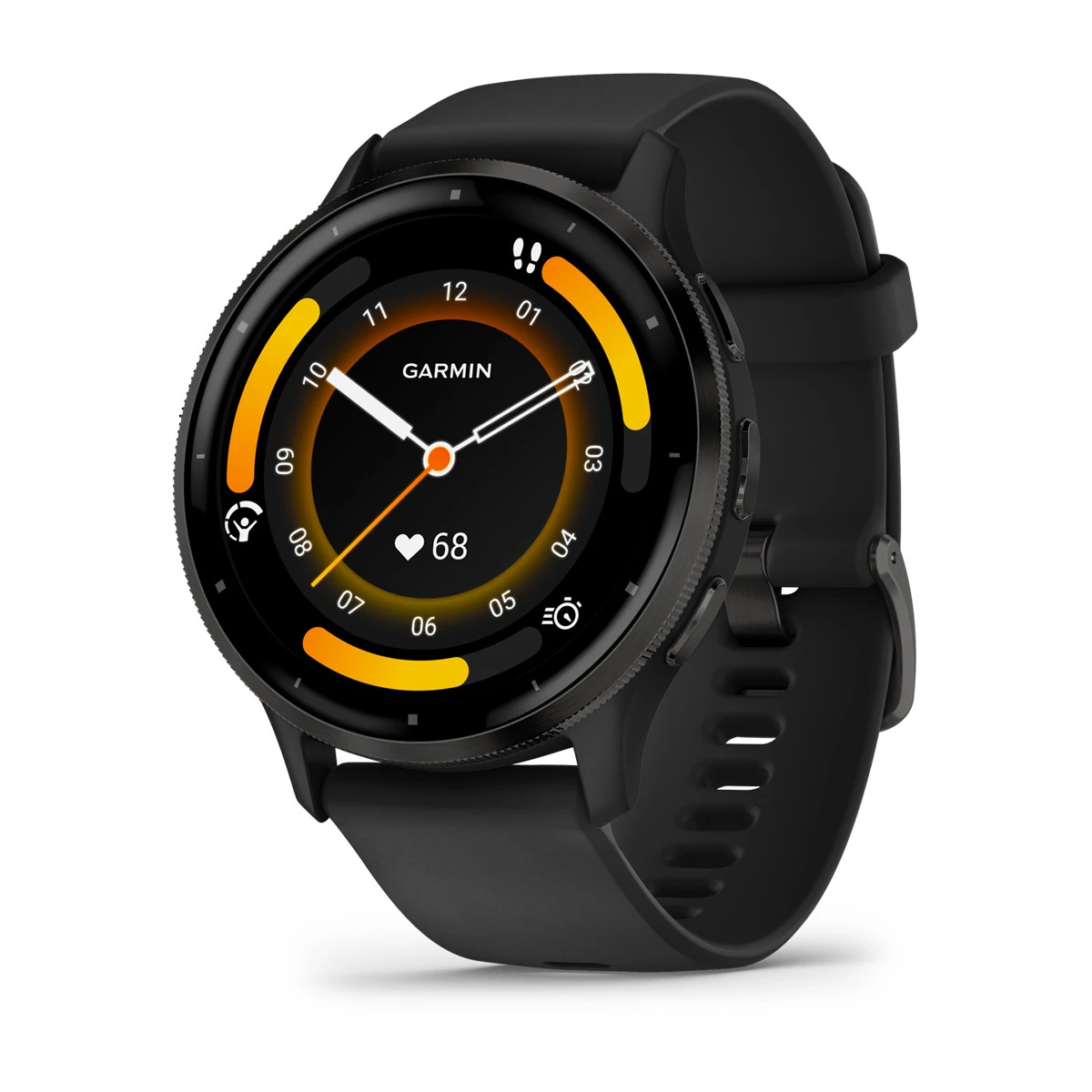
The Venu line is Garmin's answer to the Apple Watch and Samsung Galaxy Watch. These are lifestyle-first smartwatches that happen to have excellent fitness tracking. The lineup spans from the Venu 3 and Venu 3S ($450 MSRP, now around $350 street) through the premium Venu 4 ($550) to the ultra-thin Venu X1 ($800) — Garmin's luxury fashion entry with a sapphire crystal lens and 7.9mm profile. The design is refined enough for the office. The health features — sleep coaching, nap detection, ECG, stress tracking — are front and center. Training tools exist, but they serve people who work out regularly rather than people who train with a structured plan.
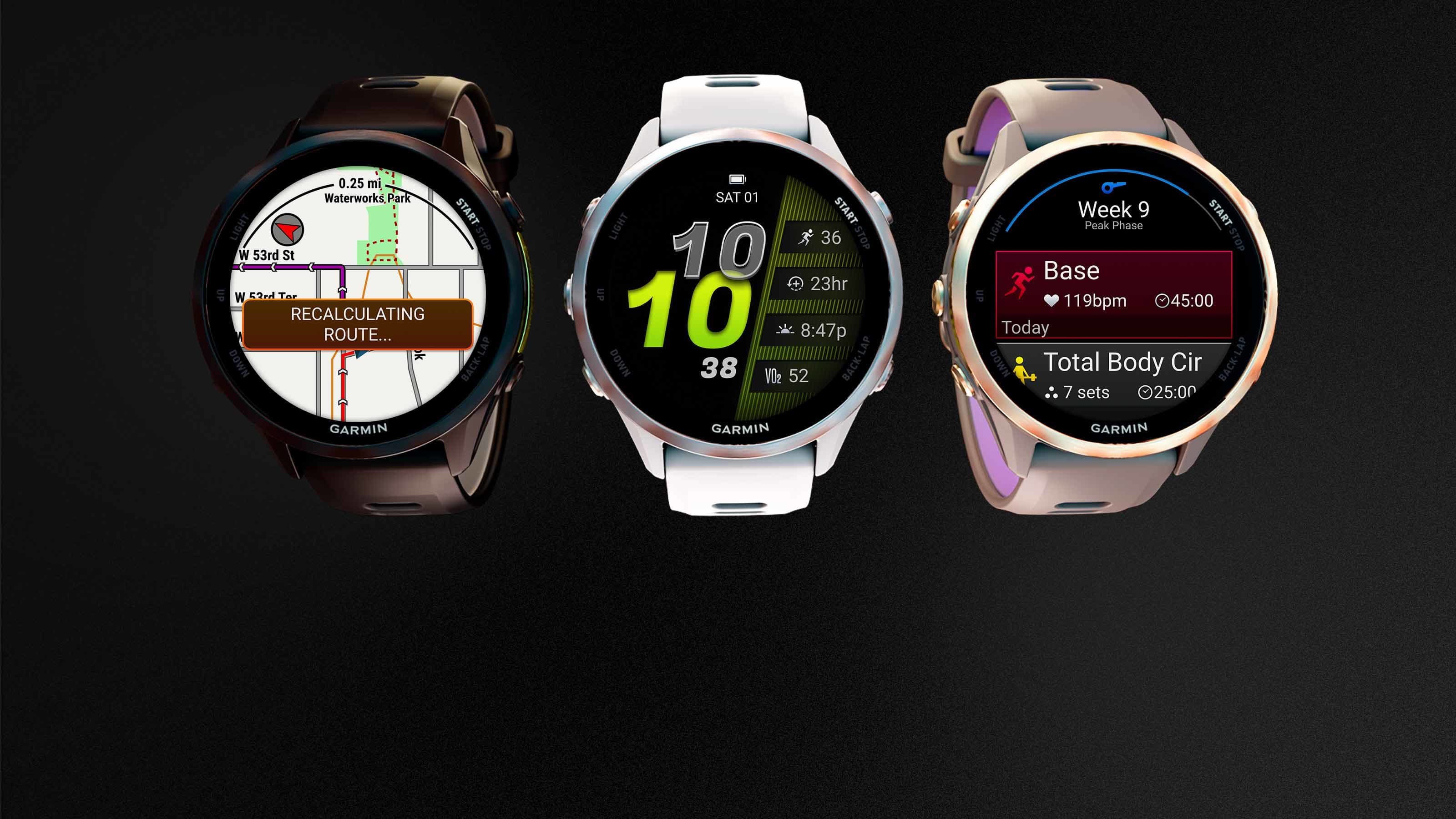
The Forerunner line is built for runners and endurance athletes, full stop. Every design decision filters through one question: does this help someone run faster, recover smarter, or train more consistently? The interface prioritizes workout data over notification management. The software assumes you know what Training Load and VO2 Max mean — and that you care. Even the entry-level Forerunner 165 ships with more sport-specific intelligence than many competitors' flagship models.
The overlap between the two lines has grown — the Venu 4 now includes multi-band GPS and advanced training metrics, while the Forerunner 970 added Bluetooth calling and a speaker. But the center of gravity remains different. A Venu wants to be your everyday watch that also tracks workouts. A Forerunner wants to be your training tool that also handles notifications.
Training and Running Features
This is where the Forerunner line earns its name. Every current Forerunner from the FR 265 upward — through the $750 FR 970 — includes Training Status, Training Load, Race Predictor, and Daily Suggested Workouts. These are not passive metrics buried in a menu; they form an integrated training system that adapts to your fitness level and adjusts recommendations based on how your body is responding.
The mid-range and premium Forerunners push further. The FR 570 and FR 970 add Running Power (wrist-based, no accessory needed), Running Dynamics compatibility, Hill Score, Endurance Score, and Running Tolerance — a metric that recommends maximum weekly mileage increases. The FR 970 layers on full-color topographic maps with on-device route editing, transforming long-run planning for trail runners and ultramarathon athletes.
The Venu line takes a different approach. The Venu 3 offers solid activity tracking with GPS, preloaded sport profiles, and basic performance metrics, but lacks Training Load analysis, structured workout suggestions, and the deeper running dynamics that serious runners depend on. The Venu 4 closes this gap significantly — it adds Training Readiness, HRV-based recovery insights, and dual-frequency GPS — but it still does not match the Forerunner's depth in pure running analytics. There is no Running Power metric anywhere in the Venu line.
The bottom line: If you follow a structured training plan, race regularly, or care about periodization, the Forerunner line is the clear choice. If you want to track your runs accurately and see basic progress metrics without drowning in data, a Venu handles that well.
Health and Wellness
Both lines share Garmin's core health platform: Body Battery energy monitoring, all-day stress tracking, Pulse Ox blood oxygen monitoring, women's health tracking, and HRV status. Sleep tracking is comprehensive across both lines, with sleep stages, sleep score, and overnight respiration rate.
The Venu line, however, treats wellness as a primary feature rather than a supporting one. The Venu 3 introduced sleep coaching and nap detection — features that offer actionable advice about when to sleep and how to improve sleep quality, not just raw data. The Venu 3 and Venu 4 both include ECG functionality, allowing on-demand electrocardiogram readings that can flag atrial fibrillation — a feature the Forerunner line reserves exclusively for the $750 FR 970.
On the Forerunner side, the FR 165, FR 265, and FR 570 all lack ECG. Sleep tracking is identical in data depth, but the presentation is more utilitarian — the Forerunner assumes you are checking sleep data to inform your training, not to optimize your overall wellness routine.
The bottom line: For health-focused users who want ECG, sleep coaching, and a wellness-first interface, the Venu line delivers more at lower price points. The Forerunner treats health data as fuel for training decisions rather than a standalone feature.
Design and Display
The Venu line wins the fashion contest convincingly. The Venu 4's stainless steel bezel and refined polymer case look appropriate at dinner. The Venu X1 is a 7.9mm-thin statement piece with a 2-inch AMOLED display that barely registers on the wrist at 34 grams — Garmin's thinnest watch by a wide margin. Even the Venu 3, with its fiber-reinforced polymer case and steel bezel, reads as a lifestyle accessory rather than sports equipment.
Forerunners are unambiguously sport watches. The five-button layout on most models is functional but adds visual bulk. The polymer cases prioritize durability and weight savings over aesthetics. The FR 970 breaks this pattern with a titanium bezel and sapphire crystal, but it still looks like a high-end running watch rather than a piece of jewelry. The FR 570 introduced bolder color options — raspberry, amp yellow, indigo — that add personality, but the silhouette remains sporty.
Every current model in both lines offers an AMOLED display. The Venu 4 and FR 970 share the same 1.4-inch, 454 x 454 panel — Garmin's best. The FR 265 uses a slightly smaller 1.3-inch display at 416 x 416, still gorgeous by any standard. All AMOLED models in both lines offer always-on display mode, though enabling it significantly reduces battery life.
The bottom line: If your watch needs to transition seamlessly from the gym to a restaurant, the Venu line is designed for exactly that. Forerunners look best paired with running shorts.

Battery Life
Garmin's battery advantage over Apple and Samsung is massive across both lines, but there are meaningful differences between Venu and Forerunner.
| Model | Smartwatch Mode | GPS Mode |
|---|---|---|
| Venu X1 | 8 days (2 with AOD) | 16 hours |
| Venu 3 | 14 days | 26 hours |
| Venu 4 | 12 days | 20 hours |
| Forerunner 165 | 11 days | 19 hours |
| Forerunner 265 | 13 days | 20 hours |
| Forerunner 570 | 11 days | 18 hours |
| Forerunner 970 | 15 days | 26 hours |
The Forerunner line offers stronger GPS endurance at the top end. The FR 970 manages 26 hours of continuous GPS — enough for most ultramarathon distances. The Venu 3 matches at 26 hours, but the Venu 4 drops to 20 hours with its dual-frequency GPS enabled. The Venu X1 trades Garmin's usual battery dominance for its ultra-thin design — just 2 days with always-on display, and 16 hours of GPS.
For everyday smartwatch use, both lines deliver roughly 11-15 days, demolishing the 1-2 day battery life of Apple Watch and Galaxy Watch.
The bottom line: Both lines crush the competition on battery life. The Forerunner line edges ahead for extended GPS sessions, making it the safer choice for ultra-distance events.
Smart Features
The Venu line was built to compete with mainstream smartwatches, and it shows. Every current Venu — the Venu 3, Venu 4, and Venu X1 — includes a built-in speaker and microphone for Bluetooth phone calls. On the Forerunner side, both the FR 570 and FR 970 offer this feature, but the FR 165 and FR 265 lack it. Music storage with Spotify, Amazon Music, and Deezer offline playback is available on all current models except the base Forerunner 165 (the Music edition adds it for $50 more).
Both lines support Garmin Pay for contactless payments, smart notifications from your phone, and Garmin's Connect IQ app store. The Connect IQ ecosystem remains limited compared to Apple's App Store or Google Play — there is no Uber, no WhatsApp, no Google Maps — but watch faces, data fields, and basic third-party apps are plentiful.
Both lines include Garmin's safety suite — LiveTrack for sharing real-time location during activities, GroupTrack for seeing training partners on the map, and Incident Detection for alerting emergency contacts after a fall or collision. These features are standard across both lineups, though Forerunner users tend to rely on them more heavily during solo trail runs and early-morning sessions.
The bottom line: For everyday smartwatch functionality — calls, notifications, music, payments — the Venu line delivers a more polished experience with calls on every model. The Forerunner matches on safety features and pulls ahead in sport-specific data fields.
Value and Pricing
Both lines span a wide price range, and comparing value requires matching watches to their intended audience rather than simply comparing spec sheets.
| Model | MSRP | Street Price (May 2026) | Best For |
|---|---|---|---|
| Forerunner 165 | $250 | ~$200 | Budget runners |
| Forerunner 265 | $450 | ~$300 | Best value runners |
| Venu 3/3S | $450 | ~$350 | Lifestyle + fitness |
| Forerunner 570 | $550 | ~$500 | Mid-range runners |
| Venu 4 | $550 | ~$550 | Premium lifestyle |
| Forerunner 970 | $750 | ~$700 | Serious athletes |
| Venu X1 | $800 | ~$700 | Design-first buyers |
The Forerunner 265 at around $300 street (MSRP $450) is the single best value in Garmin's entire catalog. It delivers roughly 90% of the training intelligence found in the FR 970 at a fraction of the price. For runners on a budget, the FR 165 at ~$200 is nearly as compelling.
On the Venu side, the Venu 3 at ~$350 street hits the sweet spot for lifestyle buyers — a gorgeous AMOLED display, sleep coaching, ECG, and 14-day battery life. The Venu 4 at $550 has held its price since launch, reflecting its position as Garmin's premium lifestyle flagship.
The interesting overlap is at the $550 tier, where the Venu 4 and FR 570 share similar MSRPs. The FR 570 wins on training features and matches the Venu on speaker/mic calls. The Venu 4 wins on design refinement, ECG, and lifestyle appeal. Neither fully satisfies both needs.
The bottom line: The best values live at the edges — FR 265 for runners, Venu 3 for lifestyle users. The premium tiers demand clear self-knowledge about your priorities.
Who Should Buy a Venu
The gym-and-yoga crowd. You work out four or five times a week — strength training, cycling classes, yoga, maybe a 5K on weekends. You want a watch that tracks all of it without making you feel like you are wearing lab equipment. The Venu 3 or Venu 4 covers every activity you do and looks good doing it.
The health-conscious professional. Sleep quality, stress management, and energy levels matter more to you than split times and VO2 Max trends. You want ECG capability, sleep coaching, and a watch you can wear to client meetings. The Venu line was designed for your daily routine.
The design-obsessed minimalist. The Venu X1 is unlike anything else in Garmin's lineup — a 7.9mm luxury piece with a sapphire crystal lens, offline maps, and a 2-inch AMOLED. It sacrifices battery for elegance, but nothing else on the market looks like it.
Who Should Buy a Forerunner
The dedicated runner. You follow a training plan, track weekly mileage, and care about your Training Load balance. Whether you are training for a first half-marathon or a qualifying time at Boston, the Forerunner's training intelligence is purpose-built for you. Start with the FR 165 if budget matters, the FR 265 for the best balance, or the FR 970 if you want everything.
The triathlete or multisport athlete. Open-water swim tracking, cycling power meter support, brick workout modes, and triathlon-specific race profiles are Forerunner strengths. The FR 570 and FR 970 both handle multisport transitions seamlessly.
The data-driven optimizer. You read your Morning Report before your first cup of coffee. You know your lactate threshold pace and check your Training Status weekly. The Forerunner line speaks your language and rewards your attention with genuinely actionable insights.
The trail and ultra runner. Offline maps on the FR 970 transform long runs in unfamiliar terrain. Extended GPS battery life handles events that stretch well beyond marathon distance. If you need maps on a Forerunner, the FR 970 is your only option.
Our Verdict
Both lines justify their existence — the Venu earns outright wins in health features, design, and smartwatch polish, while the Forerunner dominates training intelligence and GPS endurance. But if you are choosing between the two lines and are not sure which camp you fall into, the answer is almost always the Forerunner.
For most buyers, the right answer is the Forerunner line — specifically the Forerunner 265.
The Forerunner 265 offers the best combination of training depth, display quality, battery life, and value in Garmin's entire portfolio. It handles everything from casual jogs to structured marathon prep, looks sharp enough for daily wear (if not quite boardroom-ready), and costs around $300 at current street prices (MSRP $450). Even if you are not a "serious runner" today, the FR 265 gives you room to grow into more advanced training without needing to upgrade your watch.
The Venu line earns the win for a specific — and sizable — audience: people who prioritize health monitoring, design, and smartwatch functionality over structured athletic training. If you have zero interest in Training Load analytics and want a watch that looks great at brunch, handles Bluetooth calls, and still tracks your CrossFit sessions accurately, the Venu 3 at current street prices is the better choice. The Venu 4 makes sense for those who also want advanced training metrics in a premium package — a narrow but real niche.
Do you train, or do you work out? Trainers follow plans, chase goals, and use data to get faster — they should buy a Forerunner. People who work out for health, stress relief, and general fitness — and want their watch to reflect that balanced lifestyle — should buy a Venu. Both lines are excellent. Choosing the wrong one is the only real mistake.
Specs at a Glance
| Feature | Venu 3 | Venu 4 | Forerunner 265 | Forerunner 570 | Forerunner 970 |
|---|---|---|---|---|---|
| MSRP | $450 | $550 | $450 | $550 | $750 |
| Display | 1.4" AMOLED | 1.4" AMOLED | 1.3" AMOLED | 1.4" AMOLED | 1.4" AMOLED |
| Resolution | 454x454 | 454x454 | 416x416 | 454x454 | 454x454 |
| Weight | 47g | 51g | 47g | 50g | 56g |
| Battery (watch) | 14 days | 12 days | 13 days | 11 days | 15 days |
| Battery (GPS) | 26 hrs | 20 hrs | 20 hrs | 18 hrs | 26 hrs |
| Multi-band GPS | No | Yes | Yes | Yes | Yes |
| ECG | Yes | Yes | No | No | Yes |
| Offline Maps | No | No | No | No | Yes |
| Speaker/Mic | Yes | Yes | No | Yes | Yes |
| Training Load | No | Yes | Yes | Yes | Yes |
| Suggested Workouts | No | Yes | Yes | Yes | Yes |
| Case Material | Polymer/Steel bezel | Polymer/Steel bezel | Polymer | Polymer/Aluminum | Titanium bezel |
| Lens | Gorilla Glass 3 | Gorilla Glass 3 | Gorilla Glass 3 | Gorilla Glass 3 | Sapphire |
| Water Rating | 5 ATM | 5 ATM | 5 ATM | 5 ATM | 5 ATM |