
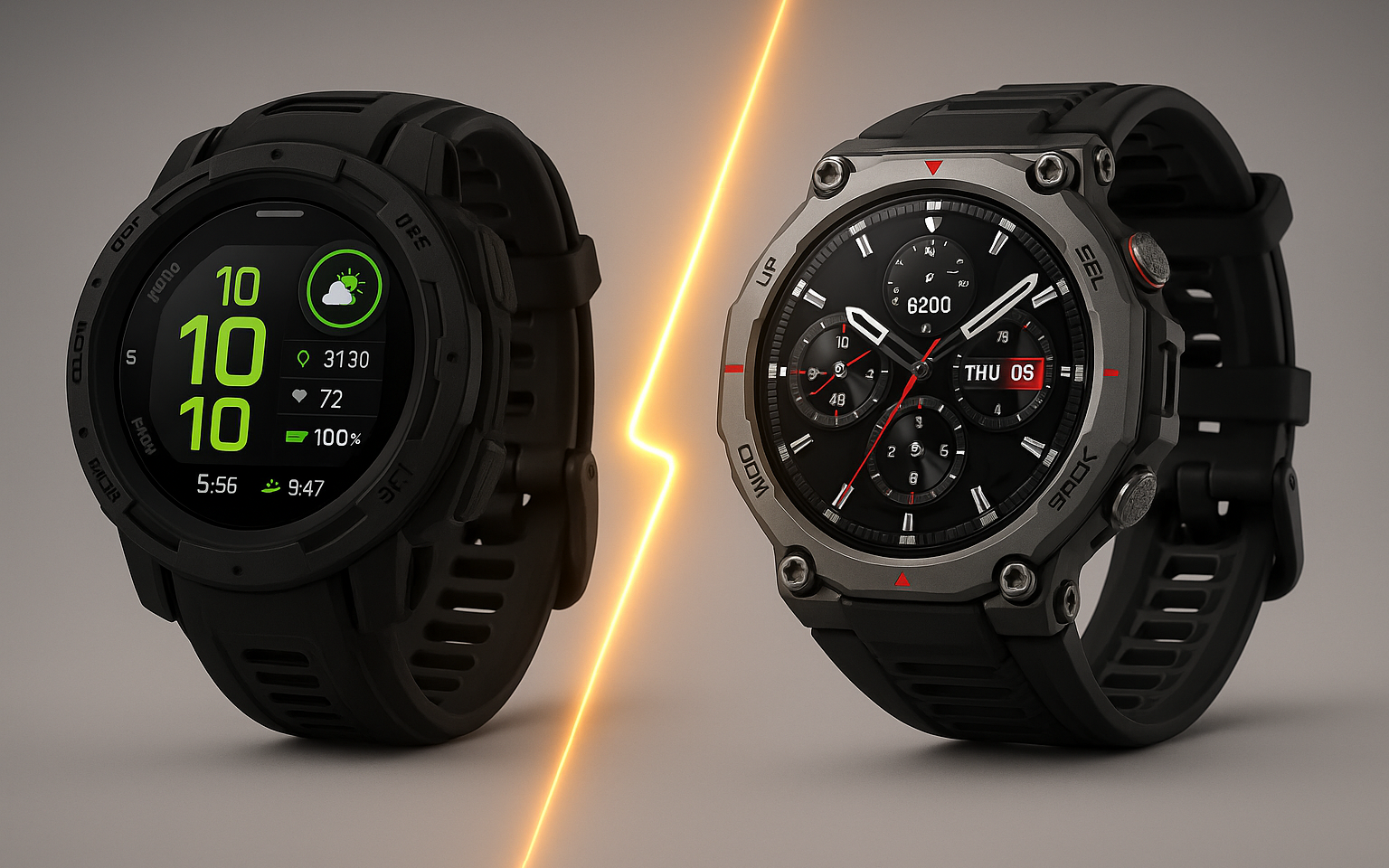
If you're shopping for a rugged outdoor watch in 2026, you're staring down a fascinating paradox: Garmin's Instinct 3 costs $400\u2013$500 but ships without offline maps, while Amazfit's $280 T-Rex 3 includes free topographic mapping and navigation. This isn't a simple budget-versus-premium fight\u2014it's a battle between Garmin's refined ecosystem and Amazfit's aggressive feature-stuffing at half the price.
Both watches meet military-grade durability standards, pack dual-frequency GPS, and promise weeks of battery life. Garmin ultimately wins this fight, but the victory is narrower than its price premium suggests\u2014and it hinges entirely on whether you value ecosystem polish over feature count.
Key Differences
Build & Durability
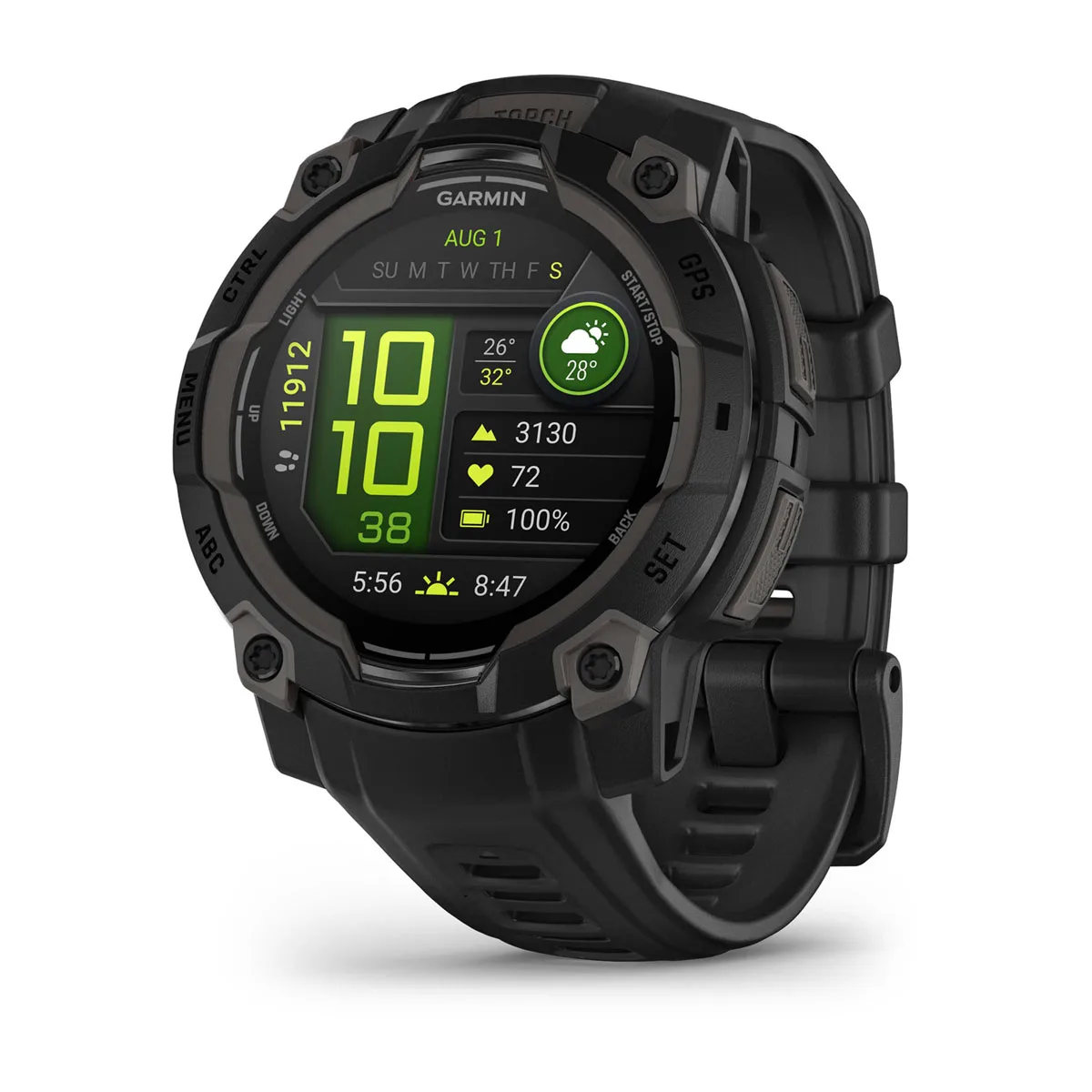
Both watches meet MIL-STD-810 military standards and 10 ATM water resistance, but the Instinct 3 feels more refined in hand. The metal-reinforced bezel adds genuine heft and reassurance when you accidentally smash it against a rock face. The polymer body keeps weight reasonable at 53 grams for the 45mm model, and the integrated LED flashlight tucked under the bezel proves surprisingly useful for pre-dawn runs and fumbling with tent zippers.
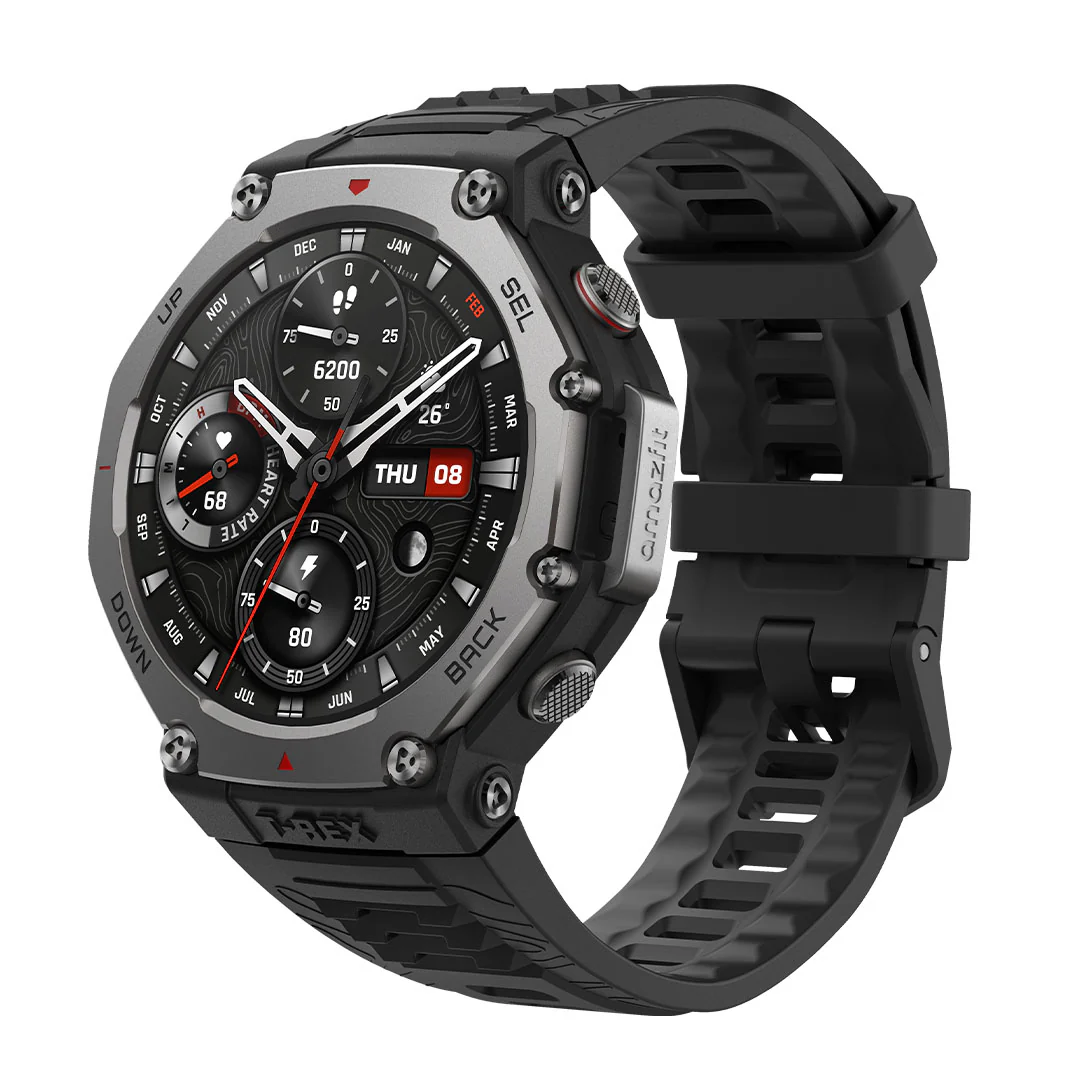
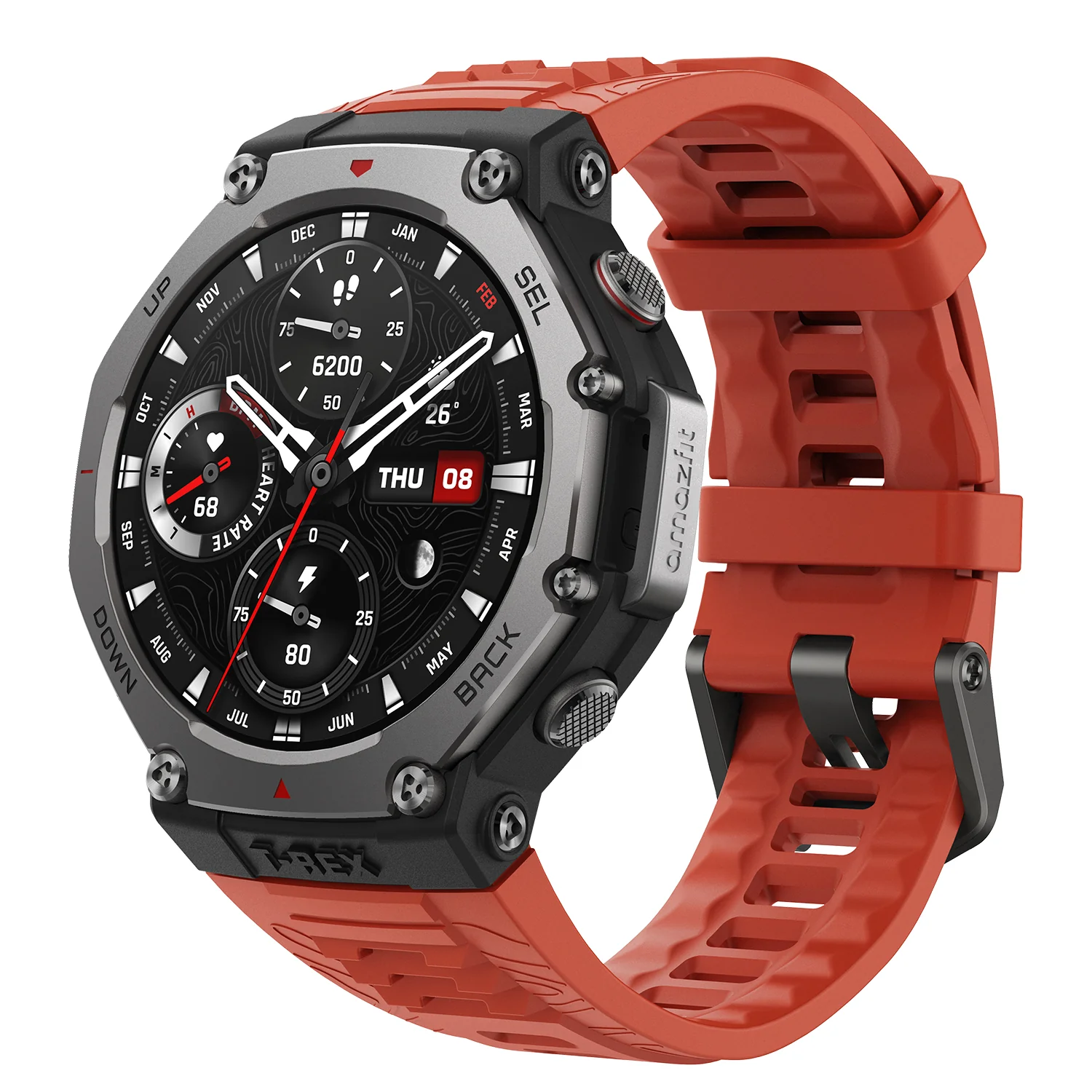
The T-Rex 3 counters with a stainless steel bezel wrapped around a 48.5mm polymer case, tipping the scales at 68.3 grams. The extra bulk is noticeable on smaller wrists, and the aggressive styling screams "tactical" where the Instinct 3 whispers understated competence. Both watches shrug off extreme temperatures, dust, and abuse, but the Instinct 3's 45mm and 50mm size options give it versatility the single-size T-Rex 3 lacks.
Winner: Garmin Instinct 3 \u2014 Better size options, lighter weight, and a built-in flashlight.
Display
The Instinct 3 offers two display technologies: a vibrant AMOLED at 390\u00d7390 pixels (45mm: 1.2 inches, 50mm: 1.3 inches) that finally brings color and clarity to the Instinct line, or a traditional MIP solar display at 176\u00d7176 pixels (45mm: 0.9 inches, 50mm: 1.1 inches) for multi-week battery life. The AMOLED models deliver crisp text and vivid colors that make data screens pleasant to read\u2014a massive upgrade from the monochrome Instinct 2. However, Garmin disables touch input on the AMOLED models despite the hardware supporting it\u2014a puzzling decision at $450\u2013$500 that forces button-only navigation.
The T-Rex 3 ships with a 1.5-inch AMOLED at 480\u00d7480 pixels and 2,000-nit peak brightness\u2014more screen real estate, higher resolution, and fully functional touch input that makes swiping through menus feel natural and fast.
Winner: Amazfit T-Rex 3 \u2014 Larger, sharper AMOLED with actual working touch input at a fraction of the price.
GPS & Navigation
Both watches pack dual-frequency GPS, but their satellite support differs. The Instinct 3 supports GPS, GLONASS, and Galileo, while the T-Rex 3 covers six satellite systems including GPS, GLONASS, Galileo, BeiDou, QZSS, and NavIC. Real-world accuracy testing shows the Instinct 3 tracks routes with exceptional precision\u2014rock-solid distance metrics and elevation data that hold up in dense tree cover. The T-Rex 3 produces slightly wobblier tracks in heavy canopy but remains competitive for recreational hiking and running.
Here's the gut punch: the Instinct 3 has no offline maps. At $400\u2013$500, Garmin ships a breadcrumb navigation system\u2014a simple line on a blank screen with turn prompts and off-course alerts. To see actual topographic detail, you need the Garmin Explore app on your phone.
The T-Rex 3 includes free offline maps with topographic detail, street names, and turn-by-turn navigation. Download maps through the Zepp app, load routes from Komoot or Strava, and navigate complex trail networks without pulling out your phone. Map rendering has occasional quirks\u2014water features can display incorrectly, and route import requires workarounds\u2014but it's functional navigation that Garmin inexplicably withholds.
Winner: Amazfit T-Rex 3 \u2014 Free offline maps at $280 versus no maps at $500 is hard to defend.
Value
This is where the math gets uncomfortable. The Garmin Instinct 3 Solar starts at $399.99 (45mm) and $449.99 (50mm). The AMOLED starts at $449.99 (45mm) and $499.99 (50mm). Neither variant includes offline maps, and the AMOLED lacks touch input.
The Amazfit T-Rex 3 costs $279.99. It includes offline maps, a larger touchscreen AMOLED display, broader satellite coverage, and competitive GPS accuracy for $120\u2013$220 less than Garmin's cheapest option.
If you're not deeply invested in Garmin Connect, that price gap is brutal. You're paying a $120\u2013$220 premium for better software integration, slightly superior sensor accuracy, and solar charging options. That math works if you live in Garmin Connect and need every training metric dialed in. It's harder to justify if you want a rugged watch that tracks runs and navigates trails.
Winner: Amazfit T-Rex 3 \u2014 Feature-loaded at $280 makes Garmin's pricing hard to justify for casual users.
Health & Fitness Tracking
The Instinct 3 ships with Garmin's Gen 4 Elevate optical heart rate sensor\u2014a generation behind the Gen 5 in the Fenix 8 and Epix series, but still accurate during steady-state runs and cycling. The full suite of Garmin training metrics\u2014VO2 max, training load, recovery time, training readiness, daily suggested workouts\u2014makes this a serious coaching tool. Integration with Strava, TrainingPeaks, and Zwift rounds out an ecosystem no competitor matches.
The T-Rex 3 delivers comparable heart rate accuracy during steady-state cardio. But high-intensity intervals expose weaknesses\u2014sustained cycling climbs and rapid interval transitions show the optical sensor struggling. More concerning: sleep tracking shows occasional reliability issues, with some users reporting detection failures requiring factory resets. Zepp Coach offers customized training plans and 170+ sport modes including strength auto-recognition for 25 exercises, but the software lacks Garmin Connect's analytical depth.
Winner: Garmin Instinct 3 \u2014 More reliable sensors and a vastly superior training ecosystem.
Battery Life
The Instinct 3 Solar delivers jaw-dropping endurance: up to 40 days in smartwatch mode and up to 60 hours of GPS tracking for the 50mm model, with solar extending runtime significantly in optimal sunlight conditions. The 45mm Solar manages up to 28 days smartwatch and 40 hours GPS. Testing confirmed meaningful solar gains, with battery actually climbing during extended sun exposure.
The Instinct 3 AMOLED trades solar for screen quality: up to 18 days (45mm) or 24 days (50mm) in smartwatch mode, and 32 to 40 hours of GPS tracking. Still impressive for AMOLED, but nowhere near the Solar's endurance.
The T-Rex 3 promises up to 27 days in typical use and up to 42 hours of GPS tracking from its 700mAh battery. With moderate daily use including GPS sessions, expect to charge roughly every week. That's excellent for an AMOLED watch but can't match the Solar Instinct 3.
Winner: Garmin Instinct 3 \u2014 The Solar variant's multi-week runtime with functional solar charging is unmatched.
Software & Ecosystem
Garmin Connect is the gold standard for fitness tracking software. Custom training plans, detailed performance analytics, seamless syncing with every major platform, and years of refinement make it the most complete ecosystem in wearables. The Instinct 3 integrates perfectly, delivering daily suggested workouts, interval training, and recovery insights that actually help you train smarter.
However, early firmware versions had bugs affecting solar gain displays and causing occasional crashes. Garmin's update cadence typically resolves these faster than Amazfit, but early adopters should expect rough edges\u2014even from the "polished" ecosystem.
The Zepp app offers respectable fitness tracking with recent additions like Zepp Flow voice assistant and speech-to-text messaging. You get offline map management, route planning, and syncing with Strava, Komoot, and TrainingPeaks. But half-baked implementations\u2014inconsistent sleep tracking, unreliable gesture recognition, and spotty auto-workout detection\u2014reveal a software maturity gap Garmin closed years ago.
Winner: Garmin Instinct 3 \u2014 Mature ecosystem with deeper training tools and better third-party integration.
Who Should Buy What
Buy the Garmin Instinct 3 if you: - Already use Garmin Connect and want seamless ecosystem integration - Prioritize multi-week battery life with solar charging (Solar model) - Need the most accurate GPS and heart rate tracking for structured training - Prefer a smaller 45mm case option - Value software polish and reliable firmware updates over time - Can live without offline maps and touchscreen control
Buy the Amazfit T-Rex 3 if you: - Want offline maps and turn-by-turn navigation without paying $500+ - Prefer touchscreen control over button-only interfaces - Don't need Garmin Connect's advanced training analytics - Want a larger 1.5-inch AMOLED display with higher resolution - Can tolerate occasional software quirks for massive cost savings - Can accept occasional sleep tracking glitches and less polish
Our Verdict
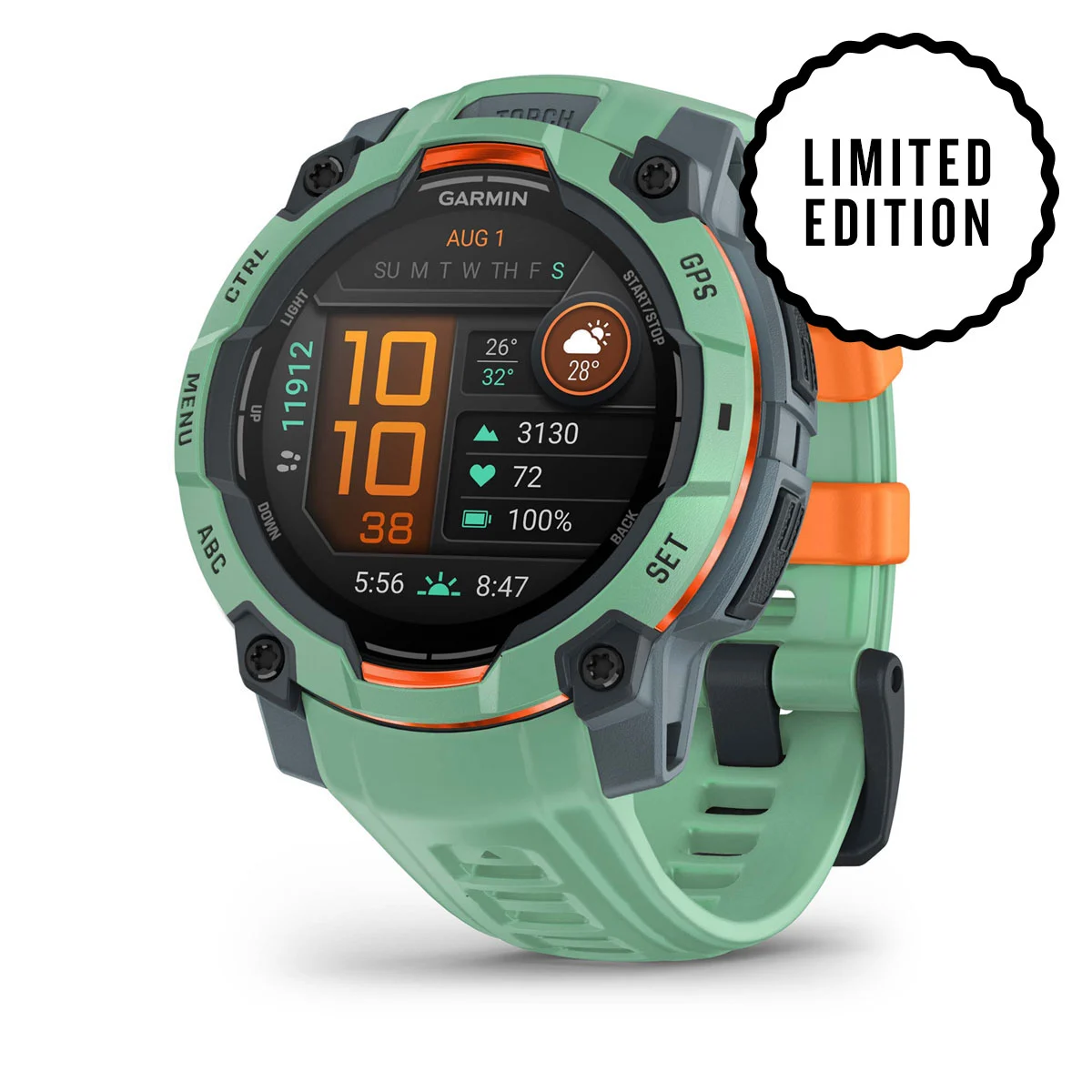
The Garmin Instinct 3 wins this comparison, but it's a closer fight than the price gap suggests. The Solar variant's multi-week battery life, superior GPS accuracy, and mature ecosystem justify the premium for serious outdoor athletes and Garmin loyalists. The AMOLED model delivers a gorgeous display upgrade but struggles to justify $450\u2013$500 when it lacks offline maps and touch input that competitors offer at half the price.
The Amazfit T-Rex 3 is the better value for most buyers. Offline maps, a larger touchscreen, and solid GPS tracking at $280 make it the smarter purchase unless you specifically need Garmin Connect's training depth or solar charging. The software frustrations and slightly weaker heart rate accuracy during intense efforts are real compromises, but they're forgivable at this price.
The uncomfortable truth: Garmin charges a hefty ecosystem tax, and the Instinct 3's missing offline maps feel like intentional product segmentation to protect Fenix sales. If you can afford $500 and live in Garmin's world, buy the Instinct 3 Solar. Everyone else should seriously consider the T-Rex 3.
Specs At A Glance
Garmin Instinct 3 AMOLED (45mm / 50mm): - Display: 1.2" / 1.3" AMOLED, 390\u00d7390px (no touch input) - Battery: Up to 18 / 24 days smartwatch; 32 / 40 hours GPS - GPS: Dual-frequency (GPS, GLONASS, Galileo) - Water resistance: 10 ATM - Weight: 53g (45mm) / 59g (50mm) - MIL-STD-810 certified - Navigation: Breadcrumb only (no offline maps) - Price: $449.99 / $499.99
Garmin Instinct 3 Solar (45mm / 50mm): - Display: 0.9" / 1.1" MIP, 176\u00d7176px (solar-charging) - Battery: Up to 28 / 40 days smartwatch; 40 / 60 hours GPS (unlimited with solar) - GPS: Dual-frequency (GPS, GLONASS, Galileo) - Water resistance: 10 ATM - Weight: 53g (45mm) / 59g (50mm) - MIL-STD-810 certified - Navigation: Breadcrumb only (no offline maps) - Price: $399.99 / $449.99
Amazfit T-Rex 3: - Display: 1.5" AMOLED touchscreen, 480\u00d7480px, 2,000 nits - Battery: Up to 27 days smartwatch; 42 hours GPS - GPS: Dual-frequency, 6 satellite systems (GPS, GLONASS, Galileo, BeiDou, QZSS, NavIC) - Water resistance: 10 ATM - Weight: 68.3g - MIL-STD-810 certified - Navigation: Offline maps with turn-by-turn - Price: $279.99