
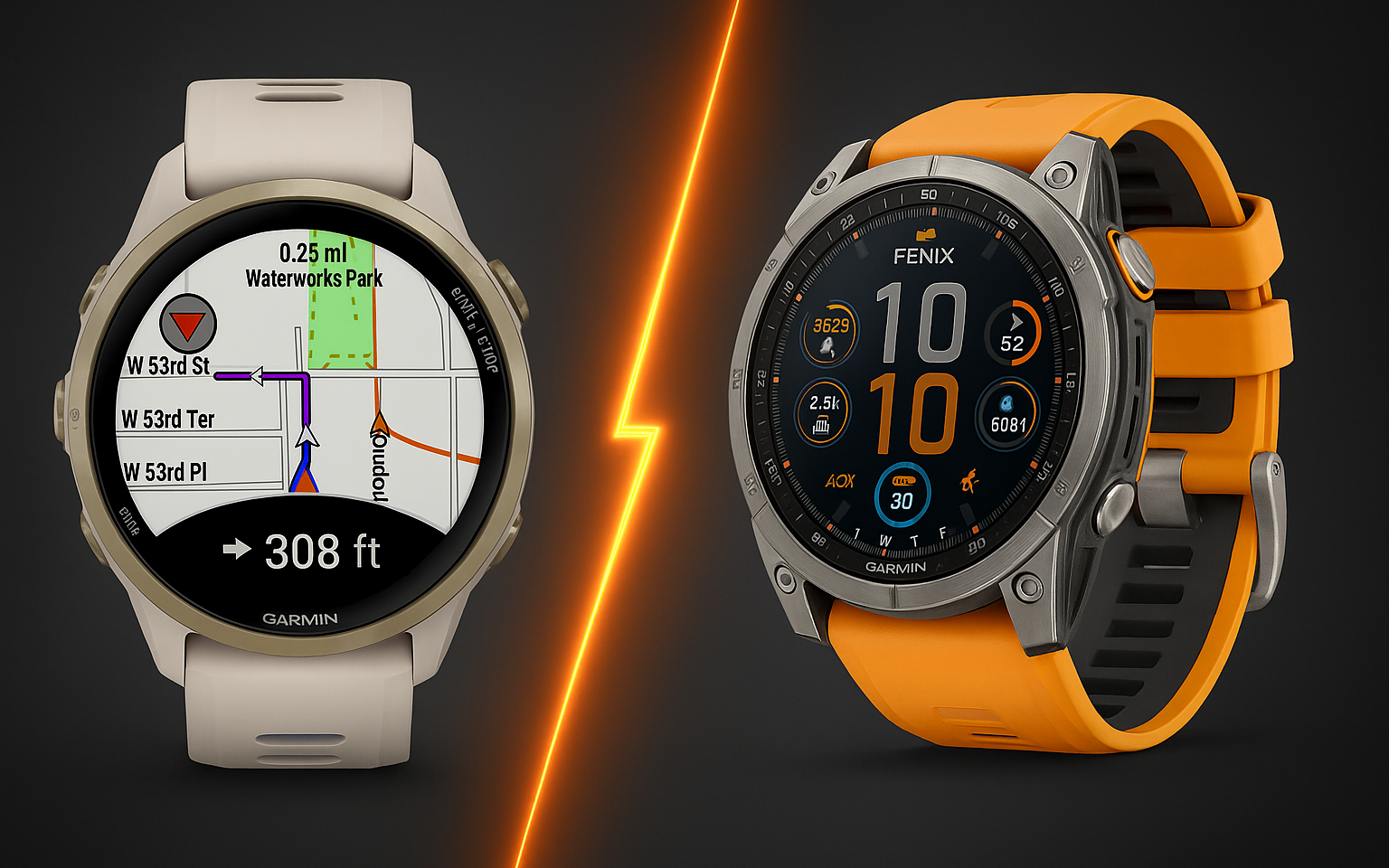
Choosing between Garmin's two premier watches feels less like picking a winner and more like choosing your weapon. The Forerunner 970 ($749.99) and the Fenix 8 ($999.99 for the 47mm AMOLED) share the same brilliant display resolution, identical navigation tools, and near-identical training features. But one costs $250 less, weighs 25 grams lighter, and shines brighter. The other survives dives to 40 meters, runs almost twice as long on GPS, and shrugs off punishment that would destroy lesser watches.
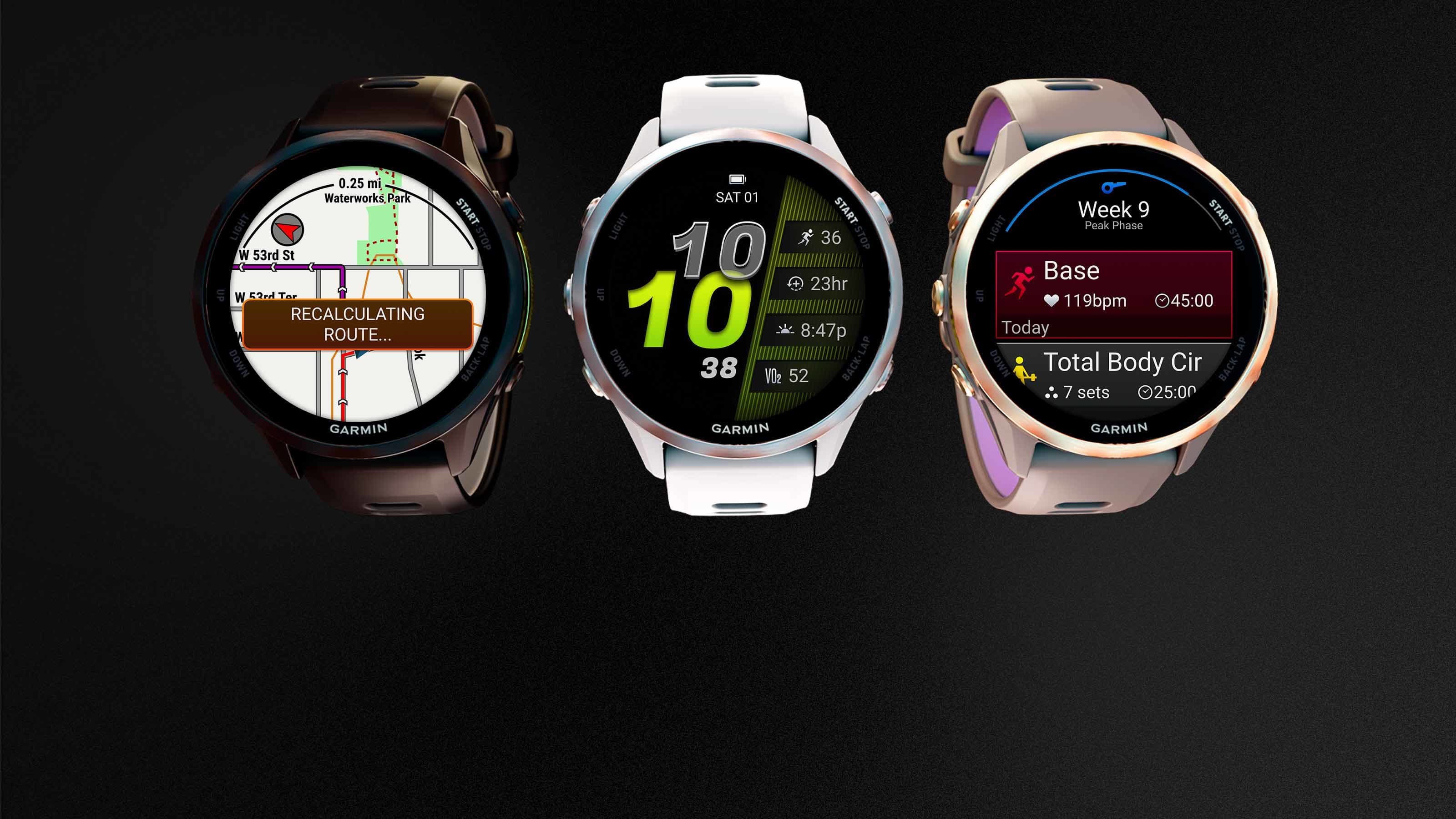
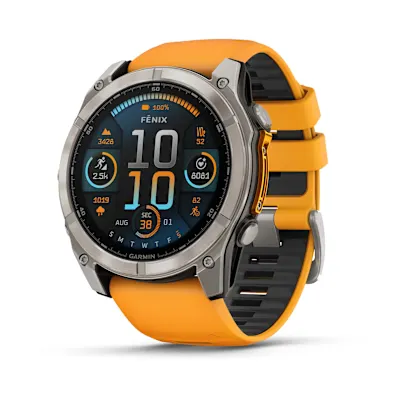
The short answer: the Forerunner 970 wins this matchup for most serious runners and triathletes. It delivers 95% of the Fenix 8's capability at 75% of the price, wrapped in a lighter, brighter package that disappears on your wrist during sleep tracking and tempo runs alike. Unless you need a dive computer, MIL-STD-810 durability, or marathon-length GPS sessions beyond 26 hours, the extra $250 buys features you will never use.
Quick Verdict
Winner: Garmin Forerunner 970
The Forerunner 970 takes this fight on value and daily wearability. At $749.99, it undercuts the Fenix 8 by $250 while matching it stride-for-stride on GPS accuracy, training intelligence, and navigation. The 56-gram titanium case feels featherlight compared to the Fenix 8's 73 grams in titanium or 81 grams in stainless steel. The display is the brightest AMOLED Garmin has ever produced -- visibly superior to the Fenix 8's 1,000-nit panel when you are squinting at split times under direct sun.
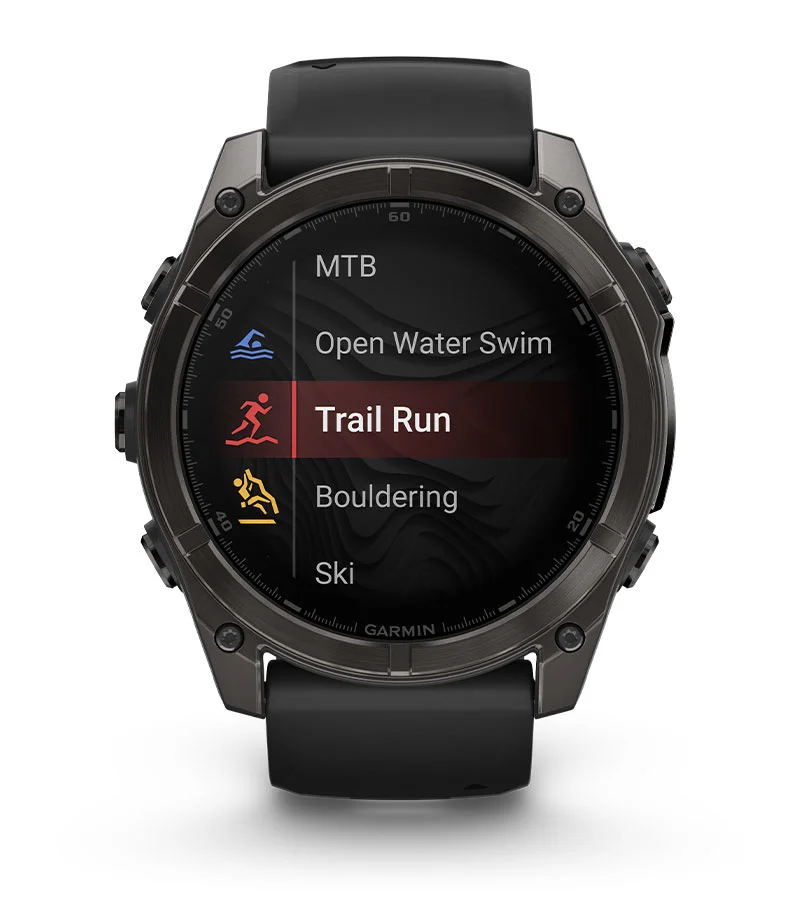
But choose the Fenix 8 if: you need the EN13319-certified dive computer rated to 40 meters, demand MIL-STD-810 durability for genuinely harsh environments, want multiple case sizes (43mm, 47mm, or 51mm), or run ultras that require more than 26 hours of continuous GPS. The Fenix 8's 47-hour GPS battery life nearly doubles the Forerunner's, and that gap matters when you are deep into a 100-miler.
Key Differences
Design & Weight
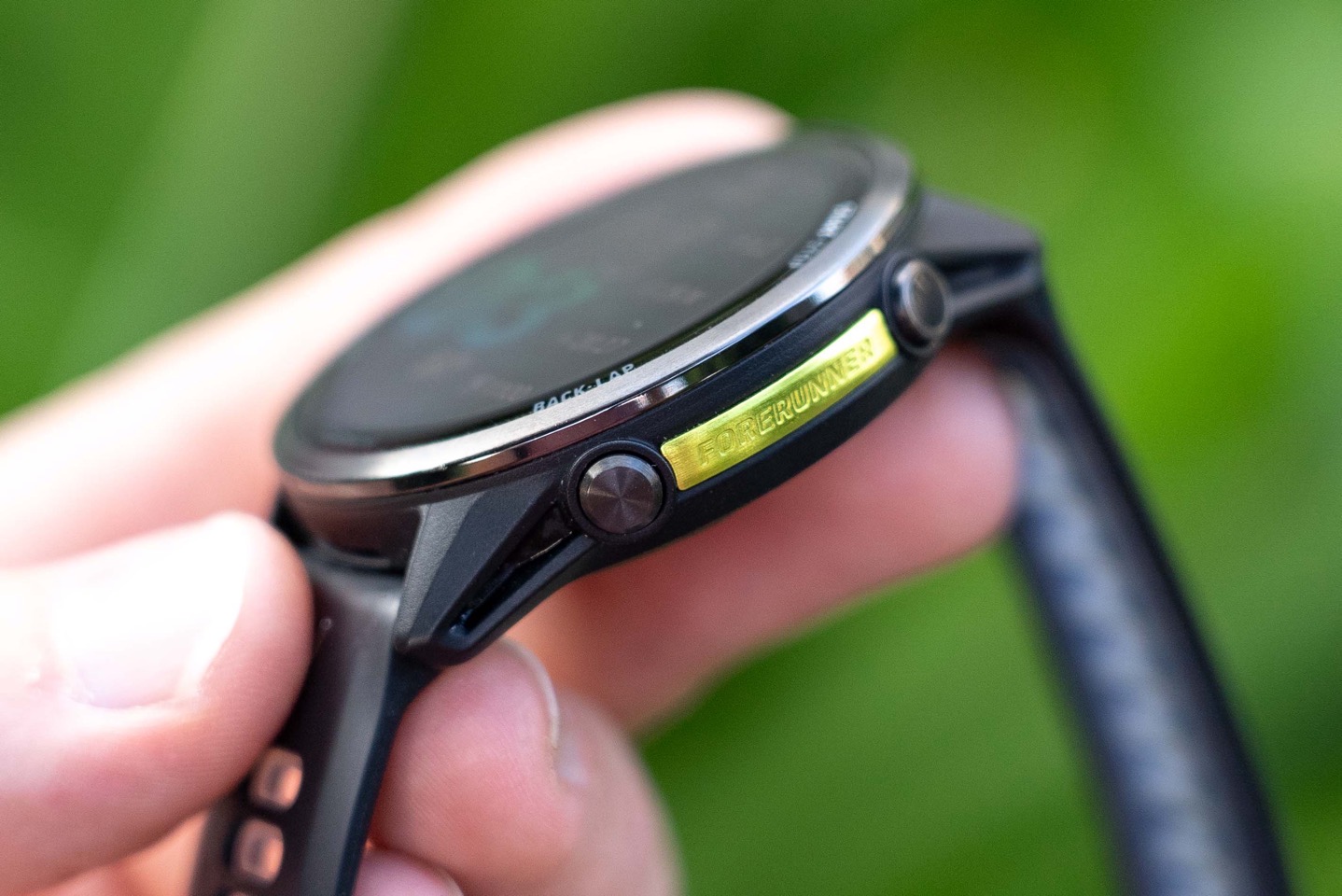
The Forerunner 970's 56-gram weight feels transformative compared to the Fenix 8. Strap on the steel Fenix 8 at 81 grams, and you notice it immediately -- during sleep, during easy runs, during any moment when you are not actively training. Even the titanium Fenix 8 at 73 grams outweighs the Forerunner by 17 grams.
Both watches share a 47mm case diameter and 1.4-inch AMOLED display at 454x454 pixels. But the Forerunner measures 12.9mm thick versus the Fenix 8's 13.8mm. That millimeter, combined with the weight gap, makes the Forerunner disappear on your wrist. The Fenix 8 announces itself.
The Fenix 8 counters with genuine ruggedness: MIL-STD-810 certification for thermal and mechanical shock, 10 ATM water resistance versus the Forerunner's 5 ATM, and leakproof inductive buttons that eliminate mechanical failure points. The Fenix survives battlefield conditions. The Forerunner survives training.
Size flexibility goes entirely to the Fenix 8. It ships in 43mm, 47mm, and 51mm cases -- plus Solar MIP versions that stretch battery life dramatically. The Forerunner 970 offers one size and one display technology. Take it or leave it.
Display
Both watches run 1.4-inch AMOLED panels at 454x454 resolution with sapphire crystal covers. But Garmin calls the Forerunner 970's display the brightest AMOLED it has ever produced, and real-world use confirms it. Stand both watches under direct sunlight and the Forerunner's maps appear noticeably brighter and more vibrant -- both remain legible, but the Forerunner gives you that extra margin of clarity. The Fenix 8 peaks at 1,000 nits; Garmin has not disclosed the Forerunner 970's exact figure, but independent reviewers consistently describe it as substantially brighter.
During bright-day trail runs or road races, that brightness advantage compounds. You glance down, read your pace, and look away. No squinting, no cupping your hand around the watch face.
GPS & Navigation
Both watches use multi-band GNSS with SatIQ technology, supporting GPS, GLONASS, Galileo, BeiDou, and QZSS. GPS accuracy is essentially identical -- tracks overlay within inches of each other on verified courses, and GPS lock happens in seconds on both. Neither watch gives you a reason to doubt the route you just recorded.
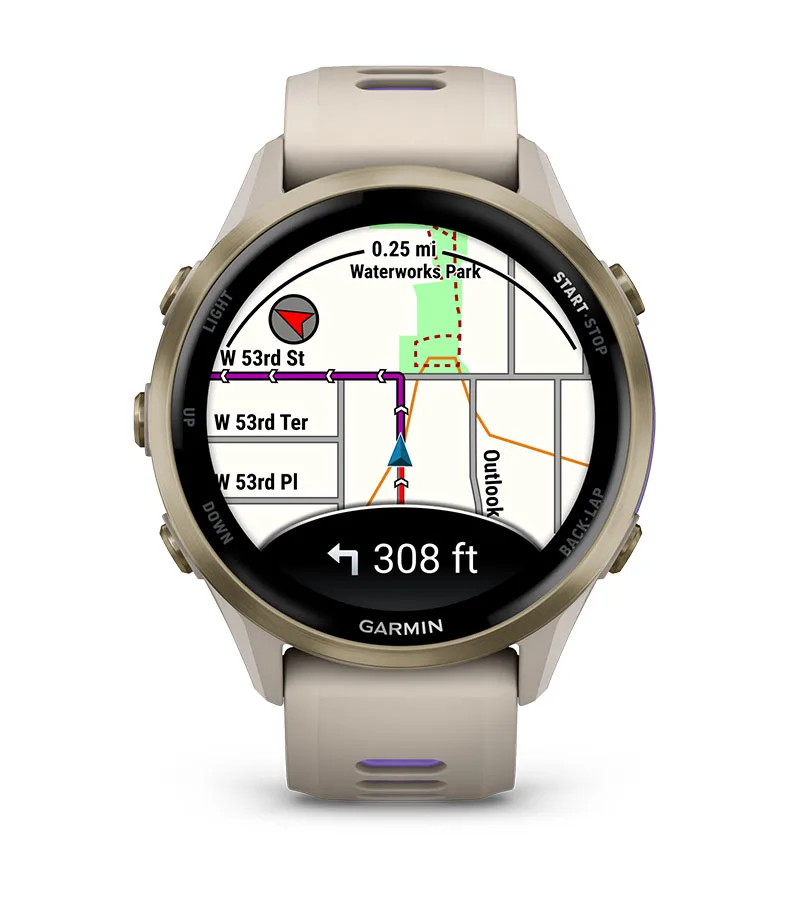
Full TopoActive maps come preloaded on both with 32GB of onboard storage, on-device route editing, round-trip routing, and turn-by-turn navigation. The Forerunner 970 introduced on-device route editing, which lets you adjust a planned route directly on the watch when conditions change. Map panning and zooming can lag 5-15 seconds on both watches -- a frustration when you need quick navigation decisions, but not unique to either model.
Training Features
This is where the $250 price gap becomes hardest to justify.
Both watches offer Training Readiness, Training Load, Recovery Time, VO2 Max, Race Predictor, PacePro, ClimbPro, daily suggested workouts, morning readiness scores, and personalized training recommendations. The training ecosystem is functionally identical.
The Forerunner 970 adds a few newer metrics -- Running Tolerance, which analyzes weekly mileage trends and warns when you are ramping volume too aggressively, and Running Economy and Step Speed Loss, which measure biomechanical efficiency during long efforts. The catch: Running Economy and Step Speed Loss require the $169.99 HRM-600 chest strap to function. That pushes the total system cost to $920 -- uncomfortably close to the Fenix 8's base price.
The Fenix 8 offers Endurance Score and Hill Score as long-term fitness indicators. Both metrics are expected to roll out to the Forerunner 970 via firmware updates eventually, following Garmin's established pattern of trickling features across its lineup.
Bottom line: if training features are your primary concern, save the $250. Both watches run the same Garmin Connect ecosystem and deliver the same depth of insight.
Battery Life
| Mode | Forerunner 970 | Fenix 8 47mm AMOLED |
|---|---|---|
| Smartwatch | Up to 15 days | Up to 16 days |
| GPS only | Up to 26 hours | Up to 47 hours |
| All + Multi-Band | Up to 21 hours | Up to 35 hours |
| Max battery GPS | -- | Up to 81 hours |
In daily smartwatch mode, the difference is negligible -- one extra day favoring the Fenix 8. But in GPS mode, the Fenix 8 nearly doubles the Forerunner. For runners logging daily 5Ks and charging weekly, this gap is irrelevant. For ultra-distance athletes running 50-mile races or thru-hiking multi-day routes, that extra 21 hours of GPS time matters profoundly.
The Fenix 8 Solar MIP version obliterates both, stretching to 28 days in smartwatch mode. But that model sacrifices the AMOLED display for a dimmer memory-in-pixel screen -- a trade many runners will not accept.
Durability & Dive Computer
The Fenix 8 holds EN13319 dive computer certification to 40 meters, with recreational scuba and apnea modes, Nitrox support (21-40% O2), and customizable PO2 settings. This is a real dive computer on your wrist, not a marketing checkbox. The 10 ATM water resistance and leakproof inductive buttons back up the claim with hardware designed to survive at depth.
The Forerunner 970's 5 ATM rating handles pool swimming, open-water swimming, and triathlons without issue. It does not handle diving. Period.
MIL-STD-810 certification gives the Fenix 8 tested resilience against thermal shock, mechanical impact, and environmental extremes that the Forerunner simply was not designed for. If your activities involve scuba, mountaineering, backcountry skiing, or military operations, the Fenix 8 justifies its existence. If your training involves roads, trails, pools, and bike paths, the Forerunner's titanium bezel and sapphire crystal prove more than sufficient.
Value
The Forerunner 970 at $749.99 delivers elite GPS accuracy, comprehensive training metrics, full navigation, and the brightest AMOLED display Garmin has ever built -- all in a 56-gram titanium case. The Fenix 8 at $999.99 (stainless steel; $1,099.99 for titanium sapphire) adds dive capability, MIL-STD-810 ruggedness, nearly double the GPS battery life, and size options.
That $250 premium buys specific, tangible features. If you use them -- diving, extreme durability, multi-day GPS tracking -- the Fenix 8 is worth every penny. If you do not, you are subsidizing capabilities that never activate.
The Fenix 7 Pro (MSRP $799.99, frequently discounted to $440-500) complicates matters further. It offers 90% of the Fenix 8 experience with slightly older sensors and no dive computer. For budget-conscious buyers willing to watch for sales, it undercuts both flagships while remaining impressively capable.
Who Should Buy What
Choose the Forerunner 970 if you: - Train primarily on roads, trails, and in pools - Prioritize lightweight comfort for all-day and all-night wear - Want the brightest display Garmin has ever built - Charge your watch weekly without stress - Need elite training metrics without paying adventure-watch premiums - Run marathons, half-marathons, triathlons, or track workouts
Choose the Fenix 8 if you: - Dive recreationally and need scuba or freediving modes - Operate in genuinely harsh environments requiring MIL-STD-810 durability - Run ultras longer than 50 miles and need extended GPS battery - Want size flexibility (43mm, 47mm, or 51mm cases) - Prefer the Solar MIP option for maximum battery endurance - Regularly use mountaineering, skiing, and backcountry features
Choose the Fenix 7 Pro if you: - Want 90% of these features at a lower price (frequently discounted to $440-500) - Do not need the newest sensors or a dive computer - Can tolerate a slightly older interface
Specs At A Glance
| Feature | Forerunner 970 | Fenix 8 (47mm AMOLED) |
|---|---|---|
| Price | $749.99 | $999.99 |
| Weight (with band) | ~56g | ~73g (titanium) / ~81g (steel) |
| Display | 1.4" AMOLED, 454x454 | 1.4" AMOLED, 454x454 |
| Peak Brightness | Brightest Garmin AMOLED | 1,000 nits |
| Case Material | Titanium bezel, sapphire | Stainless steel or titanium, sapphire option |
| Thickness | 12.9mm | 13.8mm |
| Water Resistance | 5 ATM | 10 ATM (40m dive certified) |
| GPS | Multi-band GNSS + SatIQ | Multi-band GNSS + SatIQ |
| Battery (Smartwatch) | Up to 15 days | Up to 16 days |
| Battery (GPS) | Up to 26 hours | Up to 47 hours |
| Heart Rate Sensor | Elevate V5 | Elevate V5 |
| ECG | Yes | Yes |
| Flashlight | Yes | Yes |
| Speaker/Mic | Yes | Yes |
| Storage | 32GB | 32GB |
| Size Options | 47mm only | 43mm, 47mm, 51mm |
| MIL-STD-810 | No | Yes |
| Dive Computer | No | Yes (EN13319, 40m) |