
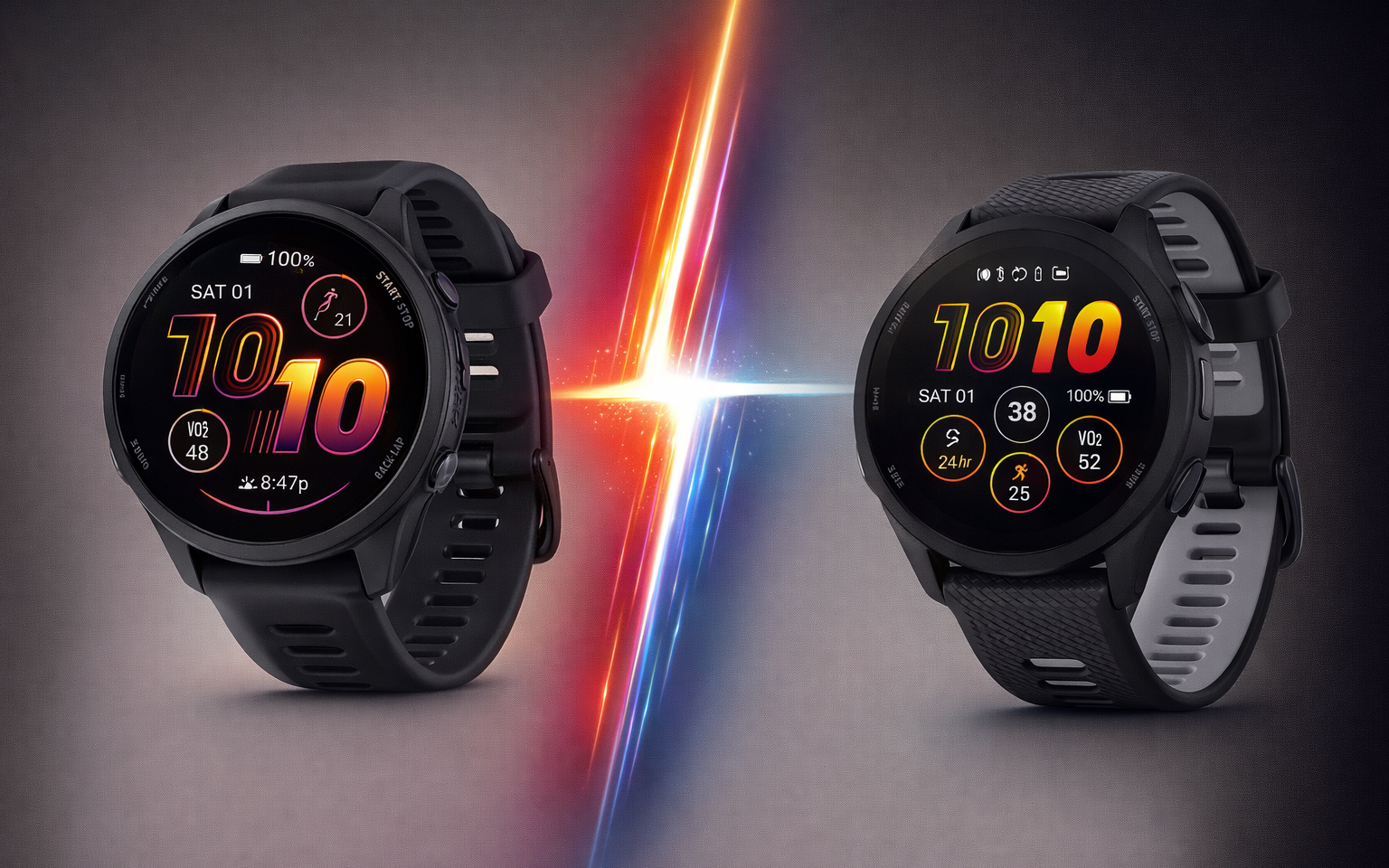
Garmin has a problem, and it is a good one to have. The Forerunner 265 landed in early 2023 and immediately became one of the best running watches ever made, a combination of brilliant AMOLED display, dead-accurate GPS, and deep training analytics that made everything else in its price bracket look incomplete. Now, over two years later, the Forerunner 570 arrives as its successor, packing hardware upgrades and a price tag that jumped from $450 to $550.
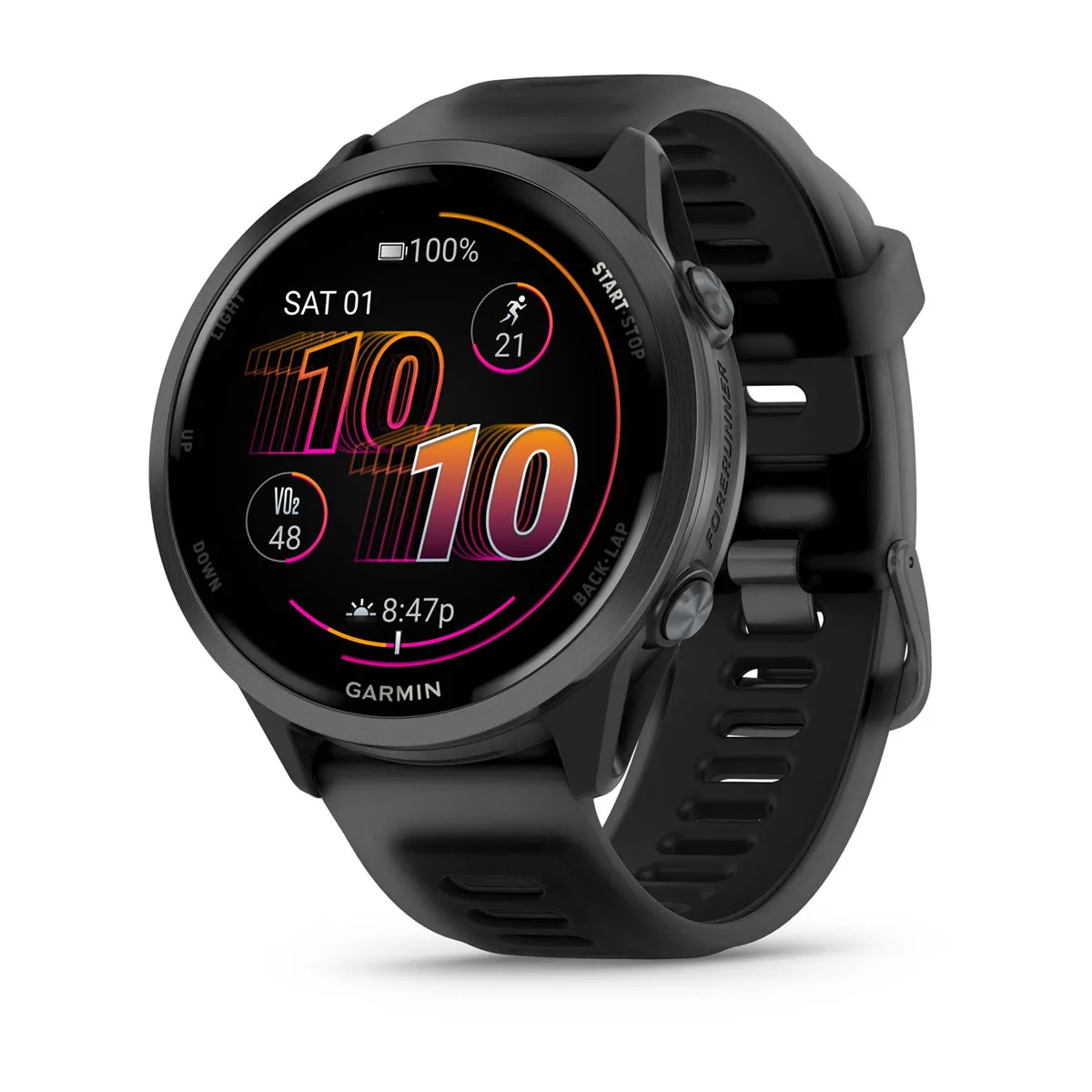
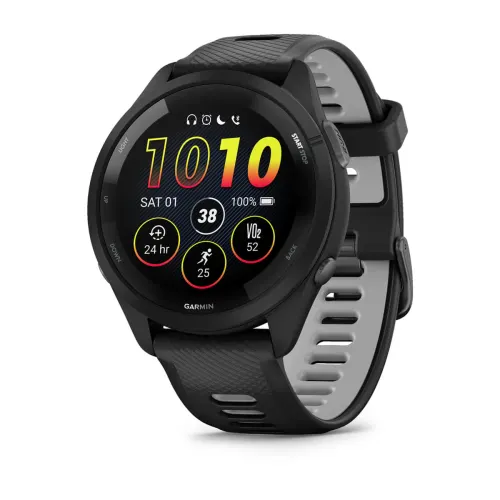
But here is the twist: the Forerunner 265 did not go away. It is still on shelves, still receiving software updates, and routinely available for around $300, sometimes less. The 570 has started seeing discounts too — dipping into the low $400s during sales — but the gap remains significant. That creates a genuine dilemma. The 570 is newer and shinier, but does it deliver enough additional value to justify the price premium? For most runners, the answer is no, and the reasoning matters more than the conclusion.
Both watches share the same DNA. They run Garmin's ecosystem, support Connect IQ apps and watch faces, track the same enormous list of activities, and deliver the training load, recovery, and race prediction metrics that serious runners depend on. The differences are real but narrower than Garmin's marketing suggests.
Display: The 570 Wins, But the 265 Never Lost
The Forerunner 570 sports a noticeably brighter and crisper AMOLED panel. On the 47mm model, that means a 1.4-inch display at 454x454 resolution, a step up from the 265's 1.3-inch, 416x416 screen. In direct sunlight, during midday runs, the difference is visible. The 570's screen punches through glare with more authority, and colors appear more vivid at a quick wrist-glance.
That said, the Forerunner 265's display was already class-leading when it launched, and it remains excellent. It is bright enough for outdoor use, sharp enough for detailed data fields, and gorgeous enough to make MIP-display watches look archaic. The 570 improves on greatness, but the 265 was never lacking.
GPS and Training: A Virtual Tie
This is the category that matters most to runners, and it is where the two watches are most difficult to separate. Both use multi-band GNSS with Garmin's SatIQ technology, which intelligently switches satellite modes to balance accuracy and battery life. In practice, GPS tracks from both watches are nearly indistinguishable, whether weaving through city blocks or running open trails.
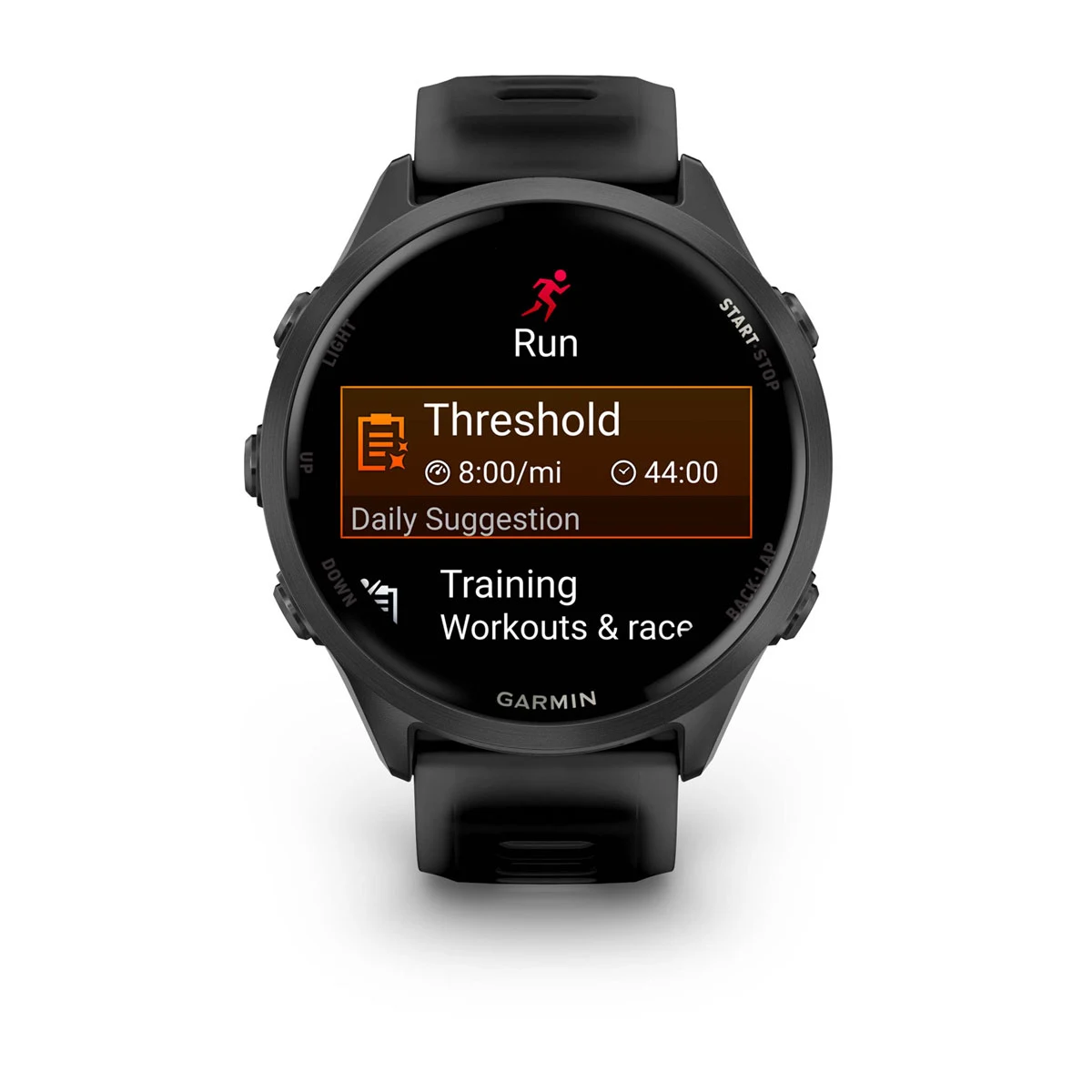
Training features are also functionally identical. Both offer Training Readiness scores, Morning Reports, race predictions, suggested workouts, HRV status, and running dynamics when paired with compatible accessories. The 570 benefits from Garmin's ongoing software updates, but the 265 receives those same updates. The training experience on both watches is deep, accurate, and among the best available from any manufacturer.
The 570 does add a few newer software touches that trickle down from the Forerunner 970, but these are incremental refinements rather than transformative additions. If you are buying a watch to train for a 5K or a marathon, either one will serve you identically.
Heart Rate and Health Tracking: A Marginal 570 Edge
The Forerunner 570 introduces Garmin's Elevate Gen 5 optical heart rate sensor, replacing the Gen 4 found in the 265. The Gen 5 sensor delivers slightly better accuracy during high-intensity intervals and erratic movements, particularly when compared against chest strap reference data. For steady-state running, the difference is minimal.
Both watches track heart rate variability, stress, blood oxygen, respiration, and sleep with impressive granularity. The 265's sleep tracking, in particular, is among the most detailed implementations on any wrist-worn device. Neither watch offers ECG functionality, which is a notable omission on the 570 given its $550 price point and the fact that Garmin's own cheaper Venu 3 includes it. The 570 physically lacks the metal contact pads required for ECG — a deliberate hardware design choice that keeps this feature reserved for Garmin's lifestyle line. Whatever the reasoning, it stings.
Skin temperature tracking is available on the 570 but absent on the 265, a useful addition for runners monitoring recovery and illness onset, though not a feature most people will use daily.

Battery Life: The 265 Pulls Ahead
In a surprising reversal, the older watch wins on battery. The Forerunner 265 delivers up to 13 days of smartwatch use and 20 hours of GPS tracking, compared to the 570's 11 days and 18 hours respectively. The difference likely stems from the 570's brighter display and additional sensor hardware drawing more power.
For most runners, both watches will comfortably last a full week of daily training without needing a charge. But for ultrarunners, multi-day adventures, or anyone who simply hates charging their watch, the 265's extra runway is a genuine advantage. Two additional hours of GPS time can be the difference between finishing a long race with data intact or watching your screen go dark at mile 28.
Build Quality and Comfort: 570 Feels Premium
The Forerunner 570 introduces an aluminum bezel that replaces the 265's fiber-reinforced polymer frame. The result is a watch that looks and feels noticeably more premium on the wrist. It catches light differently, resists scratches better, and gives the 570 a presence that the 265's sportier plastic build cannot match.
Both watches are lightweight and comfortable for all-day wear, including sleeping. The 47mm Forerunner 570 weighs 50 grams versus the 265's 47 grams, a difference that disappears on the wrist. If you care about how your running watch looks at a dinner table, the 570 is the clear winner. If you only care about how it feels at mile 18, they are equals.
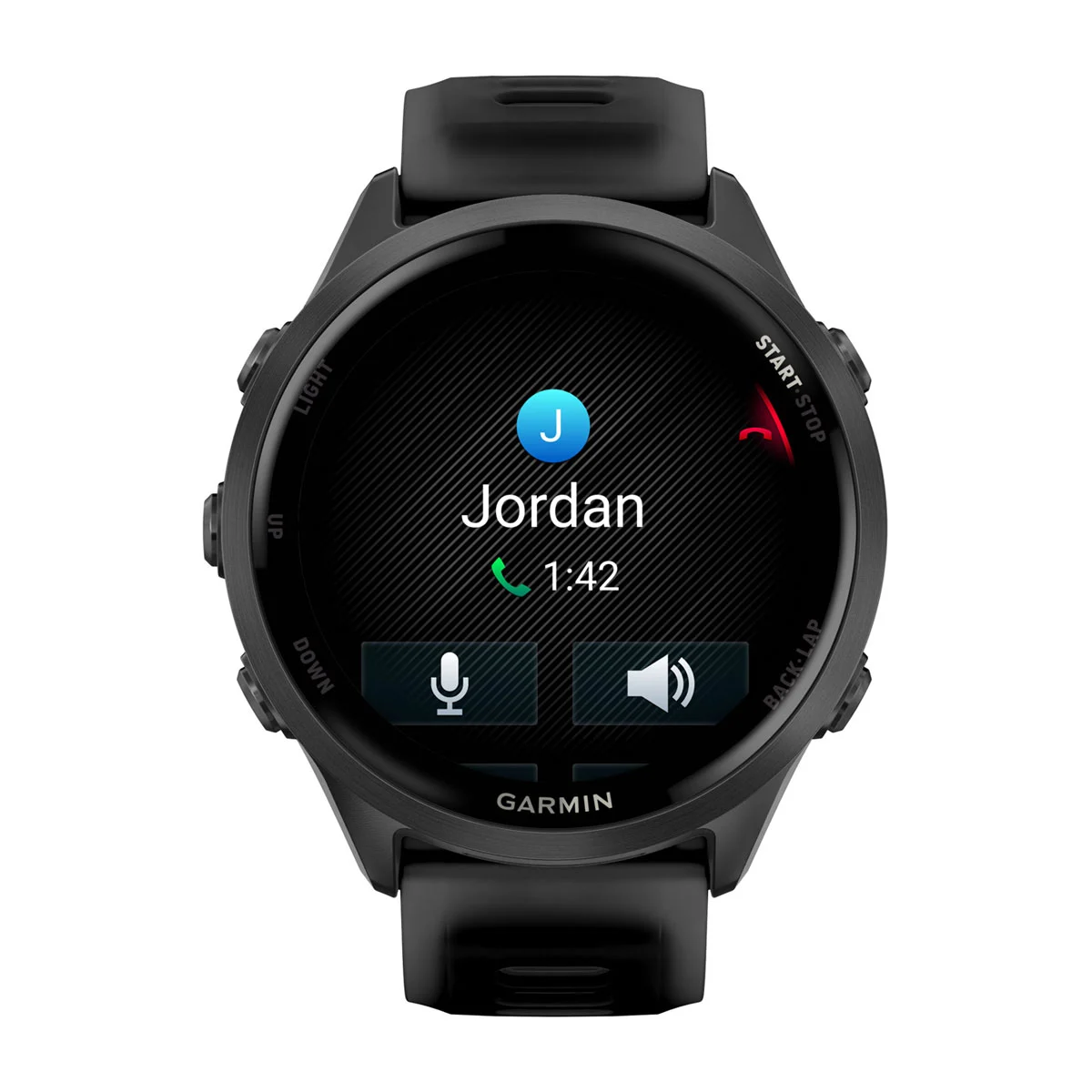
The 570 also adds a built-in speaker and microphone, enabling phone calls from the wrist and voice commands. These are borrowed from the Venu line and represent Garmin's push toward smartwatch functionality. They work well enough for quick calls when your phone is nearby, though the audio quality is merely adequate and most runners will not miss this feature if it is absent.
The Maps Problem
One glaring omission on the Forerunner 570 deserves its own mention: there are no offline maps. At $550, this is difficult to justify. Competing watches from Coros, Polar, and Suunto include maps at lower price points, and Garmin's own mapping implementation on watches like the Fenix and Forerunner 970 is widely considered the best in the industry. The 570 almost certainly has sufficient storage to support maps — Garmin's own Fenix and Forerunner 970 manage it with similar hardware. The omission appears to be a product segmentation choice, and it is a hard pill to swallow at this price.
The 265 also lacks maps, but at $300, that omission feels far more reasonable.
Value: The 265 Runs Away With It
This is where the comparison becomes lopsided. The Forerunner 265 launched at $450 and now regularly sells for around $300. The Forerunner 570 launched at $550 and has seen some discounting — dipping to around $430–$450 during sales — but the gap remains substantial. At typical street prices, the 570 costs $130 to $250 more than the 265 — depending on whether you catch a sale — for upgrades that most runners will rarely notice during actual training. Even at MSRP, the $100 gap buys you a brighter screen and an aluminum bezel, but not maps, not ECG, and not better battery life.
The 570 sits in an awkward competitive position even within Garmin's own lineup. It is not different enough from the 265 below it to justify the premium, and it is not feature-complete enough compared to the Forerunner 970 above it, which adds maps, a larger display, and the full suite of Garmin's advanced features for $200 more at MSRP. The 570 is a genuinely good watch suffering from a pricing identity crisis.
Who Should Buy What
Buy the Forerunner 570 if: - You are a first-time Garmin buyer with a $550 budget and want the latest hardware - The aluminum build and premium aesthetics matter to you - You genuinely want phone calls and voice control on your wrist - You plan to keep this watch for 3+ years and want the newest sensor platform
Buy the Forerunner 265 if: - You want the best running watch value available right now - Battery life is a priority, especially for longer events - You are upgrading from an older Garmin or a basic fitness tracker - You would rather save $130–$250 and put it toward race entries, shoes, or a chest strap
Our Verdict
The Forerunner 265 is the better choice for the vast majority of runners. It delivers essentially the same core running experience as the 570, with better battery life, at a price that has become almost absurdly good. The training metrics, GPS accuracy, and ecosystem integration that make Garmin watches indispensable are all present, fully intact, and battle-tested through nearly three years of real-world use and software refinement.
The Forerunner 570 is not a bad watch. It is, in fact, an excellent one. The brighter display is gorgeous, the aluminum build adds genuine polish, and the Elevate v5 sensor represents a real, if small, step forward in wrist-based heart rate tracking. But at $430 to $550 depending on the day, with no maps, no ECG, and shorter battery life than its predecessor, it asks runners to pay more for less in the categories that matter most while gaining upgrades in categories that matter least.
If the 570 consistently drops to $350 or below, this conversation changes entirely. Until then, the Forerunner 265 at $300 is the running watch to beat, and the 570 cannot beat it.
Specs at a Glance
| Spec | Forerunner 570 (47mm) | Forerunner 265 (46mm) |
|---|---|---|
| Price (MSRP) | $549.99 | $449.99 |
| Street Price | ~$430–$550 | ~$299 |
| Display | 1.4" AMOLED, 454x454 | 1.3" AMOLED, 416x416 |
| Bezel | Aluminum | Fiber-reinforced polymer |
| Weight | 50g | 47g |
| HR Sensor | Elevate Gen 5 | Elevate Gen 4 |
| GPS | Multi-band GNSS + SatIQ | Multi-band GNSS + SatIQ |
| Battery (Smartwatch) | Up to 11 days | Up to 13 days |
| Battery (GPS) | Up to 18 hours | Up to 20 hours |
| Offline Maps | No | No |
| ECG | No | No |
| Speaker/Mic | Yes | No |
| Music Storage | Yes (8GB) | Yes (8GB) |
| Skin Temperature | Yes | No |
| Water Rating | 5 ATM | 5 ATM |
| Sizes Available | 42mm, 47mm | 42mm (265S), 46mm |