
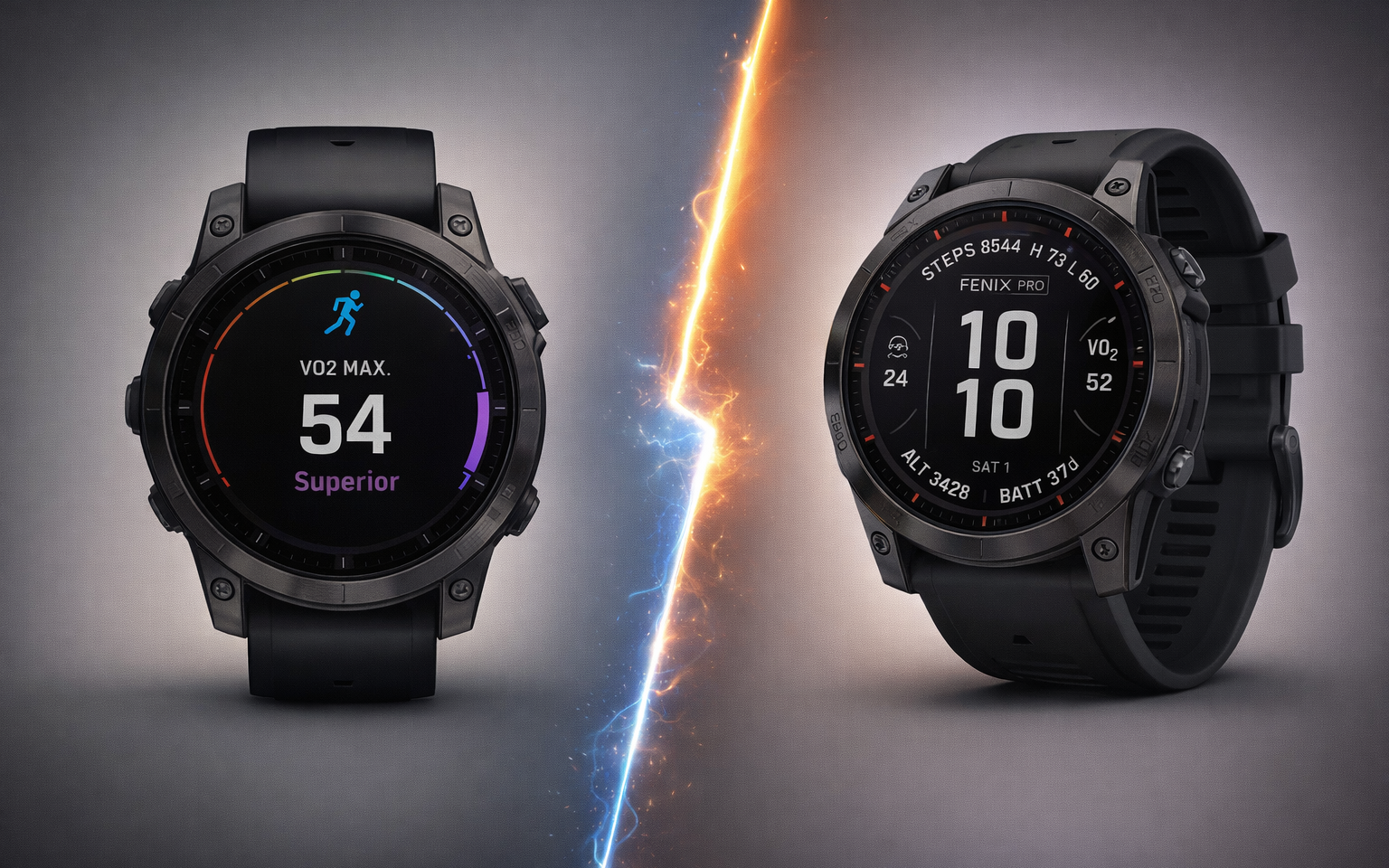
Two watches. Same guts. One question that has divided the Garmin community since 2022: do you want the screen that makes your heart skip, or the battery that never quits?
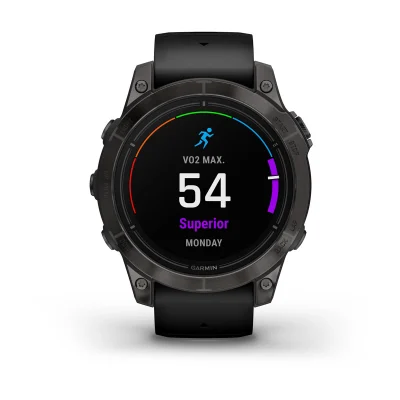
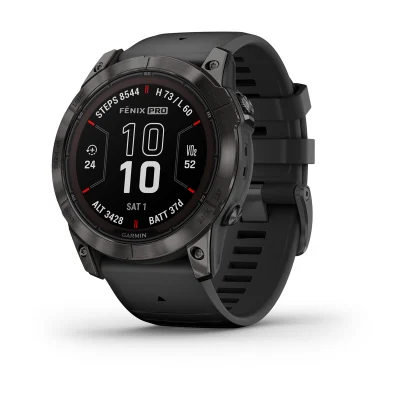
The Garmin Epix Pro (Gen 2) and Fenix 7 Pro share identical sensors, identical software, identical sport modes, and an identical commitment to being the most capable multisport GPS watches on the planet. They diverge on exactly one fundamental engineering decision: AMOLED versus MIP display technology. That single choice cascades into dramatically different strengths. One watch dazzles you with a vivid, color-rich screen that makes data analysis a pleasure. The other outlasts it by days on a single charge and tops itself off with sunlight. But those strengths come at a cost -- and the price each watch pays for its display choice shapes everything from charging habits to race-day logistics.
With the Fenix 8 now absorbing both product lines under a single roof, these two watches represent the final and most refined expression of Garmin's great display experiment. Both are available at significant discounts from their original launch prices, making this decision more interesting than ever. Here is how they compare across every dimension that matters.
Display
This is the defining difference, and it is not subtle.
The Epix Pro's 1.3-inch AMOLED panel runs at 416 x 416 pixels with rich, saturated colors and true blacks that make the watch face look painted onto the glass. Scrolling through training metrics, reviewing maps, or glancing at heart rate zones during a workout feels genuinely premium. Indoors, in dim gyms, and during predawn runs, the AMOLED screen is in a different league -- text is crisp, colors are vibrant, and the Red Shift mode bathes the display in a deep red that preserves night vision without torching your eyes at 5 a.m.
The Fenix 7 Pro's MIP display operates on entirely different principles. At 260 x 260 pixels, it is noticeably less sharp, and the colors are muted by comparison. Indoors under artificial light, the screen looks washed out and difficult to read without the backlight activated. It is, frankly, not a display you will enjoy staring at.
But step outside into direct sunlight and the dynamic flips. The MIP panel is a reflective display -- the brighter the ambient light, the more readable it becomes. In blazing midday sun, the Fenix 7 Pro's screen is perfectly legible without any backlight or wrist gesture, while the Epix Pro's AMOLED dims during activities and requires you to raise and turn your wrist to wake the screen to full brightness. The Fenix's display is also always visible at a glance, showing a full-detail watch face at all times with zero battery penalty. The Epix Pro can do always-on display too, but it costs roughly ten days of battery life for the privilege.
For most people who wear their watch around the clock -- commuting, working at a desk, training at a gym, cooking dinner, checking the time in bed -- the Epix Pro's AMOLED provides a better experience the majority of the time. The Fenix 7 Pro's MIP only gains a clear advantage in one specific scenario: bright, sustained outdoor light.
Edge: Epix Pro. The AMOLED display transforms the daily experience of using the watch. The Fenix 7 Pro's sunlight advantage is real but situational. One important caveat: the Epix Pro has no solar charging option in any configuration. If solar is a hard requirement, the Fenix 7 Pro is your only choice between these two.
Battery Life
If the display category favored the Epix Pro, battery life is where the Fenix 7 Pro delivers its knockout punch.
The 47mm Fenix 7 Pro lasts up to 18 days in smartwatch mode and stretches to 22 days with solar assistance -- assuming around three hours of 50,000-lux sunlight per day, which is roughly what you get wearing it during daytime outdoor activities in decent weather. In full GPS mode, it runs for up to 57 hours, climbing to 73 hours with solar charging. Those are not typos. Multi-day ultramarathons and expedition-length hikes are entirely realistic on a single charge.
The 47mm Epix Pro manages up to 16 days in smartwatch mode with the display set to gesture-wake only. That is respectable by any standard -- most people will charge once every two weeks. But turn on the always-on display, which is arguably the entire point of having that gorgeous AMOLED panel, and battery life collapses to roughly six days. GPS mode delivers about 42 hours, or 30 hours with the always-on display active. No solar option exists.
The charging speed partially compensates: the Epix Pro charges from empty to full in about an hour, while the Fenix 7 Pro takes closer to an hour and a half to two hours. Faster charging is a genuine convenience, though it cannot close the gap when the competing watch simply needs to be plugged in far less often.
For a weekend warrior who runs four or five times a week, the Epix Pro's battery is perfectly adequate. For someone heading into the mountains for a week, entering a multi-day stage race, or simply allergic to charging routines, the Fenix 7 Pro's endurance is genuinely liberating.
Edge: Fenix 7 Pro. The combination of longer base battery life plus solar charging creates a significant margin that matters most for serious endurance athletes.
GPS and Sensor Accuracy
Here is where the comparison gets refreshingly simple: these watches are functionally identical.
Both the Epix Pro and Fenix 7 Pro use multi-band GNSS with Garmin's SatIQ technology, which dynamically switches between single-band and multi-band satellite tracking based on conditions. In open environments, they conserve battery on single-band. Under dense tree cover or in urban canyons, they escalate to multi-band for tighter accuracy. The GPS performance is interchangeable between the two watches.
Both watches use the Garmin Elevate V5 optical heart rate sensor, the same updated sensor package introduced with the Pro refresh. Wrist-based heart rate accuracy is strong for an optical sensor, particularly at steady-state efforts, though neither watch will match a chest strap during high-intensity interval work with rapid heart rate swings. The Elevate V5 represents a meaningful improvement over the V4 sensor in the original Fenix 7 and Epix Gen 2.
Both feature a pulse oximeter for SpO2 monitoring, a barometric altimeter, compass, gyroscope, accelerometer, and thermometer. Both support ECG functionality via firmware update. Neither watch has a meaningful sensor advantage over the other.
Edge: Tie. Identical sensor hardware and identical GPS performance. Choose based on other factors.
Health and Fitness Features
The software story is the same as the sensor story: complete parity.
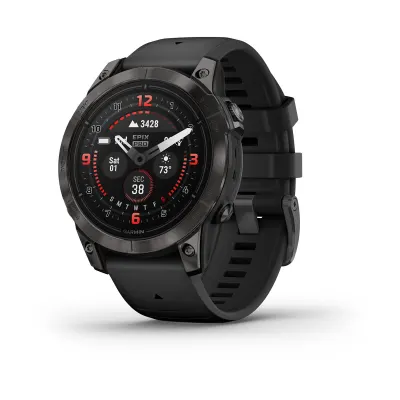
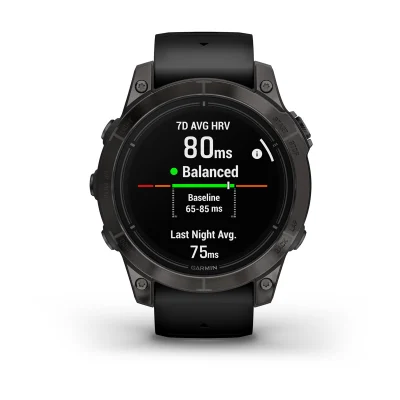
Both watches run Garmin's full training suite, including Training Readiness, Training Status, Training Load, Race Predictor, PacePro, ClimbPro, suggested daily workouts, Morning Report, Body Battery, stress tracking, sleep tracking with sleep score and HRV status, Endurance Score, and Hill Score. The last two are training metrics that debuted with the Pro lineup and measure your capacity for sustained efforts and uphill performance, respectively. Both have since rolled out to older Garmin models via firmware updates.
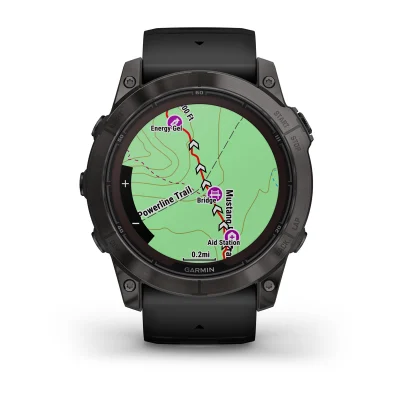
Both watches include full topographic maps with turn-by-turn navigation, real-time weather overlays, preloaded ski resort maps, and golf course maps. Both have 32GB of internal storage for offline maps, music, and apps. Both support Garmin Pay for contactless payments.
The flashlight, one of the headline features of the Pro upgrade, is present on both watches across all sizes. It includes variable intensity, a red light mode, a strobe emergency mode, and an activity-synced cadence flash for running visibility.
There is no software or feature reason to choose one over the other. The only way to get different fitness capabilities from Garmin at this tier is to move to a different product line entirely.
Edge: Tie. Identical software, identical training features, identical navigation tools.
Build and Comfort
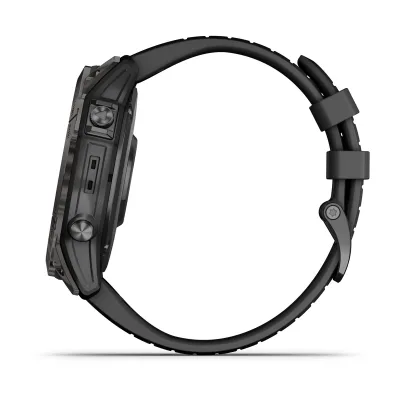
Both watches share the same case architecture and size options -- 42mm, 47mm, and 51mm -- with a fiber-reinforced polymer case in the standard editions and titanium in the Sapphire editions. Both use Garmin's five-button design with full touchscreen support, allowing every function to be accessed via either physical buttons or touch. Both are water-rated to 10 ATM.
The Sapphire editions of both watches use sapphire crystal lenses, though the Fenix 7 Pro Sapphire Solar adds Garmin's Power Sapphire solar charging lens on top. The standard Epix Pro uses Corning Gorilla Glass DX, while the standard Fenix 7 Pro Solar uses Garmin's proprietary Power Glass solar lens.
Weight is nearly identical at the same size. The 47mm Epix Pro comes in at 78 grams in the standard edition (70 grams for the Sapphire), while the 47mm Fenix 7 Pro Solar weighs 79 grams (73 grams for the Sapphire Solar). Both are substantial watches that wear similarly on the wrist. There is no comfort advantage either way.
Durability is also a wash. Both watches are built to the same MIL-STD-810 thermal and shock resistance standards, and both use the same case, button, and strap architecture. The Fenix has historically carried a reputation as the "tougher" watch, but that distinction is purely branding at this point -- the Epix Pro is physically identical in construction.
Edge: Tie. Same dimensions, same weight, same materials, same durability standards.
Value
At their original MSRPs -- $899 for the Epix Pro and $799 for the Fenix 7 Pro in 47mm standard editions -- the Fenix was the clearly better value. Same features, lower price, better battery life. The $100 premium for the AMOLED screen was a real tradeoff.
The current market has reshuffled that calculation. With the Fenix 8 now occupying the flagship position, both the Epix Pro and Fenix 7 Pro have seen steep discounts. The Epix Pro regularly appears in the $449-$499 range -- approaching 50% off its launch price. The Fenix 7 Pro hovers around $479-$540, sometimes dipping lower for specific colorways. These discounts exist because the Fenix 8, released in August 2024, now occupies the flagship position in Garmin's lineup, and retailers are clearing inventory of both Pro models.
At these prices, the Epix Pro is often the same cost as or cheaper than the Fenix 7 Pro, which inverts the original value proposition entirely. You are getting the premium AMOLED display, faster charging, and 16 days of battery life for less money than the MIP alternative. That is an unusual situation and one that tips the scales.
Both watches still receive Garmin software updates and will continue to do so. The feature set on these Pro models is mature and comprehensive. Neither watch feels outdated.
Edge: Epix Pro. At current street prices, the Epix Pro frequently costs the same or less than the Fenix 7 Pro while offering the superior display. The original value gap has evaporated.
Who Should Buy What
Buy the Garmin Epix Pro (Gen 2) if you are:
- A gym-to-trail hybrid athlete who trains both indoors and outdoors and wants a display that looks great in every lighting condition
- A data junkie who reviews detailed training metrics, maps, and workout summaries on the watch itself rather than always pulling out a phone
- A runner or cyclist who trains primarily in pre-dawn or post-sunset hours and will benefit from the AMOLED visibility and Red Shift mode
- A value-conscious buyer looking for the most watch for the money at current discounted prices
- Anyone upgrading from an older Garmin who wants a noticeable quality-of-life improvement in the display
Buy the Garmin Fenix 7 Pro if you are:
- An ultra-endurance athlete who runs multi-day stage races, fastpacks, or through-hikes where charging infrastructure is nonexistent
- A primarily outdoor athlete in sunny climates who spends the vast majority of training time in bright conditions where MIP excels
- Someone who loathes charging watches and wants to go nearly three weeks between plugging in with solar assistance
- A backcountry adventurer who values the peace of mind of solar charging extending already excellent battery life during extended trips off-grid
Our Verdict
The Garmin Epix Pro (Gen 2) is the better watch for most people.
The reason is straightforward: the AMOLED display fundamentally improves the experience of interacting with your watch for the vast majority of daily use. Checking the time in bed, reviewing a training summary at the gym, navigating a map on a cloudy trail, reading a notification at dinner -- the Epix Pro makes all of these interactions more pleasant and more legible. The Fenix 7 Pro's MIP display does its job competently outdoors, but it feels dated and washed out everywhere else.
The features, sensors, GPS accuracy, software, build quality, and durability are identical between the two watches. Battery life is the Fenix 7 Pro's one genuine advantage, and it is a substantial one -- two additional days in base smartwatch mode, stretching to six more days with solar charging on top. That gap matters if you are the kind of athlete who measures adventures in days rather than hours. For everyone else, the Epix Pro's 16-day battery life is more than sufficient, and the current pricing makes the AMOLED upgrade essentially free.
With the Fenix 8 having absorbed both product lines, the Epix Pro (Gen 2) and Fenix 7 Pro represent the end of an era for Garmin's dual-lineup approach. At their current discounted prices, both are extraordinary values. But if you are choosing between the two right now, the Epix Pro delivers the better daily experience.
Specs At A Glance
| Spec | Garmin Epix Pro (Gen 2) 47mm | Garmin Fenix 7 Pro 47mm |
|---|---|---|
| Display | 1.3" AMOLED, 416 x 416 | 1.3" MIP, 260 x 260 |
| Solar Charging | No | Yes |
| Battery (Smartwatch) | Up to 16 days (6 days AOD) | Up to 18 days (22 with solar) |
| Battery (GPS) | Up to 42 hours | Up to 57 hours (73 with solar) |
| Battery (All Satellite Systems) | Up to 32 hours | Up to 40 hours |
| Charging Time | ~1 hour | ~1.5-2 hours |
| HR Sensor | Elevate V5 | Elevate V5 |
| GPS | Multi-band GNSS + SatIQ | Multi-band GNSS + SatIQ |
| Storage | 32 GB | 32 GB |
| Water Rating | 10 ATM | 10 ATM |
| Weight | ~78 g (standard) / ~70 g (Sapphire) | ~79 g (Solar) / ~73 g (Sapphire Solar) |
| Case Sizes | 42mm, 47mm, 51mm | 42mm, 47mm, 51mm |
| Flashlight | Yes (all sizes) | Yes (all sizes) |
| Maps | Full topo + ski + golf | Full topo + ski + golf |
| Music | Yes (offline + streaming) | Yes (offline + streaming) |
| Garmin Pay | Yes | Yes |
| MSRP (47mm) | $899 | $799 |
| Typical Street Price (2026) | ~$449-$499 | ~$479-$540 |