
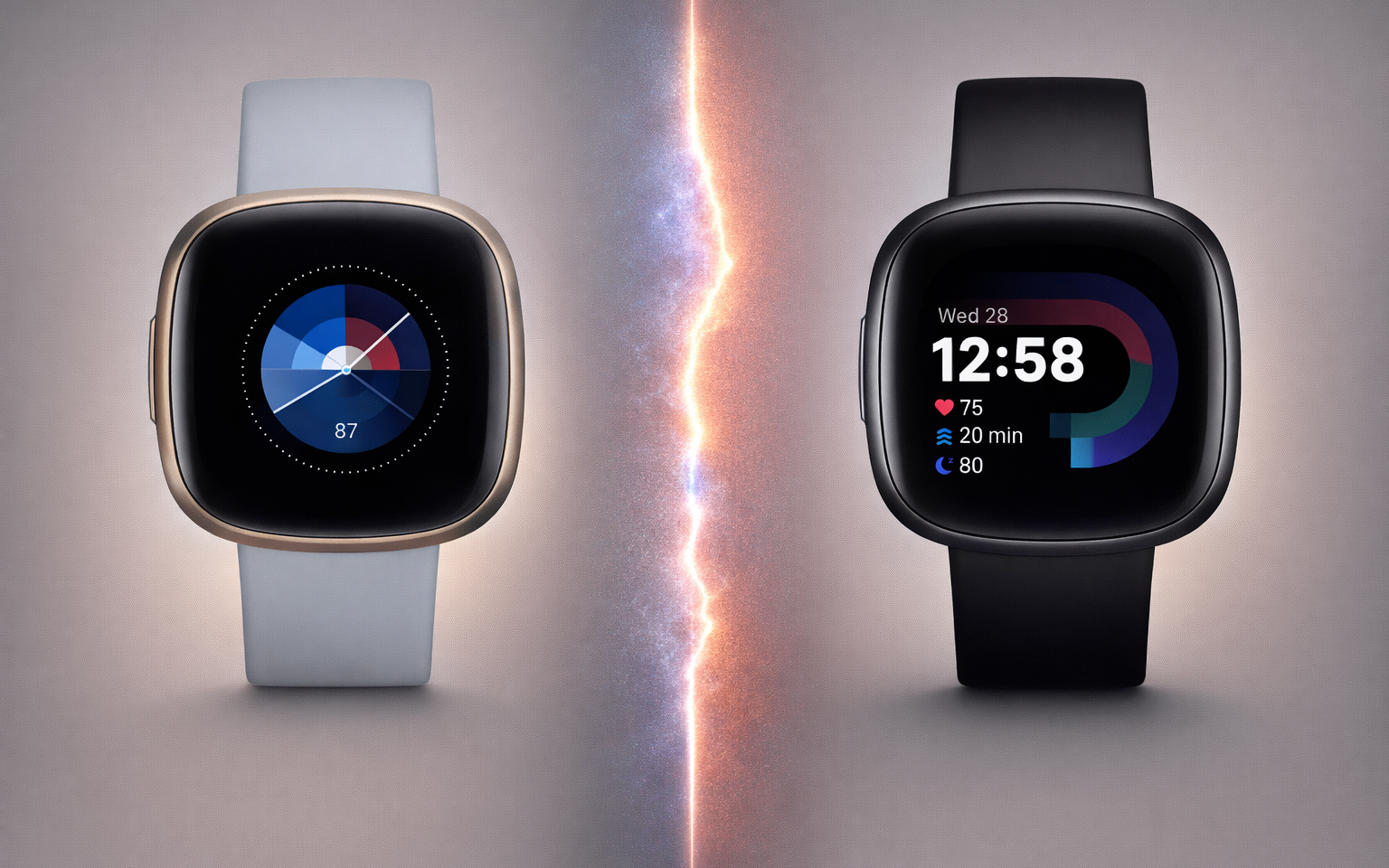
Two Fitbit smartwatches sit side by side on a desk. Same square aluminum case. Same 1.58-inch AMOLED screen. Same weight, same thickness, same physical button. One costs $70 more than the other. The obvious question: what exactly are you paying for?
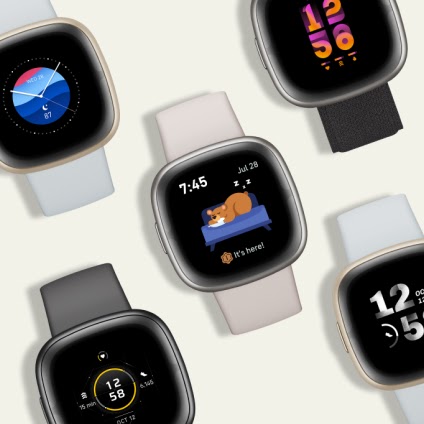
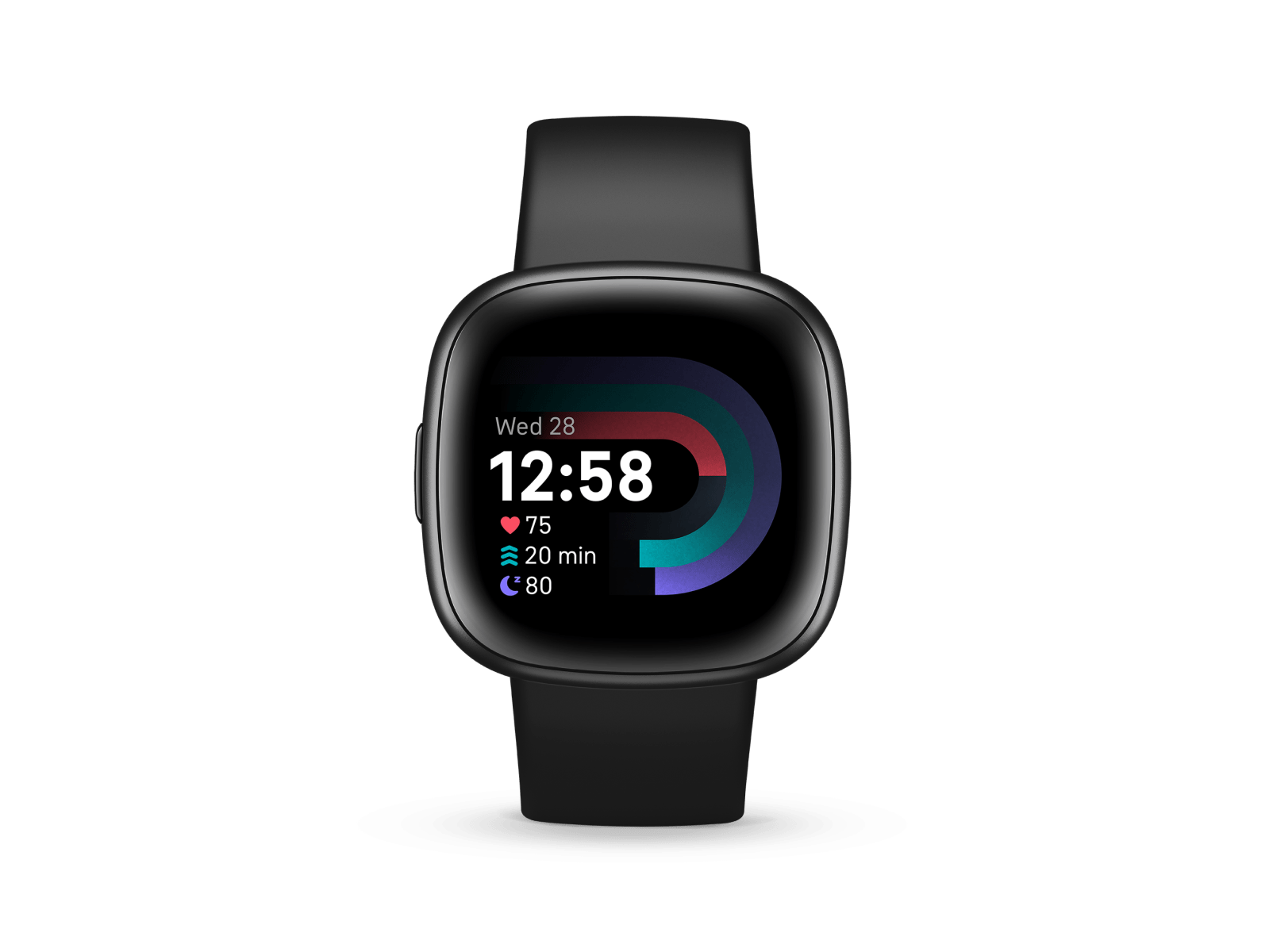
The Fitbit Sense 2 and Fitbit Versa 4 launched simultaneously in September 2022, and Fitbit designed them to be nearly identical on purpose. The Sense 2 is the "health" watch. The Versa 4 is the "fitness" watch. But strip away the marketing labels and the difference comes down to exactly three sensors the Sense 2 has and the Versa 4 lacks: an ECG, a continuous electrodermal activity (cEDA) stress monitor, and a skin temperature sensor.
Everything else — GPS accuracy, heart rate tracking, sleep analysis, battery life, smart features, app ecosystem, even the band connector — is the same device. So the real question is whether those three health sensors are worth $70 at MSRP or the $30-50 gap at today's street prices.
Stress Tracking: The Sense 2's Headline Feature Has a Credibility Problem
The Sense 2's continuous cEDA sensor is its most marketed differentiator and, on paper, its most compelling. Unlike the original Sense, which required you to hold your palm over the screen for manual spot-checks, the Sense 2 monitors electrodermal activity passively throughout the day. When it detects physiological signs of stress — elevated skin conductance paired with heart rate changes — it nudges you with a body response notification and prompts a mood check-in.
The concept is sound. Stress builds silently, and a wrist tap that says "your body is showing signs of stress" could genuinely help people who struggle to recognize their own patterns. Over weeks and months, the mood logs and stress data create a useful trend map that reveals which days, times, and situations correlate with elevated readings.
The execution is where things fall apart. The cEDA sensor measures physiological arousal, not emotional stress. A steep flight of stairs triggers it. Your morning espresso triggers it. A hard interval on the bike triggers it. The gap between what the sensor detects and what users expect it to detect creates persistent frustration. Many owners end up disabling stress notifications entirely because the false flags become more irritating than insightful.
For a specific type of user — someone who journals, meditates, or actively works with a therapist on stress management — the cEDA data functions as one useful signal among many. It prompts reflection rather than providing answers. But for the average buyer who sees "stress tracking" on the box and expects the watch to tell them when they are stressed, the feature disappoints.
The Versa 4 offers basic stress insights derived from heart rate variability, but nothing approaching the Sense 2's continuous monitoring or body response notifications. If passive stress data is something you know you will use, the Sense 2 provides it. If you are not sure, you almost certainly will not.
ECG: A Safety Net Most People Never Deploy
The Sense 2's single-lead ECG is FDA-cleared to detect atrial fibrillation, the most common form of irregular heart rhythm and a meaningful stroke risk factor. You open the ECG app, hold your fingers on the stainless steel sensor edges, wait 30 seconds, and receive a reading you can export as a PDF for your doctor.
The ECG app itself is entirely on-demand — you have to open the app, hold still, and wait 30 seconds. However, the Sense 2 also includes Irregular Rhythm Notifications (IRN), a separate passive feature that monitors your pulse in the background while you are still or sleeping and alerts you if multiple readings suggest AFib. The ECG confirms what IRN flags, giving you a PDF-quality reading to share with your doctor. For healthy adults under 50 with no cardiac history, the reading will return "normal sinus rhythm" every single time, and after the initial novelty wears off, the app sits unused.
That changes if you have a family history of heart conditions, are over 50, or have been advised by a doctor to monitor for AFib. In those scenarios, having an FDA-cleared ECG on your wrist is a genuine safety net that has caught undiagnosed conditions in enough people to justify its existence. The feature's value is real — it is just narrow.
The Versa 4 has no ECG capability at all.
Skin Temperature: The Quiet Third Sensor
The Sense 2 tracks nightly skin temperature variation from your personal baseline, a sensor the Versa 4 lacks entirely. This is the Sense 2's least discussed exclusive feature but arguably its most consistently useful one.
Skin temperature deviation is a reliable early indicator of illness — a spike often precedes noticeable symptoms by a day or two. For menstrual cycle tracking, temperature variation is one of the most dependable biological signals for predicting periods and identifying ovulation windows. And for fitness recovery, elevated readings correlate with overtraining and insufficient rest.
The data is not medical-grade, and ambient temperature affects readings. But as a wellness signal that surfaces actionable patterns, skin temperature tracking delivers genuine value with minimal user effort. Unlike the ECG and stress sensor, which require active engagement to be useful, skin temperature data just accumulates overnight and shows up in your morning dashboard.
Fitness and Smart Features: A Dead Heat
Every daily-use feature is identical on both watches. Built-in GPS for outdoor workouts (accurate enough for casual runners, frustrating for anyone training to specific splits). Optical heart rate monitoring around the clock. SpO2 blood oxygen readings. Sleep tracking with sleep stages, Sleep Score, and Sleep Profile. Daily Readiness Score. Over 40 exercise modes. Active Zone Minutes.
The smart feature set matches too. Google Wallet for contactless payments. Google Maps for turn-by-turn navigation. Amazon Alexa for voice commands. On-wrist Bluetooth calling. Notification mirroring from your phone.
Both watches share the same frustrating regression from their predecessors: no third-party app support. The Sense 2 and Versa 4 both lost the ability to install apps that the Sense and Versa 3 had. Neither watch streams or stores music. These are fitness trackers with a touchscreen and notifications, not full smartwatches — and that is true regardless of which one you buy.
If you are weighing the smartwatch form factor against a dedicated tracker, our Fitbit Charge 6 vs Versa 4 comparison covers that decision. And if either watch gives you Bluetooth headaches, our Fitbit syncing troubleshooting guide covers the most common fixes.

Battery Life: Same Rating, Slight Real-World Difference
Fitbit rates both watches at six-plus days. Real-world usage largely confirms that figure for the Versa 4, which consistently hits five to six days with normal use. The Sense 2, running its additional cEDA sensor and skin temperature tracking, tends to land closer to four to six days depending on which features are active.
The difference is a day at most and irrelevant for most people — both watches comfortably survive a work week between charges. Enable the always-on display on either and battery life drops to roughly two to four days. If you are the type who charges weekly and would notice a lost day, the Versa 4 has a marginal edge. Otherwise, call this category even.
Design and Comfort: Spot the Difference (You Cannot)
Both watches measure 40.5mm by 40.5mm by 11.2mm. Both weigh 37.64 grams. Both use an aluminum case with a physical side button. Both accept the same infinity band with tool-free quick-release pins. Both carry 50-meter water resistance for swimming and showering.
The only visual distinction is color options. The Sense 2 ships in Shadow Grey/Graphite, Lunar White/Platinum, and Blue Mist/Soft Gold. The Versa 4 offers Black/Graphite, Waterfall Blue/Platinum, Pink Sand/Copper Rose, and Beet Juice/Copper Rose. Pick whichever palette appeals to you. Design is emphatically not a factor in this decision.
Both are comfortable enough to sleep in, which matters because sleep tracking is one of Fitbit's strongest capabilities and runs identically on each watch.
The 2026 Pricing Reality
At MSRP, the Sense 2 costs $299.95 and the Versa 4 costs $229.95. But neither watch sells at MSRP in 2026. Google shifted its wearable strategy to the Pixel Watch line and discontinued both Fitbit smartwatch products. Retailers are clearing remaining inventory, and street prices have compressed: the Sense 2 runs $150-200 while the Versa 4 sits at $120-170.
That shrinks the real-world gap to roughly $30-50. The calculus changes at those prices — $30 extra for ECG and continuous stress tracking is an easier ask than $70. But it does not change the fundamental question of whether you will actually use those sensors.
Both watches also carry the same end-of-life caveat. Software support has a finite runway. Neither will get a successor in the Fitbit line. If platform longevity matters to you, both watches carry the same risk, and a Pixel Watch or Apple Watch SE may be the safer long-term bet.
Who Should Buy the Fitbit Versa 4
You want a solid fitness smartwatch at the lowest price possible. You exercise regularly, value step counts and workout tracking, and appreciate having Google Wallet and Alexa on your wrist. You have no particular medical reason to monitor heart rhythm, you manage stress without needing biometric data, and you would rather put the $30-70 savings toward a Fitbit Premium subscription or a nice replacement band. This is also the better pick if you are new to Fitbit or coming from a Fitbit Charge 6 and want a bigger screen without paying for sensors you will never use.

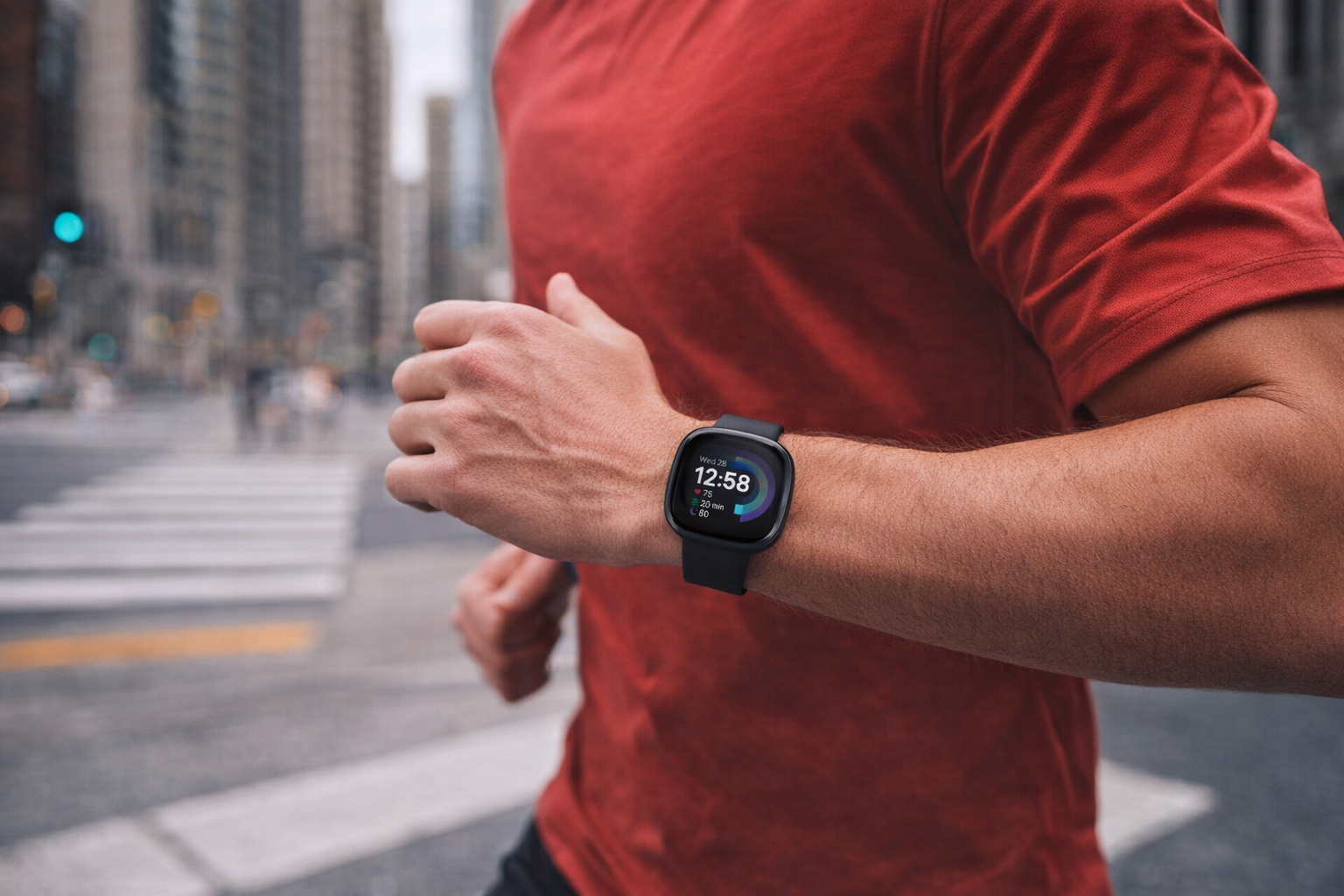
Who Should Buy the Fitbit Sense 2
You are actively working on stress management — with a therapist, through meditation, as part of a burnout recovery plan — and want physiological data to complement that work. You have a family history of heart conditions or your doctor has mentioned AFib monitoring. You want menstrual cycle tracking with temperature data. You are the type of person who reviews health dashboards weekly, not the type who means to. At current sale prices, the premium is small enough that genuine interest in even one of these features makes the upgrade reasonable.
Our Verdict
The Fitbit Versa 4 is the better buy for most people. It delivers identical fitness tracking, the same smart features, the same battery life, and the same design as the Sense 2 — at a lower price. The features you interact with every day — GPS, heart rate, sleep tracking, notifications, contactless payments — do not differ between the two watches by a single pixel or a single data point.
The Sense 2's exclusive health sensors are real and they work, but they serve a narrower audience than the $70 price gap implies. The ECG is on-demand only, which limits its utility to people who already suspect a problem. The stress sensor measures arousal rather than emotion, which frustrates users who expected a straightforward stress score. The skin temperature tracking is quietly excellent but niche.
At current street prices where the gap has shrunk to $30-50, the Sense 2 becomes easier to justify — and if you spot it within $20 of the Versa 4, buy the Sense 2 without hesitation. You get a strictly better device with zero trade-offs at that point. But at anything close to MSRP, save the money. The Versa 4 does everything most people need, and neither watch is going to get better with age.
Specs at a Glance
| Feature | Fitbit Sense 2 | Fitbit Versa 4 |
|---|---|---|
| MSRP | $299.95 | $229.95 |
| Street Price (2026) | ~$150-200 | ~$120-170 |
| Display | 1.58" AMOLED, 336x336, AOD | 1.58" AMOLED, 336x336, AOD |
| Dimensions | 40.5 x 40.5 x 11.2 mm | 40.5 x 40.5 x 11.2 mm |
| Weight | 37.64 g | 37.64 g |
| Battery Life (rated) | 6+ days | 6+ days |
| Battery Life (real-world) | 4-6 days | 5-6 days |
| Water Resistance | 50 m (5 ATM) | 50 m (5 ATM) |
| GPS | Built-in | Built-in |
| Heart Rate | 24/7 optical | 24/7 optical |
| SpO2 | Yes | Yes |
| ECG | Yes (FDA-cleared) | No |
| cEDA Stress Sensor | Yes (continuous) | No |
| Skin Temperature | Yes | No |
| Exercise Modes | 40+ | 40+ |
| Google Wallet | Yes | Yes |
| Amazon Alexa | Yes | Yes |
| On-Wrist Calling | Yes | Yes |
| Third-Party Apps | No | No |
| Music Storage | No | No |
| Status | Discontinued | Discontinued |