
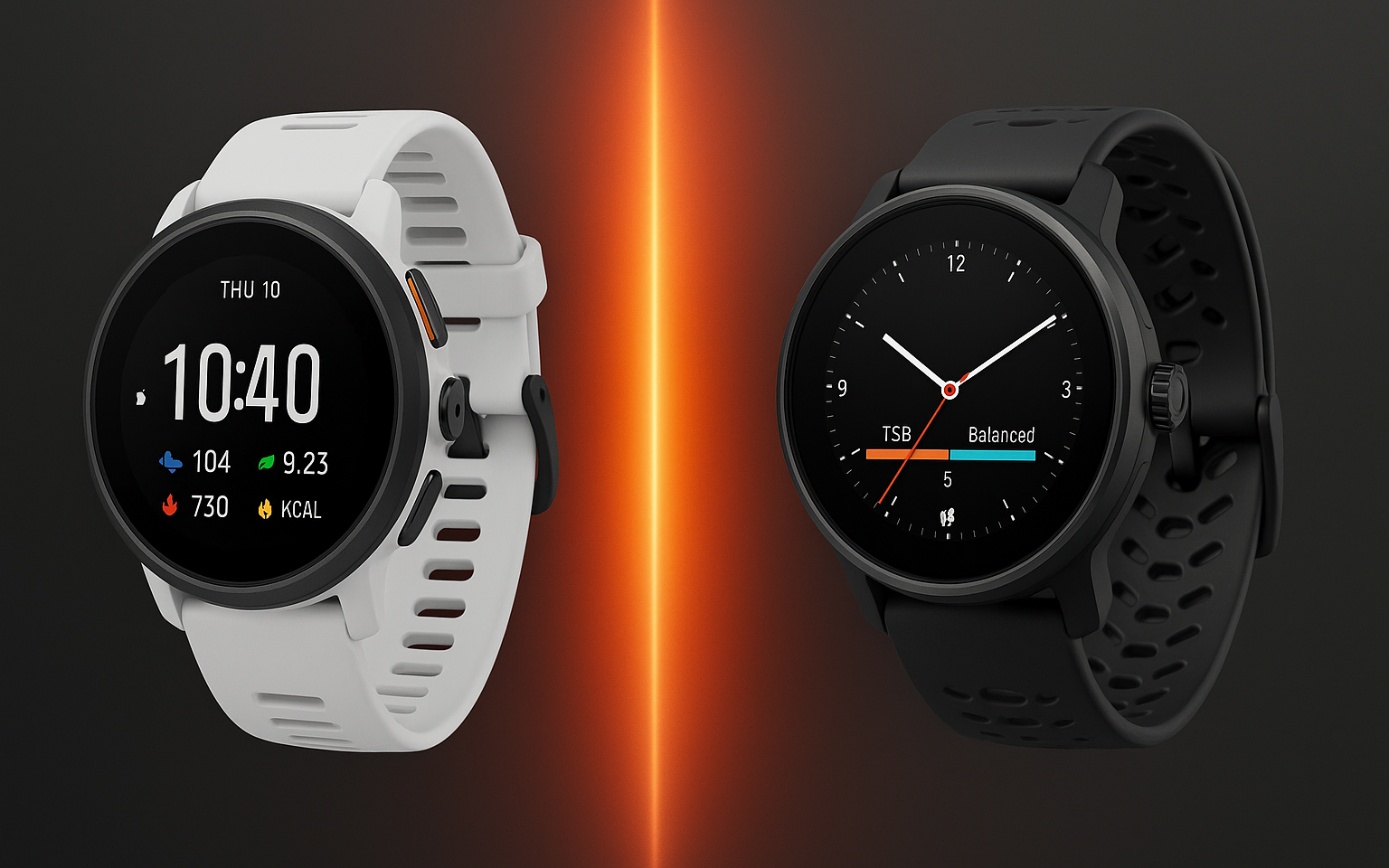
You're staring at two of the most compelling running watches under $400, and the right choice comes down to what you value most. Both the COROS Pace Pro and Suunto Race S deliver brilliant AMOLED displays, dual-frequency GPS, offline maps, and multi-day battery life in packages that cost half the price of premium Garmin rivals.
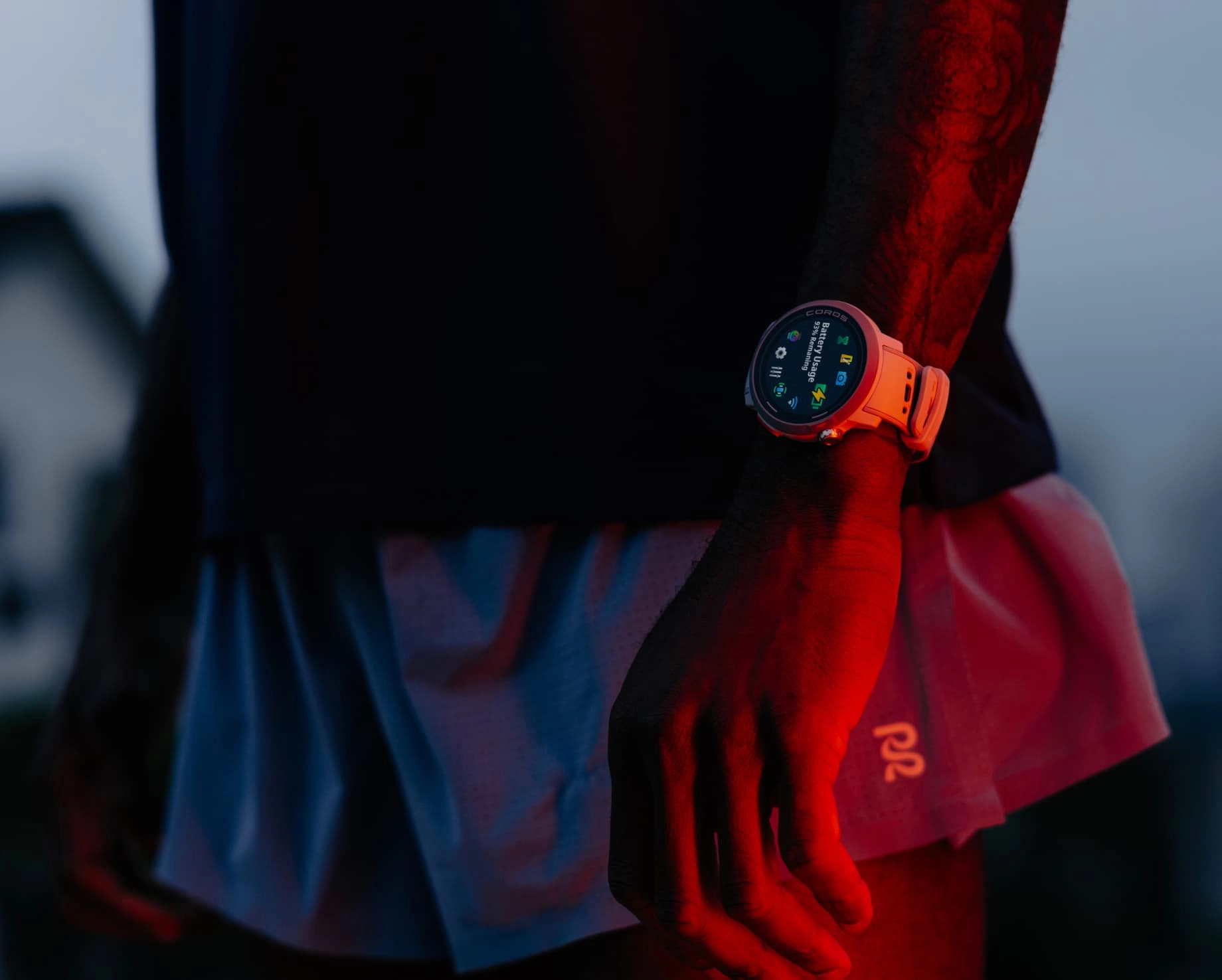

The COROS Pace Pro, now priced at $299 after a November 2025 price drop, undercuts nearly every AMOLED competitor while delivering 20 days of smartwatch battery life and weighing just 37 grams with the nylon strap. The Suunto Race S at $349 counters with a more premium build, Gorilla Glass protection, and training tools powered by TrainingPeaks integration.
Both watches have legitimate weaknesses worth flagging upfront: neither supports NFC payments or streaming music services like Spotify, and neither offers routable turn-by-turn navigation. The COROS plays offline MP3s but nothing from streaming libraries. The Suunto has no onboard music at all. If those are dealbreakers, look at the Garmin Forerunner 265 instead. For everyone else, the tradeoff comes down to endurance and ultralight design (COROS) versus build quality and ecosystem depth (Suunto).
Key Differences
Display & Design: AMOLED Brilliance, Different Philosophies
The COROS Pace Pro's 1.3-inch AMOLED screen hits 1500 nits of brightness, obliterating the old memory-in-pixel displays COROS used to ship. Colors pop. Maps render with actual detail. Reading data fields in direct sunlight requires zero squinting. The 416x416 resolution delivers crisp text, and the Ambiq Apollo510 processor keeps menus and map rendering responsive.
The Suunto Race S counters with a slightly larger 1.32-inch display at 466x466 resolution, though it tops out at 1000 nits. Both screens look stunning indoors, but the COROS has a noticeable edge in harsh sunlight—that extra 500 nits matters when you're checking pace mid-run on a blazing summer day.
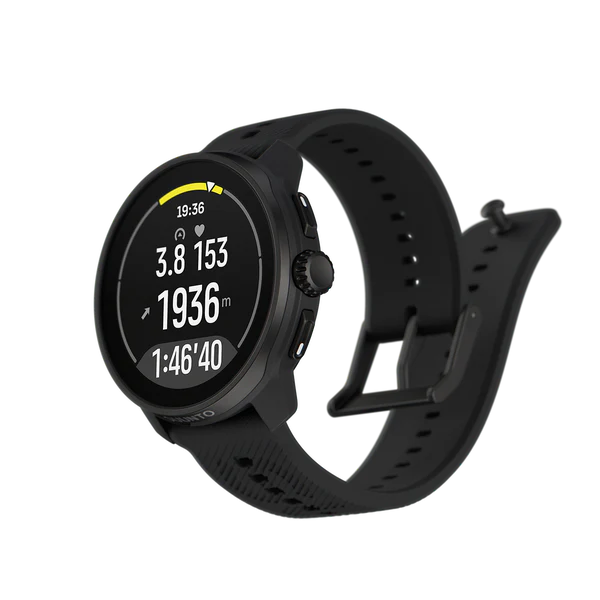
Where Suunto pulls ahead is build quality. The Race S wraps its display in Gorilla Glass versus the Pace Pro's mineral glass, meaning better scratch resistance over the long haul. The stainless steel bezel on the standard Race S feels more premium than the Pace Pro's fiber-reinforced polymer case. You can feel the difference in hand—the Suunto has heft and solidity, while the COROS prioritizes disappearing on your wrist.
Weight tells the whole story. The Pace Pro with the nylon band weighs just 37 grams—light enough that you genuinely forget you're wearing a watch during long runs. Even with the silicone strap, it's only 49 grams. The Suunto Race S sits at 60 grams with the silicone strap (53 grams for the titanium model). That 11-gram gap with silicone straps adds up over thousands of arm swings; swap to the COROS nylon band and the 23-gram difference becomes unmistakable during marathon efforts.
Both watches use rotating crowns plus touchscreens for navigation. The COROS dial feels more tactile and precise. The Suunto crown can be slow to respond during fast scrolling, though firmware updates have improved responsiveness.
Battery Life: Where COROS Dominates
This isn't close. The Pace Pro delivers 38 hours of GPS tracking in all-systems mode, 31 hours with dual-frequency enabled, and a staggering 20 days in smartwatch mode. Even with always-on display activated and daily runs logged, you're looking at roughly a week between charges. For runners who train 3-4 times weekly, that means charging twice per month.
The Suunto Race S manages 30 hours in best-accuracy GPS mode (40 hours in "good" mode, 120 hours in battery-saving tour mode) and 9 days of smartwatch battery. Use always-on display with medium brightness and that drops to 3-5 days.
For weekend warriors, both watches offer plenty of juice. Ultra runners, multi-day hikers, or anyone who forgets to charge regularly will appreciate the COROS's endurance edge. The difference becomes crucial during hundred-milers or backpacking trips—the Pace Pro can track a full UTMB attempt without dying, while the Race S requires strategic battery management or mid-race charging.
GPS & Navigation: Both Capable, Suunto Slightly Sharper
Both watches pack dual-frequency GPS (L1+L5) locking onto GPS, GLONASS, Galileo, BeiDou, and QZSS simultaneously. For most runners, the accuracy difference between these two won't matter—your splits will be close enough to plan training and race strategy with either watch.
That said, the Suunto Race S edges ahead on technical trails and urban environments with heavy obstruction. The dual-band tracking holds up well on twisty routes with fewer wild jumps or pace spikes. The Race S sticks to trails reliably and handles open-water swimming better than previous Suunto models.
The Pace Pro delivers solid GPS accuracy in most conditions and handles tight city routes without major issues. Cycling accuracy can disappoint in challenging environments with building walls or heavy tree cover, and GPS lock can take over 30 seconds to recover after signal loss. Ultra-distance athletes running technical mountain trails will notice the Suunto's more consistent tracking; casual runners won't.
Both watches pack 32GB of storage for offline maps downloadable globally for free. The COROS added street names and POIs in a September 2025 firmware update; the Suunto ships with topographic maps, route navigation, and POI support out of the box. Both use non-routable breadcrumb navigation—you follow a track and get off-course alerts, but neither calculates new routes on the fly.
Training Features: Simple vs Sophisticated
COROS presents training data simply and accessibly through EvoLab, which is free with no subscriptions. It calculates Training Status using 7-day load versus 42-day base fitness, provides race predictions for 5K through marathon, labels each workout by type (Easy, Base, Tempo, Threshold, VO2 Max, Anaerobic), and handles recovery timers and zone updates automatically.
Suunto offers more depth through direct TrainingPeaks integration, comparing 7-day load to 42-day trends with HRV-based recovery analysis. The Suunto Coach AI provides workout guidance, and recovery widgets show current form plus 1-week and 6-week trends. The Race S also estimates VO2 max, predicts race times, and tracks all-day health metrics (HRV, stress, sleep quality, SpO2). Powerful for data-driven athletes, but it can feel like overkill for casual runners.
Both watches offer interval training, structured workouts, and breadcrumb navigation. Suunto adds Climb Guidance (their version of Garmin's ClimbPro), which previews upcoming elevation during climbs with real-time guidance. COROS counters with better multisport transitions and a faster processor that makes navigating complex workouts less frustrating.
Music & Extras
The Pace Pro plays MP3 files directly through Bluetooth headphones—no phone required. Drag and drop music files to the watch's 32GB storage, pair headphones, and run phone-free. The limitation: COROS only supports MP3 files, not streaming services like Spotify or Apple Music. If your music library lives entirely in the cloud, this feature is useless.
The Suunto Race S offers music control only—play/pause/skip tracks playing on your phone, but no onboard storage or offline playback. For runners who want to leave their phone behind, the COROS wins decisively.
The Pace Pro adds ECG measurement (not medical-grade) for heart rhythm tracking. The Race S lacks ECG but includes a thermometer sensor and more robust sleep tracking that feeds into recovery recommendations.
Who Should Buy What
Buy the COROS Pace Pro if you: - Prioritize ultralight weight (37g nylon / 49g silicone) for long runs or ultras - Need maximum battery life (38h GPS, 20 days smartwatch) - Want offline music playback for phone-free runs - Prefer simpler software and a faster processor - Care about getting flagship features at the lowest possible price ($299)
Buy the Suunto Race S if you: - Value premium build quality and Gorilla Glass durability - Want better GPS consistency on technical trails - Use TrainingPeaks or prefer sophisticated training analytics - Appreciate Climb Guidance for hilly routes - Prefer established European outdoor brand heritage
Skip both if you need routable turn-by-turn navigation (Garmin Fenix/Forerunner 965), streaming music like Spotify (Garmin or Apple Watch), or NFC payments (Garmin with Garmin Pay).

Our Verdict
Winner: COROS Pace Pro. At $299, it delivers flagship-level features in a package so light you forget it exists, with battery life that eliminates charging anxiety. The offline music, faster processor, and radically lower weight create everyday advantages that compound over weeks of training. GPS accuracy is good enough for nearly everyone, and EvoLab covers the essentials without overwhelming casual athletes.
The Suunto Race S makes sense if you specifically need Gorilla Glass durability, slightly better GPS for technical trails, or TrainingPeaks integration. For everyone else, the Pace Pro's $50 price advantage, superior battery, and lighter weight make it the smarter buy in 2026.
Specs At A Glance
| Feature | COROS Pace Pro | Suunto Race S |
|---|---|---|
| Price | $299 | $349 |
| Weight | 37g (nylon) / 49g (silicone) | 60g (silicone) / 53g (titanium) |
| Display | 1.3" AMOLED, 416x416, 1500 nits | 1.32" AMOLED, 466x466, 1000 nits |
| Glass | Mineral glass | Gorilla Glass |
| Case Size | 46mm | 45mm |
| Case Material | Fiber reinforced polymer | Glass fiber polyamide + steel bezel |
| GPS Battery | 38h (all systems) / 31h (dual-freq) | 30h (best) / 40h (good) / 120h (tour) |
| Smartwatch Battery | 20 days | 9 days |
| GPS | Dual-frequency, Airoha chipset | Dual-frequency L1+L5 |
| Maps | Offline topo, street names, POIs | Offline topo, non-routable |
| Music | 32GB MP3 storage, offline playback | Control only (no storage) |
| ECG | Yes (non-medical) | No |
| Training | COROS EvoLab (free) | TrainingPeaks, Suunto Coach AI |
| NFC Payments | No | No |
| Water Resistance | 5 ATM | 5 ATM |