
Apple and Samsung's most ambitious smartwatches go head to head -- and one of them doesn't quite justify the price gap.


If you're spending north of $650 on a wrist computer, you want to know it can handle anything you throw at it: backcountry hikes without cell service, open-water swims in rough surf, marathon training blocks that demand reliable GPS, and the daily grind of notifications and contactless payments. The Apple Watch Ultra 3 ($799) and the Samsung Galaxy Watch Ultra ($649.99) both promise all of that, wrapped in titanium and sapphire glass. But the choice between them has less to do with which is "better" and almost everything to do with which phone is already in your pocket -- and whether satellite messaging is worth a $150 premium.
The short answer: the Apple Watch Ultra 3 is the more complete adventure watch, thanks to off-grid satellite texting, 5G connectivity, and a marginally more polished software experience. But the Samsung Galaxy Watch Ultra undercuts it by $150 while delivering longer battery life and a broader set of health sensors. Neither is a bad choice. One is a significantly better deal.
Quick Verdict
Winner: Apple Watch Ultra 3 -- but only if you own an iPhone and value satellite connectivity. Its off-grid messaging capability is a genuine differentiator that no other smartwatch matches, and watchOS remains the smoother, more intuitive platform for fitness tracking.
Pick the Samsung Galaxy Watch Ultra if: You're on Android, you care about body composition tracking and advanced health metrics, or you simply want the longest battery life possible in a premium rugged smartwatch -- and you'd rather keep $150 in your pocket.
Design & Build
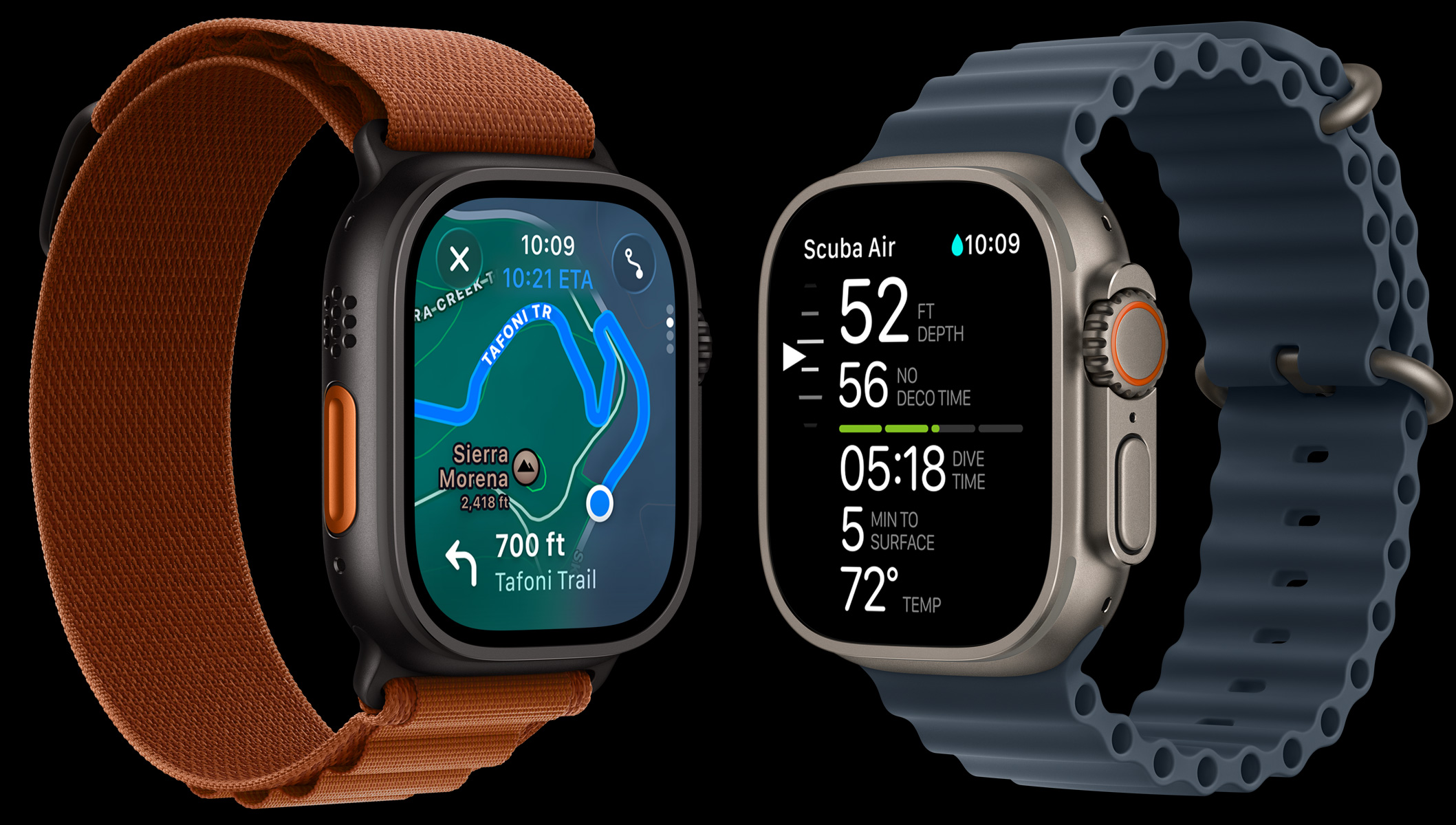
Both watches are built to take a beating. The Apple Watch Ultra 3 uses Grade 5 recycled titanium with a flat sapphire crystal, measuring 49 x 44 x 12mm and weighing 61.6 grams (natural finish) or 61.8 grams (black DLC finish). The new Black Titanium option with its DLC coating is a standout -- it hides scratches better than the natural finish and gives the watch a tactical, stealthy look that pairs well with everything from trail gear to a dress shirt.
The Samsung Galaxy Watch Ultra also uses a titanium frame with sapphire crystal, coming in at 47.4 x 47.4 x 12.1mm and 60.5 grams. Its cushion-shaped case with a round display inside is a distinctive design that stands apart from the Apple's rounded-rectangle approach. Samsung's 2025 refresh added a Titanium Blue colorway alongside the existing Silver, Gray, and White options.
On the wrist, the Samsung actually wears slightly smaller despite its squarish profile, and that extra gram saved is imperceptible. Both watches feel substantial without being punishing during sleep tracking. Both carry MIL-STD-810H certification and 100-meter water resistance (ISO 22810). The Apple Watch Ultra 3 adds IP6X dust resistance and is rated for recreational scuba diving to 40 meters with a compatible app, giving it a slight edge for serious water adventurers.
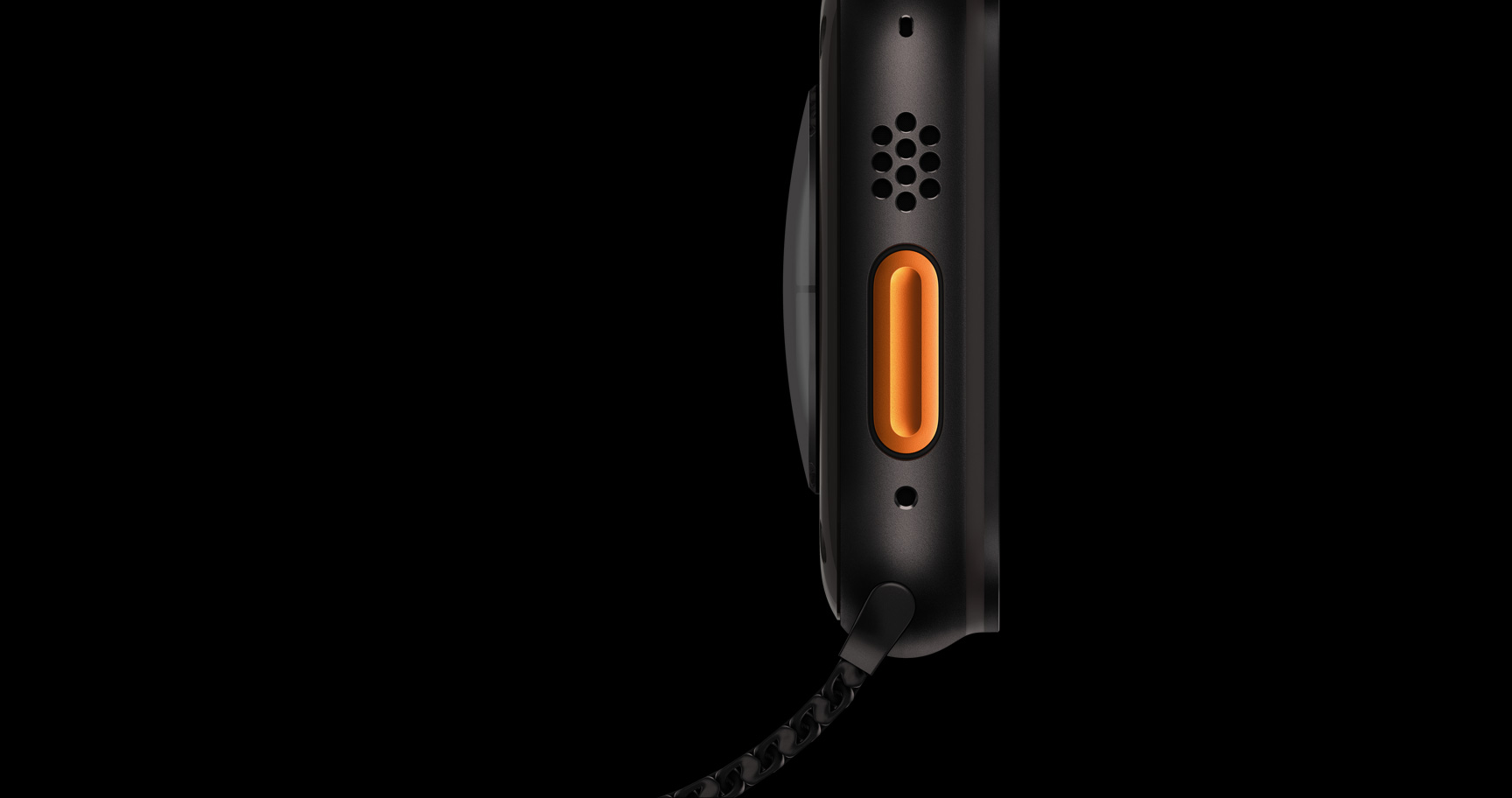
Both watches feature a programmable Action/Quick button on the side. Apple's implementation is more mature -- three generations in, it integrates deeply with workout controls, the siren, and the dive app. Samsung's Quick Button launched in 2024 and, while useful for launching workouts, still feels like it's catching up.
Winner: Tie. Both are among the most durable smartwatches ever made. Apple gets a slight nod for the scuba rating and the excellent black titanium finish, but Samsung's lighter weight and cushion-case design have their own appeal.

Display
The Apple Watch Ultra 3 packs a 1,245 sq mm always-on Retina OLED display using LTPO3 technology, pushing 422 x 514 pixels at 326 PPI and peaking at 3,000 nits. The LTPO3 panel allows finer control over the variable refresh rate, which translates to smoother animations and better power efficiency. At its minimum 1 nit, the screen is genuinely usable in a pitch-black tent without torching your night vision.
The Samsung Galaxy Watch Ultra has a 1.5-inch Super AMOLED display at 480 x 480 pixels (approximately 327 PPI), also peaking at 3,000 nits. It's bright, punchy, and perfectly visible in direct sunlight.
In practice, both displays are excellent outdoors. But the Apple Watch's larger display area means more information on screen at a glance -- workout metrics, complications, and map tiles all benefit from the extra real estate. The LTPO3 panel also feels noticeably smoother when scrolling through long lists or swiping between watch faces.
Winner: Apple Watch Ultra 3. The larger display, higher pixel density, and LTPO3 technology give it a clear edge, even though both peak at the same 3,000-nit brightness.

Performance & Features
This is where ecosystem lock-in shapes the conversation more than raw specs.
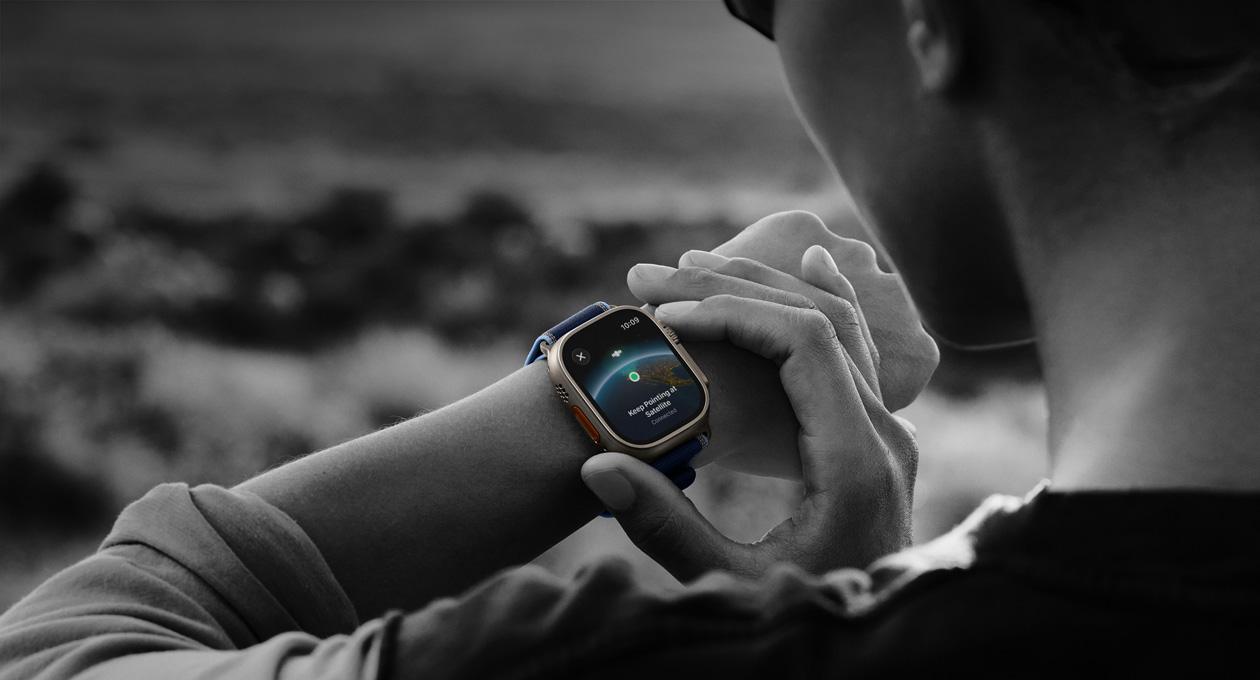
The Apple Watch Ultra 3 runs the S10 chip (64-bit dual-core with a 4-core Neural Engine) and 64GB of storage. watchOS is fast, fluid, and deeply integrated with the iPhone. The standout feature this generation is satellite connectivity: the Ultra 3 can send and receive iMessages and SMS over satellite when you're completely off-grid -- no cell towers, no Wi-Fi needed. Messages typically send in 30 seconds with a clear sky view. Combined with Emergency SOS via satellite and Find My via satellite, this makes it the only smartwatch that can genuinely keep you connected in the backcountry. You also get 5G RedCap cellular, a meaningful upgrade over LTE for faster data when you do have service. Two years of satellite service are included free.
The catch? The Ultra 3 requires an iPhone 11 or later running iOS 26. No Android compatibility, no exceptions.
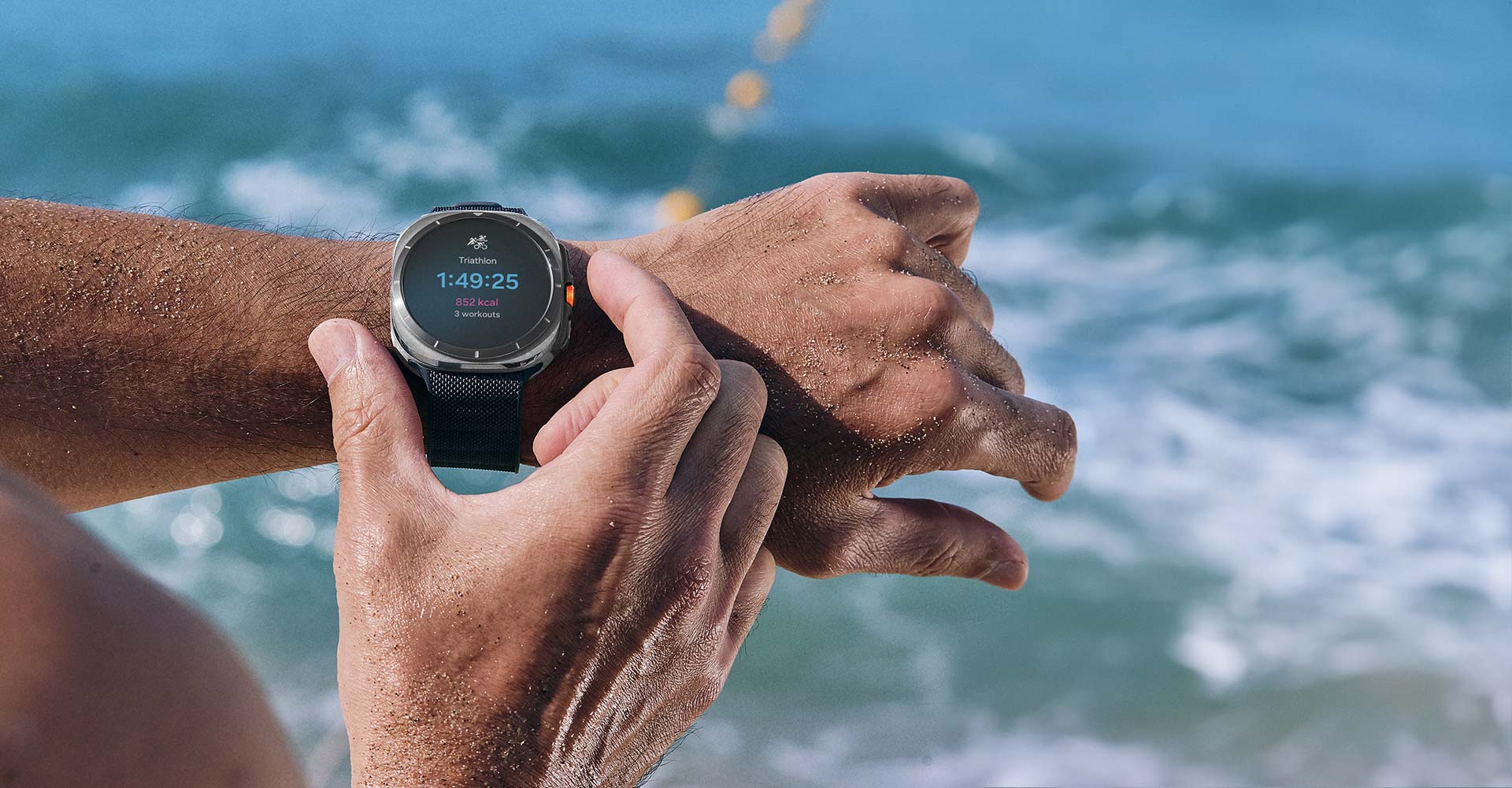
The Samsung Galaxy Watch Ultra runs the Exynos W1000 processor with 2GB RAM and 64GB storage (doubled from 32GB in the 2025 refresh). It runs Wear OS with Samsung's One UI overlay, which means access to the Google Play Store, Google Maps with turn-by-turn navigation on-wrist, and a broader third-party app ecosystem than watchOS. You can install Spotify, Strava, Komoot, and dozens of other fitness apps directly. The Multisport tile is exclusive to the Ultra model and lets you chain workout segments (swim-bike-run) with a press of the Quick Button.
The catch? Many advanced features -- including Samsung Health's full suite -- require a Samsung Galaxy phone. Pair it with a non-Samsung Android device and you lose body composition, blood pressure, ECG, and some watch face customization options.
Neither watch offers satellite messaging parity: Apple's off-grid texting is unique in the smartwatch space and a genuine safety advantage for backcountry adventurers.
Winner: Apple Watch Ultra 3 for raw feature set (satellite messaging is a category-defining feature). Samsung wins on app ecosystem openness and Google Maps integration if you're on Android.
Health & Fitness
Both watches pack serious health monitoring hardware, but they emphasize different metrics.
The Apple Watch Ultra 3 includes a third-generation optical heart sensor, electrical heart sensor (ECG), blood oxygen sensor, temperature sensor, and a depth gauge. New with watchOS 26, it adds hypertension notifications -- the watch uses the optical sensor to analyze how your blood vessels respond to heartbeats over 30-day windows and alerts you if patterns suggest elevated blood pressure. Sleep apnea detection, irregular rhythm notifications, cycle tracking, and a comprehensive Vitals app round out the health suite. GPS uses precision dual-frequency (L1 + L5) across GPS, GLONASS, Galileo, BeiDou, and QZSS.
GPS accuracy is excellent -- road cycling through switchbacks, trail running in dense forest, and open-water swimming all produced clean, accurate tracks. Heart rate accuracy is generally very good, though it can occasionally lose lock during warm-up segments or highly variable efforts. Apple's workout app is intuitive but limited: there's no on-watch route navigation within the Workout app, and trail mapping data outside the US is thin.
The Samsung Galaxy Watch Ultra uses Samsung's upgraded BioActive Sensor, which combines an optical heart rate sensor, an electrical heart sensor, and a Bioelectrical Impedance Analysis (BIA) sensor in a single chip. This enables body composition measurements (body fat percentage, skeletal muscle mass, body water, BMR), which Apple doesn't offer. Samsung also includes ECG, blood oxygen, blood pressure monitoring (calibration with a cuff required; not available in the US due to lack of FDA clearance), FDA-approved sleep apnea detection (a first for any smartwatch), AGEs Index (a skin-aging biomarker), and Vascular Load for heart stress analysis. GPS is also dual-frequency (L1 + L5).
GPS accuracy on the Samsung has improved dramatically from previous Galaxy Watch generations. Mountain terrain, open trails, and road running all produce solid, reliable tracks. However, it struggles more in dense urban canyons with tall buildings. Heart rate is accurate for running (including intervals) but unreliable for cycling -- particularly on rough terrain where wrist vibration throws off the optical sensor. If cycling is a core part of your training, this is a genuine limitation.
Winner: Samsung Galaxy Watch Ultra by a narrow margin. The BioActive sensor's body composition and broader health metric suite give it more tools for health monitoring -- though US buyers lose the blood pressure feature that is one of its key differentiators. Apple's heart rate accuracy is more consistent across activities, and hypertension notifications are a meaningful addition, but Samsung simply measures more.
Battery Life
Battery life is where the Samsung makes its strongest case.
The Samsung Galaxy Watch Ultra is rated at up to 60 hours in normal use with the always-on display on (or up to 80 hours with AOD off), and up to 100 hours in Power Saving mode. In real-world use with daily workouts and notifications, expect 2.5 to 3 days between charges. Continuous GPS workout tracking runs about 13-18 hours depending on settings, and Samsung's Exercise Power Saving mode (which still uses continuous GPS) can stretch workout recording to up to 48 hours.
The Apple Watch Ultra 3 is rated at up to 42 hours in normal use and up to 72 hours in Low Power Mode. Real-world performance lands at roughly 2 to 2.5 days with the always-on display active, notifications, a daily workout, and sleep tracking. Continuous GPS workout battery is approximately 14-16 hours at full power, or up to 20 hours in Low Power Mode with full GPS and heart rate readings. DC Rainmaker's 70km nonstop hike lasted nearly 15 hours before the battery hit 6%.
Apple does have a faster charging advantage: 80% in about 45 minutes, and 15 minutes on the charger gives you roughly 12 hours of use. Samsung's charging is noticeably slower, which is a legitimate annoyance given that you'll be charging more often than you'd like for a "rugged adventure watch."
Winner: Samsung Galaxy Watch Ultra. It lasts meaningfully longer in every scenario -- daily use, GPS workouts, and power-saving modes. The gap is roughly half a day to a full day depending on usage, which matters when you're packing for a weekend in the backcountry.
Value & Ecosystem
Here's the uncomfortable truth: you're not really choosing between these two watches. You're choosing between ecosystems.
The Apple Watch Ultra 3 at $799 is the premium play. For that price, you get satellite messaging (genuinely unique), 5G cellular, the most polished smartwatch software on the market, and seamless integration with iPhone, AirPods, Mac, and the rest of the Apple ecosystem. You're also locked in: this watch does not work with Android phones, period.
The Samsung Galaxy Watch Ultra at $649.99 saves you $150 while delivering longer battery life, broader health sensors (body composition, blood pressure), and access to the Wear OS/Google Play ecosystem. You need an Android phone, and a Samsung Galaxy phone for the full feature set. The 2025 refresh doubled storage to 64GB and added a blue titanium option without raising the price.
That $150 difference is significant. It's the cost of a good set of replacement bands, a year of a fitness app subscription, or a decent pair of trail running shoes. If satellite connectivity isn't essential to your use case -- and for most people, even active ones, it isn't -- the Samsung delivers more watch for less money.
Winner: Samsung Galaxy Watch Ultra on value. Dollar for dollar, you get more battery life, more health sensors, and more storage for $150 less. Apple wins the ecosystem polish award and the off-grid safety crown, but you pay a premium for both.
Who Should Buy What
Buy the Apple Watch Ultra 3 ($799) if you: - Own an iPhone and want the best possible smartwatch integration - Regularly hike, run, or travel in areas without cell service and need satellite messaging as a safety net - Value the most polished, smoothest smartwatch software experience - Want scuba diving capability (rated to 40m with compatible apps) - Prefer Apple's comprehensive workout and health app ecosystem
Buy the Samsung Galaxy Watch Ultra ($649.99) if you: - Use an Android phone (especially a Samsung Galaxy device) - Want the longest battery life in a premium rugged smartwatch - Care about body composition tracking, blood pressure monitoring, or sleep apnea detection - Prefer access to Google Maps navigation on-wrist and a wider third-party app selection - Want to save $150 without meaningful sacrifices in build quality or durability
Consider neither if you: - Primarily want a dedicated sports/running watch -- a COROS PACE Pro ($299) will give you vastly longer battery life (weeks, not days), better route navigation, and more granular training metrics for less money. The Garmin Fenix 8 (from $999) costs more but delivers weeks of battery life and the deepest training analytics available - Don't need ruggedness -- the Apple Watch Series 11 ($399) or Samsung Galaxy Watch 8 ($349) deliver 90% of the smartwatch experience at half the price - Want cross-platform compatibility -- neither of these watches works with the other ecosystem's phones
Specs At A Glance
| Spec | Apple Watch Ultra 3 | Samsung Galaxy Watch Ultra |
|---|---|---|
| Price | $799 | $649.99 |
| Case Material | Grade 5 Titanium | Titanium |
| Display | 1,245 sq mm LTPO3 OLED | 1.5" Super AMOLED |
| Resolution | 422 x 514 (326 PPI) | 480 x 480 (~327 PPI) |
| Max Brightness | 3,000 nits | 3,000 nits |
| Processor | Apple S10 | Exynos W1000 |
| Storage | 64GB | 64GB (2025 model) |
| Weight | 61.6g / 61.8g | 60.5g |
| Dimensions | 49 x 44 x 12mm | 47.4 x 47.4 x 12.1mm |
| Water Resistance | 100m (ISO 22810), 40m scuba | 100m (ISO 22810), 10 ATM |
| Battery (Normal) | Up to 42 hours | Up to 60 hours (AOD on) / 80 hours (AOD off) |
| Battery (Power Save) | Up to 72 hours | Up to 100 hours |
| GPS Workout Battery | ~14-16 hours | ~13-18 hours |
| GPS | Dual-frequency L1+L5 | Dual-frequency L1+L5 |
| Cellular | 5G RedCap + LTE | LTE |
| Satellite | Yes (messaging, SOS, Find My) | No |
| ECG | Yes | Yes |
| Blood Oxygen | Yes | Yes |
| Body Composition | No | Yes (BIA sensor) |
| Blood Pressure | Hypertension notifications | Yes (with cuff calibration; not in US) |
| Sleep Apnea | Yes | Yes (FDA-approved) |
| OS | watchOS (iOS only) | Wear OS (Android only) |
| Dust Resistance | IP6X | IP68 |
| MIL-STD-810H | Yes | Yes |