
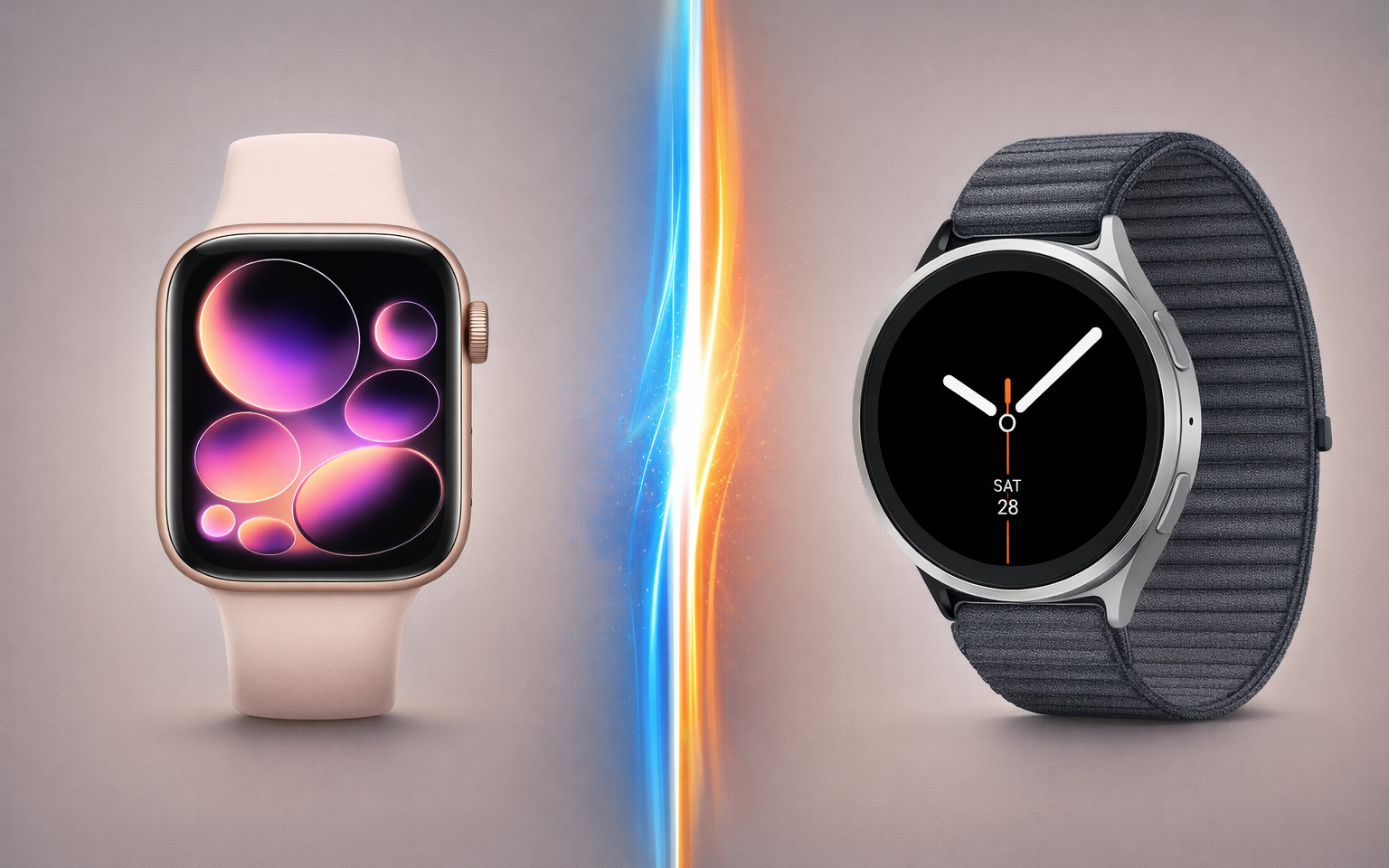
The $400 smartwatch is no longer a luxury -- it is the baseline expectation. With Apple and Samsung now charging near-identical prices for their flagship wearables, the decision between the Apple Watch Series 11 and the Samsung Galaxy Watch 8 is no longer about budget. It is about which ecosystem you trust with your health data, your notifications, and the next four years of software updates.
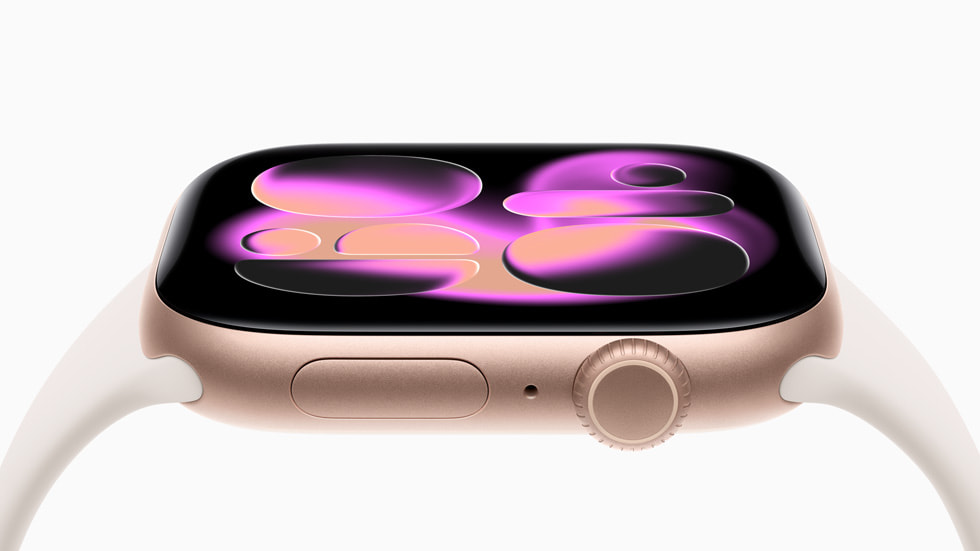
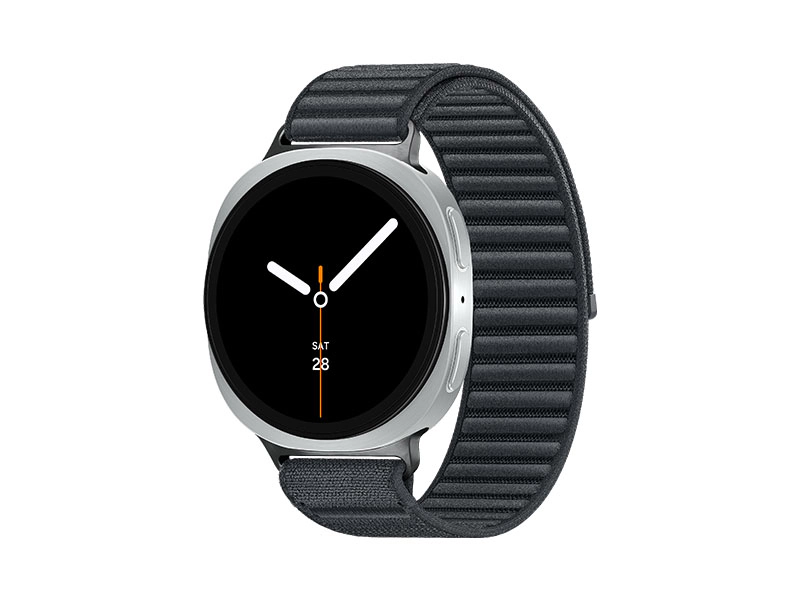
These two watches represent fundamentally different philosophies. Apple delivered a conservative hardware refresh anchored by a genuinely new health feature -- FDA-cleared hypertension screening -- and the first real battery life improvement in the Apple Watch's decade-long history. Samsung countered with a head-turning industrial redesign, a blindingly bright display, and deep Gemini AI integration that makes the watch feel like a smarter companion rather than just a fitness tracker on your wrist.
The tradeoffs are real and the stakes are high. Choosing one of these watches means committing to an operating system, a health data platform, and a band ecosystem for years to come. Here is how they stack up across every category that matters.
Design & Build
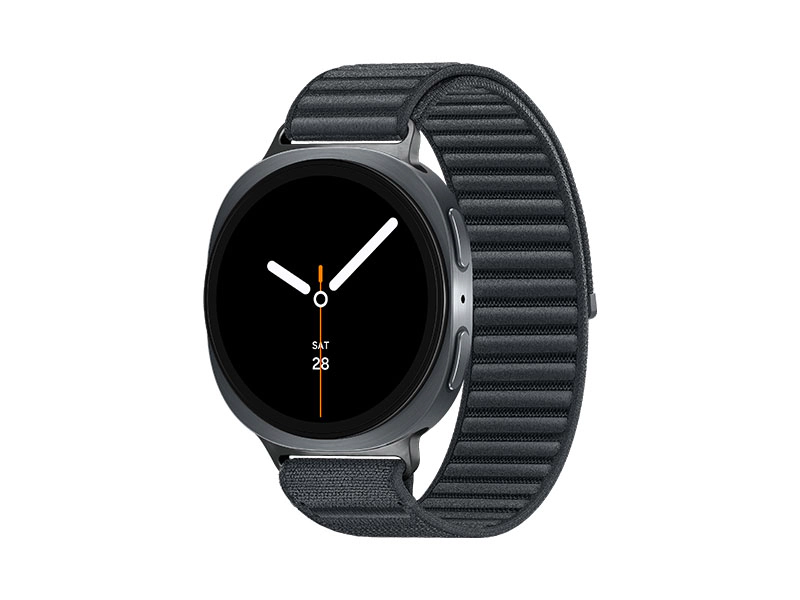
The Galaxy Watch 8 is the more visually striking watch in 2025. Samsung's new "cushion" case design -- softer, rounder corners replacing the angular look of the Watch 7 -- is a genuine refresh. At 8.6mm thick, it is the thinnest Galaxy Watch ever made, and it wears lighter than its specs suggest. The 40mm and 44mm size options cover most wrists comfortably.
The Apple Watch Series 11 looks almost identical to the Series 10, and the Series 9 before it. Apple clearly believes the rounded-rectangle silhouette is iconic enough to leave alone. The real upgrade is invisible: the aluminum models now feature a ceramic coating over the Ion-X glass that delivers twice the scratch resistance of previous generations. In 42mm and 46mm sizes, the Series 11 is also impressively thin for an Apple Watch, though Samsung wins the slimness contest outright.
The deal-breaker for Galaxy Watch upgraders: Samsung's new Dynamic Lug system breaks compatibility with every existing Galaxy Watch band. If you have invested in a collection of third-party or Samsung bands, none of them will fit the Watch 8 without an adapter. Apple, by contrast, maintained full backward compatibility with its existing band ecosystem.
Both watches offer solid water resistance and durability for daily wear. The titanium Apple Watch ($699) is the premium play, shipping with cellular by default and a sapphire crystal display. Samsung's sapphire glass comes standard on all Watch 8 models, which is a notable advantage at the base price.
Display
Samsung wins the display spec war convincingly. The Galaxy Watch 8's Super AMOLED panel peaks at 3,000 nits -- a 50% brightness advantage over the Apple Watch Series 11's 2,000-nit LTPO3 OLED. In direct sunlight, particularly during outdoor workouts, that gap is visible and meaningful.
The Apple Watch counters with its LTPO3 technology, which enables a true 1Hz refresh rate for the always-on display. This is a key reason the Series 11 achieves better battery efficiency despite a dimmer peak brightness. Apple's always-on display implementation is also notably polished, with smooth second-hand animations and intelligent dimming that maintains legibility.
Both displays are sharp, vivid, and easily readable in most conditions. But if outdoor visibility is a priority -- runners, cyclists, anyone who spends hours in bright daylight -- the Galaxy Watch 8's brightness advantage is hard to ignore.
Performance & Software
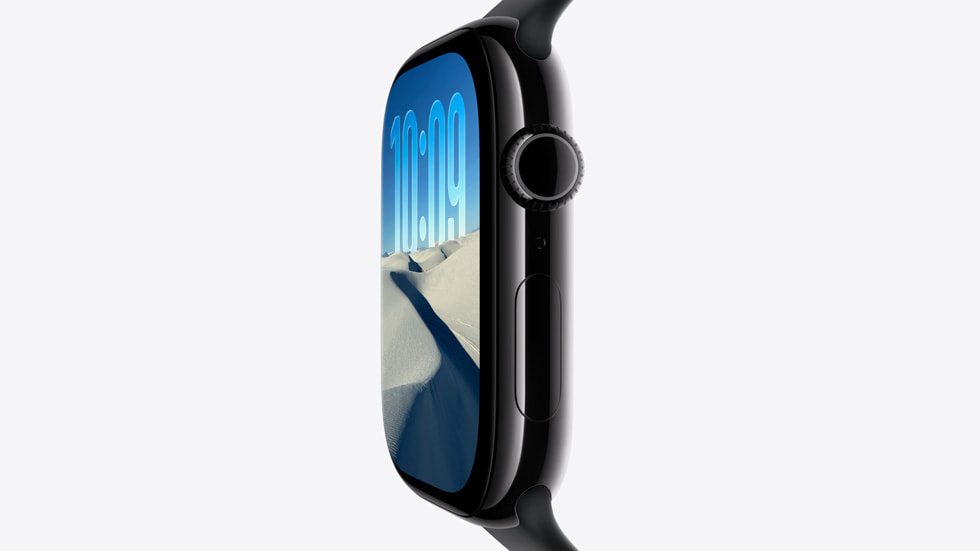
The Apple Watch Series 11 runs the S10 chip, the same silicon found in the Series 10. Apple clearly felt no urgency to upgrade the processor, and in practice the watch is fast and fluid enough that the carryover chip is not a meaningful weakness. watchOS 26 introduces Apple's Liquid Glass design language -- translucent, layered interface elements that replace the flat look of previous versions -- across the entire watch interface, alongside a Workout Buddy feature powered by Apple Intelligence and Live Translation in Messages. A subsequent watchOS 26 update added AirTag Precision Finding on the wrist, though this works only with the second-generation AirTag. The software is polished and deeply integrated with the broader Apple ecosystem.
Samsung's Galaxy Watch 8 ships with the 3nm Exynos W1000 processor and runs One UI 8 Watch on top of Wear OS 6. The chip is fast, app launches are snappy, and Samsung has largely eliminated the occasional stutter that plagued earlier Galaxy Watch models. The standout software feature is native Gemini AI integration, which lets you issue complex multi-step voice commands -- starting a workout, queuing a playlist, and setting a timer in a single request. It is the most capable AI assistant on any smartwatch right now.
Samsung promises four years of OS updates for the Watch 8, carrying it through 2029. Apple does not publish a formal update timeline, but historically supports Apple Watch models for five to six years. Both watches will receive meaningful software improvements for years to come, though Apple's track record on long-term support is stronger.
Health & Fitness Tracking
This is the category where the Apple Watch Series 11 pulls ahead most decisively.
The headline feature is FDA-cleared hypertension screening. Using the optical heart sensor over 30-day measurement windows, the Series 11 can detect signs of high blood pressure and alert the wearer. The clinical data shows 92.3% specificity, meaning few false positives, though the ~40% sensitivity means it will miss more cases than it catches -- a critical limitation to understand before relying on it. It is not a replacement for a blood pressure cuff, but it is the first smartwatch feature that could genuinely catch a silent killer condition early. No other consumer wearable offers anything comparable.
Beyond hypertension, the Apple Watch Series 11 delivers excellent GPS accuracy, reliable heart rate monitoring, ECG, SpO2 readings, wrist temperature sensing, fall detection, and crash detection. The health sensor suite is mature, clinically validated, and deeply integrated with the Health app on iPhone.
The Galaxy Watch 8 counters with Samsung's BioActive sensor, which packs heart rate, ECG, SpO2, and body composition analysis (bioelectrical impedance) into a single chip. The body composition feature -- measuring skeletal muscle mass, body fat percentage, and water levels -- remains unique to Samsung and genuinely useful for fitness enthusiasts tracking recomposition over time.
Samsung also introduced an antioxidant sensor on the Watch 8, which measures carotenoid levels in the skin using multi-wavelength absorption spectroscopy -- a method Samsung validated in clinical studies. The feature tracks how diet and lifestyle affect antioxidant levels over time, and the underlying measurement approach is sound. The practical ceiling is real, however: the feature lacks FDA or CE clearance as a medical device, the score is a dietary proxy rather than a clinical measurement, and there is no established framework for translating the readings into specific health interventions. A genuinely novel addition with meaningful limitations.
For GPS accuracy and day-to-day step counting, both watches perform well. GPS tracking is reliable on both devices, and most users will not notice a meaningful difference in route accuracy during runs or rides.
Battery Life
Battery life has been the Apple Watch's Achilles' heel for a decade, and the Series 11 finally makes meaningful progress. Apple now rates the watch at 24 hours with always-on display, including six hours of sleep tracking. Part of this jump from the Series 10's 18-hour rating reflects Apple's updated testing methodology that now includes sleep tracking in the measurement, but real-world gains are genuine — comfortably stretching through a full day and night of sleep tracking is now reliably achievable. With moderate usage -- lighter notifications, no continuous GPS workout -- real-world runtime extends meaningfully beyond the rated figure. Low Power Mode extends the rated life to 38 hours.
The Galaxy Watch 8 is rated at 30 hours with AOD and up to 40 hours without. On paper, Samsung wins. In practice, the gap is narrower than it appears -- real-world usage with notifications, workouts, and Gemini queries typically lands closer to 24-30 hours for the 44mm model, and the smaller 40mm model drains faster due to its 325mAh cell versus the 44mm's 435mAh battery.
The practical reality for both watches is daily charging. Neither will reliably make it through two full days of active use with always-on display enabled. The Apple Watch charges faster -- 8 hours of runtime from just a 15-minute charge -- which makes topping off during a shower a viable daily strategy. Samsung's charging is adequate but not as aggressive.
Ecosystem & Value
This is where the decision often makes itself.
The Apple Watch Series 11 only works with iPhones. The Galaxy Watch 8 only works with Android phones, and while it technically supports non-Samsung Android devices, the full feature set -- including seamless Samsung Health integration and certain AI features -- is optimized for Galaxy phones, though body composition tracking is available on any Android 8.0+ device with the Samsung Health app.
At $399 for the 42mm GPS Apple Watch and $349 for the 40mm Bluetooth Galaxy Watch 8 ($379 for the 44mm), Samsung offers a lower entry price. Adding LTE to the Galaxy Watch costs an additional $50. Apple's cellular models start around $499. The titanium Apple Watch at $699 with built-in 5G RedCap cellular sits in a class of its own.
Both watches deliver strong value at their respective prices, but the Apple Watch's longer historical software support and stronger resale value tilt the long-term value equation in Apple's favor. Samsung's $50 price increase over the Watch 7, combined with the band ecosystem reset, makes the Watch 8 a harder sell for existing Galaxy Watch owners.

Who Should Buy What
Buy the Apple Watch Series 11 if:
- You own an iPhone -- there is no competitive alternative
- Hypertension screening or any FDA-cleared health feature is important to you
- You want the longest possible software support runway
- You already own Apple Watch bands and want to keep using them
- You value a deeply integrated ecosystem where your watch, phone, AirPods, and Mac work in concert
Buy the Samsung Galaxy Watch 8 if:
- You own a Samsung Galaxy phone and want the tightest possible integration
- Body composition tracking matters to your fitness goals
- You prioritize display brightness for outdoor workouts
- Gemini AI assistance on your wrist appeals to your workflow
- You want the thinnest, most modern-looking smartwatch hardware available
Our Verdict
The Apple Watch Series 11 is the better smartwatch overall. The hypertension screening feature alone represents a category-leading health innovation that Samsung cannot match, and the meaningful battery life improvement addresses the longest-standing complaint about Apple's wearable. The software is more polished, the ecosystem integration is deeper, and the long-term support track record is stronger.
That said, the Galaxy Watch 8 is not a distant second. Samsung built a legitimately excellent watch -- thinner, brighter, and smarter with Gemini AI than any Galaxy Watch before it. For Android users, and particularly Samsung Galaxy phone owners, the Watch 8 is the clear best choice and a significant upgrade over the Watch 7. The body composition sensor and that stunning 3,000-nit display are real advantages that the Apple Watch cannot replicate.
The honest truth is that your phone makes this decision for you. But if you are somehow choosing between ecosystems -- or advising a friend -- the Apple Watch Series 11 offers more meaningful health features and a more reliable long-term investment. For Android users, the Galaxy Watch 8 is excellent -- but the Series 11 is the smartwatch that moved the category forward this year.
Specs At A Glance
| Spec | Apple Watch Series 11 | Samsung Galaxy Watch 8 |
|---|---|---|
| Starting Price | $399 (42mm GPS) | $349 (40mm BT) / $379 (44mm BT) |
| Sizes | 42mm, 46mm | 40mm, 44mm |
| Display | LTPO3 OLED, 2,000 nits | Super AMOLED, 3,000 nits |
| Processor | Apple S10 | Exynos W1000 (3nm) |
| Storage | 64GB | 32GB |
| RAM | Not disclosed | 2GB |
| Battery (AOD on) | ~24 hours (rated) | ~30 hours (rated) |
| Battery (AOD off) | ~38 hours (Low Power) | ~40 hours |
| Cellular | 5G RedCap (optional / standard on Ti) | LTE (+$50) |
| Health Sensors | HR, ECG, SpO2, temp, hypertension | HR, ECG, SpO2, body comp, antioxidant |
| Key Health Feature | FDA-cleared hypertension screening | Body composition analysis |
| Water Resistance | WR50M / IP6X | 5ATM / IP68 / MIL-STD-810H |
| OS | watchOS 26 | Wear OS 6 / One UI 8 Watch |
| Phone Compatibility | iPhone only | Android only (Samsung preferred) |
| Band Compatibility | Backward compatible | New Dynamic Lug (not backward compatible) |